Choosing the Right Material for Your Patio Doors
By Housey · Last reviewed 31st of May 2026
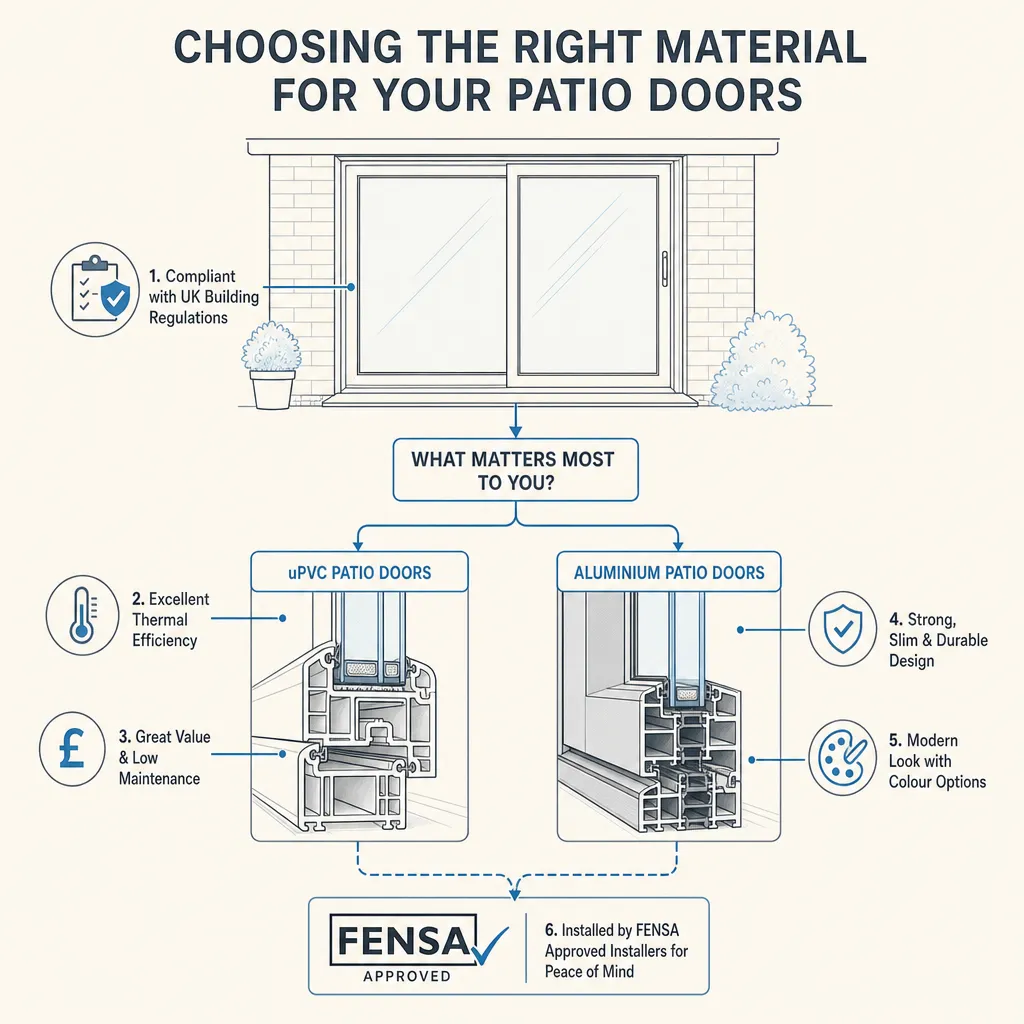
Choosing the Right Material for Your Patio Doors
Patio doors are one of the most noticeable changes you can make to a home's rear elevation, and the material you choose will affect thermal performance, security, maintenance commitments, and appearance for the next 20–30 years. Many homeowners reach this decision during a kitchen extension, garden room project, or a broader rear-of-house renovation — moments when the overall investment is already significant and the cost of choosing the wrong specification can be high.
Key points
- All replacement patio doors installed in England must comply with Building Regulations Part L (Approved Document L, 2021 edition), which sets a maximum permitted whole-unit U-value of 1.4 W/m²K for replacement glazed doors.
- FENSA-registered installers can self-certify compliance with Building Regulations and notify building control automatically — always request a FENSA certificate on completion of the installation.
- Properties in conservation areas, Article 4 direction areas, or listed buildings may require planning permission or listed building consent even for like-for-like door replacements — check with your local planning authority before ordering.
- Thermally broken aluminium frames provide slimmer sightlines than uPVC and can span larger openings, making them particularly suited to contemporary extensions and wide sliding or bifold configurations.
- Triple-glazed units typically achieve a centre-pane U-value of around 0.5–0.7 W/m²K, compared with approximately 1.0–1.2 W/m²K for standard double-glazed units — useful in well-insulated homes where reducing heat loss through the glazed opening is a priority.
The main patio door materials compared
Material | Whole-unit U-value (typical) | Lifespan | Maintenance | Relative cost | Best for |
|---|---|---|---|---|---|
uPVC | 1.2–1.4 W/m²K (double glazed) | 20–35 years | Very low | £ (lowest) | Most homes; standard sliding or French configurations; cost-effective replacement |
Aluminium | 1.0–1.4 W/m²K (thermally broken) | 35–50+ years | Low | ££–£££ | Contemporary homes; slim sightlines; large spans; bifold or wide sliding doors |
Timber | 1.2–1.6 W/m²K | 30–60 years with maintenance | High — repaint or re-oil every 3–7 years | ££–£££ | Period properties; listed buildings; conservation areas; natural wood aesthetic |
Composite (timber/aluminium) | 0.8–1.4 W/m²K | 30–50 years | Low externally | £££ | Homeowners wanting a timber interior look with aluminium weather performance |
Indicative UK cost and performance ranges, last reviewed 2026-05-31. U-values vary by manufacturer and glazing specification — always ask for the whole-unit U-value certificate, not only the centre-pane glass figure.
Which material suits your home?
Use this decision guide before requesting quotes:
- Choose uPVC if you want the lowest upfront cost, minimal ongoing maintenance, and a standard sliding or French door configuration. uPVC performs well thermally in most specifications and suits homes from the 1960s through to the early 2000s.
- Choose aluminium if you want slim sightlines, a large glazed span (bifold or wide sliding), a contemporary look, or a long-term low-maintenance product. Thermally broken aluminium comfortably meets Part L U-value requirements.
- Choose timber if the property is listed, in a conservation area, or if you want a natural wood interior finish. Factor in the ongoing maintenance commitment and check planning requirements before placing an order.
- Choose composite if you want the warmth of a timber interior finish without the external maintenance burden. Composite frames are popular for rear kitchen extensions on period properties where modern external materials feel incongruous inside.
- Consult a structural engineer or chartered building surveyor if you want to widen the existing aperture — enlarging an opening in a load-bearing wall requires the correct lintel specification and building control approval before glazing is manufactured or ordered.
Building regulations and planning
Building Regulations in England
All replacement patio doors in England must comply with Part L of the Building Regulations (Approved Document L, 2021 edition). Key requirements for replacement glazed doors:
- Whole-unit U-value of 1.4 W/m²K or better
- Centre-pane energy rating of at least C under the British Fenestration Rating Council (BFRC) scheme, or equivalent
FENSA-registered installers self-certify compliance and notify building control automatically. If your chosen installer is not FENSA-registered, either you or the installer must apply for building control approval separately before work begins — this adds cost and processing time. Always confirm FENSA registration before committing to an installer.
Planning permission and listed buildings
Replacing patio doors on a like-for-like basis is usually permitted development (no planning application required) for a standard house. Planning permission or consent may be required if:
- The property is in a conservation area and the new doors are visible from a public highway
- The property is subject to an Article 4 direction that removes standard permitted development rights
- The property is listed — listed building consent is required for any internal or external alteration, regardless of whether it is visible from the street
Always check your property's planning status on your local planning authority's website or via the Planning Portal before placing an order with an installer.
Scotland, Wales, and Northern Ireland
Building regulations requirements differ across the devolved nations. In Scotland, Technical Handbook Section 6 (Energy) applies; in Wales, Approved Document L (Wales); in Northern Ireland, Technical Booklet F. Confirm the applicable guidance for your location before specifying.
What the installation involves
A patio door installation typically follows these stages:
- Survey visit — the installer confirms aperture dimensions, checks the structural lintel is adequate for the existing or proposed opening, and agrees the final specification
- Factory manufacture — frames are made to measured dimensions; lead times are typically 4–10 weeks depending on material and specification
- Installation day — most single-opening patio door installations complete in one day
- Finishing — mastic sealing, internal trim fitting, hardware adjustment, and post-installation testing of all locking points
- Documentation — the installer provides a FENSA certificate and manufacturer warranty cards
If the opening is being widened, allow for a separate earlier phase: structural lintel installation by a builder under building control approval, before the glazing unit is ordered or manufactured.
What to ask before accepting a quote
- What is the whole-unit U-value for the specification being quoted, and can you provide the product data sheet?
- Is the company FENSA-registered, and will I receive a FENSA certificate on completion?
- What glazing specification is included — soft-coat low-E glass, argon-filled units, or triple-glazed?
- What is the security specification — multipoint locking, laminated inner pane, anti-lift devices?
- What warranties are provided on the frame, sealed glazing units, and hardware?
- Is VAT included in the quoted price?
- Who will carry out the installation — directly employed fitters or subcontractors?
- If the opening width is changing, has the lintel specification been confirmed by a structural engineer or building control?
When to get professional help
Most patio door replacements are a standard installation managed by a competent door installer. Seek additional professional advice if:
- You want to widen the existing opening — a structural engineer or chartered building surveyor should confirm the lintel specification before building work or glazing orders are placed
- The property is listed or in a conservation area and you are uncertain whether consent is required before ordering
- You notice damp, rot, or settlement cracking around the existing door frame, suggesting a wider structural or moisture problem that should be investigated before new doors are fitted
- The patio doors are part of a larger extension project where a single building control application covers the full scope of works
How Housey can help
Housey connects homeowners with vetted window and door installers who can measure, advise on material specifications, and provide comparable quotes. Compare options from local FENSA-registered installers before committing to a material or configuration.
Frequently asked questions
Do patio doors add value to a house in the UK?
Well-chosen patio doors — particularly bifold or sliding aluminium doors connecting to a usable garden — generally add buyer appeal. The impact on a formal valuation depends on overall property condition, local market, and quality of installation. For valuation-specific questions, a RICS-regulated valuer is the appropriate source of advice rather than a door installer or estate agent.
How much do patio doors cost in the UK?
Costs vary by material, size, configuration, and installer. As a rough guide: a standard two-panel uPVC sliding door costs approximately £1,000–£2,500 supplied and fitted; aluminium sliding or French doors typically start at £2,000–£5,000+; bifold configurations can reach £5,000–£15,000 or more depending on panel count and material. Always obtain at least three comparable quotes. (Indicative UK costs, last reviewed 2026-05-31.)
What is the difference between sliding patio doors and bifold doors?
Sliding patio doors operate on a track, with one or two panels sliding past the others. Bifold doors are hinged panels that fold concertina-style to stack to one or both sides of the opening, providing a wider clear aperture when fully open. Bifold doors offer more open access to the garden; sliding doors are mechanically simpler and generally less expensive. The right choice depends on opening width, desired clearance, and budget.
Are uPVC patio doors secure?
Modern uPVC patio doors with multipoint locking mechanisms, laminated glass, and anti-lift devices offer good domestic security. Look for products meeting PAS 24 (enhanced security performance standard for doors) or carrying the Secured by Design accreditation, endorsed by UK police forces. Older single-point-lock sliding doors are considerably less secure and are worth upgrading when the time comes to replace them.
Sources and further reading
- Approved Document L: Conservation of fuel and power (2021) — GOV.UK
- FENSA: consumer information on replacement windows and doors — FENSA
- Planning Portal: windows and doors — Planning Portal
- British Fenestration Rating Council (BFRC) energy ratings — BFRC
- Secured by Design: doors and windows guidance — Secured by Design (Police CPI)
Useful next reads
 Improvement & Build
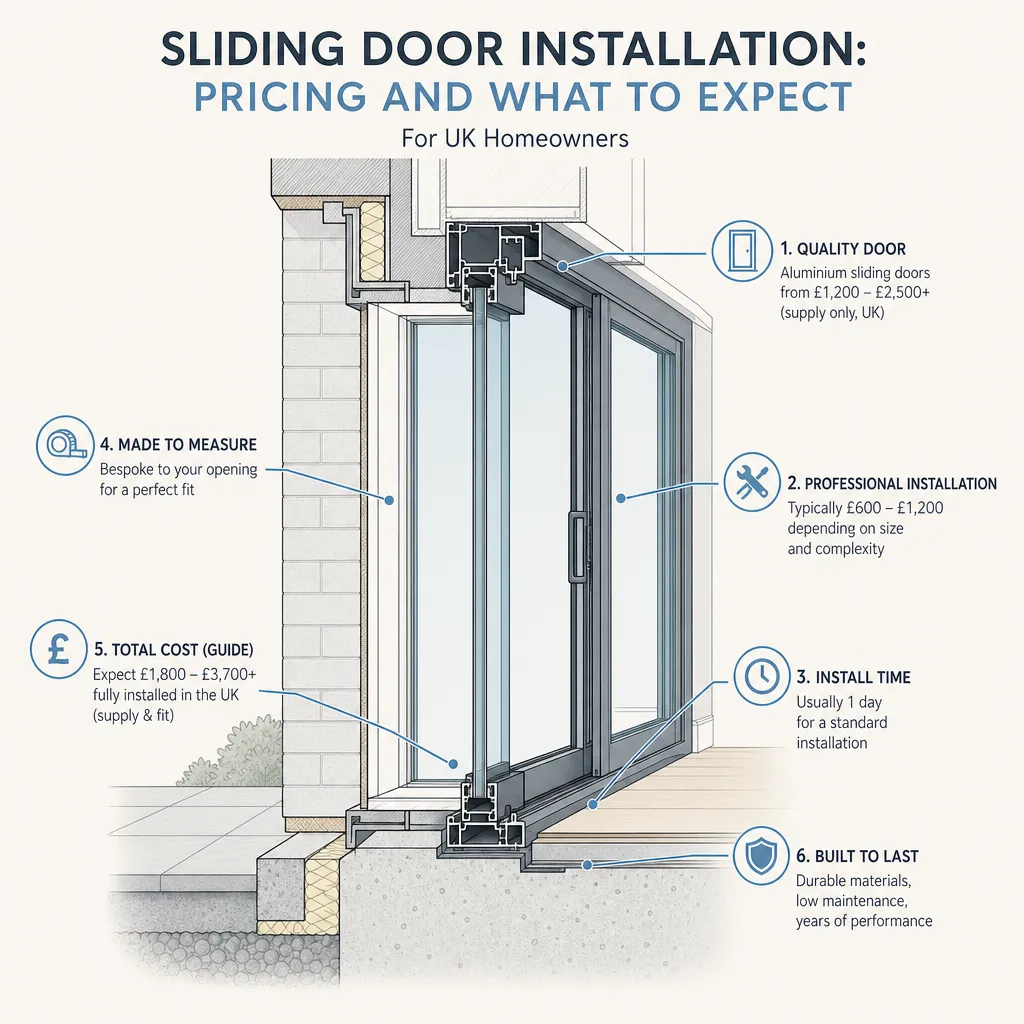
Sliding door installation: pricing and what to expect
A new sliding patio door in the UK typically costs £800–£3,000 fully installed, depending on size, material, and glazing specification.
 Improvement & Build
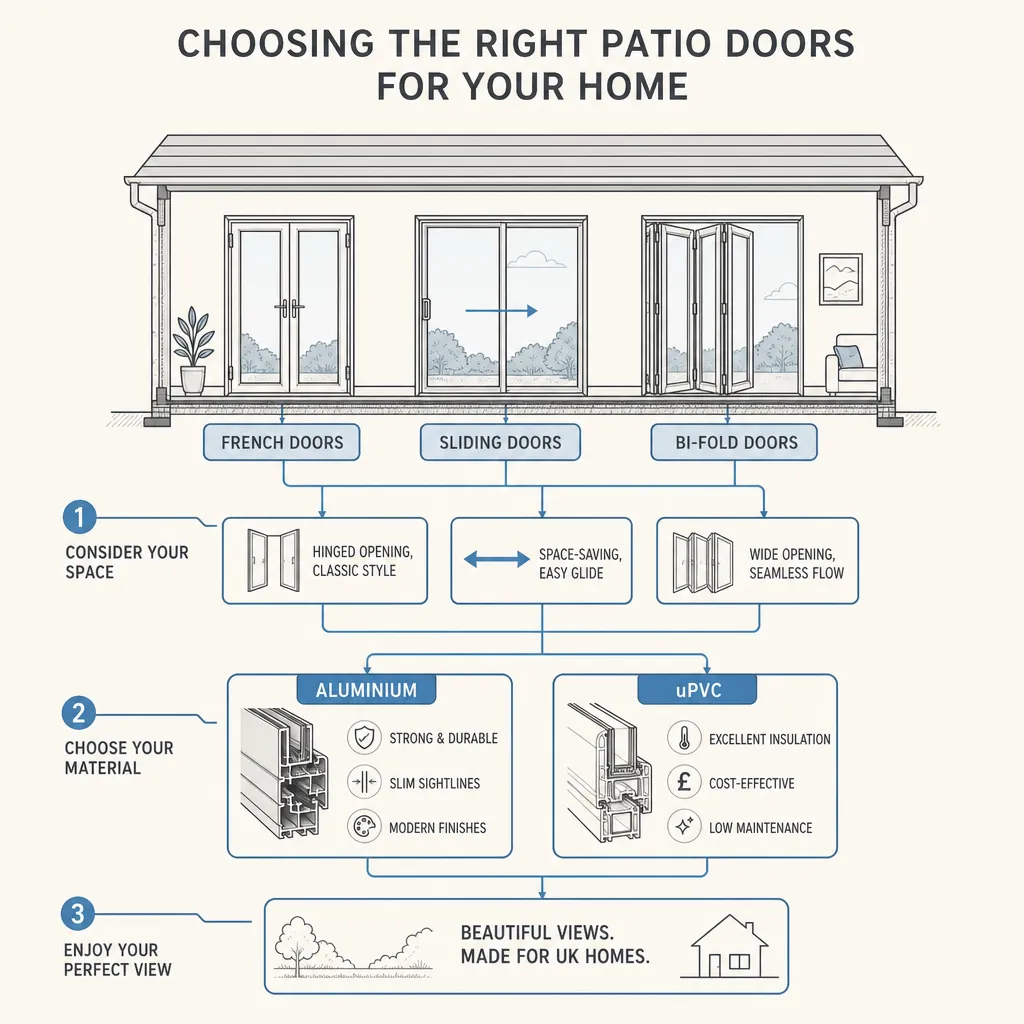
Choosing the Right Patio Doors for Your Home
The right patio doors depend on your opening width, available swing space, home style, and budget.
 Improvement & Build
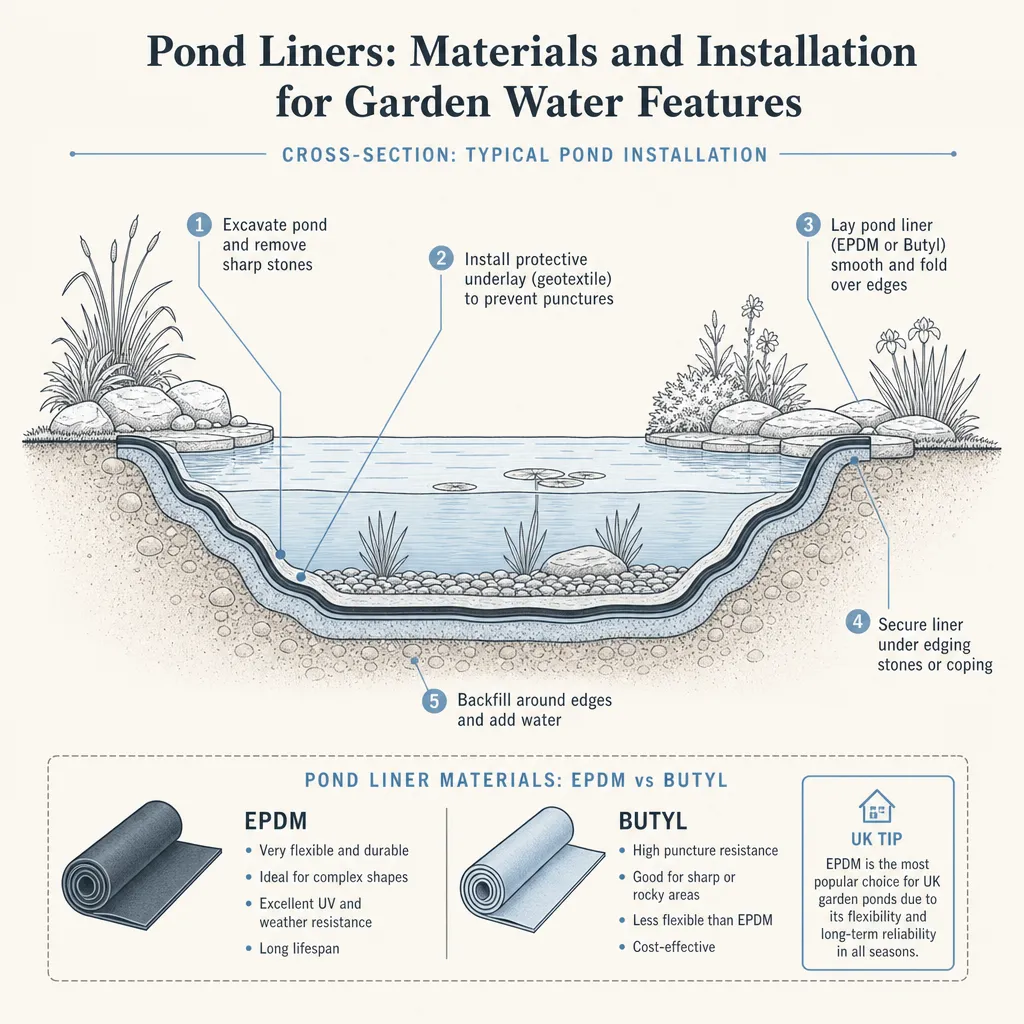
Pond Liners: Materials and Installation for Garden Water Features
Garden pond liners come in four main types: EPDM rubber, butyl rubber, PVC, and preformed fibreglass.
 Improvement & Build
Selecting the right material for bay windows: a homeowner's guide
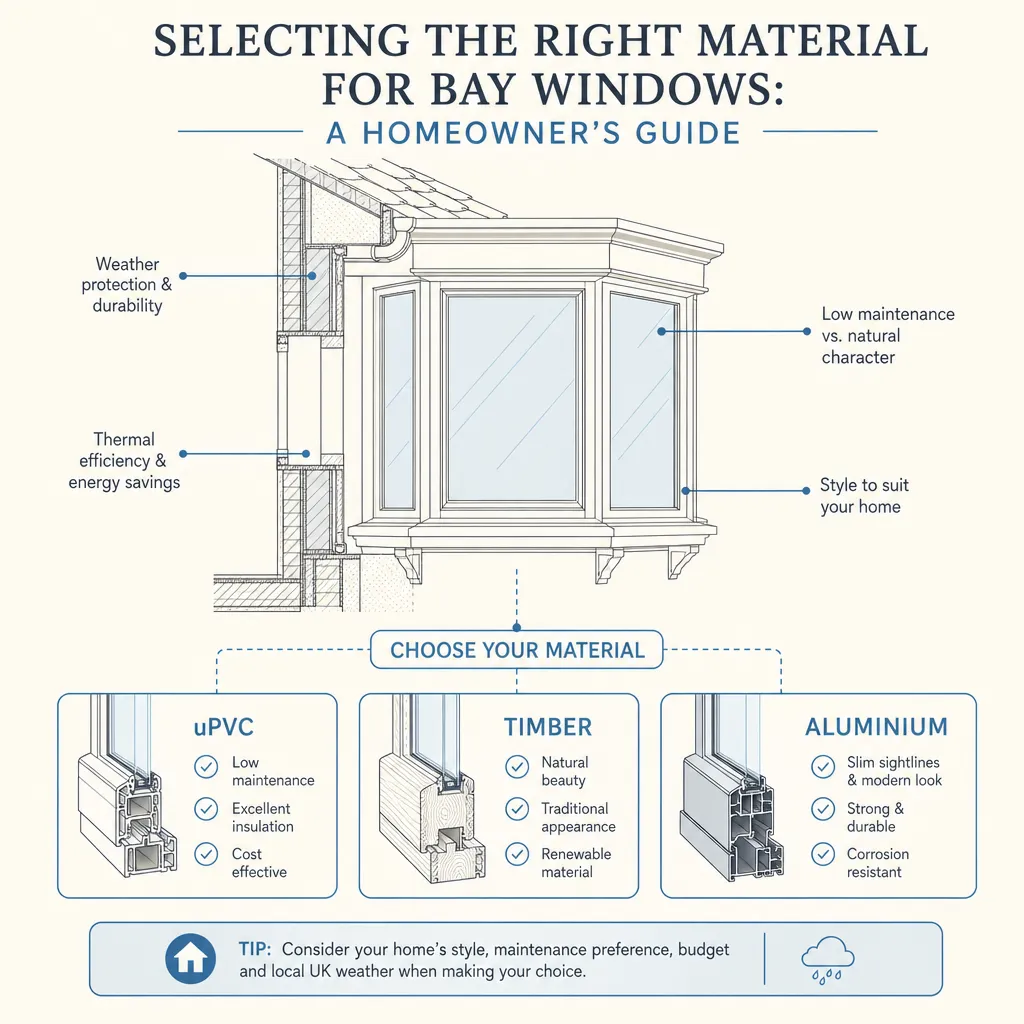
The main bay window materials in the UK are uPVC, timber, and aluminium.
 Improvement & Build
Patio Doors: Types, Features, and Installation Guide
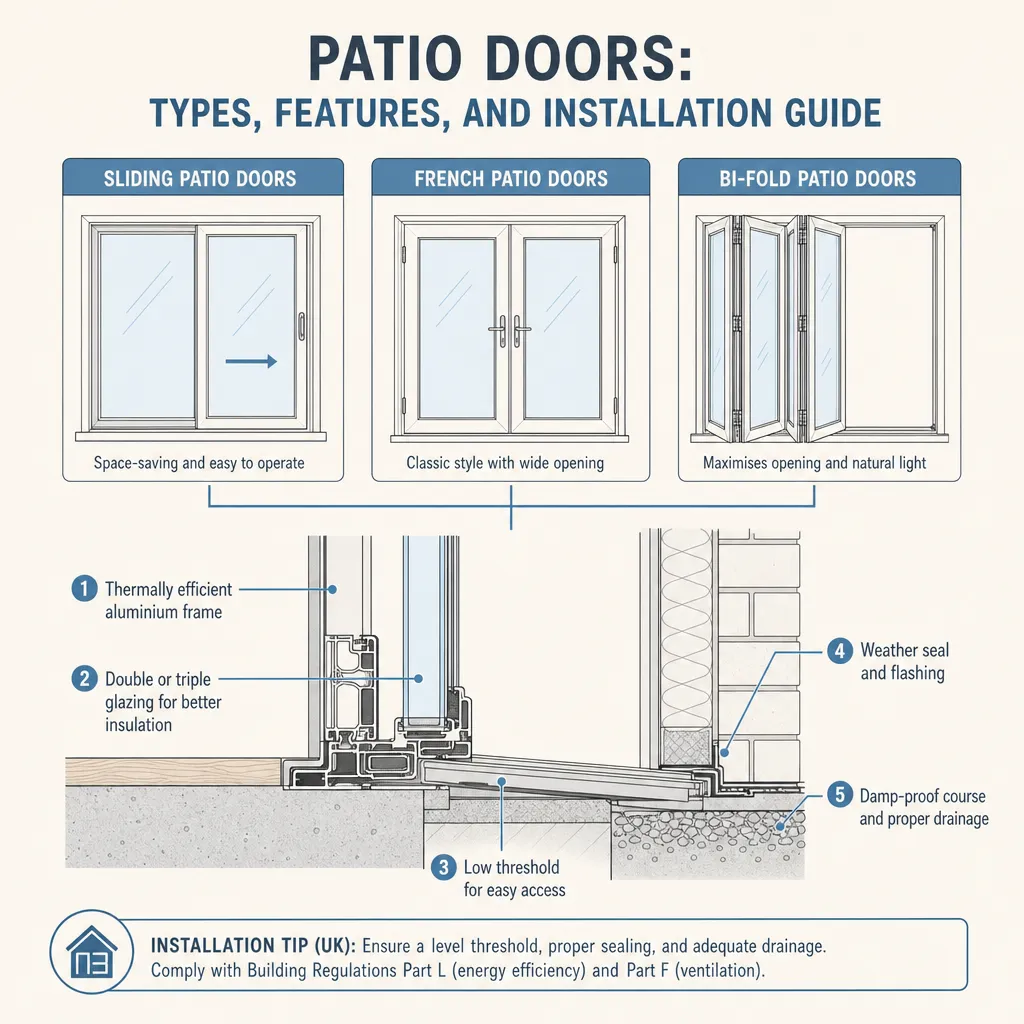
UK patio doors come as sliding, French, or bifold systems.