Cladding Installation Over Damp Boundary Walls: Technical and Regulatory Considerations
By Housey · Last reviewed 3rd of May 2026
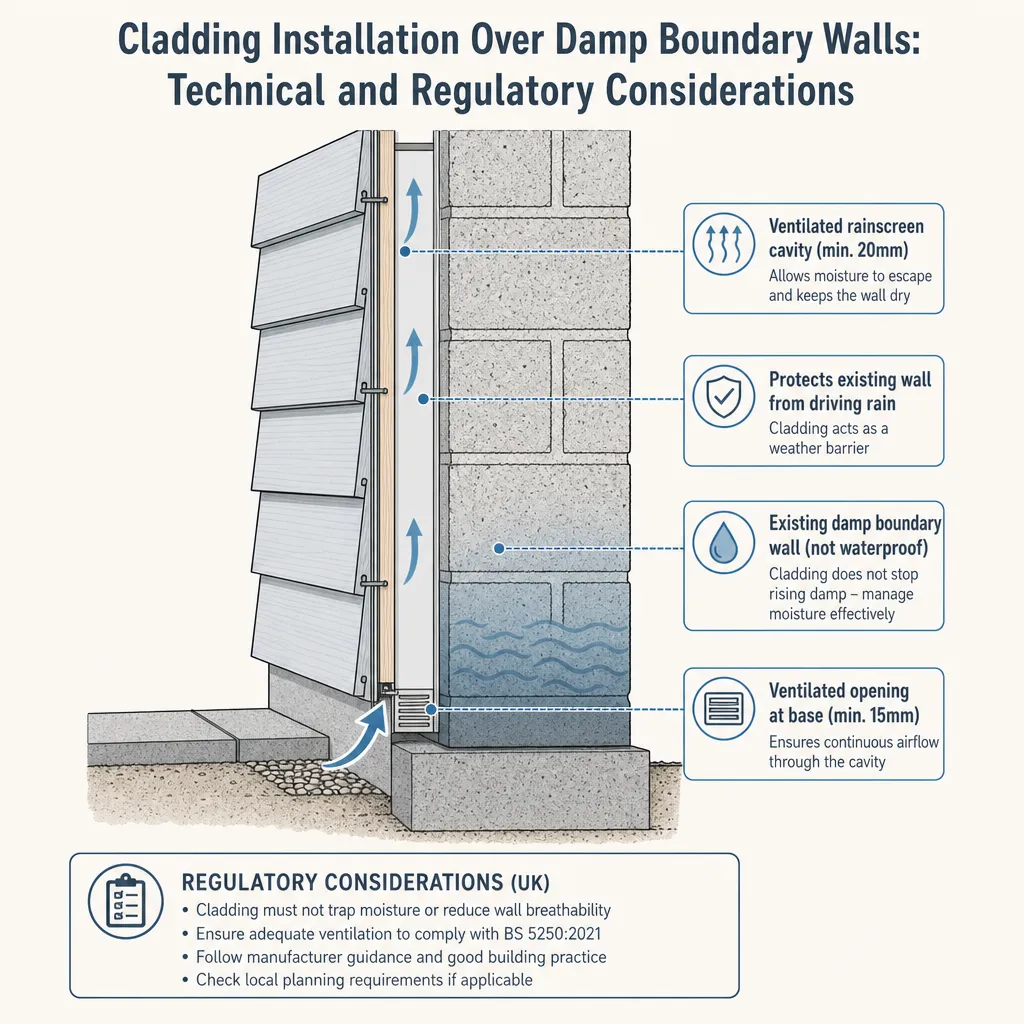
Cladding Installation Over Damp Boundary Walls: Technical and Regulatory Considerations
Boundary walls — whether shared party walls, garden walls, or the external flank walls of a terrace — are among the most persistently damp elements of a UK property. Owners of Victorian, Edwardian, and interwar homes frequently consider external cladding as a route to improved weatherproofing and appearance. But installing cladding directly over an actively damp wall without addressing the moisture source is one of the more consequential specification errors in UK domestic construction. The consequences — accelerated masonry decay, timber rot in battens and subframes, mould growth, and regulatory non-compliance — can be expensive to remediate. This article sets out the moisture assessment, regulatory framework, and professional input required to approach this work correctly.
Key points
- Installing cladding directly over an active damp wall without moisture remediation risks trapping moisture in the substrate, accelerating masonry decay, promoting mould growth, and causing timber rot in the supporting structure.
- Approved Document C (Site preparation and resistance to contaminants and moisture) requires external wall construction to resist moisture penetration — all cladding systems must be specified to comply.
- Approved Document B (Fire safety) applies where cladding materials meet combustibility thresholds or are used above 18 m height — confirm your material's fire classification with building control before specifying.
- Where the boundary wall is a party wall shared with an adjoining owner, the Party Wall etc. Act 1996 requires a Party Structure Notice to be served at least two months before cladding work begins.
- External cladding to a dwellinghouse in a conservation area or to a listed building is not permitted development and requires planning permission.
Why damp must be assessed before cladding
A damp boundary wall can be wet for several distinct reasons, and the cladding specification depends on identifying which mechanism is present:
- Rising damp: groundwater drawn up through masonry by capillary action; typically visible as a tide mark up to approximately 1 m from ground level. A damp proof course (DPC) treatment or chemical injection is required before cladding.
- Penetrating damp: rain driven through porous or cracked masonry; most common in exposed locations and solid-walled properties. A rainscreen system with a ventilated, drained cavity can manage this if correctly specified — but only if rising damp has been separately excluded.
- Condensation: warm interior air depositing moisture on a cold wall surface; can be exacerbated by adding an impermeable external cladding layer without improving internal ventilation.
- Defective pointing or coping stones: localised ingress through failed mortar joints or a missing coping. Repointing and coping replacement should be completed before any cladding is applied.
A damp and timber survey by a qualified surveyor — ideally a member of the Property Care Association (PCA) — will identify the type and extent of damp and specify the appropriate remediation before any cladding system is finalised. Do not allow a cladding contractor to proceed on the basis of a visual assessment alone.
Choosing the right cladding approach
Cladding approach | Suitable over damp wall? | Key condition | Building Regulations consideration |
|---|---|---|---|
Direct-fixed boards (no cavity) | No | Damp must be fully resolved first | Approved Document C |
Rainscreen with ventilated, drained cavity | Possibly — penetrating damp only | Rising damp must be treated separately | Approved Documents C and B |
Render over treated substrate | Depends on damp type | Rising damp must be remediated first | Approved Document C |
External wall insulation (EWI) system | With caution | Breathable system may be required; damp source must be identified | Approved Documents C, L, and B |
Timber cladding on drained, ventilated battens | Possibly — with drainage detail | Battens must be treated; cavity must drain at base | Approved Documents C and B |
A rainscreen cladding system — boards fixed on a subframe over a ventilated cavity of 25–50 mm, with drainage at the base — provides the greatest tolerance for background wall damp where the source is penetrating rather than rising. The cavity must be genuinely ventilated at the top and bottom and free-draining at the base; a cavity that traps rather than drains moisture provides no protection and may worsen the wall's condition.
Planning permission and permitted development
In England, external cladding to a dwellinghouse is generally permitted development under Class A of Schedule 2, Part 1 of the Town and Country Planning (General Permitted Development) (England) Order 2015. However, permitted development does not apply if:
- The property is in a conservation area and the cladding would be on a wall or roof slope facing a highway — stone, artificial stone, pebble dash, render, timber, plastic, or metal cladding in a conservation area is specifically excluded from Class A.
- The property is a listed building — full planning permission and Listed Building Consent are both required for any external works.
- The local planning authority has removed permitted development rights via an Article 4 Direction.
Always check with your local planning authority (LPA) before applying cladding in any designated area. A Lawful Development Certificate can provide formal confirmation that the works are permitted development, which protects your position at resale and avoids enforcement risk.
Building Regulations requirements
Building Regulations approval is likely required where cladding constitutes a material alteration to the weatherproofing or thermal envelope of the building. In practice, most external cladding projects to dwellings will engage:
- Approved Document C: the system must prevent moisture penetrating to the interior of the habitable building. This applies even where the wall was already damp before cladding — the cladding must not make the situation worse, and the construction detail must demonstrate adequate moisture resistance.
- Approved Document L: if insulation is incorporated behind the cladding, the new wall U-value must meet the applicable threshold (currently 0.30 W/m²K for a replacement element in an existing external wall in England — check the current version of Approved Document L, as figures are subject to revision).
- Approved Document B: for most two-storey dwellings, many timber and composite cladding materials are acceptable in terms of fire performance, but confirm the classification with building control before specifying — particularly for materials used in semi-detached or terraced properties where fire spread to adjacent properties is a consideration.
Building regulations drawings produced by a qualified architectural technician should show the full wall construction detail, including the cavity dimensions, batten specification, drainage path, vapour control layer (if specified), fixing centres, and fire stopping details. Building control consultants can advise on which Approved Documents apply and manage the application and inspection process.
Party Wall Act considerations
If the boundary wall is a party wall shared with an adjoining owner, the Party Wall etc. Act 1996 is likely engaged. Attaching a cladding system to a party wall — or carrying out works to it — constitutes work to a party structure under Section 2 of the Act. This requires you to serve a Party Structure Notice on the adjoining owner at least two months before work commences.
The adjoining owner has 14 days to consent or dissent. If they dissent, the dispute is referred to a party wall surveyor (or agreed surveyor) who will produce a Party Wall Award setting out how the work must be carried out. Proceeding without notice is a civil wrong that can result in an injunction halting the work and liability for the adjoining owner's costs.
If the wall is wholly within your own curtilage and is not shared, the Party Wall etc. Act does not apply — but confirm the boundary position in your title deeds before proceeding.
Important limitations
This article is general information only. The correct specification for cladding over a damp boundary wall depends on the damp type, the wall construction, the property's planning designation, local authority policies, and the specific cladding system being considered. Rules and requirements differ between England, Scotland, Wales, and Northern Ireland. Nothing in this article constitutes professional structural, planning, damp-remediation, or fire safety advice. Always commission a damp survey and engage qualified professionals before specifying or installing cladding over any wall affected by moisture.
What to ask a qualified professional
Before instructing a damp surveyor, cladding contractor, or building control consultant, ask:
- What type of damp is present, and has the source been identified and remediated before cladding is specified?
- Is a ventilated and drained cavity specified, and what are the drainage and ventilation details at the base and head of the wall?
- Does the proposed system comply with Approved Document C and, where applicable, Approved Documents L and B?
- What fire classification does the proposed cladding material hold under EN 13501-1, and is that classification appropriate for this building type and location?
- Is the boundary wall a party wall, and have Party Wall etc. Act 1996 obligations been confirmed?
- Does the property's planning designation affect my permitted development rights for this external cladding?
- What completion certificate or building control sign-off will I receive, and in what form?
- Will the fixing method affect the structural integrity of the existing masonry or party wall?
When to get professional help
Commission a damp and timber survey before any other professional is engaged — it defines the remediation required and shapes the cladding specification. Engage a structural engineer if there is any uncertainty about the load implications of a heavy cladding system on an ageing or weakened wall. Instruct a planning consultant or contact your LPA if the property is designated or the permitted development position is unclear.
Do not proceed on the basis of a cladding contractor's own assessment alone. A contractor has a commercial interest in the work proceeding and may not hold the qualifications to assess damp type, fire compliance, or planning status. The risk of getting the specification wrong sits with the homeowner.
How Housey can help
Housey can connect you with qualified professionals to assess and manage this work correctly. Start with a damp and timber survey to identify the moisture source, then commission building regulations drawings that specify the correct cladding system and cavity construction detail. Where planning designation or Party Wall obligations are a concern, building control consultants can manage your application, and damp proofing specialists can carry out the necessary remediation before any cladding is installed.
Frequently asked questions
Can I clad a boundary wall without planning permission?
In many cases, yes — external cladding to a dwellinghouse is permitted development in England, subject to conditions. However, if the property is in a conservation area and the wall faces a highway, or if the property is listed, planning permission is required. Specific materials including stone, render, timber, plastic, and metal cladding in a conservation area are excluded from Class A permitted development. Always check with your local planning authority before starting work.
Does cladding over a damp wall make damp worse?
It can, if installed without addressing the damp source or without a properly ventilated cavity. Trapping moisture between the cladding and the original masonry accelerates decay, encourages mould growth, and can cause timber battens to rot within a few years. The correct approach is to identify the damp type, treat the source, and specify a cladding system that allows any residual moisture to drain and evaporate rather than accumulate.
What is a ventilated cavity in a rainscreen cladding system?
A ventilated cavity is an air gap — typically 25–50 mm — between the face of the existing wall and the back of the cladding boards, created by vertical and horizontal battens or a proprietary subframe. The cavity allows moisture that enters behind the boards to drain down and evaporate rather than sitting against the substrate. It must be open to airflow at the top and bottom, with a clear drainage path at the base of the wall.
Does cladding a wall affect my buildings insurance?
It may. Notify your insurer before carrying out material external alterations. If the cladding changes the fire performance or weatherproofing characteristics of the building envelope, your insurer needs to be aware. Failure to notify your insurer of a material change to the structure may affect the validity of a future claim, particularly if the alteration is later found to be non-compliant with Building Regulations.
Do I need Party Wall Act consent to clad a boundary wall?
If the boundary wall is a party wall shared with a neighbour, attaching a cladding system to it is likely to constitute work to a party structure under Section 2 of the Party Wall etc. Act 1996, requiring a Party Structure Notice to be served at least two months before work begins. If the wall is wholly within your own property, the Act does not apply — confirm the boundary position in your title deeds before proceeding.
Sources and further reading
- Approved Document C: Resistance to moisture — GOV.UK
- Approved Document B: Fire safety — GOV.UK
- Approved Document L: Conservation of fuel and power — GOV.UK
- The Party Wall etc. Act 1996: explanatory booklet — GOV.UK
- Planning Portal: Exterior walls and cladding — Planning Portal
- Property Care Association: Damp diagnosis guidance — Property Care Association
Useful next reads
 Planning & Pre-Build
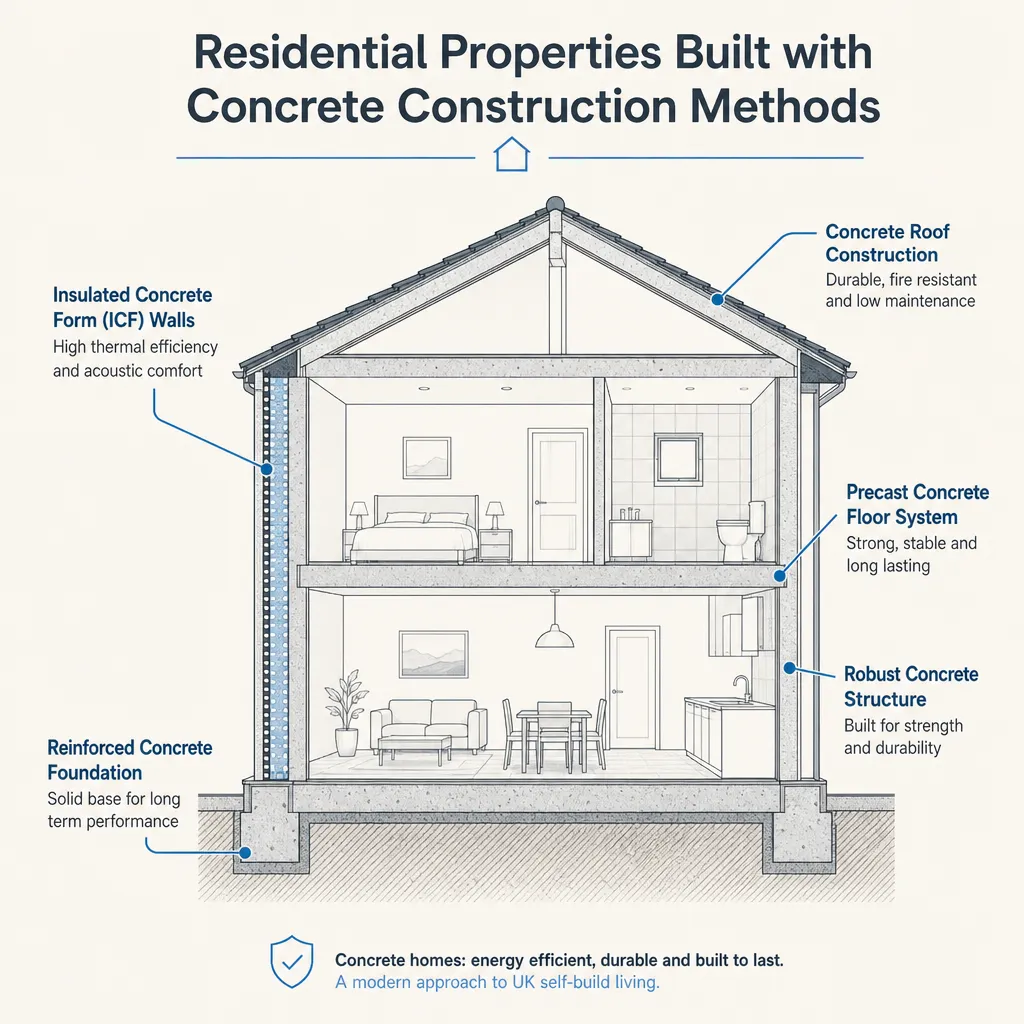
Residential Properties Built with Concrete Construction Methods
UK homes are built using several concrete methods: in-situ cast concrete, precast panel systems, insulating concrete formwork (ICF), and older non-traditional types such as Wimpey No-Fines and Laing Easiform.
 Planning & Pre-Build
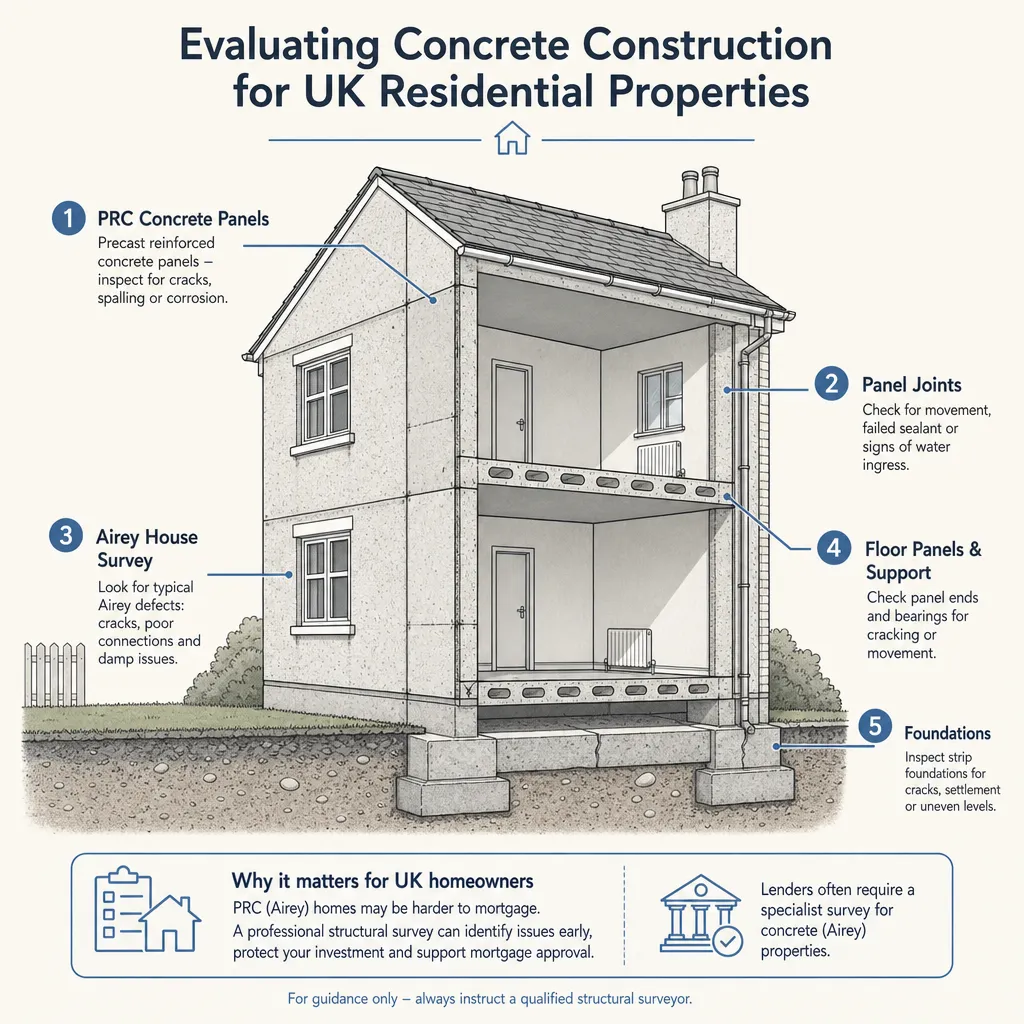
Evaluating Concrete Construction for UK Residential Properties
Concrete construction in UK homes covers post-war non-traditional housing — such as Airey and Wimpey No-Fines properties — typically classified as non-standard by mortgage lenders, and modern systems including ICF and block cavity wall, which are generally standard.
 Planning & Pre-Build
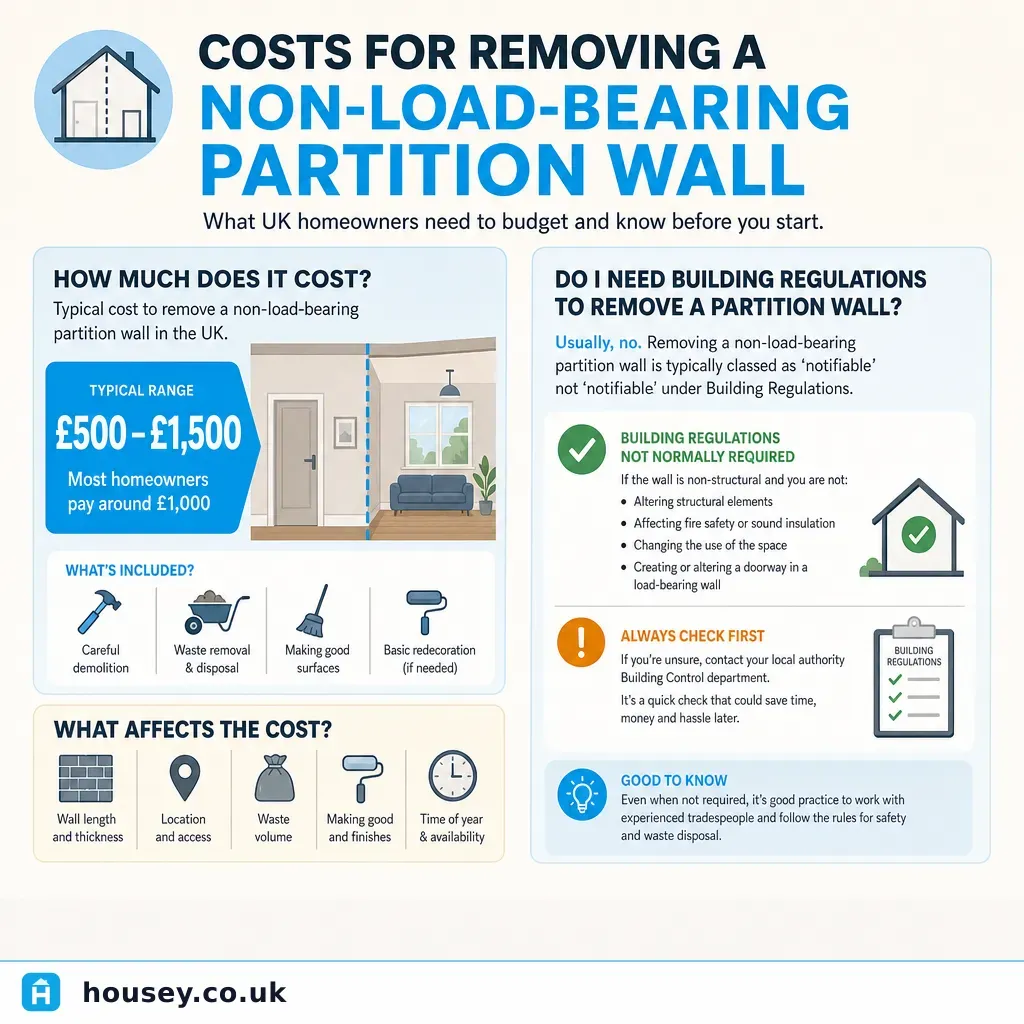
Costs for removing a non-load-bearing partition wall
Removing a non-load-bearing partition wall in a UK home typically costs £300–£1,500 in labour, plus £200–£600 or more for replastering and making good.
 Planning & Pre-Build
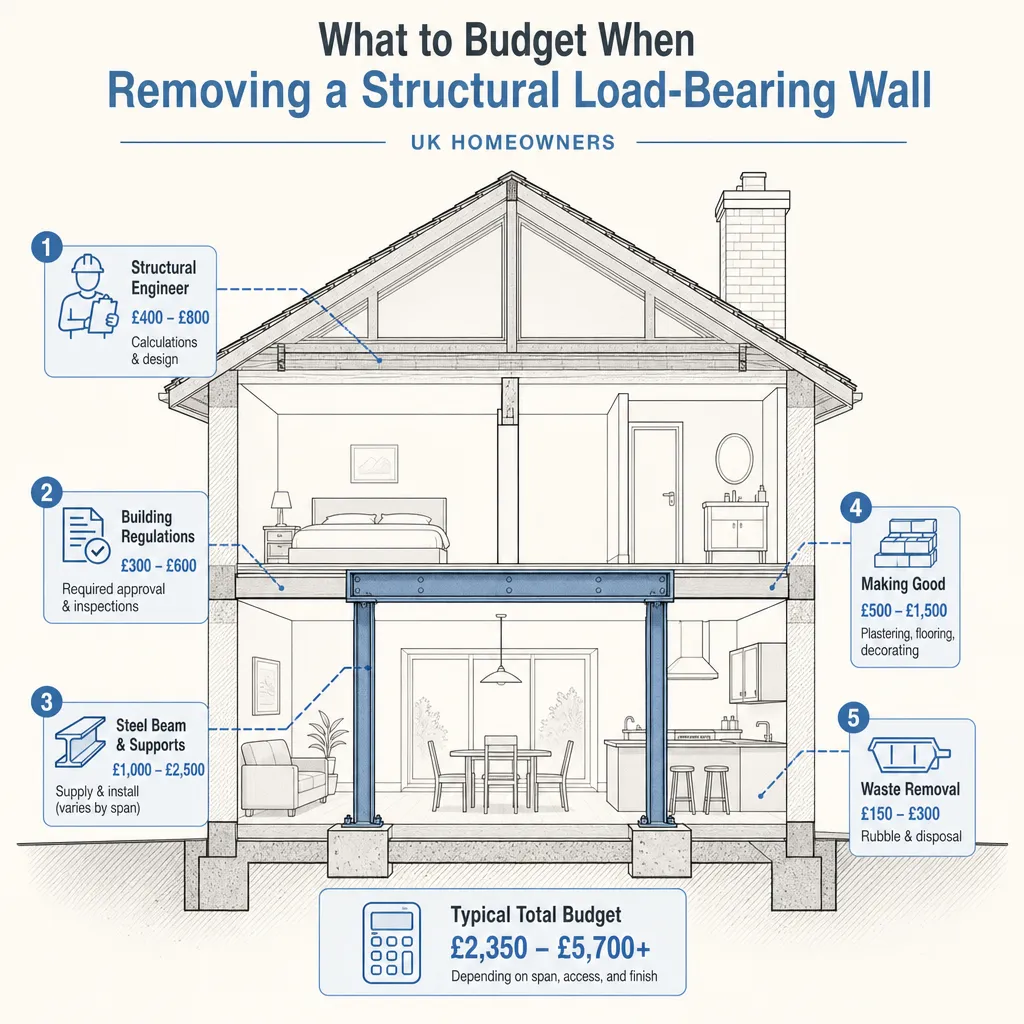
What to Budget When Removing a Structural Load-Bearing Wall
Removing a load-bearing wall in a typical UK home costs £2,500–£8,000 or more in total, covering a structural engineer's calculations, Building Regulations approval, the steel beam, builder's labour, and replastering.
 Planning & Pre-Build
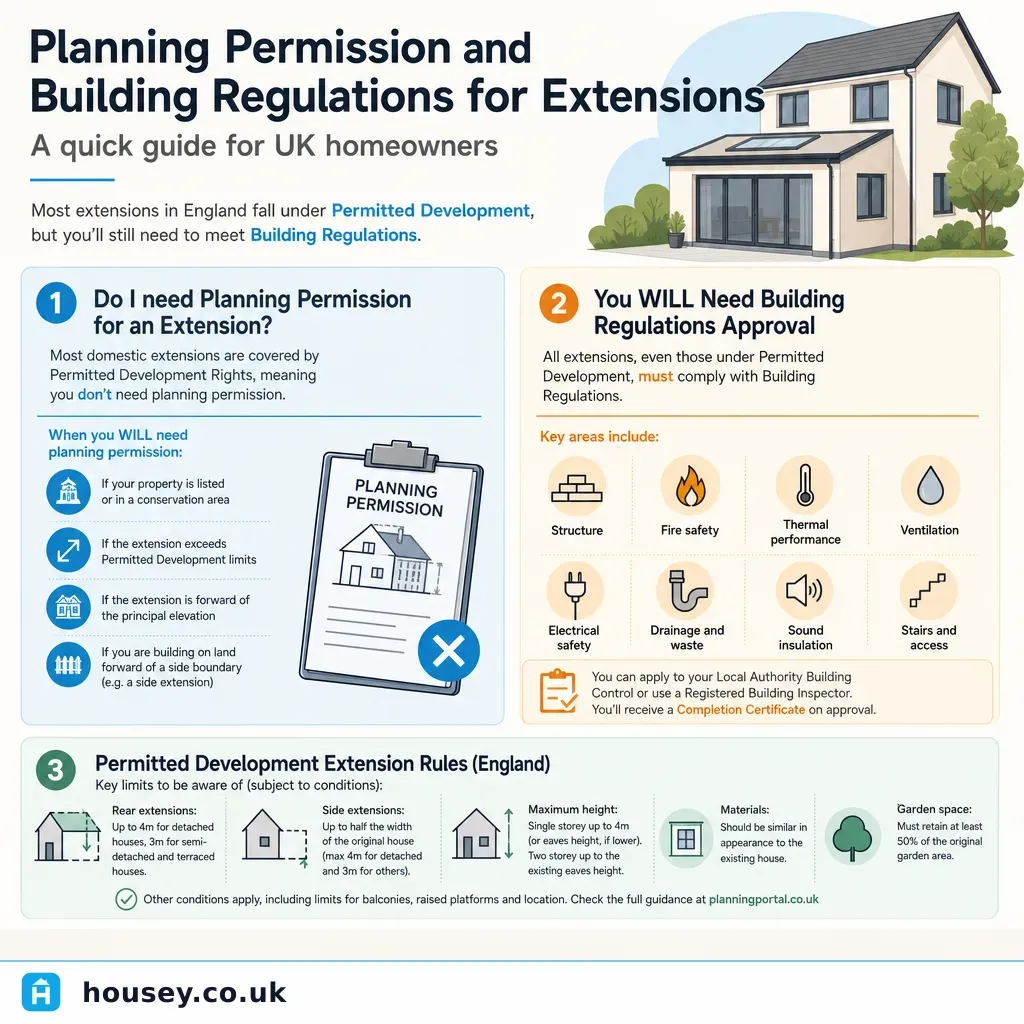
Planning Permission and Building Regulations for Extensions
UK home extensions usually require both planning permission and Building Regulations approval, though most smaller rear extensions qualify as Permitted Development under the GPDO 2015 and need no planning application.