Green Roofs: Environmental Benefits and Installation Considerations
By Housey · Last reviewed 18th of May 2026
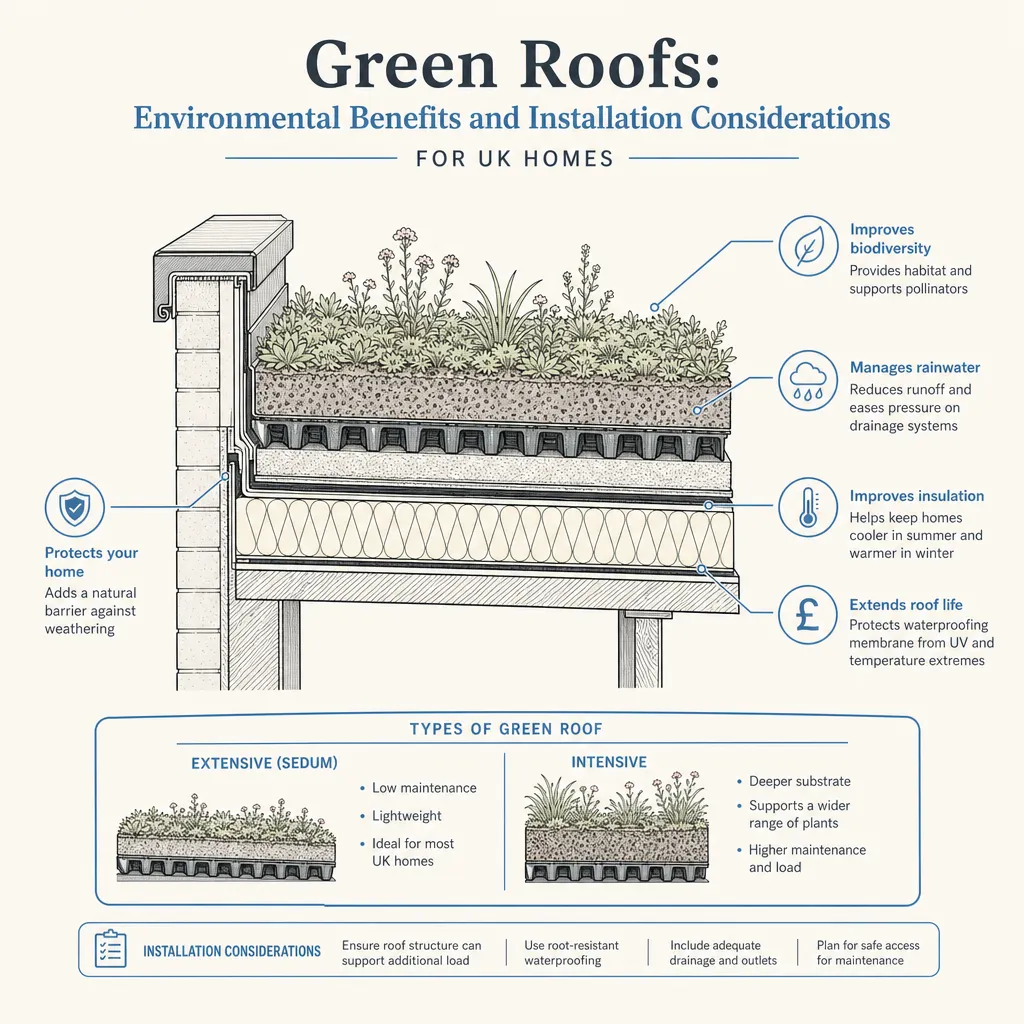
Green Roofs: Environmental Benefits and Installation Considerations
Green roofs — also called living roofs — are appearing on more UK extensions, garages, and new-build developments as planning policy increasingly requires biodiversity net gain and sustainable drainage. Whether you are motivated by ecology, planning conditions, or stormwater management, the decision to install a green roof involves structural, horticultural, and waterproofing considerations that go well beyond selecting a sedum mat.
Key points
- The Environment Act 2021 introduced mandatory biodiversity net gain (BNG) of 10% for most new developments in England, effective February 2024; green roofs can contribute to BNG calculations and score well in biodiversity metric assessments.
- Extensive green roofs (sedum, wildflower, or moss-based) typically add 70–150 kg/m² of dead load when saturated; intensive systems (deeper substrate, shrubs, trees) can add 200–500 kg/m² or more.
- BS 8579:2020 (Guide to the design of green roofs) is the primary UK technical standard governing green roof specification, including waterproofing requirements, drainage, and root barrier design.
- London Plan Policy G5 requires major developments to meet a minimum Urban Greening Factor (UGF) score; green roofs receive among the highest per-m² credits in the scoring matrix.
- Indicative installed costs in the UK: extensive sedum systems £80–£150 per m²; intensive roof gardens £150–£400+ per m², depending on substrate depth, irrigation, and plant specification.
What is a green roof and what types are available?
A green roof is a roofing system comprising a waterproof membrane, a root-resistant layer, a drainage layer, a filter membrane, a growing substrate, and vegetation. Three main categories are used in UK residential and commercial projects:
Extensive green roofs Substrate depth of 60–150 mm, planted with low-maintenance, drought-tolerant species: sedum, mosses, wildflowers, and grasses. Lightweight (60–150 kg/m² saturated). Once established, they require minimal irrigation and maintenance. Not designed for regular human access.
Semi-intensive green roofs Substrate depth of 120–200 mm with mixed planting including grasses, herbs, and small shrubs. Moderate weight. Occasionally accessible. A useful middle ground when the structure can support more than an extensive system but not the full load of an intensive roof garden.
Intensive green roofs Substrate depth of 150 mm to 1 m or more, supporting shrubs, small trees, lawns, and herbaceous beds. Much heavier (200–500 kg/m²+). Require irrigation systems and regular maintenance. Suited to roof gardens and accessible terraces on buildings with structural concrete decks.
What environmental benefits do green roofs deliver?
Stormwater management A 100 mm extensive sedum roof retains approximately 50–70% of annual rainfall in UK conditions, releasing water slowly and reducing peak runoff into combined sewer systems. CIRIA's SuDS Manual (C753) recognises green roofs as a sustainable drainage (SuDS) component eligible for credits in drainage strategy calculations.
Urban heat island reduction Vegetation and substrate absorb solar radiation rather than re-radiating it as heat. The Greater London Authority includes green roofs in its Heat Resilience and Sustainable Cooling Action Plan as part of the strategy for managing rising urban temperatures.
Biodiversity Sedum and wildflower roofs can support pollinators, invertebrates, and nesting birds — particularly valuable in urban areas where ground-level habitat is scarce. Green roofs designed to BS 8579 with varied substrate depths and native species mixes score well in biodiversity metric assessments used under mandatory BNG.
Building thermal performance A green roof adds thermal mass and a modest degree of additional insulation. It should not be relied upon alone to meet Part L U-value targets of 0.18 W/m²K, but it supplements the roof build-up and can reduce cooling demand in summer.
Membrane longevity Substrate and growing medium shield the waterproof membrane from UV radiation and thermal cycling — the primary causes of membrane degradation. Evidence from Germany, where green roofs are widespread, suggests membrane life can approximately double when protected by a growing medium.
Structural requirements: what your roof must support
A structural engineer should confirm load capacity before any green roof system is specified. The following table gives indicative saturated loads by system type:
Green roof type | Typical saturated load | Structural implications |
|---|---|---|
Extensive (sedum or wildflower) | 70–150 kg/m² | Many concrete flat roofs and modern timber-framed extensions can accommodate this, subject to structural assessment |
Semi-intensive | 120–250 kg/m² | Usually requires a concrete or steel deck; timber structures need careful assessment |
Intensive (roof garden) | 200–500 kg/m²+ | Typically requires a structural concrete deck designed specifically for the load; unsuitable for most domestic timber structures without major structural work |
Loads are approximate and vary by substrate saturation and plant species. A structural engineer's assessment is required for all system types.
Pre-installation checklist for homeowners
Before committing to a green roof, confirm that the following have been addressed:
Which green roof system suits your project?
- Choose extensive (sedum) for low maintenance, biodiversity credit, and stormwater attenuation on a flat extension or garage roof with limited structural capacity.
- Choose wildflower extensive to maximise pollinator value and ecological diversity — particularly relevant when the roof forms part of a mandatory BNG calculation.
- Choose semi-intensive if the structure can support more load and you want greater visual interest with shrubs and grasses, without committing to the full weight and maintenance of an intensive system.
- Choose intensive if you want a usable roof garden or terrace — budget for structural engineering, irrigation, and ongoing horticultural maintenance from the outset.
- Consult an ecologist if the green roof forms part of a BNG plan or planning condition, to ensure the correct substrate profile and plant mix are specified.
- Ask a structural engineer before any installation where the roof structure is timber, of unknown specification, or more than 30 years old.
When to get professional help
A structural engineer is essential before any green roof installation — this is not optional. An ecologist should be involved when the roof forms part of a BNG plan, a planning condition requires a specific habitat type, or the site has existing wildlife interest to complement.
Seek specialist input promptly if:
- An installer quotes for a green roof without first confirming structural load capacity.
- The existing roof shows any sign of deflection, membrane failure, or poor drainage before the green roof is considered.
- Planning conditions specify a particular habitat outcome, substrate profile, or BNG metric level.
How Housey can help
Housey connects you with experienced roofers with green roof experience who can specify and install appropriate waterproofing systems, ecological survey specialists who can advise on plant mixes and substrate profiles for biodiversity net gain, and environmental survey professionals who can assess drainage and SuDS requirements for your project.
Frequently asked questions
Do green roofs need planning permission in the UK?
An extensive green roof on a flat-roofed extension usually falls within permitted development rights if the extension itself is permitted. However, works that alter roof height or affect a listed building or conservation area require planning permission. Always check with your local planning authority before starting work — rules vary by property type and location.
How much does a green roof cost in the UK?
Indicative UK costs, last reviewed 2026-05-18: extensive sedum systems typically cost £80–£150 per m² installed; intensive roof gardens £150–£400+ per m². Cost drivers include access difficulty, substrate depth, irrigation provision, and plant specification. Obtain at least three quotes from contractors with demonstrable green roof experience and references.
Can any flat roof support a green roof?
Not without a structural assessment. Even a lightweight extensive system adds 70–150 kg/m² when saturated, which can exceed the capacity of older or lightly-framed timber roofs. A structural engineer must confirm the roof structure can bear the additional dead load before any green roof installation proceeds.
How much maintenance does a green roof need?
Extensive sedum roofs need inspecting twice a year — spring and autumn — to remove invasive weeds, clear drainage outlets, and check the membrane around upstands and penetrations. Intensive systems require regular irrigation, fertilising, and horticultural maintenance comparable to a conventional garden. Budget for ongoing maintenance costs when choosing a system type.
Sources and further reading
- BS 8579:2020 Guide to the design of green roofs — BSI
- Environment Act 2021: biodiversity net gain provisions — legislation.gov.uk
- London Plan Policy G5: Urban greening — Greater London Authority
- CIRIA SuDS Manual C753 — CIRIA
- Green Roof Organisation: guidance and resources — GRO
- Energy Saving Trust: roof insulation and energy guidance — Energy Saving Trust
Useful next reads
 Energy & Retrofit
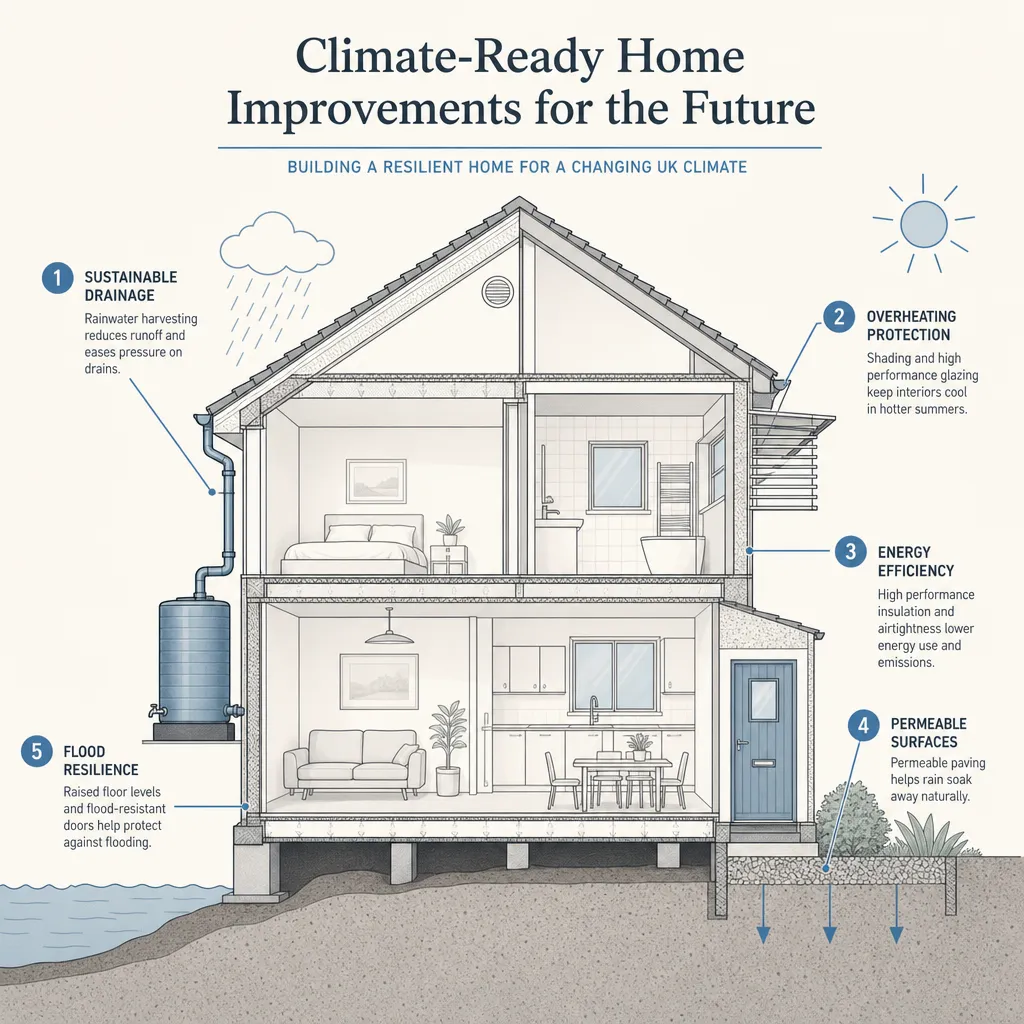
Climate-Ready Home Improvements for the Future
Climate-ready home improvements tackle four main risks for UK properties: overheating, increased rainfall and flooding, storm damage, and energy cost volatility.
 Energy & Retrofit
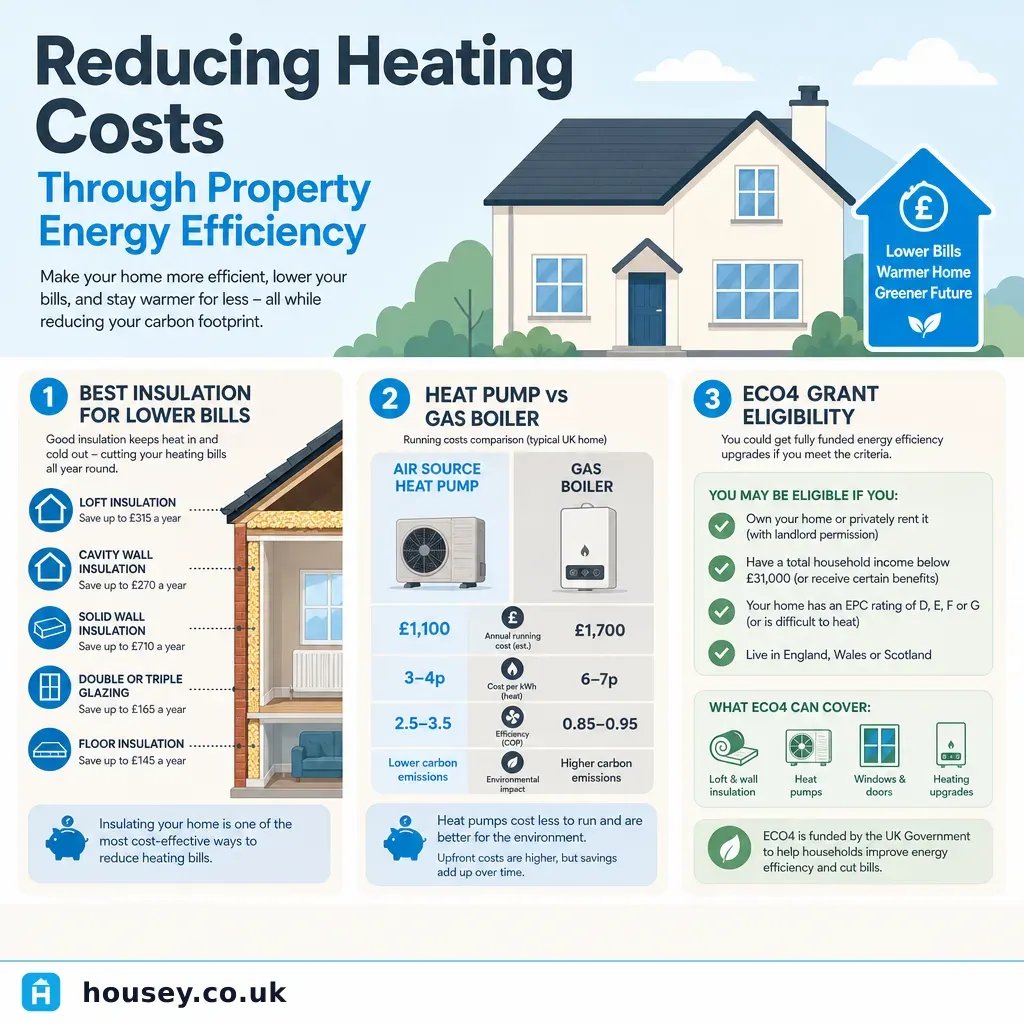
Reducing Heating Costs Through Property Energy Efficiency
Reducing heating costs starts with identifying where heat is lost — typically walls (30–35%), roof (20–25%), and windows.
 Energy & Retrofit
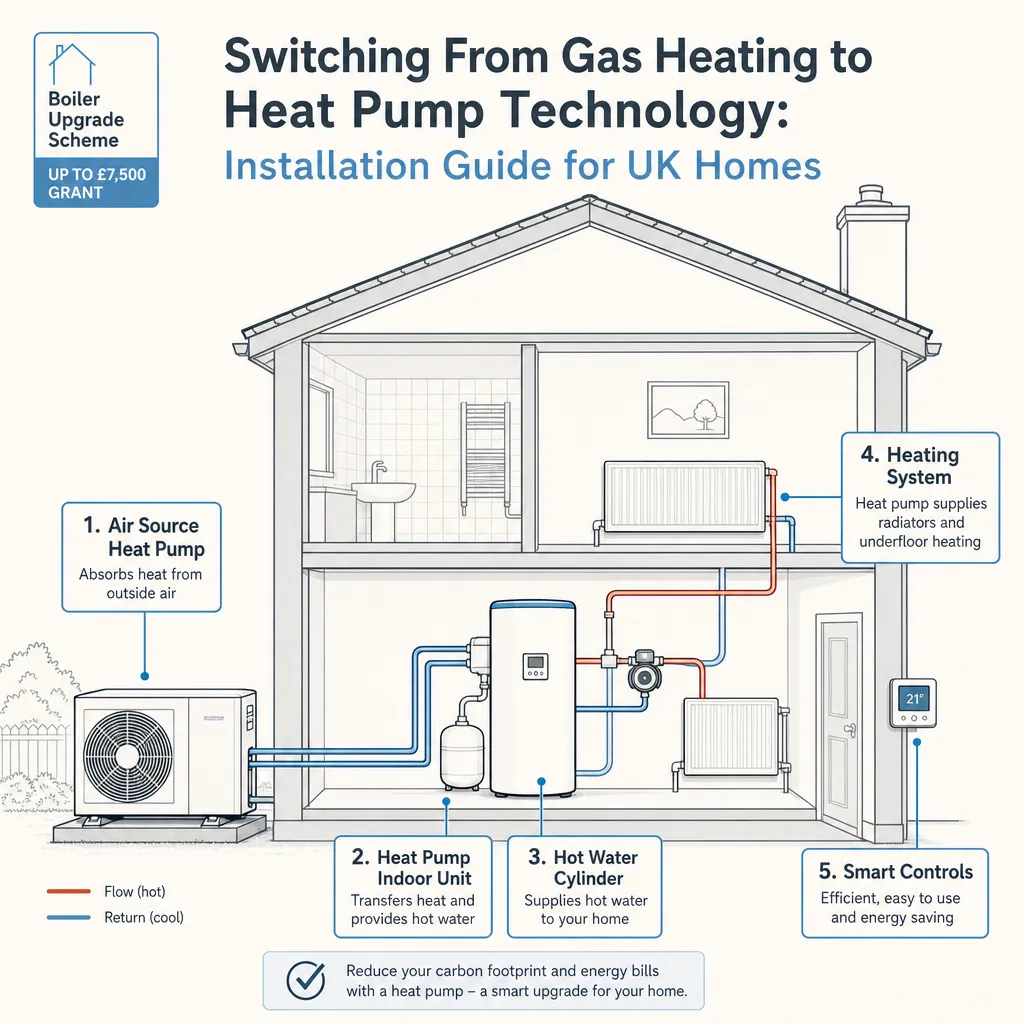
Switching From Gas Heating to Heat Pump Technology: Installation Guide
Switching from gas to a heat pump requires a heat loss calculation, correctly sized equipment, and often radiator upgrades before installation.
 Energy & Retrofit
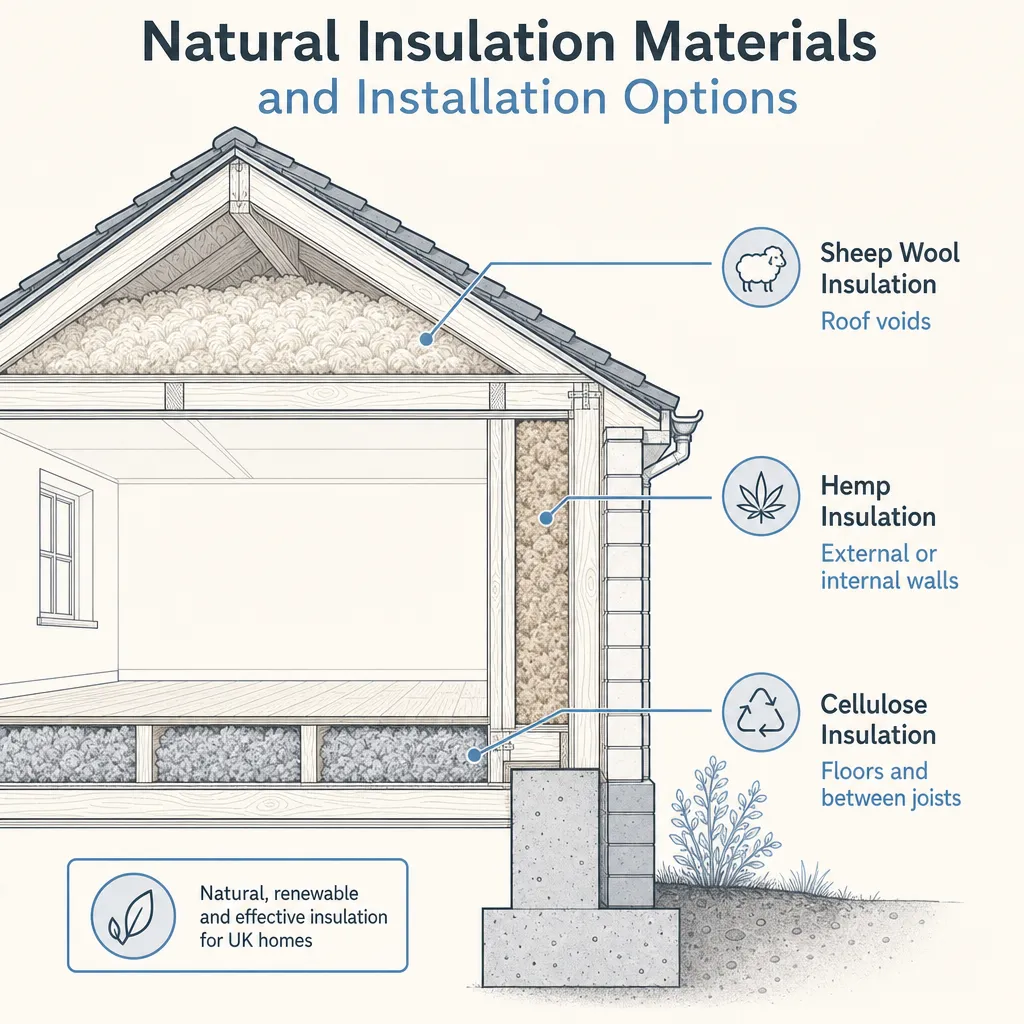
Natural Insulation Materials and Installation Options
Natural insulation materials such as sheep wool, hemp, cellulose, wood fibre, and cork can match mineral wool for thermal performance and offer additional benefits including moisture buffering and lower embodied carbon.
 Energy & Retrofit
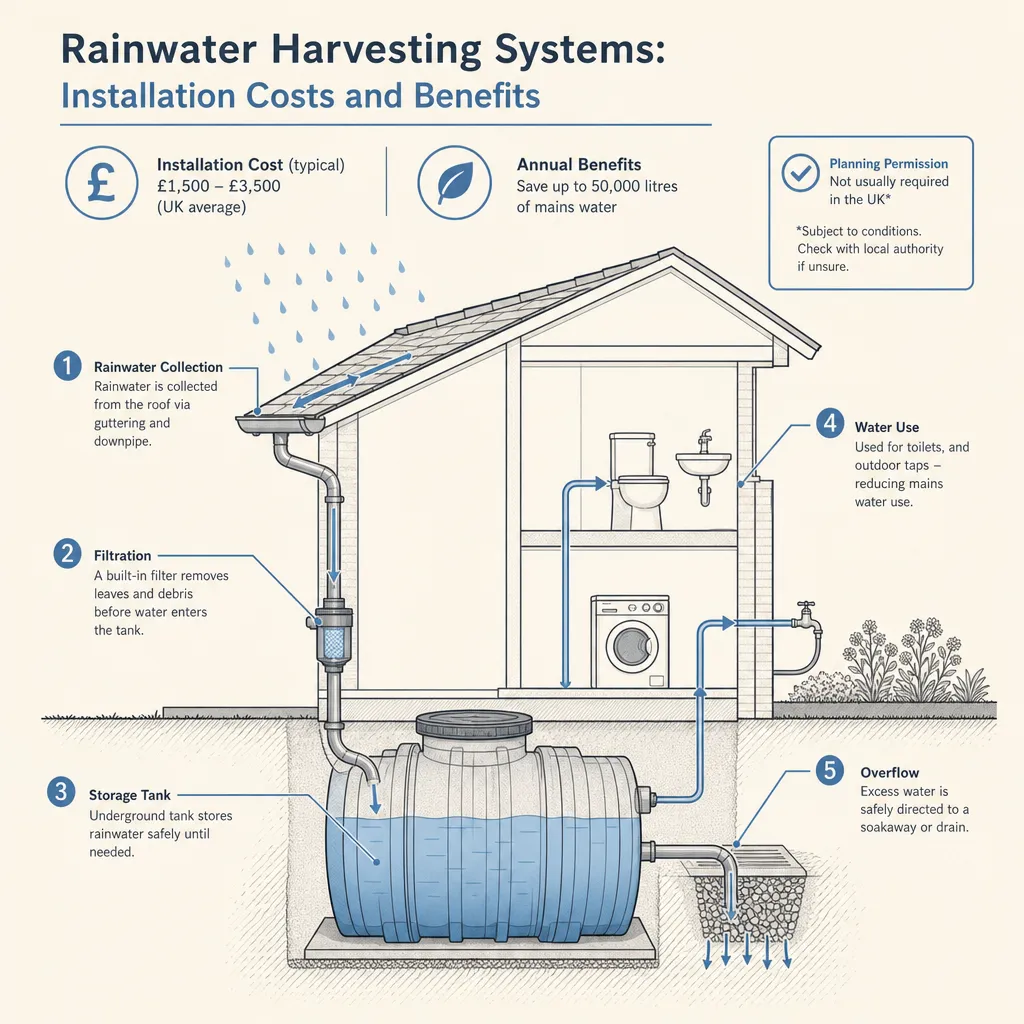
Rainwater Harvesting Systems: Installation Costs and Benefits
A domestic rainwater harvesting system costs £200–£600 for a simple above-ground butt or £2,500–£7,000 fully installed for an underground tank.