Climbing Plant and Ivy Removal Services
By Housey · Last reviewed 7th of May 2026
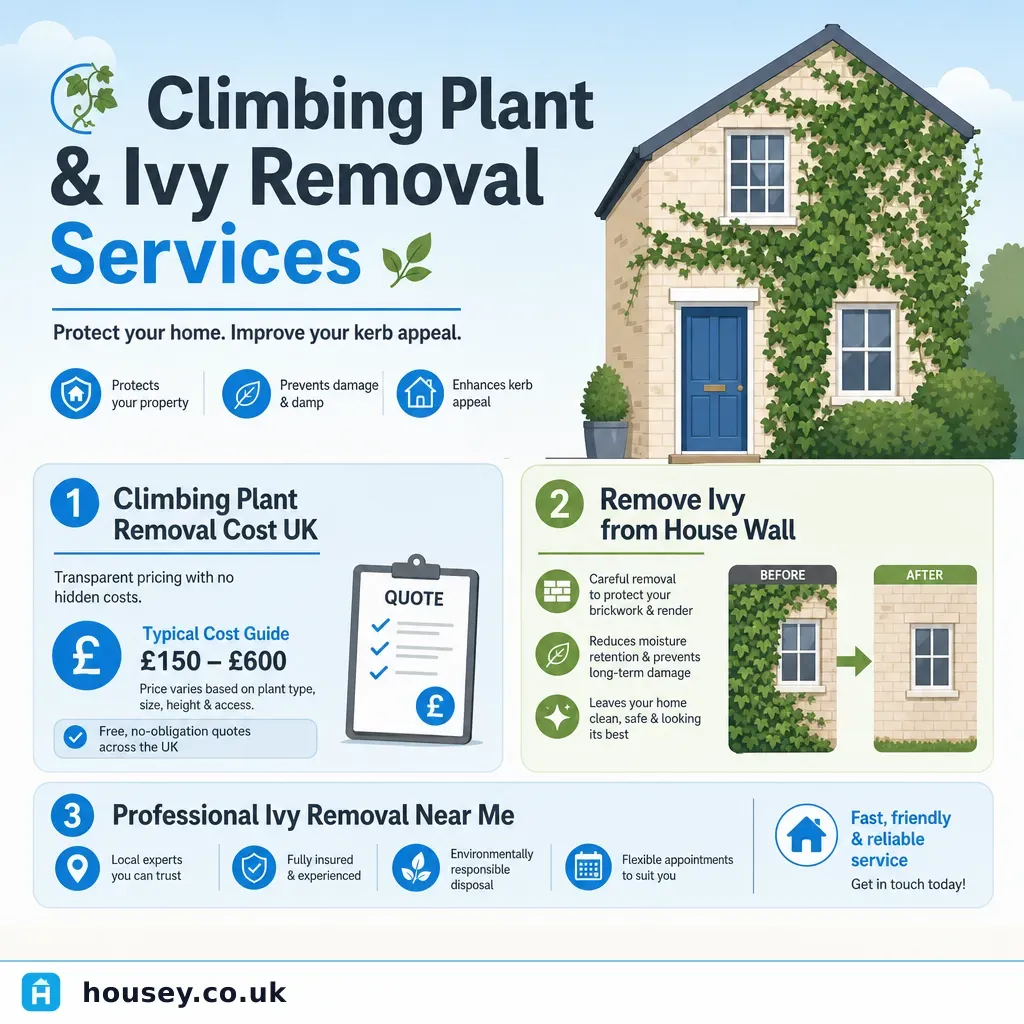
Climbing Plant and Ivy Removal Services
Ivy and other vigorous climbing plants are a familiar sight on UK homes — particularly Victorian terraces, 1930s semis, and older stone cottages — and homeowners often reassess them when selling, remortgaging, or noticing visible damage to render or pointing. Whether you want a clean brick facade before listing the property or need to clear decades of growth before repointing, understanding what professional removal involves — and when to call a specialist — will help you plan time and budget realistically.
Key points
- English ivy (Hedera helix) does not inherently damage sound masonry, but the Royal Horticultural Society advises it can exploit and worsen existing mortar defects, cracks, and damp ingress points.
- Japanese knotweed, Himalayan balsam, and giant hogweed are listed under Schedule 9 of the Wildlife and Countryside Act 1981; allowing them to spread to a neighbouring property or watercourse is a criminal offence.
- Work at height above 2 metres — including clearing ivy from upper storeys — falls under the Work at Height Regulations 2005, which means professional access equipment is required for trade work on your property.
- Removing established ivy from a two-storey semi-detached typically takes one to three days depending on coverage and density, followed by dead-material clearance and disposal.
- After removal, brickwork often looks worse temporarily as hidden staining, rootlet residue, and masonry erosion become visible for the first time.
Which climbing plants cause problems on UK homes?
Not all climbing plants carry the same risk. Self-clinging climbers — those that attach via rootlets or adhesive pads directly into masonry — are generally more likely to cause damage than species trained onto trellis or wires.
Plant | Attachment type | Risk to masonry | Key notes |
|---|---|---|---|
English ivy (Hedera helix) | Rootlets into mortar and render | Low on sound walls; higher on soft lime mortar or cracked render | Common on pre-1919 properties; RHS notes it can insulate walls and support wildlife |
Virginia creeper | Adhesive pads | Moderate — pads leave residue and can pull at render | Vivid autumn colour; pad residue remains after removal |
Boston ivy (Parthenocissus tricuspidata) | Adhesive pads | Moderate — similar to Virginia creeper | Often confused with Virginia creeper |
Wisteria | Twining stems | Low to moderate if managed; can force into joints if neglected | Requires annual pruning to prevent damage accumulating |
Climbing hydrangea | Aerial rootlets | Similar to ivy; becomes very heavy when mature | Substantial arisings to clear on older or larger properties |
Japanese knotweed | Underground rhizomes | Severe — can penetrate foundations, floors, and walls | Schedule 9 invasive species; specialist removal required |
How much does professional climbing plant removal cost?
Cost depends on coverage area, plant density, access requirements, disposal volume, and whether the work is combined with masonry or clearance work.
Indicative UK costs, last reviewed 2026-05-07. Figures are approximate — always request itemised quotes as prices vary considerably by location and project.
- Small wall section or single-storey coverage (up to 20 m²): £150–£350
- Two-storey semi-detached facade (approx. 40–80 m²): £300–£700
- Large Victorian terrace or detached property with heavy coverage: £600–£1,500+
- Japanese knotweed treatment (chemical, multi-year programme): £1,000–£3,500+ depending on extent; providers should hold TrustMark accreditation or an equivalent recognised standard
These figures cover removal and disposal. Masonry repairs, repointing, render patching, or scaffold hire — if required separately — will add to the total.
How do professionals remove ivy and climbing plants?
A qualified landscaper or tree surgeon will typically follow this process:
- Cut stems at the base to kill the plant and allow foliage to dry out, reducing weight and making removal cleaner. This step is often carried out two to four weeks before the main clearance visit.
- Strip dead material from the wall section by section using hand tools, taking care not to dislodge loose or cracked render.
- Remove rootlets and adhesive pads where possible — some residue is normal on older masonry and may require careful brushing or specialist cleaning products.
- Clear and dispose of arisings — vigorous climbers generate substantial green waste, and responsible disposal (green-waste transfer or composting facility) is typically included in professional quotes.
- Inspect and advise on masonry condition after removal, noting areas that may need repointing or repair before any cosmetic work.
Red flags that suggest a more serious problem
Stop and consult a professional before proceeding if you notice any of the following:
- Crack patterns behind or around the climber — stepped cracks through mortar joints, diagonal cracks at window or door corners, or wide horizontal cracks may indicate structural movement rather than simple surface weathering.
- Soft or missing mortar — ivy rootlets can penetrate deeply into soft lime mortar; removal may accelerate spalling and expose significant voids that need repointing before weather causes further damage.
- Damp internal walls adjacent to heavily covered external facades — the vegetation may be masking water ingress rather than simply concealing the brickwork.
- Suspected Japanese knotweed — look for bamboo-like cane stems, heart-shaped leaves with a flat base, and vigorous spread near boundaries or garden beds; do not disturb or attempt removal without specialist advice.
- Active bird nests — removal during nesting season (broadly February to August in the UK) can constitute an offence under the Wildlife and Countryside Act 1981; confirm nesting status with your contractor before starting work.
What to ask a climbing plant removal contractor
Before accepting a quote, ask:
- Are you insured for public liability, and what is the cover level?
- Will you cut stems first and return for removal, or tackle it in a single visit?
- How do you dispose of arisings, and is disposal included in this quote?
- Do you have access equipment for upper-storey work, and is scaffold or MEWP hire included in the price?
- Will you flag any masonry or damp concerns identified during or after removal?
- Is there any possibility of Japanese knotweed or another Schedule 9 invasive species on the site?
- What is your method for removing rootlets or adhesive pads from brick or render without causing further damage?
When to get professional help
Ivy removal is manageable as DIY for ground-level work on a small area, but professional help is advisable whenever:
- The plant covers more than one storey or an area larger than approximately 15–20 m².
- You suspect masonry damage, significant cracking, or damp behind the vegetation.
- There is any possibility of Japanese knotweed or another Schedule 9 invasive species.
- Access requires working above 2 metres — homeowners working on their own property should carefully assess the risk and consider hiring scaffold regardless of who does the work.
- You are selling or remortgaging and a valuer or surveyor has flagged vegetation in their report.
For larger clearance jobs that include tree or hedge work alongside plant removal, a specialist tree surgeon is often the most appropriate contractor to lead the project.
How Housey can help
Housey connects you with vetted local landscapers and tree surgeons who can assess coverage, provide itemised quotes, and advise on any masonry issues before or after removal. Request quotes from multiple contractors in your area and compare responses before committing.
Frequently asked questions
Does ivy actually damage house walls?
English ivy does not damage structurally sound masonry. The RHS notes that on solid brick or stone with intact mortar, ivy can even help insulate a wall. However, where mortar is soft or cracked — common in pre-1919 UK properties built with lime mortar — ivy rootlets can penetrate and worsen existing defects. Post-removal masonry inspection is strongly advisable on older homes.
Do I need planning permission to remove climbing plants from my house?
For most UK homes, no planning permission is required to remove climbing plants. If your property is listed or within a conservation area, check with your local planning authority before starting work — some external alterations that affect the appearance of a facade may require consent. Your council's planning department can confirm requirements free of charge.
Can I remove ivy myself?
Ground-level ivy on a small area can reasonably be tackled as DIY — cut stems at the base, wait several weeks for die-back, then strip dead material. For upper-storey coverage, large-scale growth, suspected masonry damage, or any possibility of an invasive species, a professional contractor is the safer and more efficient choice.
How long does climbing plant removal take?
A typical two-storey semi-detached with moderate ivy coverage takes one to three days including disposal. Dense or multi-layer growth on a large house may take longer. If stems are cut as a separate first visit to allow die-back, allow several additional weeks before the main clearance.
What happens to the wall after ivy removal?
Walls often look worse before they improve. Staining, discolouration, residual rootlet stumps, and minor surface erosion all become visible once the vegetation is gone — this is normal. A repointing inspection is advisable on older properties, and a masonry cleaning service may help if staining is significant.
Sources and further reading
- Climbers and wall shrubs — Royal Horticultural Society
- Prevent the spread of invasive non-native plants — GOV.UK
- Wildlife and Countryside Act 1981 — Schedule 9 — legislation.gov.uk
- Work at Height Regulations 2005 — Health and Safety Executive
- Japanese knotweed and the law — GOV.UK
Useful next reads
 Improvement & Build
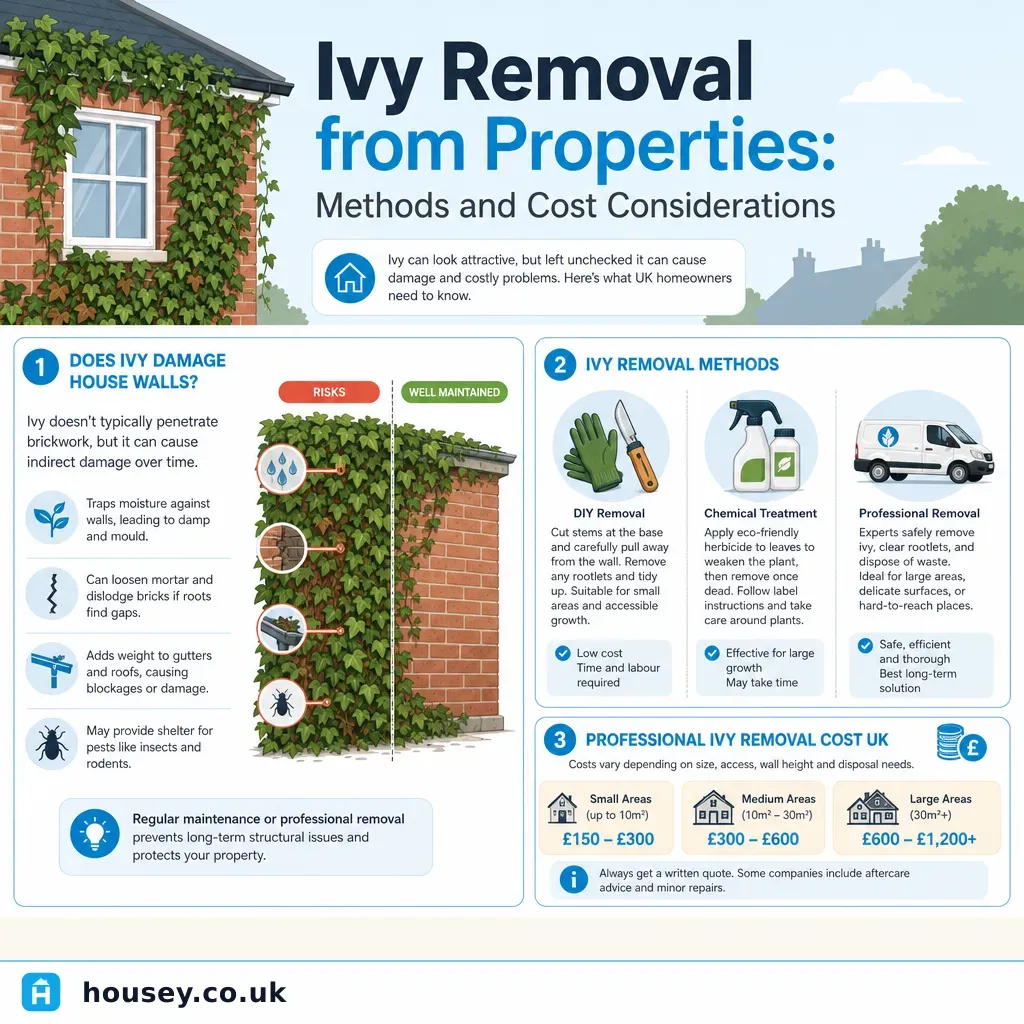
Ivy Removal from Properties: Methods and Cost Considerations
Remove ivy by cutting the main stems at the base and waiting two to four weeks before pulling the dead growth from the wall — this reduces damage to mortar.
 Improvement & Build
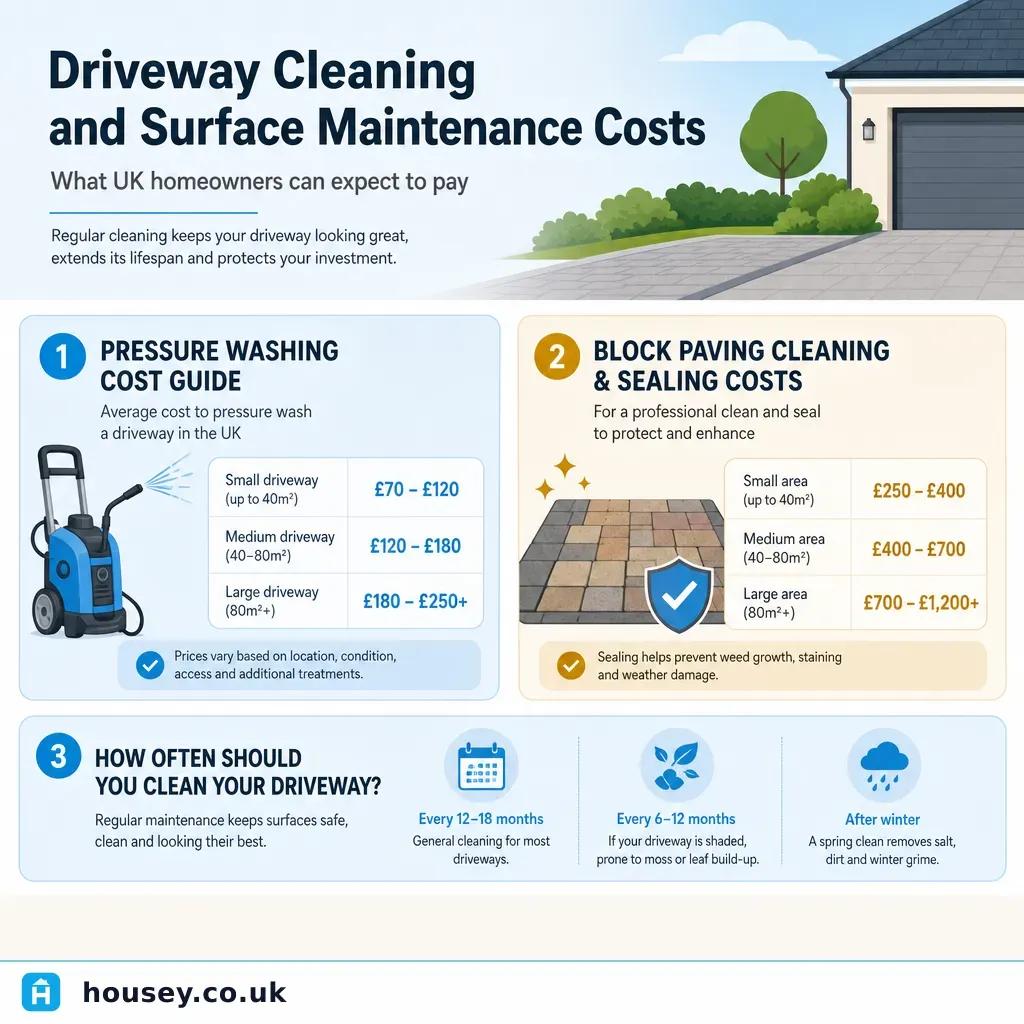
Driveway Cleaning and Surface Maintenance Costs
Professional driveway cleaning in the UK typically costs £100–£300 for pressure washing an average single driveway, rising to £300–£600 if block paving sealing and re-jointing are included.
 Improvement & Build
Window cleaning costs: what to budget
Window cleaning in the UK typically costs £5–£15 per visit for a small terraced house and £15–£40 or more for a larger detached property, depending on the number of windows, access difficulty, and frequency.
 Improvement & Build
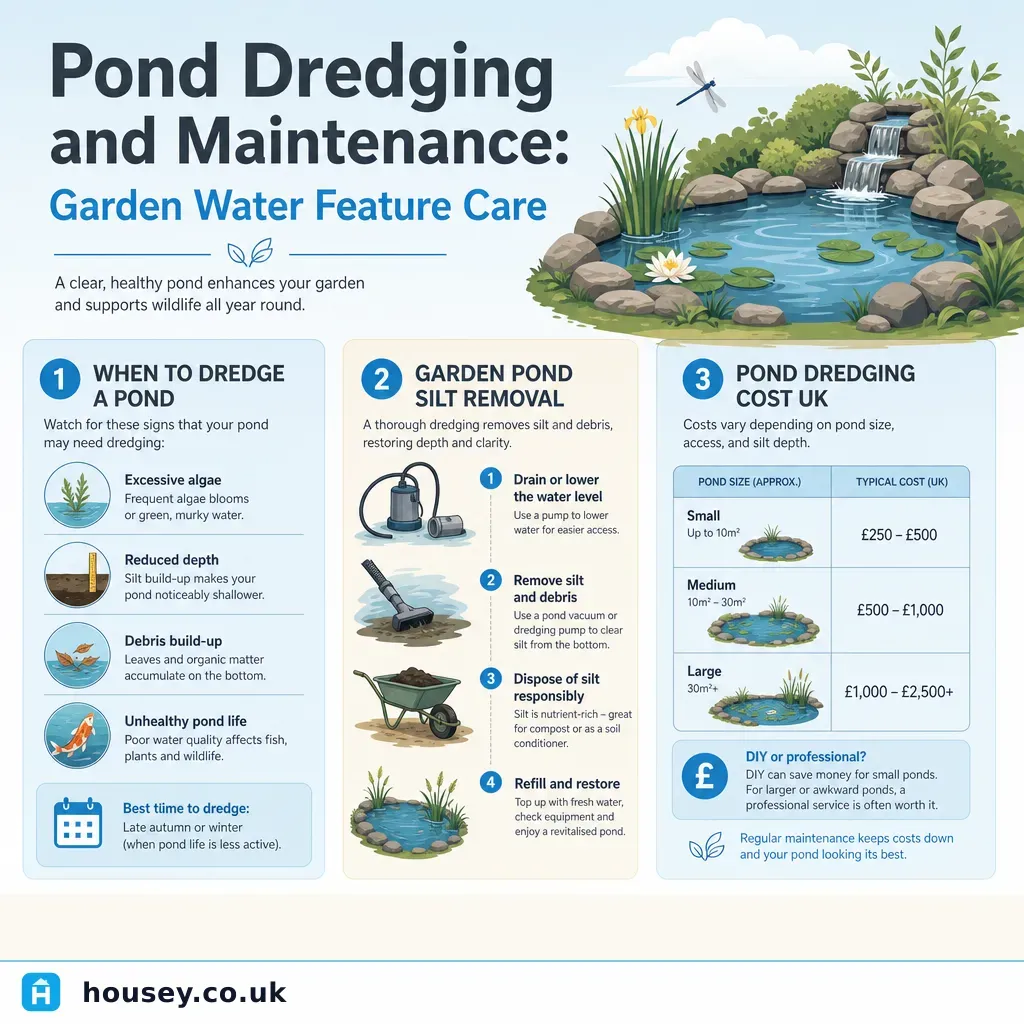
Pond Dredging and Maintenance: Garden Water Feature Care
Pond dredging involves removing accumulated silt, sediment, and decaying vegetation to restore water depth and quality.
 Improvement & Build
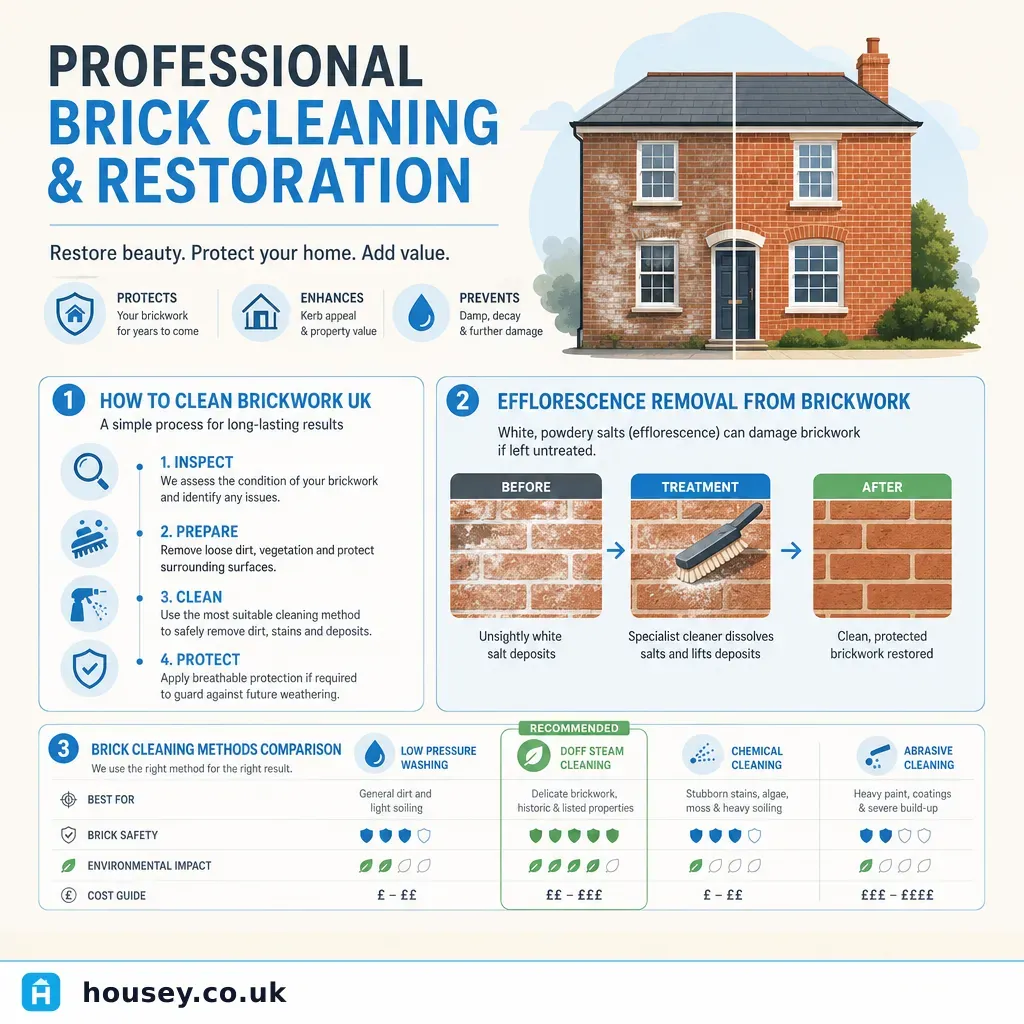
Professional Brick Cleaning and Restoration
Professional brick cleaning removes staining, efflorescence, pollution deposits, and biological growth from masonry without damaging mortar joints or the brick face.