Colonial-Style Properties: Architectural Characteristics and History
By Housey · Last reviewed 11th of May 2026
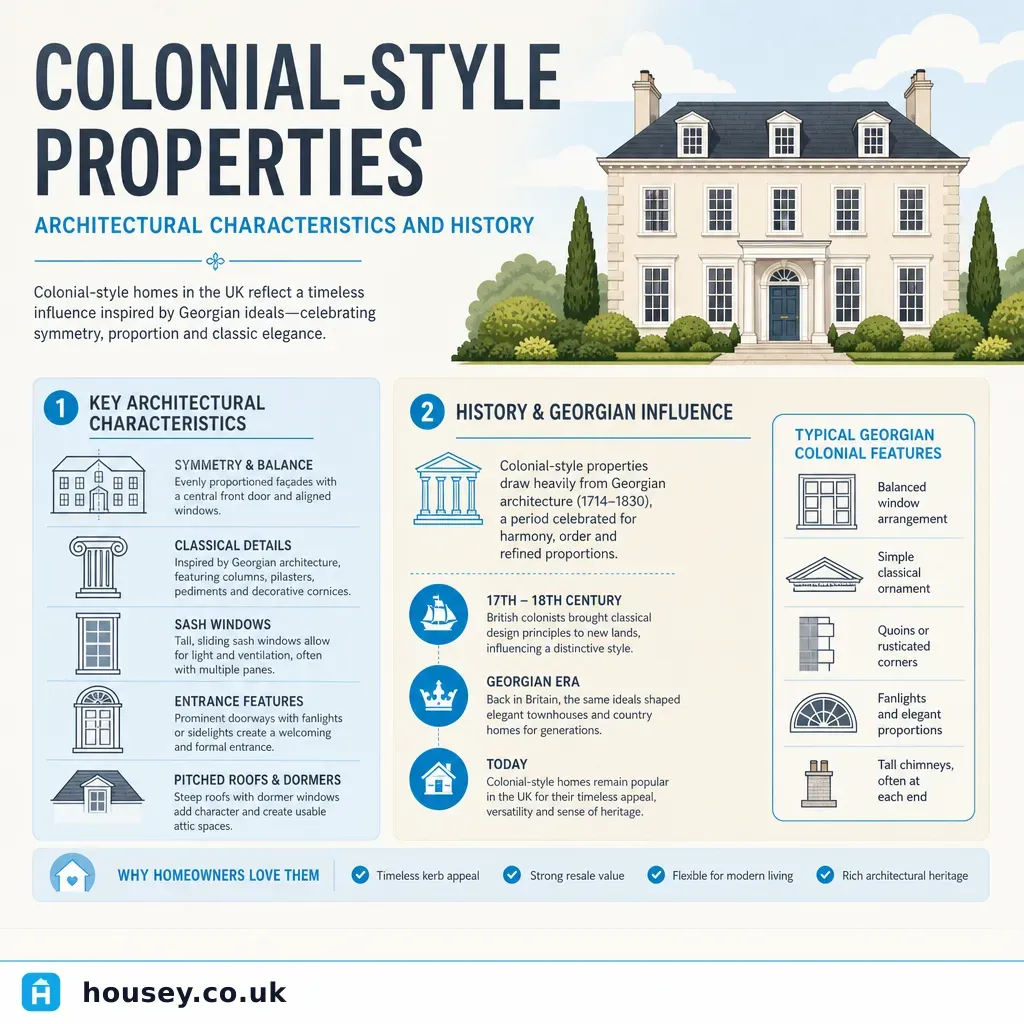
Colonial-Style Properties: Architectural Characteristics and History
Colonial-era architecture and its later revival styles have left a distinct imprint on British property, from Georgian townhouses to twentieth-century adaptations inspired by American and Caribbean precedents. Whether you are researching a property purchase, planning a sympathetic extension, or simply curious about the house you own, understanding what colonial style means in a UK context helps inform decisions around planning, materials, and conservation status.
Key points
- Colonial style in UK property typically describes Georgian-era buildings (c.1714–1830) reflecting formal symmetry and classical proportions, or later Colonial Revival homes of the 1920s–1950s that borrowed from American East Coast domestic architecture.
- In conservation areas, external alterations to period properties — including window replacements, extensions, and re-rendering — may require planning permission even where permitted development rights would ordinarily apply.
- Listed buildings (Grade I, Grade II*, or Grade II) require Listed Building Consent for virtually any material alteration, inside or outside; unauthorised works are a criminal offence under the Planning (Listed Buildings and Conservation Areas) Act 1990.
- A RICS Level 3 Building Survey is generally recommended for pre-1900 properties, including most genuine Georgian and colonial-era homes, particularly where solid-wall or lime-mortar construction is present.
- PAS 2035 guidance applies when retrofitting insulation to older solid-wall homes; inappropriate insulation can cause moisture damage to historic fabric, so a qualified retrofit assessor should be involved before works begin.
What does colonial style mean in UK property?
In UK property listings and architectural history, the term is used in at least three overlapping ways.
Georgian Colonial: Buildings of the Georgian period (c.1714–1830), whose formal symmetry and classical detailing were exported across the British Empire. These are among the most commonly listed domestic buildings in England and Wales.
Colonial Revival: A twentieth-century movement — particularly popular in the 1920s–1950s — that consciously borrowed proportions and details from American East Coast colonial architecture, especially in detached suburban homes. White-painted brick, multi-pane sash windows, and columned porticos are characteristic features.
Colonial Vernacular: Domestic buildings influenced by styles seen in British colonial territories — wide verandas, deep overhanging eaves, jalousie-style shutters — sometimes found in UK homes designed by architects with overseas experience.
The term is not a formal classification under the UK's listed building or planning systems. Two estate agents may use it very differently, so it is worth identifying which architectural tradition a property actually belongs to before making planning or renovation decisions.
Defining architectural characteristics
Feature | Typical colonial or colonial-revival form | Why it matters for homeowners |
|---|---|---|
Facade symmetry | Central front door with evenly spaced windows on either side | Extensions must usually maintain symmetry to satisfy planners in conservation areas |
Windows | Double-hung sash windows, often with small panes or Georgian glazing bars | Replacement windows in conservation areas typically must match the original style |
Roof form | Hipped or gabled with moderate pitch; dormers are common | Roof alterations may trigger building control notifications |
Entrance | Pilastered or columned doorway, fanlight above the door | Alterations to a principal elevation may require consent |
Materials | Red or yellow brick, lime render, stone dressings | Modern cement render or unsympathetic cladding can harm conservation area character |
Interior plan | Central hallway, formal room layout, high ceilings | Structural walls are common throughout; opening them up requires a structural assessment |
Historical context in the UK
Georgian colonial architecture arrived in Britain as part of the broader Palladian revival, rooted in the work of sixteenth-century Italian architect Andrea Palladio. By the early eighteenth century, formal symmetry, sash windows, and classical ornament were the dominant language of polite English domestic architecture — a style that travelled with the Empire and returned in adapted forms.
The nineteenth century added Victorian interpretations: Gothic details were sometimes grafted onto essentially colonial proportions, and bay windows appeared on otherwise symmetrical terraces. The Edwardian period (roughly 1901–1910) produced a wave of large detached villas combining colonial pretensions with Arts and Crafts materials — wide frontages, full-height bay windows, and formal gardens.
Between the wars, a more overtly American-influenced Colonial Revival emerged in prosperous suburbs, promoted through house-builder catalogues and pattern books. These homes typically feature white-painted brick or weatherboarding, multi-pane sash windows, shutters (usually decorative rather than functional), and columned porticos. Post-war Colonial Revival largely faded, though it persisted in prestige developer housing through the 1980s and 1990s.
Planning and conservation implications
Conservation areas
Many Georgian and colonial-era streetscapes are designated conservation areas by local authorities. Within a conservation area:
- Permitted development rights are partially restricted; changes to rooflines, windows, doors, and external materials often require planning permission.
- Replacement windows must typically match the original style — usually timber sash or high-quality profile-match uPVC; non-matching uPVC profiles are often refused.
- Extensions should respect the building's proportions, materials, and symmetry.
Listed buildings
Pre-1840 domestic buildings of architectural merit are frequently listed. Listed Building Consent is required for virtually any internal or external alteration, including replacing windows (even like for like), removing internal walls, altering chimney stacks or fireplaces, and painting external stonework for the first time. Unauthorised listed building works are a criminal offence under the Planning (Listed Buildings and Conservation Areas) Act 1990.
What to check before buying or altering
Look up the property on the Historic England National Heritage List for England — or Cadw for Wales, Historic Environment Scotland for Scotland. Check the local authority's conservation area map; many councils publish interactive GIS maps online. Ask your solicitor to confirm whether any Article 4 Directions remove permitted development rights.
What not to assume about colonial-style properties
- "It's not listed, so I can do anything" — Conservation area controls apply independently of listing status. Many unlisted Georgian and colonial-revival homes still carry significant planning restrictions.
- "Like-for-like replacement is always permitted" — Even replacing a window with an identical one may require consent in some conservation areas or on listed buildings.
- "The style is purely cosmetic" — Colonial-era buildings often have solid-wall construction, lime-based mortars, and timber frame elements that behave very differently from modern building fabric. Inappropriate insulation or damp-proofing can cause lasting damage.
- "A standard survey will cover everything" — For pre-1900 properties with original fabric, a RICS Level 3 Building Survey from a surveyor experienced in historic buildings is advisable; a Level 2 survey may not adequately flag lime-mortar, solid-wall, or period-specific defect risks.
Homeowner checklist: owning or buying a colonial-style property
When to get professional help
Seek specialist advice if you are considering any extension or alteration to a listed colonial-era property, if you are unsure whether your property falls within a conservation area or is subject to Article 4 Directions, if you are planning to replace windows or render on a pre-1940 building, if you notice damp, cracking, or movement in solid-wall or lime-mortar construction, or if you are buying a Georgian or colonial-era home and want to understand consent obligations before exchange.
How Housey can help
Housey connects homeowners with qualified architecture and design professionals who understand the constraints and opportunities of colonial and period properties. If you need specialist guidance on listed buildings, conservation area consent, or heritage-sensitive alterations, our heritage and conservation consultants can help you navigate the planning process and protect the character of your home.
Frequently asked questions
Is colonial style a formal architectural classification in the UK?
No. Colonial style is a descriptive term used in property listings and architectural writing, not a formal planning or heritage classification. The legally relevant categories are listing status (Grade I, II*, or II) and conservation area designation, both of which carry specific legal implications for alterations. A heritage consultant or conservation architect can clarify the constraints that apply to a specific property.
Do I need planning permission to repaint the exterior of a colonial-style house?
Repainting the exterior of an unlisted house in a standard residential area usually does not require planning permission. However, if the property is listed or in a conservation area, you may need Listed Building Consent or planning permission, particularly if the paint would change the character of the building's appearance. Always check with your local planning authority before proceeding.
What survey is best for a Georgian or colonial-era property?
A RICS Level 3 Building Survey is generally recommended for pre-1900 properties, solid-wall construction, and any building that has been significantly altered. Ask whether the surveyor has experience with historic buildings and lime-mortar construction, as standard Level 2 surveys may not adequately address period-specific defect risks.
Can I add insulation to a solid-wall colonial-era property?
Solid-wall insulation is technically possible but carries risks in historic buildings, including moisture trapping, condensation, and damage to original fabric. Listed buildings require Listed Building Consent before any such work. PAS 2035 guidance applies to retrofit on older homes; a qualified retrofit assessor or heritage consultant should be involved before work begins.
Sources and further reading
- National Heritage List for England — Historic England
- Planning (Listed Buildings and Conservation Areas) Act 1990 — legislation.gov.uk
- Conserving and enhancing the historic environment — GOV.UK
- Energy efficiency and historic buildings — Historic England
- Find a Surveyor — RICS
Useful next reads
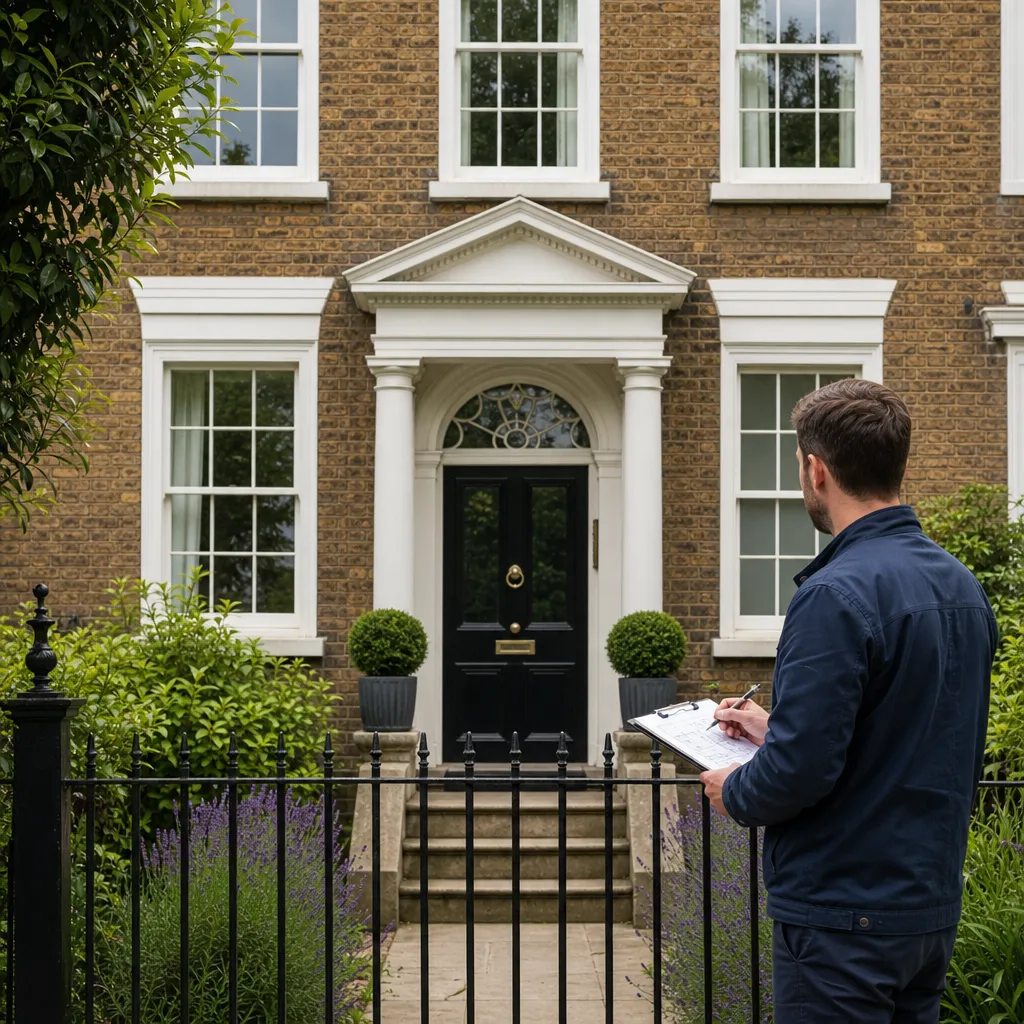 Planning & Pre-Build
Federal-Style Architecture: Characteristics and Period Features
Federal-style architecture emerged in the USA between roughly 1780 and 1820, drawing directly on the British Adam style and Georgian neoclassical tradition.
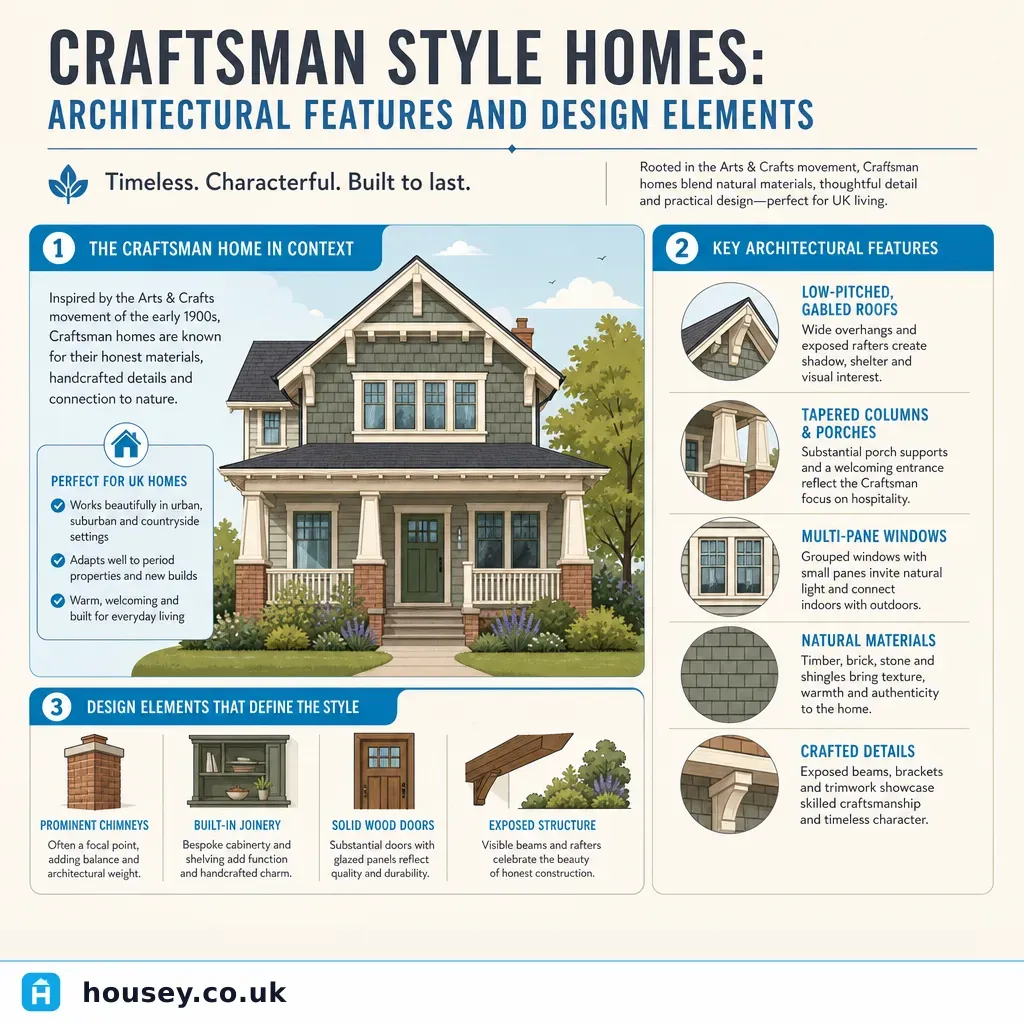 Planning & Pre-Build
Craftsman Style Homes: Architectural Features and Design Elements
Craftsman style homes are defined by natural materials, low-pitched gabled roofs with wide eaves, covered porches, exposed timber details, and grouped casement windows.
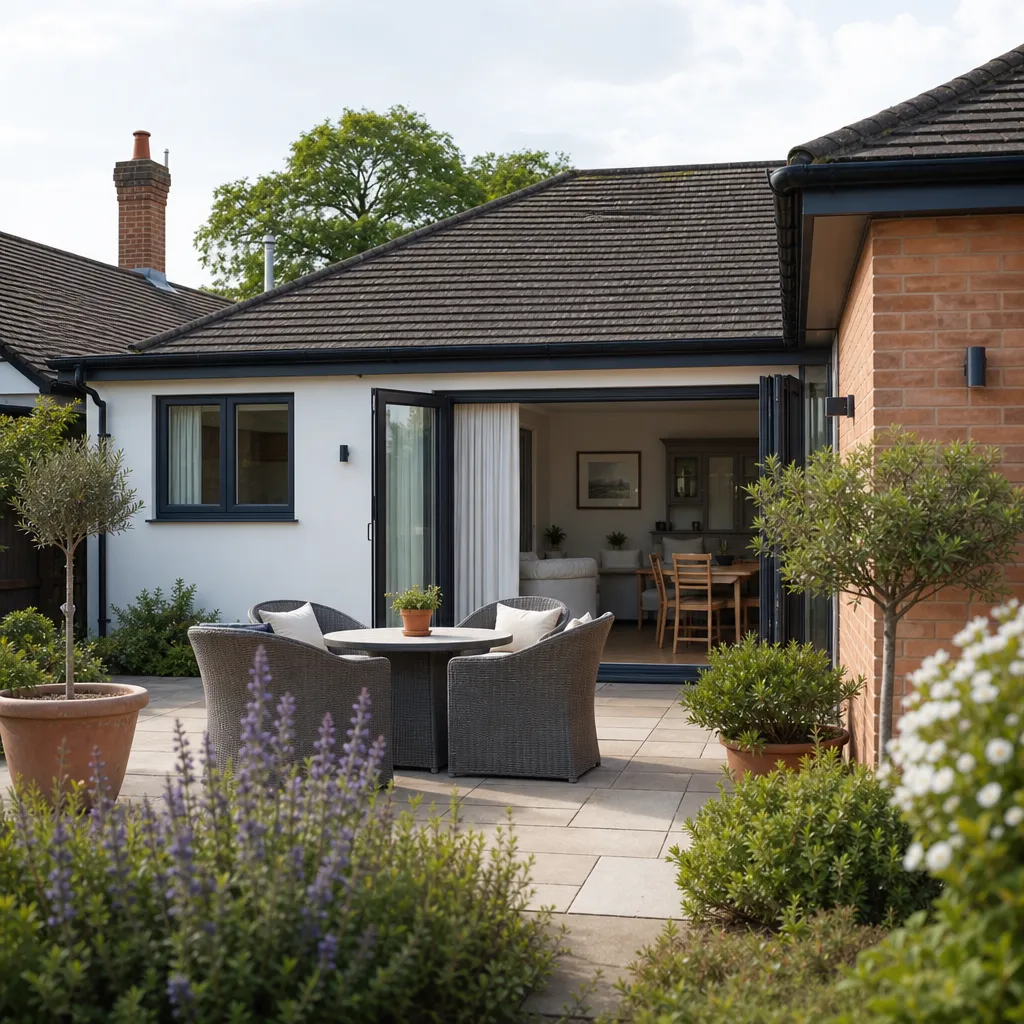 Planning & Pre-Build
What Is a Patio Home? Understanding This Property Type in the UK
A patio home is a compact, low-maintenance property designed around a private patio or courtyard rather than a traditional lawn garden.
 Planning & Pre-Build
Cape Cod Style Homes: Design Elements and Characteristics
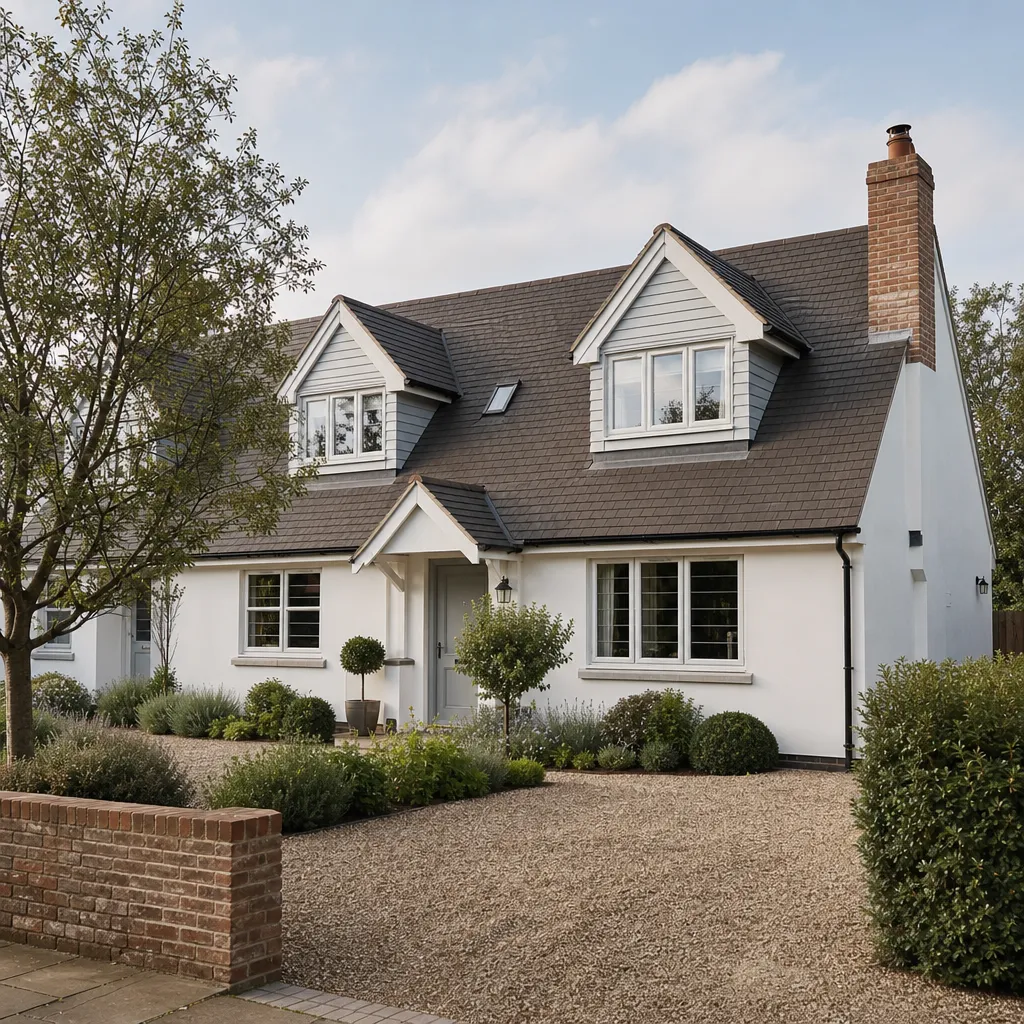
A Cape Cod home is defined by its steep symmetrical gabled roof, compact 1.
 Planning & Pre-Build
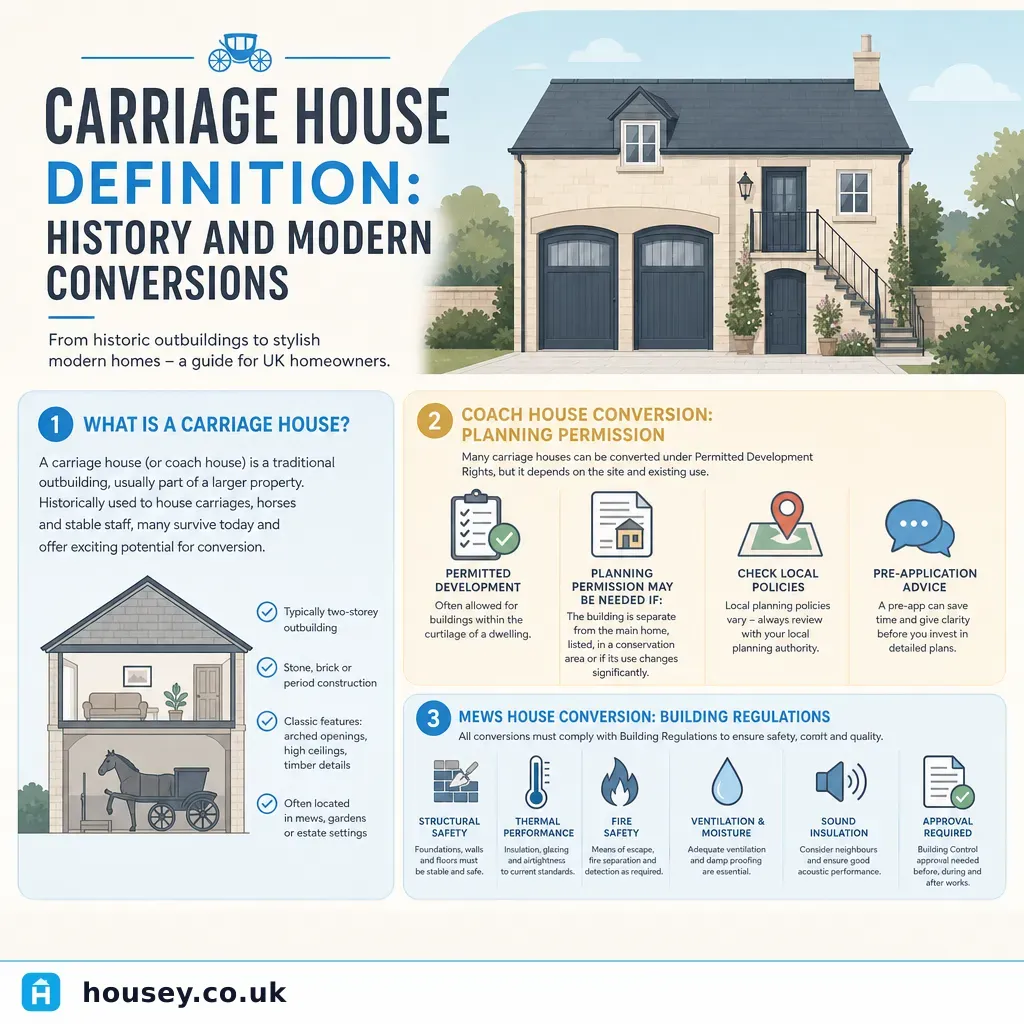
Carriage House Definition: History and Modern Conversions
A carriage house is a Victorian or Edwardian outbuilding originally used to shelter horse-drawn vehicles, often with groom's accommodation above.