Federal-Style Architecture: Characteristics and Period Features
By Housey · Last reviewed 31st of May 2026
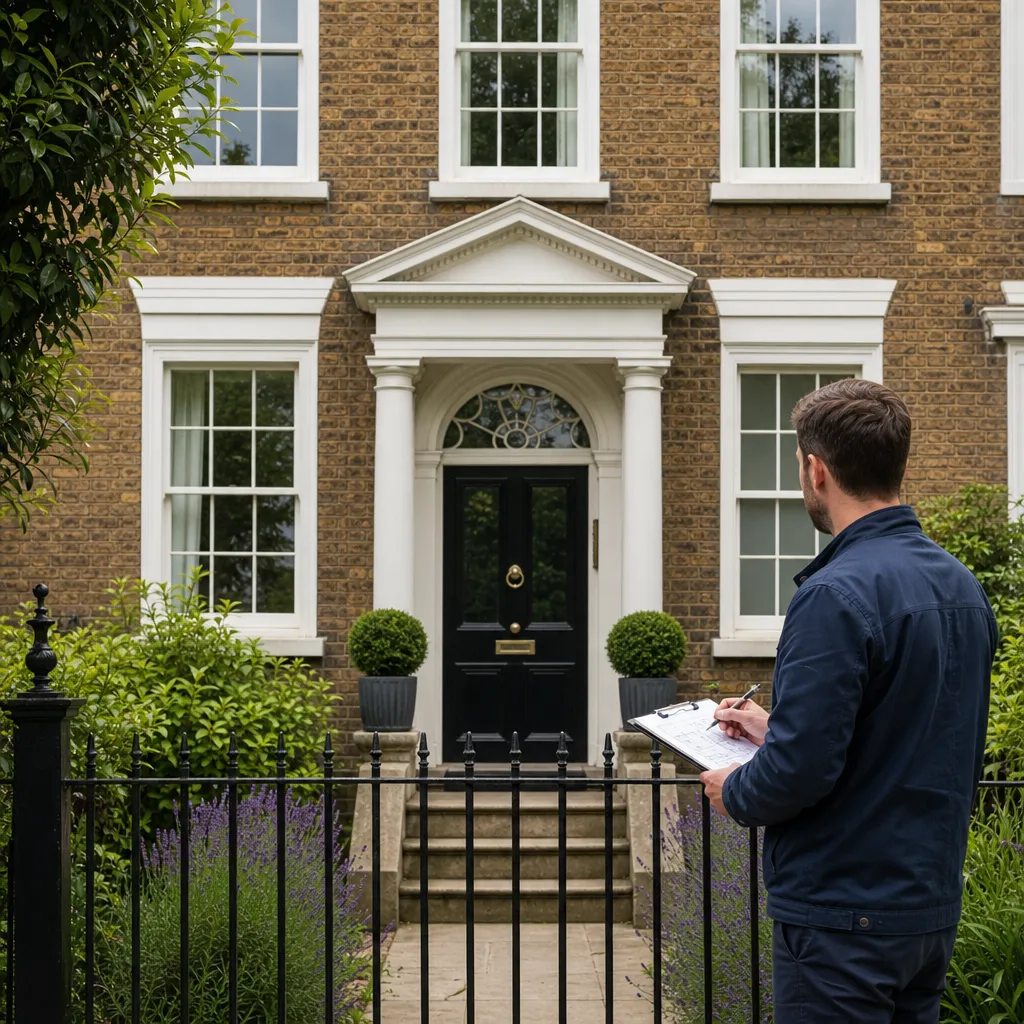
Federal-Style Architecture: Characteristics and Period Features
Federal-style architecture draws directly on the British Georgian and Adam-style tradition, making it more relevant to UK homeowners and architects than its American origins might suggest. The style flourished between roughly 1780 and 1820 in the United States, at exactly the moment when late Georgian and early Regency architecture was defining Britain's most enduring period townscapes. Whether you are working on a listed property with Adam-period features, specifying neoclassical references in a new design, or simply seeking to identify a building's architectural vocabulary, understanding the Federal style illuminates the shared neoclassical heritage on both sides of the Atlantic.
Key points
- Federal style flourished in the USA from approximately 1780 to 1820, coinciding in Britain with late Georgian and early Regency architecture — both drawing directly on the Adam brothers' neoclassical vocabulary.
- Key identifying features include elliptical fanlights, Palladian windows, delicate low-relief plasterwork using swags, urns, and oval medallions, low-pitched roofs concealed by parapets or balustrades, and symmetrical three- or five-bay facades.
- The Adam style (Robert and James Adam, active from the 1760s) is the closest British equivalent and is found in listed townhouses, country houses, and civic buildings across England and Scotland.
- Buildings with genuine Adam-style or late Georgian features may be listed under the Planning (Listed Buildings and Conservation Areas) Act 1990 — any works affecting their character require listed building consent.
- Conservation area designation in Georgian streetscapes (Bath, Edinburgh New Town, Cheltenham, and many London boroughs) can restrict permitted development rights, requiring prior approval for changes to windows, doors, and external materials.
Origins and historical context
Federal style takes its name from the Federal period of American political history. Its primary architectural influences were:
- The Adam brothers — Robert Adam in particular transformed British interior and exterior design from the 1760s with a lighter, more delicate interpretation of ancient Roman forms, moving away from the heavier Palladian Baroque of earlier Georgian work.
- Andrea Palladio — the 16th-century Venetian architect whose treatise I Quattro Libri dell'Architettura was enormously influential on both British Georgian design and the American Federal movement via the Palladian Revival.
- Classical antiquity — direct study of Roman and Greek ruins, facilitated by 18th-century Grand Tour culture, informed the consistent use of columns, entablatures, pilasters, and decorative friezes across both traditions.
American architects most closely associated with Federal style include Charles Bulfinch, Samuel McIntire, and Benjamin Henry Latrobe. The style gradually gave way to Greek Revival from around 1820.
Characteristic features of Federal-style buildings
Exterior features
Feature | Description | UK parallel (Adam or Georgian) |
|---|---|---|
Symmetrical facade | Typically three or five bays; central entrance emphasised | Standard Georgian terrace and country house composition |
Elliptical or semi-circular fanlight | Delicate radial or spider-web glazing bars above the entrance | Very common in Georgian townhouses in Edinburgh, Bath, and London |
Sidelights flanking the entrance | Narrow vertical glazed panels framing the door case | Present in Adam-influenced door surrounds across Britain |
Palladian window | Three-part window with arched central light and flat-headed side lights | Widespread in British Georgian architecture |
Parapet or balustrade concealing roof | Roof largely hidden behind a classical parapet | Standard treatment on Georgian street facades |
Brick construction | Red brick with restrained ornamental detail; stucco on grander examples | Brick or stucco rendering common in British Georgian |
Swags, garlands, and oval medallions | Delicate low-relief ornament in stucco or cast composition | Hallmark of Adam exterior and interior detailing in Britain |
Interior features
Federal interiors share most of their vocabulary with Adam-period British rooms:
- Elliptical or oval rooms — a defining Adam innovation, carried directly into Federal domestic architecture
- Low-relief plaster ceilings — delicate floral, urn, and swag motifs, in deliberate contrast to heavier earlier Georgian plasterwork
- Slender fluted columns and pilasters — used to define room divisions or frame chimneypieces
- Geometric floor patterns — inlaid hardwood or stone emphasising bilateral symmetry
- Top-lit entrance halls and staircases — cantilevered timber or stone stairs under an elliptical lantern or fanlight
Federal style versus Georgian and Regency: a comparison
Style | Approximate dates | Country | Key characteristics | Closest parallel |
|---|---|---|---|---|
Federal | c.1780–1820 | USA | Elliptical motifs, Adam influence, red brick, delicate ornament | Late Georgian / Adam (UK) |
Georgian | c.1714–1830 | UK | Symmetry, sash windows, Palladian influence, brick or stone | — (the parent tradition) |
Adam style | c.1760–1790 | UK | Neoclassical interiors, oval rooms, painted ceilings, delicate ornament | Direct source of Federal style |
Regency | c.1811–1820 | UK | Stucco facades, wrought-iron balconies, wider windows, Nash influence | Closest UK parallel to later Federal |
Greek Revival | c.1820–1850 | UK and USA | Heavier temple-front columns, Doric and Ionic orders | Follows and supersedes both Federal and Regency |
Relevance to UK planning and heritage
Although Federal-style buildings are located primarily in the United States, the architectural principles and period features closely mirror what is protected and regulated in late Georgian and Regency townscapes across Britain.
UK homeowners and architects may encounter Federal or Adam-style characteristics in:
- Listed buildings — Georgian townhouses, country houses, and civic buildings with Adam interiors frequently appear on Historic England's National Heritage List for England at Grade I, Grade II*, or Grade II
- Conservation areas — Georgian streetscapes such as Bath's Royal Crescent, Edinburgh New Town, Cheltenham's Regency terraces, and many London squares are protected under conservation area designation
- New-build or extension projects referencing neoclassical forms, where local planning authorities may require a design and access statement demonstrating respect for the character of the area
Which professional do you need?
Situation | Professional needed | Why |
|---|---|---|
Extending or altering a Georgian or Regency property | Architect with period experience | Matching Adam-style features requires specialist knowledge of materials and proportions |
Listed building works (any grade) | Heritage and conservation consultant | Listed building consent is required; conditions affect both design and materials |
Conservation area works involving windows, doors, or external materials | Heritage consultant and local planning authority | Permitted development rights are often restricted and prior approval may be needed |
Replicating decorative plasterwork, historic joinery, or specialist masonry | Specialist conservator or craftsperson with reference to Historic England guidance | Inappropriate materials or methods can cause irreversible damage to historic fabric |
New-build or extension referencing neoclassical forms in a heritage-sensitive area | Architect and heritage consultant | Design and access statement is typically required by the local planning authority |
When to get professional help
Seek specialist advice before committing to any of the following:
- Removing, altering, or replacing decorative plasterwork, joinery, or stonework in a building of Georgian or Adam-period character
- Replacing sash windows, fanlights, or period door cases — even in unlisted buildings within conservation areas, permitted development rights may be restricted
- Specifying a new-build or extension with neoclassical forms in a heritage-sensitive context, where a design and access statement will typically be required
- Repointing, cleaning, or rendering external brickwork or stonework on a listed or pre-1919 property, as inappropriate materials can cause irreversible damage to historic fabric
Planning rules, listed building controls, and conservation area requirements vary by local authority and property history. Always check with your local planning authority before starting any works that may affect a period building's fabric or appearance.
How Housey can help
Housey connects you with professionals experienced in period architecture and heritage projects. Whether you are planning a sympathetic extension to a Georgian property, need guidance on conservation area consents, or want to understand how Adam-style features should inform a new design, our architecture service and heritage and conservation consultants can help you find the right specialist.
Frequently asked questions
Is Federal-style architecture found in the UK?
Federal style as a distinct label is an American architectural category. In the UK, the same neoclassical tradition — drawing on the Adam brothers, Palladio, and classical antiquity — produced Georgian, Adam-style, and Regency architecture. A Georgian townhouse in Edinburgh or Bath shares the same design language as a Federal building in Boston or Charleston; the difference is largely one of geography and national labelling.
What is the difference between Adam style and Federal style?
Adam style refers to the influence of Robert and James Adam on British architecture from the 1760s, particularly their use of delicate plasterwork, oval rooms, and painted interiors. Federal style is its American counterpart: architects such as Bulfinch and McIntire absorbed Adam's vocabulary and applied it to American building types, generally producing work that is somewhat simpler and less ornate than the grandest Adam interiors.
Do I need planning permission to alter features of a Georgian or Regency property?
If the property is listed, listed building consent is required for works affecting its character — this includes internal as well as external changes. In conservation areas, permitted development rights are often restricted and prior approval may be needed for window or door changes. Always check with your local planning authority before starting any work.
What materials were used in Federal-period buildings?
The primary materials were red brick, marble or stone for ornamental details, painted timber for joinery and window frames, and lime plaster for walls and ornamental ceilings. Understanding original material specifications matters for conservation repair: modern cement mortars and synthetic renders can cause irreversible damage to historic masonry if used inappropriately.
Sources and further reading
- National Heritage List for England — Historic England
- Planning (Listed Buildings and Conservation Areas) Act 1990 — legislation.gov.uk
- Historic England: repairing traditional buildings — Historic England
- Listed buildings: get information — GOV.UK
- Conserving and enhancing the historic environment — GOV.UK Planning Practice Guidance
Useful next reads
 Planning & Pre-Build
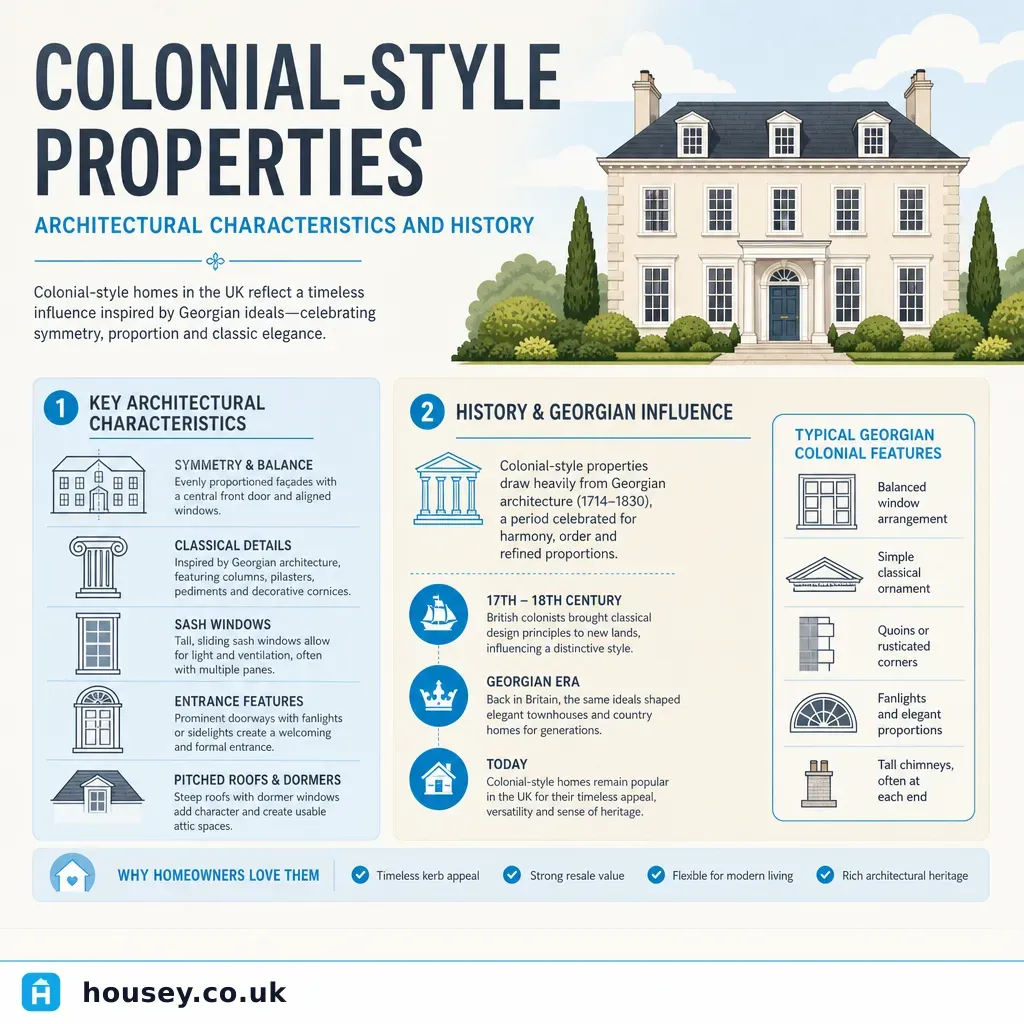
Colonial-Style Properties: Architectural Characteristics and History
Colonial-style properties in the UK typically refer to buildings reflecting Georgian symmetry and classical proportions, or twentieth-century Colonial Revival homes.
 Planning & Pre-Build
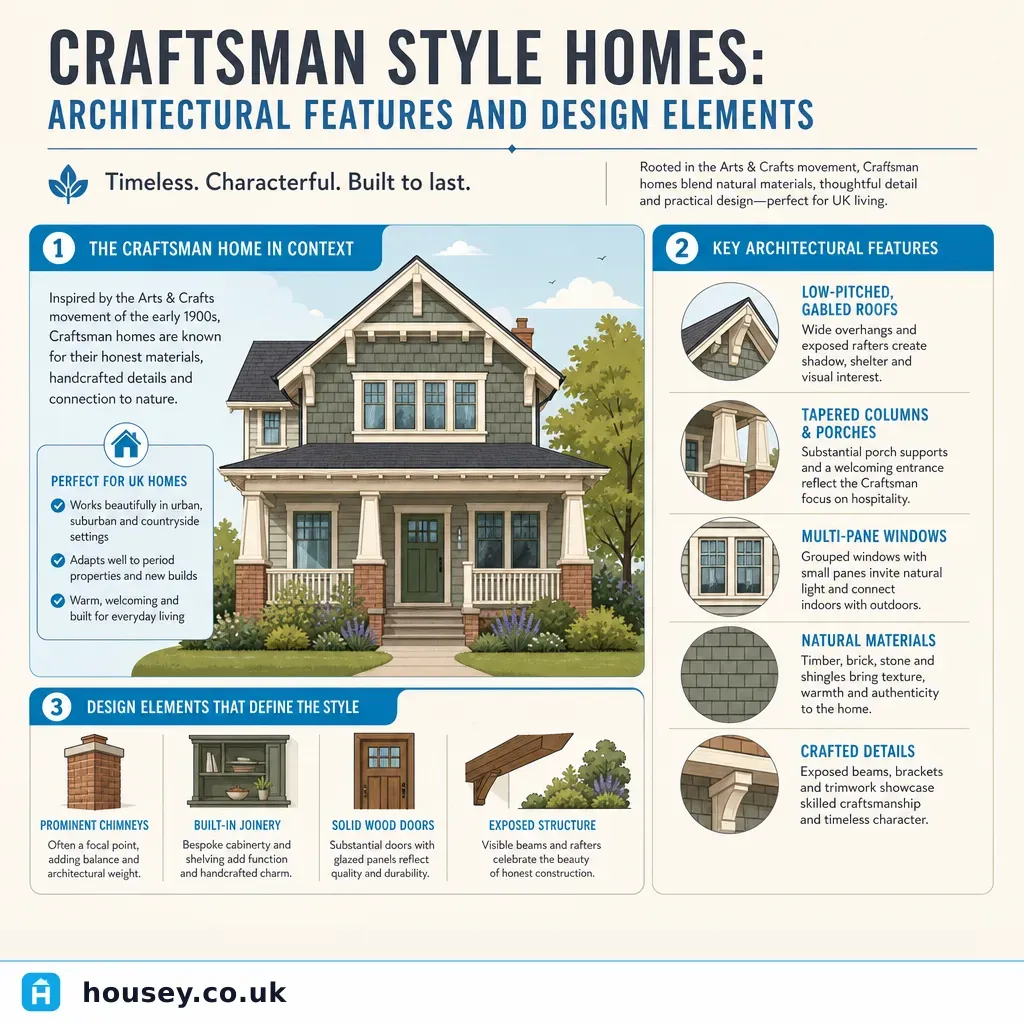
Craftsman Style Homes: Architectural Features and Design Elements
Craftsman style homes are defined by natural materials, low-pitched gabled roofs with wide eaves, covered porches, exposed timber details, and grouped casement windows.
 Planning & Pre-Build
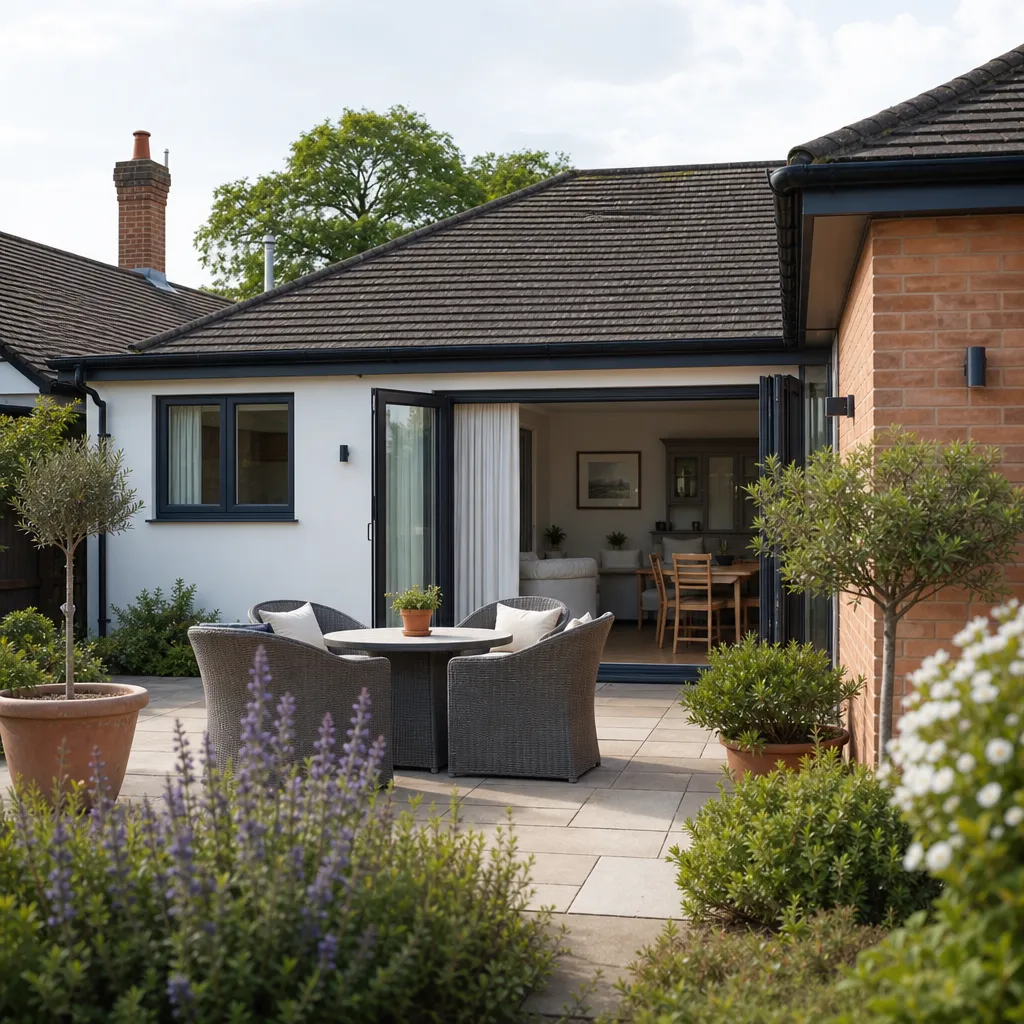
What Is a Patio Home? Understanding This Property Type in the UK
A patio home is a compact, low-maintenance property designed around a private patio or courtyard rather than a traditional lawn garden.
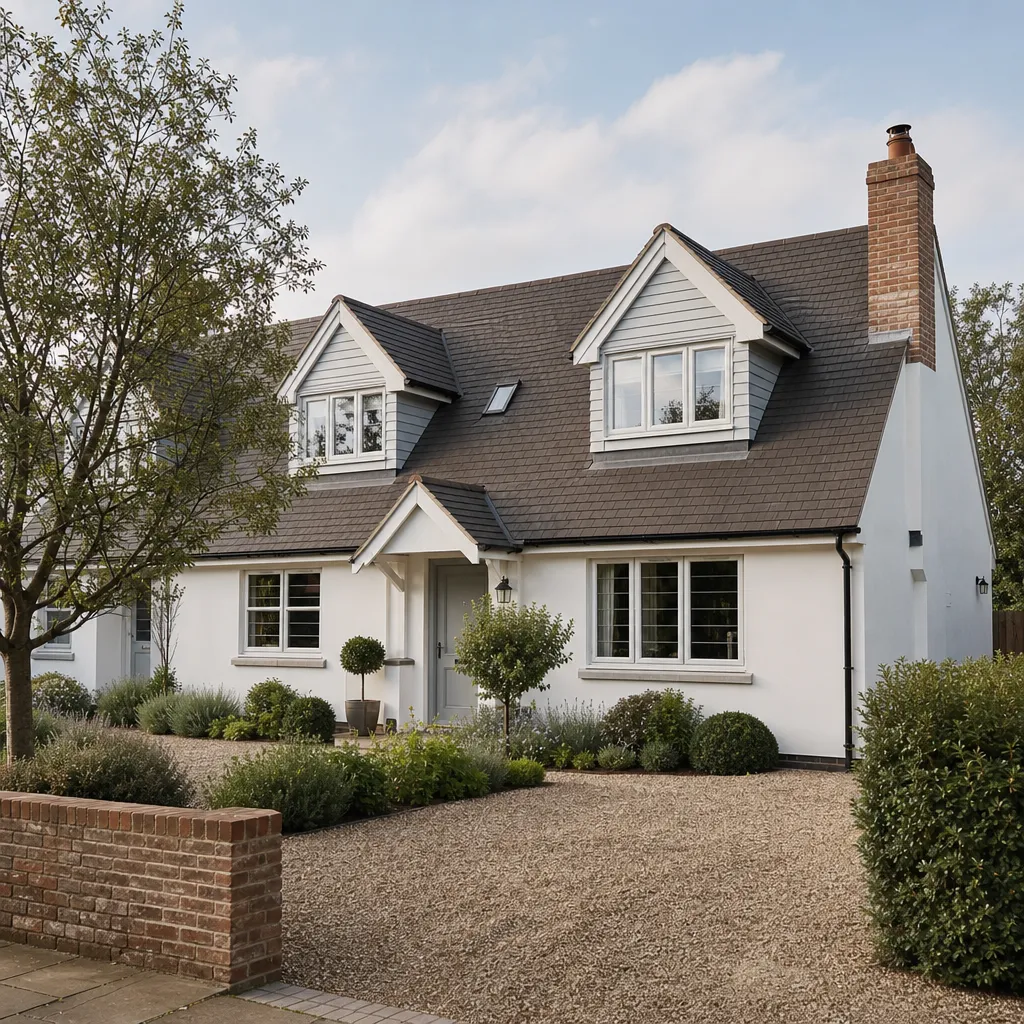 Planning & Pre-Build
Cape Cod Style Homes: Design Elements and Characteristics
A Cape Cod home is defined by its steep symmetrical gabled roof, compact 1.
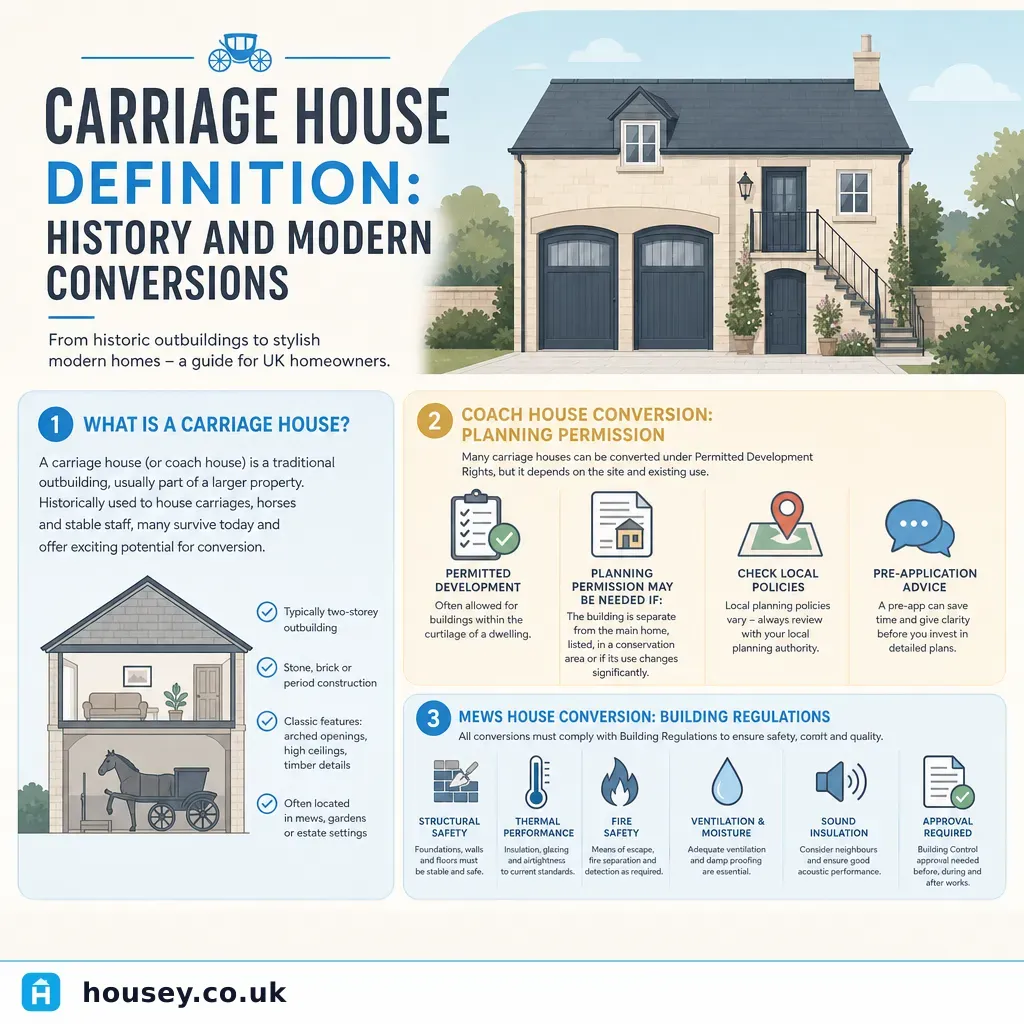 Planning & Pre-Build
Carriage House Definition: History and Modern Conversions
A carriage house is a Victorian or Edwardian outbuilding originally used to shelter horse-drawn vehicles, often with groom's accommodation above.