Colour blocking walls: a design technique for home interiors
By Housey · Last reviewed 11th of May 2026
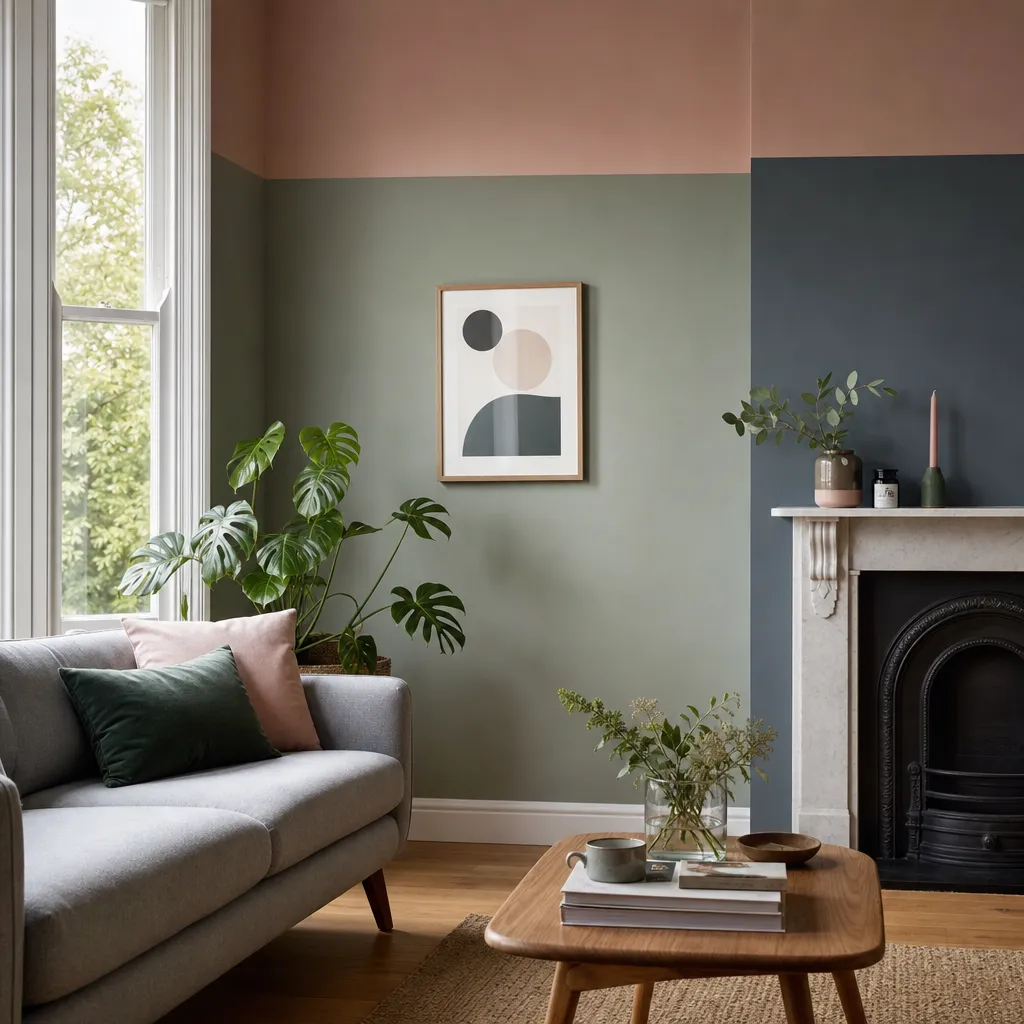
Colour blocking walls: a design technique for home interiors
Colour blocking on walls has become a popular decorating approach across UK homes, appearing in modernised Victorian terraces, contemporary flats, and renovated 1930s semis alike. It typically comes up when homeowners want more visual interest than a single all-over shade provides, but are not ready for patterned wallpaper or textured finishes. The decisions involved are mostly practical — which colours work together, where on the wall to break them, and how to achieve a clean, deliberate result without the need for expensive professional help.
Key points
- Colour blocking uses two or more solid, contrasting colours applied in distinct geometric zones — the most common arrangement is a horizontal divide at roughly two-thirds wall height, with a darker tone below and a lighter shade above.
- Existing architectural features — dado rails, picture rails, chimney breasts, window recesses, and alcoves — make natural boundaries for colour blocks and remove the need for precision taping.
- The 60-30-10 colour rule (60% dominant colour, 30% secondary, 10% accent) is a useful starting reference; colour blocking concentrates the accent value on the wall itself, making it a more deliberate design statement than standard one-colour decorating.
- In rooms with limited natural light, placing a warmer or darker colour below the dado line and a lighter, warmer tone above tends to be more effective than reversing the arrangement.
- Low-tack painter's tape aligned to a chalk line or spirit level is essential for a clean dividing line when there is no physical moulding to follow — standard masking tape is too aggressive and can pull existing paint.
What colour blocking actually involves
Colour blocking in interiors uses solid areas of colour meeting at a clean, deliberate line — horizontal, vertical, or shaped by the architecture of the room. It is distinct from ombre walls, geometric patterns, and colourwash finishes: each zone is visually complete on its own, and the interest comes from how the solid areas relate rather than from gradation or applied pattern.
The technique suits a wide range of UK property types. In Victorian and Edwardian homes, dado rails and picture rails create natural horizontal bands at approximately 90–100 cm and 150–180 cm respectively. In post-war and contemporary properties without original mouldings, the dividing line can be established with a painted timber batten, a precision tape line, or by colouring within natural architectural recesses such as alcoves and chimney breasts.
Which room suits which approach?
Room | Recommended approach | Why it works |
|---|---|---|
Hallway or stairwell | Darker lower third, lighter upper two-thirds | Practical (hides scuffs) and creates a sense of height in a narrow space |
Living room chimney breast | Full-height contrasting block on the breast only | Defines a focal point without overwhelming the whole room |
Bedroom headboard wall | Painted panel or arch shape behind the bed | Defines the sleeping zone; suits saturated, moody tones |
Kitchen diner | Horizontal break at worktop height | Connects wall colour to cabinetry; works with both modern and traditional kitchens |
Children's bedroom | Bold contrasting blocks on one or two walls | High visual impact; easy to repaint as tastes change |
Home office nook or alcove | Single contrasting colour inside the recess | Visually separates the work zone from the rest of the room |
Choosing your colours
Colour blocking works with several different colour relationships:
- Complementary pairs (opposite on the colour wheel — blue and orange, purple and yellow) create maximum contrast but can feel intense on large wall areas, particularly in smaller rooms.
- Analogous pairs (adjacent on the wheel — teal and sage green, dusty pink and warm terracotta) are more harmonious and easier to live with day-to-day.
- Tonal pairs (same hue in different saturation or lightness — deep navy and pale sky blue) are the most forgiving option and suit UK homes where natural light is often variable.
For north-facing rooms or any room with limited daylight, warm tones — ochres, soft terracottas, warm off-whites — tend to hold their warmth better under artificial light than cool blues or greens, which can read as flat or cold. Always test large paint sample cards (A4 minimum) pinned to the actual wall at different times of day and under evening lighting before committing to full tins.
Decision tree: which approach should you use?
- Follow an existing dado rail or picture rail if your property has period mouldings — this is the lowest-effort approach and removes the need for precision taping altogether.
- Use a horizontal two-tone divide if your walls are plain plaster with no mouldings and you want a clean, contemporary look.
- Block a single architectural feature (chimney breast, alcove, staircase wall) if you want visual impact without full commitment — a single surface can be repainted quickly if you change your mind.
- Use a vertical divide if you want to make a wide, low room appear taller, or to visually separate two zones in an open-plan space.
- Try a panel or arch shape if you want a more contemporary result and are comfortable working with a spirit level and tape.
- Consult a decorator if you are working with unusual proportions, very high ceilings, or complex geometrics — or if your property is listed and internal paint may require consent.
Practical steps for a clean finish
The most common complaint about DIY colour blocking is bleed along the dividing line. A few practical steps reduce the risk significantly:
- Prepare the surface — fill and sand any cracks or imperfections before taping. Tape lifts on uneven plaster, letting paint seep under the edge.
- Mark your line — use a pencil mark and spirit level, or snap a chalk line across the wall, before applying any tape.
- Use low-tack painter's tape and align it precisely to your marked line.
- Seal the tape edge — brush a thin coat of the lighter colour along the tape edge first. This fills micro-gaps before the contrasting paint is applied and gives a sharper finished line.
- Apply the contrasting colour — cut in carefully at the tape edge with a small brush before rolling the rest of the section.
- Remove the tape while the final coat is still slightly tacky — removing it when fully dry can pull the paint edge and create a jagged line.
- Choose the right finish — eggshell or satin for hallways and children's rooms where scuff-resistance matters; matt emulsion for living rooms and bedrooms.
Homeowner checklist: before you start colour blocking
When to get professional help
Colour blocking is one of the more accessible DIY decorating projects, but there are situations where a professional decorator is the better choice:
- Very high ceilings or stairwells where safe working at height requires a scaffold tower or professional access equipment.
- Listed buildings or conservation area properties where internal paint choices or finishes may require listed building consent from the local planning authority.
- Unusual wall surfaces — exposed brick, heavily textured Artex, uneven old lime plaster — where significant surface preparation is needed before painting.
- Complex geometric designs with multiple angles, curves, or arches where precision cutting-in is the difference between a polished and an amateurish result.
How Housey can help
Housey helps UK homeowners connect with vetted local decorators for painting and decorating projects of all sizes. If your colour blocking project requires professional surface preparation, high-access work, or a decorator experienced in precision cutting-in, you can submit a request through Housey and compare quotes from local professionals.
Frequently asked questions
How high should the dividing line be on a colour-blocked wall?
There is no fixed rule, but a break at one-third to two-thirds of the wall height is the most common range. At approximately 90–100 cm — around dado rail height — it suits standard UK rooms with 2.4m ceilings. Higher breaks at picture-rail height (around 150–180 cm) work well in rooms with taller ceilings. Test sample cards at different heights before committing.
Does colour blocking make a room look bigger or smaller?
It depends on the arrangement. A lighter tone above a darker lower band tends to make ceilings appear higher. Vertical blocks can make narrow rooms feel wider. Blocking a single feature such as a chimney breast draws the eye inward, adding depth. Strong all-over contrast in a small room can feel busy — a tonal pair rather than complementary colours usually works better in tight spaces.
What paint finish is best for colour blocking?
Matt emulsion gives the flattest, most contemporary look and suits living rooms and bedrooms. Eggshell or satin is more practical for hallways, kitchens, and children's rooms where surfaces need to be wiped clean. Avoid combining very different sheens — matt above and high gloss below — on the same wall, as the contrast in reflectivity can look unintentional under raking light.
Can colour blocking work on textured walls?
Yes, but surface preparation matters more. Heavily textured walls make a crisp tape line harder to achieve; using a physical moulding or batten as the dividing element sidesteps the problem. On moderately textured surfaces, sealing the tape edge with a thin coat of the lighter colour before applying the contrasting paint reduces bleed significantly and gives a sharper finish.
Sources and further reading
- Painting and decorating guidance for homeowners — Painting and Decorating Association
- How to paint a room: preparation and technique — Dulux
- Guidance on alterations to listed buildings — Historic England
Useful next reads
 General property advice
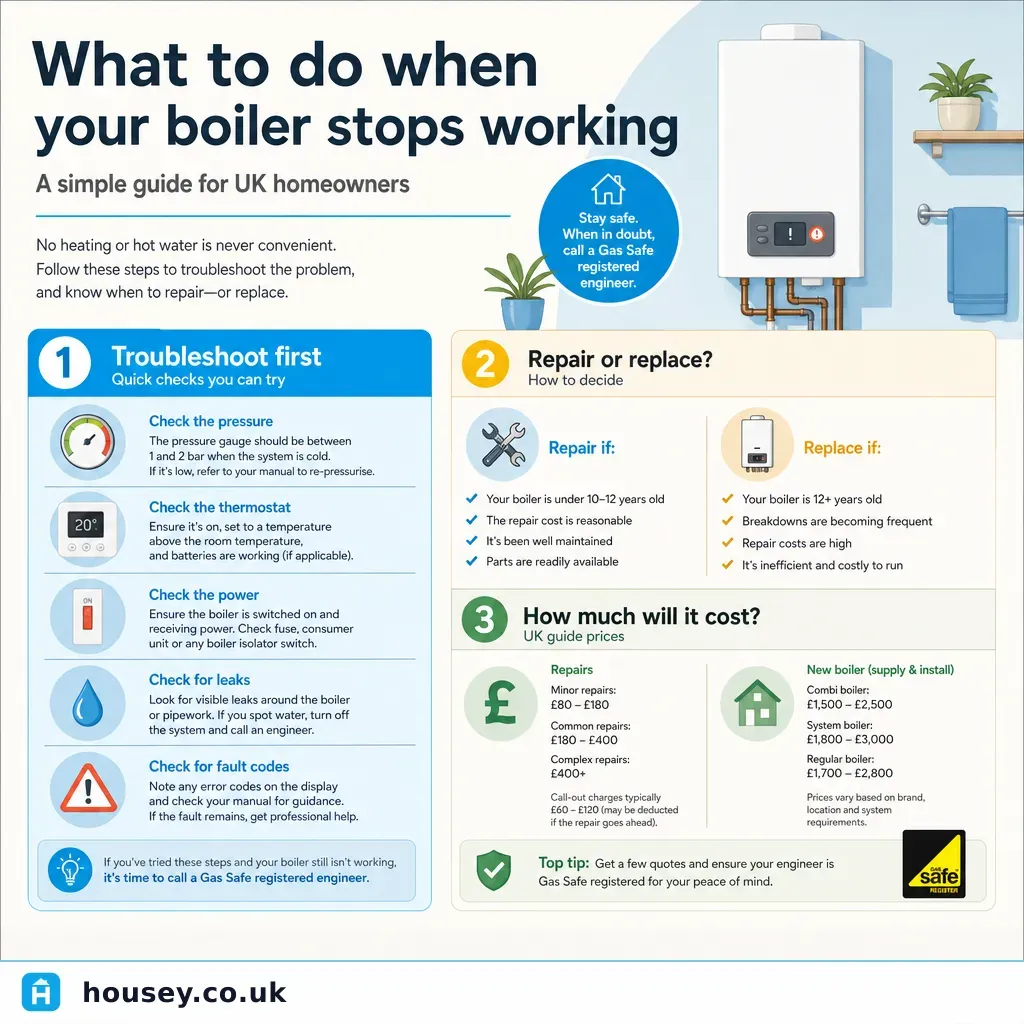
What to do when your boiler stops working
When your boiler stops working, check the pressure gauge (should read 1–1.
 General property advice
Property Market Trends: Activity Growth and Price Movements
UK property market activity is measured through completed sale registrations (HM Land Registry), lender mortgage data, and transaction volumes from HMRC.
 General property advice
Installing a water main shut-off valve for your property
A water main shut-off valve — commonly called a stopcock — controls all water entering your home from the mains.
 General property advice
Monthly House Price Index: August Market Report and Analysis
The UK House Price Index is published monthly using completed Land Registry transaction data, meaning August figures typically reflect sales agreed months earlier.
 General property advice
Scottish Property Market: Activity and Regional Trends
Scotland's property market operates under distinct legal rules: sellers must provide a Home Report before marketing, transactions become legally binding at conclusion of missives rather than exchange of contracts, and Land and Buildings Transaction Tax replaces Stamp Duty.