Scottish Property Market: Activity and Regional Trends
By Housey · Last reviewed 10th of May 2026

Scottish Property Market: Activity and Regional Trends
Scotland's residential property market operates under a distinct legal and tax framework from England and Wales, and its regional dynamics reflect an economy spanning oil-dependent Aberdeen and the expanding technology and financial sectors of Edinburgh and Glasgow. Whether you are buying, relocating from south of the border, or tracking investment opportunities, the rules here are genuinely different — not merely a variation on a familiar theme.
Key points
- The Home Report — a mandatory pack commissioned by the seller — must be provided to buyers before marketing; it includes a Single Survey (RICS condition report), an Energy Report (EPC), and a Property Questionnaire.
- Land and Buildings Transaction Tax (LBTT) replaced Stamp Duty Land Tax in Scotland from April 2015; an Additional Dwelling Supplement (ADS) of 6% (as of 2024) applies to second and additional residential property purchases on the full purchase price.
- The conclusion of missives — not exchange of contracts — is the point at which a Scottish property transaction becomes legally binding; withdrawal after this point can carry legal liability.
- Registers of Scotland (RoS) publishes quarterly transaction statistics, the primary source for Scottish market activity data including average prices by property type and local authority area.
- Scotland has five distinct regional markets: Edinburgh and the Lothians, Glasgow and the Clyde Valley, Aberdeen and Aberdeenshire, the Highlands and Islands, and smaller markets across Tayside, Fife, and the Borders.
How the Scottish property market differs from England and Wales
Feature | Scotland | England and Wales |
|---|---|---|
Pre-sale survey | Home Report mandatory (seller-commissioned) | Not mandatory; buyer commissions own survey |
Price convention | Often "offers over" plus sealed-bid closing date | Asking price plus negotiation |
Legal binding point | Conclusion of missives | Exchange of contracts |
Property tax | LBTT plus ADS for additional properties | SDLT plus surcharge for additional dwellings |
Land registration | Registers of Scotland | HM Land Registry |
Governing law | Scots law | English law |
Offers over and closing dates: Most properties are marketed at a stated figure below expected sale price. Buyers submit sealed bids by a closing date without knowledge of competing offers. The seller is not obliged to accept the highest bid — entry date and offer conditions also matter.
Conclusion of missives: Rather than exchange of contracts, transactions become legally binding through a formal exchange of letters between solicitors. Either party may withdraw without penalty until missives are concluded; withdrawal afterwards can attract damages.
LBTT rates and the Additional Dwelling Supplement
LBTT is a progressive tax. Indicative residential purchase rates for 2025–26:
- Up to £145,000: 0%
- £145,001–£250,000: 2%
- £250,001–£325,000: 5%
- £325,001–£750,000: 10%
- Above £750,000: 12%
First-time buyer relief raises the nil-rate threshold to £175,000. The ADS rate of 6% applies to the full purchase price on second or additional residential properties — not just the portion above a threshold — which significantly affects yield calculations for buy-to-let investors.
Always verify current LBTT rates and thresholds with Revenue Scotland or a Scottish solicitor before proceeding, as rates are subject to change in Scottish Budgets.
Regional market trends
Edinburgh and the Lothians: Scotland's most competitive market. Demand is driven by public sector, finance, and technology employment. Closing dates are routine in sought-after postcodes; properties regularly sell above Home Report value in active conditions.
Glasgow and the Clyde Valley: More affordable than Edinburgh on average; strong rental demand underpins buy-to-let activity. Wide variation exists between the West End and Southside and more challenged postcodes.
Aberdeen and Aberdeenshire: Cyclicality is linked to oil and gas sector employment; market performance often diverges from Edinburgh and Glasgow depending on energy sector conditions. Recovery from the 2014–16 oil price downturn was prolonged.
Highlands and Islands: Low transaction volumes, limited supply, and strong demand for rural and coastal properties. Second-home demand is significant; the Scottish Government has explored additional levies in areas designated as housing pressure zones.
Tayside, Fife, and Borders: University towns including Dundee and St Andrews generate academic and student demand. The Borders market is partly influenced by commuter reach to Edinburgh.
What not to assume about Scottish market data
- Home Report values are not market prices. In competitive Edinburgh postcodes, properties frequently sell above the Home Report valuation — it is a professional assessment at a point in time, not a ceiling or a guide to final price.
- Aberdeen distorts Scotland-wide averages. Oil-sector cyclicality means Aberdeen can move sharply against the national trend; aggregate Scottish averages obscure this divergence.
- Closing date outcomes are not immediately public. Sealed-bid results are private until the transaction registers with Registers of Scotland, unlike England where sold prices appear on HM Land Registry relatively quickly.
- "Scotland" is not one market. Edinburgh and Aberdeenshire can be moving in opposite directions simultaneously; always seek local intelligence alongside national data.
When to get professional help
- Engage a Scottish solicitor early — solicitors in Scotland commonly handle both legal conveyancing and estate agency, and the missives process requires specialist knowledge
- For older or unusual properties, commission an independent survey in addition to the Home Report; the Single Survey is a condition report, not a detailed defect assessment
- For investment purchases, seek Scottish tax advice on LBTT and ADS before committing; the ADS applies to the full purchase price and significantly affects net yield on lower-value properties
- For category A or B listed properties in Scotland, consult a heritage professional before committing to renovation works — listed building consent is regulated by Historic Environment Scotland
How Housey can help
Housey connects buyers, sellers, and homeowners across Scotland and the wider UK with vetted property professionals — from surveyors and heritage consultants to renovation specialists and energy improvement contractors.
Frequently asked questions
What is the Home Report and is it compulsory in Scotland?
Yes. Since 1 December 2008, sellers must commission a Home Report before marketing a residential property in Scotland. It contains a Single Survey (RICS condition report), an Energy Report (EPC), and a Property Questionnaire. Buyers receive it before making an offer. They may also commission their own independent survey if they wish, which is advisable for older or potentially defective properties.
How does a Scottish closing date work?
The seller's solicitor sets a date and time by which all offers must be submitted. Buyers bid without knowledge of competing offers. The seller is not obliged to accept the highest price — entry date, suspensive conditions, and deposit terms also influence the decision. There is no guarantee that submitting the highest figure will secure the property.
What is the Additional Dwelling Supplement and when does it apply?
The Additional Dwelling Supplement (ADS) is an LBTT surcharge on second or additional residential property purchases in Scotland, including buy-to-let investments and holiday homes. As of 2024, the rate is 6% of the full purchase price. A 36-month repayment window applies if your previous main home is sold after the new purchase completes.
Are Scottish house prices rising or falling?
Scotland's market varies significantly by region and property type. Registers of Scotland publishes quarterly house price statistics; the ONS UK HPI also covers Scotland. For current conditions, check Registers of Scotland data or consult a local surveyor — Edinburgh can be moving quite differently from Aberdeen or rural Highland areas at any given time.
Sources and further reading
- Property market statistics — Registers of Scotland
- Land and Buildings Transaction Tax guidance — Revenue Scotland
- Buying and selling a home in Scotland — mygov.scot
- ONS UK House Price Index — Office for National Statistics
Useful next reads
 General property advice
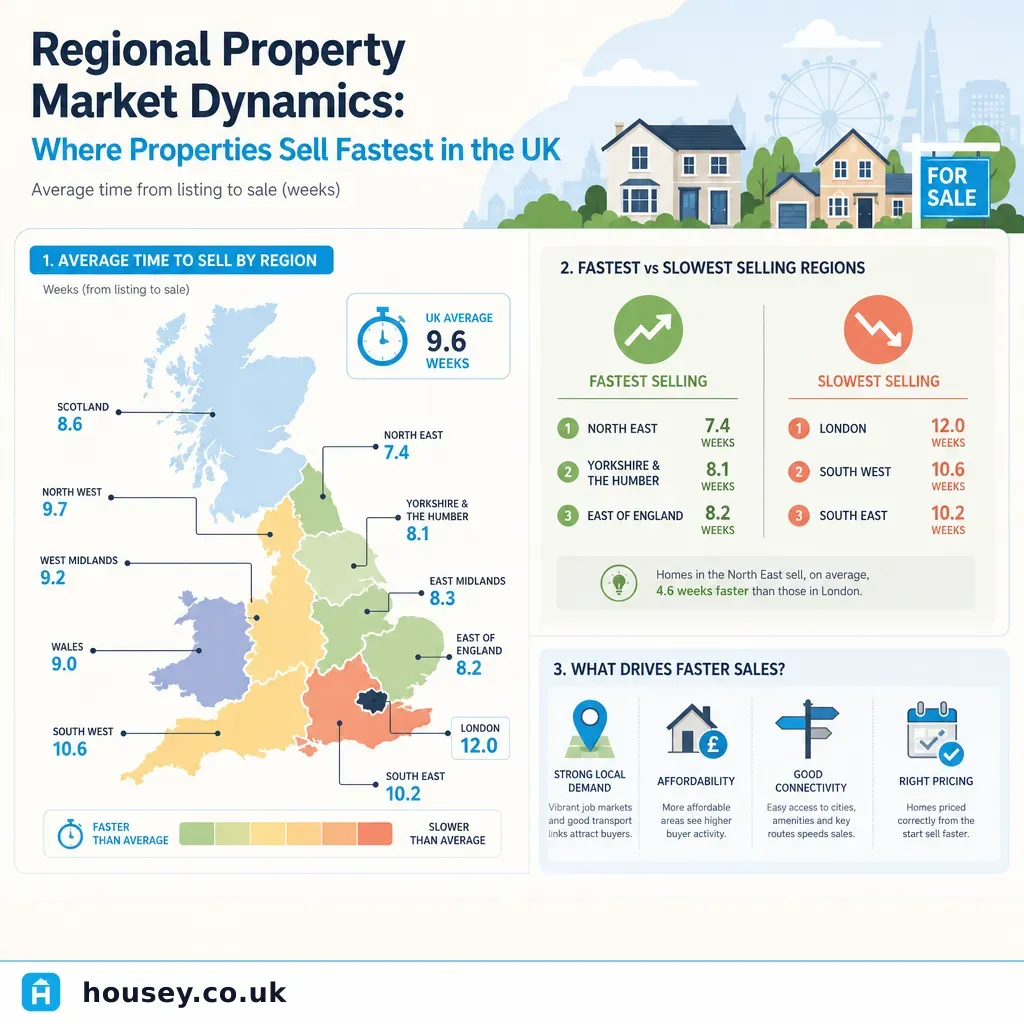
Regional Property Market Dynamics: Where Properties Sell Fastest in the UK
Properties in northern English cities such as Manchester and Leeds have often shown shorter average listing-to-sale times than the national average, though this varies by price bracket, property type, and local stock levels.
 General property advice
Property Market Trends: Activity Growth and Price Movements
UK property market activity is measured through completed sale registrations (HM Land Registry), lender mortgage data, and transaction volumes from HMRC.
 General property advice
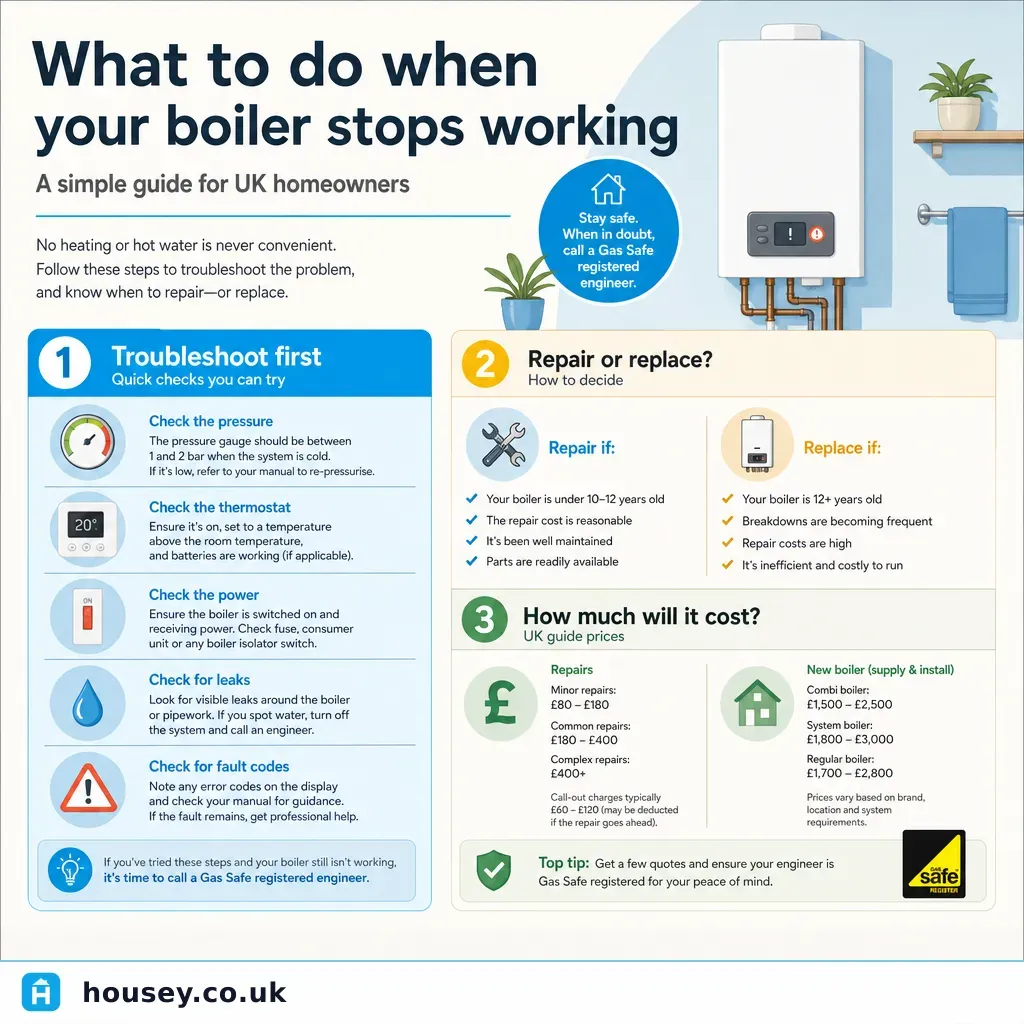
What to do when your boiler stops working
When your boiler stops working, check the pressure gauge (should read 1–1.
 General property advice
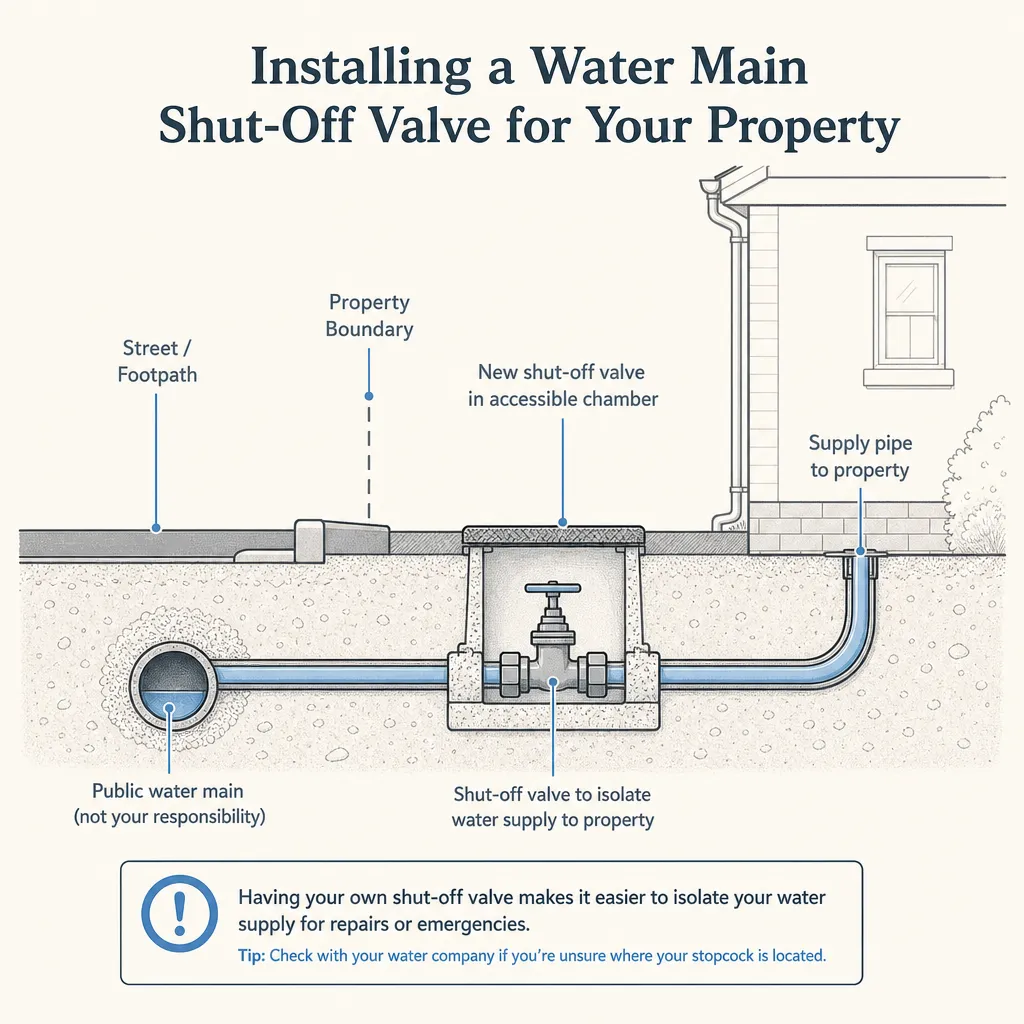
Installing a water main shut-off valve for your property
A water main shut-off valve — commonly called a stopcock — controls all water entering your home from the mains.
 General property advice
Monthly House Price Index: August Market Report and Analysis
The UK House Price Index is published monthly using completed Land Registry transaction data, meaning August figures typically reflect sales agreed months earlier.