Combi versus condensing boilers: what's the difference?
By Housey · Last reviewed 11th of May 2026
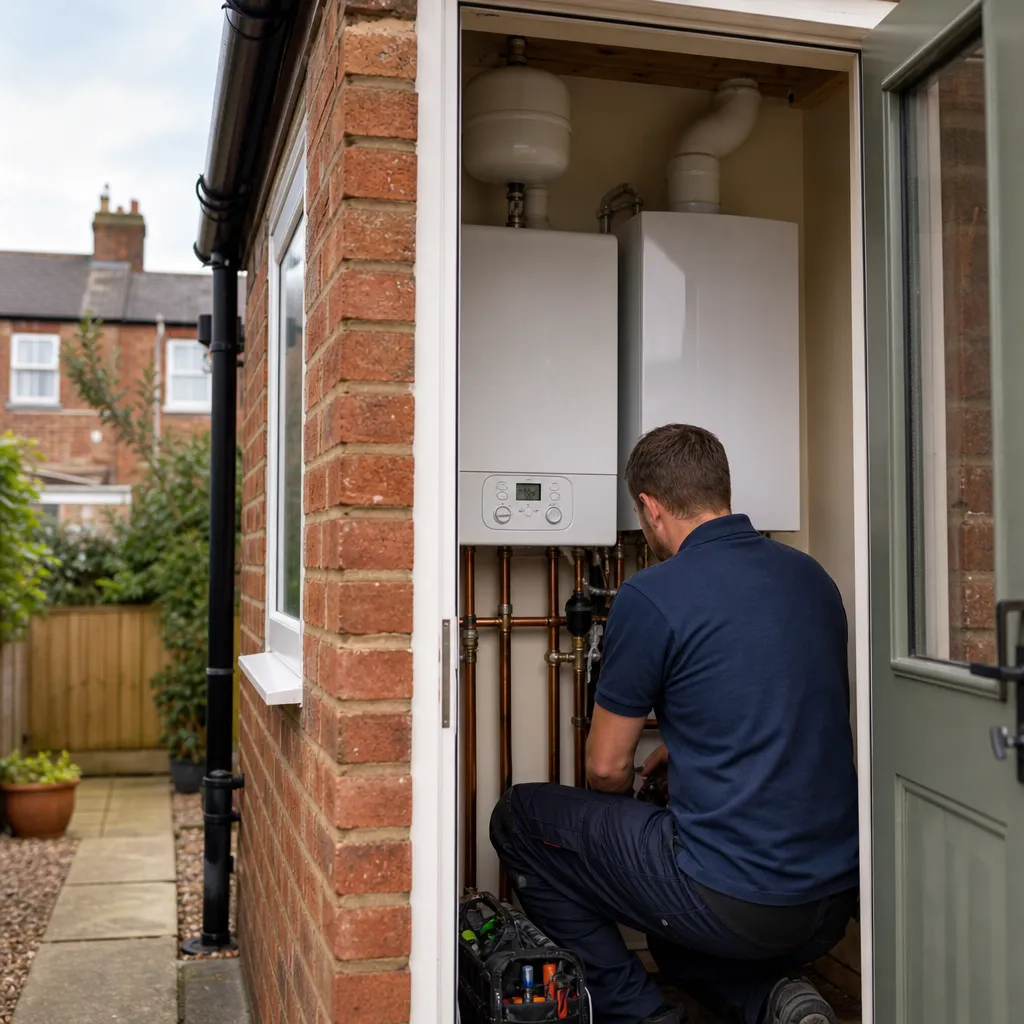
Combi versus condensing boilers: what's the difference?
When homeowners start researching boiler replacement, 'combi' and 'condensing' appear together constantly — and are frequently assumed to be either the same thing or two options to choose between. In fact, they describe completely different characteristics of a boiler, and understanding the distinction matters both for making an informed purchasing decision and for knowing what current Building Regulations actually require.
Key points
- 'Combi' describes a boiler's function — it combines central heating and domestic hot water in a single unit with no separate storage cylinder.
- 'Condensing' describes a heat-recovery technology — a secondary heat exchanger captures heat from exhaust flue gases, achieving seasonal efficiency of 90% or above.
- Since April 2005, Building Regulations Approved Document L has required all new and replacement gas boilers in England and Wales to be condensing type; Scotland and Northern Ireland have equivalent requirements.
- Most modern combi boilers sold in the UK are also condensing boilers — the two technologies are routinely combined in a single unit.
- A visible white vapour plume from a condensing boiler's flue is normal; it is water condensate leaving the cooled exhaust, not a fault or sign of incomplete combustion.
What does 'condensing' mean?
A condensing boiler has a secondary heat exchanger that recovers heat from the exhaust gases before they leave through the flue. In a non-condensing boiler, those gases — and the heat they carry — are simply vented away, typically wasting 20–30% of the fuel's energy.
By recovering this heat, the flue gases cool below their dew point (approximately 55°C for natural gas combustion), causing water vapour in the exhaust to condense into liquid. This slightly acidic liquid drains away through a plastic condensate pipe, usually through an external wall or into an internal waste pipe. The visible white vapour at the flue terminal is the remaining moisture in the cooled exhaust — normal and not a cause for concern.
The efficiency gain is reflected in ErP (Energy-related Products) ratings, which replaced SEDBUK (Seasonal Efficiency of Domestic Boilers in the UK) ratings from 2015. An A-rated condensing boiler achieves 90% or above seasonal efficiency; older non-condensing units are typically G-rated at 70–80%.
What does 'combi' mean?
A combination (combi) boiler performs two jobs in a single, usually wall-mounted unit:
- It heats the central heating circuit — radiators, underfloor heating.
- It heats domestic hot water on demand, drawing directly from the mains cold supply.
There is no separate hot water storage cylinder. When a hot tap opens, a diverter valve redirects the boiler's output to heat the incoming cold water. The boiler heats water only when needed, rather than maintaining a stored volume at temperature.
Combi is a functional description — it explains how the boiler delivers hot water. Condensing is a technology description — it explains how the boiler recovers heat from its own exhaust. They are not alternatives; they operate on different axes entirely.
Comparison table: combi, condensing, system, and non-condensing
Term | What it describes | Legally required in GB? | Can be combined with other types? |
|---|---|---|---|
Condensing | Secondary heat exchanger; 90%+ seasonal efficiency | Yes — all new/replacement gas boilers since April 2005 | Yes (condensing combi, condensing system, condensing regular) |
Combi | Combined heating and hot water on demand; no cylinder | No — a functional and design choice | Yes (condensing combi is the standard modern configuration) |
System boiler | Sealed heating circuit; separate hot water cylinder | No — a functional choice | Yes (usually condensing in modern installations) |
Regular (heat-only) | Requires cold water tank in loft and hot water cylinder | No — a functional choice | Yes (usually condensing when replaced today) |
Non-condensing | Older technology; vents flue gases without heat recovery | Cannot legally be installed as replacement in GB | No longer sold as new units in Great Britain |
The most common configuration today is the condensing combi — a single unit that is condensing (mandatory) and a combination boiler (the most popular functional type for smaller properties). A condensing system boiler and a condensing regular boiler are also fully compliant and widely installed where the property's hot water demand warrants a cylinder.
What not to assume
Several persistent misunderstandings come up when homeowners research boiler replacement:
'My old combi is not condensing — that means combis can be non-condensing.' This was true before April 2005. Pre-2005 combis were often non-condensing. However, any replacement boiler installed today must be condensing regardless of the previous boiler type. If your old non-condensing combi fails irreparably, its replacement will be a condensing unit.
'Condensing means it's a combi.' Not at all. A condensing system boiler stores hot water in a separate cylinder and is condensing but not a combi. Both types are widely available and both comply with current regulations.
'The white vapour from my flue is a fault.' White vapour from a condensing boiler's flue is a sign the boiler is working as intended. The cooled exhaust releases moisture as vapour. It is only worth investigating if accompanied by unusual smells, fault codes, or persistent condensation on surfaces near the flue terminal — which may indicate incorrect flue positioning rather than a boiler fault.
'A non-condensing boiler can still be installed if I can find one.' In Great Britain, a non-condensing gas boiler cannot legally be installed as a replacement under Building Regulations. There are very narrow documented exceptions where condensing technology is technically impractical — for example, certain chimney configurations — but these are not a general loophole and must be justified formally.
'Condensing boilers need much more maintenance.' Condensting boilers require the same annual Gas Safe service as any gas boiler. The condensate drain is an additional component to check for blockages or frost protection, but this does not substantially increase maintenance time or cost.
Decision tree: what type of boiler do I need?
- Replacing an existing boiler → The replacement must be condensing. Choose between combi, system, or regular based on your property's hot water demand and available space.
- Want no storage cylinder and have 1–2 bathrooms → A condensing combi boiler is likely the right choice; ask your installer to confirm mains pressure is adequate.
- Have 2+ bathrooms or a larger household → A condensing system boiler with an appropriately sized cylinder will usually handle simultaneous hot water demand better.
- Not sure whether your existing boiler is condensing → Check the flue: a plastic pipe (white or grey, 60–100 mm diameter) exiting through a wall indicates condensing; a metal flue or chimney connection typically means non-condensing. Your Gas Safe engineer can confirm.
- Boiler showing a fault code or you can smell gas → Stop troubleshooting and call a Gas Safe registered engineer or, for a gas smell, call 0800 111 999 immediately.
Efficiency and energy bills
The legal requirement for condensing technology exists because the efficiency gains are substantial and well evidenced. The Energy Saving Trust estimates that replacing a G-rated non-condensing boiler with an A-rated condensing model can reduce gas consumption for heating and hot water by 20–30%, depending on property type and usage patterns.
When comparing new boilers, the ErP rating label shows efficiency from A (most efficient) to G (least efficient). It is also worth looking at the manufacturer's declared efficiency at 30% load — part-load efficiency is more representative of typical seasonal use than peak-load efficiency, since most boilers run at partial output for much of the UK heating season.
When to get professional help
Selecting and installing any gas boiler — combi, system, or regular, condensing or otherwise — must be carried out by a Gas Safe registered engineer. No element of gas installation or gas-side repair is a DIY task.
Seek professional assessment if you are unsure about:
- Which boiler type best matches your property's hot water demand and available space.
- Whether the condensate drain can be routed correctly and protected against frost for your property layout.
- Whether existing pipework sizing suits the new boiler — condensing boilers work best with lower system return temperatures, which may have implications for older radiator systems.
- Whether the boiler output has been correctly sized using a heat loss calculation — an oversized boiler short-cycles inefficiently and fails to deliver expected performance.
How Housey can help
Housey connects homeowners with Gas Safe registered engineers who can advise on boiler type, correct sizing, and replacement options. Receive and compare quotes from vetted local engineers so you can make an informed decision based on the right specification for your home rather than price alone.
Frequently asked questions
Is a condensing combi boiler the same as a combi condensing boiler?
Yes — the terms are interchangeable. They describe a single unit that is both a combination boiler (heats water on demand, no cylinder) and uses condensing technology (recovers heat from exhaust gases). All new gas boilers legally installed in Great Britain are condensing; the majority are also combis, though condensing system and regular boilers are also widely available.
Can a non-condensing boiler still be used legally?
An existing non-condensing boiler can continue to operate. However, since April 2005 in England and Wales — with equivalent requirements in Scotland and Northern Ireland — a non-condensing gas boiler cannot be installed as a replacement, except in very limited technically impractical circumstances. If an old non-condensing boiler fails beyond repair, its replacement must be condensing type.
How do I tell if my current boiler is condensing?
The most reliable visual check is the flue outlet. A condensing boiler uses a plastic flue pipe (typically white or grey CPVC or polypropylene, 60–100 mm diameter) exiting through a wall rather than a chimney. A separate small plastic condensate drain pipe is another indicator. A metal flue or large vertical chimney outlet typically indicates an older non-condensing unit. A Gas Safe engineer can confirm on inspection.
Do condensing boilers require more maintenance than older boilers?
No more than any gas boiler. Annual servicing is best practice for all gas appliances and a legal requirement for rented properties under the Gas Safety (Installation and Use) Regulations 1998. For condensing boilers, the condensate drain pipe should additionally be checked for blockages and frost-protected in cold weather. Routine maintenance costs are not significantly higher than for older non-condensing units.
Sources and further reading
- Building Regulations Approved Document L: Conservation of fuel and power — GOV.UK
- Boilers and heating systems — Energy Saving Trust
- Gas Safe Register — Gas safety guidance — Gas Safe Register
- Gas safety in the home — Health and Safety Executive
- Building Regulations 2010 — legislation.gov.uk
Useful next reads
 General property advice
Combi boilers versus system boilers: which is right for you?
Combi boilers heat water on demand from the mains and suit smaller homes with one or two bathrooms and up to four occupants.
 General property advice
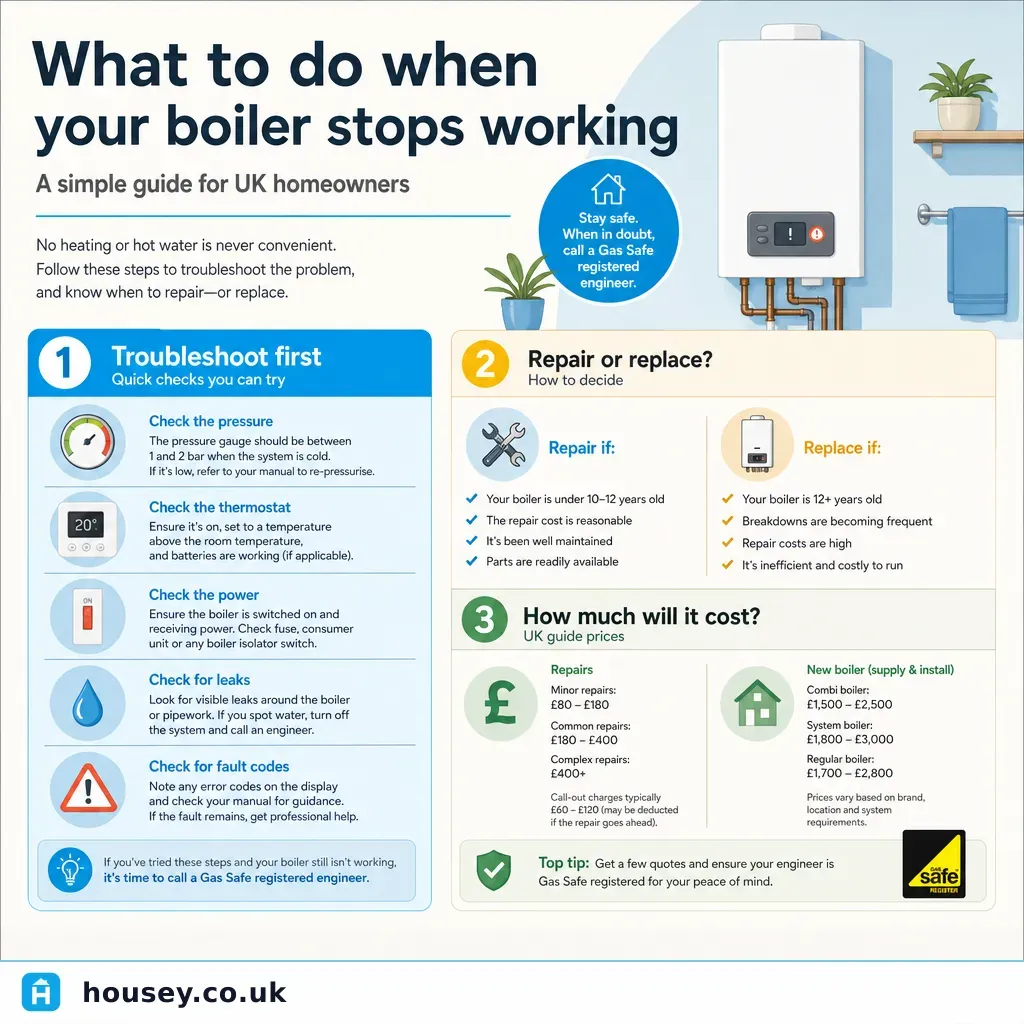
What to do when your boiler stops working
When your boiler stops working, check the pressure gauge (should read 1–1.
 General property advice
Property Market Trends: Activity Growth and Price Movements
UK property market activity is measured through completed sale registrations (HM Land Registry), lender mortgage data, and transaction volumes from HMRC.
 General property advice
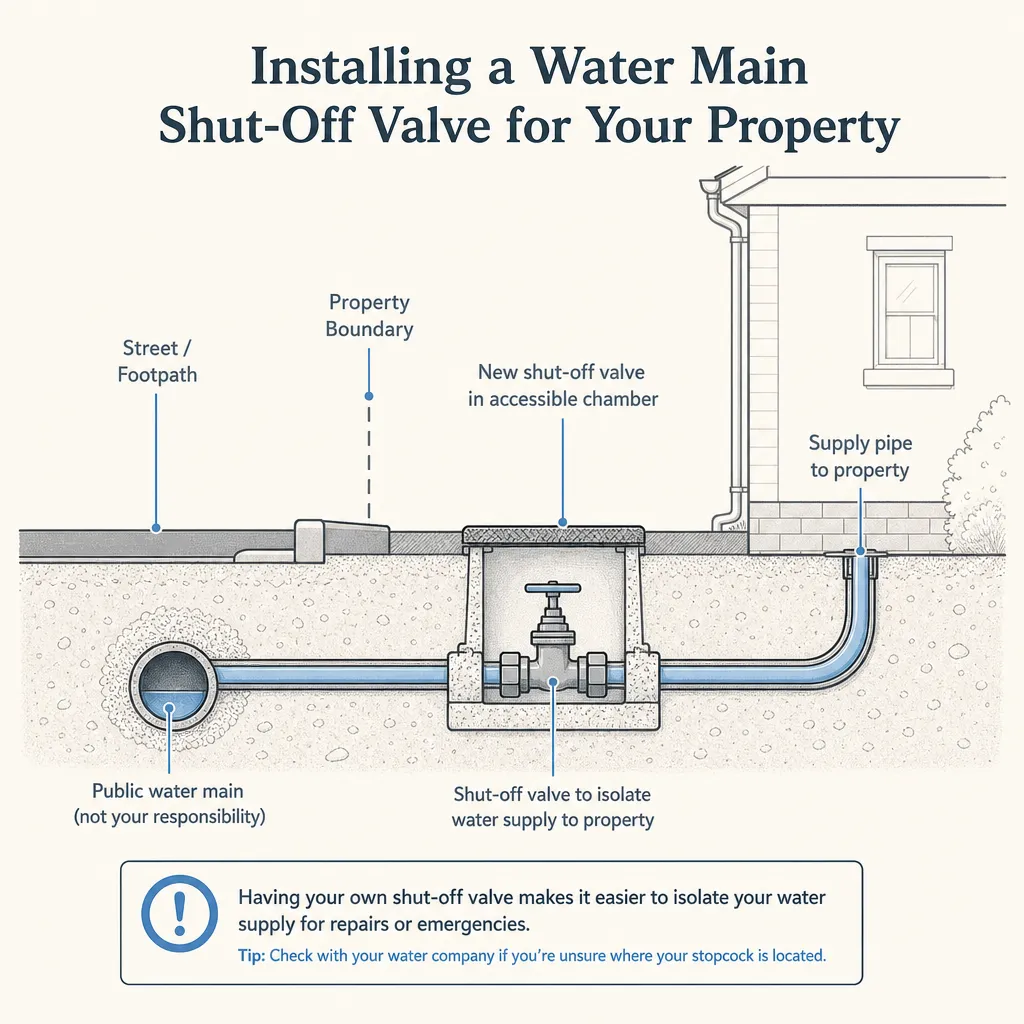
Installing a water main shut-off valve for your property
A water main shut-off valve — commonly called a stopcock — controls all water entering your home from the mains.
 General property advice
Monthly House Price Index: August Market Report and Analysis
The UK House Price Index is published monthly using completed Land Registry transaction data, meaning August figures typically reflect sales agreed months earlier.