Common Home Heating Mistakes: Efficiency and Safety
By Housey · Last reviewed 30th of May 2026
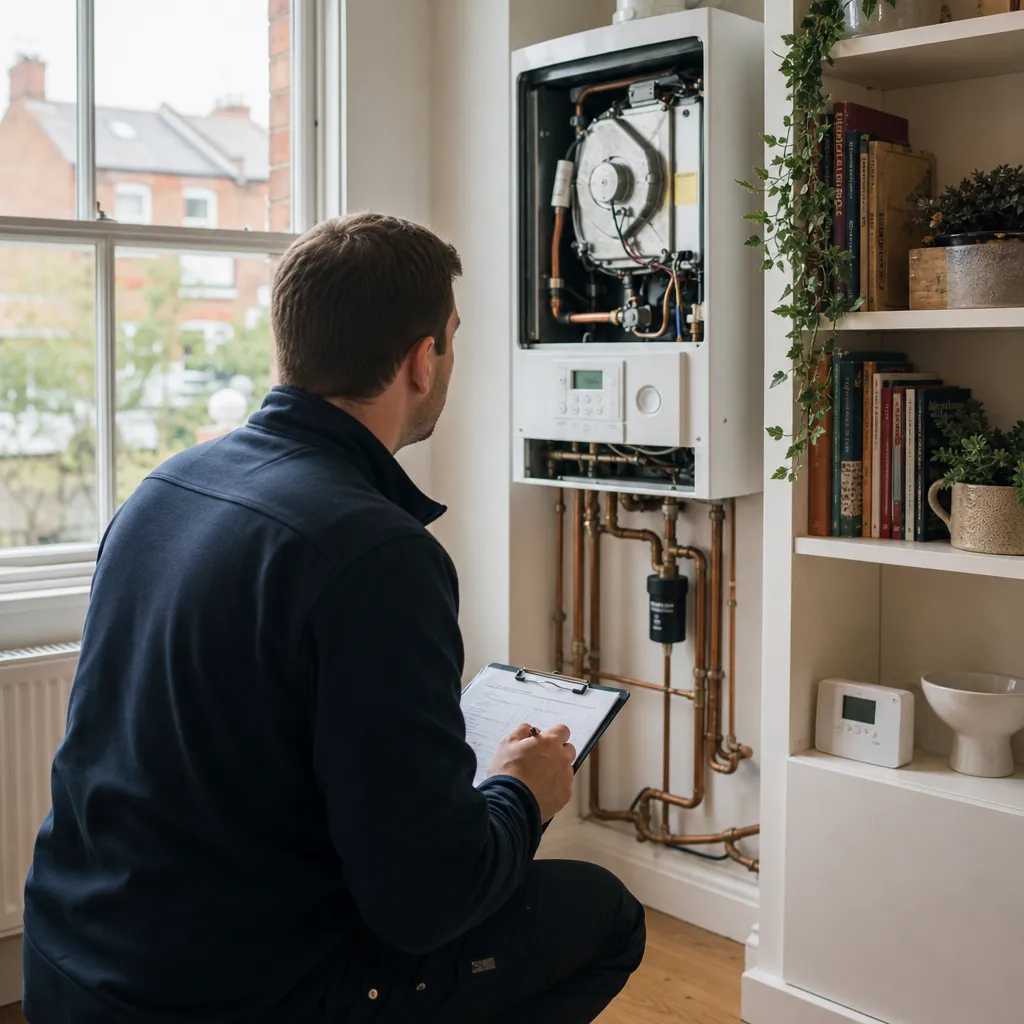
Common Home Heating Mistakes: Efficiency and Safety
Understanding how your heating system actually works — and how common misconceptions translate into wasted energy and unnecessary costs — has become more pressing as UK energy prices remain high and the transition to low-carbon heating gathers pace. The most expensive heating habits are rarely dramatic failures; they are small daily decisions based on assumptions that feel logical but contradict how modern boilers, heating controls, and building physics behave. Some of these mistakes also carry genuine safety implications, particularly where gas appliances go unserviced or ventilation is inadequate.
Key points
- Setting a gas boiler's flow temperature to 75–80°C is rarely efficient in a reasonably well-insulated home; the Energy Saving Trust recommends a flow temperature of 55–60°C for most combi boilers, which can reduce gas consumption by around 6–8%.
- Gas boilers and other gas appliances must be serviced annually by a Gas Safe registered engineer — a legal requirement for landlords under the Gas Safety (Installation and Use) Regulations 1998 and strongly advisable for all owner-occupiers.
- Blocking radiators with furniture or heavy curtains reduces heat output and forces the boiler to run longer to satisfy the thermostat set-point.
- Under Building Regulations Part L, replacement heating systems must include a room thermostat, programmer, and thermostatic radiator valves (TRVs) on all radiators except the one adjacent to the room thermostat.
- British Standard BS EN 50292 recommends a carbon monoxide (CO) alarm in every room containing a gas, oil, or solid fuel burning appliance; CO alarms are a low-cost, potentially life-saving addition to any home with combustion appliances.
Mistake 1: setting the boiler flow temperature too high
The flow temperature is the temperature at which your boiler sends water to the radiators. Most UK combi boilers are installed and left at 75–80°C — a legacy setting suited to older, poorly insulated homes with undersized radiators. In a reasonably insulated home, a flow temperature of 55–60°C is usually sufficient and allows the boiler to run in condensing mode, recovering latent heat from flue gases. The Energy Saving Trust estimates this adjustment alone can reduce gas use by around 6–8% with no loss of comfort in most homes.
On most combi boilers, look for the central heating temperature dial — typically marked with a radiator symbol. Reduce it in small increments, monitoring whether the home still reaches its target temperature on the coldest days. If in doubt, ask a Gas Safe registered engineer to advise.
Note: If your system has a hot water cylinder (system or heat-only boiler), stored hot water must reach at least 60°C to prevent Legionella growth. Do not reduce the cylinder temperature below 60°C without professional advice.
Mistake 2: assuming constant low heat is cheaper than a timed programme
The belief that leaving heating on a low constant temperature is more economical than using a programme is widespread in UK homes but is not supported by evidence in most dwelling types. Heat loss from a building is proportional to the temperature difference between inside and outside — a home held at 16°C all day loses significantly more energy than one that drops to 14°C during unoccupied hours. Both the Carbon Trust and the Energy Saving Trust recommend programmable controls with setback temperatures for most UK homes.
Exceptions exist: very well-insulated homes at EPC band A or B, or Passivhaus-standard properties, may respond better to a nearly constant temperature, and homes occupied all day may benefit from fewer programme changes. A heating engineer or energy-efficiency consultant can advise on the optimal programme for your specific dwelling type and occupancy.
Mistake 3: ignoring radiator balance and trapped air
Uneven heating — where some radiators are very hot and others barely warm — is almost always caused by trapped air or poor radiator balance. Bleeding radiators (releasing trapped air from the bleed valve at the top corner) should be carried out with radiators cold and after checking system pressure is correct. If the same radiator repeatedly needs bleeding within a short period, a minor system leak may be drawing in fresh air; a Gas Safe engineer should inspect the system pressure and integrity.
Radiator balancing — adjusting the lockshield valve at the return end of each radiator to ensure even heat distribution — is a standard commissioning task that is often skipped after installation. A heating engineer can balance a typical domestic system in a single visit.
Mistake 4: neglecting the annual boiler service
For landlords, annual boiler servicing by a Gas Safe registered engineer is a legal requirement under the Gas Safety (Installation and Use) Regulations 1998 and forms part of the Gas Safety Record obligations. For owner-occupiers, it remains strongly advisable: servicing identifies component wear before breakdown, verifies combustion efficiency, checks flue integrity, and confirms the appliance is not producing elevated carbon monoxide. A gas service should include a flue gas analysis, heat exchanger inspection, condensate trap check (on condensing boilers), and a visual inspection of gas connections.
Never attempt to service, adjust, or repair a gas boiler yourself. All gas work is restricted to Gas Safe registered engineers.
Mistake 5: poor heating controls
Inadequate controls are one of the largest controllable sources of heating waste in UK homes. Common errors include using only the boiler's on/off switch rather than a room thermostat, fitting TRVs but setting them all to maximum, failing to programme separate heating and hot water timings, and not updating programmes when household occupancy patterns change. Smart thermostats — offering remote control, occupancy detection, and schedule learning — can help, but they require active management and reliable Wi-Fi to deliver consistent savings.
Homeowner heating checklist
Work through this list at the start of the heating season:
Heating control options compared
Control type | What it does | Best for | Main limitation |
|---|---|---|---|
Room thermostat | Switches heating on/off based on air temperature in one reference room | Most homes; the essential baseline | Does not account for room-by-room temperature variation |
Thermostatic radiator valves (TRVs) | Limits heat output per individual radiator | Multi-room temperature management | Only effective if actively set to appropriate levels |
Smart thermostat | Remote control, learning algorithms, presence detection | Households with variable or irregular schedules | Requires Wi-Fi; upfront cost; needs active management |
Weather compensation | Adjusts flow temperature based on outdoor temperature | Heat pumps and modern hydronic systems | Requires compatible controls on boiler or heat pump |
Load compensation | Adjusts flow temperature based on room temperature demand | Any compatible heating system | Less beneficial in very well-insulated homes |
Red flags: when your heating system needs urgent attention
- CO alarm sounds — evacuate the property immediately and call the National Gas Emergency Service on 0800 111 999. Do not re-enter until the property has been checked by a Gas Safe engineer.
- Boiler pressure is persistently too high or too low despite correct repressurising — a Gas Safe engineer should investigate.
- Unusual smells, sounds, or visible soot marks around the boiler casing — switch off the appliance and call a Gas Safe engineer.
- Radiators remain cold throughout the home despite correct pressure and controls — possible pump failure or airlocked system; professional diagnosis needed.
- Boiler is more than 15 years old and has not been recently serviced — efficiency losses and safety risks both increase with appliance age and deferred maintenance.
Important limitations
This article covers general guidance on heating efficiency and safety for UK homes. Gas safety law is strict: never attempt to adjust, repair, or service a gas appliance yourself. All gas work must be carried out by a Gas Safe registered engineer. Advice specific to your boiler type, heat pump, or heating system should be sought from a qualified heating engineer or energy consultant. Grant availability and regulatory thresholds may change; always check current GOV.UK and Ofgem guidance.
What to ask a qualified professional
Before instructing a heating engineer or energy consultant, ask:
- Are you Gas Safe registered, and may I verify your registration number on the Gas Safe Register website?
- Will you carry out a flue gas analysis and combustion efficiency check as part of the boiler service?
- Can you balance my radiator system and review my flow temperature settings in the same visit?
- What controls do you recommend for my boiler type and dwelling, and what is a realistic payback period?
- If I am considering a heat pump, will you carry out or refer a room-by-room heat loss calculation for my property?
When to get professional help
Contact a Gas Safe registered engineer urgently if your CO alarm sounds, if boiler pressure is persistently abnormal, if the boiler produces unusual smells or sounds, or if radiators remain cold despite correct settings. Contact an energy-efficiency consultant if you want a whole-house assessment identifying the highest-impact improvements before investing in new controls, insulation, or a replacement heating system.
How Housey can help
Housey connects UK homeowners with qualified energy-efficiency consultants who can assess your home's heating controls, insulation, and system configuration, and with professionals for heat pump surveys if you are considering switching from gas to a low-carbon heating system.
Frequently asked questions
Is it cheaper to leave the heating on low all day or use a timer?
For most UK homes, a timed programme with setback is more efficient than a constant low temperature. The Energy Saving Trust supports timed heating with setback for most UK dwelling types. Exceptions exist for very well-insulated buildings or homes with all-day occupancy. A heating engineer can advise on the most appropriate programme for your home.
How often should I bleed my radiators?
Bleed radiators at the start of the heating season or whenever a radiator is warm at the bottom but cool at the top, indicating trapped air. If the same radiator needs bleeding repeatedly within a short period, a Gas Safe registered engineer should check the system for a minor leak that is drawing in fresh air.
What flow temperature should I set my combi boiler to?
The Energy Saving Trust recommends 55–60°C for most combi boilers in well-insulated homes, enabling condensing-mode operation that can reduce gas use by around 6–8%. For system or heat-only boilers with a hot water cylinder, stored water must reach 60°C to prevent Legionella. Ask a Gas Safe registered engineer to advise on the correct settings for your specific system.
How often should my gas boiler be serviced?
Annually. For landlords this is a legal requirement under the Gas Safety (Installation and Use) Regulations 1998. For owner-occupiers it is strongly advisable — it maintains efficiency, identifies wear before breakdown, verifies safe combustion, and upholds manufacturer warranties. Book ahead of the heating season to avoid busy winter waiting times.
Sources and further reading
- Thermostats and heating controls — Energy Saving Trust
- Gas Safety (Installation and Use) Regulations 1998 — legislation.gov.uk
- Gas Safe Register: find a registered engineer — Gas Safe Register
- Approved Document L: Conservation of Fuel and Power — GOV.UK
- Central heating and boilers — Energy Saving Trust
Useful next reads
 Energy & Retrofit
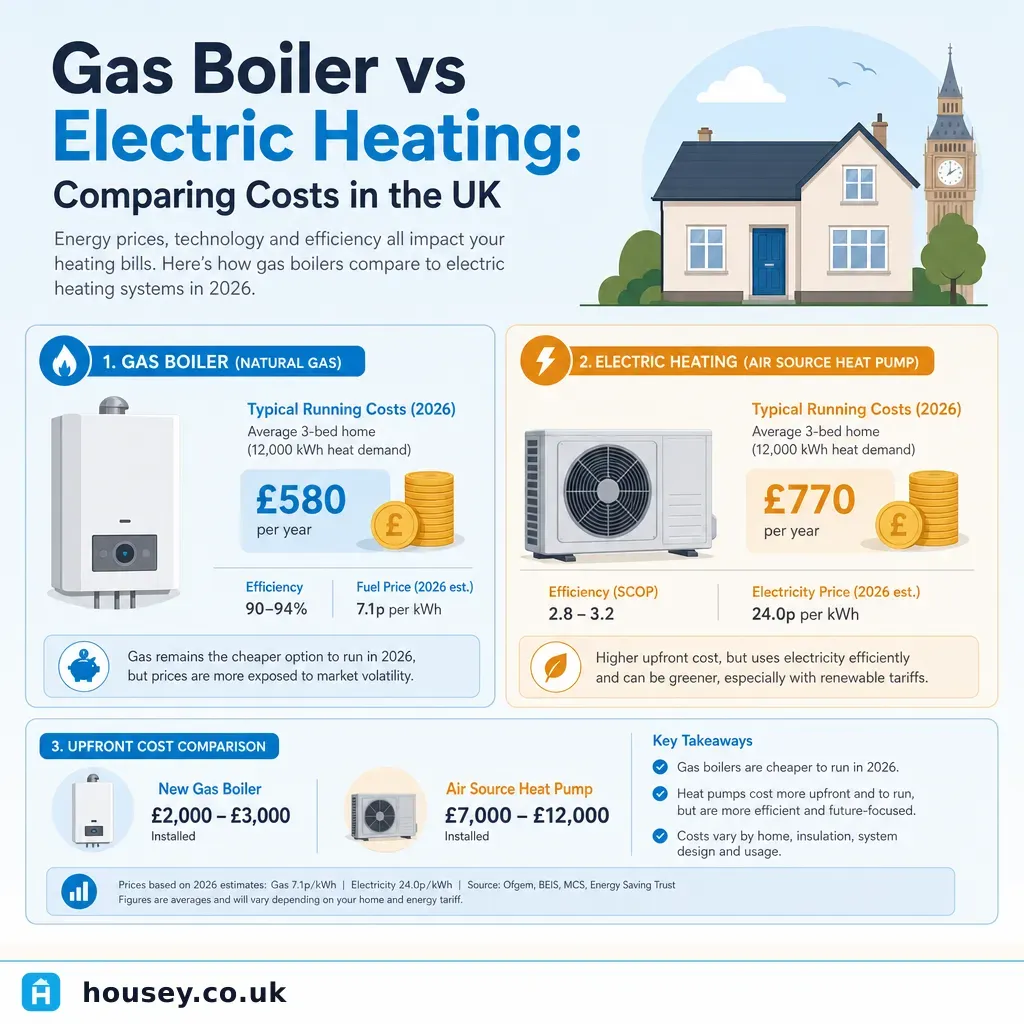
Gas Boiler vs Electric Heating: Comparing Costs in the UK
Gas boilers currently cost around 6.
 Energy & Retrofit
Reducing Heating Costs Through Property Energy Efficiency
Reducing heating costs starts with identifying where heat is lost — typically walls (30–35%), roof (20–25%), and windows.
 Energy & Retrofit
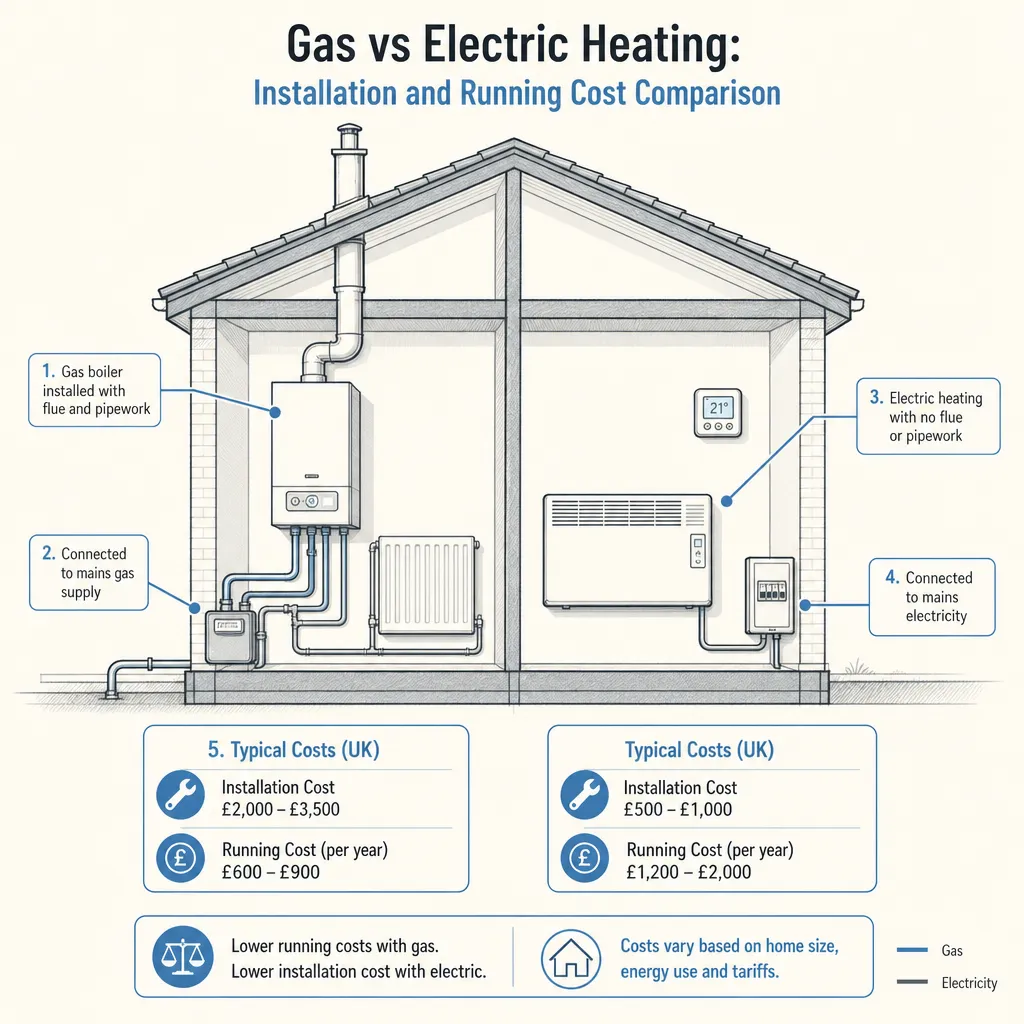
Gas vs Electric Heating: Installation and Running Cost Comparison
Gas central heating usually has lower running costs per kWh than direct electric heating in the UK, though heat pumps can change that equation.
 Energy & Retrofit
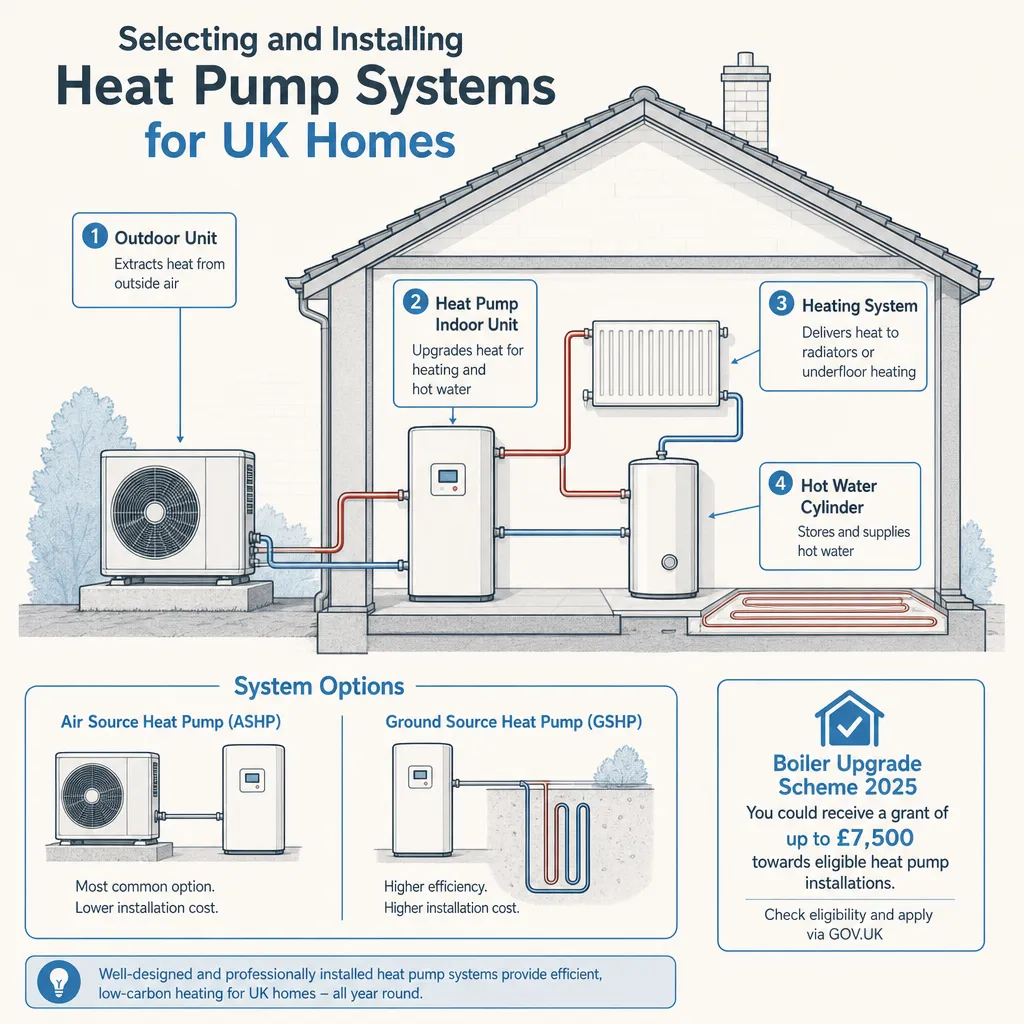
Selecting and Installing Heat Pump Systems for UK Homes
Selecting a heat pump for a UK home requires a site-specific heat loss calculation, an assessment of existing heat emitters, and a check on fabric insulation before any system is chosen.
 Energy & Retrofit
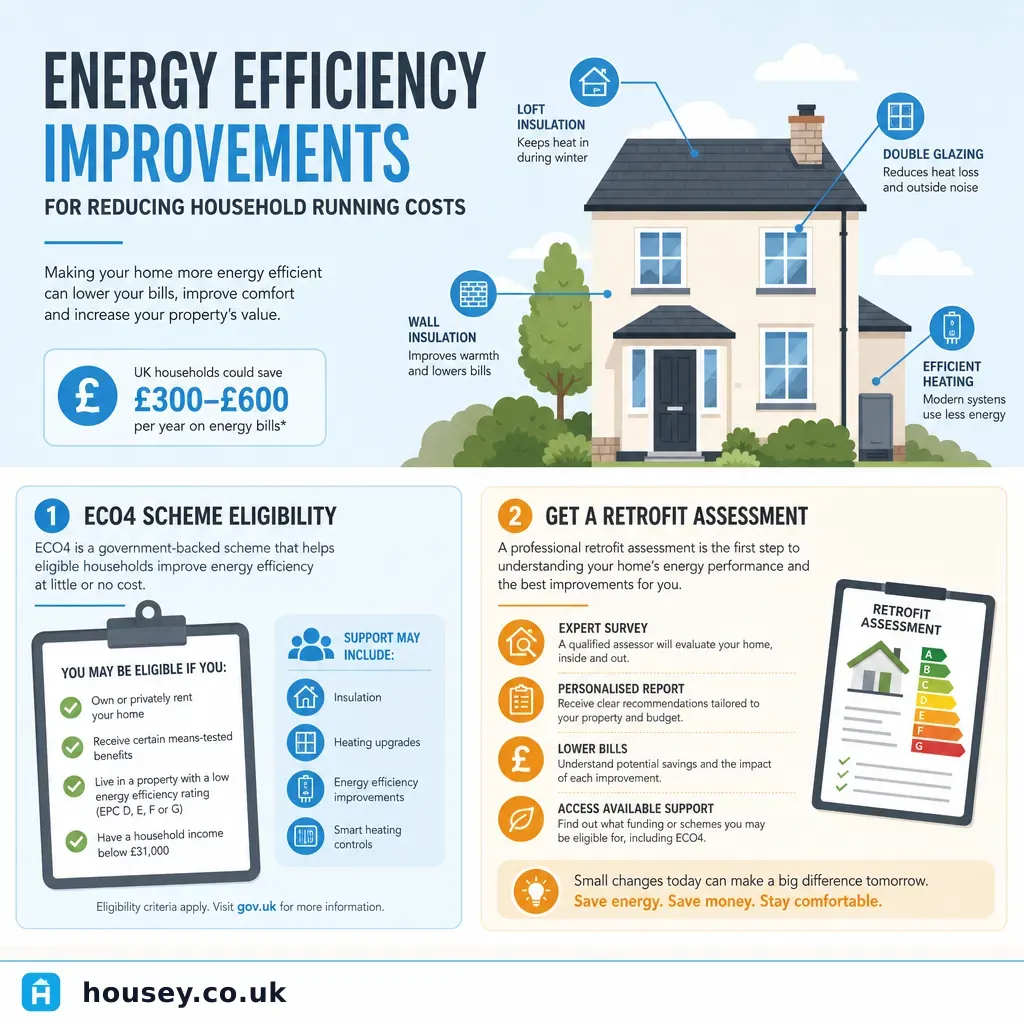
Energy Efficiency Improvements for Reducing Household Running Costs
Reducing household running costs usually starts with draught-proofing and loft insulation — the measures with the best savings-to-cost ratio.