Energy Efficiency Improvements for Reducing Household Running Costs
By Housey · Last reviewed 30th of May 2026
Energy Efficiency Improvements for Reducing Household Running Costs
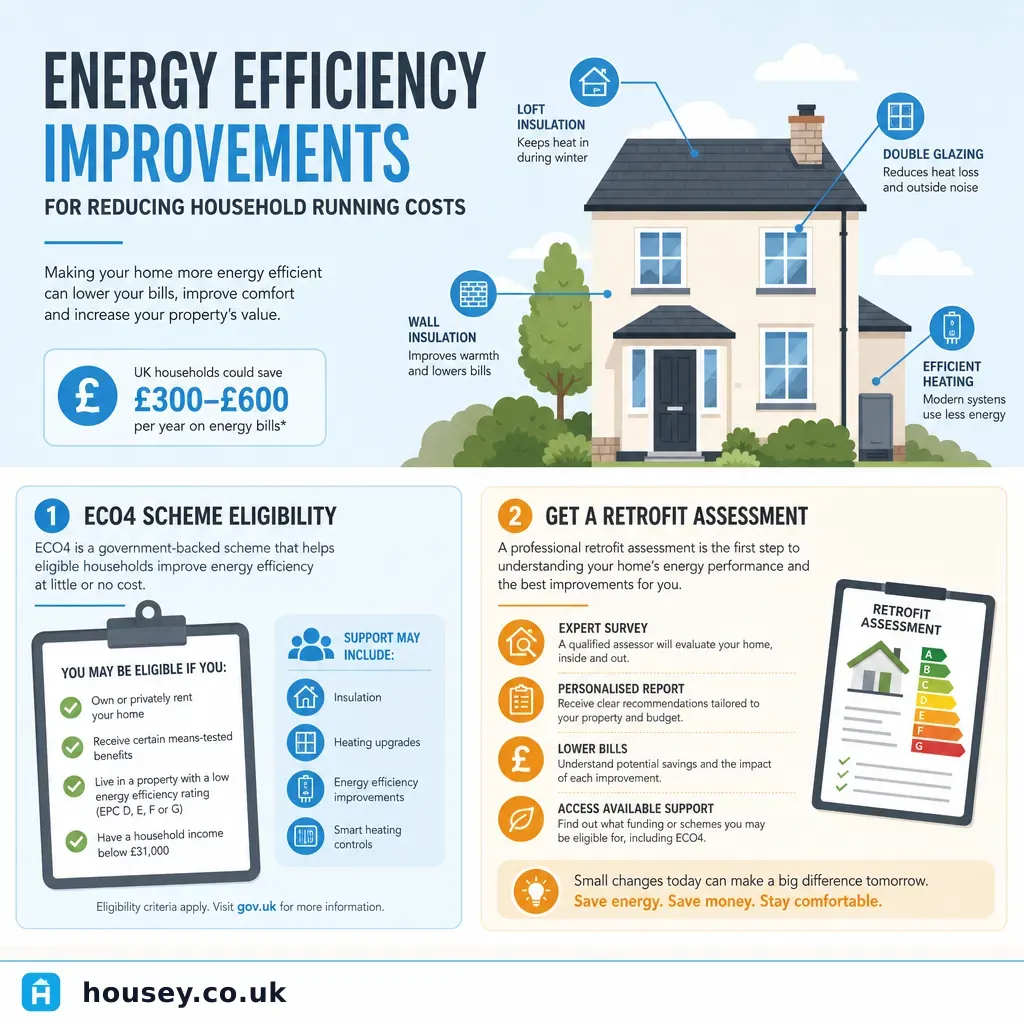
Rising energy tariffs and the impending tightening of minimum energy efficiency standards for rental properties have pushed energy efficiency firmly onto the agenda for homeowners and landlords across the UK. The question of where to start is rarely straightforward — the right improvement depends on a property's age, construction type, existing insulation levels, and heating system, and the wrong sequence of measures can create moisture or ventilation problems rather than solve them. Understanding the available measures, the funding landscape, and the correct order of works is the starting point for meaningful, lasting bill reductions.
Key points
- ECO4 (Energy Company Obligation 4) offers fully or partially funded insulation and heating upgrades for eligible households receiving means-tested benefits or meeting low-income criteria — apply via your energy supplier or check GOV.UK.
- PAS 2035:2019 is the British Standard governing whole-house retrofit in the UK; projects receiving public funding must follow it, and it requires a formal Retrofit Assessment by a qualified assessor before measures are specified.
- Loft insulation in an uninsulated semi-detached home can save an estimated £180–£300 per year, according to the Energy Saving Trust — typically the single highest savings-to-cost ratio measure available to most UK homeowners.
- Solid wall insulation — external or internal — carries a significant moisture risk if incorrectly specified for a pre-1920 solid brick or stone property; a PAS 2035 Retrofit Assessment should always precede any solid-wall insulation project.
- The Boiler Upgrade Scheme (BUS) currently provides a £7,500 grant towards an air source or ground source heat pump, applied for by an MCS-certified installer on the homeowner's behalf at the point of installation.
Which improvements have the most impact?
Different measures deliver different savings, upfront costs, and installation complexity. The table below provides a general guide; all figures are indicative and vary by property size, construction type, installer, and region.
Measure | Typical annual saving (semi-detached) | Indicative installed cost | Best suited to | Risk if poorly specified |
|---|---|---|---|---|
Loft insulation (uninsulated to 270mm) | £180–£300 | £300–£600 | Most homes with accessible loft | Low (maintain ventilation) |
Cavity wall insulation | £150–£250 | £600–£1,200 | Post-1920 cavity-walled properties | Moderate (damp if cavity unsuitable) |
Solid wall insulation (external) | £200–£450 | £8,000–£20,000+ | Pre-1920 solid-walled properties | High (moisture if incorrectly specified) |
Double or triple glazing (whole house) | £75–£200 | £3,000–£12,000 | Homes with single glazing | Low to moderate |
Air source heat pump (after BUS grant) | Varies widely | £7,000–£15,000 | Well-insulated homes, EPC C or above | High if undersized or poorly designed |
Solar PV (4kWp system) | £200–£500 (bill offset) | £5,000–£10,000 | South-facing roof with low shading | Low (if MCS-certified installer used) |
Draught-proofing | £50–£120 | £50–£300 (DIY feasible) | Most existing homes | Very low |
Hot water cylinder insulation jacket | £50–£80 | £15–£30 (DIY feasible) | Homes with uninsulated cylinders | Very low |
Indicative UK costs and savings, last reviewed 2026-05-30. Sources: Energy Saving Trust, BEIS household energy data.
The fabric-first principle: where to start
PAS 2035 and mainstream retrofit guidance consistently recommend a fabric-first approach: reduce heat loss through the building envelope before upgrading the heating system. Installing a heat pump in a poorly insulated property with single glazing will produce disappointing efficiency and higher running costs than the modelling suggests.
A practical order of works for most UK homes:
- Draught-proofing — lowest cost, immediate payback, minimal risk. Address gaps around doors, windows, loft hatches, and suspended timber floors.
- Loft insulation — highest savings-to-cost ratio for most homes. Funding through ECO4 or the Great British Insulation Scheme (GBIS) may be available at no or low cost.
- Cavity wall insulation — significant annual saving if your property has a suitable unfilled cavity (typically post-1920 construction). Confirm cavity suitability with a specialist before proceeding.
- Solid wall insulation — high capital cost but substantial saving for solid-walled properties. A PAS 2035 Retrofit Assessment is required to confirm the correct specification.
- Heating system upgrade — heat pump, hybrid heat pump, or high-efficiency boiler replacement, once the fabric performance has been improved.
- Renewables — solar PV and battery storage are most cost-effective once heat demand has been reduced by the measures above.
Funding and grants available in the UK
ECO4 runs until at least March 2026 and provides insulation and heating upgrades for eligible households. Eligibility depends on benefit receipt or low-income criteria. Contact your energy supplier or check GOV.UK for the current application process.
Great British Insulation Scheme (GBIS) provides cavity wall and loft insulation for properties with an EPC rating of D, E, F, or G. Eligibility is broader than ECO4 and covers many non-benefit households. Applications are made through energy suppliers or local authorities.
Boiler Upgrade Scheme (BUS) offers a £7,500 grant towards an air source heat pump or £7,500 for a ground source heat pump. The grant is claimed by an MCS-certified installer on your behalf at the point of installation.
Home Upgrade Grant (HUG2) targets off-gas-grid households in lower-income bands. Administered by local authorities — check with your council for availability in your area.
Scheme terms, funding caps, and eligibility criteria change — always verify the current position on GOV.UK before committing to work or turning down a contractor's offer.
Which improvement should I prioritise?
- Choose draught-proofing and loft insulation first if your home has poor or absent insulation — the savings-to-cost ratio is hard to beat and the risk of adverse effects is minimal.
- Choose cavity wall insulation if your property dates from approximately 1920 or later and the cavity is confirmed as suitable by a BBA-certificated installer.
- Choose solid wall insulation if your property is pre-1920 solid brick or stone construction, but only after a PAS 2035 Retrofit Assessment has confirmed the correct specification, vapour strategy, and ventilation approach for your specific wall type.
- Choose a heat pump if your property is already well insulated (EPC C or above), you have outdoor space for a unit, and you want to decarbonise your heating — use the Boiler Upgrade Scheme to reduce the capital cost.
- Choose solar PV if your roof faces broadly south, east, or west with minimal shading, and you spend time at home during the day or have battery storage to increase self-consumption.
- Seek a PAS 2035 Retrofit Assessment if your home is solid-walled, of unusual construction, pre-dates 1919, or you are simply unsure where to start — this assessment produces a Medium-Term Improvement Plan prioritised for your specific property.
Pre-retrofit preparation checklist
Red flags to watch for
- An installer offering solid wall insulation, cavity fill, or a heat pump without first carrying out a survey of your specific property and wall construction.
- Unsolicited approaches from contractors claiming you qualify for a free grant — some rogue operators have exploited ECO scheme referrals. Verify all installers are TrustMark-registered and check they are authorised under the relevant scheme with your energy supplier.
- Cavity wall insulation offered for a pre-1920 property — many older homes have narrow cavities, rubble fill, or porous masonry that make conventional injected insulation unsuitable and a potential source of damp.
- A heat pump sized without a full room-by-room heat loss calculation to BS EN 12831 — undersizing leads to poor efficiency, comfort complaints, and running costs higher than a gas boiler.
- Claims that a grant will cover the full cost of work without confirming your specific household eligibility — eligibility criteria are strictly assessed and vary significantly.
Important limitations
This article provides general information about energy efficiency measures available to UK homeowners and is not a substitute for a professional assessment of your specific property. Building construction, condition, occupancy, local climate, and existing moisture levels all affect which measures are suitable, achievable, and cost-effective. Solid wall insulation, heat pump installation, and changes affecting listed or conservation area buildings carry specific technical and regulatory requirements. Funding scheme terms change frequently — verify all eligibility criteria and current scheme availability on GOV.UK before committing to any work.
When this becomes urgent
Seek professional advice promptly if:
- New dampness, mould growth, or condensation has appeared following any insulation work — this may indicate a moisture risk triggered or worsened by the measure.
- Your property has an EPC rating of F or G and you let it to private tenants — Minimum Energy Efficiency Standards (MEES) regulations impose legal obligations on landlords, and the minimum permitted standard is under active government review.
- You are buying or selling a property and its EPC rating is affecting mortgage eligibility or sale price — an accredited energy assessor can confirm what improvements are achievable and at what indicative cost.
What to ask a qualified professional
Before instructing an energy-efficiency consultant or retrofit assessor:
- Are you TrustMark-registered, and do you hold the relevant qualifications to act as a Retrofit Coordinator or Retrofit Assessor under PAS 2035?
- Will you provide a written Retrofit Assessment and a Medium-Term Improvement Plan specific to my property?
- Which funding schemes am I eligible for based on my household income, benefit status, and my property's current EPC rating?
- For insulation: how will you assess the suitability of my cavity, or confirm the correct specification for my wall construction and any existing moisture conditions?
- For heat pump installation: will you carry out a room-by-room heat loss calculation to BS EN 12831 before sizing the system?
- What are the moisture and ventilation implications of the proposed measures for my specific property type and construction?
- Will the work be lodged with TrustMark and my energy supplier, and will I receive a PAS 2035-compliant completion certificate?
When to get professional help
A PAS 2035 Retrofit Assessor or energy-efficiency consultant should be your first call if:
- Your property is solid-walled, of unusual construction, or was built before 1919.
- You are planning more than one measure simultaneously and want to confirm the correct sequence for your specific property.
- You have experienced damp or moisture problems and are unsure whether a previous insulation installation is a contributing factor.
- You are applying for a grant scheme that requires a formal Retrofit Assessment under PAS 2035 before works are specified.
How Housey can help
An energy-efficiency consultant can review your current EPC, identify the highest-impact measures for your property type and construction, and advise on available funding routes. If you are planning a whole-house retrofit or need a formal assessment before applying for a grant, a retrofit assessment will produce the Retrofit Assessment document and Medium-Term Improvement Plan required under PAS 2035.
Frequently asked questions
What is the quickest energy efficiency improvement I can make?
Draught-proofing gaps around doors, windows, loft hatches, and suspended timber floors is the fastest and cheapest improvement available to most homeowners. It can often be completed in a weekend with materials costing £50–£150, with a payback period of under a year in most properties. No professional is required unless the gaps are unusually complex.
Does loft insulation need planning permission?
No. Installing or upgrading loft insulation does not require planning permission or Building Regulations approval in most cases. Listed buildings or conservation area properties may have constraints on certain external works, but standard loft insulation is an internal measure and is generally unaffected by these controls.
What EPC rating do I need to sell my home?
A valid Energy Performance Certificate must be provided to buyers before exchange of contracts — there is no minimum rating required to sell an owner-occupied home. For rental properties, Minimum Energy Efficiency Standards (MEES) currently require a minimum of EPC E for most privately rented homes in England and Wales, with the government consulting on a tighter future standard.
Can I get a grant for solar panels?
There is currently no universal UK government grant for solar PV for owner-occupied homes. MCS-certified solar PV systems qualify for the Smart Export Guarantee (SEG), which pays for surplus electricity exported to the grid. Some local authorities run targeted grant schemes — check with your local council and GOV.UK for the latest position in your area.
Sources and further reading
- Improve your home's energy efficiency — GOV.UK
- ECO4: Energy Company Obligation scheme guidance — GOV.UK / DESNZ
- PAS 2035: Retrofitting dwellings for improved energy efficiency — BSI / TrustMark
- Home energy saving advice — Energy Saving Trust
- Apply for the Boiler Upgrade Scheme — GOV.UK
- Minimum Energy Efficiency Standards: landlord guidance — GOV.UK
- Smart Export Guarantee (SEG) — Ofgem
Useful next reads
 Energy & Retrofit
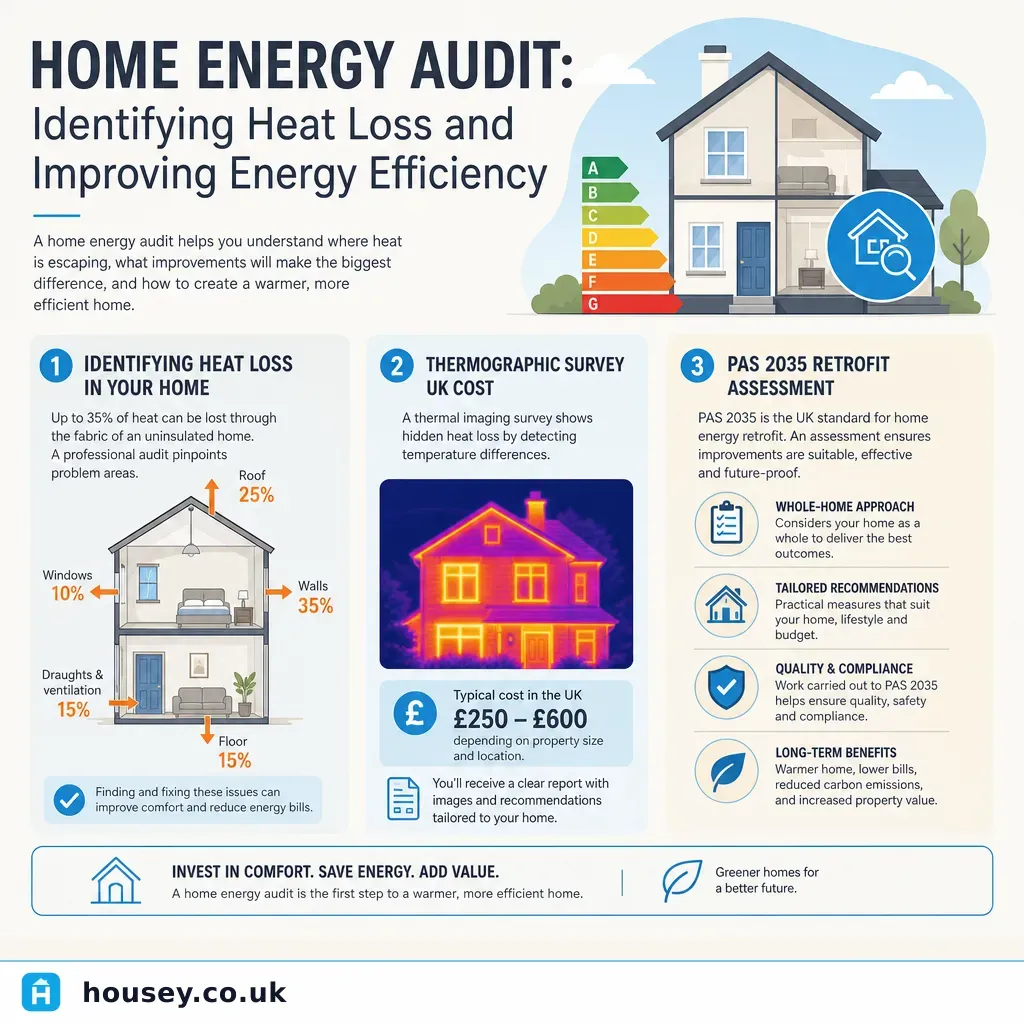
Home Energy Audit: Identifying Heat Loss and Improving Energy Efficiency
A home energy audit is a structured assessment of where your property loses heat and how efficiently it uses energy.
 Energy & Retrofit
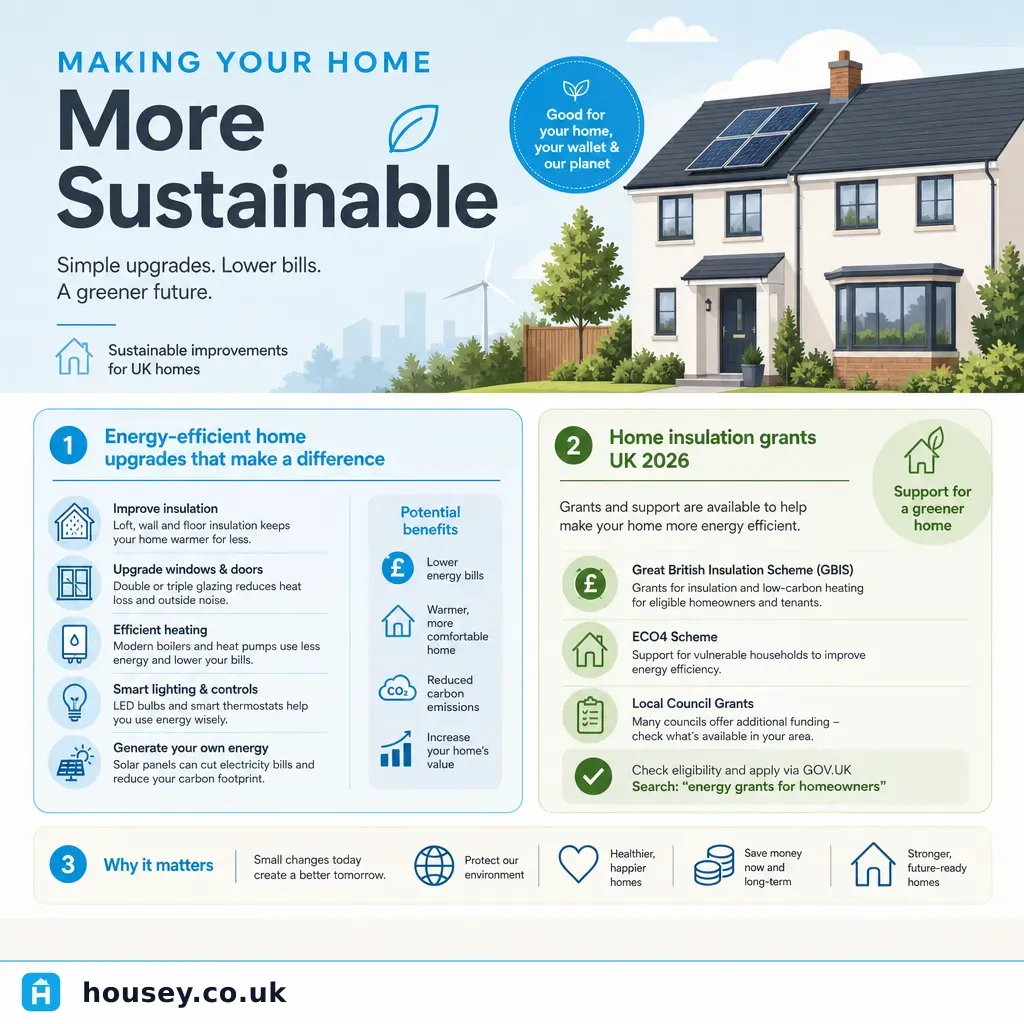
Making your home more sustainable
Making a UK home more sustainable usually starts with fabric-first improvements such as insulation, draught-proofing, and efficient glazing before adding renewable energy systems like solar panels or a heat pump.
 Energy & Retrofit
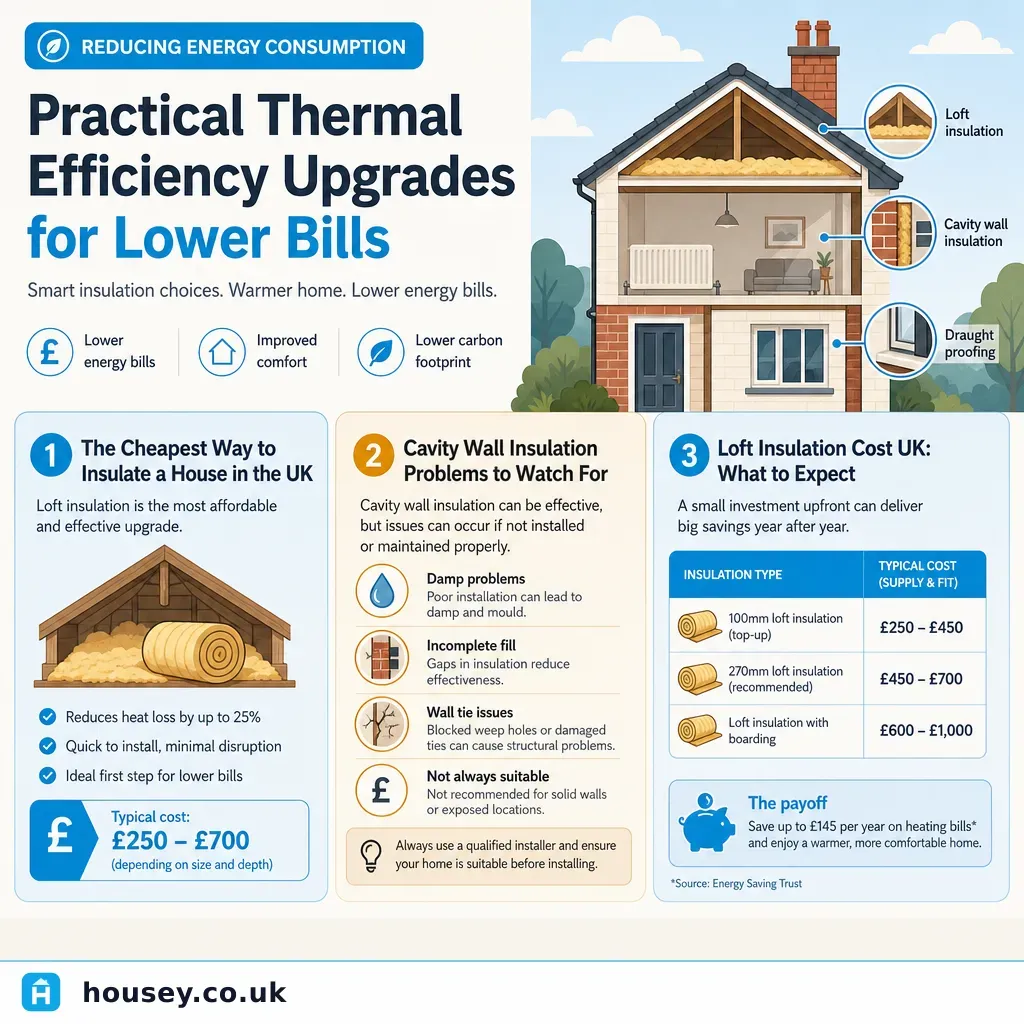
Reducing Energy Consumption: Practical Thermal Efficiency Upgrades for Lower Bills
Improving your home's thermal performance typically starts with the cheapest, fastest-payback measures: draught-proofing gaps at doors, windows, and floors, then loft insulation to 270 mm.
 Energy & Retrofit
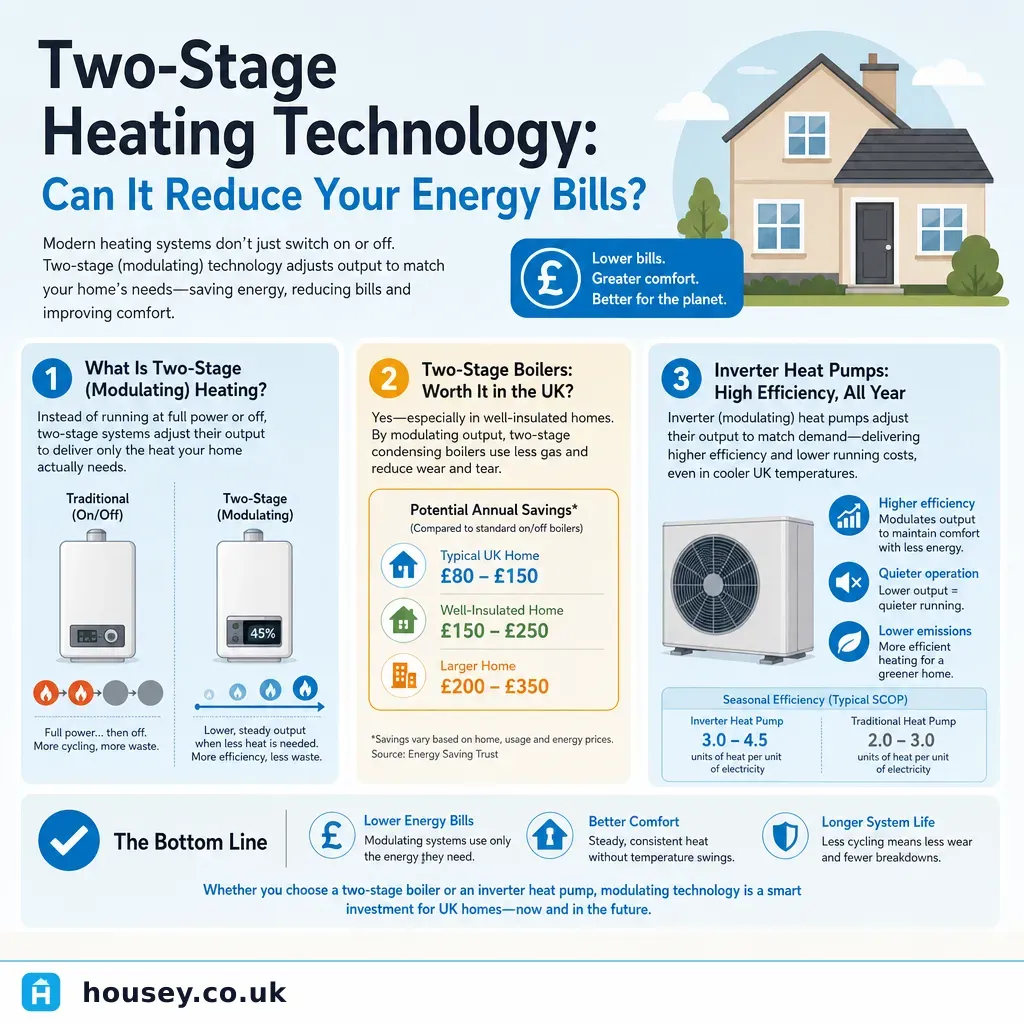
Two-Stage Heating Technology: Can It Reduce Your Energy Bills?
In UK homes, two-stage or modulating heating technology refers to modulating condensing gas boilers and inverter-driven heat pumps, not the forced-air furnaces common in North America.
 Energy & Retrofit
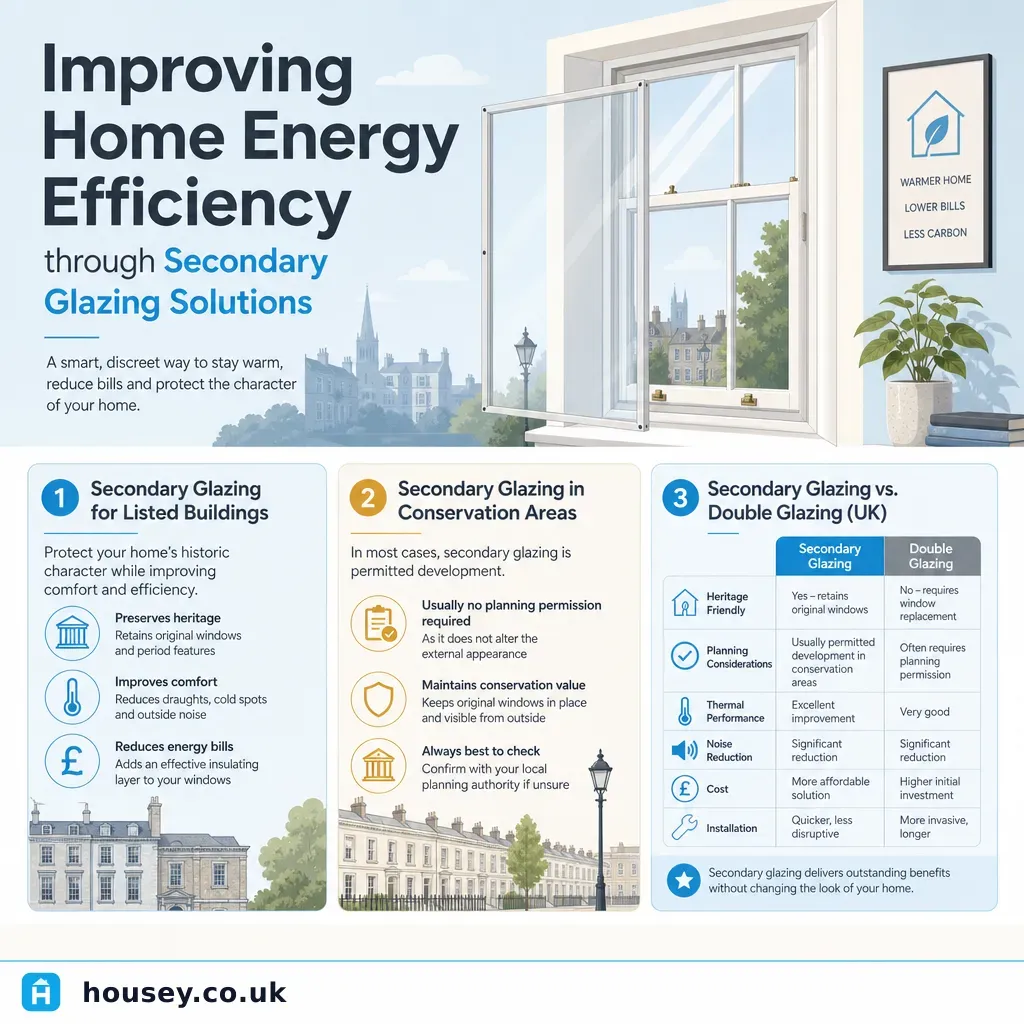
Improving Home Energy Efficiency through Secondary Glazing Solutions
Secondary glazing fits an additional pane inside your existing window reveal, reducing heat loss and noise without replacing the original frame.