Common Home Repair Mistakes: Prevention and Solutions
By Housey · Last reviewed 1st of June 2026
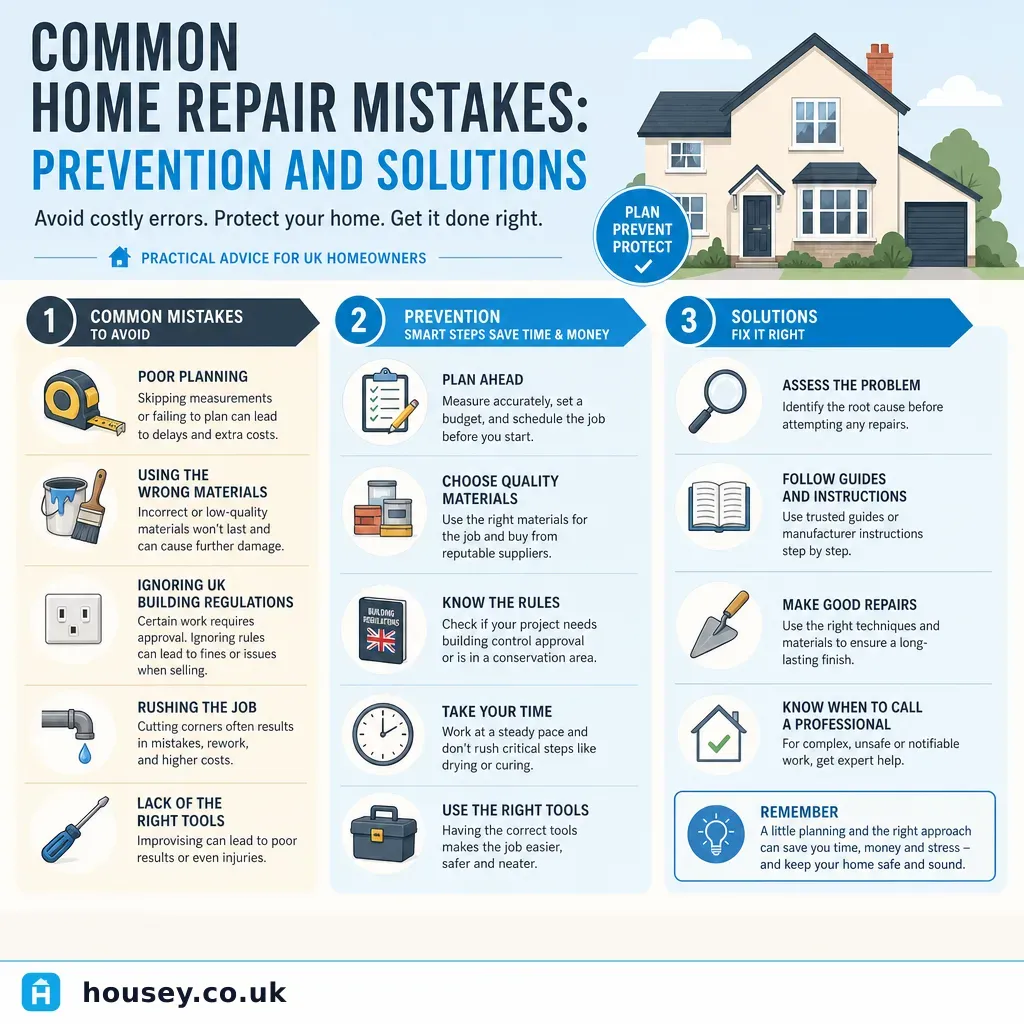
Common Home Repair Mistakes: Prevention and Solutions
Home improvement projects across the UK regularly run over budget, take longer than planned, or produce results that need putting right — often because of avoidable errors made early in the process. From misjudging whether a wall is load-bearing to skipping building control sign-off on an extension, the same categories of mistake appear repeatedly in properties of every era and type. Understanding where things typically go wrong is the most practical preparation any homeowner can make.
Key points
- Skipping building regulations approval for notifiable work — including most extensions, loft conversions, and new electrical circuits — can make a property harder to sell and may attract enforcement action under Section 36 of the Building Act 1984.
- Suspected asbestos-containing materials (ACMs) must not be disturbed without a prior survey; the Control of Asbestos Regulations 2012 places legal duties on anyone who may disturb ACMs, and properties built before 2000 may contain them.
- All gas work must be carried out by a Gas Safe registered engineer; unlicensed gas work is illegal under the Gas Safety (Installation and Use) Regulations 1998 and typically voids home insurance.
- Accepting a verbal quote without a written contract covering scope, price, and a staged payment schedule is a leading cause of contractor disputes recognised by Citizens Advice and the Construction Ombudsman.
- Applying impermeable renders or chemical damp-proof courses to solid-wall pre-1919 properties often traps moisture within the wall fabric, worsening damp rather than resolving it.
Planning and preparation mistakes
Starting without checking permissions
Beginning notifiable work without first establishing whether planning permission or building regulations approval is required is one of the most costly mistakes UK homeowners make. Permitted development rights allow many common projects — single-storey rear extensions within certain dimensions, loft conversions, and garage conversions — without a full planning application, but these rights are subject to size limits, property type, and location. Properties in conservation areas, national parks, or Areas of Outstanding Natural Beauty (AONBs) have more restricted permitted development rights; listed buildings require listed building consent for any material alteration.
Building regulations are entirely separate from planning permission. Even where planning is not needed, building control approval is usually still required for structural work, extensions, roof alterations, new bathrooms, and most electrical or drainage changes. Work completed without the required approval must be disclosed when selling and can delay or block a transaction.
Under-budgeting and single-quote procurement
Accepting one quote without understanding what is included is a persistent problem. A lower headline price that excludes structural surveys, waste disposal, plastering after first-fix works, or VAT often costs more in total than a higher quote covering full scope. The Federation of Master Builders (FMB) recommends obtaining at least three comparable written quotes before instructing any contractor.
No written contract
Citizens Advice recommends a written contract for any work above a modest sum. It should cover: scope of work, materials specification, start and expected completion dates, a staged payment schedule, a variation procedure, and what happens if problems arise. Verbal agreements are legally binding in England and Wales but extremely difficult to enforce in a dispute.
Structural and building work mistakes
Removing walls without structural assessment
Knocking through between rooms or removing chimney breasts are popular projects in Victorian terraces and 1930s semis, but removing a load-bearing wall or chimney breast without adequate support — typically a steel RSJ beam sized by a structural engineer — can cause serious structural damage. A structural engineer or RICS-chartered surveyor should assess any wall before removal work begins, and building control sign-off is required.
Misdiagnosing and overtreating damp
Damp is widely misdiagnosed in UK properties, particularly in pre-1919 solid-wall homes. Injected chemical damp-proof courses and impermeable renders applied to solid-wall properties can trap moisture within the wall fabric, making the underlying problem worse. The Property Care Association (PCA) recommends diagnosis by a qualified specialist before any treatment; penetrating damp, condensation, and defective gutters are far more common causes than true rising damp.
Flat roof failures
Flat roof extensions and outbuildings generate a disproportionate share of domestic building complaints in the UK. Common errors include insufficient fall — typically a minimum of 1:80 is required for most felt and EPDM systems — poor detailing at abutments and upstands, and materials not suited to the UK climate. A poorly installed flat roof can fail within a few years and may require complete replacement.
Electrical, plumbing, and gas errors
Notifiable electrical work without certification
Under Part P of the Building Regulations (England), most electrical work in kitchens and bathrooms, and all new circuits anywhere in a dwelling, must either be carried out by a registered competent-person scheme member — such as a NICEIC or NAPIT registered electrician — or notified to building control before work begins. Uncertified electrical work is a safety risk and must be disclosed on any property sale.
Plumbing: ignoring Water Regulations
Work on plumbing systems must comply with the Water Supply (Water Fittings) Regulations 1999. Some work must be notified to the local water undertaker in advance. Fitting non-compliant or absent backflow-prevention devices is a common DIY plumbing error with potential public health consequences.
Gas: a registered engineer only
Gas installation and repair work must only be carried out by an engineer on the Gas Safe Register. There are no homeowner exemptions. Illegal gas work voids buildings insurance and creates serious risks. If you smell gas: do not operate electrical switches; open windows; leave the property immediately; and call the National Gas Emergency Service on 0800 111 999.
What not to assume
These are the most common misconceptions that cause home repairs and improvements to go wrong:
Common assumption | Reality |
|---|---|
Permitted development means building control is not needed either | Planning permission and building regulations are entirely separate regimes; many permitted development projects still require building control approval. |
A wall running parallel to the floor joists cannot be load-bearing | Wall orientation is not a reliable test; load paths are complex. A structural engineer's assessment is the only reliable confirmation. |
The damp must be rising damp and needs a chemical DPC injection | True rising damp is relatively rare; condensation, penetrating damp, and defective gutters or pipes are far more common. Misdiagnosis leads to ineffective and costly treatment. |
A general builder can carry out gas, electrical, or oil heating work | For gas (Gas Safe Register), electrical work in kitchens and bathrooms (Part P), and oil heating (OFTEC), registration with a recognised competent-person scheme is a legal requirement. |
If the work looks right, it has passed building regulations | Building regulations cover structural integrity, fire safety, thermal performance, and drainage — none of which are visible once work is complete. Formal certification is required. |
The previous owner confirmed no permission was needed | Always verify with your local planning authority; an absence of enforcement action so far is not confirmation of lawfulness. |
Red flags that a repair or build has gone wrong
Recognising early warning signs can prevent a minor problem from escalating into a structural or legal crisis:
- New cracks appearing in walls or ceilings shortly after building work — especially stepped diagonal cracks in brickwork, which may indicate differential structural movement.
- Doors and windows sticking soon after structural work is completed, which can signal inadequate support or unexpected movement.
- Persistent damp smell or new damp patches appearing after waterproofing or damp-treatment work has been carried out.
- Water pooling on a newly installed flat roof after rain, indicating insufficient fall or poor detailing at abutments.
- Electrical circuits tripping frequently or sockets feeling warm to the touch after electrical work.
- Gas smell at any time after gas work — do not investigate yourself; leave the property and call the National Gas Emergency Service (0800 111 999).
- No building regulations completion certificate for work that required one — contact your local building control authority promptly.
- A contractor who cannot or will not provide a written contract, proof of public liability insurance, or a relevant trade registration number when asked.
Before you start: homeowner checklist
Work through this list before instructing any contractor or beginning a substantial DIY project:
When to get professional help
Some repairs carry legal requirements or safety risks that make professional involvement essential rather than optional:
- Gas work: Gas Safe registered engineer only — no homeowner exemptions exist.
- New electrical circuits and electrical work in kitchens or bathrooms: Part P registered electrician, or formal notification to building control before work starts.
- Suspected asbestos-containing materials: Commission an accredited asbestos survey before any works that may disturb these materials.
- Structural alterations including wall removal, chimney breast removal, or underpinning: require a structural engineer's assessment and building control sign-off before and after the work.
- Any notifiable building work: ensure building control is notified before work begins and that a completion certificate is obtained on completion.
If work has already been done incorrectly, a RICS-chartered surveyor, structural engineer, or relevant specialist can assess the extent of the problem and advise on remediation options.
How Housey can help
Whether you are planning a home extension, repairing a flat roof, or simply want to avoid the risks that come with unvetted contractors, Housey connects you with qualified local professionals. Find accredited extension builders or trusted roofers in your area — submit a brief and compare quotes so you can make a well-informed decision before any work begins.
Frequently asked questions
What happens if I complete building work without building regulations approval in England?
Unapproved work is a material fact that must be disclosed when selling. The local authority has 12 months to take enforcement action under Section 36 of the Building Act 1984. A regularisation application can retrospectively certify completed work, though some work may need to be exposed for inspection or partially redone. Always obtain approval before starting notifiable work.
How do I check that a contractor is properly registered?
For gas engineers, search the Gas Safe Register at gassaferegister.co.uk. For electricians, check NICEIC (niceic.com) or NAPIT (napit.org.uk). For window and door installers, check FENSA (fensa.org.uk). For general builders, the Federation of Master Builders (fmb.org.uk) and TrustMark (trustmark.org.uk) maintain searchable registers. Always verify directly on the official register rather than relying on a website claim alone.
Can I make a legal claim against a contractor for poor workmanship?
Yes. Under the Consumer Rights Act 2015, a contractor must carry out work with reasonable care and skill. If they do not, you may be entitled to repair, repeat performance, or a price reduction. Disputes can be pursued through the county court small claims track for amounts up to £10,000 in England and Wales, or via an alternative dispute resolution scheme where the contractor is a member of one.
Can old textured ceilings or floor tiles contain asbestos?
Yes. Textured coatings such as Artex, vinyl floor tiles, and tile adhesives in properties built or renovated before 2000 may contain chrysotile (white asbestos). Under the Control of Asbestos Regulations 2012, you must not disturb materials you know or suspect contain asbestos. Commission an accredited asbestos survey before any works that may affect these materials.
Sources and further reading
- Planning Portal: Permitted development rights for householders — Planning Portal
- GOV.UK: Building regulations approval — GOV.UK
- Gas Safe Register: Check an engineer's registration — Gas Safe Register
- NICEIC: Find a registered electrician — NICEIC
- HSE: Asbestos — guidance for homeowners — Health and Safety Executive
- Citizens Advice: Problems with building work, decorators and repairs — Citizens Advice
- Federation of Master Builders: Consumer advice for homeowners — Federation of Master Builders
Useful next reads
 Improvement & Build
Winterizing Plumbing in Holiday Homes and Vacation Properties
Holiday homes left unheated face serious burst-pipe risk in UK winters.
 Improvement & Build
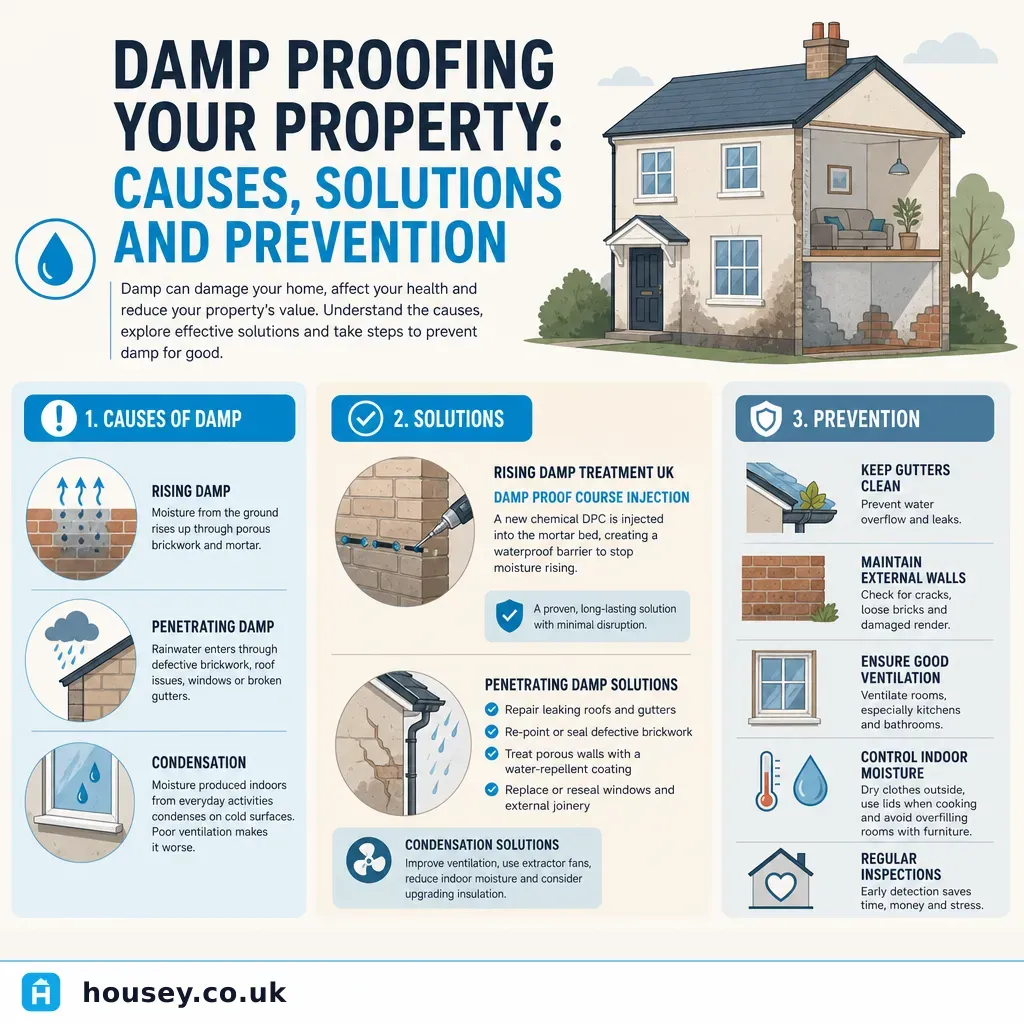
Damp Proofing Your Property: Causes, Solutions and Prevention
Damp in UK properties falls into three main types: rising damp caused by a failed damp proof course, penetrating damp from defects such as failed flashings or cracked render, and condensation from poor ventilation.
 Improvement & Build
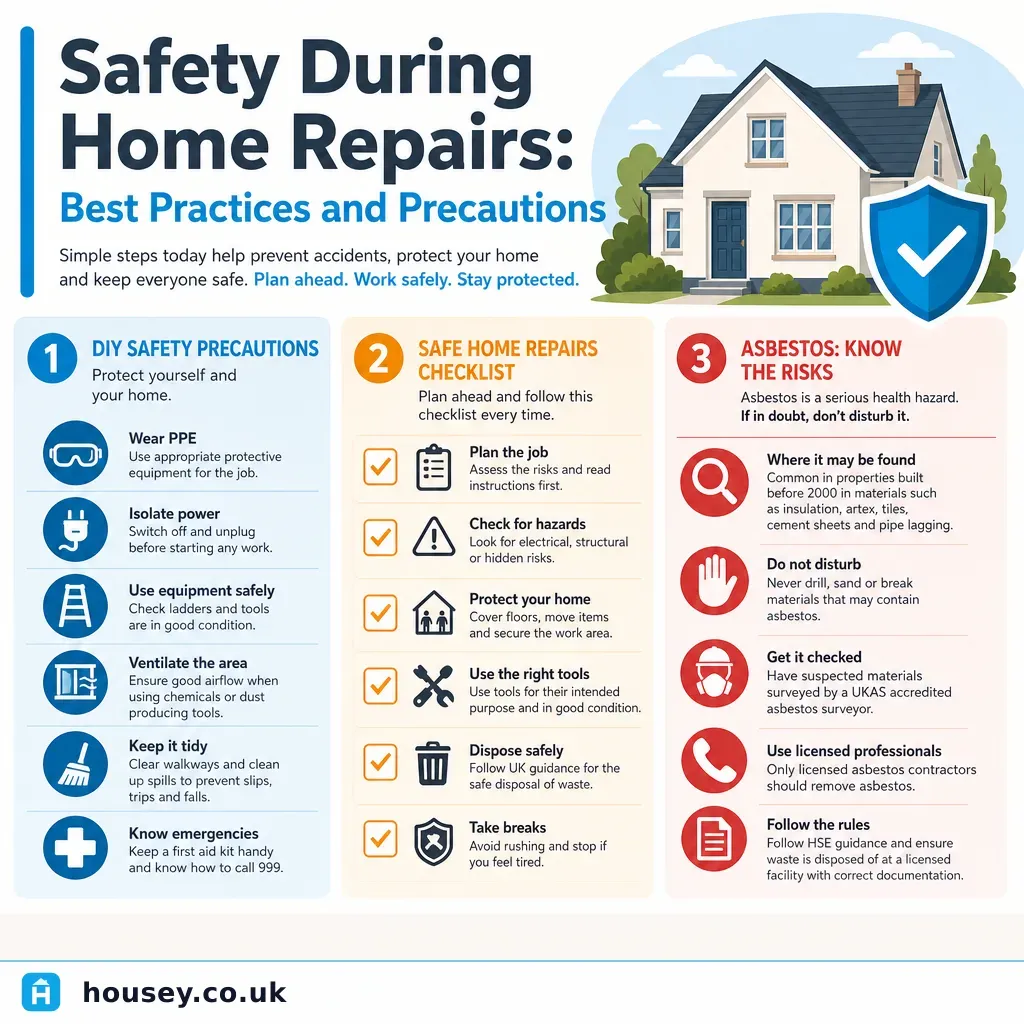
Safety During Home Repairs: Best Practices and Precautions
Safe home repairs in the UK require identifying hazards before starting — including asbestos in pre-2000 properties, gas and electrical risks, and working-at-height dangers.
 Improvement & Build
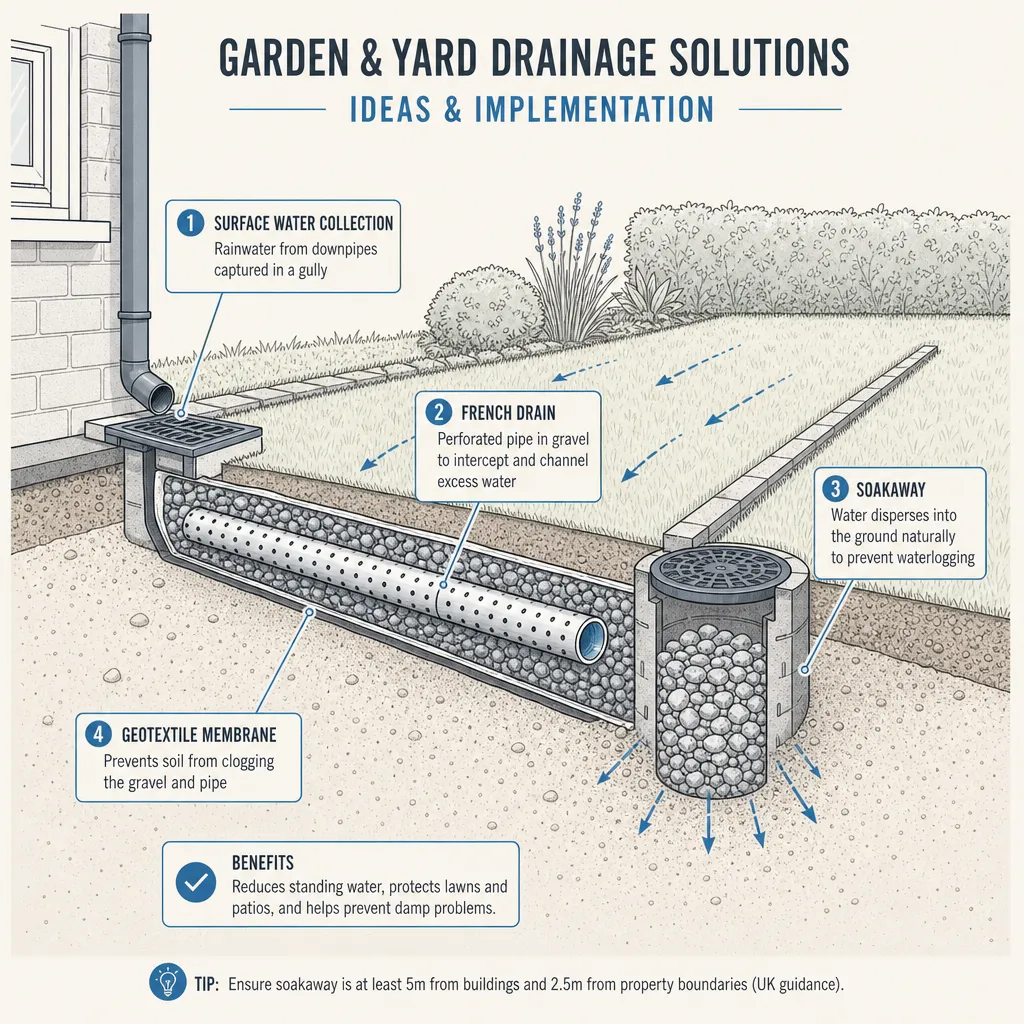
Garden and yard drainage solutions: ideas and implementation
Garden drainage problems — from standing water to waterlogged lawns — are usually resolved with French drains, soakaways, channel drainage, permeable paving, or improved grading.
 Improvement & Build
Is Your Garage Door Safe? Safety Checks and Maintenance
UK automatic garage doors must have auto-reversal and photocell safety sensors under the Supply of Machinery (Safety) Regulations 2008.