Common Velux Window Issues and How to Resolve Them
By Housey · Last reviewed 12th of May 2026
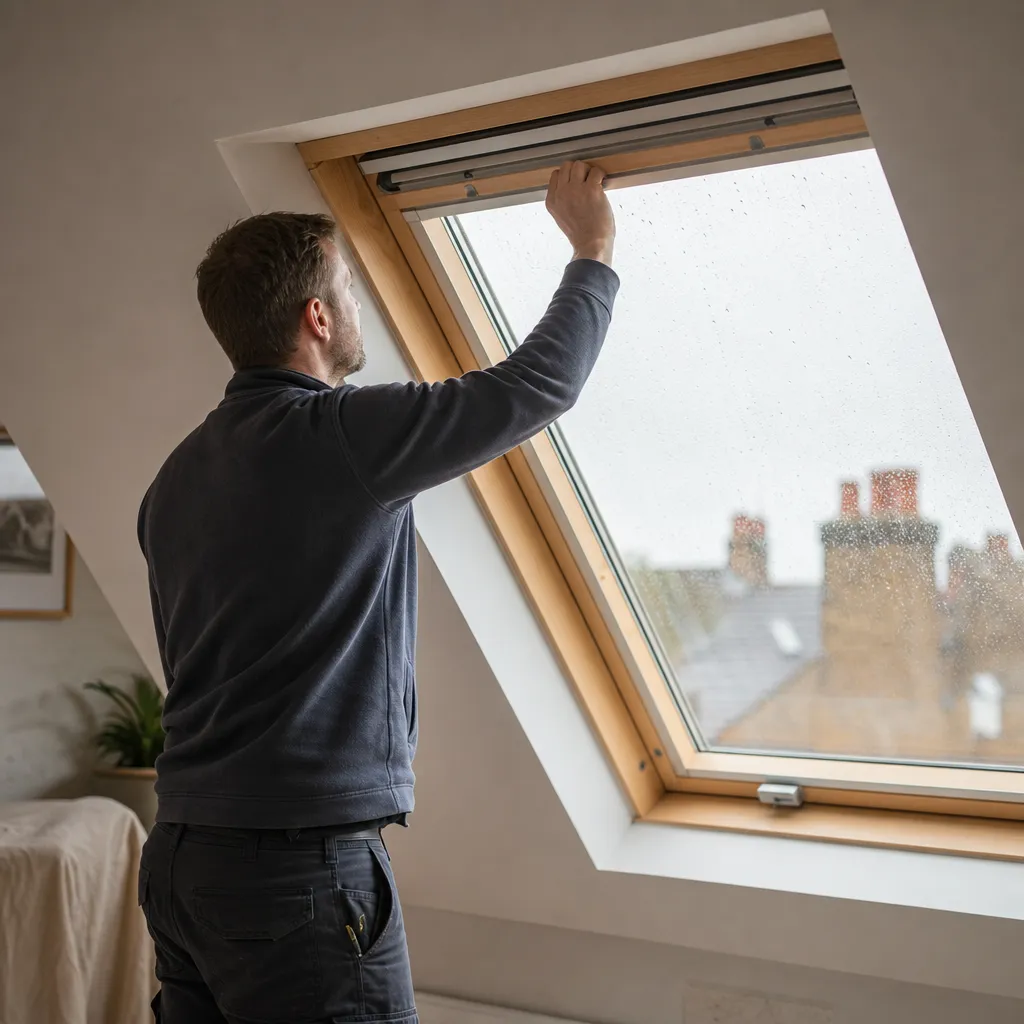
Common Velux Window Issues and How to Resolve Them
Roof windows are hardest working when the weather is worst — which is also when problems become most apparent. Whether you've noticed a drip around the frame during a downpour, a stiff handle that won't lock, or misted panes that won't clear, roof window faults tend to surface at inconvenient moments. Understanding what's actually failing, and whether it's something you can address yourself or requires a professional to inspect from the roof, can save both time and unnecessary expense.
Key points
- Most Velux roof window leaks originate at the flashing collar or the flashing kit interface with the roof covering, not the window unit itself.
- Condensation on the internal surface of the glass is usually caused by high internal humidity; condensation between the two panes indicates a failed sealed unit requiring replacement.
- Velux recommends maintenance every one to two years, including cleaning drainage channels, checking seals, and lubricating hinges and handles with a silicone-based product.
- Most Velux roof window models carry a 10-year product guarantee; installation defects are generally excluded unless the window was fitted by an accredited installer.
- Replacing like-for-like roof windows in an existing opening is usually permitted development in England; changing the opening size may require building control sign-off under Part L.
The most common Velux window problems
Water ingress and leaks
Leaks are the fault homeowners are most anxious about — and they are often misdiagnosed. Water appearing on the ceiling or around the window frame during rain usually traces back to the flashing system rather than the window unit itself. The flashing collar seals the gap between the window frame and the surrounding roof covering; if this deteriorates, shifts, or was incorrectly installed, water finds a path into the roof structure.
Common leak sources to check:
- EDW or BDW flashing kit: the aluminium collar around the frame. Look for gaps, lifted sections, or cracked sealant at the joints.
- Roof covering at the upslope edge: tiles or slates bridging the head of the window need to lap correctly over the flashing.
- Drainage channels: blocked channels inside the frame can overflow and mimic a leak; clean them with a dry cloth.
- Sash seal: if the rubber gasket around the opening sash has shrunk or split, driving rain can enter at the perimeter.
What not to assume: a wet patch directly below the window on a warm day is not always a leak — it may be condensation running down the glass or frame. Confirm by checking the area during and immediately after heavy rainfall before calling in a roofer.
Condensation problems
Surface condensation on the inner pane is common in UK homes, particularly in bathrooms, kitchens, and older properties with limited extract ventilation. It does not usually indicate a window fault. Improving ventilation — trickle ventilators, an extractor fan, or simply opening the window more regularly — often resolves it.
Condensation between the two panes of glass is a different matter. This indicates that the hermetic seal of the insulating glazing unit (IGU) has failed, allowing moist air into the cavity. Once this occurs, the unit cannot be repaired — it must be replaced. Replacement sealed units for many Velux models are available from glazing suppliers without replacing the entire frame.
Handles, latches, and operation
Problem | Likely cause | First step | When to call a pro |
|---|---|---|---|
Handle stiff or hard to turn | Dry hinge mechanism | Apply silicone spray (not WD-40 near rubber) | If hinge is bent or sash is visibly warped |
Latch won't engage | Worn catch or misaligned sash | Ensure sash is fully closed; clean latch | If latch is broken or sash drops out of alignment |
Window won't stay open | Friction shoe worn | Adjust friction shoe (user-adjustable on most GGL models) | If friction shoe is cracked or missing |
Electric INTEGRA won't operate | Solar cell low or motor fault | Check control panel; confirm blind is not obstructing | If a fault code is displayed after resetting |
Window rattles when closed | Worn sash gasket | Inspect rubber seal around sash perimeter | If frame is visibly distorted |
Draughts and wind noise
A draught around a closed roof window points to a deteriorated or displaced sash seal. Over time the rubber or foam gasket compresses and loses its ability to create an airtight closure. Replacement seal strips are available for most Velux models and can generally be fitted without specialist tools. If the draught persists after fitting a new seal, the sash or frame may be warped — which typically requires professional assessment.
Excessive wind noise through a closed window is often installation-related: if the window sits proud of the surrounding tiles, or the internal lining is not correctly fitted, turbulence around the frame amplifies sound. A roofer or window installer can inspect the installation from outside.
Frame deterioration and corrosion
Older timber-framed Velux windows can develop rot if the surface coating has failed and moisture has penetrated the wood. Check the corners of the frame and any areas where the finish is peeling or discoloured. Early-stage rot can sometimes be treated with a wood preservative and overpainted, but structural rot in the sash or frame normally means the component needs replacing.
Aluminium flashings can corrode in coastal or heavily polluted environments. White powdery deposits (oxidation) or pitting on the flashing are signs that a roofer should inspect whether treatment or replacement is needed.
Preventative maintenance checklist
Carry out these checks every one to two years:
Red flags that mean call a professional
Some faults are straightforward to address; others require someone working safely on the roof or with specialist knowledge. Stop DIY and instruct a roofer or qualified installer if you notice:
- Water ingress that persists after cleaning drainage channels and checking visible seals
- Cracking or movement in the roof structure close to the window opening
- A sagging or distorted frame — this may indicate movement in the supporting rafters
- Any fault in an electric or solar INTEGRA window that a control-panel reset does not resolve
- Rot extending beyond the surface finish into structural timber
- The window no longer sits flush with the roof plane — this risks both water ingress and wind uplift
When to get professional help
If leaks are involved, working safely on a pitched roof is the primary concern. Do not attempt to re-seat or re-seal a flashing from the roof yourself unless you are experienced with working at height and have appropriate fall-protection measures in place. For most homeowners, the right course of action is to instruct a roofer or accredited installer.
Electric and solar-powered INTEGRA models should not be disassembled by a homeowner. Any work on the operating mechanism beyond a basic reset should be carried out by a qualified installer familiar with the Velux range.
How Housey can help
If you need a professional to diagnose a roof window fault or repair the flashing, Housey can connect you with vetted roofers experienced with roof windows and window and door installers who have experience with Velux and other roof window brands. Submit a single request and receive quotes from up to four local professionals.
Frequently asked questions
Why is my Velux window leaking around the frame?
The most likely cause is a failure in the flashing kit — the aluminium collar that seals the window to the surrounding roof covering. This can deteriorate with age, be damaged by weather, or fail if incorrectly installed. Check the flashing for lifted sections, gaps, or cracked sealant. If the flashing looks intact, also check that the drainage channels inside the frame are not blocked.
Can I replace a Velux sealed unit myself?
Replacing the insulating glazing unit is technically possible on some models if you can source the correct unit by quoting the window's product code. However, removing the sash on an upper-floor or steep-pitched roof carries a risk of it falling. Most homeowners instruct a window installer for this work. The product code is usually on a label at the top of the inner frame.
How long do Velux windows typically last?
The window unit itself, if maintained, can last 20 to 30 years or longer. Sealed glazing units may need replacement after 15 to 20 years if the hermetic seal fails. Flashings may need attention earlier — particularly on older roofs where surrounding tiles have shifted. Timber frames require periodic repainting or re-staining to prevent moisture penetration.
Is a Velux window leak covered by building insurance?
Building insurance policies vary significantly. A sudden and unexpected leak is more likely to be covered than gradual deterioration. Most policies exclude wear-and-tear maintenance failures. Check your specific policy wording and, if in doubt, report the issue and document the damage with photographs before undertaking any repairs.
Sources and further reading
Useful next reads
 Improvement & Build
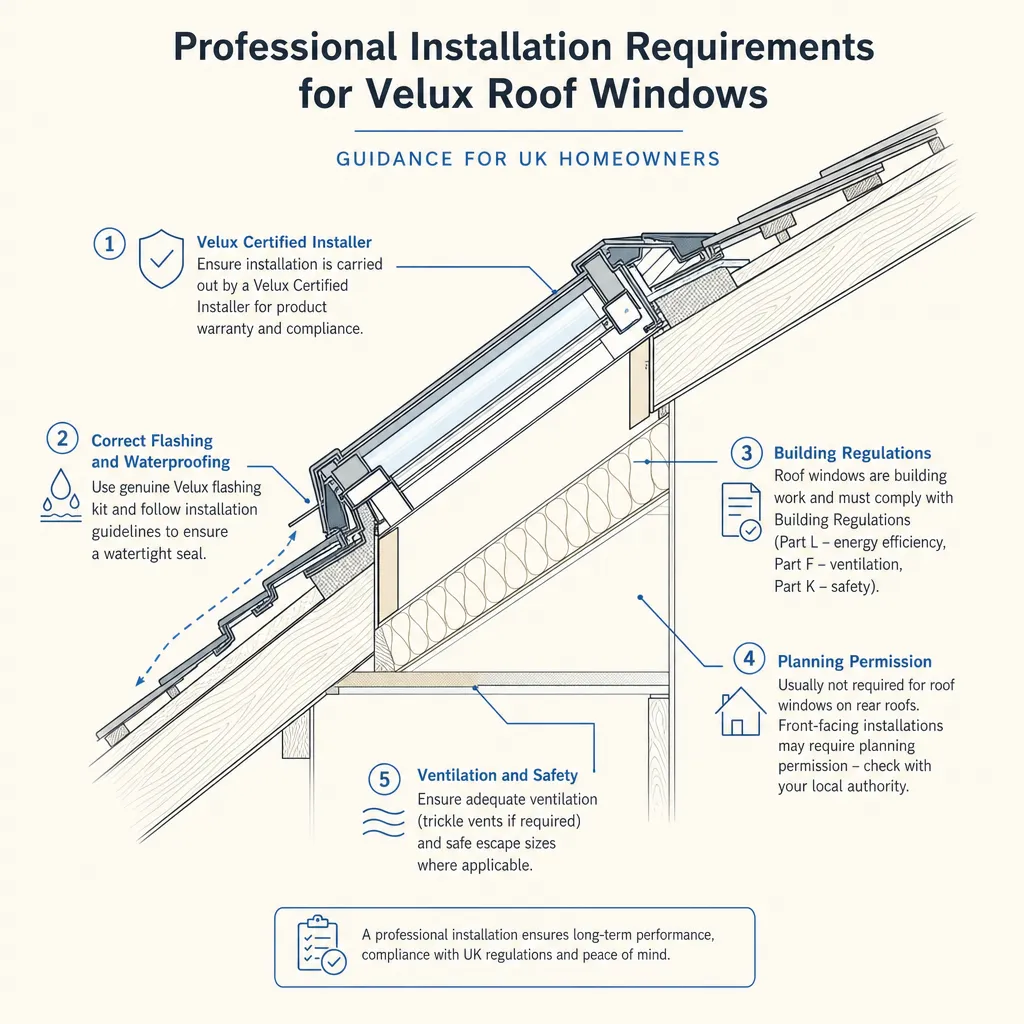
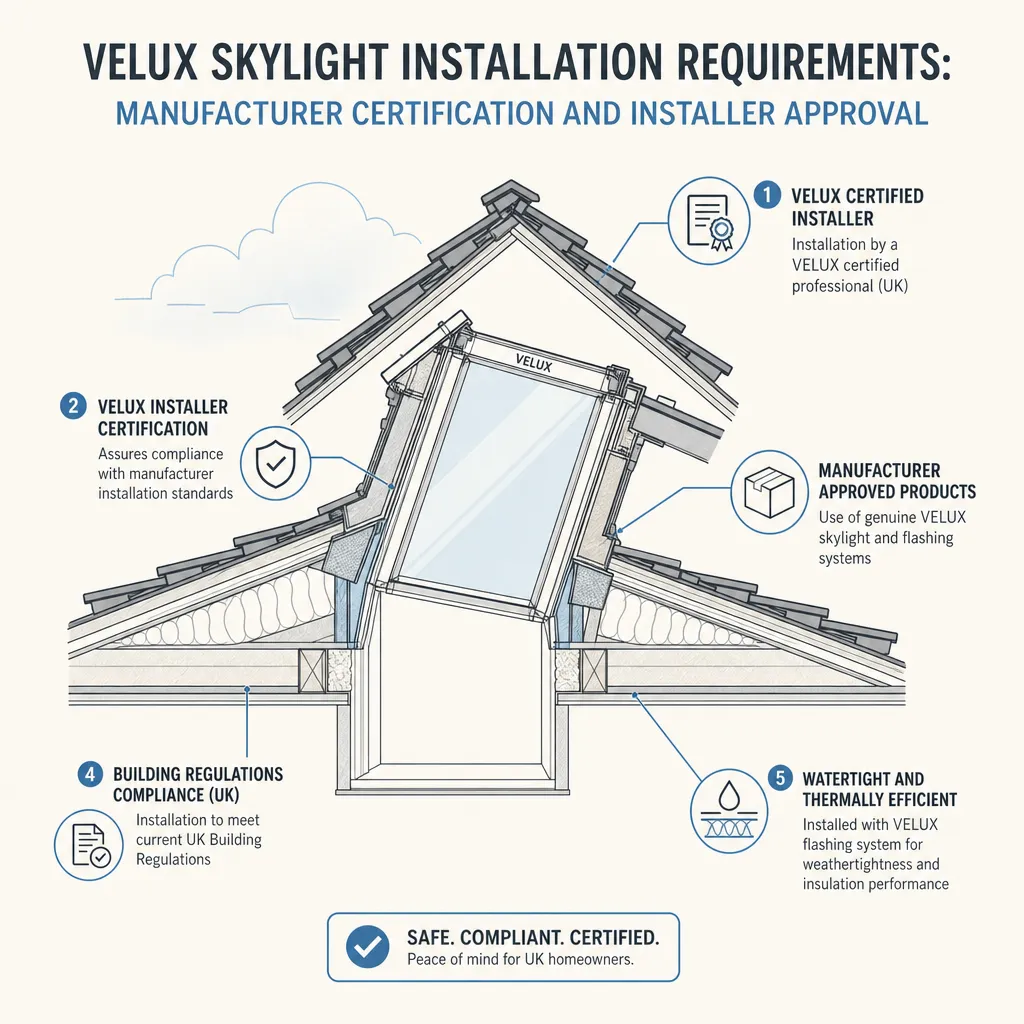
Professional Installation Requirements for Velux Roof Windows
Velux roof windows installed as replacements in the same opening usually fall under permitted development, but new openings or changes on listed buildings or in conservation areas require planning permission.
 Improvement & Build
Outdoor lighting problems: solutions for common issues in gardens and driveways
Outdoor lighting problems in UK gardens commonly stem from water ingress, incorrect IP ratings, faulty transformers, poor earth connections, or corroded contacts.
 Improvement & Build
Repairing a Broken uPVC Door Lock: Replacement and Solutions
A broken uPVC door lock usually needs a new cylinder, a replacement multipoint mechanism, or both.
 Improvement & Build
Fixing Sticking uPVC Door Locks: Diagnosis and Solutions
A sticking uPVC door lock is usually caused by a dry or corroded cylinder, misaligned door frame, or a worn multipoint mechanism.
 Improvement & Build
Velux Skylight Installation Requirements: Manufacturer Certification and Installer Approval
Velux recommends using their registered installer network to protect warranty coverage and ensure compliance with building regulations.