Common Window Problems and When to Call a Professional
By Housey · Last reviewed 19th of May 2026
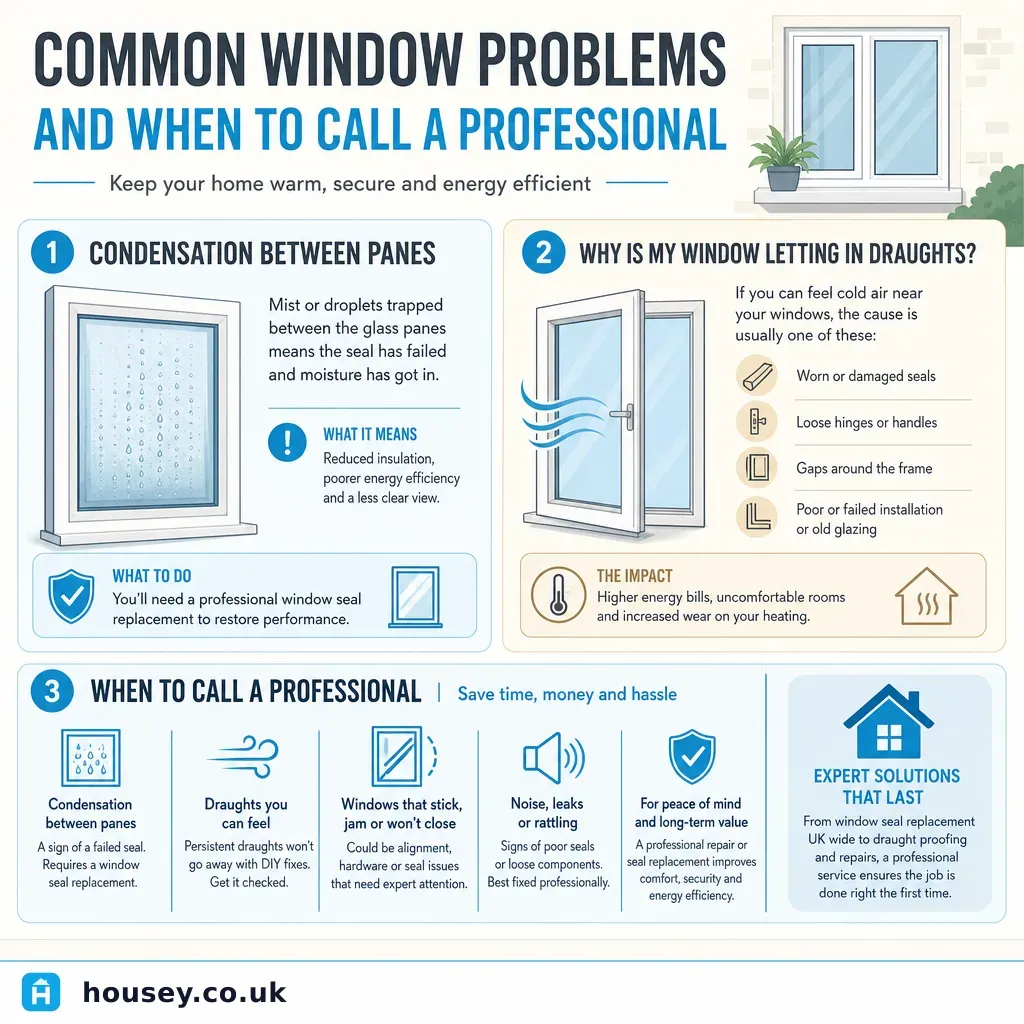
Common Window Problems and When to Call a Professional
Window defects are among the most frequently reported maintenance issues in UK homes, affecting properties of all ages and construction types. Whether you are managing a Victorian terrace with original timber sash windows or a 1990s estate house with ageing uPVC units, the symptoms can look similar but the causes and solutions often differ significantly — and the right fix may cost considerably less than an outright replacement.
Key points
- Condensation between double-glazed panes indicates a failed sealed unit (DGU); the frame does not need to be replaced — just the glass unit, which typically costs £80–£250 per standard size.
- Draughts through closed windows are most commonly caused by perished or compressed rubber seals, not a failed frame — seal replacement is usually far cheaper than full window replacement.
- Timber window frames showing soft or spongy areas, paint failure at joints, or discolouration may have active decay; early-stage rot can sometimes be treated with epoxy filler systems rather than requiring full replacement.
- Security is compromised by broken multipoint locking mechanisms or failed espagnolette bolts — these warrant urgent attention, particularly on ground-floor units in occupied properties.
- FENSA or CERTASS registered installers can replace sealed units without a full building regulations notification, provided the existing frame remains in place.
Condensation between panes
Condensation forming between the two panes of a double-glazed unit — visible as a haze, smearing, or water droplets inside the cavity — means the hermetic seal around the perimeter of the unit has failed. Moisture has entered the cavity and the desiccant within the spacer bar is saturated.
This is a sealed unit failure, not necessarily a frame failure. A sealed unit replacement — fitting a new double-glazed unit into the existing frame — is usually straightforward where the frame is sound. Costs are typically £80–£250 per unit depending on size and glass specification.
What this is not: condensation on the internal (room-side) surface of the glass is normal in humid conditions and indicates a ventilation issue, not a window failure. Improved extract ventilation or trickle vents are the appropriate response there.
Draughts through closed windows
Draughts when windows are closed typically stem from one of the following:
- Perished or compressed rubber gaskets or seals: the most common cause; replaceable on most uPVC and aluminium windows without frame replacement.
- Warped uPVC frame: prolonged sun exposure or poor original installation can cause uPVC sashes to bow slightly out of square.
- Worn or incorrectly adjusted friction stays: allows the sash to sit slightly off the frame rebate.
- Shrinkage in timber frames: common in older timber casements in centrally heated homes; specialist draught-proofing strips or compression seals can resolve this without replacement.
Many draught issues can be resolved without full replacement. A window specialist or joinery company can advise on whether adjustment, seal replacement, or unit replacement is the appropriate fix.
Stiff, difficult-to-open, or broken hardware
Mechanisms — handles, hinges, friction stays, tilt-and-turn fittings, espagnolette bolts — have finite lifespans. Common failure modes include:
- Stiff handle or lock: often needs lubrication with a dry PTFE spray (not WD-40 on plastic mechanisms).
- Broken friction stay: the window stays open at 45° but drops further; replacement parts are widely available from window hardware suppliers.
- Multipoint locking mechanism failure: the long metal strip running up the edge of the sash can fail at pivot points and is replaceable if the manufacturer can be identified.
- Tilt-and-turn mechanism jamming: usually a misaligned handle or worn gearbox; specialist repair is often faster and cheaper than full window replacement.
For uPVC windows, replacement hardware is widely available. For older or discontinued ranges, a window repair specialist may be needed to identify equivalent compatible parts.
Timber frame rot and deterioration
Timber window frames — whether original softwood sashes or more recent hardwood casements — are vulnerable to decay if paintwork fails and moisture penetrates. Early warning signs include:
- Paint bubbling, flaking, or darkening at joints and cills.
- Frame feels soft or spongy when pressed firmly with a finger.
- A gap between the frame and the surrounding masonry.
- Visible fungal growth or black staining at joints.
Early-stage decay can sometimes be treated with wood preservative systems and two-part epoxy filler, stabilising the frame without replacement. This approach is common in listed buildings and conservation areas where like-for-like replacement in matching timber is required.
Advanced decay, where the structural integrity of the frame is compromised, requires joinery replacement. In conservation areas, replacement frames must typically match the existing profile in timber — check with your local planning authority before ordering.
Condensation on the interior glass surface
Condensation on the room-facing surface of the glass is a ventilation issue, not a window fault. It is common in kitchens, bathrooms, and poorly ventilated bedrooms, and indicates that indoor relative humidity is exceeding the dewpoint of the glass surface.
Solutions include improved extract ventilation, trickle vents (built into many modern frames), passive vents, or a whole-house ventilation assessment. Replacing windows alone is unlikely to resolve persistent internal condensation unless the new windows include trickle vents that the old ones lacked.
Water ingress around frames
If water is tracking into the building around — rather than through — the window frame, the problem is usually with the external weatherseal between the frame and the surrounding masonry, not the window unit itself. This is typically addressed with an appropriate silicone or polyurethane frame sealant rated for external use.
However, if water is entering through a joint in the frame itself, or if the cill geometry is allowing water to track back into the wall, a window specialist should inspect before any sealing work proceeds.
Red flags: when to call a professional immediately
The following symptoms mean you should contact a FENSA-registered installer, joinery specialist, or chartered surveyor without delay:
- Window cannot be secured shut — an immediate security risk, particularly on ground-floor units.
- Frame has separated from surrounding masonry, or cracks are visible in surrounding brickwork alongside a window that no longer closes properly.
- Moisture is entering the room through or around the frame after rain.
- Visible decay affecting more than a small isolated area of the frame.
- Glass is cracked or broken — a safety and security risk.
- Fire-escape or egress windows that no longer open, or do not open sufficiently for emergency exit.
- In a rented property, any defect affecting habitability — landlords have a legal duty to maintain windows fit for purpose under the Homes (Fitness for Human Habitation) Act 2018.
Decision tree: repair or replace?
Use this guide to identify the right first step:
- Condensation between panes, frame is sound? → Sealed unit replacement only; no frame replacement needed.
- Draughts through closed window, frame is intact? → Seal replacement or hardware adjustment; no unit replacement needed.
- Hardware broken but frame is undamaged? → Hardware repair or part replacement.
- Timber frame soft or decayed at joints? → Epoxy filler repair (minor decay) or joinery replacement (advanced decay).
- uPVC frame warped or cracked? → Frame replacement — uPVC cannot be repaired like timber.
- Window will not close, lock, or is a security risk? → Call a professional urgently; do not delay.
- Water entering around the frame from external masonry? → External sealant or pointing repair; may not be a window fault.
- Cracks in surrounding brickwork and window not closing properly? → Consult a chartered surveyor — possible structural movement.
What to ask before instructing a window repair company
- Can you provide a written diagnosis of the fault before quoting for repair?
- Are you FENSA or CERTASS registered?
- Is a sealed unit replacement feasible here, or is full replacement necessary — and why?
- What guarantee do you offer on the repair or replacement unit?
- If this is a timber frame, do you have experience with period or conservation-area properties?
- Will the repair or replacement require a building regulations notification?
When to get professional help
Most window problems have a cost-effective repair option that does not involve full replacement. The key is accurate diagnosis before committing. A FENSA or CERTASS registered company can usually assess whether repair, sealed unit replacement, or full replacement is the appropriate response. For timber frames in conservation areas or listed buildings, use a joinery specialist with experience of traditional construction. If there are cracks in the surrounding masonry, sticking doors elsewhere in the property, or other signs of movement, a chartered building surveyor or structural engineer should inspect before window repairs proceed.
How Housey can help
Housey connects you with vetted window and door installers who can diagnose common window problems and provide written quotes for repair or replacement. Whether you need a single sealed unit replaced or a full assessment of ageing frames, compare multiple specialists in your area before committing.
Frequently asked questions
Can I replace a sealed unit myself?
Sealed unit replacement is technically possible as a DIY task but requires careful handling of glass (safety gloves, two people for large panes), correct measurement, and appropriate glazing clips and beading. For ordinary glazing, it is not a building regulations matter. However, if the window contains toughened, laminated, or fire-rated glass, the replacement must match the original specification; check the existing unit before ordering.
How long do sealed units last before failing?
Most modern sealed units carry a 5–10 year manufacturer guarantee. In practice, units in well-maintained frames often last 20 years or more before the seal fails. Units in poorly fitted or persistently damp frames may fail within 5–8 years. Regular maintenance — keeping weep holes clear and replacing perished external sealant — extends unit life significantly.
My window rattles in the wind — is that a serious problem?
Rattling usually indicates the sash is no longer sitting squarely in the frame, or that weatherstripping has compressed and lost its seal. It is a maintenance issue rather than an urgent structural concern, but it will worsen over time and allow increased draughts and moisture. A window specialist can adjust hinges, replace seals, or install draught-proofing strips to resolve it.
Sources and further reading
- FENSA consumer guidance — FENSA
- Timber windows and doors: repair and maintenance — Historic England
- Draught-proofing guidance — Energy Saving Trust
- Homes (Fitness for Human Habitation) Act 2018 — legislation.gov.uk
- Glass and Glazing Federation consumer advice — Glass and Glazing Federation
Useful next reads
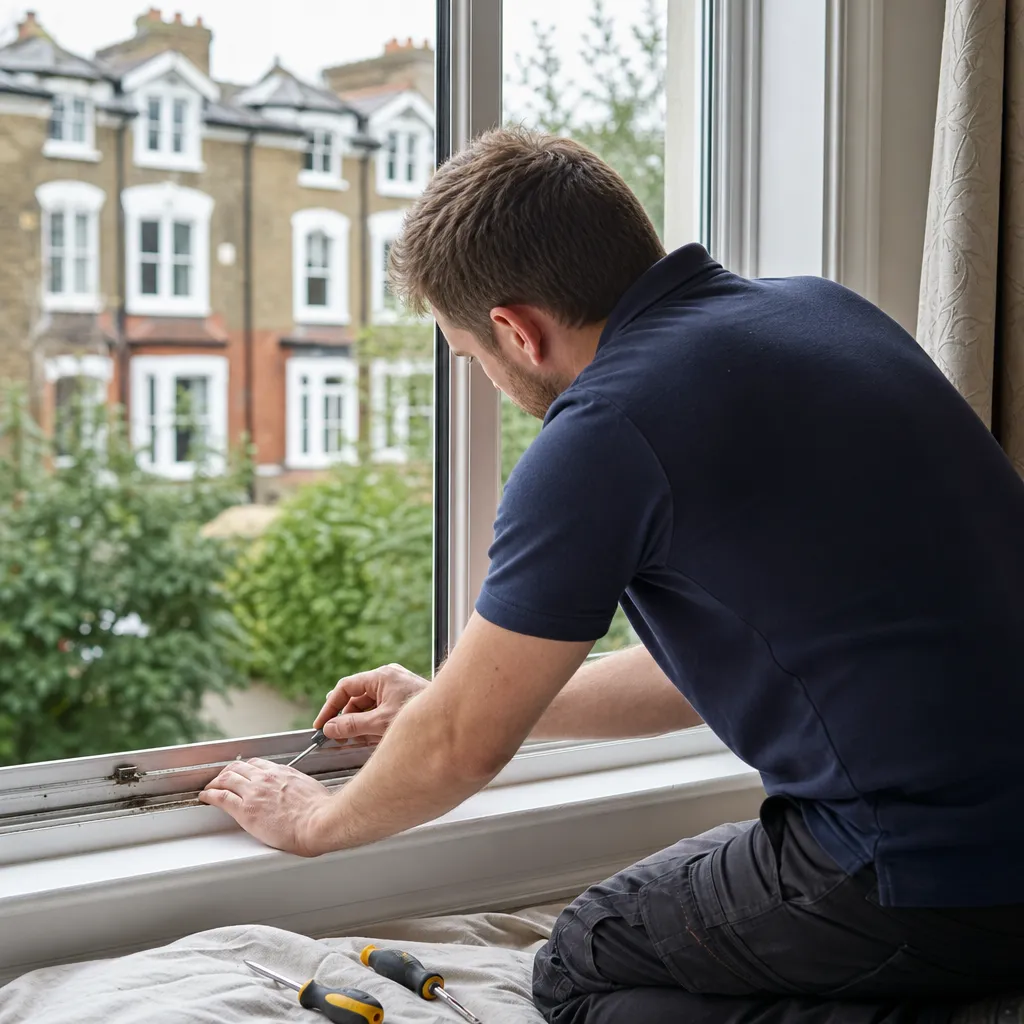 Improvement & Build
How to Repair Window Tracks
Most window track problems — stiffness, grinding, or failure to slide — stem from debris build-up, worn rollers, or dried seals.
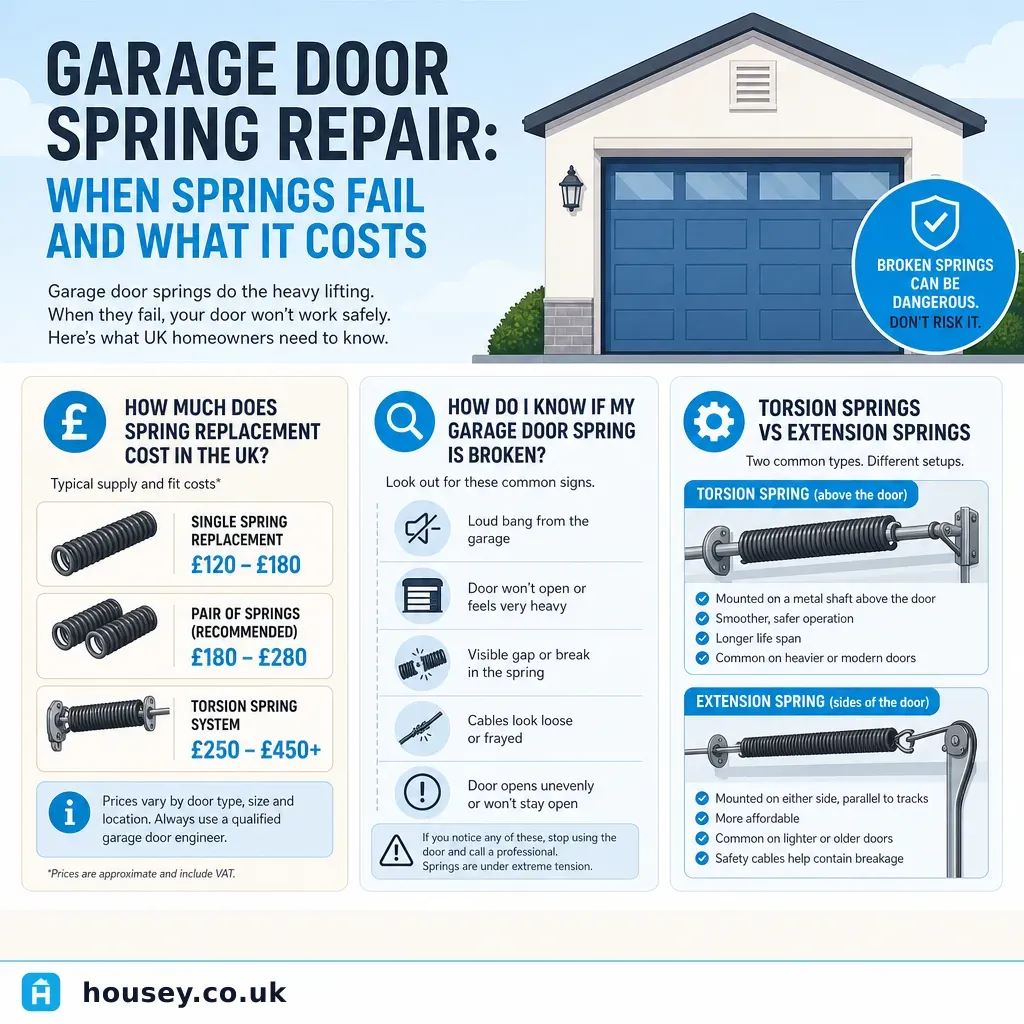 Improvement & Build
Garage Door Spring Repair: When Springs Fail and What It Costs
A broken garage door spring usually makes the door heavy, lopsided, or completely inoperable.
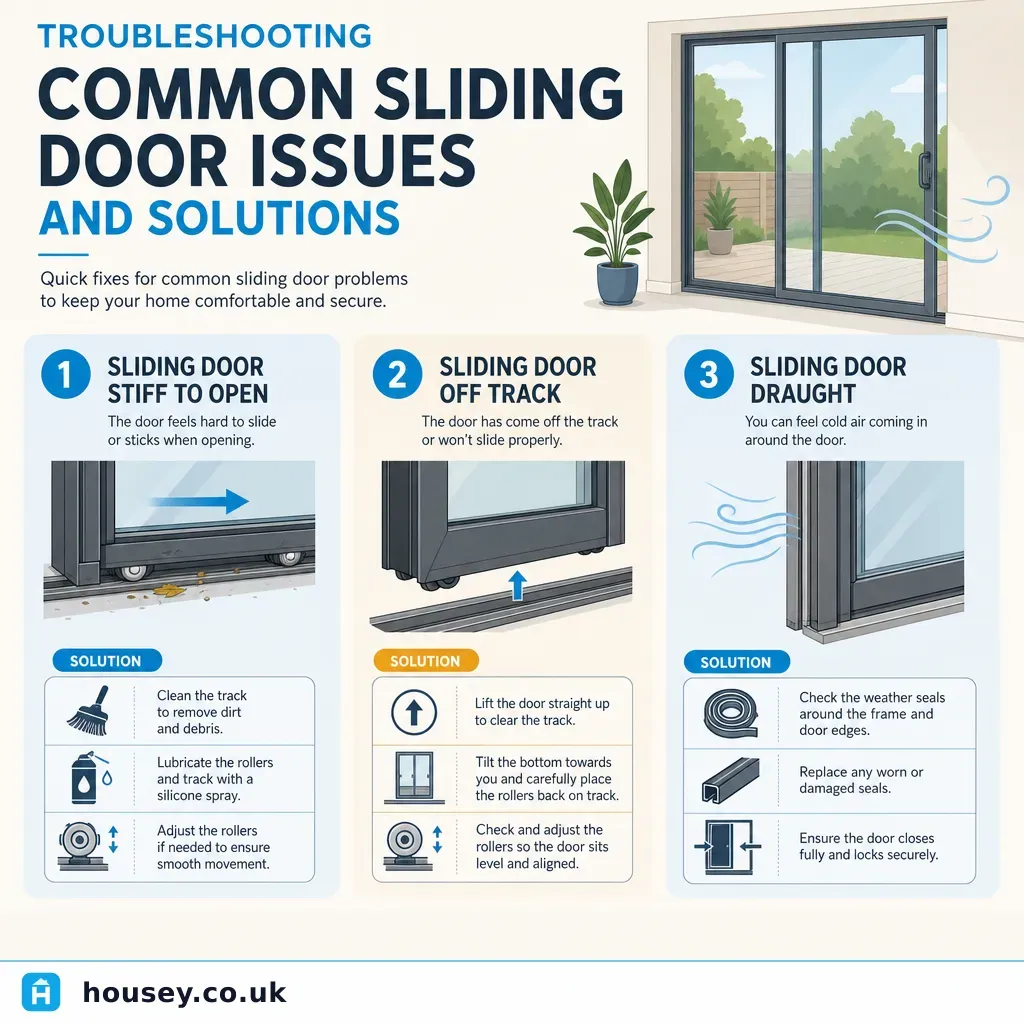 Improvement & Build
Troubleshooting common sliding door issues and solutions
Most sliding door problems — stiff operation, draughts, misalignment, or a faulty lock — have straightforward fixes.
 Improvement & Build
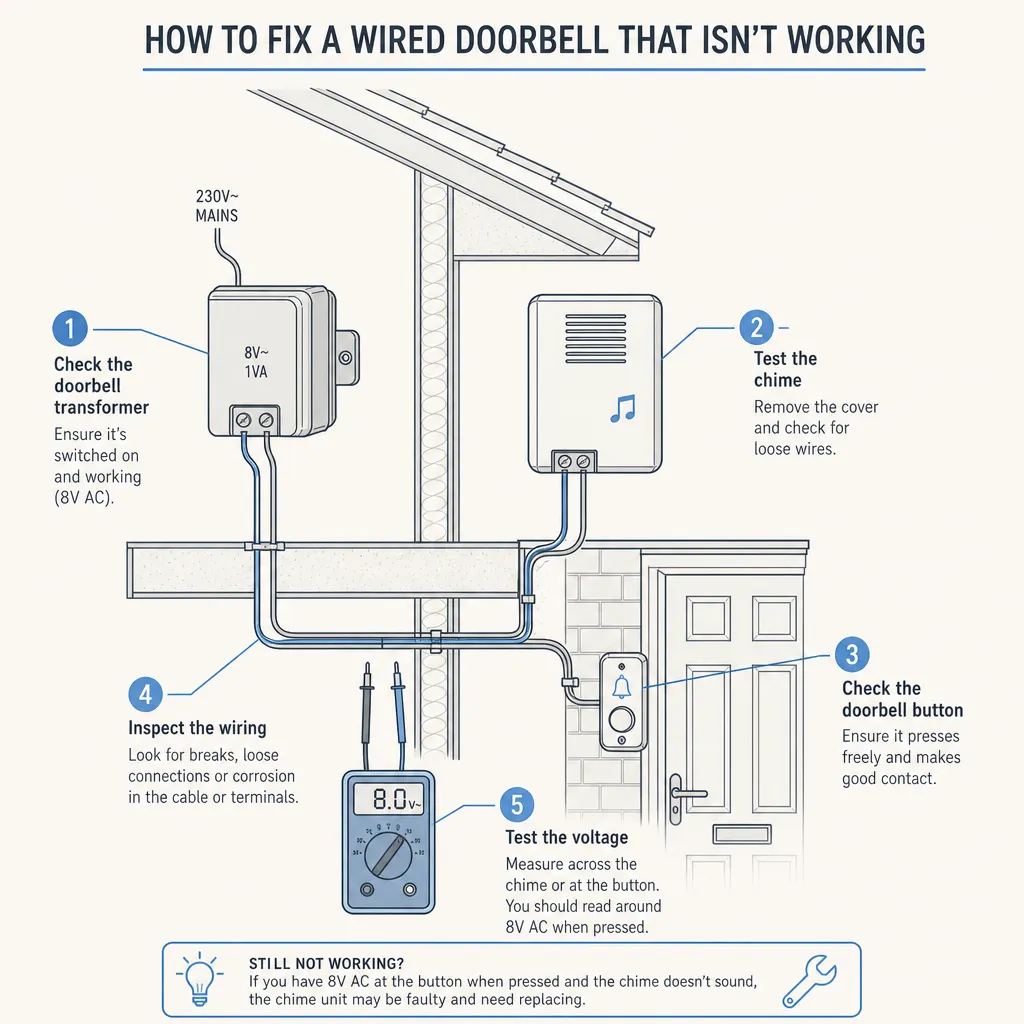
How to fix a wired doorbell that isn't working
Most wired doorbells fail because of a worn push button, corroded bell wire connections, a faulty transformer, or a jammed chime mechanism.
 Improvement & Build
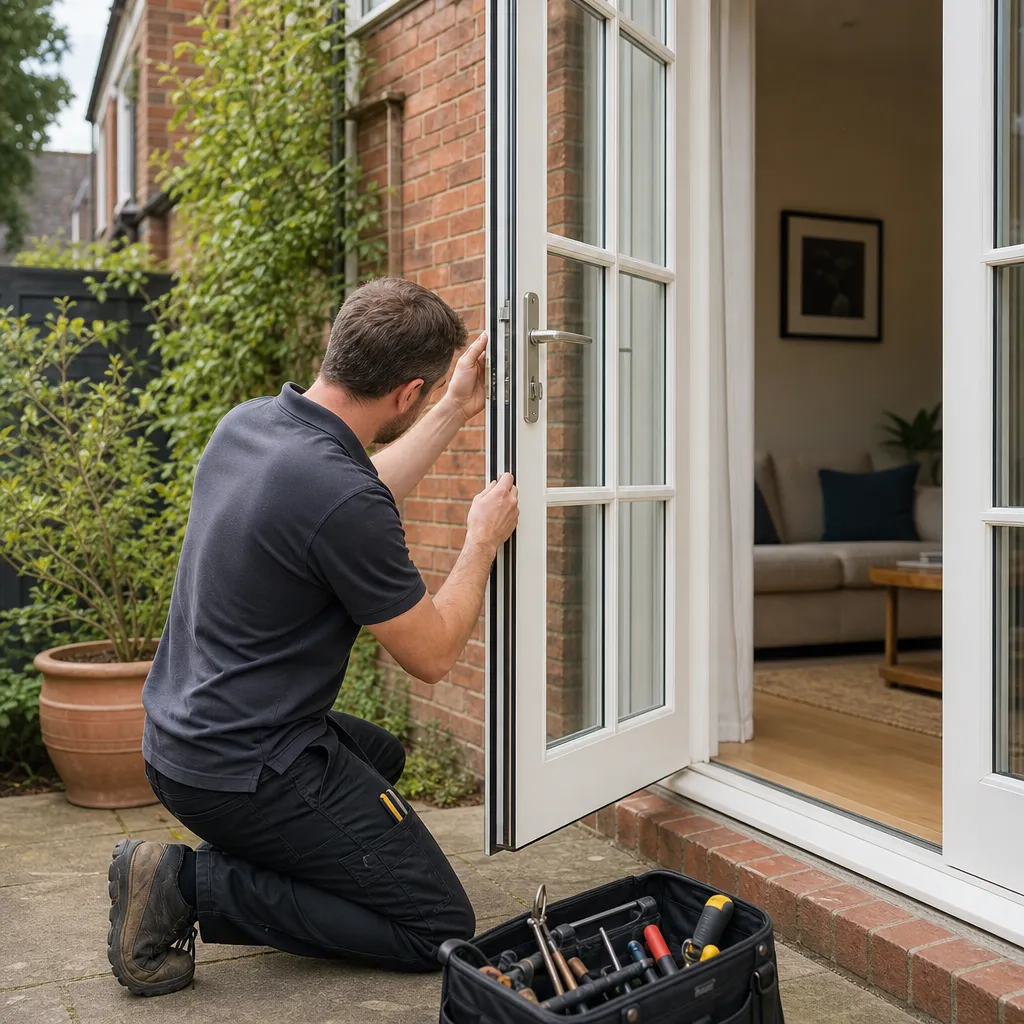
Diagnosing and Fixing French Door Closure Issues
French doors that won't close are usually caused by hinge drop, a misaligned keep plate, or seasonal timber swelling.