Troubleshooting common sliding door issues and solutions
By Housey · Last reviewed 1st of June 2026
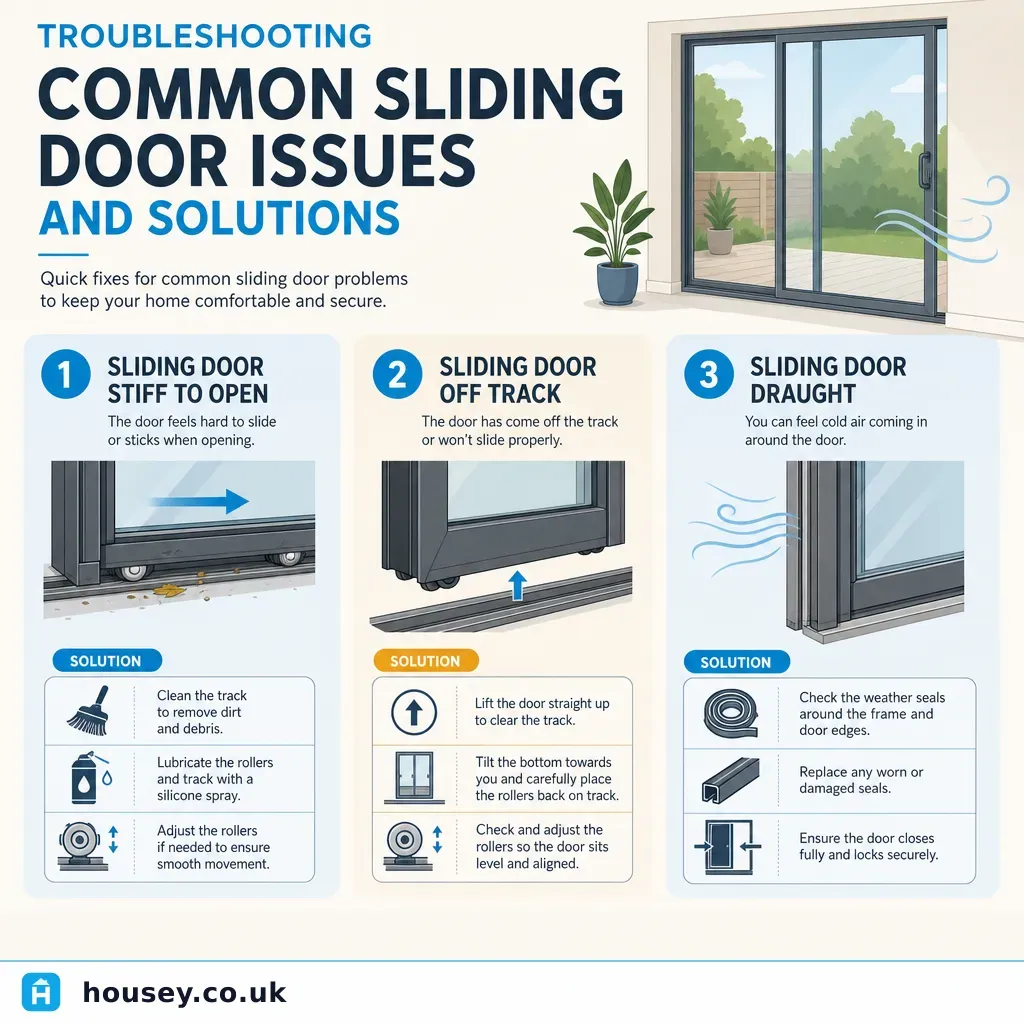
Troubleshooting common sliding door issues and solutions
Sliding doors are mechanically straightforward, but regular use — combined with the UK's damp, cold winters — means most homeowners encounter at least one operational problem over a door's lifetime. Identifying the root cause early usually keeps repair costs modest; ignoring the symptoms can lead to damaged rollers, failed seals, or compromised security hardware that is far more expensive to rectify.
Key points
- The majority of sliding door faults — stiff operation, minor draughts, and poor alignment — are caused by worn or dirty rollers and adjustable-track components that can be serviced without replacing the door.
- Damaged double-glazed units (indicated by persistent internal condensation between the panes) cannot be repaired; the sealed unit must be replaced by a FENSA-registered glazing professional.
- A sliding door that does not lock securely is a security risk that should be addressed promptly — do not leave the fault unattended.
- Forced entry attempts, impact damage, or cracking in the frame can compromise the structural integrity of the glazed unit and require immediate professional assessment.
- FENSA-registered installers are the appropriate professionals for most sliding door repairs involving glazed units, hardware replacement, or frame adjustments.
Decision tree: what is wrong with my sliding door?
Work through these prompts to narrow down the likely cause before calling a professional or attempting any adjustment.
- Door is difficult to slide open or close → check rollers for debris or wear; check track for warping or obstruction → try cleaning the track and adjusting roller height screws (see the next section).
- Door lets in a draught or cold air → check perimeter seals and brush strips for damage or compression loss → replace seals if accessible, or call an installer for frame-level adjustments.
- Door won't close fully or sits unevenly in the frame → rollers may be uneven or worn; track may be warped → adjust roller height via access screws; if the track is bent, professional replacement is likely needed.
- Door lock is stiff, doesn't engage, or won't release → lubricate lock mechanism with dry PTFE spray (not oil-based); if the mechanism is broken, call an installer for hardware replacement.
- Condensation between the glass panes → failed sealed glazing unit → sealed unit replacement required; not a DIY repair.
- Visible cracks in the glass → safety risk; do not use the door until assessed by a glazing professional.
- Water ingress at the base or sides → check drainage slots in the track are clear; check perimeter seals; if water tracks inside the frame reveal, a professional inspection is needed.
Stiff or heavy doors: rollers and tracks
The most common sliding door complaint is a panel that becomes progressively harder to move. The cause is almost always one of three things.
1. Debris in the track. UK gardens deposit soil, grit, and leaf matter into door tracks throughout the year. Vacuum or brush the track thoroughly, then wipe with a damp cloth. Do not use oil-based lubricants — these attract more debris. A silicone or dry PTFE spray is appropriate for the track surface.
2. Worn or damaged rollers. Rollers are the load-bearing wheels that carry the door panel along the track. Most sliding patio doors have adjustable rollers accessible via small screw covers at the base of each panel end. Turning the adjustment screw raises or lowers the panel relative to the track; the manufacturer's manual will confirm the adjustment direction. If rollers are cracked or seized, they can often be replaced without replacing the door — a glazing hardware supplier or the original installer can source matching components.
3. Warped or damaged track. Aluminium tracks can be dented by heavy foot traffic or impact. Minor warping may be correctable; a severely damaged track section typically needs professional replacement.
What not to assume: a door that is difficult to move does not automatically need full replacement. Roller and track servicing resolves the majority of cases at modest cost.
Draughts and condensation: seals and glazing
Perimeter seals and brush strips wear over time and compress permanently, allowing cold air to enter around the door edges. Replacement brush pile strips and foam seals are widely available from glazing hardware suppliers. On most sliding doors the seals clip or press into a groove on the frame and can be swapped without specialist tools. If the seal has perished at a corner joint, or if the draught enters around the frame itself rather than between the door and frame, a professional adjustment may be needed.
Condensation between the glass panes indicates that the hermetic seal of the double-glazed unit has failed, allowing moist air into the cavity. This is not repairable — the sealed unit must be replaced. In most cases the glazed unit can be replaced without replacing the frame, provided the frame itself is undamaged. A FENSA-registered installer can supply and fit a replacement unit to the current Building Regulations Part L U-value specification.
Condensation on the room-side surface of the glass is different: this occurs when warm, humid internal air meets a cold glass surface and is normal in certain conditions. Improving ventilation or room heating usually reduces it. It does not indicate a failed sealed unit.
Lock and security hardware faults
A sliding door that fails to lock fully is a security issue. Common causes and responses:
- Lock mechanism needs lubrication. Apply dry PTFE spray to the lock body and latch. Do not use WD-40 or oil-based lubricants — they attract dust and can cause the mechanism to seize further over time.
- Misalignment between the lock latch and the keeper plate. If the door has dropped slightly (common with worn rollers), the latch no longer aligns with the keeper in the frame. Adjusting the roller height to re-level the door usually resolves this.
- Broken or worn multipoint lock body. Multipoint lock bodies are replaceable. A locksmith or glazing installer can supply a compatible unit; the manufacturer name and model number of the existing lock helps source a match.
- Handle spindle failure. If the handle turns but does not operate the lock, the handle spindle or internal mechanism has failed. Handle sets are usually replaceable without removing the glazing panel.
Do not leave a faulty lock unaddressed. If the door cannot be secured, contact a glazing installer or locksmith promptly.
Water ingress and drainage
Sliding door tracks are designed with drainage slots or weep holes that allow rainwater to escape externally. In the UK's wet climate, these slots block with debris over time. Clear them annually with a thin implement or compressed air.
If water still enters after clearing drainage slots, check:
- The external perimeter sealant (silicone bead) around the frame. Cracked or missing sealant allows water to track behind the frame and into the reveal.
- The condition of the threshold. A damaged threshold seal or a sunken external slab can cause water to pool at the base and enter under the frame.
- Whether the lintel above the door is directing water towards the frame rather than outward — a sign of a construction detail fault that needs a builder or installer to assess.
Common faults: DIY or call a professional?
Fault | DIY-appropriate? | Approximate professional repair cost | Notes |
|---|---|---|---|
Dirty or obstructed track | Yes | — | Clean with brush, vacuum, dry lubricant |
Stiff rollers needing adjustment | Usually yes | £50–£150 | Adjustment screws accessible on most panels |
Worn or broken rollers needing replacement | Possible with correct parts | £100–£250 | Source matching rollers by door model |
Failed sealed glazing unit | No | £150–£400 per unit | Requires glazier; Part L compliance needed |
Perished perimeter seals | Usually yes | £80–£180 | Brush pile or foam seals from hardware supplier |
Stiff or misaligned lock | Partial (lubrication only) | £100–£250 | Hardware replacement needs installer or locksmith |
Blocked drainage slots | Yes | — | Clear annually |
Water ingress requiring resealing | No | £150–£350 | Professional if frame or perimeter sealant involved |
Cracked or broken glass | No | £200–£600+ | Safety risk; professional assessment first |
Frame damage or structural deformation | No | Varies significantly | May require full door replacement |
Indicative UK costs, last reviewed 2026-06-01. Costs vary by region and door specification.
Red flags: when to stop and call a professional
- Cracked or broken glass. Even a hairline crack in toughened or laminated glass is a safety risk. Do not use the door until a glazing professional has assessed it.
- The frame is visibly bowed, twisted, or separating from the wall. This may indicate structural movement in the building, not just a door fault.
- The door has been forced or shows signs of attempted break-in. The frame, lock, and glazing unit should all be inspected before the door is relied upon for security.
- Water tracks inside the wall reveal, not just into the track. This suggests a weatherproofing failure that needs investigation beyond the door itself.
- The multipoint lock is completely jammed and the door cannot be opened. Do not force the door; call a glazing installer or locksmith.
- You cannot identify the source of the fault after checking the obvious causes. A professional diagnosis costs less than incorrect repairs.
What to ask before booking a sliding door repair
- What is likely causing the fault, and have you encountered this problem on this door type before?
- Will you carry out a full inspection before quoting, or is the quote based only on the described fault?
- What parts will be needed, and are they proprietary or widely available?
- If a sealed unit needs replacing, will the replacement meet current Building Regulations Part L U-value requirements?
- Will a FENSA or CERTASS certificate be issued if glazing work is carried out?
- What is your guarantee on the repair?
- Is VAT included in the quote?
When to get professional help
For most sliding door problems, a FENSA-registered window and door installer is the right first call. Contact a professional promptly if:
- The glass is cracked or broken.
- The door cannot be locked securely.
- You suspect structural movement around the frame.
- Water is entering the wall cavity rather than just the track channel.
- The frame itself is damaged or deformed.
A locksmith can assist with isolated lock-body failures if a glazing installer cannot attend quickly.
How Housey can help
Housey connects homeowners with vetted window and door installers who can diagnose and repair sliding door faults, replace sealed glazing units, and restore hardware to full working order. Submit a brief describing your fault and compare quotes from local specialists.
Frequently asked questions
How much does it cost to repair a sliding door in the UK?
Repair costs depend on the fault. Roller replacement typically costs £100–£250; a failed sealed glazing unit costs £150–£400 per unit to replace; resealing around the frame costs £80–£200. A professional diagnosis visit may be charged separately if a quote is not accepted. Indicative UK costs, last reviewed 2026-06-01.
Can I replace sliding door rollers myself?
On many sliding patio doors the rollers are accessible via screw covers at the base of the panel. If you can source matching rollers from the manufacturer or a glazing hardware supplier, replacement is manageable for a confident DIYer. However, heavy glazed panels can be awkward to manoeuvre safely alone — a second person to assist reduces the risk of damage or injury.
Why does my sliding door let in cold air even though the seals look intact?
The most common cause is compression loss in brush pile or foam seals that appear intact but have lost their resilience. Run a hand around the door perimeter on a cold, windy day to locate the draught. Replacement seals are available from glazing hardware suppliers; if the draught comes from behind the frame itself, professional resealing of the external perimeter is needed.
How often should I service my sliding door?
Annual maintenance — clearing the track, cleaning drainage slots, lubricating the lock with dry PTFE spray, and checking seals for wear — keeps most sliding doors operating well and prevents minor faults from developing into costly repairs.
Sources and further reading
- Building Regulations Approved Document L: Conservation of fuel and power — GOV.UK
- FENSA: competent persons scheme for replacement glazing — FENSA
- Glass and Glazing Federation: consumer guidance on glazing — Glass and Glazing Federation
- Planning Portal: windows and doors guidance — Planning Portal
Useful next reads
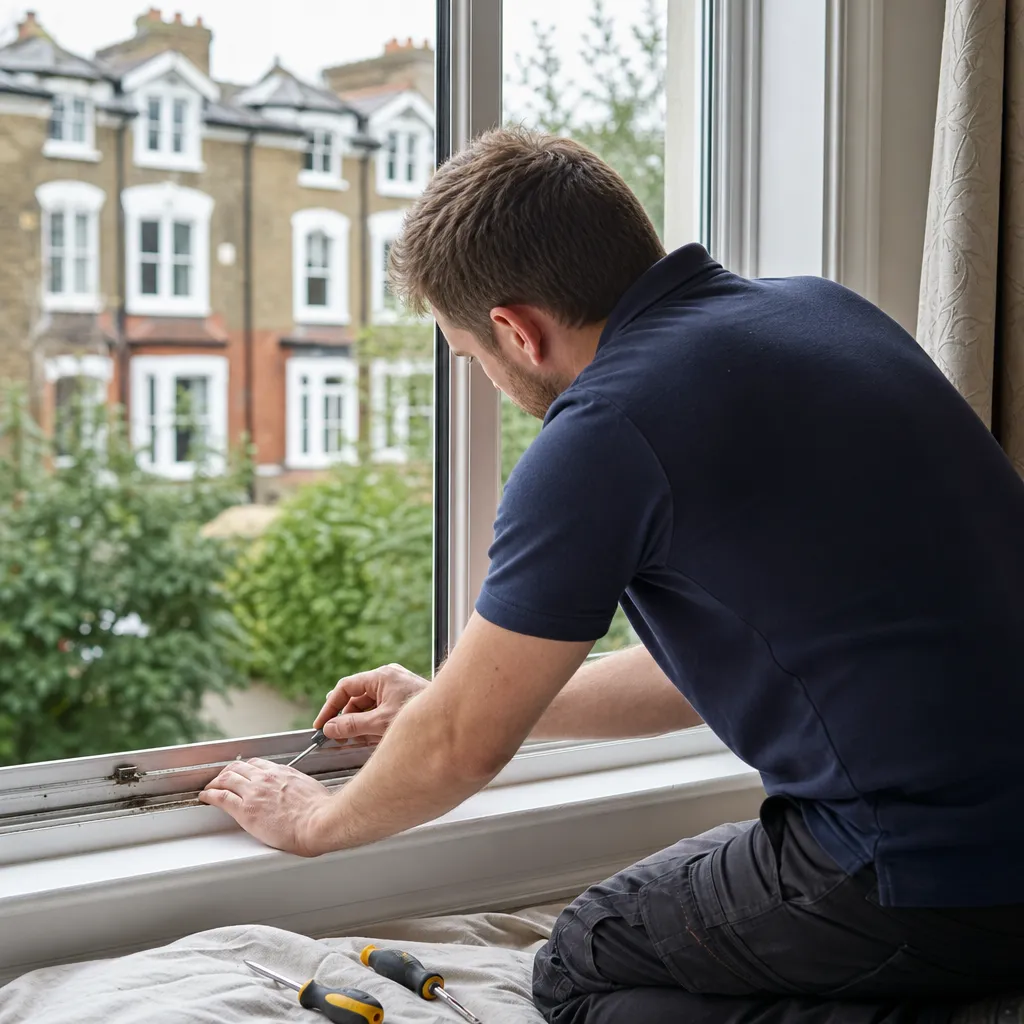 Improvement & Build
How to Repair Window Tracks
Most window track problems — stiffness, grinding, or failure to slide — stem from debris build-up, worn rollers, or dried seals.
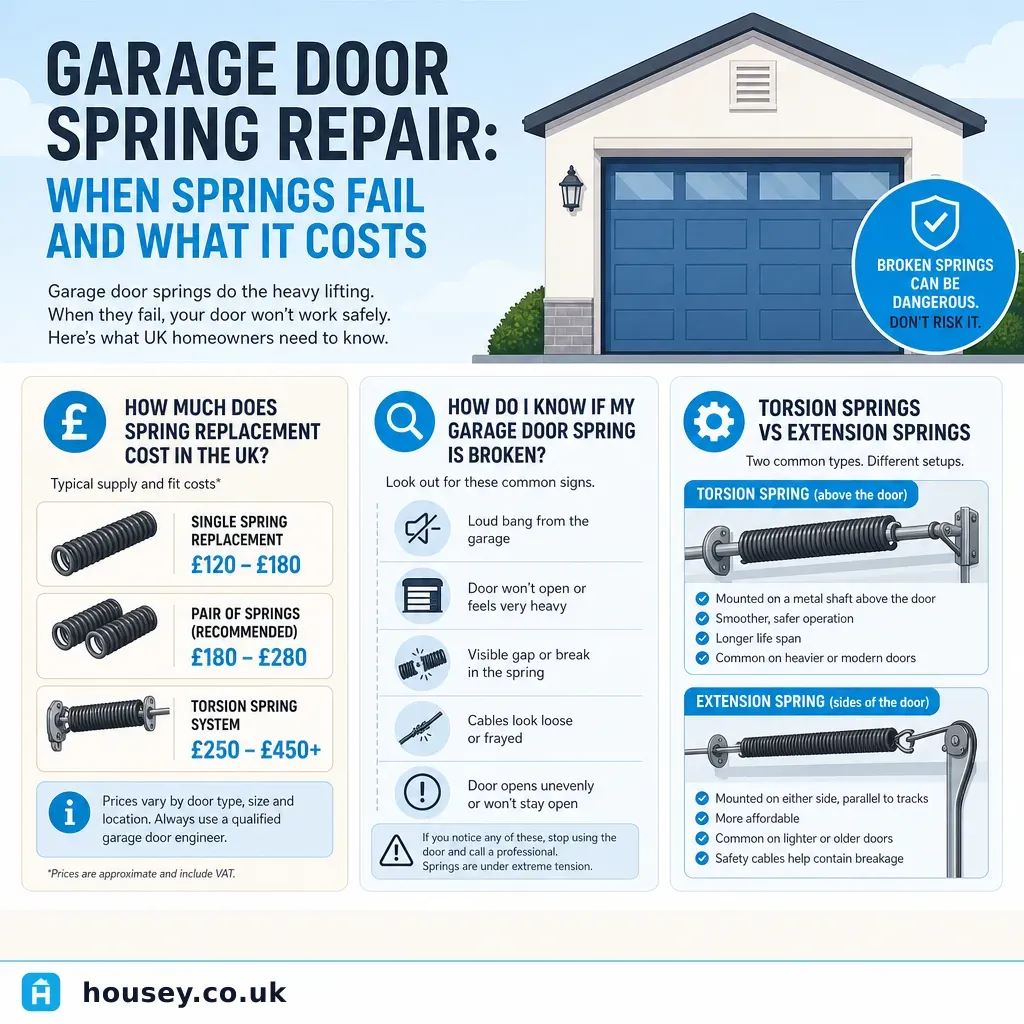 Improvement & Build
Garage Door Spring Repair: When Springs Fail and What It Costs
A broken garage door spring usually makes the door heavy, lopsided, or completely inoperable.
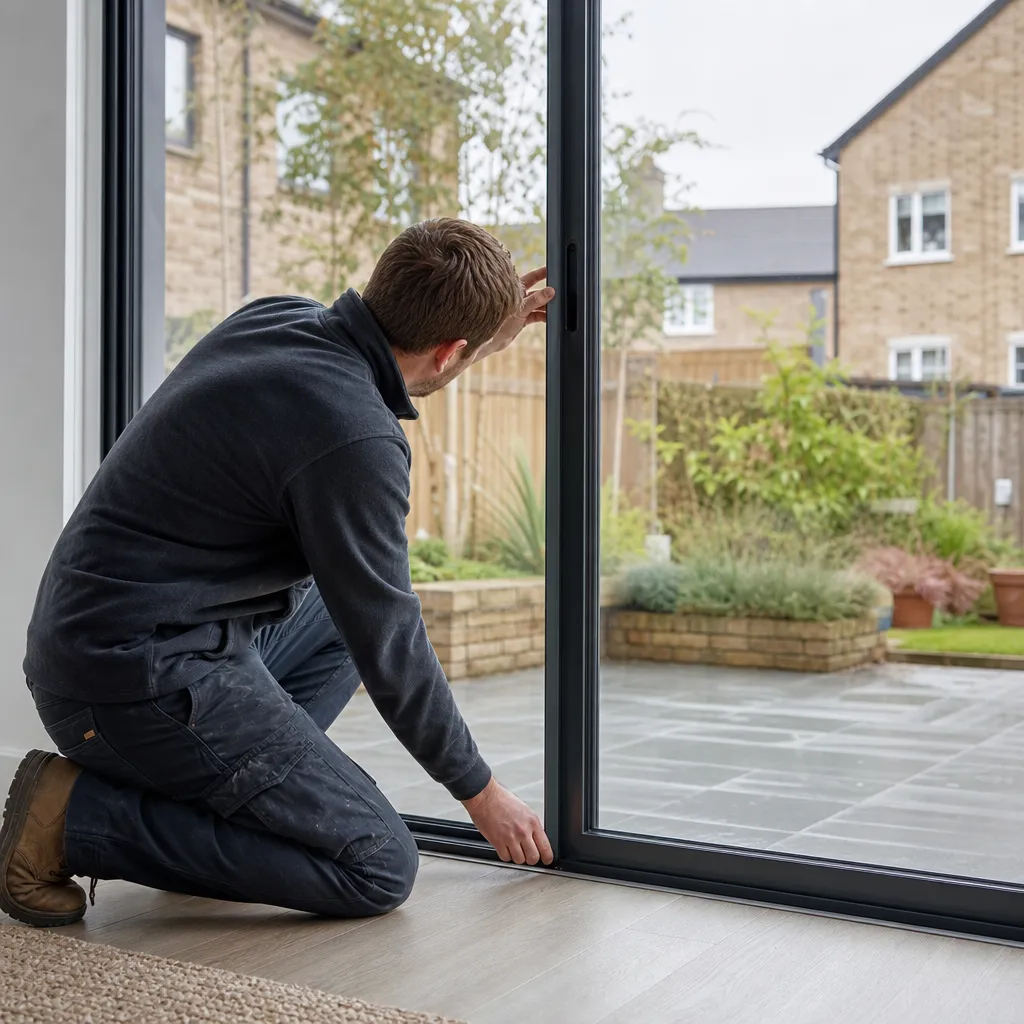 Improvement & Build
Resolving stuck or difficult sliding glass doors: causes and fixes
Most sliding glass door problems come down to worn roller carriages, compacted grit in the bottom track, or a frame that has shifted out of square.
 Improvement & Build
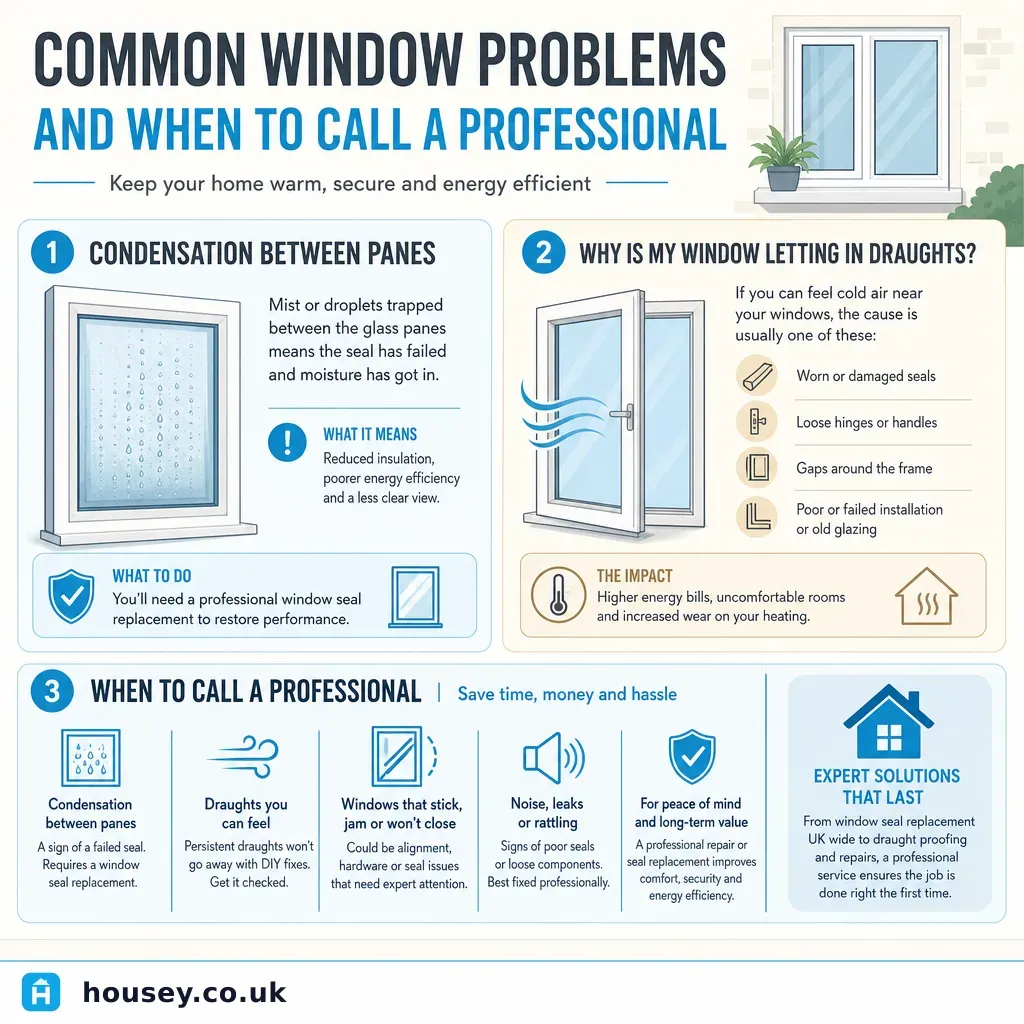
Common Window Problems and When to Call a Professional
The most common window problems in UK homes are condensation between panes (failed sealed unit), draughts from worn seals or warped frames, stiff or broken hardware, and rotting timber frames.
 Improvement & Build
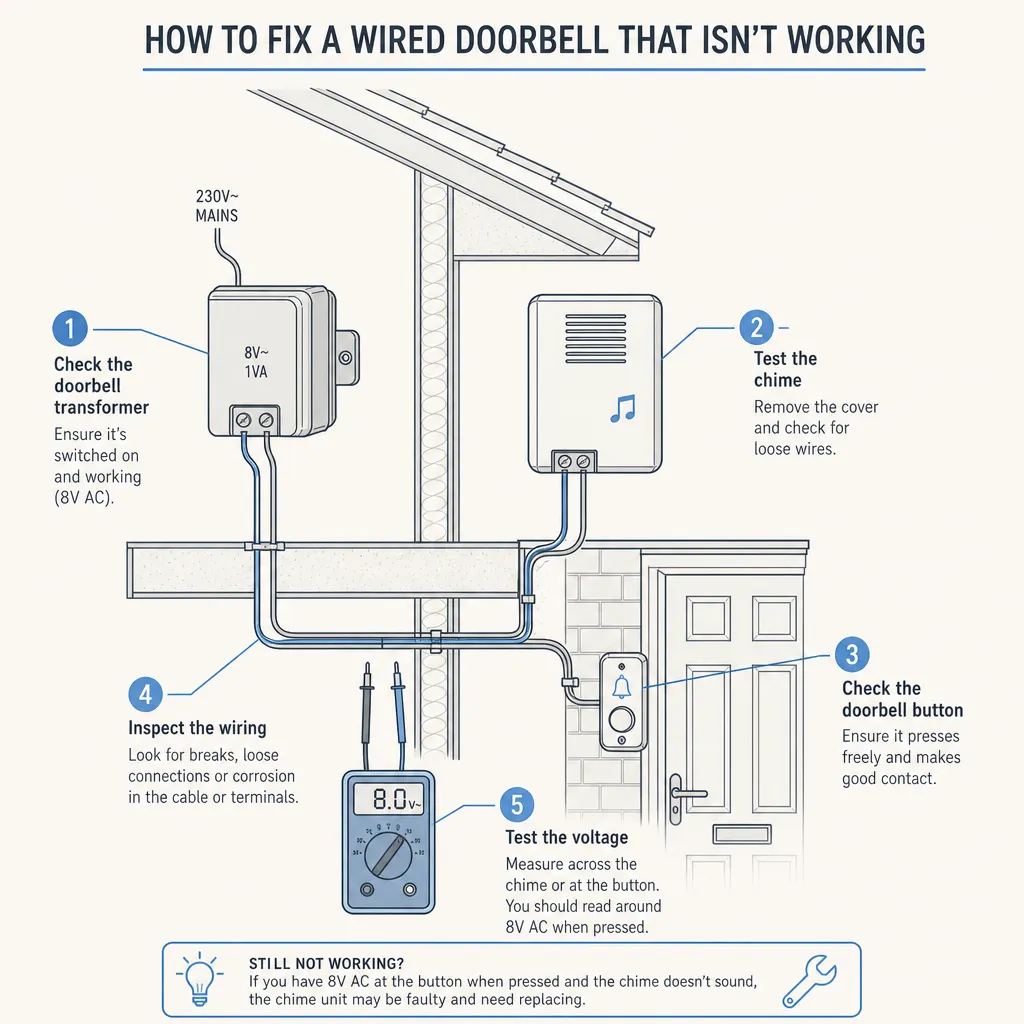
How to fix a wired doorbell that isn't working
Most wired doorbells fail because of a worn push button, corroded bell wire connections, a faulty transformer, or a jammed chime mechanism.