How to Repair Window Tracks
By Housey · Last reviewed 19th of May 2026
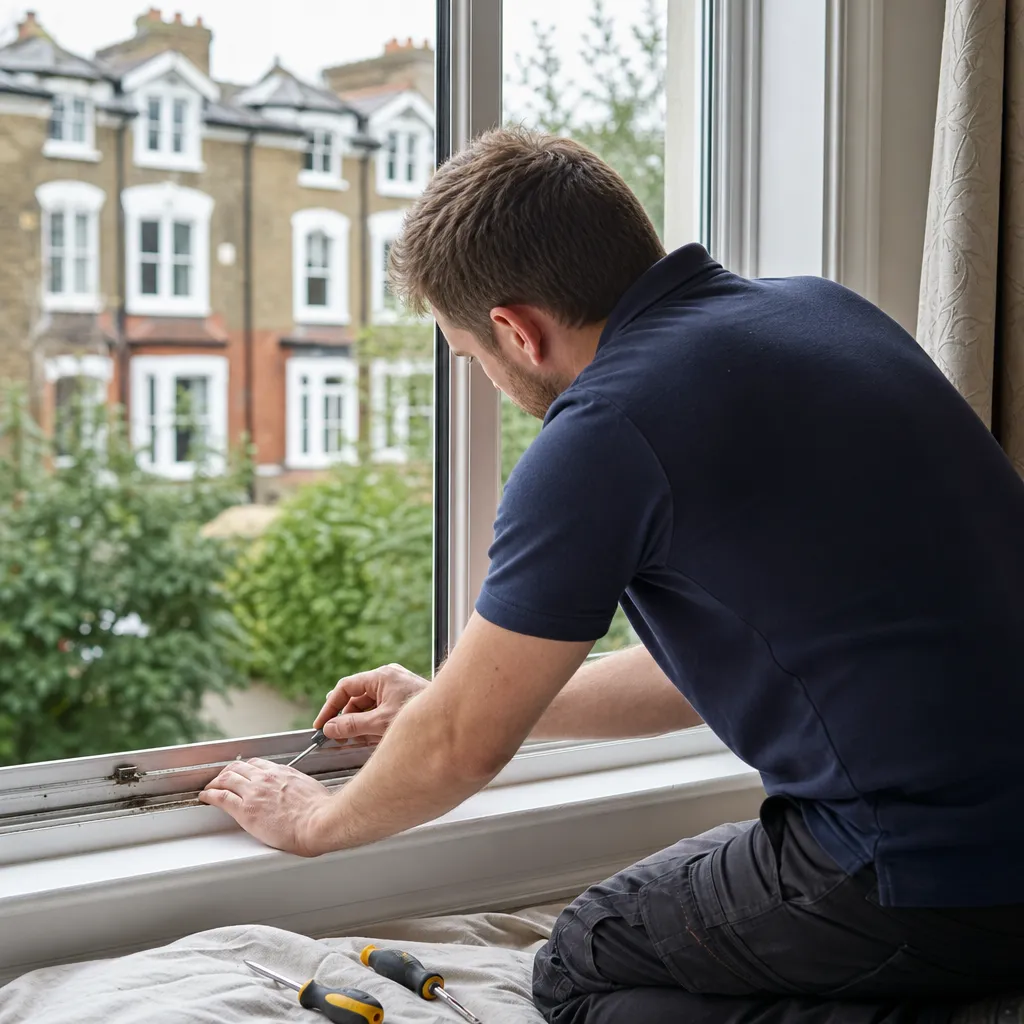
How to Repair Window Tracks
Sliding window tracks, sash channels, and the runners on patio doors are components that wear quietly until they stop working. The problem commonly surfaces when a window becomes stiff to operate, grinds as it moves, or refuses to close fully — which can affect both security and draught-proofing in a UK home. Understanding what type of track system your windows use, and identifying the precise fault, is the essential first step before buying replacement parts or calling in a glazing professional.
Key points
- Sliding windows typically use aluminium or uPVC extruded channel tracks; compacted grit, old lubricant, and deformed seals are the most common causes of stiff operation.
- uPVC window hardware — including rollers, friction stays, and keeps — is generally available as individual replacement components without needing to change the full frame.
- Sash windows use a pulley-and-sash-cord counterweight system housed inside the box frame, not a conventional sliding track.
- Silicone-based spray lubricants are recommended for uPVC and aluminium tracks; petroleum-based products such as WD-40 can degrade rubber seals and attract dust over time.
- FENSA or CERTASS registration is required when a glazed unit or full frame is replaced, but not for hardware or track maintenance on existing windows.
What type of window track do you have?
The right repair approach depends on the track system your windows use. UK residential properties typically feature one of three configurations.
Sliding uPVC or aluminium tracks are found on contemporary sliding casements, aluminium patio windows, and some conservatory vents. The window travels along an extruded channel, guided by nylon or metal rollers mounted in the base of the sliding sash.
Sash window channels appear in traditional timber vertical-sliding sashes, common throughout Victorian, Edwardian, and inter-war housing stock. The sash moves within painted or waxed timber channels — or later-fitted draught-brush seals — and is counterbalanced by cast-iron or lead weights on sash cords routed over pulleys inside the box frame.
Tilt-and-turn and friction-stay systems pivot on side-mounted hinges or stays rather than running on a linear track. Stiffness here usually means a worn or incorrectly adjusted friction stay, not a track fault.
Which problem do you have?
Use this guide to narrow down the cause before starting work.
- Window slides but feels gritty or stiff → likely debris or dried lubricant in the channel; start with a thorough clean.
- Window derails or drops to one side as it moves → likely a failed or missing roller; inspect roller condition before lubricating.
- Window slides freely but won't lock or latch → the keep (strike plate) or locking mechanism is misaligned; adjust or replace the keep rather than the track.
- One side of a sash feels heavier, or the sash won't stay open → a sash cord has likely broken or stretched; the counterweight system needs attention.
- The frame itself is visibly bowed or corner gaps are uneven → frame distortion, not a track problem; a professional assessment is needed.
- Track is cracked, bent, or has sections missing → replacement of the damaged section or a full window review is required.
How to clean and lubricate sliding window tracks
For most sliding windows, a thorough clean followed by fresh lubrication will restore smooth operation. You will need a stiff-bristled brush, a vacuum cleaner with a narrow nozzle, a clean cloth, and a silicone-based spray lubricant.
- Open the window fully and, where the design permits, tilt or lift it clear of the frame. Many sliding windows have a tilt-to-remove function; check the manufacturer's documentation.
- Vacuum out loose debris from the channel, paying particular attention to corners and roller housings where grit collects.
- Scrub compacted dirt from the track profile with the brush, then wipe clean with a damp cloth and allow to dry.
- Inspect the track for visible cracks, raised sections, or deformation that could catch the roller.
- Apply a thin coat of silicone spray along the full length of the track. Avoid over-applying — excess lubricant collects more dust.
- Slide the window back and forth several times to distribute the lubricant, then test the lock engagement.
Do not use WD-40, cooking oil, petroleum jelly, or furniture polish. These are not suitable long-term lubricants for window tracks and can degrade rubber seals or leave grit-attracting residues.
Replacing worn rollers
If cleaning does not resolve the stiffness, or if the window tilts or rocks in the frame, a worn roller is the likely cause. Rollers on sliding windows are small nylon or steel wheels housed at the sash base, running in the bottom channel track.
Most rollers are secured by one or two screws accessible from the bottom edge of the sash, or from inside the frame once the sash is removed. Note the window system before sourcing parts — roller dimensions and housing profiles vary between manufacturers. Replacement rollers for common uPVC systems (including VEKA, Rehau, Kommerling, and Profile 22) are available from glazing trade suppliers and online retailers. Indicative UK cost: approximately £5–£25 per roller set (last reviewed 2026-05-19; prices vary by system and supplier).
After fitting, use the height adjustment screw — if present — to set how far the sash sits above the track, which affects both slide resistance and weathertightness.
Repairing sash window channels
Timber sash windows present a different set of issues. Common causes of stiffness include:
Paint build-up: repeated repainting gradually constricts the channel. Strip and sand the run, then treat with a wax-based lubricant — beeswax is traditional; purpose-made sash lubricant sticks are widely available and less messy.
Swollen timber: common after wet seasons in properties with inadequately maintained frames. Easing the channel with a plane can help but risks damaging the finish; this is often best left to a joiner.
Broken sash cord: if one side of the sash drops lower, or the window will not stay open at the set height, a cord has likely snapped. Replacing sash cords involves removing the pocket piece in the box frame to access the weight — a manageable task, but one that risks losing the weight inside the frame if care is not taken.
Homeowner checklist before calling a professional
Work through these checks before arranging a trade visit:
Red flags: when track repair is not enough
Some conditions go beyond routine maintenance and require professional assessment:
- Frame distortion: the window frame has bowed, causing the sash to bind against the frame rather than within the track. This can indicate subsidence, thermal stress, or failed installation fixings.
- Structural track damage: aluminium tracks corroded through their wall, or uPVC channels cracked along their length, cannot be reliably made good with sealant alone.
- Failed glazed unit: internal misting between panes means the hermetic seal has failed; the unit needs replacing regardless of track condition.
- Persistent water ingress: water pooling in the track or seeping into the reveal suggests failed weather seals or blocked drainage slots; left untreated, this causes timber decay or render damage.
- Security failure: a window that cannot be fully closed or locked is a security risk. If hardware adjustments do not resolve it, professional repair or replacement is the appropriate next step.
When to get professional help
Most track cleaning and roller replacement is within the capability of a confident DIYer. Engage a professional window fitter, glazier, or joiner if:
- The frame is visibly distorted or the surrounding masonry has cracked.
- Sash cord replacement involves heavy weights in a deep or difficult-to-access box frame.
- The window is in a listed building or conservation area, where repair methods may be subject to planning conditions.
- The work requires access above first-floor height without appropriate equipment.
How Housey can help
If your inspection reveals a deeper problem — a damaged frame, failed sealed unit, or a window that needs full replacement — Housey can connect you with vetted window and door installers who can assess and quote for the right solution.
Frequently asked questions
Can I use WD-40 to lubricate my uPVC window tracks?
WD-40 is not recommended for window tracks. It evaporates quickly, leaves a residue that attracts grit, and can soften rubber seals over time. A silicone-based spray lubricant is the appropriate choice for uPVC and aluminium tracks and will not degrade the seals or gaskets in the frame.
Do I need a FENSA certificate for repairing window tracks?
No. FENSA registration applies to the installation of replacement glazing — new glazed units or replacement window frames. Maintaining or repairing existing hardware, rollers, or tracks on an existing window does not trigger a FENSA or building control notification requirement.
How long do window rollers typically last?
In normal use, nylon rollers on sliding windows can last 10–20 years. Heavy use, inadequate lubrication, or abrasive debris in the track will shorten their life. If a window installed within the last 10 years is already difficult to slide, check whether it is still within the installer's guarantee period.
My sash window sticks after rain — is this a track problem?
Usually not. Timber sash windows expand when they absorb moisture, constricting the channel. The longer-term fix is to maintain the timber with paint or preservative treatment. Draught-seal brush inserts can also help by reducing direct timber-to-timber contact in the channel run.
Sources and further reading
- Glass and Glazing Federation consumer guidance — Glass and Glazing Federation
- FENSA consumer information — FENSA
- Historic England: Windows in Historic Buildings — Historic England
- GOV.UK: Building Regulations approval — GOV.UK
Useful next reads
 Improvement & Build
Diagnosing and Fixing French Door Closure Issues
French doors that won't close are usually caused by hinge drop, a misaligned keep plate, or seasonal timber swelling.
 Improvement & Build
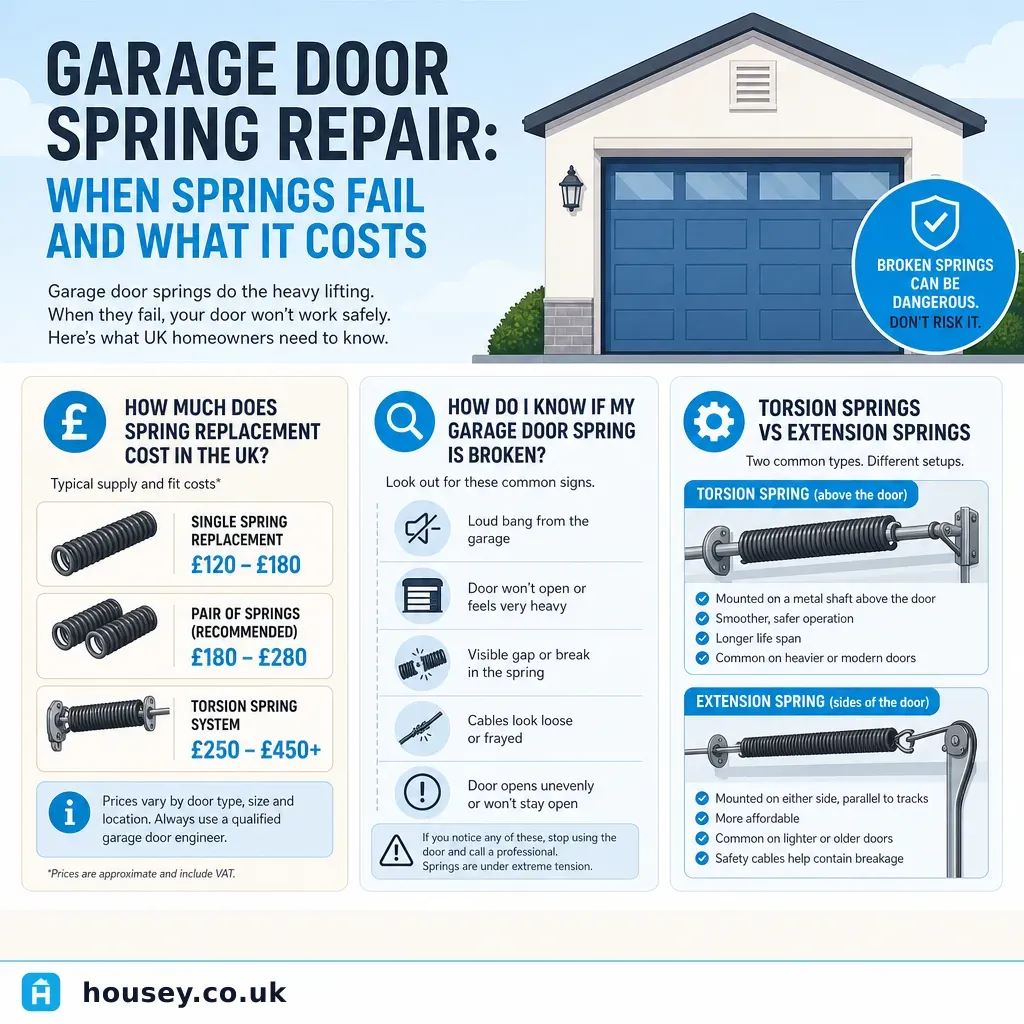
Garage Door Spring Repair: When Springs Fail and What It Costs
A broken garage door spring usually makes the door heavy, lopsided, or completely inoperable.
 Improvement & Build
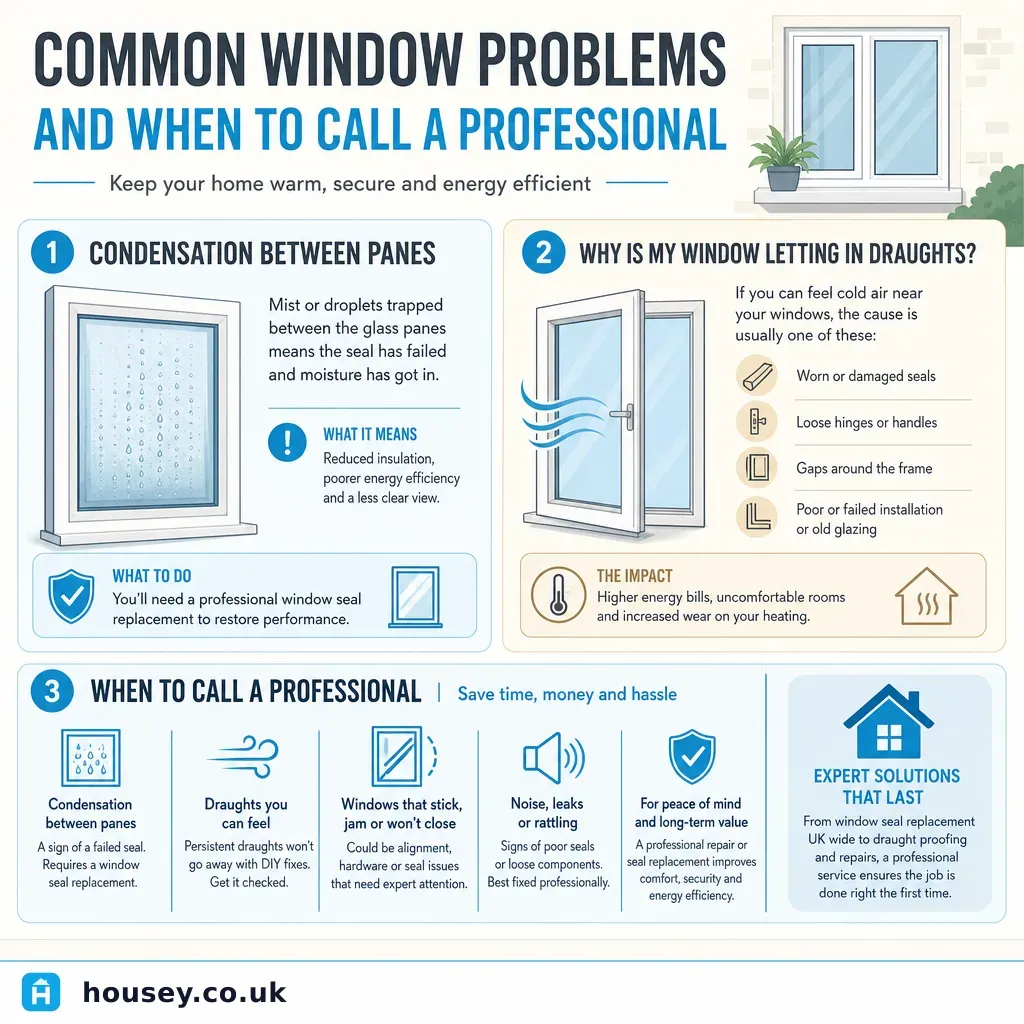
Common Window Problems and When to Call a Professional
The most common window problems in UK homes are condensation between panes (failed sealed unit), draughts from worn seals or warped frames, stiff or broken hardware, and rotting timber frames.
 Improvement & Build
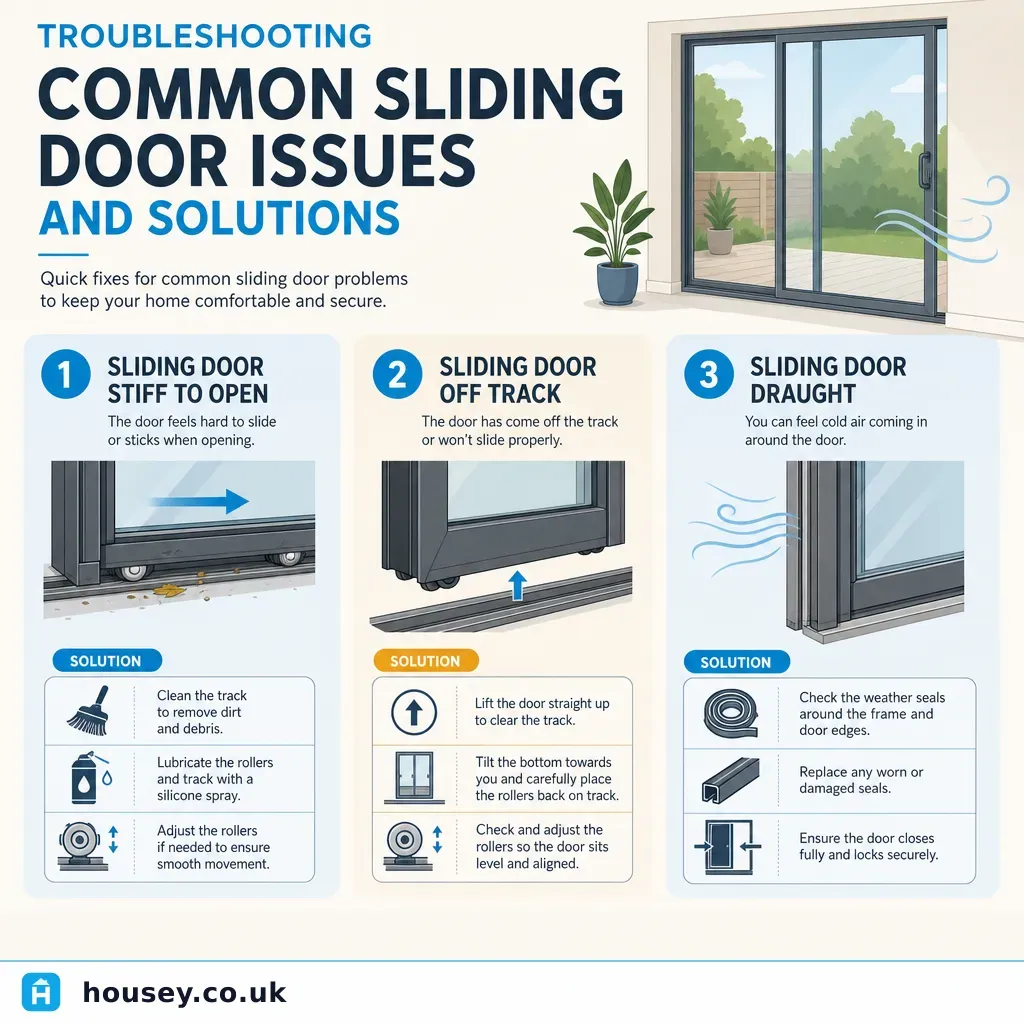
Troubleshooting common sliding door issues and solutions
Most sliding door problems — stiff operation, draughts, misalignment, or a faulty lock — have straightforward fixes.
 Improvement & Build
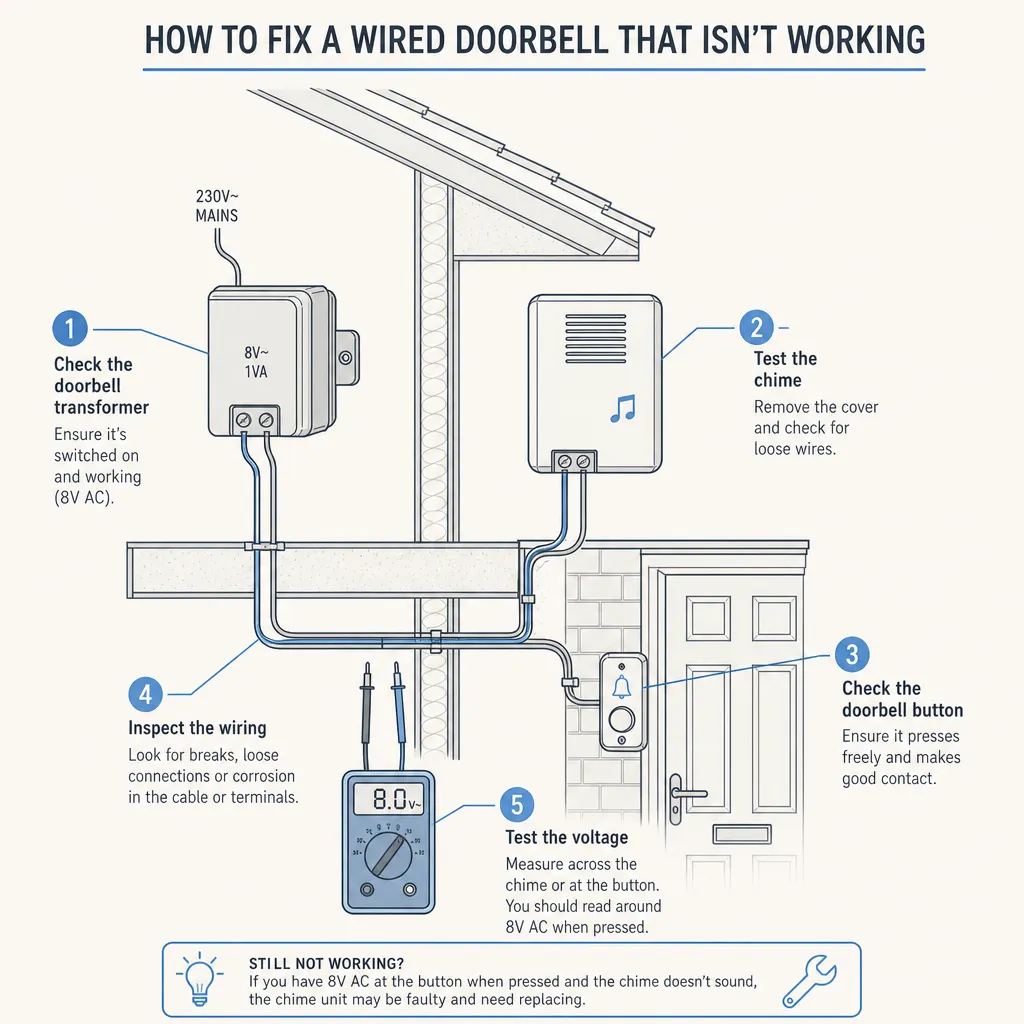
How to fix a wired doorbell that isn't working
Most wired doorbells fail because of a worn push button, corroded bell wire connections, a faulty transformer, or a jammed chime mechanism.