Diagnosing and Fixing French Door Closure Issues
By Housey · Last reviewed 11th of May 2026
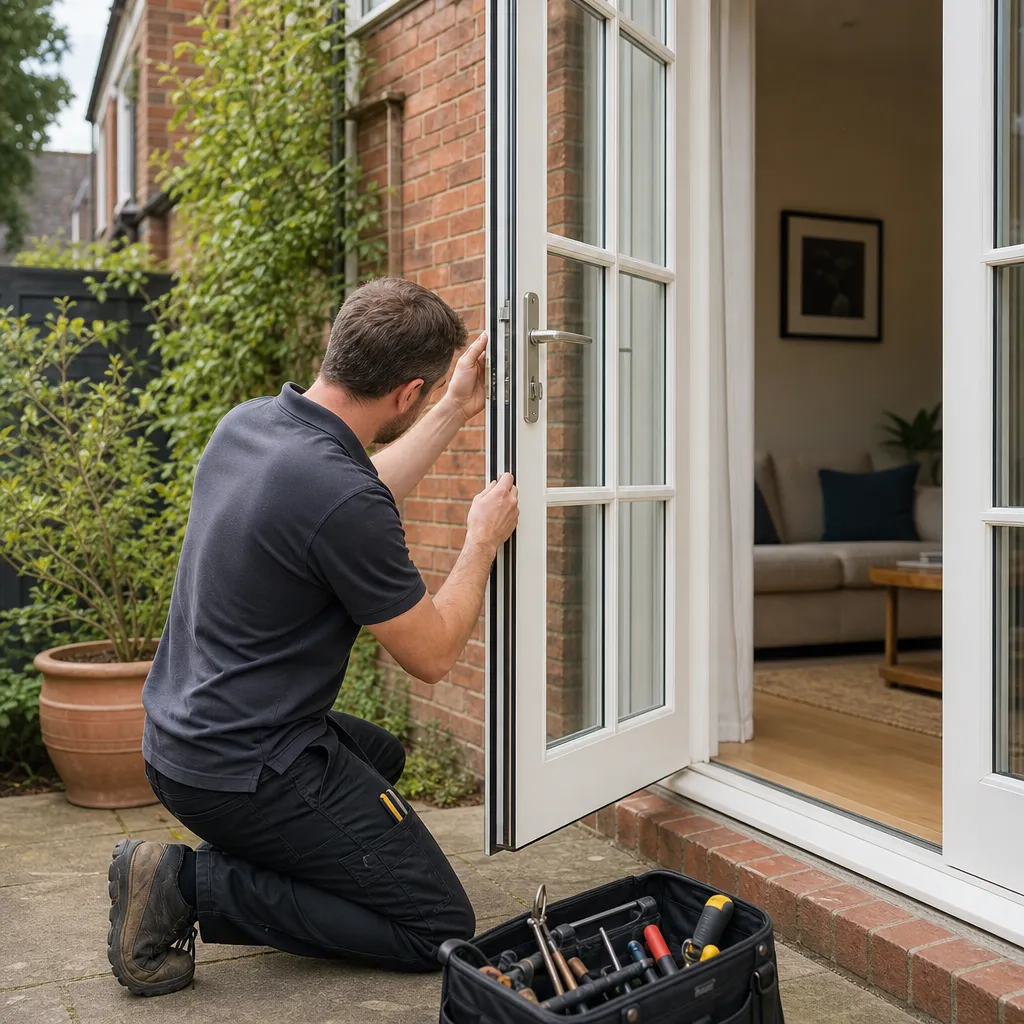
Diagnosing and Fixing French Door Closure Issues
French doors that stick, bind, or refuse to latch are a common complaint in UK homes — from Victorian terraces where timber frames shift with the seasons to modern uPVC installations where a single dropped hinge throws the whole leaf out of alignment. The problem typically surfaces after a wet winter, following nearby building works, or simply as hardware ages and wears.
Key points
- Hinge drop is the single most common cause: a French door that catches at the top opposite corner and drags at the bottom usually has loose hinge screws or worn hinge leaves.
- Timber doors expand and contract with humidity; a door that sticks in January but closes freely in July is often showing normal seasonal movement rather than a structural defect.
- uPVC and aluminium doors have adjustable hinges offering ±2 mm of lateral and ±3 mm of vertical adjustment, settable with a hex key without removing the door.
- A misaligned keep plate (striker plate) on the frame is often quicker to fix than rehinging: repositioning it by 1–3 mm can restore a clean latch.
- Frame racking — where the opening is measurably out of square — may indicate foundation movement or structural change and requires professional investigation before any repair work begins.
Diagnosing where the fault lies
Before reaching for a plane or a screwdriver, take five minutes to observe the door carefully. Close it slowly and note exactly where it binds or fails to seat.
Step 1 — Mark the contact point. Insert a strip of carbon paper, or rub chalk along the door's closing edge, then close the door gently. The transfer mark shows precisely where the door is touching the frame.
Step 2 — Check the hinges. Open the door fully and grip the leading edge firmly. Noticeable vertical play — the door lifts slightly when you raise the edge — indicates worn or loose hinges.
Step 3 — Inspect the frame. Use a long spirit level on both jambs and across the head. A deviation of more than 3 mm from plumb over a 2 m frame suggests the opening has moved since installation.
Step 4 — Check the keep plate. Operate the latch and examine where the bolt or tongue contacts the keep plate slot. If the tongue lands high, low, or to one side, repositioning the plate is often the simpler fix.
Common symptoms and likely causes
Symptom | Most likely cause | Typical fix |
|---|---|---|
Binds at top of leading edge | Hinge drop (bottom hinge loose) | Tighten screws; use longer screws or rawlplugs |
Binds at bottom of leading edge | Top hinge loose, or door swollen at top | Tighten top hinge; plane bottom edge if timber is swollen |
Closes flush but won't latch | Keep plate misaligned | File or reposition keep plate |
Draught around the meeting edge | Compression seals worn or perished | Replace draught seals |
Both leaves binding simultaneously | Frame out of square | Professional inspection required |
Fixing a dropped hinge
Hinge drop is especially common on heavy hardwood doors and older installations where original screws have gradually worked loose.
- Open the door and support it with a door wedge to unload the hinges.
- Inspect each screw in turn. If a screw spins without gripping, the hole is stripped.
- For stripped holes: remove the screw, pack the void with wooden toothpicks and wood adhesive (or a purpose-made timber rawlplug), allow to cure fully, then re-drive a longer screw.
- Use screws of at least 50 mm — long enough to reach through the door lining into the structural jamb behind it — for a lasting repair.
- For uPVC or aluminium doors: locate the adjustment slots on each hinge body, use a 5 mm hex key, and raise or lower the leaf until the gap around the frame is even — typically 3 mm all round.
Adjusting keep plates and latches
When the door closes flush but the latch won't engage cleanly:
- Measure the gap between the latch tongue and the centre of the keep-plate slot. A misalignment of under 4 mm is usually correctable by repositioning the plate.
- Mark the new position lightly in pencil, unscrew the plate, and extend the mortise in the relevant direction with a sharp chisel.
- Refit the plate and test the latch. Fill and paint any exposed timber to prevent moisture ingress.
For uPVC multi-point locking systems, many have an adjustable mushroom-head cam on each locking point — a small flat-head screwdriver turns it to alter engagement depth without removing any hardware from the frame.
Seasonal movement in timber French doors
Solid and engineered timber is hygroscopic — it absorbs atmospheric moisture and swells. A door that seizes in a damp November but moves freely in August is behaving within normal parameters for the material.
Practical steps to manage seasonal movement:
- Seal all six faces of each door leaf, including the top, bottom, and lock edges — not only the face sides. Bare end grain absorbs moisture far more readily than sealed surfaces.
- Fit a quality brush seal or compression draught seal on the meeting edge where the two leaves close against each other.
- If the door is consistently tight in winter, a small amount of planing on the binding edge — followed by immediately sealing the cut face — normally resolves the problem.
What not to assume: seasonal movement does not mean the doors are defective or misinstalled. Older solid-timber doors, particularly in pre-1919 housing, generally show more movement than modern engineered-core equivalents. Where architectural character matters, repair and re-seal rather than replace; where movement is severe and affects security or weatherproofing, an engineered-timber replacement may offer a more stable long-term result.
Red flags: when to call a professional
Stop and seek professional advice if you observe any of the following:
- The frame is visibly racked — one jamb is noticeably out of plumb, or the head sags — suggesting settlement or structural movement in the surrounding wall.
- Cracks have appeared in the masonry or plasterwork surrounding the frame at the same time as the door problem began.
- The door was recently installed and has never closed correctly — a manufacturing or installation defect may apply; FENSA-registered installations carry a 10-year guarantee backed by an insurance-backed guarantee (IBG).
- Both leaves bind at different points simultaneously — unlikely to be a single-hinge problem, this suggests more widespread frame distortion.
- Corner cracking in glazing units — stress fractures at the glass corners can indicate the frame is bearing a structural load it was not designed to carry.
Pre-repair homeowner checklist
Before ordering parts or calling a tradesperson, work through the following:
When to get professional help
If adjustments don't resolve the problem, if the frame is measurably out of square, or if the installation is under a live warranty, instruct a qualified window and door installer or joiner to inspect the work. For older properties where ground movement may be a factor, a RICS-registered building surveyor can establish whether the door problem is a symptom of a wider structural issue before any remedial carpentry is carried out.
How Housey can help
If a professional diagnosis or repair is needed, Housey can connect you with vetted window and door installers in your area who can assess the fault and carry out a lasting repair — whether a simple hinge adjustment or a complete door replacement.
Frequently asked questions
Why do my French doors stick only in winter?
Timber absorbs atmospheric moisture and swells when humidity is high — most notably in autumn and winter. If the doors close freely in summer, seasonal swelling is almost certainly the cause. Ensuring all door edges are fully sealed and fitting a brush seal on the meeting stile usually reduces the problem significantly. If sticking is severe enough to affect security or weathertightness, planing the binding edge is a practical remedy.
Can I adjust uPVC French door hinges myself?
Yes, in most cases. Modern uPVC door hinges have lateral and vertical adjustment slots accessible with a 5 mm hex key. Adjust in small increments — half a turn at a time — and check the gap around the door as you go. If the full adjustment range is exhausted without resolving the problem, a professional should inspect the frame and the door sash.
My French doors close flush but won't latch — what's wrong?
A misaligned keep plate is the most likely cause. The latch tongue is landing slightly above, below, or to one side of the plate's slot. Close the door slowly and watch where the tongue contacts the plate. Repositioning or carefully filing the keep plate is usually quicker than adjusting the door itself, and does not require removing the door from its hinges.
How long does a dropped hinge repair take?
Tightening or replacing screws and making minor hinge adjustments typically takes under an hour. If screw holes need packing with timber and adhesive, allow the adhesive to cure — often two to four hours depending on the product — before reloading the hinge. Frame or complete hinge-replacement work may take a full day.
Sources and further reading
- FENSA Glazing Guarantee Scheme — FENSA
- Draught-proofing guidance for windows and doors — Energy Saving Trust
- Building Regulations Approved Document Q: Security — GOV.UK
Useful next reads
 Improvement & Build
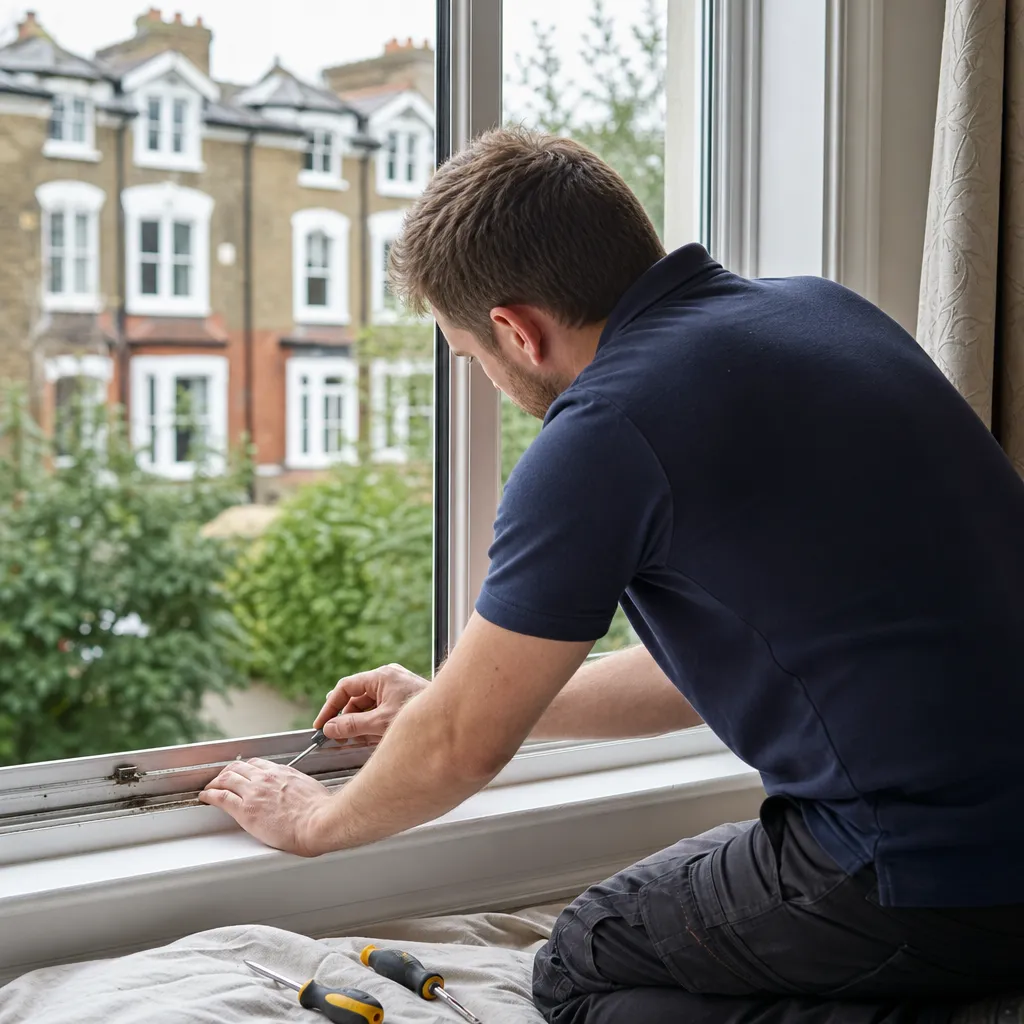
How to Repair Window Tracks
Most window track problems — stiffness, grinding, or failure to slide — stem from debris build-up, worn rollers, or dried seals.
 Improvement & Build
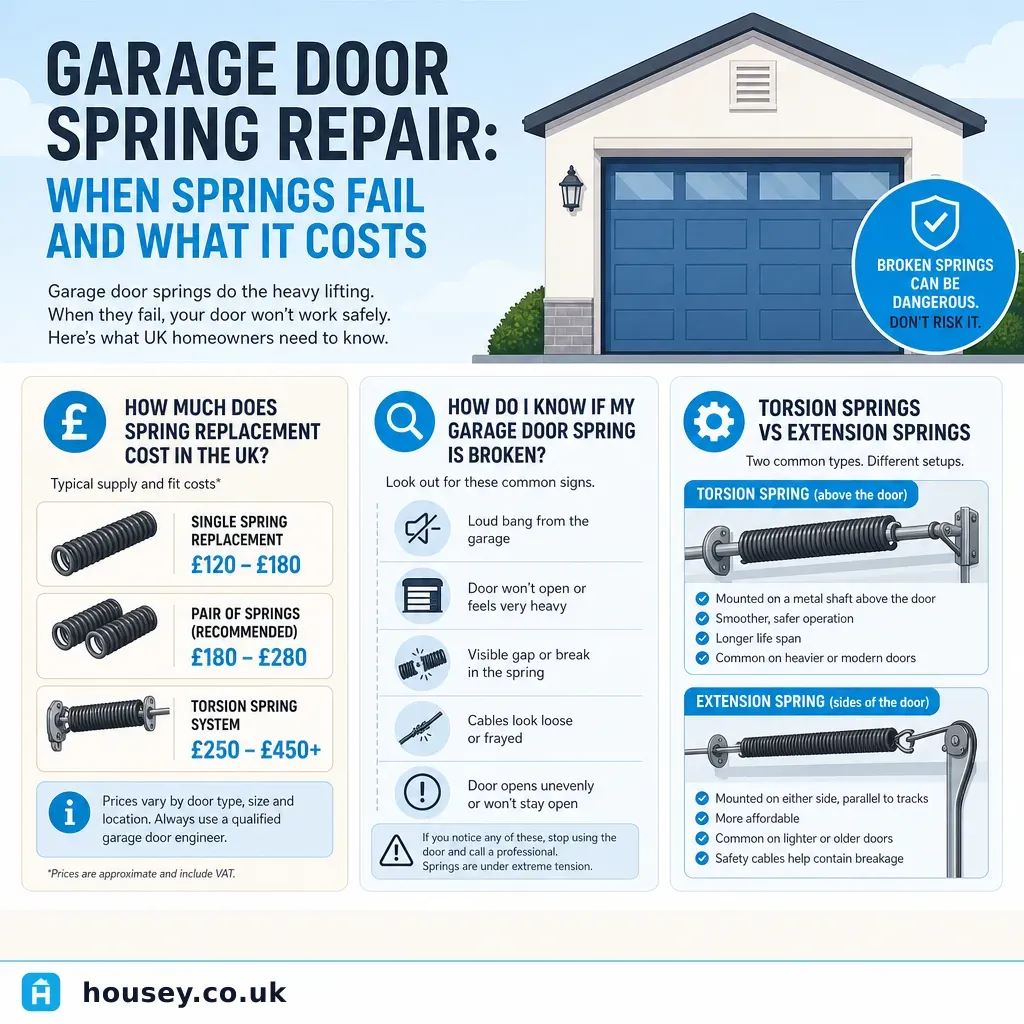
Garage Door Spring Repair: When Springs Fail and What It Costs
A broken garage door spring usually makes the door heavy, lopsided, or completely inoperable.
 Improvement & Build
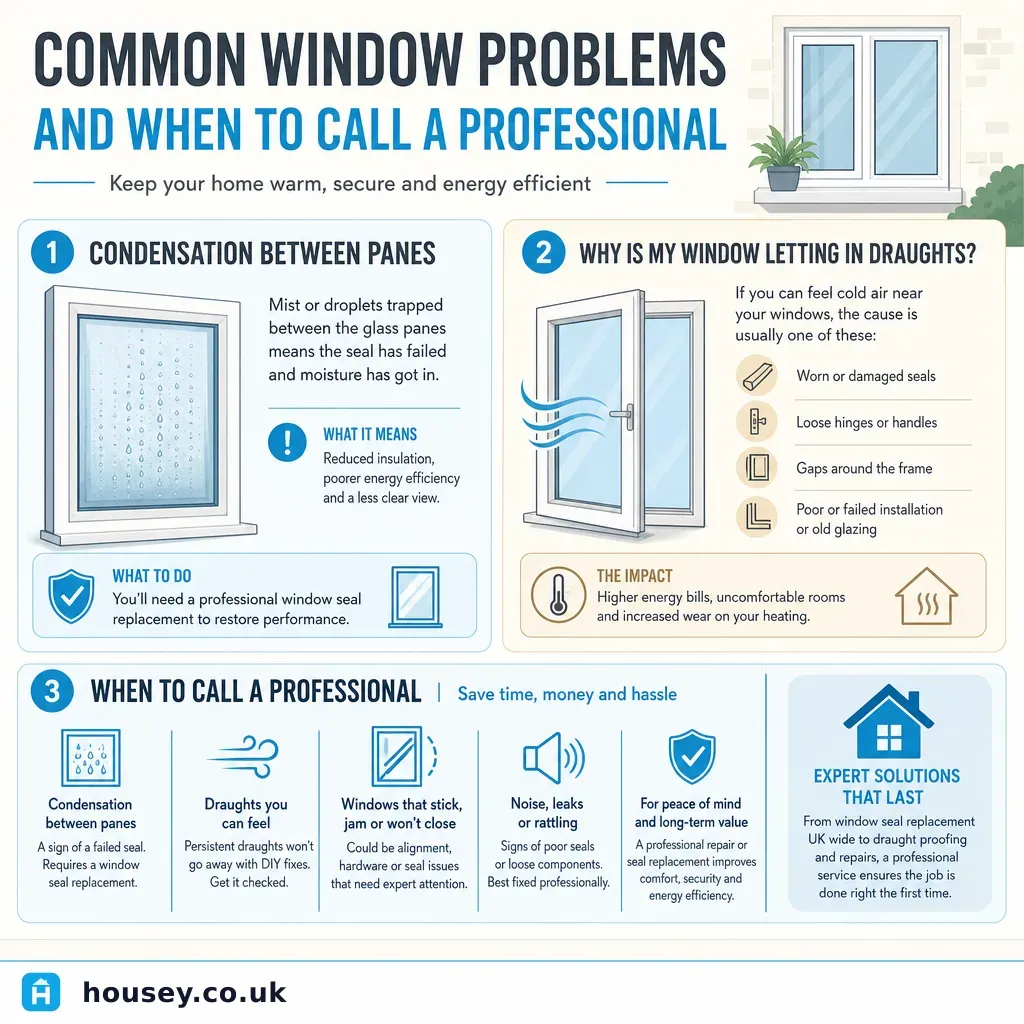
Common Window Problems and When to Call a Professional
The most common window problems in UK homes are condensation between panes (failed sealed unit), draughts from worn seals or warped frames, stiff or broken hardware, and rotting timber frames.
 Improvement & Build
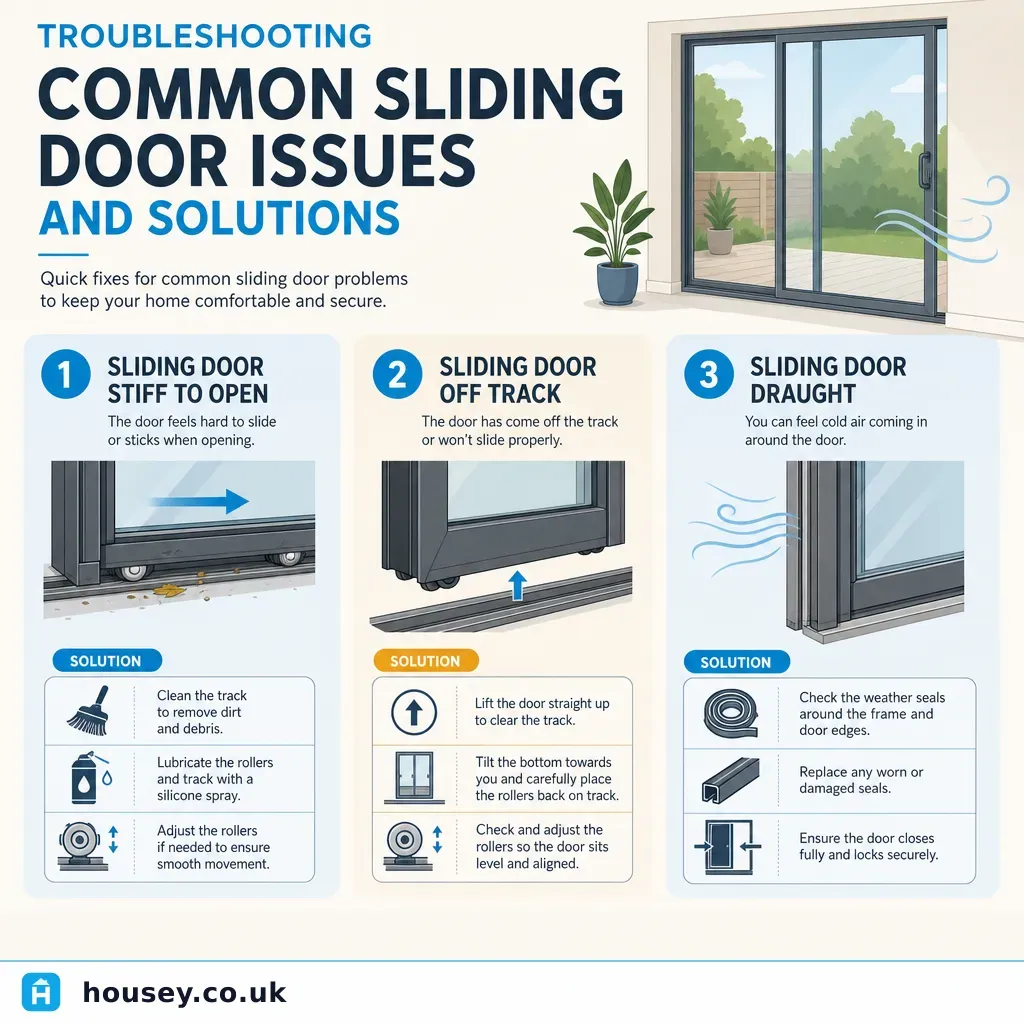
Troubleshooting common sliding door issues and solutions
Most sliding door problems — stiff operation, draughts, misalignment, or a faulty lock — have straightforward fixes.
 Improvement & Build
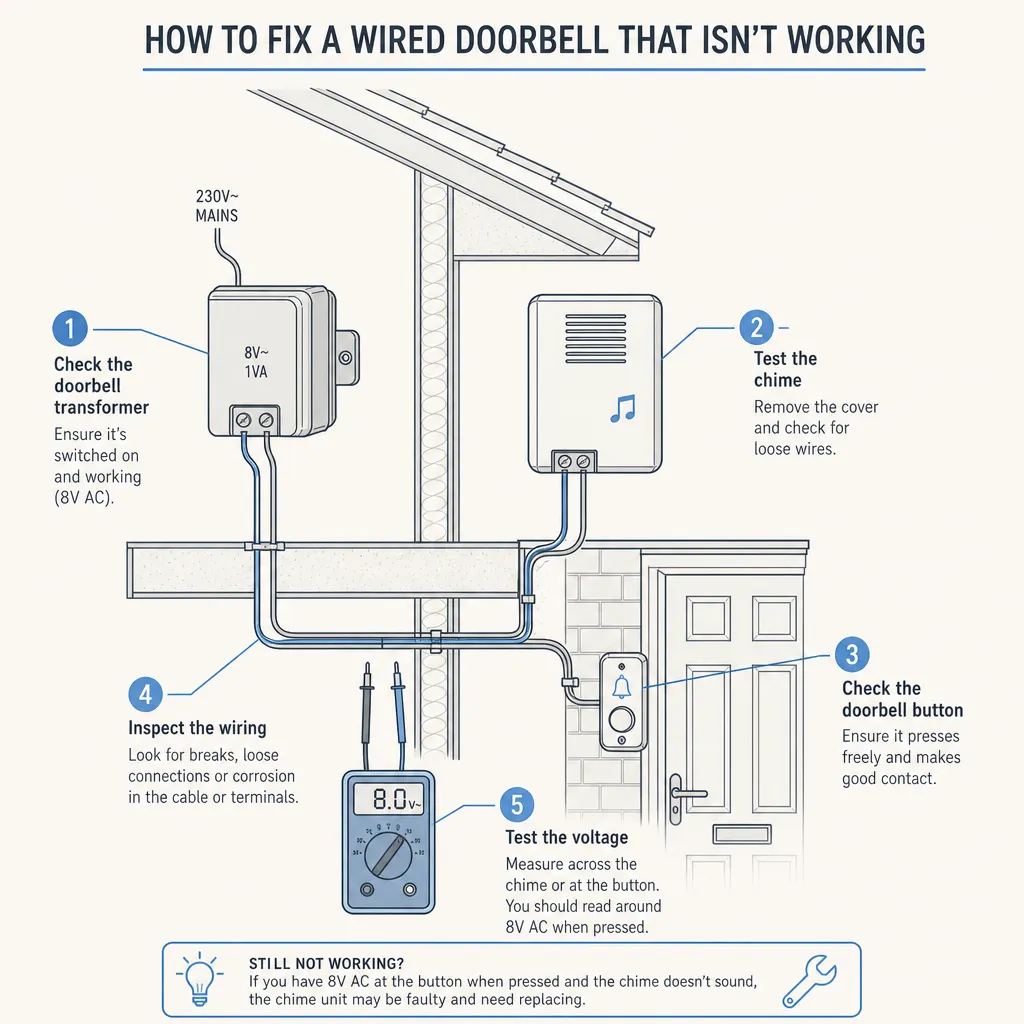
How to fix a wired doorbell that isn't working
Most wired doorbells fail because of a worn push button, corroded bell wire connections, a faulty transformer, or a jammed chime mechanism.