Compact Dwelling Construction Costs
By Housey · Last reviewed 11th of May 2026
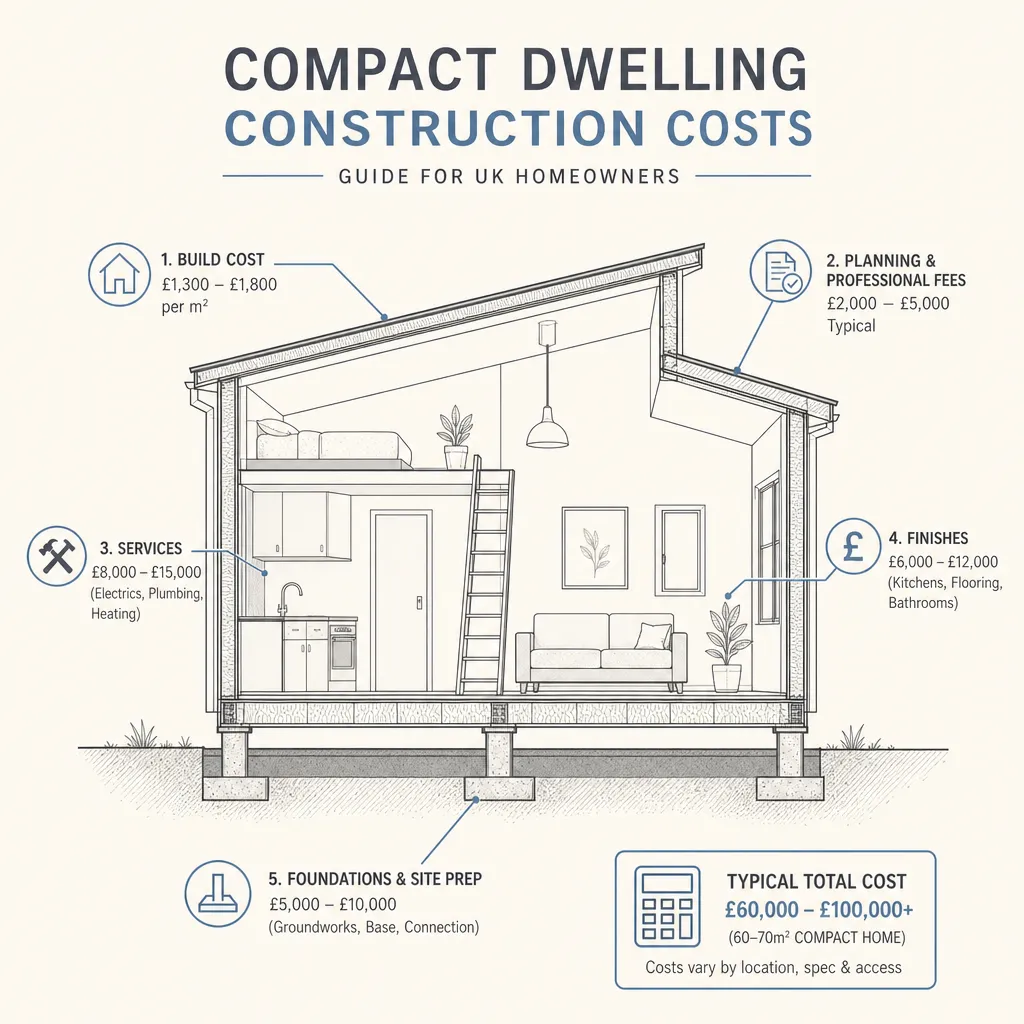
Compact Dwelling Construction Costs
Small and compact homes — sometimes described as tiny houses, micro-homes, garden annexes, or compact dwellings — attract growing interest in the UK from homeowners looking to house a family member, reduce living costs, or make better use of a large garden or outbuilding plot. Construction costs and planning requirements vary significantly depending on whether the structure is permanent or moveable, designed to full residential building standards, or built as an annexe to an existing house. Getting clear on these distinctions before committing to any design spend is the single most valuable step early in the process.
Key points
- Any new permanent residential dwelling in the UK requires planning permission — there is no permitted development route for a new standalone house, regardless of floor area.
- The Nationally Described Space Standard (NDSS) sets minimum internal floor areas in England: 37 m² for a 1-person 1-bedroom home and 50 m² for a 2-person 1-bedroom home — but NDSS is only mandatory where adopted by the local planning authority.
- A residential annexe within a domestic curtilage may qualify for Class E permitted development as an outbuilding, but only if it remains genuinely incidental to the main dwelling and is not used as an independent residence.
- Mobile homes and tiny houses on wheels are regulated under the Caravan Sites and Control of Development Act 1960 and the Mobile Homes Act 1983, not under standard residential planning and Building Regulations.
- Indicative build costs range from approximately £50,000 for a basic modular or flat-pack unit to over £200,000 for a custom-designed compact permanent home, depending on specification and site conditions (Indicative UK costs, last reviewed 2026-05-11).
How much does a compact dwelling cost to build?
Costs vary more than almost any other building type, because the market spans everything from a pre-manufactured garden pod to a fully designed and built standalone house on a serviced plot.
Build route | Typical cost range | Planning route | Building Regs? | Notes |
|---|---|---|---|---|
Off-the-shelf garden pod or studio | £30,000–£80,000 | Class E PD (incidental use) or full planning | Depends on use | Not suitable for independent residential use without planning permission |
Modular or prefab compact home | £60,000–£130,000 | Full planning permission required | Yes | Factory-built unit; foundation and connection costs extra |
Bespoke timber-frame compact home | £100,000–£200,000 | Full planning permission required | Yes | Custom-designed; includes structural and thermal design costs |
Custom masonry compact home | £110,000–£220,000+ | Full planning permission required | Yes | Traditional build; typically slower programme |
Tiny house on wheels | £30,000–£80,000 | Caravan site licence required for occupation | Not standard Part A/L | Subject to caravan and mobile home legislation |
Indicative UK costs, last reviewed 2026-05-11. Costs exclude land, professional fees, site connections, and VAT where applicable. Regional variation is significant.
Which compact dwelling build route suits your project?
- Choose a modular or prefab unit if speed and cost certainty matter, your site has good access, and you have planning permission or are confident of obtaining it.
- Choose a bespoke timber-frame or masonry design if you want a custom layout, high energy performance, or you are in a location with design requirements such as a conservation area, AONB, or village setting.
- Consider a garden annexe if the intended use is genuinely incidental to the main house and Class E permitted development rights are available — but seek planning advice before proceeding, because the distinction between an annexe and an independent dwelling matters to the local planning authority.
- Consider a tiny house on wheels only if you understand the caravan licensing regime and have an authorised site; this is not a route to avoid planning obligations for a permanent residence.
- Consult your local planning authority or a planning consultant before committing to any design if your scheme involves a new standalone dwelling, an annexe that may be sold or rented separately, or a site in a sensitive landscape such as the green belt or an AONB.
What drives the cost of a compact dwelling?
Factors that increase cost
- Remote or rural location with long or complex service connections — electricity, water, foul drainage
- Steep, unstable, or contaminated ground requiring engineered foundations
- High-specification energy performance: Passivhaus standard, MVHR ventilation, triple glazing
- Conservation area, AONB, or national park designation requiring high-quality materials and an extended planning process
- Bespoke architectural design with unusual geometry or non-standard structural approach
Factors that reduce cost
- Standard urban or suburban plot with existing services nearby
- Factory-built modular unit with a standard configuration
- Simple rectangular floor plan with a standard pitched or flat roof
- Good vehicle access and proximity to mains connection points
Planning permission: what compact dwellings usually require
Most compact permanent homes require full planning permission for new residential development (Use Class C3). Planning officers will typically consider:
- Whether the site falls within or adjacent to a residential curtilage
- Impact on neighbouring amenity — overlooking, overshadowing, and loss of light
- Design quality, scale, and materials in context
- Flood risk (Sequential Test if in Flood Zones 2 or 3)
- Whether the NDSS minimum space standard has been met, where adopted by the LPA
- Green belt policy — sites within the green belt face a strong presumption against new development under the National Planning Policy Framework
Proposals in the green belt that do not fall within a defined exception — such as limited infilling of a village or replacement of an existing dwelling of similar size — are unlikely to secure permission under current planning policy. Always check with the local planning authority before engaging a designer.
What to ask a professional before commissioning a compact dwelling
Before appointing a designer or builder, ask:
- Does this plot have any planning history, Article 4 Directions, agricultural tie conditions, or ecology constraints that affect what can be built?
- Will the proposed use of the structure — permanent residence, holiday let, or annexe — change the planning route?
- Which Building Regulations Parts apply, and what building control route will be used?
- What structural warranty product will the completed building carry?
- What are the estimated costs for mains connections, and how are those figures calculated?
- Is the structure designed to comply with current Building Regulations Part L (energy efficiency) and Part F (ventilation)?
- What is explicitly included in and excluded from the quoted build cost?
When to get professional help
Compact dwellings sit at the intersection of planning policy, structural design, and Building Regulations in ways that make professional advice essential from the outset — not after you have spent money on a scheme that may not be approved.
- Appoint an architect before progressing any design — planning policy for small homes is site-specific, and an architect familiar with local policy can identify issues before they become expensive.
- Engage a structural engineer if you are building a permanent structure: foundations, frame connections, and roof design all require structural input to comply with Building Regulations Approved Document A.
- Seek a planning consultant if your site is in a sensitive location — green belt, AONB, conservation area, or flood zone — or if there is any doubt about whether a new residential unit will be acceptable in principle.
- Do not rely on generic permitted development guidance for anything involving a new independent residential use: planning law is complex, site-specific, and subject to local variation through adopted policies and Article 4 Directions.
How Housey can help
Housey connects you with vetted architects experienced in compact dwelling design and UK planning applications. Whether you are exploring a modular option, commissioning a bespoke small home, or trying to understand the planning position on your plot, getting the right professional advice early is the best investment you can make before committing to any build spend.
Frequently asked questions
Do I need planning permission for a tiny house in the UK?
If the tiny house is a permanent structure intended as a residential dwelling, yes — full planning permission is required. If it is a mobile home or a structure on wheels, a caravan site licence is required for lawful occupation. There is no permitted development route for a new standalone independent residential unit in England or Wales, regardless of floor area.
What is the minimum legal size for a new home in England?
The Nationally Described Space Standard sets minimum internal floor areas: 37 m² for a 1-person 1-bedroom home and 50 m² for a 2-person 1-bedroom home. These standards are only mandatory where adopted by the local planning authority. Scotland, Wales, and Northern Ireland operate separate housing space standards.
Can I build a compact home in my garden for a family member?
Possibly, as a residential annexe — but the planning position depends on whether it would be genuinely incidental to the main dwelling or effectively a new independent home. An annexe sold, separately let, or occupied independently of the main house is likely to require full planning permission as a new dwelling. Seek planning advice before commissioning any design work.
Can self-builders reclaim VAT on a compact new home?
Yes, in most cases. Self-builders constructing a new dwelling can reclaim VAT on eligible materials and services using HMRC's DIY VAT reclaim scheme (form VAT431NB), provided the structure is built as a principal private residence. Take advice from an accountant or the HMRC VAT helpline before relying on this scheme, as conditions apply.
Sources and further reading
- Planning Portal: Do you need permission? — Planning Portal / GOV.UK
- Nationally Described Space Standard — GOV.UK
- Caravan Sites and Control of Development Act 1960 — legislation.gov.uk
- VAT431NB: VAT refunds for DIY housebuilders — HMRC / GOV.UK
- National Planning Policy Framework — GOV.UK
Useful next reads
 Planning & Pre-Build
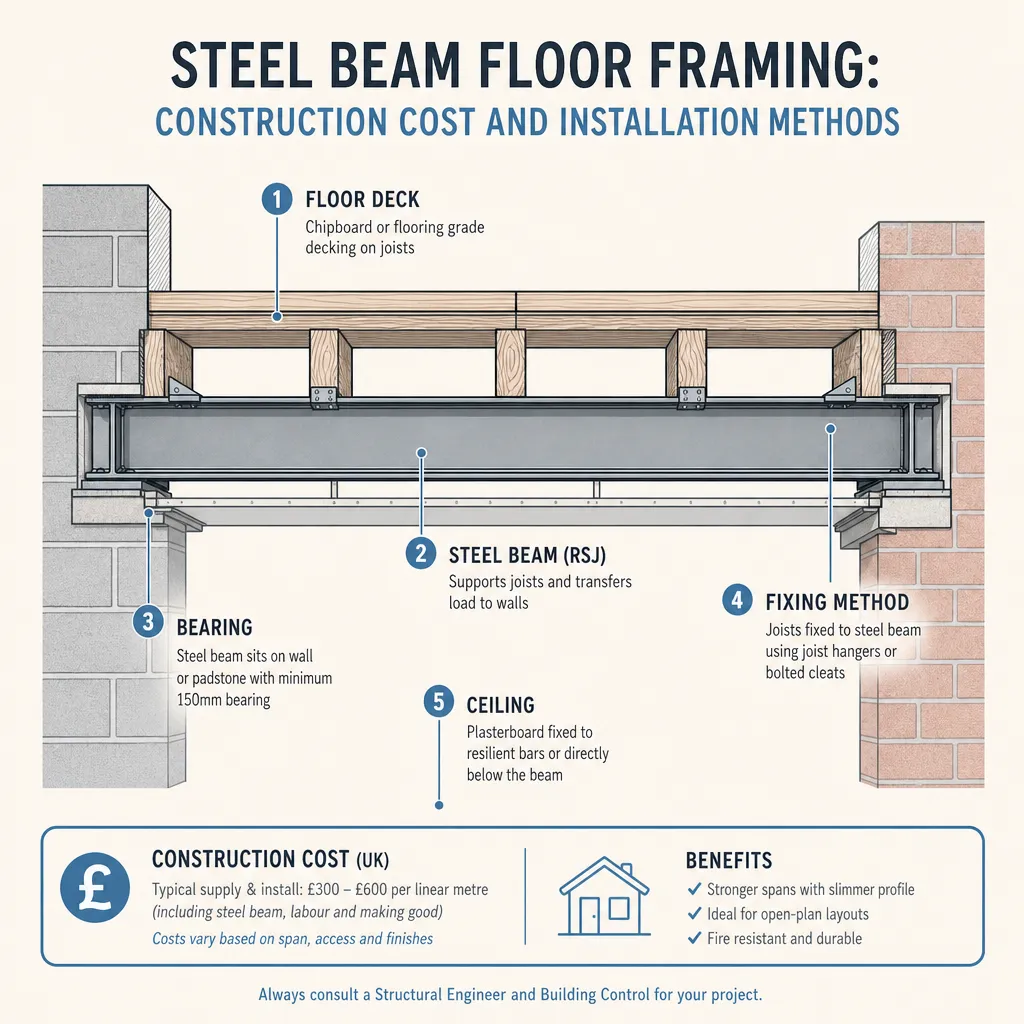
Steel Beam Floor Framing: Construction Cost and Installation Methods
Steel beam floor framing is used in UK homes when spans are too wide for timber joists, or when a load-bearing wall is removed.
 Planning & Pre-Build
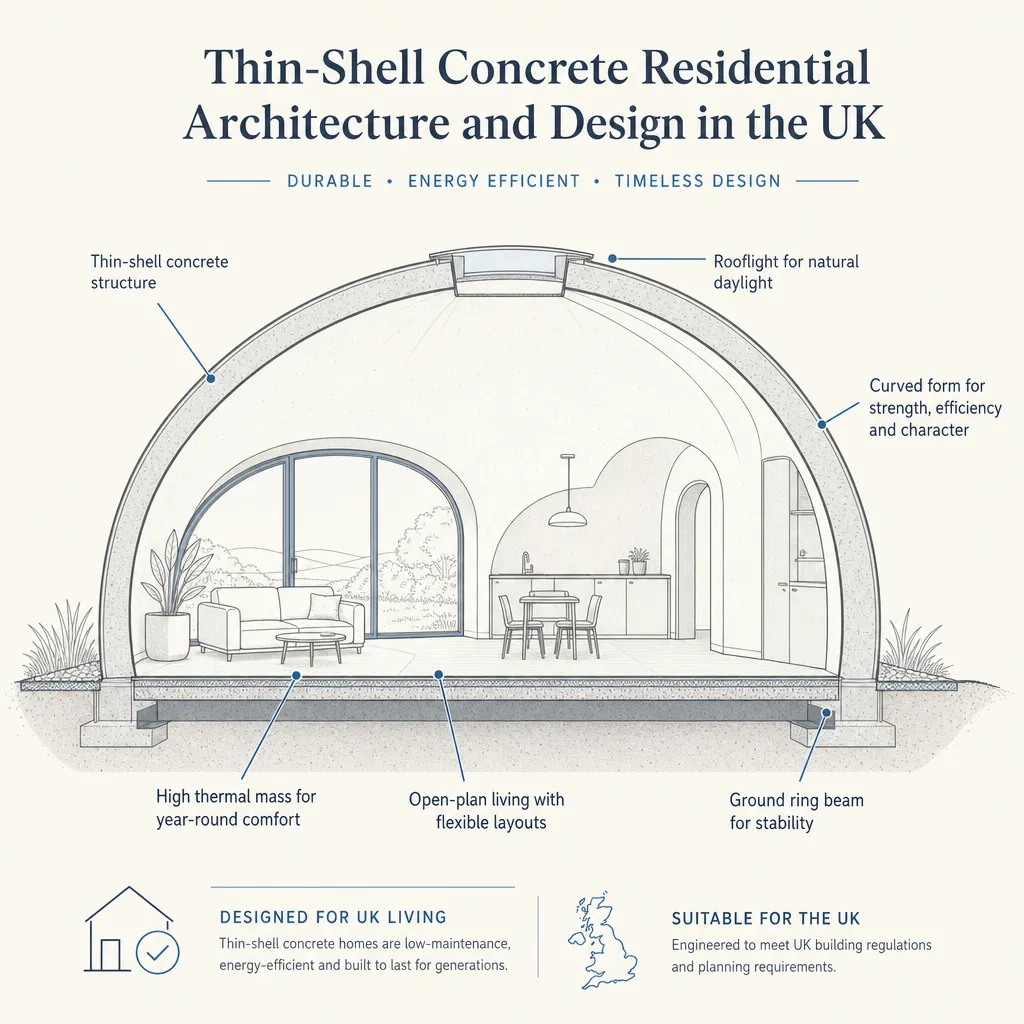
Thin-Shell Concrete Residential Architecture and Design in the UK
Thin-shell concrete construction uses curved or folded concrete forms — including domes, vaults, and hyperbolic paraboloids — to achieve structural efficiency through shape rather than mass.
 Planning & Pre-Build
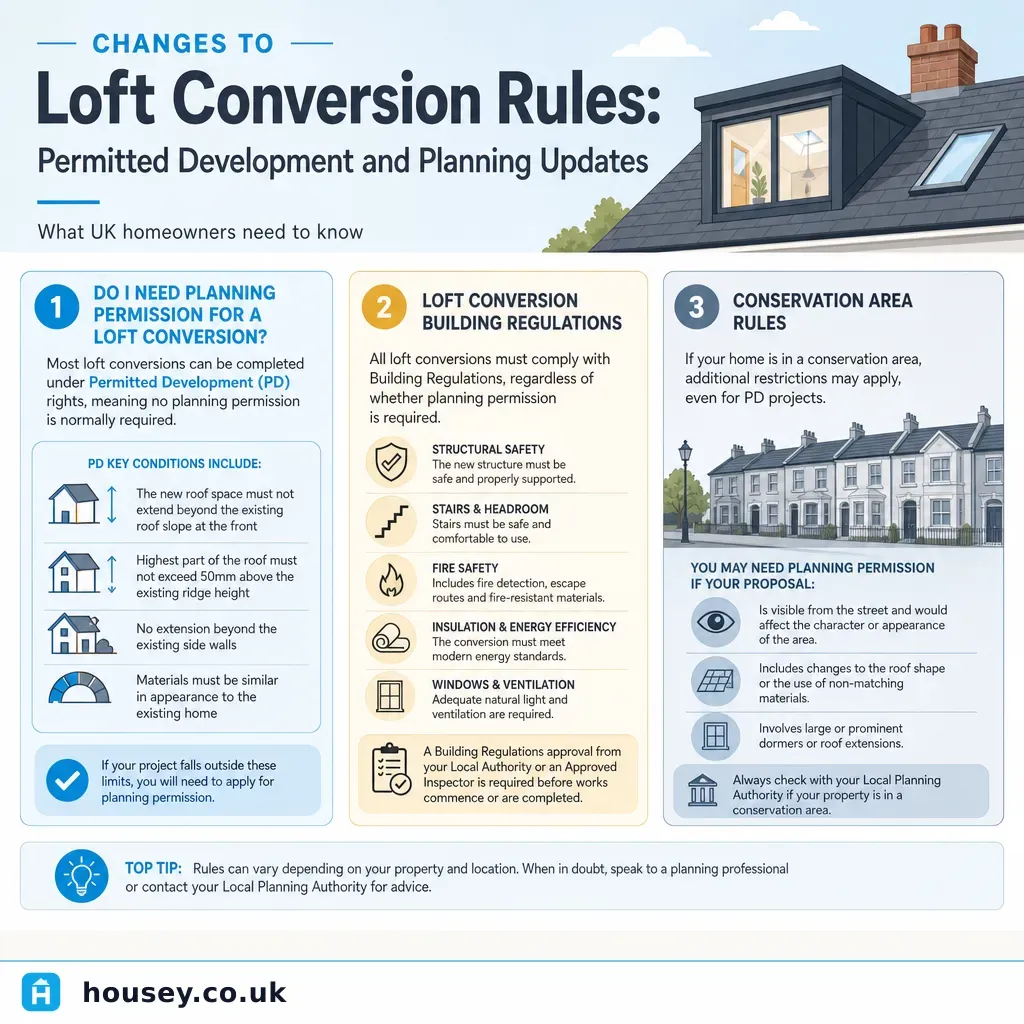
Changes to Loft Conversion Rules: Permitted Development and Planning Updates
In England, most loft conversions on standard houses qualify as Permitted Development under Class B of the GPDO 2015, allowing up to 40 cubic metres (terraced) or 50 cubic metres (detached or semi-detached) without a planning application — if conditions are met.
 Planning & Pre-Build
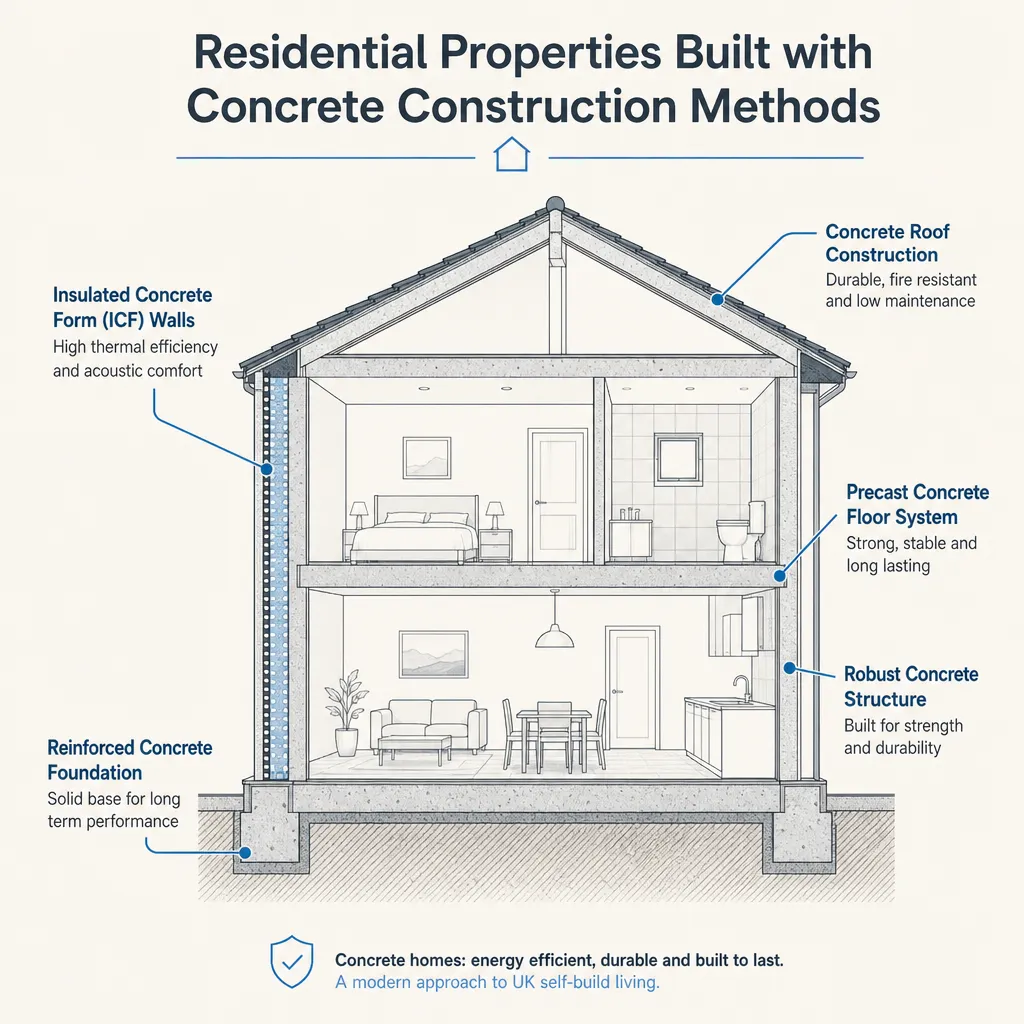
Residential Properties Built with Concrete Construction Methods
UK homes are built using several concrete methods: in-situ cast concrete, precast panel systems, insulating concrete formwork (ICF), and older non-traditional types such as Wimpey No-Fines and Laing Easiform.
 Planning & Pre-Build
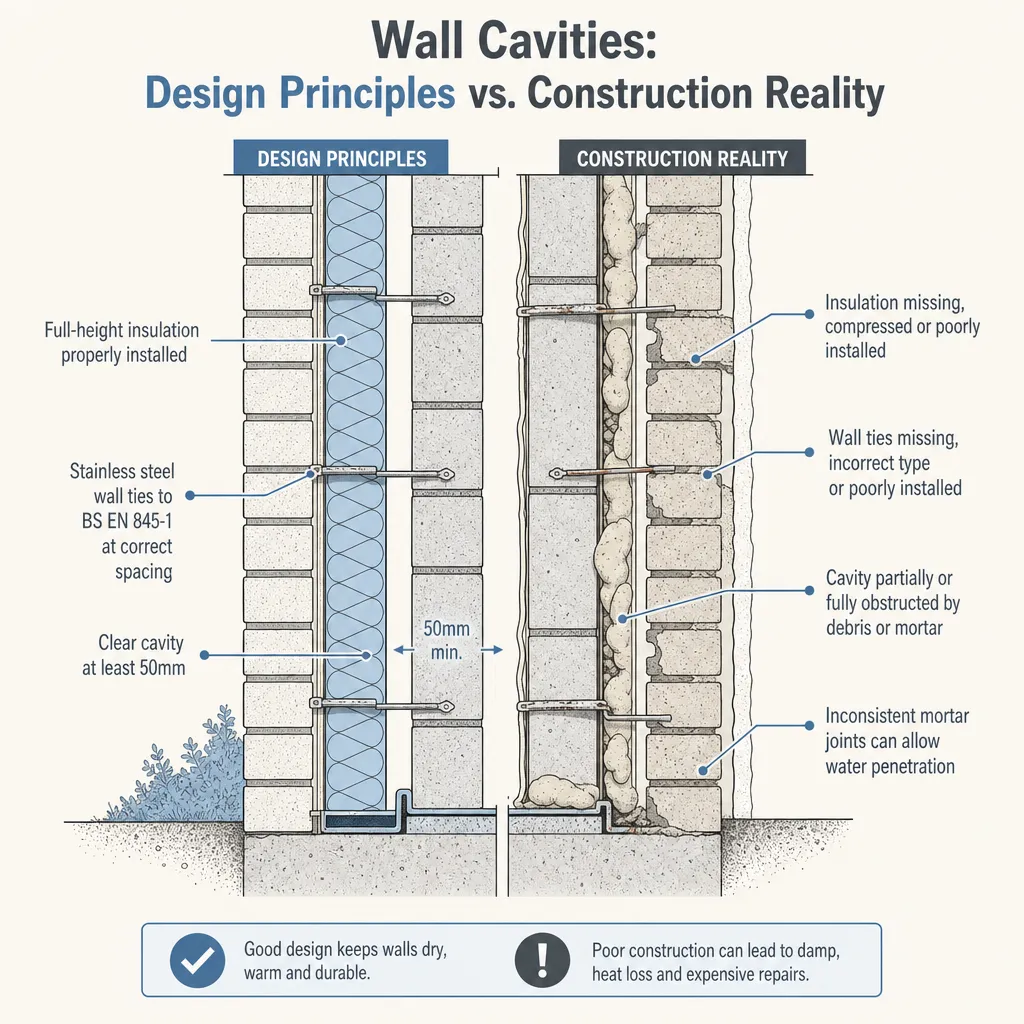
Wall Cavities: Design Principles vs. Construction Reality
A UK cavity wall is designed to resist weather, control heat loss, and structurally link two masonry leaves.