Window Installation Costs: uPVC Options and Project Planning
By Housey · Last reviewed 11th of May 2026
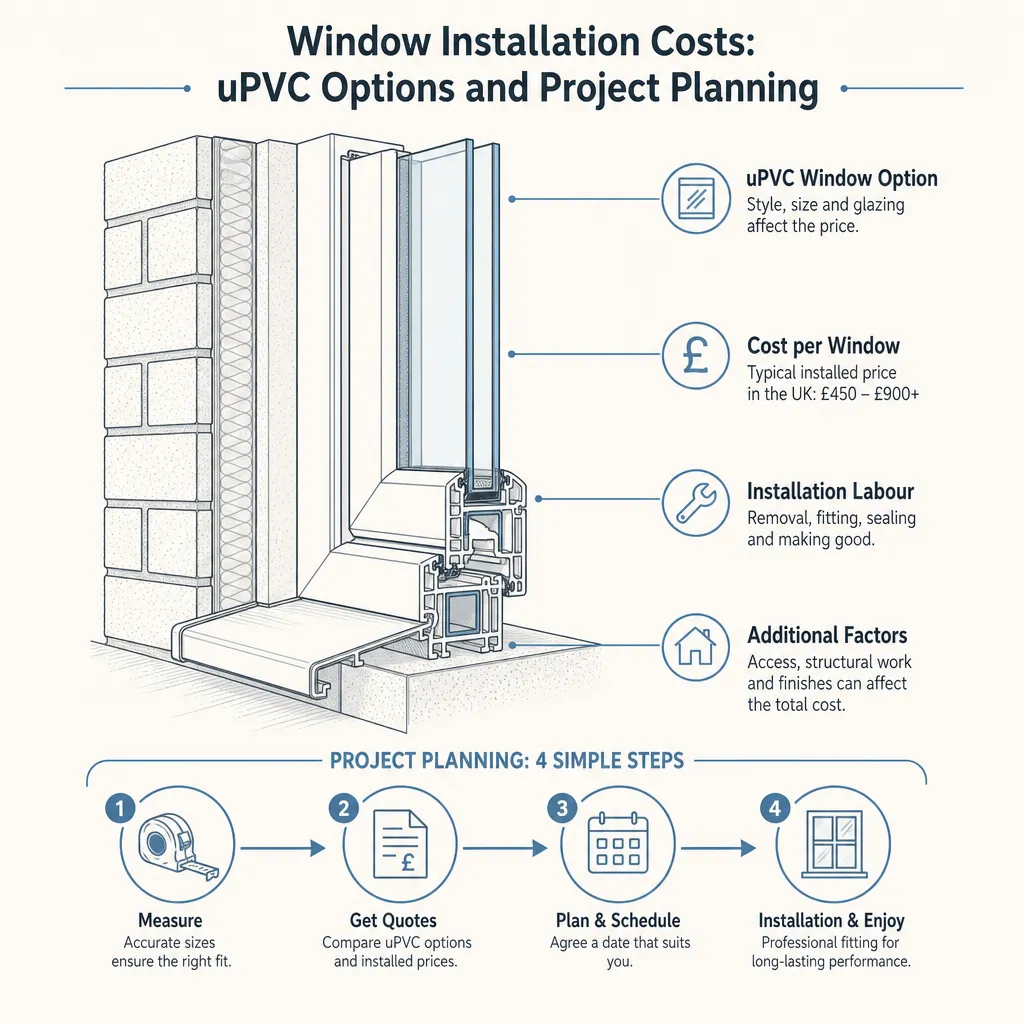
Window Installation Costs: uPVC Options and Project Planning
Window replacement is one of the most common home improvement projects in the UK, undertaken for a variety of reasons: failed sealed units losing their insulating gas, improved energy efficiency ahead of sale, cosmetic update, or compliance with landlord Energy Performance Certificate obligations. Getting accurate, comparable quotes requires knowing what drives the cost, what the installation process involves, and what documentation to expect on completion.
Key points
- uPVC — the UK equivalent of what North American markets call "vinyl windows" — is the most cost-effective frame material for replacement windows, typically costing £400–£900 per casement window installed (indicative UK costs, last reviewed 2026-05-11).
- All replacement windows in England must comply with Building Regulations Part L (minimum whole-window U-value of 1.6 W/m²K); using a FENSA-registered installer is the standard self-certification route.
- A full window replacement for a typical 3-bedroom semi-detached house usually costs £4,000–£8,000 for standard uPVC double-glazed casement windows, installed (indicative UK costs, last reviewed 2026-05-11).
- The FENSA compliance certificate issued on completion is a required document when selling your property — conveyancers routinely request it.
- Windows in listed buildings and some conservation areas cannot be replaced without planning consent; uPVC is generally not acceptable in these settings.
What drives the cost of window installation?
Window installation costs in the UK vary considerably between properties and regions. The main factors are:
Frame material: uPVC is the least expensive option. Composite (aluminium-clad timber), thermally-broken aluminium, and timber frames cost progressively more for the same opening size.
Glazing specification: Standard double glazing with a low-e coating is the baseline for most replacement projects. Triple glazing adds roughly 20–30% to the glazing cost but achieves lower U-values. Acoustic laminate glass, toughened safety glass, and self-cleaning coatings all add further cost.
Window size and type: Standard casement windows (the most common type in UK homes) cost less per unit than bay windows, sash windows, or large picture windows. Tilt-and-turn hardware adds a modest premium.
Number of windows: Larger projects achieve a lower per-window cost because mobilisation, scaffolding, and set-up charges are spread across more units.
Access and installation conditions: Upper-floor windows may require scaffolding or access platforms. Victorian or Edwardian properties may have non-standard or out-of-square opening sizes requiring made-to-measure frames and additional fitting time.
Removal and disposal: Usually included in installer quotes but confirm explicitly — disposal of old glass and frame material can be a significant cost on larger projects.
Location: Labour rates in London and the South East are typically 20–40% higher than in the Midlands, North, and Wales.
Indicative cost ranges by window type
Window type | Indicative supply-and-install cost (uPVC, double-glazed) |
|---|---|
Small casement (e.g., bathroom, hallway) | £350–£600 |
Standard casement (e.g., bedroom) | £400–£900 |
Large casement (e.g., living room front) | £600–£1,200 |
Bay window (3-section) | £1,200–£3,000 |
uPVC sash window | £700–£1,500 |
French doors / patio doors | £1,200–£3,500 |
Indicative UK costs, last reviewed 2026-05-11. Prices include frames, standard double glazing, hardware, installation, and disposal of existing windows. Scaffolding, non-standard sizes, and upgraded glazing are additional. Obtain at least three quotes.
Worked UK property scenario: 3-bedroom 1960s semi-detached
A homeowner in the East Midlands replaces all windows in a 1960s semi-detached house. The property has 4 bedroom casements, 1 bathroom casement, 1 large living-room casement, and 2 ground-floor casements — 8 windows in total, with ladder access (no scaffolding needed).
Specification | Indicative total installed cost |
|---|---|
Standard uPVC double glazing (1.4 W/m²K units) | £3,800–£5,500 |
uPVC with upgraded glazing (1.2 W/m²K, warm-edge spacer) | £5,000–£7,000 |
uPVC triple-glazed units throughout | £5,500–£8,000 |
Indicative UK costs, last reviewed 2026-05-11. Significant regional variation applies. Costs include supply, installation, and disposal of existing windows.
Planning and regulatory requirements
Permitted development: In England, replacing windows with units of similar appearance generally falls within permitted development rights — planning permission is not usually needed. Building regulations compliance is still required.
Building Regulations Part L: All replacement windows must meet the minimum U-value threshold. Using a FENSA-registered (or CERTASS-registered) installer is the standard compliance route. The installer self-certifies that the installation meets Part L and issues a FENSA certificate. Without scheme registration, the installer must notify building control before starting work, and an inspection may follow.
Listed buildings and conservation areas: Listed building consent is required before replacing any window in a listed building. In conservation areas, planning permission may be required where the existing windows contribute to the character of the area or an Article 4 direction is in place. uPVC is generally not acceptable in either setting. Check with your local planning authority before ordering frames.
Scotland, Wales, and Northern Ireland: Building regulations and permitted development rules differ. Check with Building Standards Scotland or the relevant devolved authority before proceeding.
Project timeline: what to expect
A standard residential window replacement typically takes 4–12 weeks from first contact to completion:
- Get at least three quotes — allow 2–3 weeks for site surveys and written quotes from FENSA-registered installers.
- Review specifications — compare frame brand and profile, glazing U-value, hardware, guarantee terms, and FENSA registration number.
- Place order and confirm lead time — uPVC made-to-measure frames typically have 3–8 week lead times from order.
- Prepare your home — clear windowsills and move furniture away from openings on installation day.
- Installation — typically 45–90 minutes per window; a full house of 8–10 windows usually takes 1–2 days.
- Receive FENSA certificate — arrives by post within a few weeks; file it with your property documents immediately.
What to ask before accepting a quote
Before committing to a window installation:
- Is VAT included in the quoted price?
- What is the whole-window U-value of the glazing units being supplied?
- What frame profile brand and gauge is being used?
- Is your company FENSA-registered, and can you provide your registration number?
- Does the price include removal and disposal of existing frames and glass?
- Is scaffolding included if upper-floor access requires it?
- What guarantees apply separately to frames, glazing units, and installation workmanship?
- What lead time should I expect from order to installation?
- What happens if frames are manufactured to incorrect dimensions?
- Have you physically surveyed the opening sizes, or is this quote based on estimates?
When to get professional help
For most replacements, a FENSA-registered installer is sufficient. Seek additional advice if:
- The property is listed or in a conservation area — a planning consultant or heritage architect should advise on acceptable specifications before you commit to a frame material.
- You notice signs of structural movement around window openings — cracks through lintels, sticking frames, or sagging masonry should be assessed by a structural engineer or RICS surveyor before new frames are fitted.
- You are undertaking a whole-house energy retrofit — a PAS 2035 retrofit coordinator should assess the thermal envelope and specify windows as part of a whole-house plan, not as a standalone item.
- The property has historic window proportions where made-to-measure timber frames may be more appropriate than uPVC.
How Housey can help
Housey connects homeowners with vetted, FENSA-registered window and door installers across the UK. Submit your project once and receive quotes from local contractors so you can compare specifications and prices directly.
Frequently asked questions
How much does it cost to replace all windows in a UK house?
Replacing all windows in a typical 3-bedroom semi-detached house costs approximately £4,000–£8,000 for standard uPVC double-glazed units, installed. Larger homes, bay windows, sash windows, or upgraded glazing increase the total. Prices vary by region, with London and the South East typically higher. Always obtain at least three quotes. (Indicative UK costs, last reviewed 2026-05-11.)
Do I need planning permission to replace windows in the UK?
In most cases in England, replacing windows with similar-appearance units falls within permitted development rights. You do need to comply with Building Regulations Part L. Exceptions include listed buildings (listed building consent required), conservation areas in some cases, and properties where permitted development rights have been removed. Check with your local planning authority if unsure.
What is a FENSA certificate and why is it important?
A FENSA certificate confirms that your replacement windows were installed by a registered installer and comply with building regulations. It is a required document when selling your property — solicitors and conveyancers will request it. Without it, you may need retrospective building control sign-off, which can delay or complicate a sale.
How long does window installation take?
A single window typically takes 45–90 minutes to install. A full house of 8–10 windows can usually be completed in 1–2 days. Made-to-measure uPVC frames have lead times of 3–8 weeks from order, so factor this into your project timeline when planning works around other trades or a property sale.
Sources and further reading
- Building Regulations Approved Document L: Conservation of fuel and power — GOV.UK
- FENSA: Find a registered installer — FENSA
- Planning Portal: Windows — Planning Portal
- Energy Saving Trust: Double glazing — Energy Saving Trust
- Citizens Advice: Getting work done on your home — Citizens Advice
Useful next reads
 Improvement & Build
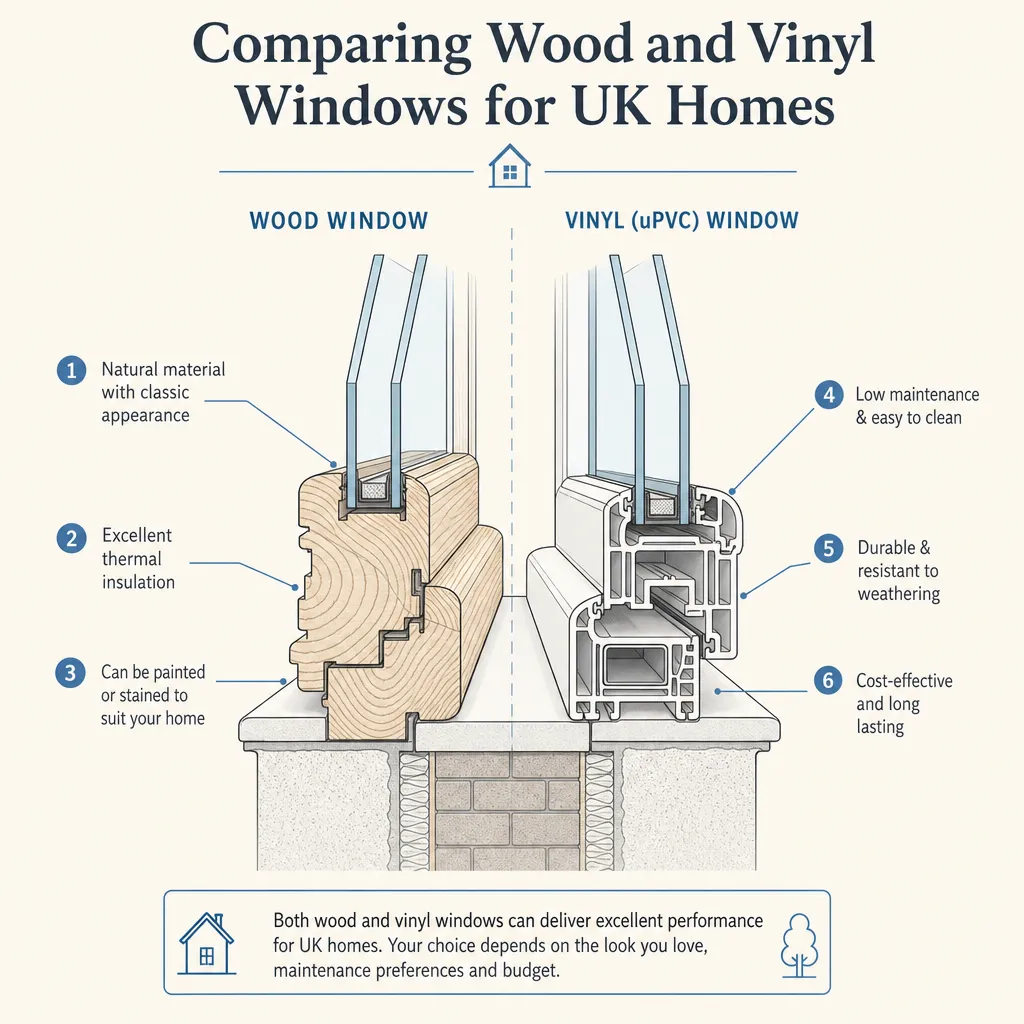
Comparing Wood and Vinyl Windows for UK Homes
Timber windows typically cost more upfront than uPVC but can last twice as long with regular maintenance.
 Improvement & Build
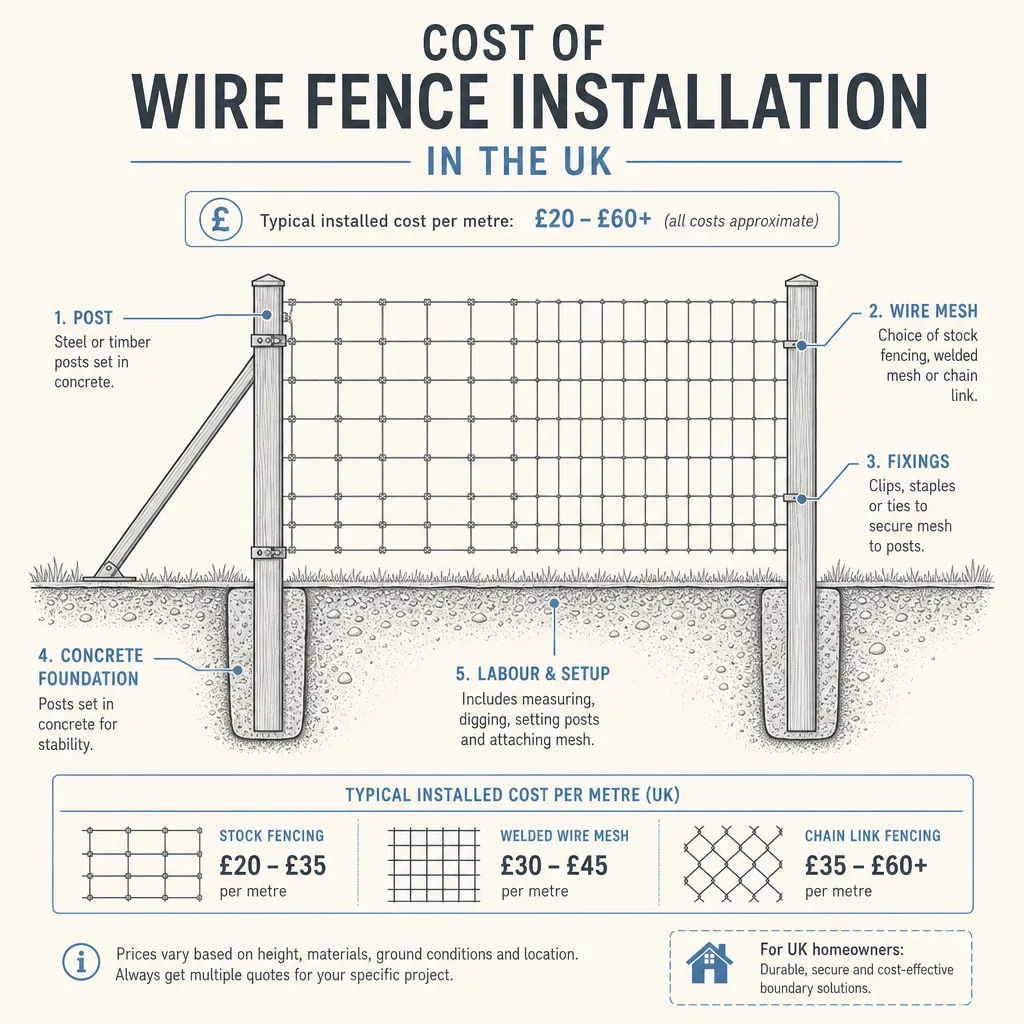
Cost of Wire Fence Installation in the UK
Wire fence installation in the UK typically costs £8–18 per metre for stock fencing, £15–35 per metre for chain-link, and £20–45 per metre for welded wire mesh panels, all installed.
 Improvement & Build
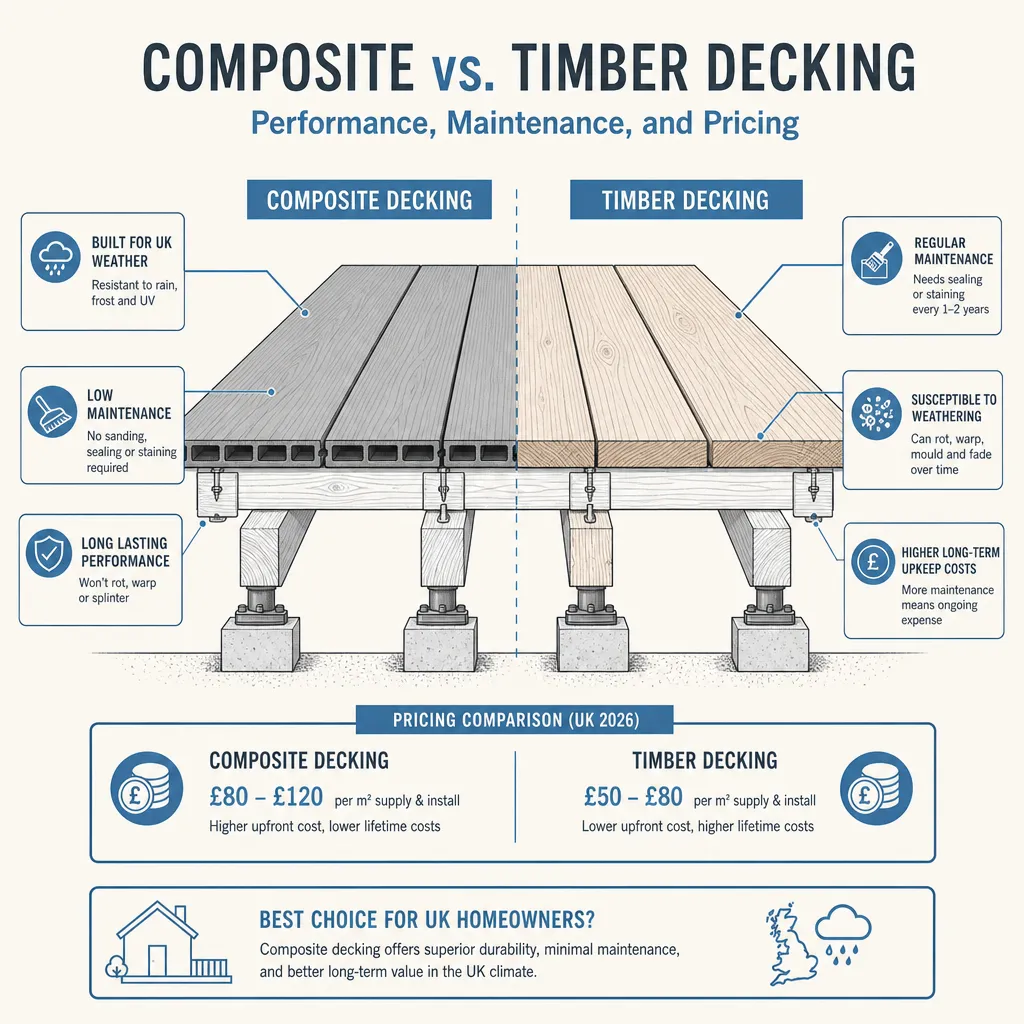
Composite vs. Timber Decking: Performance, Maintenance, and Pricing
Composite decking costs more upfront — typically £120–£220 per m² installed versus £80–£150 for treated softwood — but requires far less maintenance and carries a 25-year warranty.
 Improvement & Build
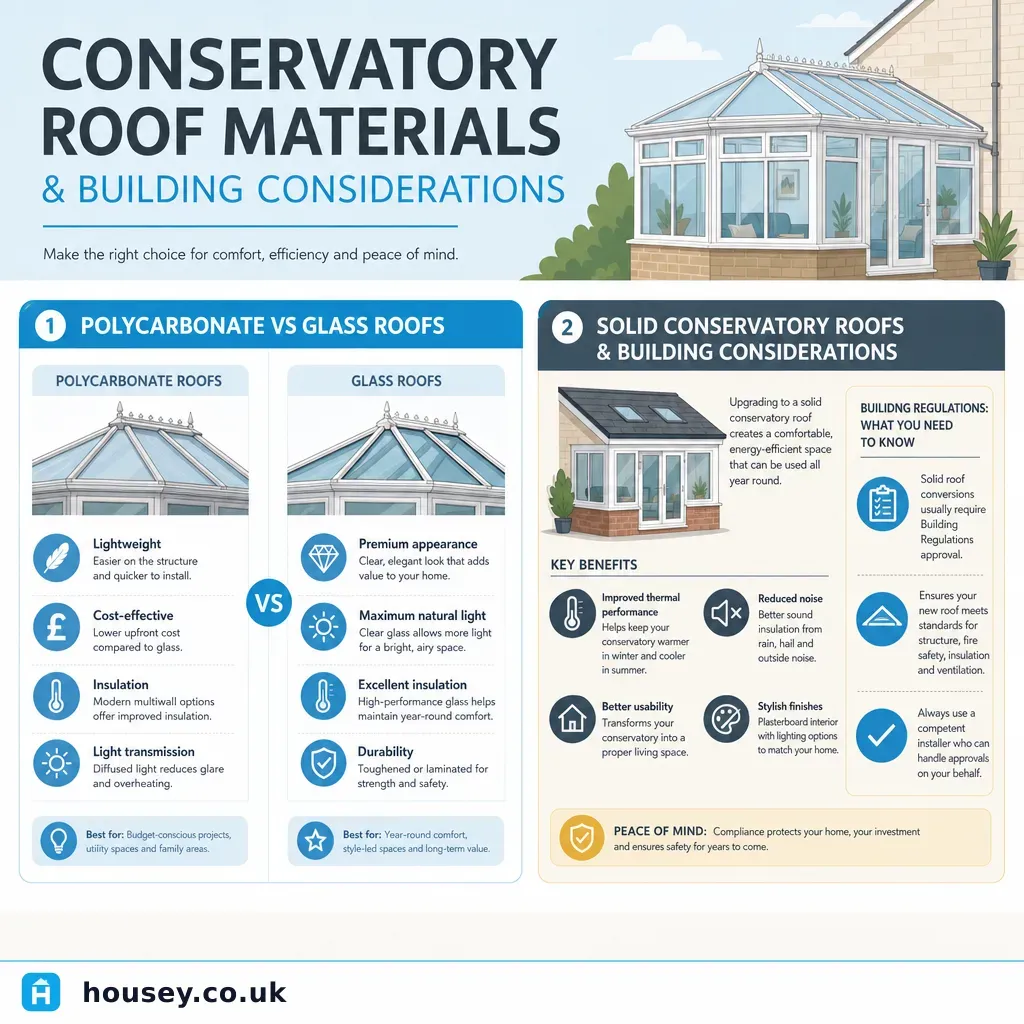
Conservatory Roof Materials and Building Considerations
The main conservatory roof materials are polycarbonate, glass, and solid insulated panels.
 Improvement & Build
Installing Replacement Windows in Your Home
Replacing windows in the UK requires compliance with Building Regulations Part L — a minimum centre-pane U-value of 1.