Comparing Wooden Houses with Brick-Built Properties
By Housey · Last reviewed 19th of May 2026
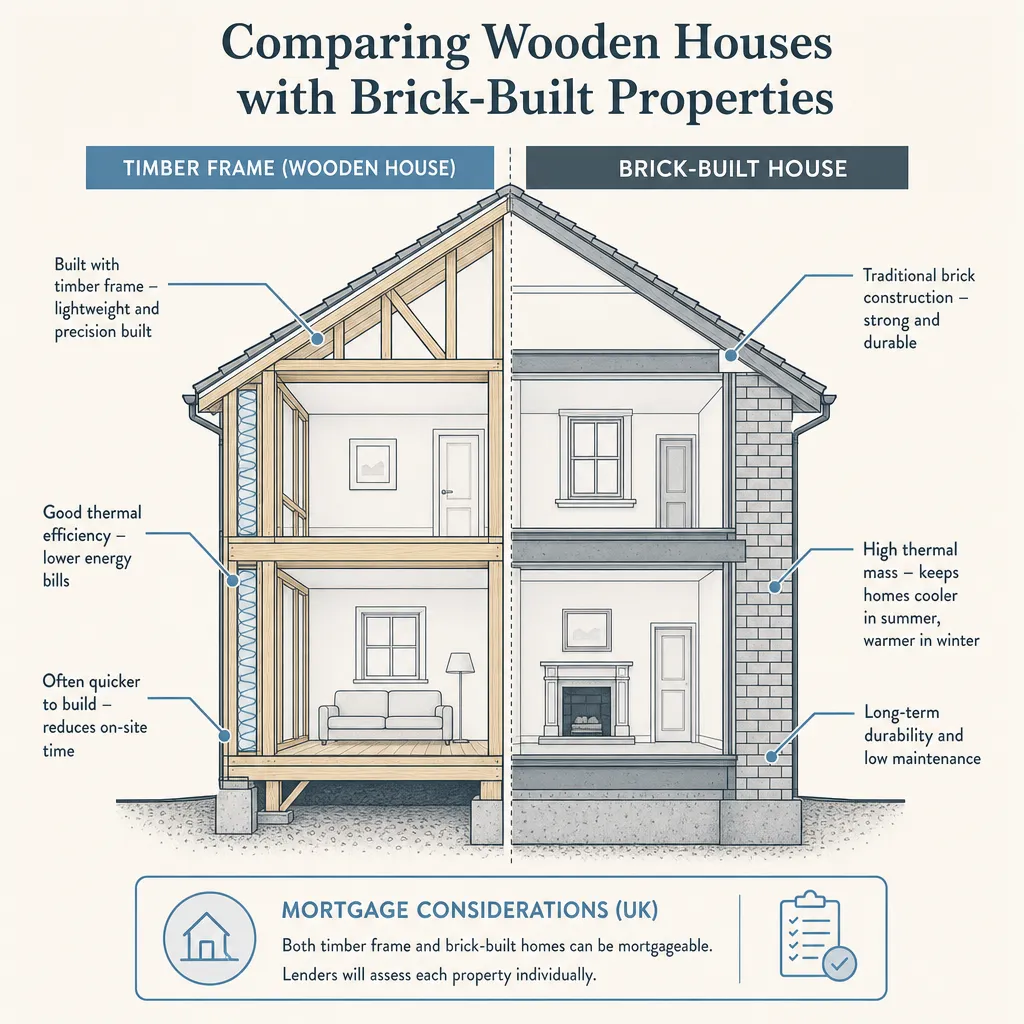
Comparing Wooden Houses with Brick-Built Properties
For most of the twentieth century, brick and block was so dominant in UK housebuilding that timber frame felt unusual. That is changing: roughly a quarter of new homes in England are now built with a timber frame, and in Scotland the figure exceeds 70%. Whether you are planning a self-build, buying a property where the estate agent mentions 'timber frame', or trying to understand what a mortgage surveyor means by 'non-standard construction', the real differences between timber frame and masonry matter for mortgages, insurance, energy performance, and long-term value.
Key points
- Timber frame accounts for approximately 26% of new homes in England and over 70% in Scotland, according to NHBC data — it is far from an unusual construction type in new builds.
- Most mainstream UK mortgage lenders will lend on modern closed-panel or open-panel timber frame construction that carries an NHBC Buildmark or equivalent structural warranty.
- Building Regulations Approved Document A (Structure) applies equally to timber frame and masonry; both must comply, but they achieve it through different structural approaches.
- Timber frame superstructures can be weathertight within days of delivery to site; traditional masonry typically takes several months to reach the equivalent construction stage.
- Pre-1945 post-and-beam or cruck-frame timber properties are often classified as non-standard construction, which can restrict mortgage choice and attract higher insurance premiums.
How do timber frame and brick-built homes compare?
Feature | Timber frame | Brick/masonry |
|---|---|---|
Construction speed | Superstructure erected in days to weeks | Several months to reach equivalent stage |
Thermal performance (new build) | Easier to achieve low U-values | Achievable but typically requires thicker walls |
Thermal mass | Lower — heats and cools quickly | Higher — stores and releases heat slowly |
Moisture risk during build | Must be kept dry; ingress during construction can cause long-term issues | More tolerant of wet site conditions |
Mortgage availability | Good for modern standard construction with warranty | Accepted by all mainstream lenders |
Insurance | Generally available; declare construction type accurately | Standard |
Typical lifespan (modern) | 60+ years for a well-designed, maintained structure | 100+ years for solid brick |
Self-build suitability | High — kit systems from numerous UK suppliers | High — traditional trades widely available |
Which construction type should you choose?
- Choose timber frame if build speed matters, you are self-building to a tight programme, or your design prioritises high insulation levels within a slim wall build-up.
- Choose masonry if you prefer high thermal mass (suits passive solar or south-facing designs), want the widest lender options at resale, or local tradespeople are more experienced in traditional construction.
- Consider timber frame seriously if building in Scotland, where trades are highly experienced and it is the majority method for new homes.
- Commission a RICS Level 3 Building Survey before buying any older timber-frame property — pre-1945 post-and-beam buildings in particular require detailed inspection for rot, movement, and past repairs.
- Ask a structural engineer if you see movement, cracking, or evidence of remedial work on a timber-frame property you are considering purchasing.
Thermal performance and energy efficiency
Modern closed-panel timber frame construction can achieve wall U-values of 0.15 W/m²K or better, comfortably exceeding the 0.18 W/m²K notional target in Approved Document L. High insulation levels are structurally integral to many timber kit systems, making low-energy or Passivhaus standards more straightforward to achieve without significant extra cost.
Traditional cavity masonry — brick outer leaf, block inner leaf, 100 mm cavity — with standard cavity insulation typically achieves around 0.25–0.30 W/m²K. Fully filling the cavity or adding external wall insulation can improve this, but the base construction has less inherent insulation potential compared with well-specified timber frame.
Brick's counterpoint is thermal mass. Masonry walls absorb heat and release it slowly, reducing temperature swings and assisting passive cooling in sunny rooms. Whether this is an advantage depends on building orientation, heating system, and how the building is used — it is not a straightforward win for masonry in all situations.
Mortgages, insurance, and resale
Mortgages: Modern timber frame (post-1970) built to NHBC Buildmark or equivalent structural warranty standards is accepted by most UK lenders. Some older or system-built types from the 1960s and 1970s may face restricted loan-to-value ratios or lender exclusions. Always speak to a mortgage broker experienced in non-standard construction before exchanging contracts on an older timber-frame property.
Insurance: Buildings insurance is available for timber-frame homes, but you must declare the construction type accurately. Some insurers classify certain older timber types as non-standard and either charge higher premiums or apply additional exclusions. Obtain at least two comparable quotes and read the policy definitions before committing.
Resale: Brick properties remain more straightforwardly saleable across most of England. Modern, well-documented timber-frame homes are entirely mortgageable and sellable, but a buyer's solicitor or surveyor may request evidence of the structural warranty, construction specification, and maintenance history. Having these documents to hand speeds the process.
A worked UK property scenario
Scenario: A self-builder in rural Perthshire is planning a four-bedroom family home. They want strong thermal performance, a predictable build programme, and want to stay within a fixed budget.
Timber frame is the natural starting point here. Scotland's construction workforce is highly experienced in timber kit assembly; build programmes are reliable and well-understood by local contractors; the climate rewards high insulation levels that closed-panel timber frame delivers efficiently; and a range of accredited UK kit suppliers serve the Scottish market competitively. A RICS-registered architect and structural engineer should be engaged from design stage to ensure compliance with Building Regulations and to secure NHBC or LABC warranty sign-off required for mortgage and resale purposes.
What not to assume
- "Timber frame is less durable than brick" — modern engineered timber and closed-panel systems are designed for 60-plus years with normal maintenance; many older timber-frame buildings in England and Scotland have stood for centuries.
- "Brick is always better for insulation" — solid brick walls are among the worst-performing wall types thermally; cavity masonry with full insulation performs reasonably well, but modern timber frame typically achieves superior U-values more easily.
- "You can't get a mortgage on a timber-frame house" — you can on modern, warranty-backed examples; restrictions apply mainly to some older or unusual system-built types.
- "Timber frame is only for self-build" — major UK housebuilders have used timber frame at scale for decades; it is the dominant new-build construction method in Scotland.
When to get professional help
- Commission a RICS Level 3 Building Survey before purchasing any older timber-frame property, particularly pre-1945 examples.
- Ask a structural engineer to assess any visible movement, cracking, or evidence of past remedial work before exchange.
- Use a mortgage broker experienced in non-standard construction if the property is pre-1970 or has an unusual structural system.
- Appoint a RICS or RIBA-registered professional from design stage if self-building, to manage building control approval and structural warranty sign-off.
How Housey can help
Housey helps UK homeowners, buyers, and self-builders connect with the right professionals — from RICS-registered surveyors who can inspect timber-frame properties before exchange, to architects and structural engineers with experience across both construction types. Use Housey to describe your project and compare quotes from qualified professionals in your area.
Frequently asked questions
Are timber frame houses safe in the UK?
Modern timber-frame homes built to current Building Regulations are safe and regulated to the same performance standards as masonry. Fire resistance, structural integrity, and acoustic separation requirements all apply. Older, pre-1945 timber-frame buildings may have been built to different standards and should be professionally surveyed before purchase.
Will a brick house outlast a timber frame house?
A well-maintained brick house can last 150 years or more; solid brick walls rarely fail structurally. Modern timber frame is designed for 60-plus years, but can remain sound much longer with good maintenance and weatherproofing. The key variable for both types is whether water ingress has been identified and managed promptly.
Can I extend a timber frame house?
Yes. Extensions to timber-frame homes are common in the UK. Any structural implications of cutting into or loading the existing frame should be assessed by a structural engineer before work begins. Building Regulations approval is required in the usual way, and the extension's construction type does not need to match the original house.
Sources and further reading
- NHBC — timber frame construction guidance — NHBC
- Building Regulations Approved Document A — Structure — GOV.UK
- RICS Home Survey Standard — RICS
- TRADA — timber frame technical information — TRADA
- Energy Saving Trust — wall insulation types — Energy Saving Trust
Useful next reads
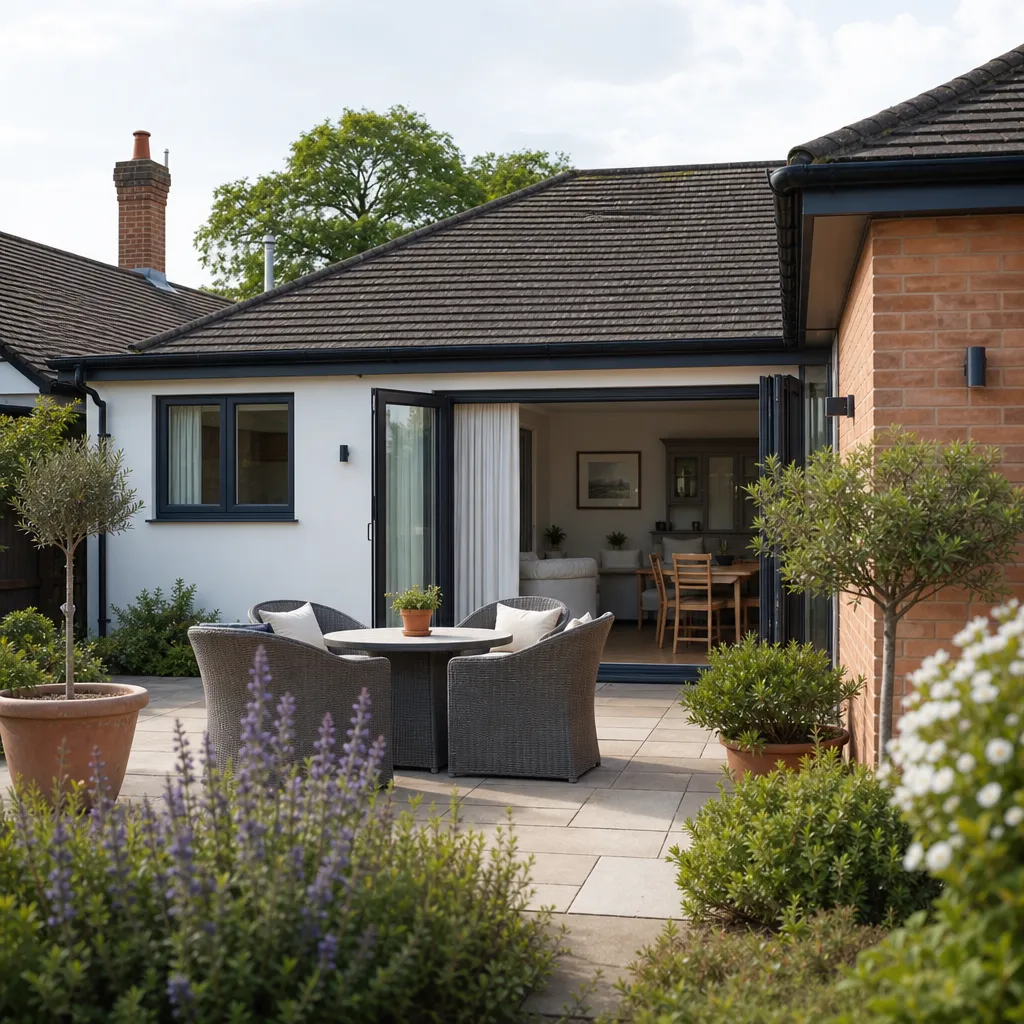 Planning & Pre-Build
What Is a Patio Home? Understanding This Property Type in the UK
A patio home is a compact, low-maintenance property designed around a private patio or courtyard rather than a traditional lawn garden.
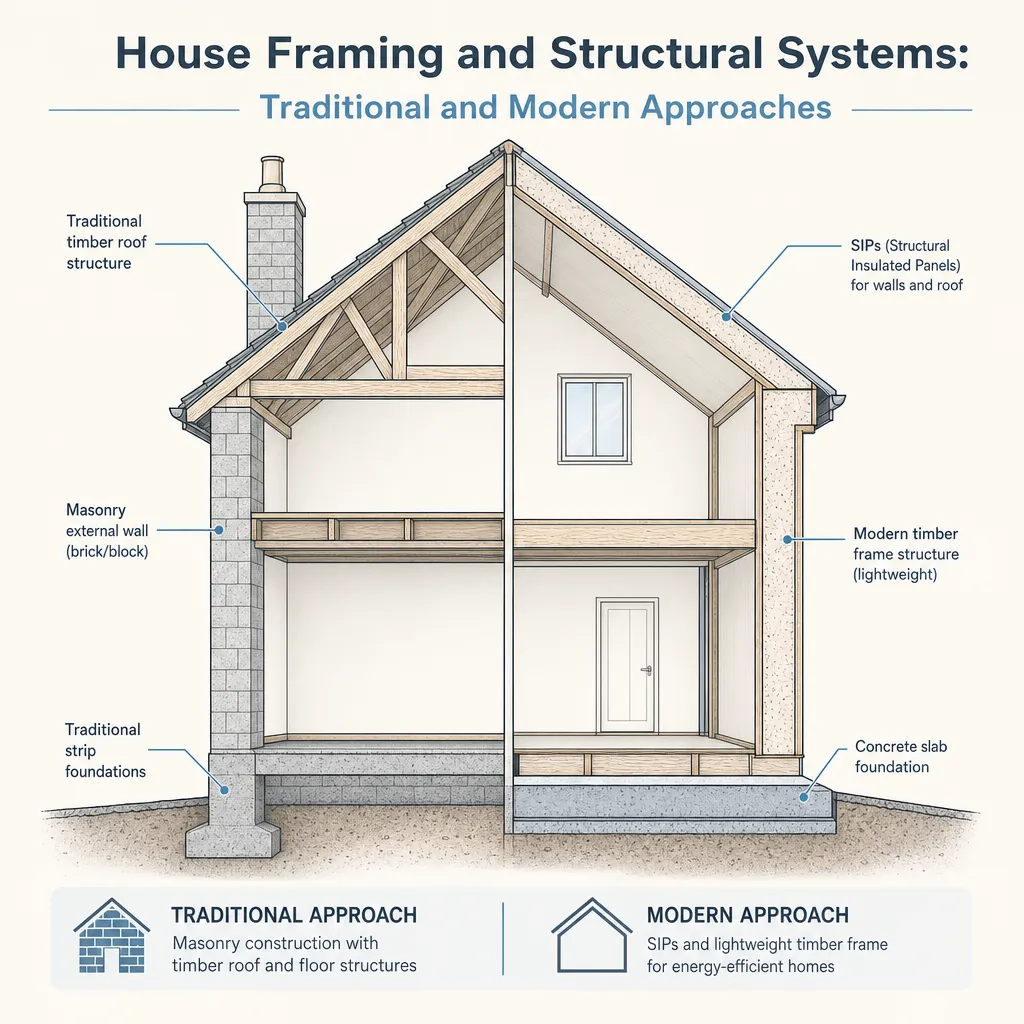 Planning & Pre-Build
House Framing and Structural Systems: Traditional and Modern Approaches
UK homes are built using four main structural systems: traditional masonry (brick and block), timber frame, structural insulated panels (SIPs), and insulated concrete formwork (ICF).
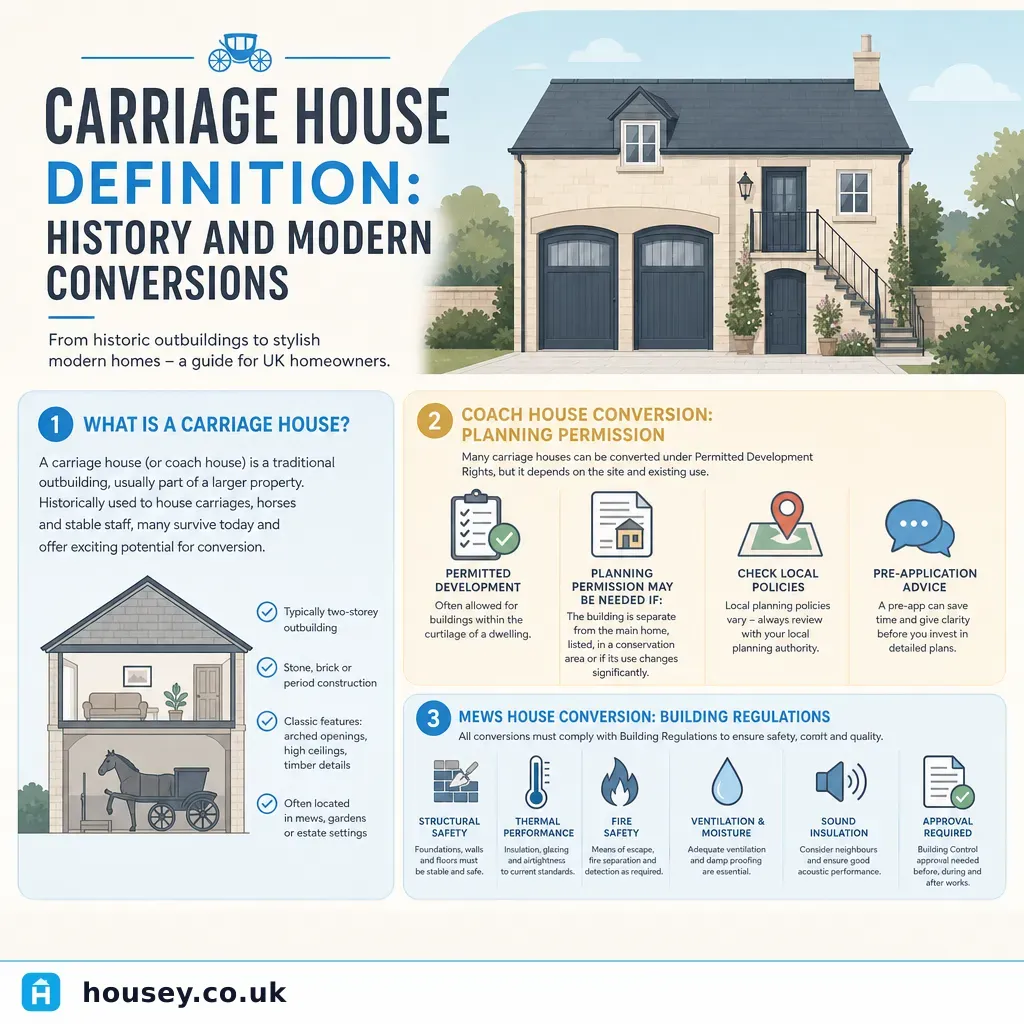 Planning & Pre-Build
Carriage House Definition: History and Modern Conversions
A carriage house is a Victorian or Edwardian outbuilding originally used to shelter horse-drawn vehicles, often with groom's accommodation above.
 Planning & Pre-Build
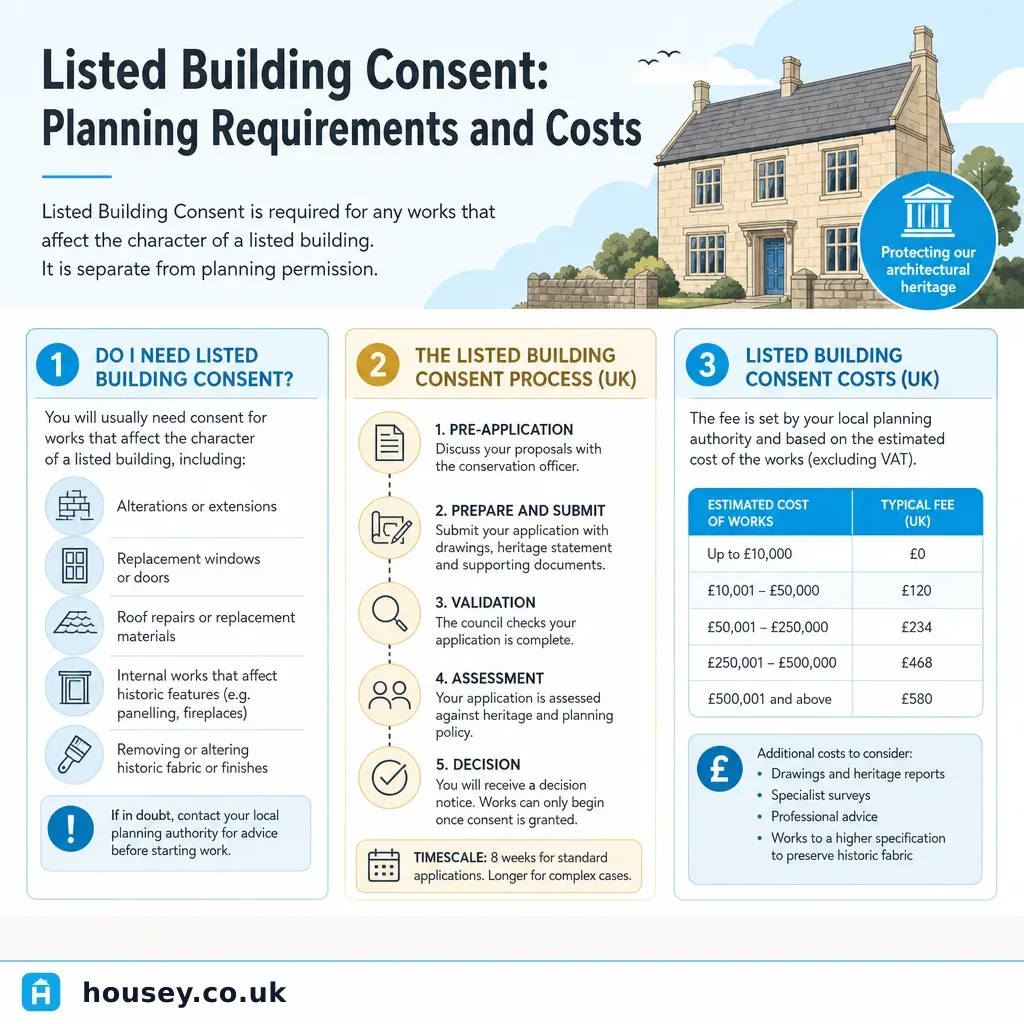
Listed Building Consent: Planning Requirements and Costs
Listed Building Consent is required for any works that affect the character of a listed building as a building of special architectural or historic interest — including internal alterations.
 Planning & Pre-Build
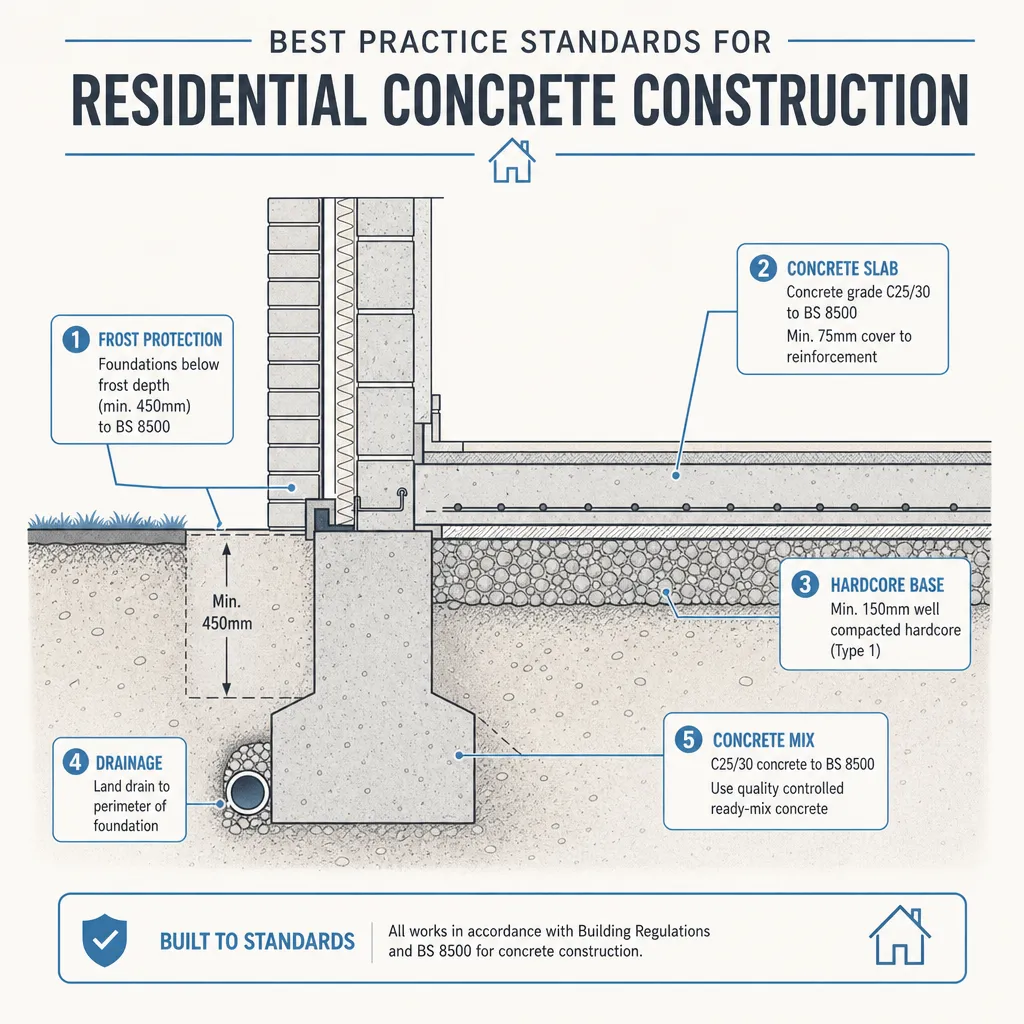
Best Practice Standards for Residential Concrete Construction
Residential concrete in the UK must comply with BS EN 206 and BS 8500, which define mix designations, cement types, and durability requirements for each application.