Vinyl Fencing Options: Costs, Durability, and Design Considerations
By Housey · Last reviewed 11th of May 2026
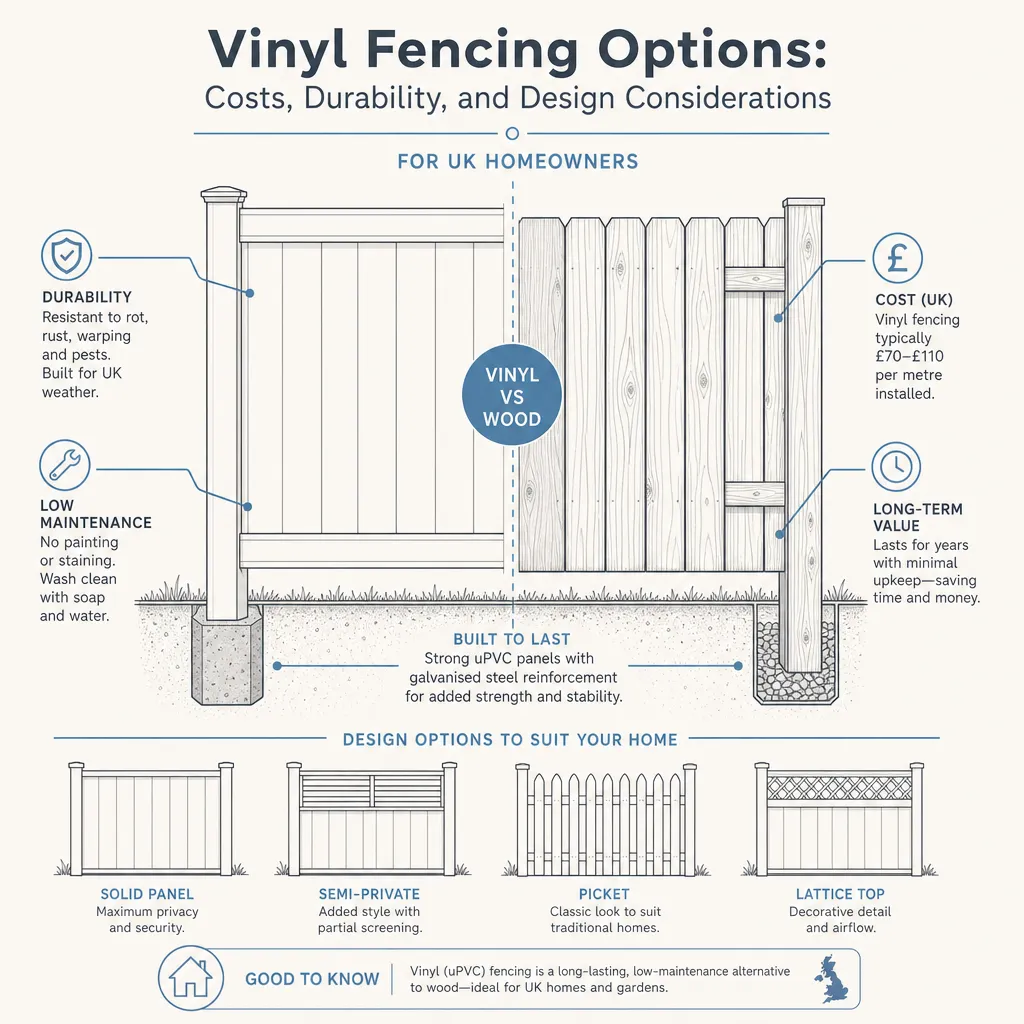
Vinyl Fencing Options: Costs, Durability, and Design Considerations
Garden fencing decisions typically arise during landscaping projects, property purchases, or boundary disputes — and the choice of material has long-term consequences for maintenance time, cost, and appearance. In the UK, PVC fencing (marketed in some product ranges as "vinyl") has become a mainstream alternative to traditional timber, appealing to homeowners who want a durable boundary with no routine painting or preservative treatment. Understanding performance, planning rules, and realistic costs before committing helps you avoid common mistakes.
Key points
- PVC fencing (sold as "vinyl" in some product ranges) typically lasts 20–30 years without painting or staining, though UV degradation can affect colour and impact resistance in highly exposed positions.
- Garden fences up to 2m tall generally fall within permitted development rights in England — but fences adjacent to a highway are limited to 1m without planning permission under the Town and Country Planning (General Permitted Development) (England) Order 2015.
- Installed PVC fencing costs approximately £100–£300 per linear metre in the UK, depending on panel style, post specification, and site conditions (indicative UK costs, last reviewed 2026-05-11).
- PVC panels cannot be painted easily with standard exterior paints — specialist plastic primer is required if you wish to change colour after installation.
- Conservation areas and listed building curtilages may remove permitted development rights for boundary structures; always check with your local planning authority before installing.
What is vinyl fencing and how does it compare?
In the UK, "vinyl fencing" refers to rigid PVC or uPVC (unplasticised polyvinyl chloride) fence panels and posts. The term "vinyl" is more common in US markets; UK suppliers typically label the same product as PVC or uPVC fencing. Composite fencing — which blends recycled wood fibre and PVC — is a related but distinct category with a more realistic timber appearance.
Material | Lifespan | Maintenance | Indicative installed cost (per linear metre) | Best for | Watch out for |
|---|---|---|---|---|---|
PVC / vinyl | 20–30 years | Wash down annually | £100–£300 | Low-maintenance boundaries, picket styles | UV fading, brittleness in frost |
Pressure-treated timber | 10–20 years | Treat every 2–3 years | £80–£200 | Traditional looks, easy repair | Rot, warping, ongoing treatment cost |
Composite (wood-plastic) | 25–30 years | Occasional wash | £150–£350 | Realistic wood look, low maintenance | Higher upfront cost |
Metal (galvanised steel) | 30–50+ years | Periodic rust treatment | £200–£600+ | Security, period properties | Cost, rust if coating damaged |
Mesh / chain link | 15–25 years | Minimal | £60–£150 | Rear or agricultural boundaries | Limited privacy |
Indicative UK costs, last reviewed 2026-05-11. Costs vary by region, ground conditions, and supplier. Always obtain at least three quotes.
Planning permission and boundary rules
Most residential garden fences fall within permitted development rights in England, meaning planning permission is not required provided:
- The fence is no more than 2 metres tall when not adjacent to a highway.
- The fence is no more than 1 metre tall if it adjoins a public highway (including footpaths).
These rights can be removed if your property is in a conservation area, if the building is listed, or if the local planning authority has withdrawn permitted development rights. Rules differ in Wales, Scotland, and Northern Ireland — check with the relevant planning authority.
Boundary ownership is a separate question from planning permission. Before installing, check your title deeds and Land Registry title plan to confirm who owns the boundary. If the boundary is in dispute, seek advice from Citizens Advice or a property solicitor before any work begins.
Durability: what to expect in practice
Manufacturers typically claim 20–30 year lifespans for uPVC fence panels, and many products carry guarantees of 10–25 years. In practice, longevity depends on:
- UV exposure: South-facing gardens may see colour fading and surface chalking within 10–15 years if lower-grade PVC is used.
- Impact resistance: PVC can crack under sharp impact. Damaged panels usually need replacing as a unit; timber can often be repaired in place.
- Frost: Standard uPVC becomes more brittle in freezing temperatures. Quality products are formulated for UK winters; budget imports may not be.
- Post installation: Posts set too shallow or without adequate concrete footing are the most common cause of fencing failure regardless of panel material. A minimum 600mm footing depth is standard for 1.8m panels; deeper on exposed sites.
Red flags when buying PVC fencing
- No manufacturer guarantee, or a guarantee shorter than 10 years.
- No stated UV stabiliser grade or compound specification.
- Supplier unable to name the PVC compound or country of manufacture.
- No rated wind-load specification for exposed or coastal locations.
- Very low prices with no written warranty.
Cost guide and what affects your quote
Installed PVC fencing costs typically include panels, posts, post caps, concrete mix, and labour. Key cost drivers are:
- Panel height and style: Basic lap panels cost less than tongue-and-groove, decorative picket, or ranch-style designs.
- Post specification: Concrete posts are more durable than PVC-sleeved posts. Steel-reinforced systems cost more but perform better on exposed sites.
- Ground conditions: Rocky ground, tree roots, or difficult access increases labour time and cost.
- Removal of existing fencing: Disposal of old timber panels adds to overall project cost — confirm whether this is included in any quote.
- Run length: Longer runs reduce per-metre cost as mobilisation and set-up charges are spread.
Worked UK property scenario: 20-metre rear garden boundary
A homeowner with a 20-metre rear boundary on a 1980s estate in the West Midlands replaces 1.8m-tall timber panels with PVC tongue-and-groove panels:
- Approximately 12 panels (1.65m wide) with concrete-footed posts
- Removal and disposal of existing timber panels
- Flat ground, good vehicle access
Indicative total: £2,000–£4,500 installed, depending on panel brand and contractor. (Indicative UK costs, last reviewed 2026-05-11.)
Homeowner checklist before accepting a quote
- Is VAT included in the quoted price?
- Does the quote include removal and disposal of existing fencing?
- What panel and post specification is being supplied — brand, profile thickness, UV grade?
- What is the post footing depth and concrete mix specification?
- Does the installer carry public liability insurance?
- What manufacturer guarantee applies to the panels?
- Is there a separate workmanship guarantee?
- What happens if ground conditions prove more difficult than expected?
Design considerations
PVC fencing is available in white, cream, grey, black, and woodgrain-effect finishes. White is most widely stocked and typically cheapest. Darker colours and woodgrain options cost more and may be harder to source for future repairs or extensions.
Consider neighbourhood character and local planning sensitivities before committing to a style. Solid 1.8m panels suit private rear gardens but can look stark at the front of a property. Semi-open or picket styles may be more appropriate for front gardens, rural settings, or areas where the local planning authority discourages highly reflective white PVC.
When to get professional help
PVC fencing installation is relatively straightforward for experienced landscape contractors, but seek specialist advice if:
- The boundary is in dispute with a neighbour — get legal advice before installing anything.
- Your property is in a conservation area, falls within the curtilage of a listed building, or has had permitted development rights removed.
- The ground has significant slope, unstable soil, or tree roots near the fence line.
- You are installing above 1.8m or in a highly exposed, coastal, or elevated location requiring wind-load calculations.
- Any underground services (drainage, gas, electricity) run close to the proposed fence line.
How Housey can help
Housey connects you with vetted local professionals who can survey your boundary, advise on the right specification, and supply and install PVC or composite fencing. Find landscapers or garden designers in your area through Housey and get multiple quotes in one place.
Frequently asked questions
Does PVC or vinyl fencing need planning permission?
In most cases in England, garden fences up to 2m tall fall within permitted development rights and do not require planning permission. Fences adjacent to a highway are limited to 1m. Conservation areas, listed buildings, and sites where permitted development rights have been removed are exceptions — check with your local planning authority if you are unsure.
How long does PVC fencing last?
Quality uPVC fencing typically lasts 20–30 years with minimal maintenance. Most manufacturers offer guarantees of 10–25 years. Longevity depends on UV stabiliser grade, post installation depth, and ground conditions. Budget products may fade or become brittle sooner, particularly in south-facing or exposed positions.
Can I paint vinyl or PVC fencing?
Standard exterior paints do not adhere reliably to uPVC. Changing colour requires a dedicated plastic primer followed by a flexible exterior paint formulated for PVC. In most cases, specifying the correct colour at the outset is simpler and more durable than repainting later.
Is PVC fencing suitable for an exposed or coastal garden?
For exposed or coastal sites, specify products with higher-grade UV stabilisers, metal-reinforced posts, and a manufacturer wind-load rating. Cheaper PVC products may fade, discolour, or become brittle in harsh conditions. A landscape contractor familiar with your local conditions can advise on the right specification.
Sources and further reading
- Planning Portal: Fences, gates and garden walls — Planning Portal
- Town and Country Planning (General Permitted Development) (England) Order 2015 — legislation.gov.uk
- Citizens Advice: Boundary disputes — Citizens Advice
- HM Land Registry: Get information about property and land — GOV.UK
Useful next reads
 Improvement & Build
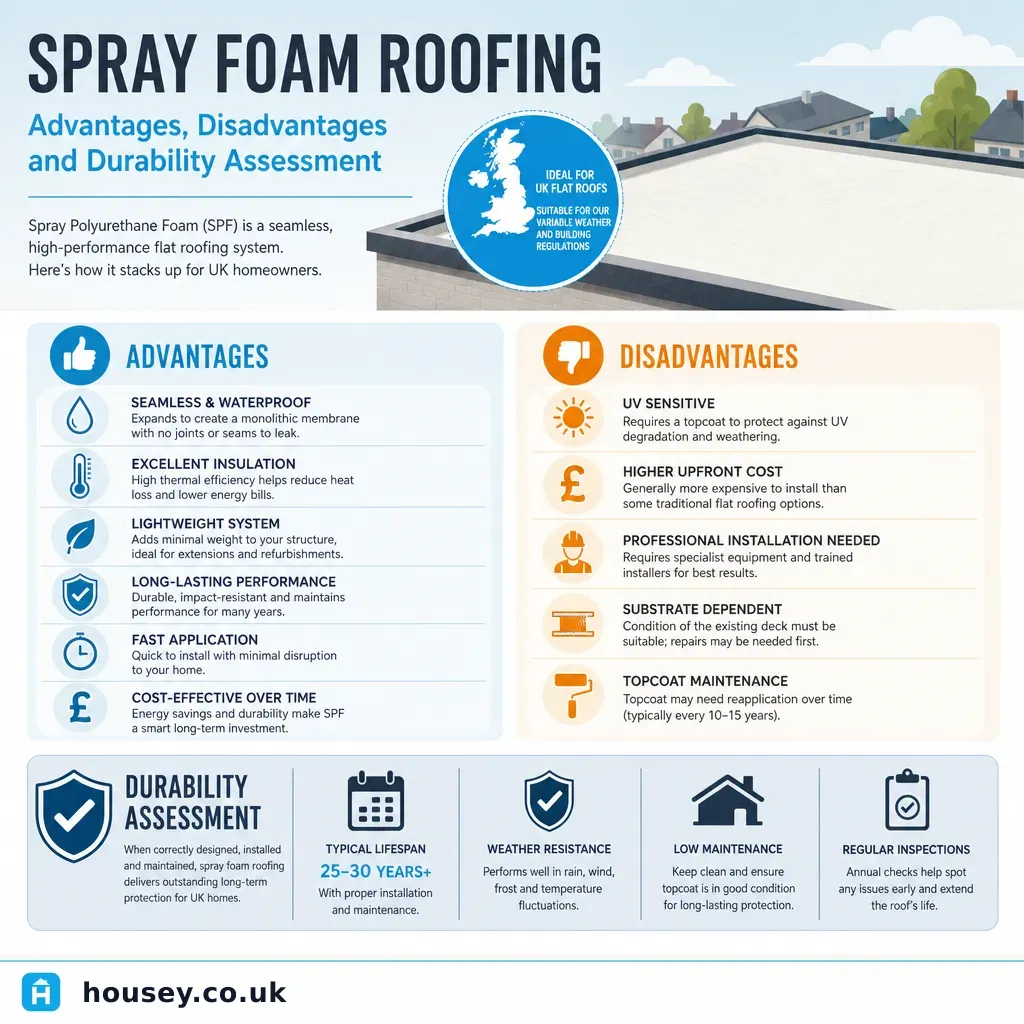
Spray foam roofing: advantages, disadvantages and durability assessment
Spray foam roofing creates a seamless, fully adhered waterproof membrane with built-in insulation that can extend the life of a flat roof by 20 to 30 years when correctly topcoated and maintained.
 Improvement & Build
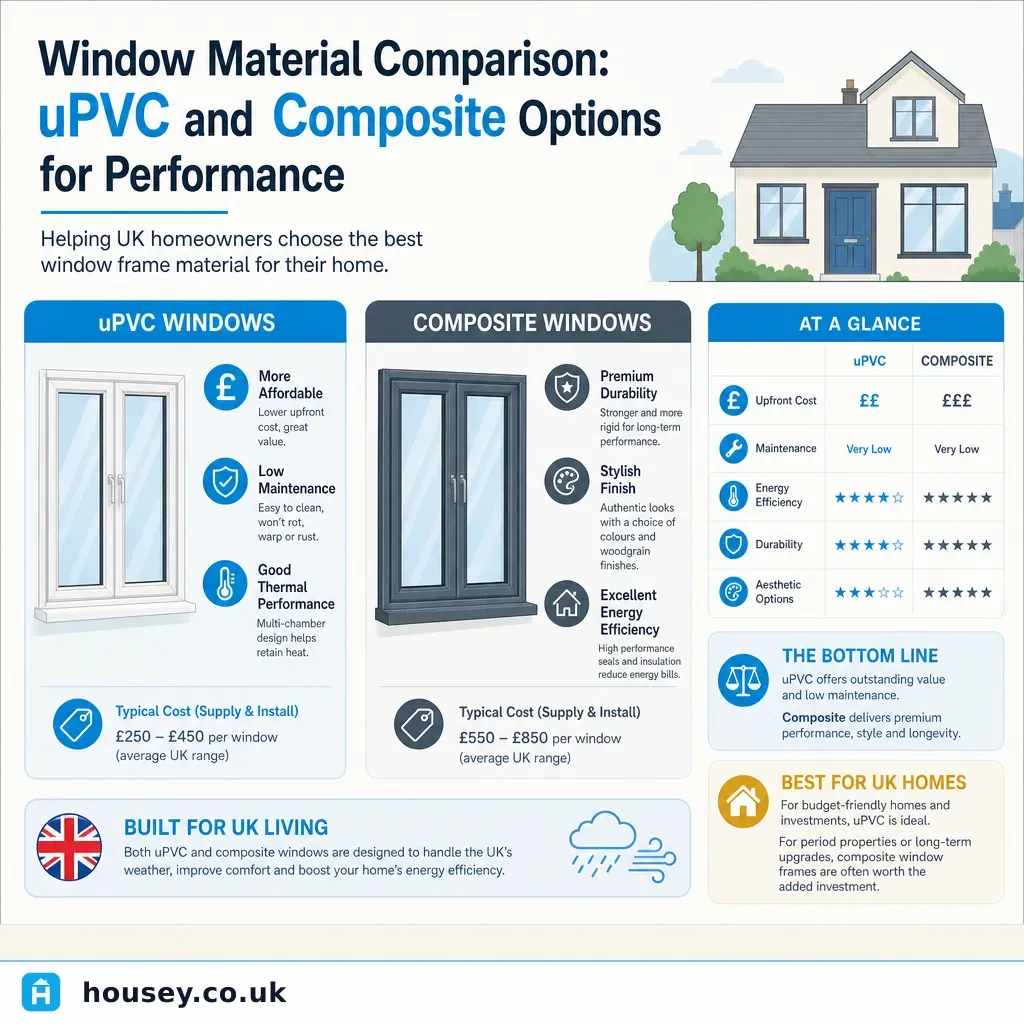
Window Material Comparison: uPVC and Composite Options for Performance
In the UK, uPVC frames (sold as 'vinyl' in some markets) are the most common window material, offering good thermal performance at moderate cost.
 Improvement & Build
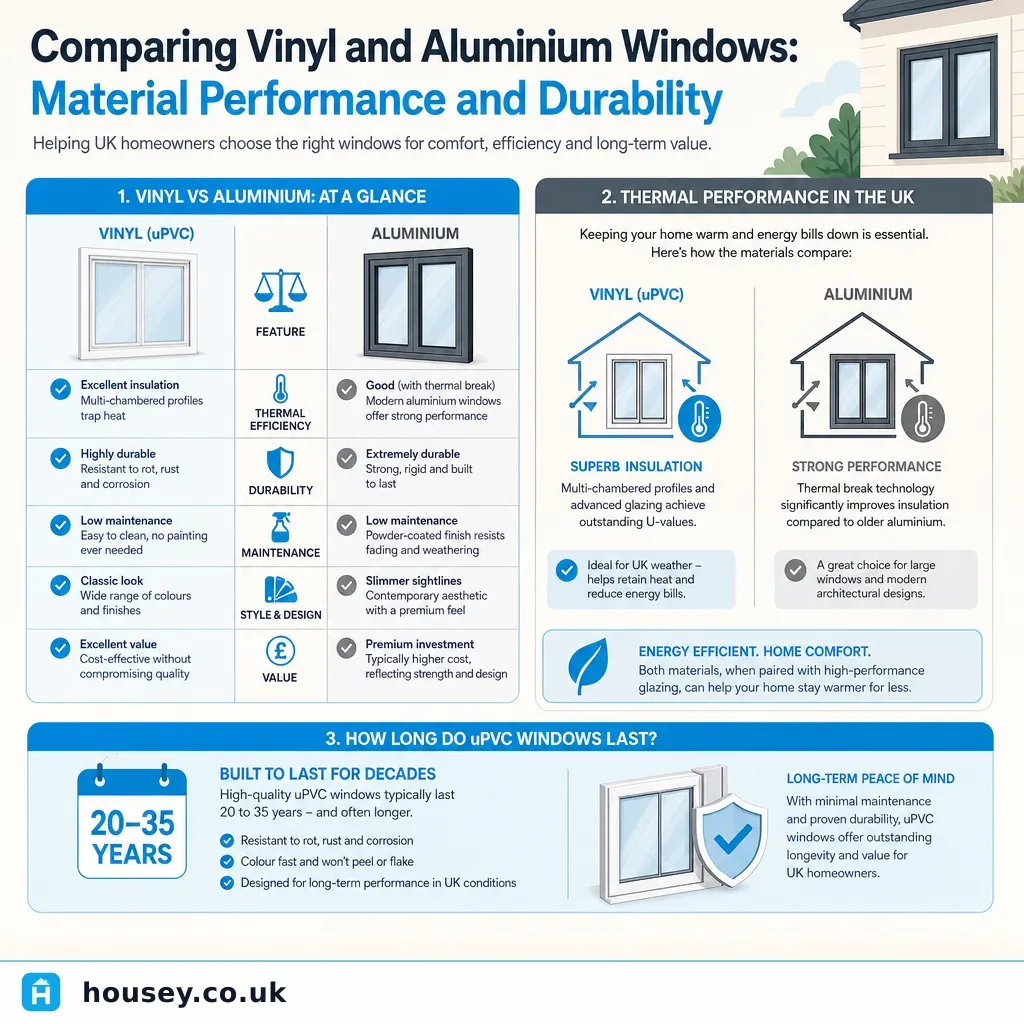
Comparing Vinyl and Aluminium Windows: Material Performance and Durability
uPVC (vinyl) and aluminium windows both meet UK Building Regulations Part L when properly specified.
 Improvement & Build
Professional Roofing Solutions: Expert Installation and Maintenance
A professional roofer should hold relevant trade qualifications such as NVQ Level 2 in Roofing Occupations, carry public liability insurance, and provide a written quotation.
 Improvement & Build
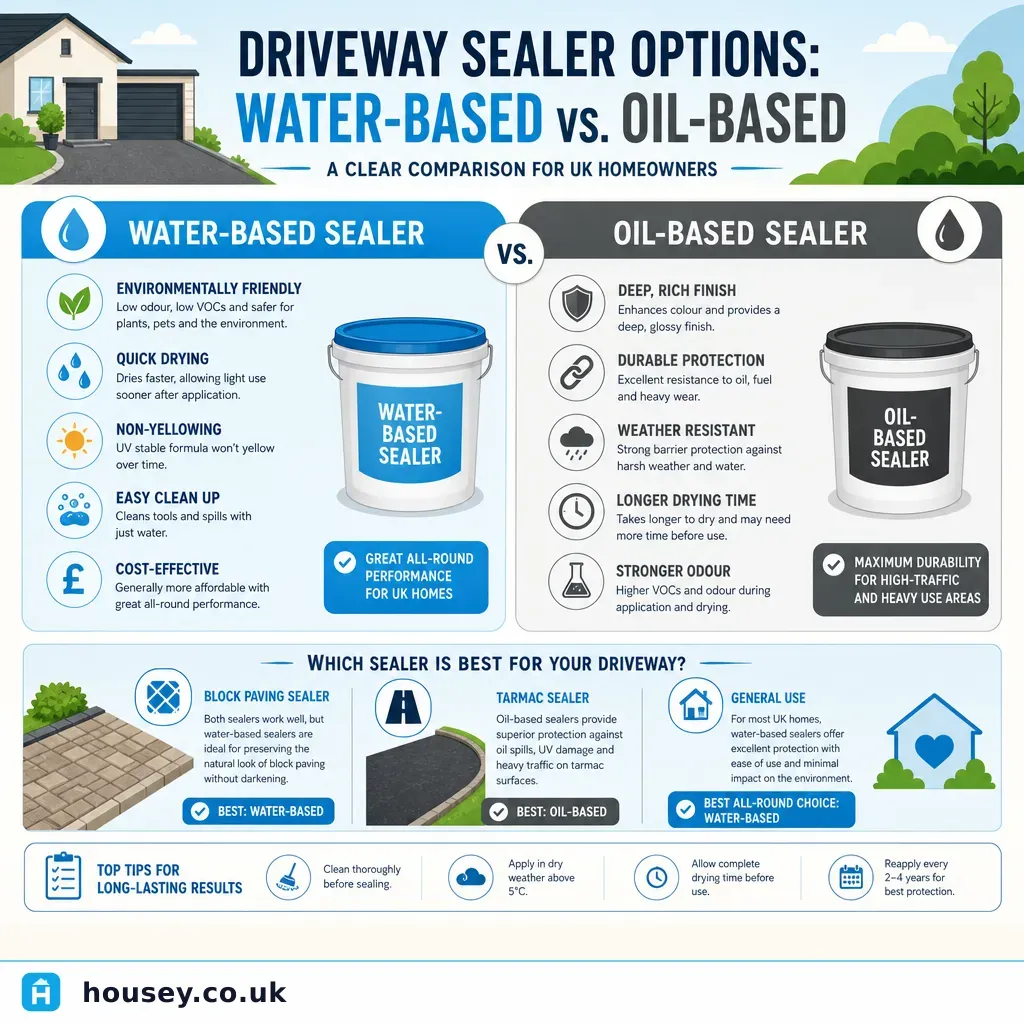
Driveway Sealer Options: Water-Based vs Oil-Based Comparison
Water-based driveway sealers are generally easier to apply, lower in VOCs, and suitable for most block paving and concrete surfaces.