Composite Decking Installation Costs
By Housey · Last reviewed 11th of May 2026
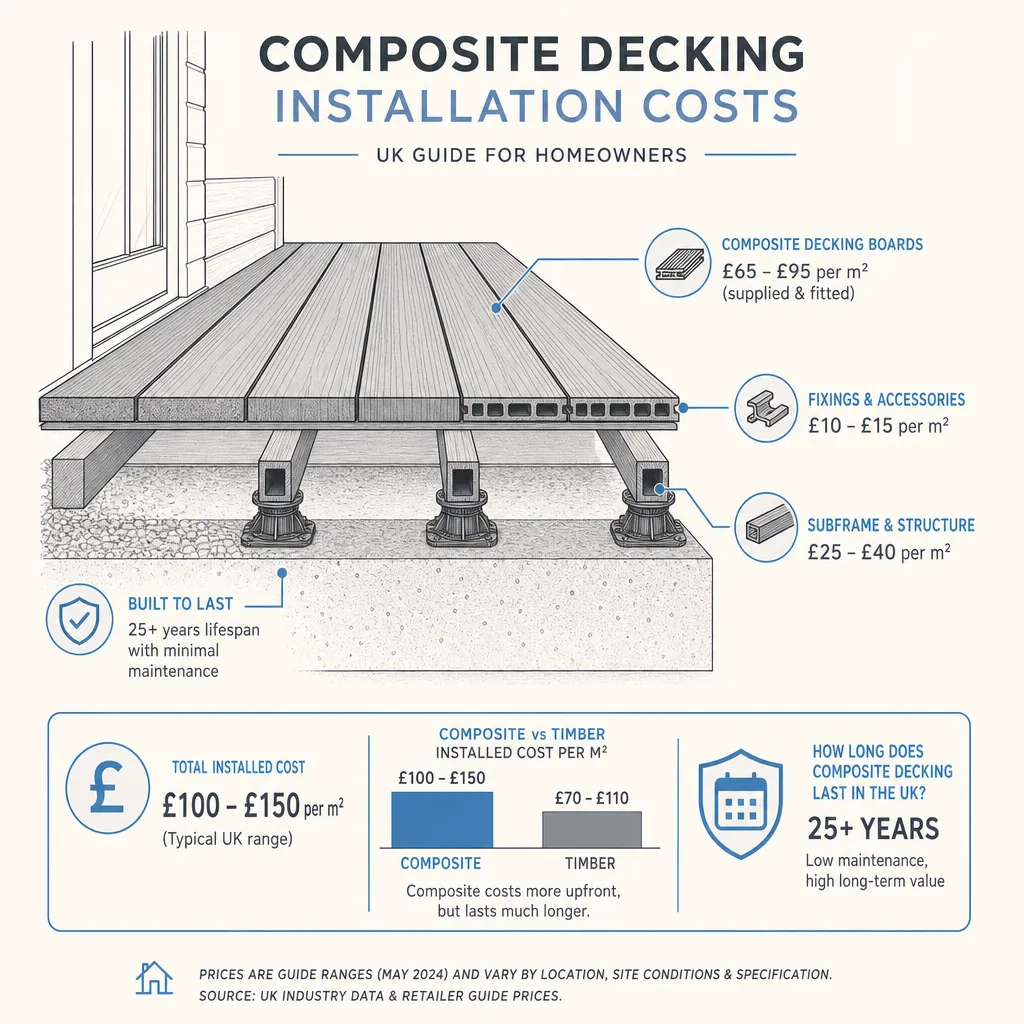
Composite Decking Installation Costs
Outdoor living spaces are a consistent priority in UK home improvement budgets, and composite decking has become a mainstream alternative to pressure-treated timber since the mid-2010s. The question of cost typically arises when homeowners are weighing composite against timber boards, planning a new terrace or garden room base, or replacing an existing deck that has rotted or become structurally unsound.
Key points
- Installed composite decking costs typically range from £100 to £200 per m² (supply and fit), compared with £70–£130 per m² for pressure-treated softwood. Indicative UK costs, last reviewed 2026-05-11.
- Board-only material costs vary widely: entry-level solid-core composite boards start around £18–£28/m², while premium capped boards such as Millboard or Trex Transcend reach £45–£70/m².
- Most reputable composite decking products carry a manufacturer warranty of 10–25 years; some premium ranges offer 30-year structural warranties.
- Composite decking at or below 30 cm above ground level does not usually require planning permission under permitted development rights for householders, though decks adjacent to a highway or in conservation areas may face restrictions.
- An aluminium subframe costs roughly £15–£30/m² more than a timber one but significantly extends deck life by eliminating ground-contact rot risk.
What does composite decking cost in the UK?
Composite decking total installed costs depend on three main variables: the board grade, the subframe specification, and site complexity including ground preparation, steps, and raised height.
Component | Typical cost range (per m²) |
|---|---|
Entry-level composite boards (solid core) | £18–£28 |
Mid-range composite boards (hollow core, capped) | £28–£45 |
Premium capped composite boards (e.g. Millboard, Trex Transcend) | £45–£70 |
Timber subframe (pressure-treated joist and post system) | £15–£22 |
Aluminium subframe (proprietary system) | £25–£38 |
Labour (installation only, clear site) | £25–£40 |
Ground preparation (levelling, membrane, gravel) | £8–£20 |
Indicative UK costs, last reviewed 2026-05-11. Regional variation applies; obtain at least three quotes.
For a typical 20 m² garden deck using mid-range boards, a timber subframe, and straightforward ground conditions, expect a total installed cost of £2,200–£3,600.
Composite vs timber decking: how do the costs compare?
Composite decking costs more upfront than pressure-treated softwood but its total cost of ownership is often lower over 15–25 years once maintenance is factored in.
Aspect | Composite decking | Pressure-treated softwood |
|---|---|---|
Typical installed cost | £100–£200/m² | £70–£130/m² |
Annual maintenance cost | Minimal (wash down) | £10–£30/m² (oil, treat, sand) |
Likely lifespan | 20–30+ years | 10–20 years (with maintenance) |
Risk of rot or splinter | Low (capped boards) | Moderate to high without maintenance |
Slip resistance | Good (grooved boards) | Variable; can be slippery when wet |
Appearance options | Wide range of colours and finishes | Natural timber look only |
Sources: manufacturer product data and contractor survey data.
Most composite manufacturers cite 8–12 years as the approximate cost-of-ownership crossover point versus maintained softwood decking.
What factors drive the cost of composite decking installation?
Board grade and profile
Solid-core boards are heavier and denser; hollow-core boards are lighter and faster to install. Capped composite boards — where the wood-plastic composite (WPC) core is wrapped in a protective polymer shell — resist moisture, UV fading, and staining far better than uncapped boards and command a price premium.
Subframe complexity
A ground-level deck on a level site with a straightforward timber subframe is the cheapest scenario. Costs increase with:
- Raised decks requiring posts set in concrete
- Uneven or sloped ground requiring extensive groundwork
- Aluminium or steel subframes
- Integrated lighting channels or hidden fixing systems
Site access and preparation
Restricted access (narrow side gates, terraced town houses), removal of existing decking, and excavation for drainage all add to labour time. Some composite decking companies include ground preparation in their quoted price; others do not — always confirm what is and is not included when comparing quotes.
Steps and balustrades
Each step section typically adds £150–£350. Balustrade systems — required under Building Regulations Approved Document K for decks over 600 mm above ground — add £80–£200 per linear metre depending on material: glass, stainless cable, or composite-match aluminium.
Do I need planning permission for composite decking?
Under Permitted Development Rights for Householders (England), decking does not usually require planning permission if:
- The deck and all other additions cover no more than 50% of the total garden area
- The deck is no more than 30 cm above ground level
- The property is not in a conservation area, World Heritage Site, or subject to an Article 4 direction
- The deck is not within the curtilage of a listed building
Decks adjacent to a highway may face additional restrictions. Planning rules in Scotland and Wales differ from those in England — check with your local planning authority before starting work if there is any doubt.
Homeowner checklist: before you accept a quote
Use this checklist when reviewing quotes from composite decking installers:
When to get professional help
Most composite decking projects are relatively low risk, but involve a qualified professional if:
- The deck is to be elevated more than 600 mm above ground, triggering Building Regulations Part K requirements for guarding
- Ground conditions suggest inadequate drainage, existing services (pipes or cables), or contaminated ground
- The site is on a slope requiring retaining structures or significant groundwork
- The project is in a conservation area and there is any doubt about permitted development status
How Housey can help
Whether you need a professional landscaper to design and build a composite deck or groundworkers to prepare a complex or sloped site, Housey connects you with vetted local professionals who can provide competitive quotes. Describe your project once to receive up to four responses from providers in your area.
Frequently asked questions
Does composite decking get hot in summer?
Some composite boards, especially darker-coloured ones, can become noticeably warm in direct sunlight. Premium capped boards from brands such as Trex and Millboard include heat-dispersal formulations, but in a south-facing UK garden, surface temperatures may still reach 45–55 °C on hot days. Light-coloured boards and grooved profiles help manage heat build-up. Ask your supplier for heat-performance data before specifying a dark colour.
Can composite decking be installed on an existing timber subframe?
Sometimes, but it depends on the condition and joist spacing of the existing structure. Most composite manufacturers specify a maximum joist spacing of 400 mm for diagonal board runs and 500 mm for perpendicular runs. An installer should inspect the existing subframe before confirming whether it can be reused. Rotted or undersized joists must be replaced before new boards are laid.
Is composite decking slippery when wet?
Quality composite boards include a grooved or embossed texture specifically to improve wet-weather grip and generally outperform smooth-faced softwood boards in wet conditions. Any outdoor surface can become slippery if algae or moss establishes. An annual wash with a specialist composite decking cleaner is usually sufficient to maintain safe grip year-round.
Does composite decking fade?
Uncapped composite boards can fade noticeably over 2–5 years of UV exposure. Capped boards with co-extruded protective shells are significantly more UV-stable, and most premium manufacturers guarantee against significant colour change within their warranty terms. Check the specific warranty document carefully, as coverage and definitions of acceptable fading vary considerably between brands.
Sources and further reading
- Planning permission: when you need it — GOV.UK
- Approved Document K: Protection from falling, collision and impact — HM Government
- Trex composite decking UK — Trex Company (commercial source; warranties and product specifications)
- Millboard enhanced grain decking — Millboard (commercial source; warranties and product specifications)
Useful next reads
 Improvement & Build
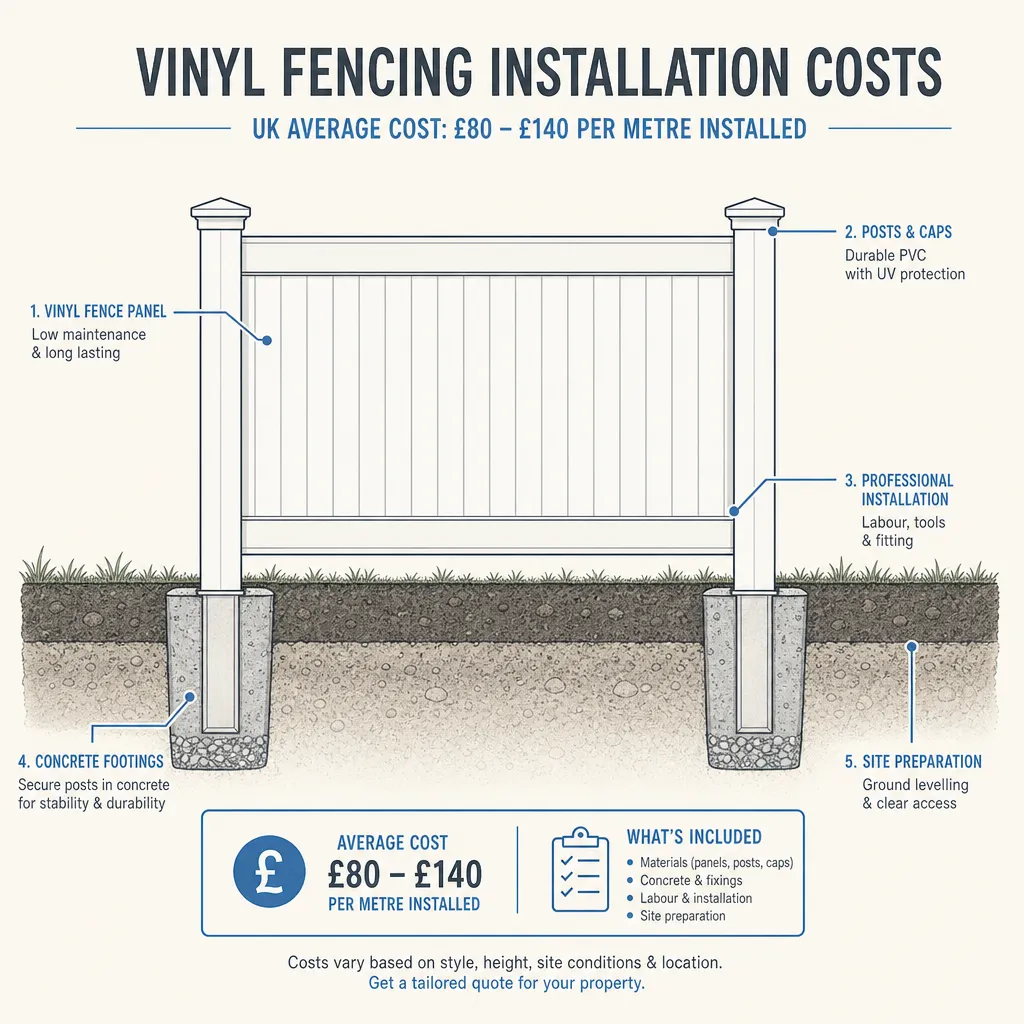
Vinyl Fencing Installation Costs
Vinyl fencing in the UK costs roughly £60–£200 per metre for supply and installation, depending on fence style, height, and ground conditions.
 Improvement & Build
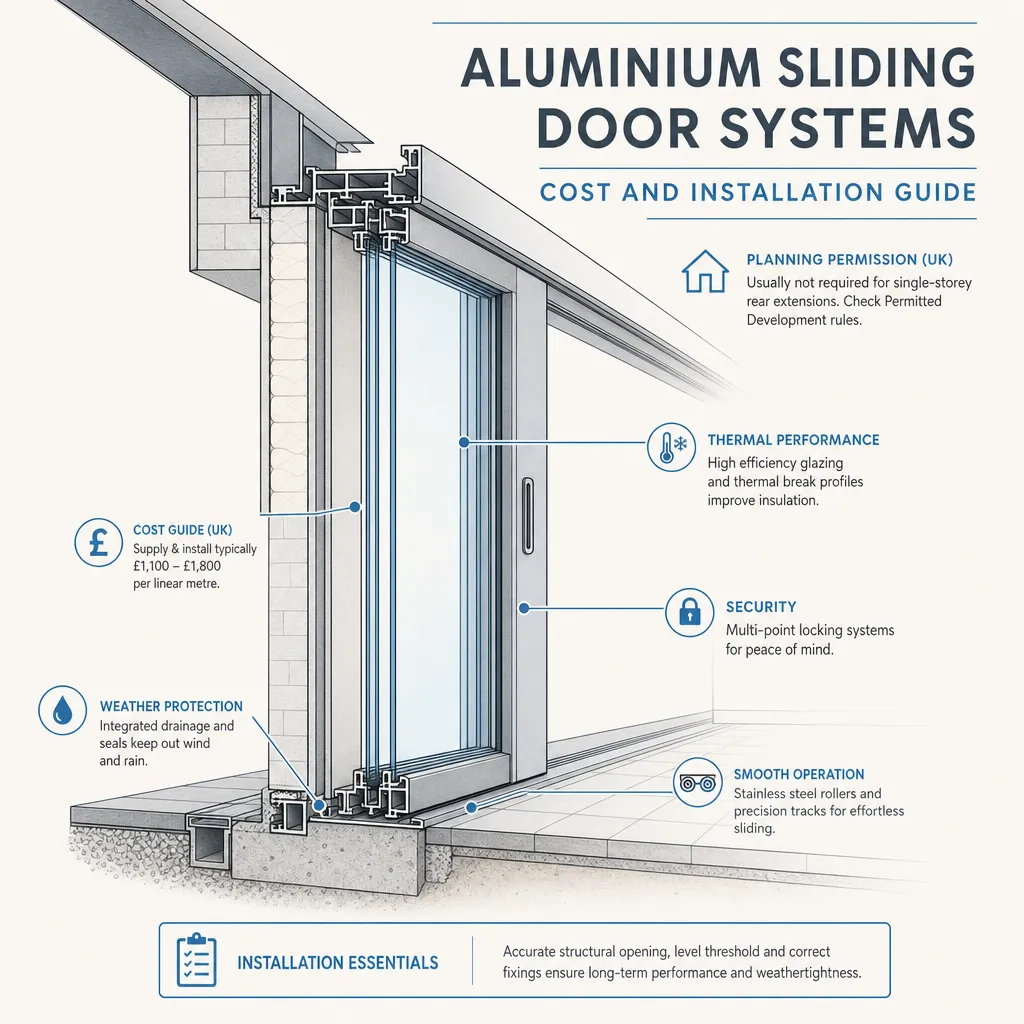
Aluminium Sliding Door Systems: Cost and Installation Guide
Aluminium sliding doors typically cost £2,500–£7,000 supply and fitted for a standard opening.
 Improvement & Build
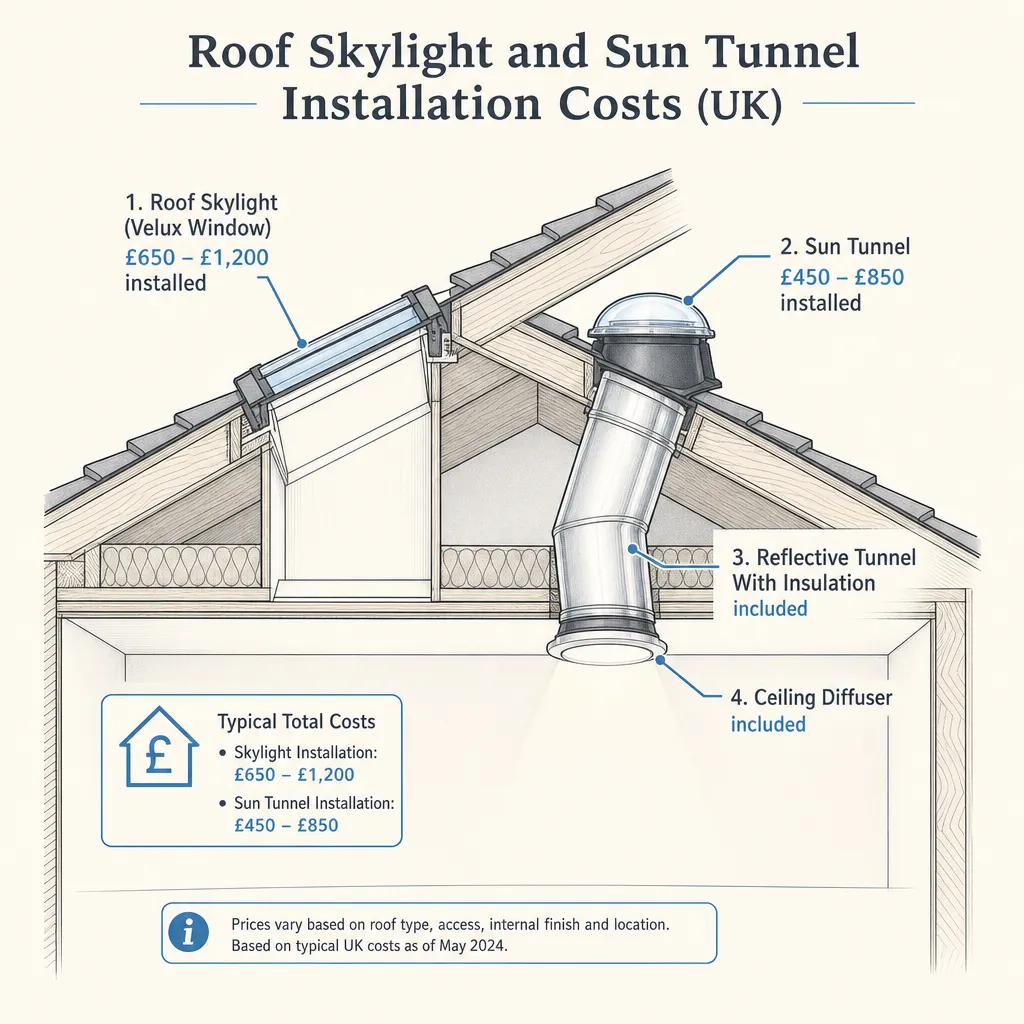
Roof Skylight and Sun Tunnel Installation Costs
A standard pitched-roof skylight costs £800–£3,000 installed in the UK, including flashings and basic making good.
 Improvement & Build
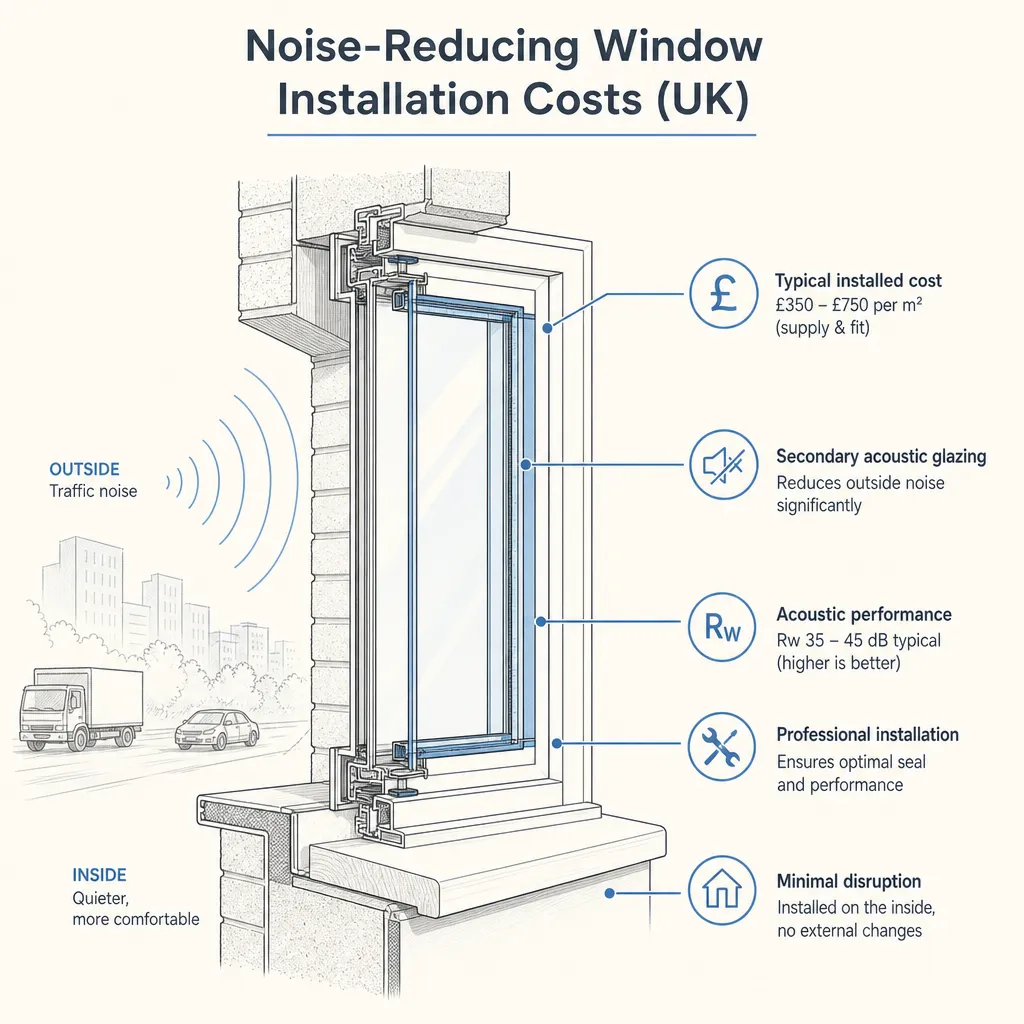
Noise-Reducing Window Installation Costs
Noise-reducing window installation in the UK typically costs £400–£1,500 per window depending on glazing specification, frame material, and property type.
 Improvement & Build
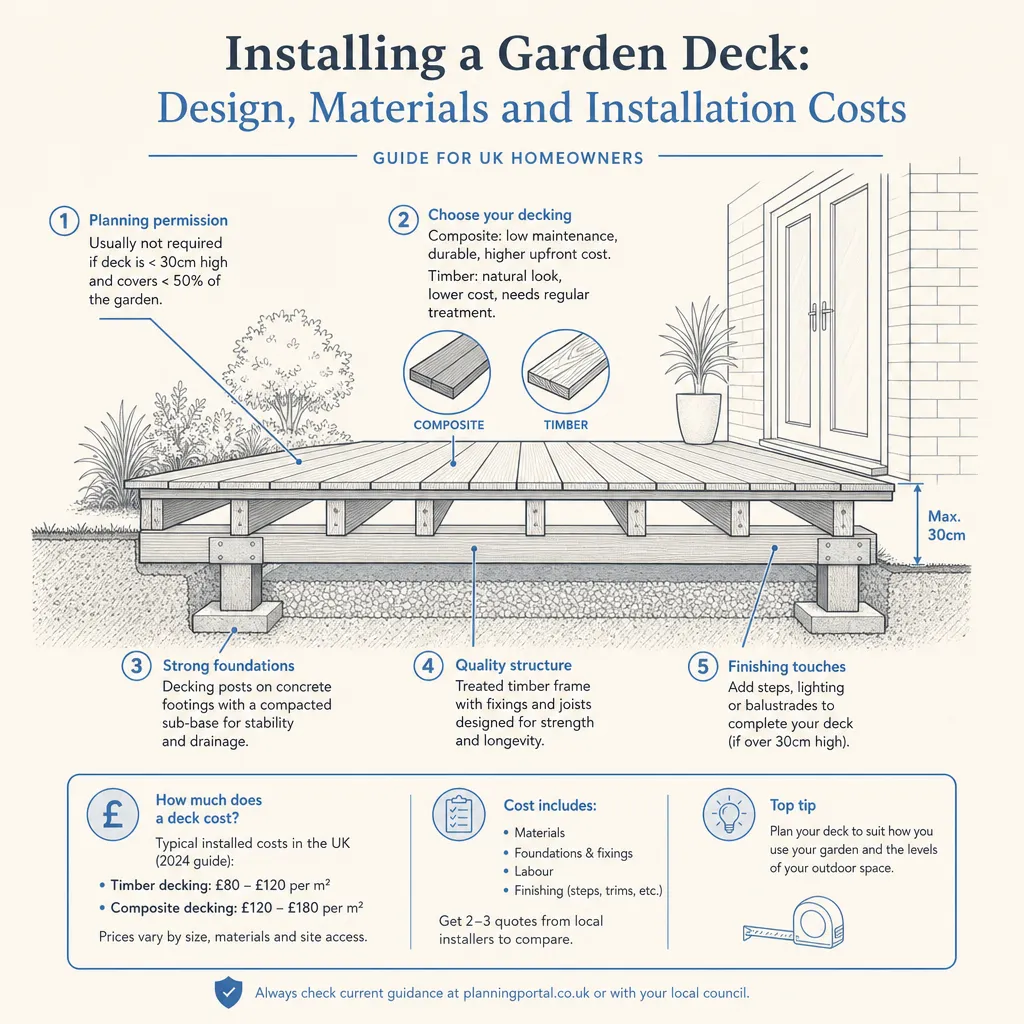
Installing a Garden Deck: Design, Materials and Installation Costs
Garden decking costs £80–250 per m² installed in the UK depending on material — softwood is cheapest, composite the most durable.