Vinyl Fencing Installation Costs
By Housey · Last reviewed 11th of May 2026
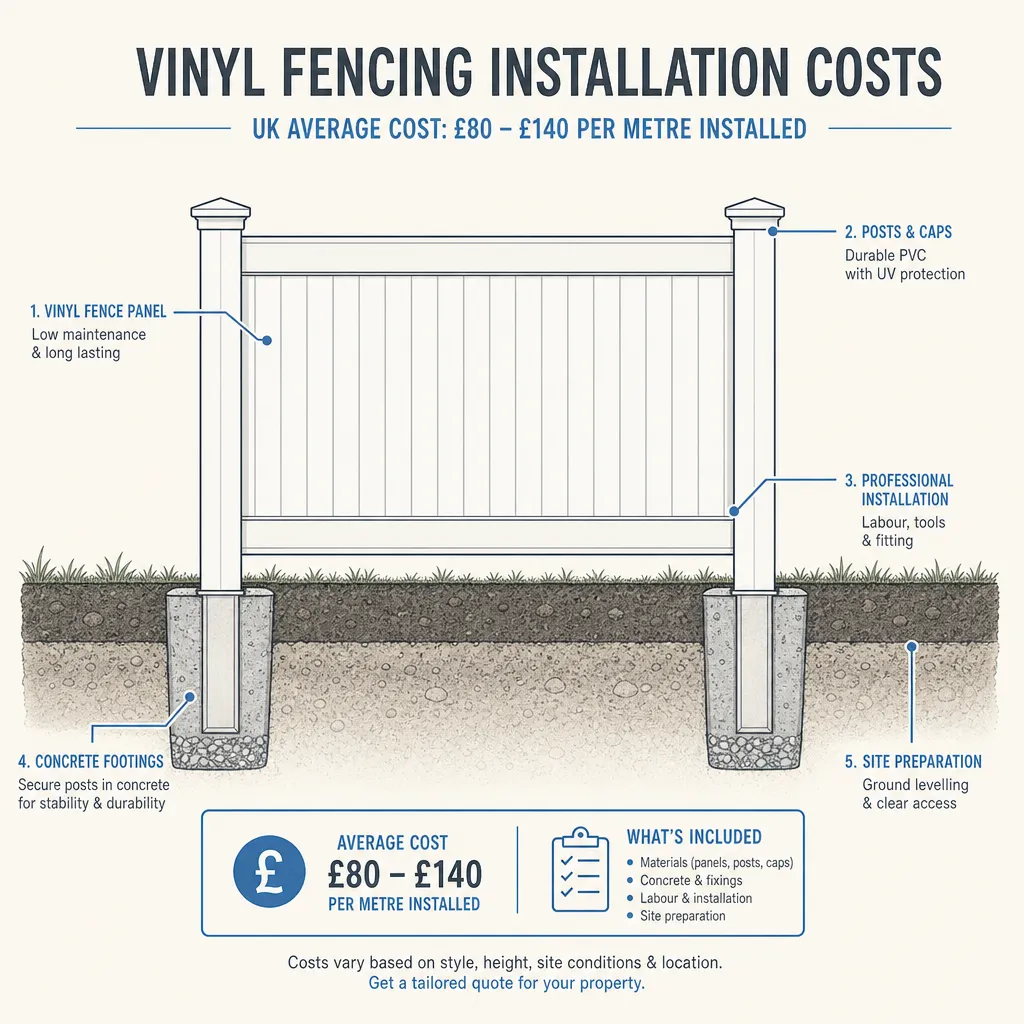
Vinyl Fencing Installation Costs
Vinyl fencing — sold in the UK as PVC fencing — has become a practical low-maintenance alternative to timber for garden boundaries and enclosures. Questions about installation costs typically arise when homeowners are replacing ageing wooden panels, landscaping a new-build plot, or seeking a long-term boundary solution that requires minimal upkeep.
Key points
- Vinyl fencing is sold in the UK as PVC fencing (unplasticised polyvinyl chloride) — both terms refer to the same material.
- Boundary ownership should be confirmed from the Land Registry title plan and property deeds before any fence is installed; installing on the wrong side of a boundary is costly to undo.
- Under the Town and Country Planning (General Permitted Development) (England) Order 2015, most garden fences up to 2 metres in height do not require planning permission; fences adjacent to a highway are restricted to 1 metre without consent.
- Indicative supply-and-fit costs range from approximately £60–£200 per metre depending on fence style, height, and ground conditions — Indicative UK costs, last reviewed 2026-05-11.
- Posts must be set in concrete to adequate depth — typically at least one-third of the total post length — for long-term stability in UK ground conditions, particularly in clay-heavy soils.
What does vinyl fencing cost in the UK?
Vinyl fencing costs more per metre upfront than standard pressure-treated timber but significantly less to maintain over its lifetime, with no painting, staining, or rot treatment required.
Fence style | Typical height | Indicative cost per metre (supply & fit) | Notes |
|---|---|---|---|
Vinyl picket fence | 0.9–1.2 m | £60–£120 | Decorative boundary; not a security fence |
Vinyl privacy panel | 1.5–1.8 m | £90–£180 | Most common UK residential choice |
Vinyl post-and-rail | 1.0–1.5 m | £50–£100 | Open style; paddock or rural use |
Vinyl ranch-style panel | 1.0–1.5 m | £70–£130 | Decorative; suits period or rural settings |
Vinyl close-board style | 1.5–1.8 m | £100–£200 | Higher privacy; heavier profile panels |
Indicative UK costs, last reviewed 2026-05-11. Costs vary by region, ground conditions, access constraints, and whether existing fencing requires removal. Obtain at least three written quotes.
What affects the cost of vinyl fence installation?
Ground conditions are the most variable factor. Hard or stony ground takes longer to excavate for posts; clay soil may need posts set deeper. Sloped ground requires stepped panels or specialist installation at each step.
Old fence removal: If existing fencing must be cleared before installation can begin, expect to add approximately £10–£25 per metre for removal and disposal — Indicative UK costs, last reviewed 2026-05-11.
Gates: A standard vinyl single gate typically adds £150–£400 per gate depending on width and style — Indicative UK costs, last reviewed 2026-05-11.
Access: Rear gardens without vehicular access increase material carrying time and may add to labour costs, particularly on longer fence runs.
Post depth: Standard UK practice for a 1.8 m fence is to set posts at least 600 mm into the ground. In exposed or unstable ground, deeper setting may be needed.
Region: Labour rates vary across the UK; London and the South East are generally higher than other regions.
Vinyl fencing vs other materials
Option | Best for | Not ideal for | Approximate lifespan | Maintenance level |
|---|---|---|---|---|
Vinyl (PVC) | Low-maintenance gardens, coastal or damp settings | Traditional or rural aesthetics where timber suits | 20–30 years+ | Very low |
Pressure-treated timber | Budget projects, traditional appearance | Minimising long-term upkeep | 10–20 years | Moderate (annual treatment) |
Composite | Natural look with low maintenance | Very tight initial budgets | 15–25 years | Low |
Metal (galvanised or wrought iron) | Heritage settings, security, longevity | DIY installation | 30–50 years+ | Low–moderate |
Closeboard timber | Privacy and security | Long-term low maintenance | 10–15 years | High |
Do I need planning permission for vinyl fencing?
Under the Town and Country Planning (General Permitted Development) (England) Order 2015, most garden fences up to 2 metres do not require planning permission. Equivalent permitted development rights apply in Wales, Scotland, and Northern Ireland under their respective regulations.
You may need planning permission if:
- The fence is adjacent to or forward of the principal front elevation of the property, faces a highway, and exceeds 1 metre in height
- The property is a listed building or within a conservation area — check with your local planning authority before installation
- Permitted development rights have been removed by a planning condition or Article 4 direction — check your title deeds and any local notices
- The fence would obstruct visibility splays at a road or driveway junction
If uncertain, contact your local planning authority before instructing a contractor.
Homeowner checklist: before your vinyl fence is installed
When to get professional help
Vinyl fencing installation is generally a standard landscaping or groundwork task. Consider instructing a professional if:
- Ground conditions are challenging — waterlogged, very hard, or potentially contaminated
- The fence line runs close to existing structures, walls, or large tree root zones
- Underground services may be present along the line of the proposed fence
- The property is within a conservation area or is a listed building
- There is an unresolved boundary dispute with a neighbouring owner
How Housey can help
Housey connects homeowners with vetted local landscapers for fencing installation and groundworkers for post setting and groundwork across the UK. Submit a quote request on Housey to compare prices from local professionals in your area.
Frequently asked questions
How long does vinyl fencing last in the UK?
High-quality PVC vinyl fencing typically lasts 20–30 years or more in UK conditions. It does not rot, rust, or require painting. Most products include UV stabilisers to prevent discolouration. Cheaper imports may lack adequate UV resistance, so check product specifications before purchasing. Post bases should be inspected periodically after severe weather events.
Can I install vinyl fencing myself?
It is possible to install vinyl fencing as a DIY project if you have tools for post-hole digging and concreting. The main challenges are setting posts plumb at consistent spacing, particularly on sloped ground. Professional installation ensures correct post depth and alignment, which matters most on longer fence runs and in difficult ground conditions.
Does vinyl fencing require any maintenance?
Vinyl fencing requires very little maintenance compared to timber. An occasional wash with a hose or mild detergent removes algae and surface dirt. No painting, staining, or preservative treatment is needed. Check post fixings after severe wind events, as insufficiently set posts can shift over time in heavy clay or sandy soils.
Will my neighbour need to agree to a new fence on the boundary?
If you install a fence entirely within your own property, you generally do not need your neighbour's consent. If there is any uncertainty about the exact boundary position, resolve this before installation — relocating a completed fence is significantly more expensive than clarifying the boundary position beforehand.
Sources and further reading
- Planning Portal — Fences, walls and gates — Planning Portal
- Town and Country Planning (General Permitted Development) (England) Order 2015 — legislation.gov.uk
- HM Land Registry — Understanding title plans — GOV.UK
- LSBUD — Safe digging service — LSBUD
Useful next reads
 Improvement & Build
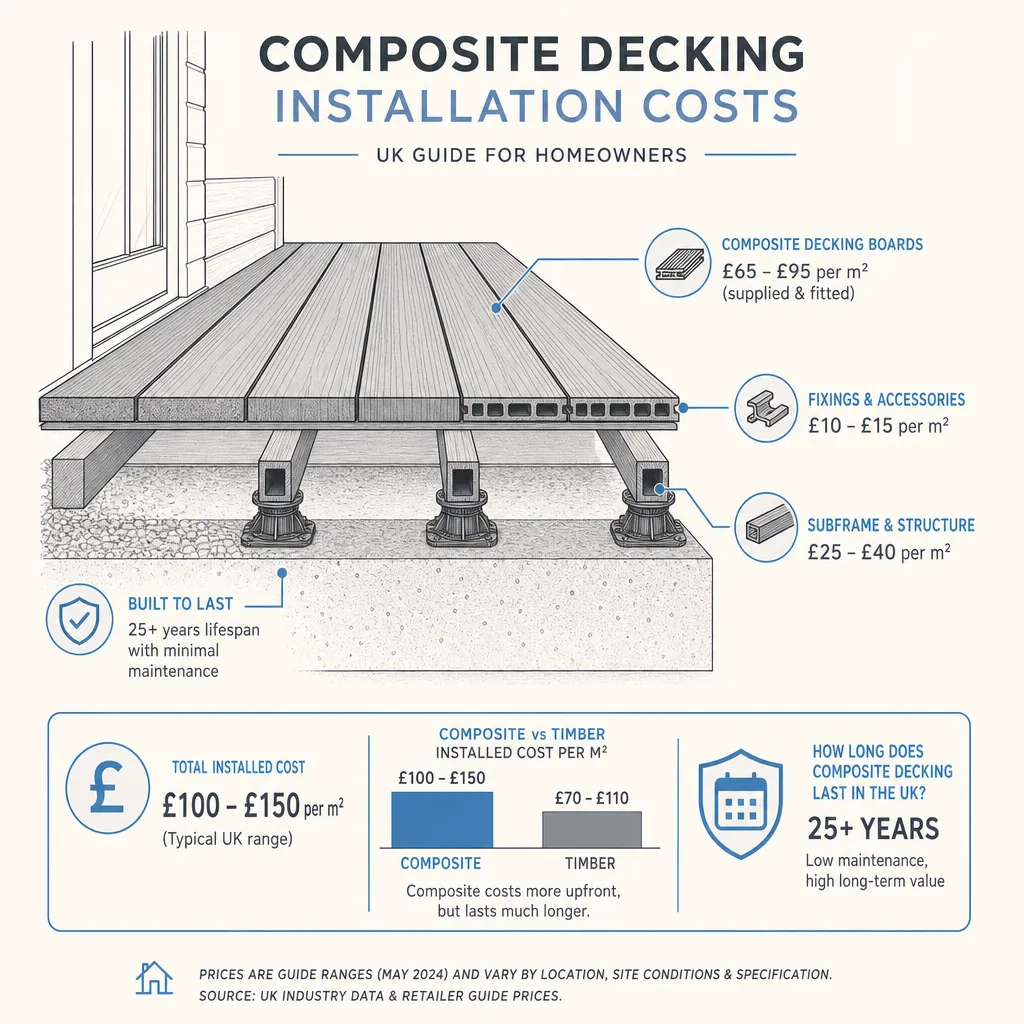
Composite Decking Installation Costs
Composite decking installation in the UK typically costs £100–£200 per m² for supply and fit, including subframe and fixings.
 Improvement & Build
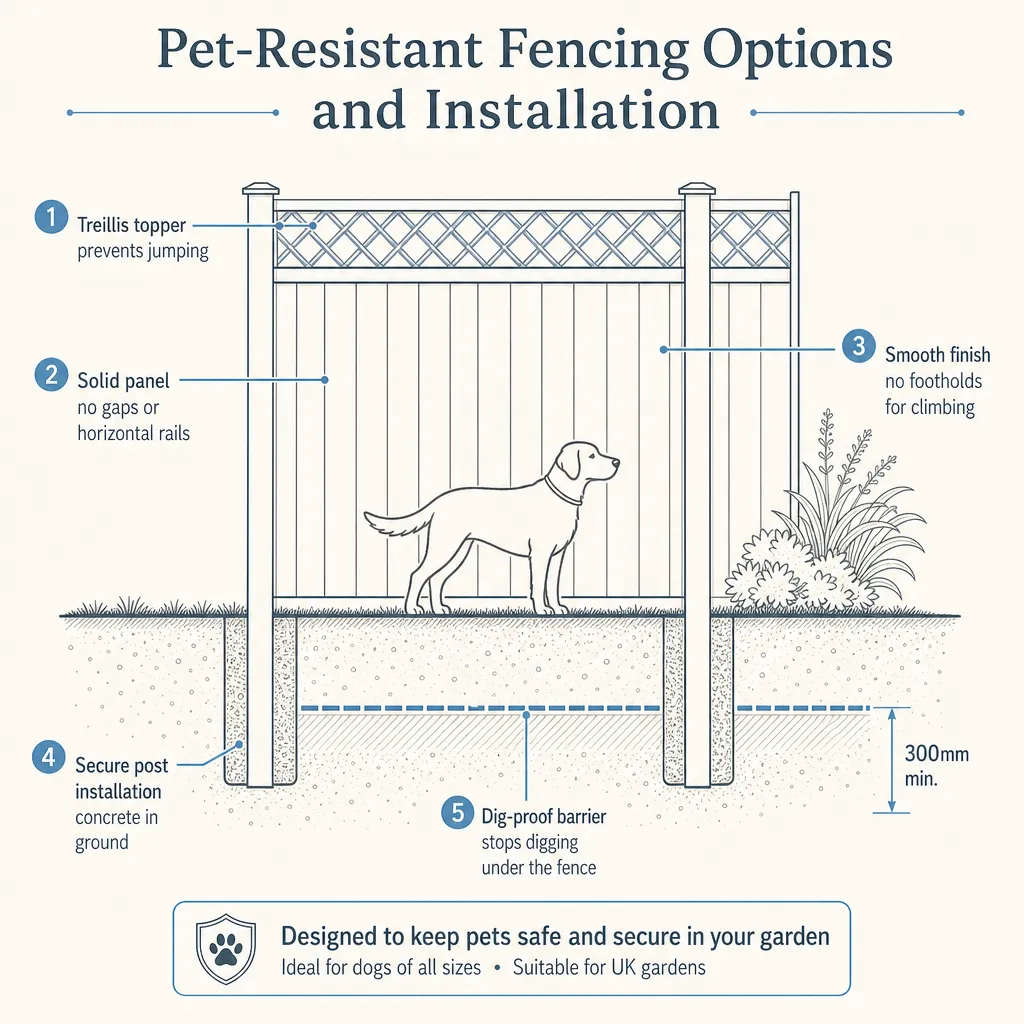
Pet-Resistant Fencing Options and Installation
Pet-resistant fencing in the UK typically needs to be at least 1.
 Improvement & Build
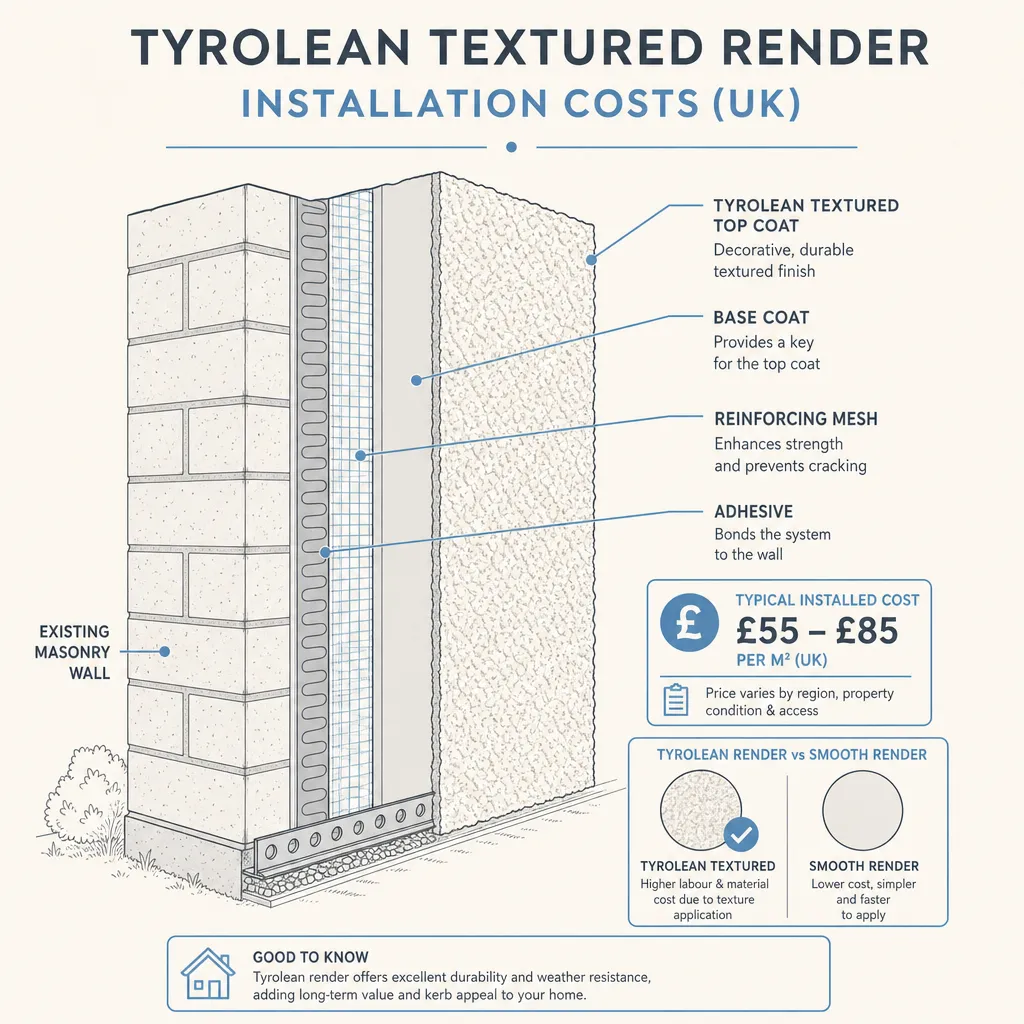
Tyrolean Textured Render Installation Costs
Tyrolean render installation in the UK typically costs £25–£45 per m² for material and labour on a prepared substrate, with additional costs for base coat repair, scaffolding, and defect remediation.
 Improvement & Build
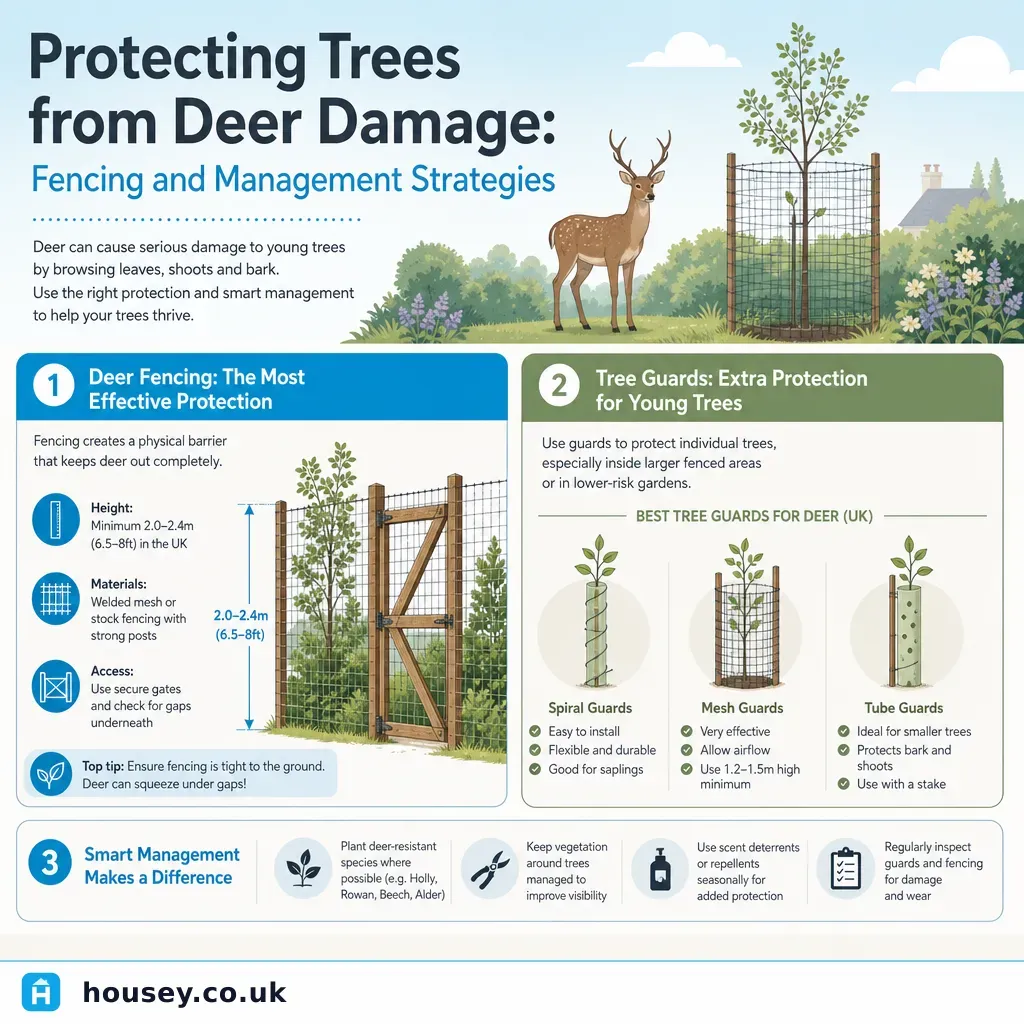
Protecting Trees from Deer Damage: Fencing and Management Strategies
Protect individual trees with mesh tubes or weld mesh cages of at least 1.
 Improvement & Build
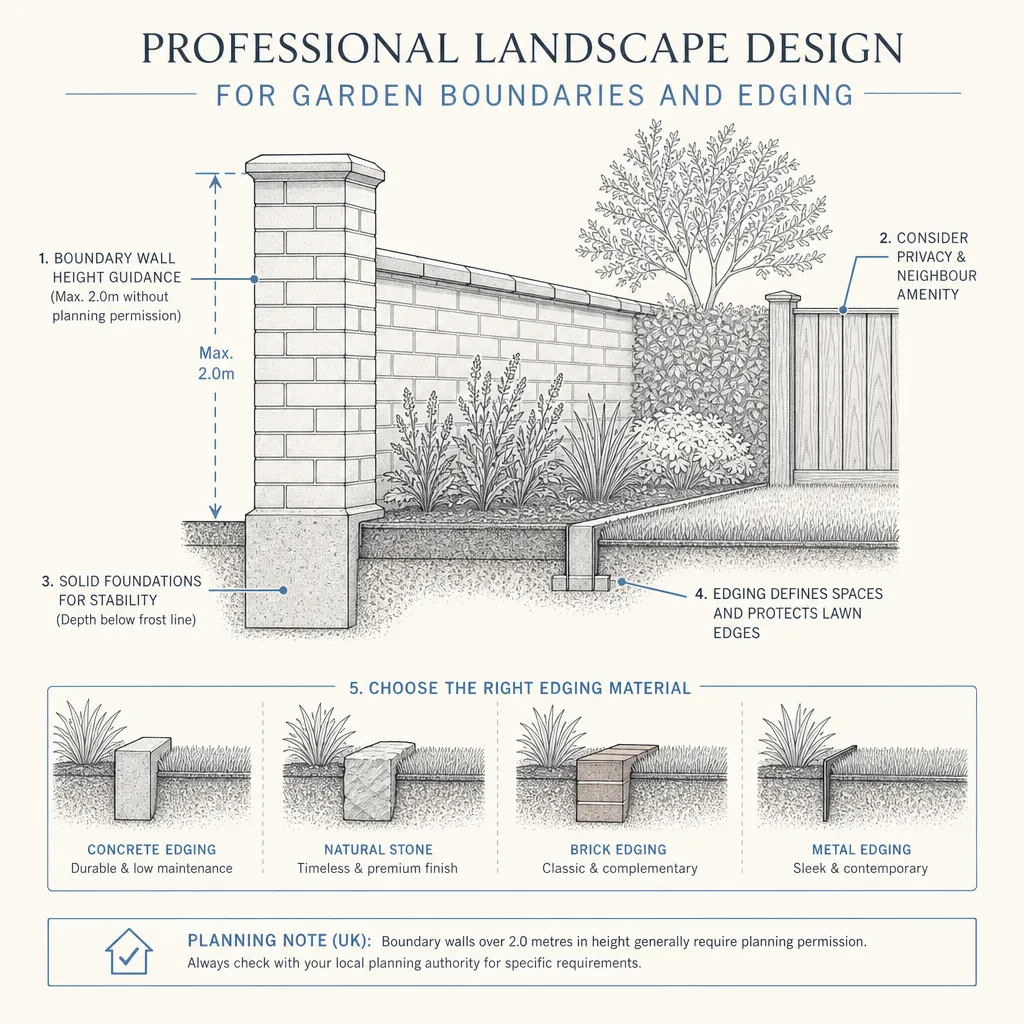
Professional Landscape Design for Garden Boundaries and Edging
Garden boundaries and edging define structure, manage drainage, and mark the legal interface between properties.