Roof Skylight and Sun Tunnel Installation Costs
By Housey · Last reviewed 11th of May 2026
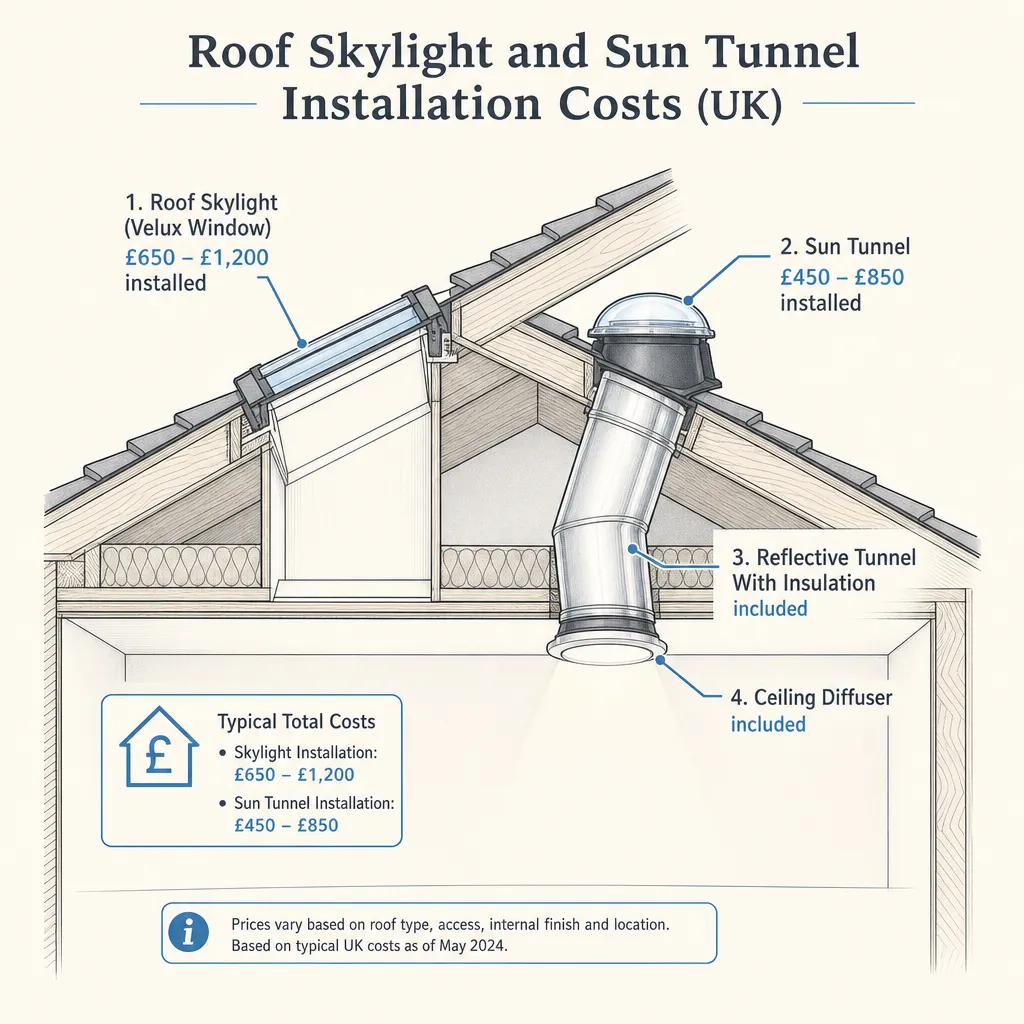
Roof Skylight and Sun Tunnel Installation Costs
Adding a skylight or sun tunnel is one of the most effective ways to bring natural daylight into UK homes where side or rear extensions are not practical, where planning restrictions apply, or where a dark hallway, bathroom, or landing needs brightening without major structural work. Costs vary considerably depending on roof type, unit specification, and the amount of internal finishing required — and the quality of installation matters significantly for long-term weatherproofing and thermal performance.
Key points
- Standard pitched-roof skylights (Velux-style openable units) typically cost £800–£3,000 per unit installed including flashings and basic internal making good; flat-roof glazed rooflights generally cost £1,000–£4,000+ depending on size and glazing specification (Indicative UK costs, last reviewed 2026-05-11).
- Sun tunnels (solar tubes) cost approximately £500–£1,500 installed and suit rooms beneath a roof void where a full skylight is not feasible, such as bathrooms, hallways, or landings with no direct roof access.
- Under Building Regulations Approved Document L (Conservation of Fuel and Power), new roof windows must meet minimum thermal performance requirements; a standard double-glazed roof window should achieve a U-value of 1.6 W/m²K or better.
- Most domestic skylight installations qualify as permitted development provided the unit does not protrude more than 150mm above the existing roof plane and the property is not listed or in a designated area.
- Roof type significantly affects cost and complexity: flat-roof installations require a kerb and upstand, making them typically more involved and expensive than standard pitched-roof flashings on a tile or slate roof.
What affects skylight and sun tunnel costs?
Several variables push skylight installation costs up or down significantly:
Roof type and covering: Pitched tile roofs with standard flashings are the most straightforward and affordable installation. Flat roofs require an upstand kerb, adding cost and complexity. Slate roofs need more careful handling to avoid damage to surrounding slates. Profiled metal or corrugated roofs require specialist flashings.
Unit size and specification: A small fixed roof light (600mm × 600mm) costs far less than a large openable top-hung unit (1,000mm × 1,600mm or larger). Triple glazing, noise-reduction glass, self-cleaning coatings, solar-control glazing, and electric or solar-powered opening mechanisms all add to the unit price.
Fixed versus openable: Openable skylights provide natural ventilation, which may be required under Building Regulations Part F in bathrooms, kitchens, and habitable rooms. Fixed units cost less but provide no ventilation.
Internal works: Once the roof is opened and the unit installed, the internal reveal (the sloped plasterboard or timber frame between the roof window and the ceiling) typically needs boarding, plastering, and decorating. This adds approximately £200–£800 per unit depending on depth and finish required.
Scaffolding and access: Most skylight installations require scaffold or a working-at-height platform. Scaffolding for a typical two-storey terrace costs £300–£800 for erection, hire, and dismantling; more complex access needs will cost more.
Sun tunnel routing: Rigid tube sun tunnels are more efficient than flexible tubes. Longer runs or those requiring bends lose light transmission; a clear, short path from roof dome to ceiling fitting delivers the best result.
Skylight and sun tunnel types: cost and suitability comparison
Type | Best for | Typical installed cost | Key advantage | Key limitation |
|---|---|---|---|---|
Fixed pitched-roof skylight | Loft conversions where ventilation is provided separately | £800–£1,800 | Lower cost, simple installation | No ventilation |
Openable centre-pivot skylight | Loft rooms and habitable rooms requiring ventilation | £1,000–£2,500 | Light and ventilation; easy to clean | Higher cost than fixed |
Openable top-hung skylight | Where maximum unobstructed internal opening is needed | £1,200–£3,000 | Full clear opening from hinge at top | Most expensive standard type |
Flat-roof frameless rooflight | Flat-roofed extensions, kitchen extensions, garages | £1,000–£4,000+ | Modern aesthetic; good daylighting | Kerb and upstand required; more complex |
Sun tunnel — rigid tube | Bathrooms, hallways, landings with short run to roof | £500–£1,000 | Low cost; minimal roof disruption | Less light than a full skylight |
Sun tunnel — flexible tube | Where routing around rafters or joists is needed | £600–£1,500 | Flexible routing around obstructions | Reduced light transmission vs rigid |
Electric or solar-powered opening skylight | High roof pitches or where manual reach is impractical | £1,500–£3,500 | Automated operation; rain sensor options | Higher cost; battery or solar maintenance |
Indicative UK costs, last reviewed 2026-05-11. Costs include supply, installation, and standard flashings. Internal plastering and decoration are additional unless otherwise stated.
Planning permission and permitted development rules
In England, roof alterations including skylights fall under Schedule 2, Part 1, Class A of the Town and Country Planning (General Permitted Development) (England) Order 2015. A skylight is generally permitted development if:
- It does not project more than 150mm above the existing roof plane
- It does not exceed the height of the highest part of the existing roof
- The property is not a listed building
- The installation is not on a roof slope facing a highway in a conservation area, national park, AONB, or World Heritage Site
In conservation areas, national parks, and AONBs, roof alterations visible from a highway require a planning application. For listed buildings, Listed Building Consent is required for any skylight regardless of size. Rules in Wales, Scotland, and Northern Ireland differ — check with your local planning authority.
Building regulations for skylights
Skylight installations may be subject to Building Regulations in the following circumstances:
- Part L (thermal performance): New roof windows must meet minimum U-value requirements — typically no worse than 1.6 W/m²K for a new installation in a renovation context. Check the current Approved Document L for up-to-date figures, as these are subject to revision.
- Part F (ventilation): Habitable rooms and bathrooms must have adequate ventilation. Openable skylights can contribute to the required provision, and their sizing should be checked against Part F requirements.
- Part K (protection from falling): Openable skylights at low level may require restrictors or guarding under Approved Document K where people could fall through.
For a straightforward like-for-like replacement of an existing roof window, building regulations notification is typically not required. For a new opening where none previously existed, a building notice to local building control is advisable. Check with your local authority building control department before work begins.
What to ask before accepting an installation quote
- What exactly is included — the unit itself, proprietary flashings, scaffolding, and internal making good, or supply only?
- Are proprietary manufacturer flashings specified, or generic lead flashings?
- Does the quote include scaffolding or other access equipment, and what are the access arrangements?
- Will internal work be carried out — boarding, plastering, and painting the reveal — or is this excluded?
- Is VAT included in the quoted price?
- What is the warranty on the unit and on the installation workmanship?
- Is the installer experienced with this specific type of roof covering (tile, slate, flat felt, EPDM)?
- What could affect the final price — for example, rotten rafters, missing breathable membrane, or unexpected felt conditions discovered on opening the roof?
- Will a building regulations compliance certificate or notification document be provided if applicable?
When to get professional help
Most skylight installations should be carried out by a qualified roofer with experience in roof glazing. Always use a professional if:
- The roof is more than 2m above ground level — working at height above this threshold is regulated by the Work at Height Regulations 2005 and DIY installation is strongly inadvisable
- The property is listed or in a conservation area — consult a planning professional before ordering any unit
- The installation requires cutting through more than one rafter — this is structural work that may require engineering assessment and building control notification
- There are existing signs of roof leaks, water damage, or rot near the proposed location
Red flags that may arise during or after installation:
- Rotten or undersized rafters discovered once the roof is opened
- Evidence of previous water ingress or mould around the new opening
- Missing, torn, or incorrectly lapped breathable membrane or sarking felt
- Condensation appearing on the glazing or internal reveal shortly after installation, suggesting inadequate flashings or a thermal bridge
How Housey can help
Housey can connect you with qualified roofers experienced in skylight and sun tunnel installations across a range of roof types, from Victorian slate terraces to flat-roofed kitchen extensions. Getting multiple quotes through Housey allows you to compare unit specifications, flashing details, and warranty terms before committing to an installer.
Frequently asked questions
Do skylights add value to a property?
A well-installed skylight that brightens a previously dark room or loft conversion can positively affect buyer appeal, particularly in UK properties where natural light is often limited. The value uplift is difficult to quantify and depends on property, location, and installation quality. Poorly fitted skylights showing water staining or condensation are likely to be viewed negatively by buyers and RICS surveyors carrying out a Level 2 or Level 3 survey.
Can I install a skylight myself?
DIY installation is not advisable for skylights requiring work at height above 2m. Beyond the safety risk, an incorrectly installed skylight is very likely to leak, causing significant internal water damage. Flashings and roof integration require skill and familiarity with the specific roof covering. Use a qualified roofer with demonstrable experience of roof glazing — poor installation can also void manufacturer warranties.
How long does skylight installation take?
A single standard pitched-roof skylight typically takes half a day to a full working day to install, including flashings and basic internal making good. A flat-roof rooflight with a new kerb may take a full day or more. Multiple units can often be installed in sequence over one or two days. Scaffolding erection and dismantling adds time and is usually arranged around the installation day itself.
What is the difference between a skylight and a sun tunnel?
A skylight is a glazed unit set into the roof slope or flat roof, providing daylight and — if openable — ventilation directly into the room below. A sun tunnel uses a rooftop dome to capture daylight, transmitted down a reflective tube and diffused through a ceiling fitting. Sun tunnels cost less and are less disruptive, but deliver less light than a full skylight and provide no ventilation.
Sources and further reading
- Town and Country Planning (General Permitted Development) (England) Order 2015 — legislation.gov.uk
- Approved Document L: Conservation of Fuel and Power — GOV.UK
- Approved Document F: Ventilation — GOV.UK
- Work at Height Regulations 2005 — Health and Safety Executive
- Roof windows and loft conversions guidance — Planning Portal
Useful next reads
 Improvement & Build
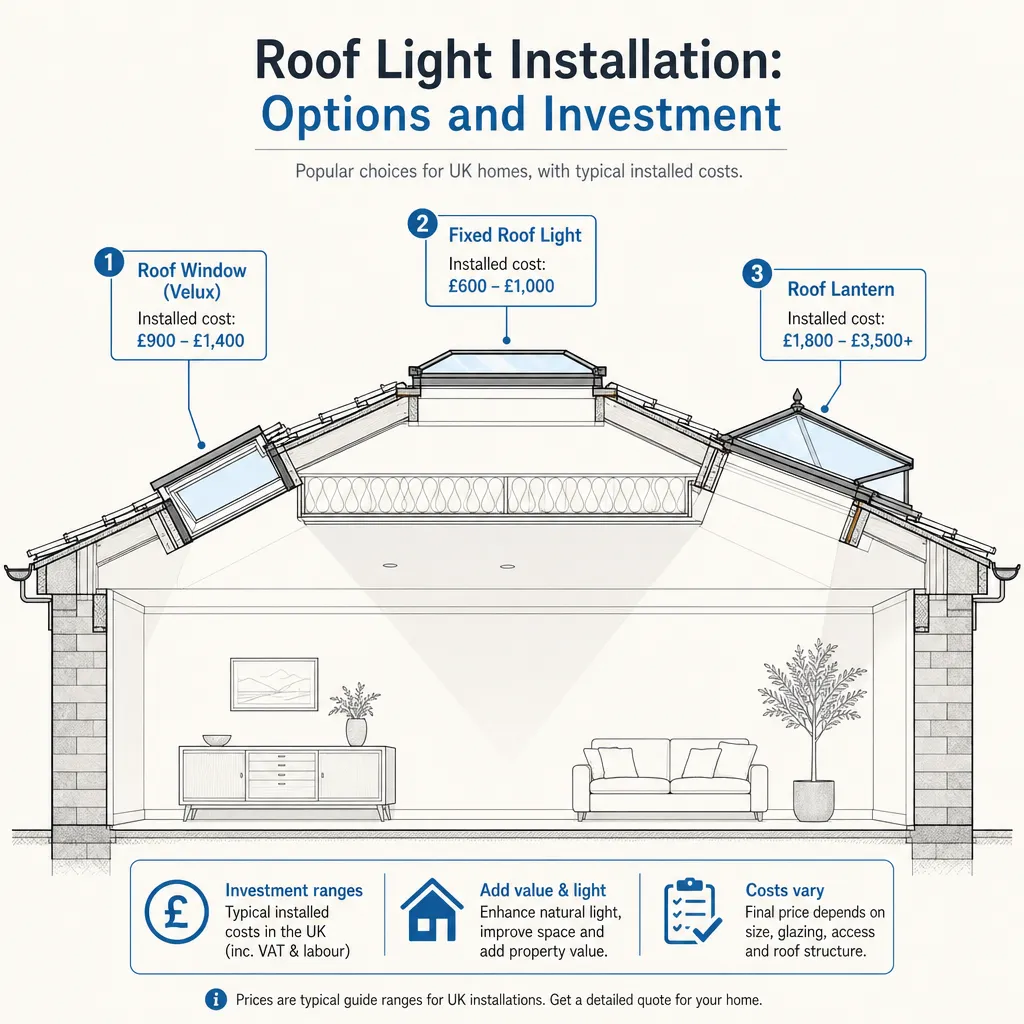
Roof Light Installation: Options and Investment
Roof light installation costs range from £500–£1,500 for a fitted pitched roof window to £2,000–£8,000 or more for a flat roof lantern.
 Improvement & Build
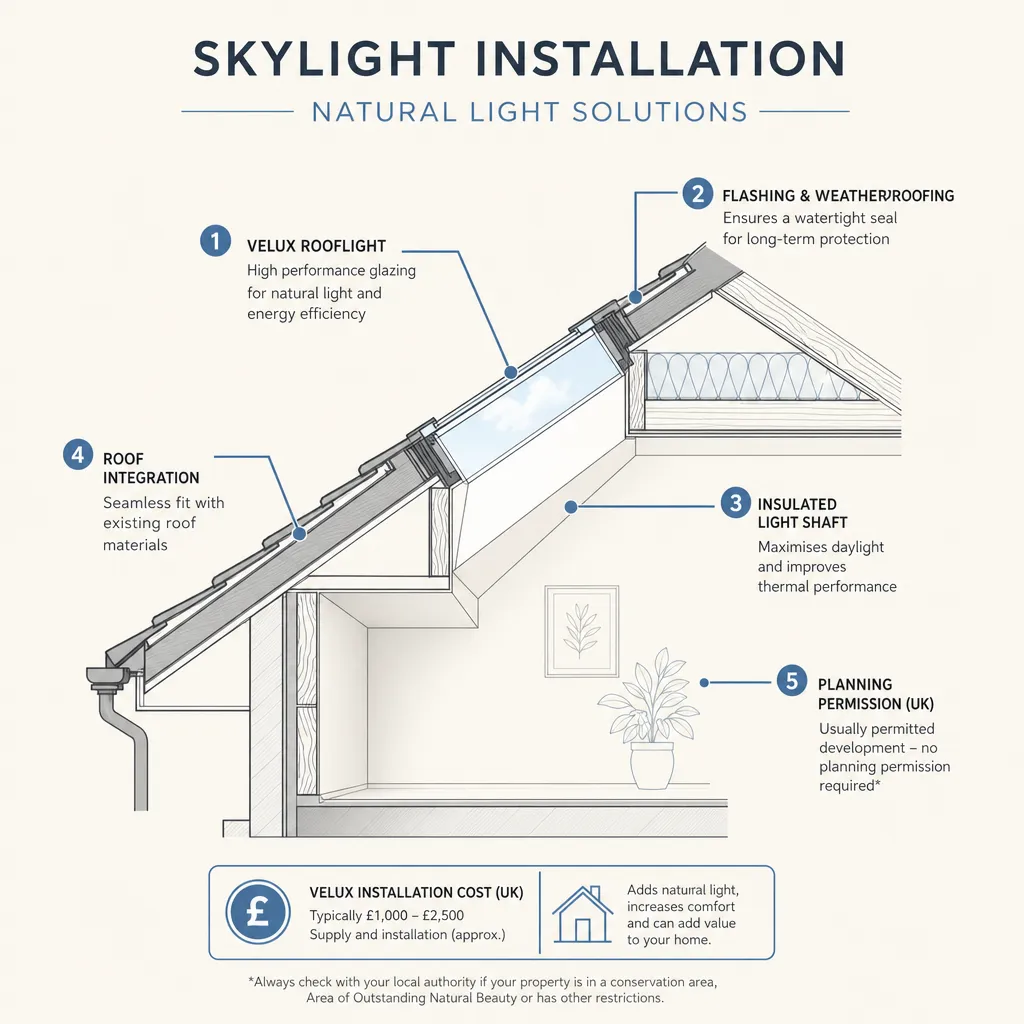
Skylight Installation: Natural Light Solutions
A standard pitched-roof skylight such as a Velux or equivalent roof window costs £800–£2,500 installed in the UK, including the unit and roofing work.
 Improvement & Build
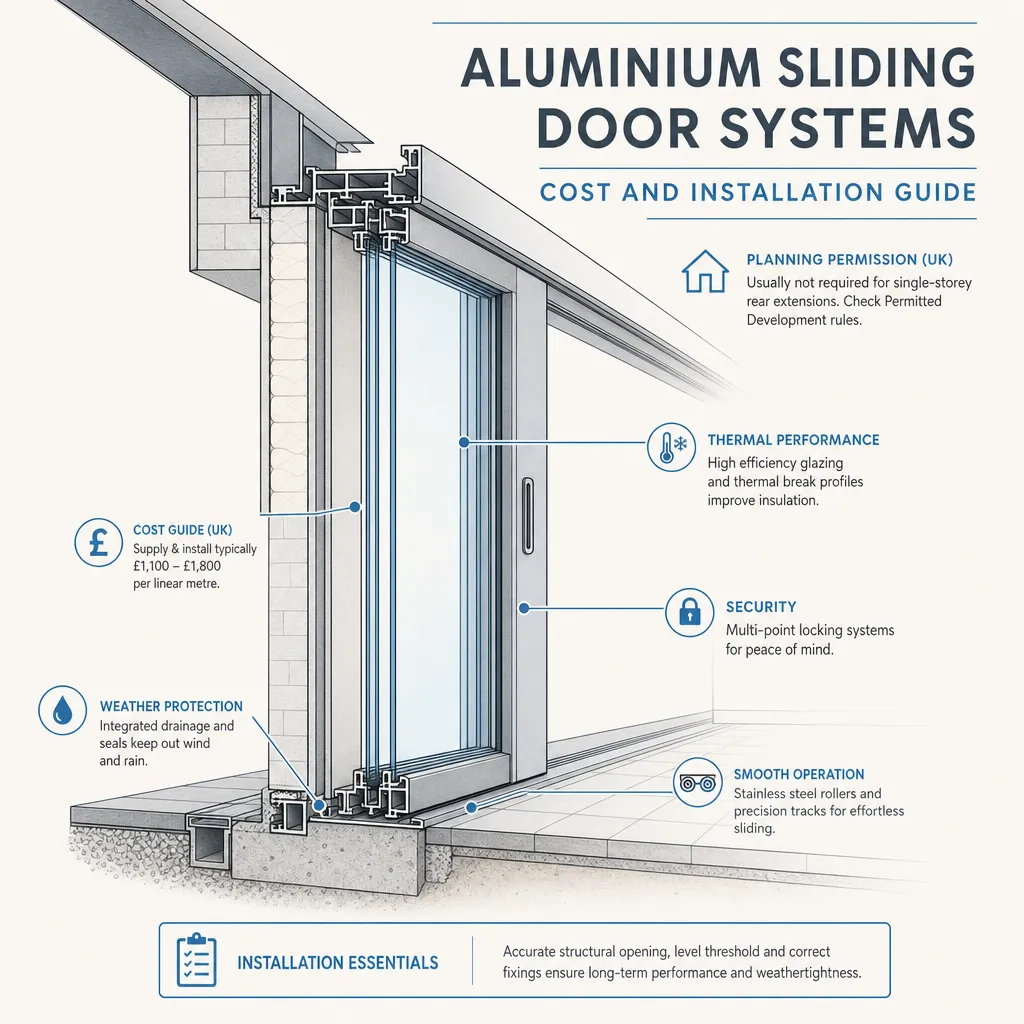
Aluminium Sliding Door Systems: Cost and Installation Guide
Aluminium sliding doors typically cost £2,500–£7,000 supply and fitted for a standard opening.
 Improvement & Build
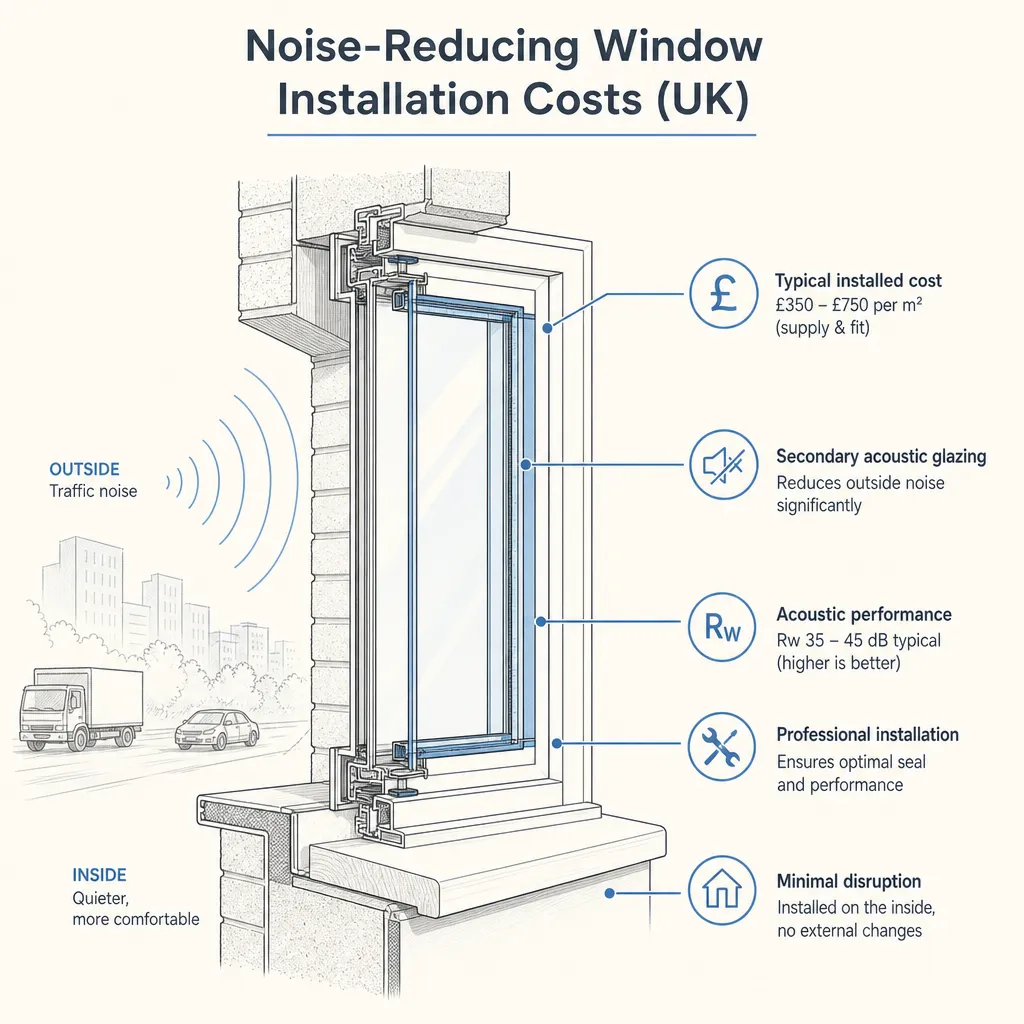
Noise-Reducing Window Installation Costs
Noise-reducing window installation in the UK typically costs £400–£1,500 per window depending on glazing specification, frame material, and property type.
 Improvement & Build
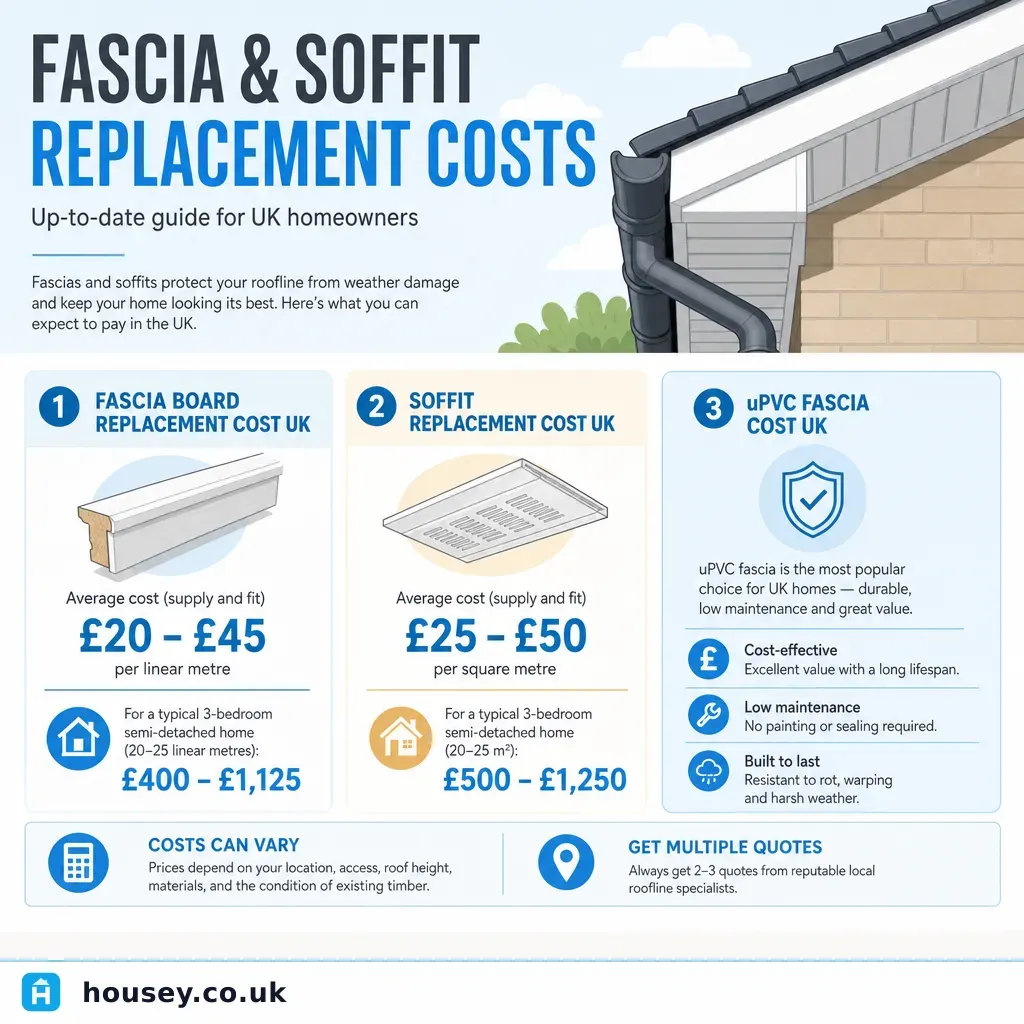
Fascia and Soffit Replacement Costs
Fascia and soffit replacement for a semi-detached house in the UK typically costs £1,800–£4,500 for uPVC boards and new guttering.