Composite Decking Installation: Costs and Benefits
By Housey · Last reviewed 5th of May 2026
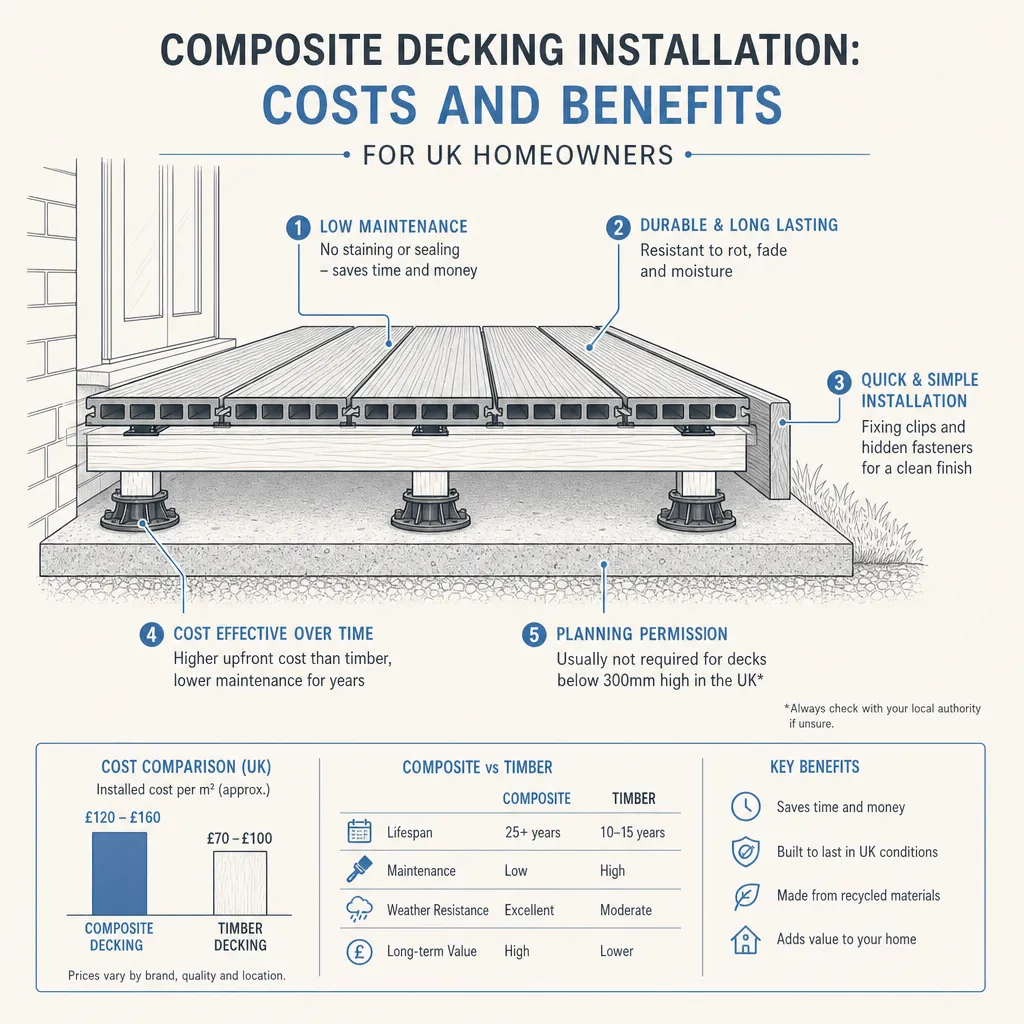
Composite Decking Installation: Costs and Benefits
Composite decking has moved from a niche premium product to one of the most frequently requested garden improvements among UK homeowners, driven by the appeal of a low-maintenance alternative to softwood or hardwood boards. Whether you are replacing a weathered timber deck or creating a new outdoor living space from scratch, understanding the real costs, structural requirements, and planning rules before you commit will help you avoid the most common and costly mistakes.
Key points
- Composite decking typically costs £100–£200 per square metre installed in the UK, depending on board grade, subframe specification, and site complexity (Indicative UK costs, last reviewed 2026-05-05).
- Ground-level decks no more than 30 cm above existing ground level generally fall within permitted development in England; raised decks above this threshold require a planning application.
- Composite boards require a level, stable subframe — typically aluminium or pressure-treated timber joists at 400–500 mm centres — and cannot simply be laid over soft ground or an existing rotten deck.
- Capped composite boards (with a protective polymer outer shell) typically carry 25–30 year warranties; uncapped products are more susceptible to moisture absorption, staining, and fading and carry shorter warranties.
- Any deck raised above 600 mm at any point is subject to Building Regulations Approved Document K for edge protection and balustrades, regardless of whether planning permission is required.
What is composite decking?
Composite decking boards are manufactured from a blend of wood fibre — typically recycled sawdust or wood pulp — and a polymer binder, usually polyethylene or polypropylene. The ratio and manufacturing process determine the board's durability, colour stability, and structural performance.
There are two main product categories:
- Uncapped composite: the wood-polymer blend is exposed on all sides. Lower cost, but more susceptible to moisture absorption, staining, and fading over time.
- Capped composite: a polymer cap or shell wraps some or all sides of the board, protecting the core from moisture and UV degradation. More durable, longer warranty, and higher upfront cost.
Most reputable UK suppliers offer hollow or grooved profiles compatible with hidden-fix clip systems, which avoid visible screws on the deck surface and give a cleaner finish.
Composite decking costs in the UK
Costs depend on the product chosen, the subframe specification, site access, groundworks required, and regional labour rates. The following table gives indicative supply and fit ranges. Always request at least two itemised written quotes before committing.
Cost element | Indicative range (per m²) | Notes |
|---|---|---|
Entry-level composite boards | £25–£50 | Uncapped; shorter warranty, higher long-term maintenance |
Mid-range capped composite | £50–£90 | Good durability; 15–25 year warranty typical |
Premium capped composite | £90–£150+ | Top brands; 25–30 year fade and stain warranty |
Aluminium subframe | £15–£30 | More durable than timber; will not rot |
Pressure-treated timber subframe | £8–£18 | Lower cost; adequate for most UK climates |
Labour (installation) | £30–£60 | Varies by region; London rates typically higher |
Groundworks and weed membrane | Variable | Depends on existing surface, slope, and access |
Indicative UK costs, last reviewed 2026-05-05. Costs vary by region, product specification, and site conditions. Obtain itemised quotes before proceeding.
A typical 20 m² deck using mid-range capped composite boards and an aluminium subframe might cost £2,400–£4,200 installed. Sloped gardens, complex layouts, integrated steps, or lighting will add to this figure.
Does composite decking need planning permission?
In England, a deck is generally permitted development if it meets all of the following conditions:
- It is no more than 30 cm above the existing ground level at any point.
- It does not cover more than 50% of the total garden area, including other outbuildings.
- It is not in the curtilage of a listed building.
- It is not within a designated area such as a conservation area, National Park, or Area of Outstanding Natural Beauty.
Raised decks above 30 cm require a full planning application. Any deck raised above 600 mm at any point is also subject to Building Regulations Approved Document K for edge protection and balustrades, regardless of planning status. Scotland, Wales, and Northern Ireland each have separate planning regimes. Check with your local planning authority before starting work.
Composite vs timber decking: which is right for you?
Feature | Composite decking | Pressure-treated timber |
|---|---|---|
Upfront cost | Higher | Lower |
Annual maintenance | Minimal (occasional wash) | Sanding, oiling, or staining annually |
Lifespan | 25–30 years (capped) | 10–15 years with consistent maintenance |
Slip resistance | Varies by profile; check Pendulum Test Value (PTV) rating | Can become slippery; non-slip strips often needed |
Splinter risk | None | Moderate as timber ages |
Appearance stability | Stable (capped); may fade slightly (uncapped) | Weathers to grey unless oiled or stained regularly |
Sustainability | Look for FSC-certified wood fibre and recycled content | FSC-certified timber available from most merchants |
Repairability | Boards can be replaced; colour matching after years may vary | Boards can be replaced and refinished to match |
The lifetime cost of composite decking often becomes competitive with or cheaper than timber after 8–12 years, once the cumulative cost of annual timber maintenance is factored in.
Installation: what to expect
A typical composite decking installation follows these stages:
- Site survey: the installer assesses the existing surface, drainage, slope, and access conditions before finalising the specification and quote.
- Ground preparation: soft ground, existing vegetation, or old decking should be removed. A weed-suppressing membrane is laid beneath the subframe to prevent plant growth disrupting the structure.
- Subframe installation: joists are fixed at 400–500 mm centres — some composite manufacturers specify tighter centres, so the technical datasheet should always be checked. The subframe must be level and supported on concrete pads or proprietary adjustable feet rather than sitting directly on bare soil.
- Board installation: hidden-fix clip systems are fitted between boards, avoiding visible surface fixings. End caps are applied to exposed board ends for a neat finish.
- Perimeter and steps: fascia boards finish visible edges; steps require additional structural consideration and must comply with Approved Document K if the deck is raised.
- Inspection and handover: the finished deck is cleaned of debris and inspected with the homeowner before sign-off.
Red flags when reviewing composite decking quotes
Watch for these warning signs when comparing quotes from installers:
- No subframe specification given: a proper quote should state joist centres, material (aluminium or pressure-treated timber), and the fixing method to the ground.
- No product name or grade listed: composite decking quality varies enormously; insist the brand, product range, and warranty period are stated in writing.
- No mention of movement gaps: composite boards expand and contract with temperature changes; manufacturer-specified end and side expansion gaps are not optional and cannot be skipped without risking board buckling.
- Unusually low price with no explanation: this may indicate uncapped boards, a timber subframe on wet ground, or groundworks and membrane omitted from the scope.
- No weed membrane included: skipping this step leads to weed growth and potential uneven movement as plant roots develop beneath the structure.
- No reference to manufacturer installation guidelines: composite warranties are typically void if the product is not installed in accordance with the manufacturer's published specification.
When to get professional help
Simple ground-level composite decking on a flat, firm surface can be a manageable project for a confident DIYer, but most homeowners benefit from professional installation — particularly where:
- The deck will be raised above 30 cm, meaning planning consent and possibly Building Regulations apply.
- The site is sloped, has drainage issues, or is close to the building's damp-proof course.
- Integrated steps, handrails, or outdoor lighting are required.
- The area exceeds 20–25 m² or involves a complex layout around obstacles.
A landscaping professional with composite decking experience can ensure the subframe is correctly specified to the manufacturer's requirements, the product warranty is protected, and any planning or building control obligations are addressed before work begins.
How Housey can help
If you are planning a composite decking project and want to compare quotes from experienced local professionals, Housey can connect you with vetted landscapers and decking specialists across the UK.
Frequently asked questions
Is composite decking worth the extra cost compared to timber?
For most homeowners who want a low-maintenance outdoor space, composite decking is worth the higher upfront cost. The main savings come from avoiding annual sanding, oiling, or staining — a 20 m² timber deck may need £150–£400 of materials and a weekend of work each year. Capped composite boards typically last 25–30 years with only occasional cleaning needed.
Does composite decking get hot in the sun?
Darker composite boards can become noticeably warm underfoot in direct summer sunlight. This is a characteristic of the polymer component and is generally manageable in UK conditions, though more pronounced on south-facing decks in full sun. Lighter-coloured boards absorb less heat. This is worth considering if the deck is used barefoot or by young children.
Can composite decking be laid over an existing timber deck?
It is generally not recommended to lay composite boards directly over an existing timber deck without first assessing the subframe condition. Old, rotten, or uneven joists will not provide adequate support and will void the composite manufacturer's warranty. In most cases, old boards and any degraded joists should be removed before new installation begins.
How do I clean composite decking?
Most composite boards require only occasional brushing and washing with warm soapy water and a soft-bristled brush. Avoid pressure washing above 1,500 psi as this can damage the board surface texture. Some manufacturers supply specific cleaning products; always check the maintenance guidance provided with your particular boards before using any chemical treatments.
How long does composite decking last?
Capped composite boards from reputable manufacturers typically carry warranties of 25–30 years when installed and maintained to specification. Uncapped products carry shorter warranties, often 10–15 years. Actual lifespan also depends on subframe quality, level of exposure to standing water, and how regularly the boards are cleaned.
Sources and further reading
Useful next reads
 Improvement & Build
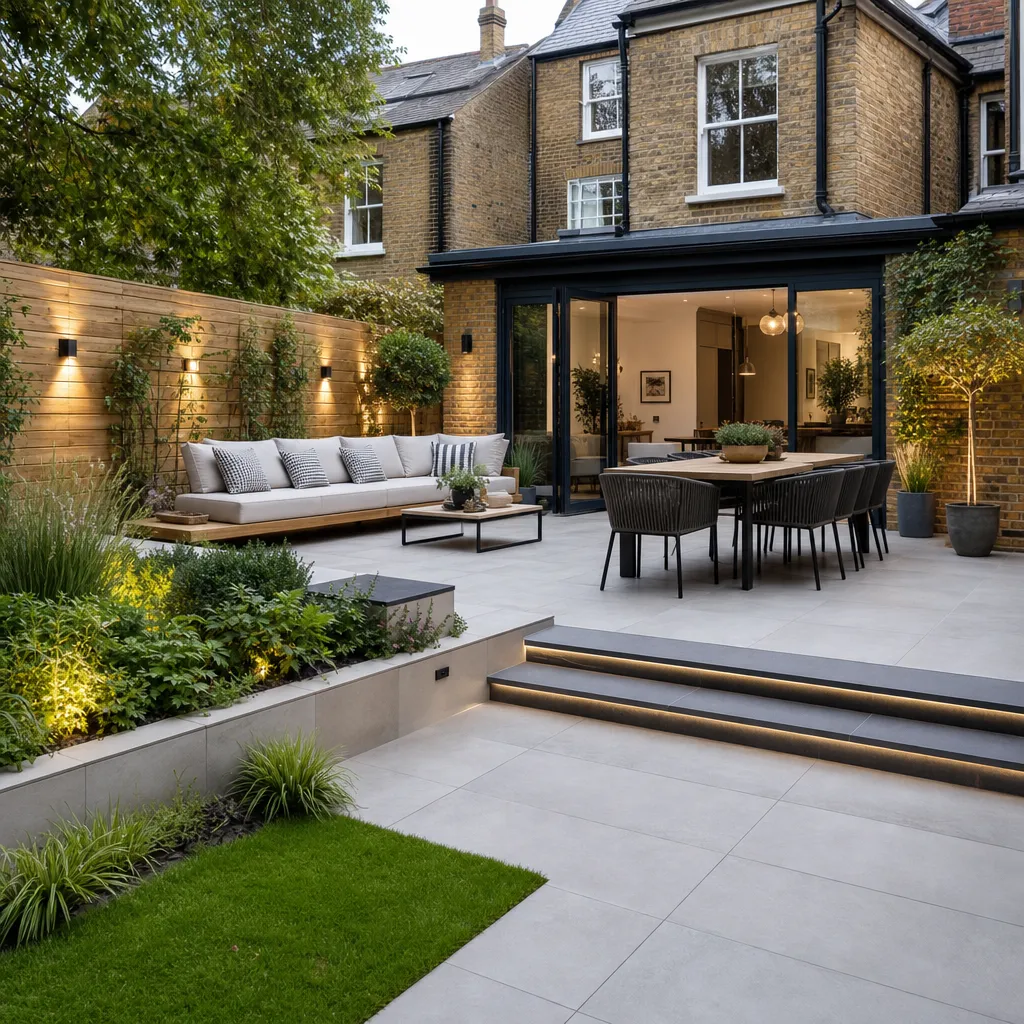
Creating Functional and Attractive Outdoor Entertainment Areas
A well-planned outdoor entertainment area combines a level surface — patio, decking, or gravel — shelter or shade, appropriate lighting, and power access if needed.
 Improvement & Build
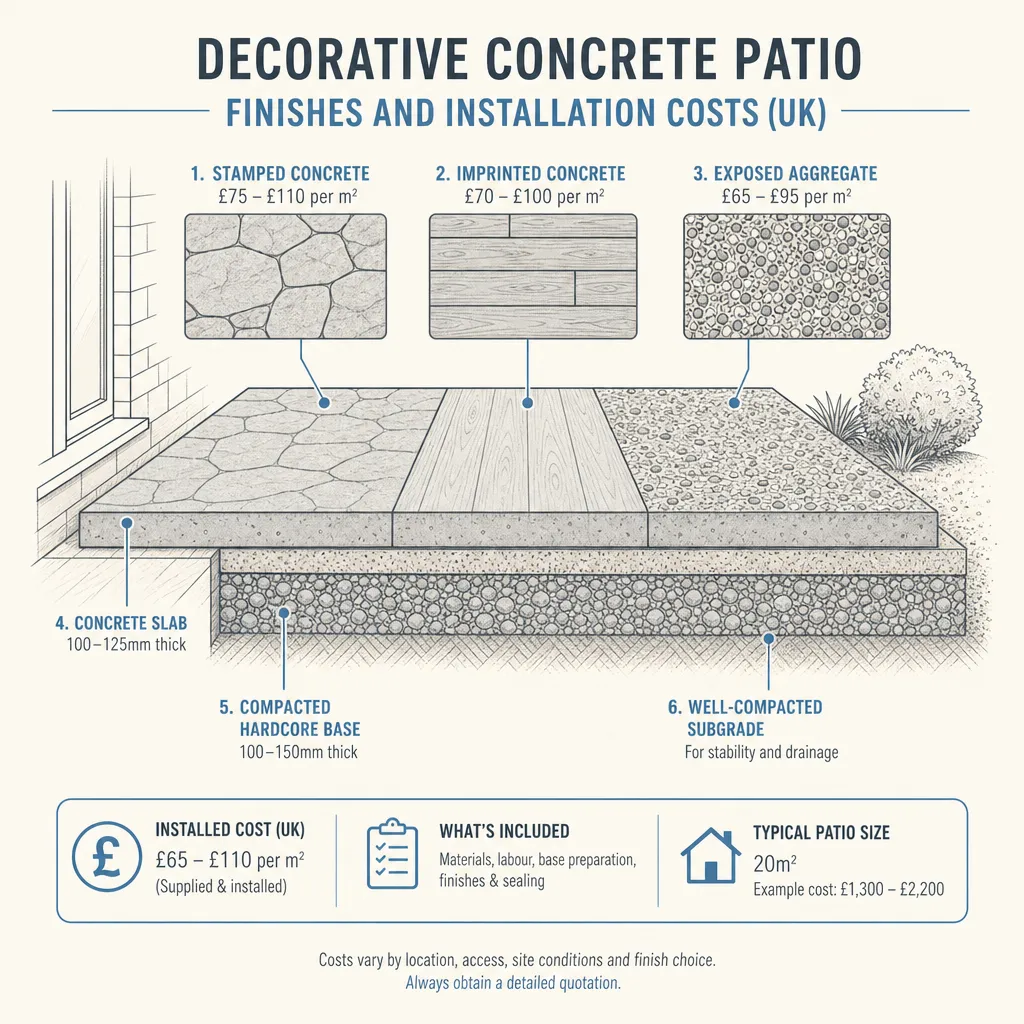
Decorative concrete patio finishes and installation costs
A decorative concrete patio costs roughly £80–£200+ per square metre in the UK, depending on the finish — from brushed concrete to stamped, exposed aggregate, or stencilled designs.
 Improvement & Build
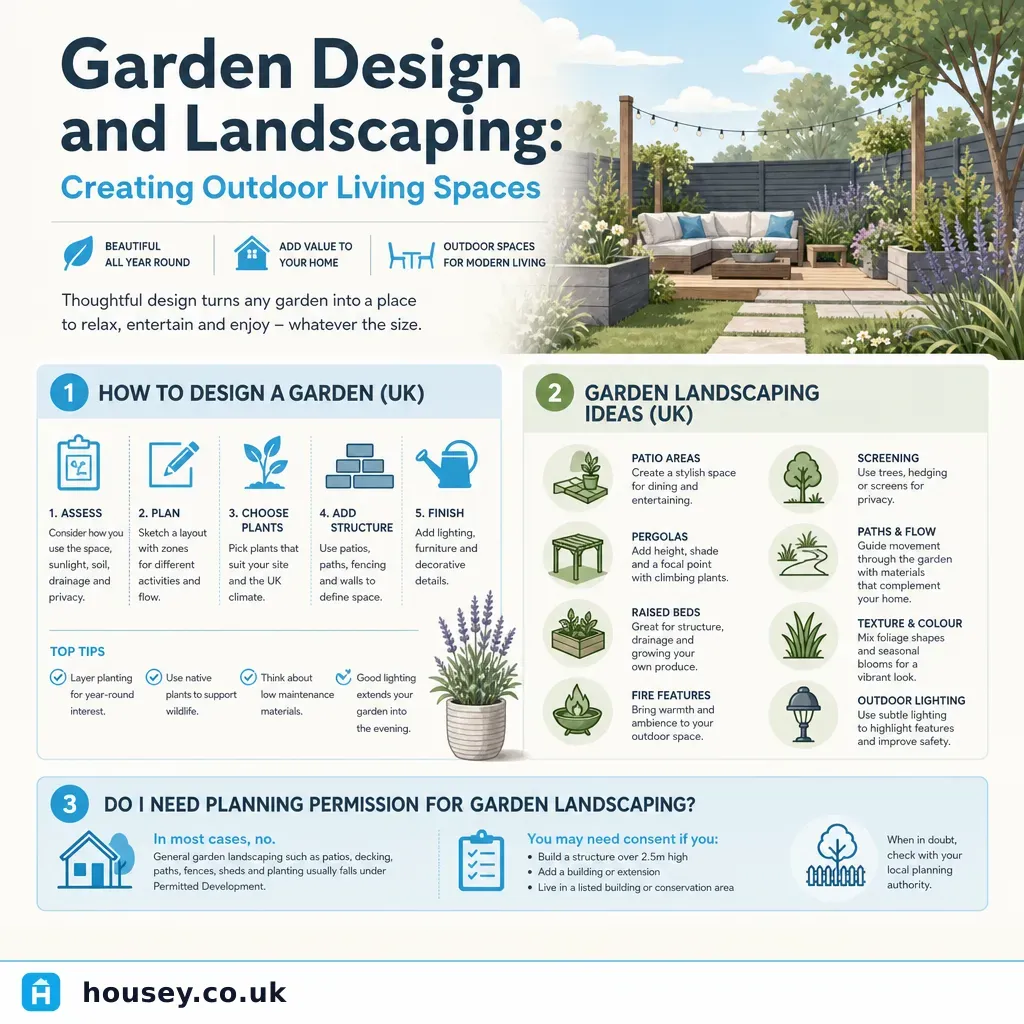
Garden Design and Landscaping: Creating Outdoor Living Spaces
Garden design creates functional outdoor living spaces through a combination of hard landscaping such as paving and decking, soft landscaping including planting and lawns, and structures such as pergolas or raised beds.
 Improvement & Build
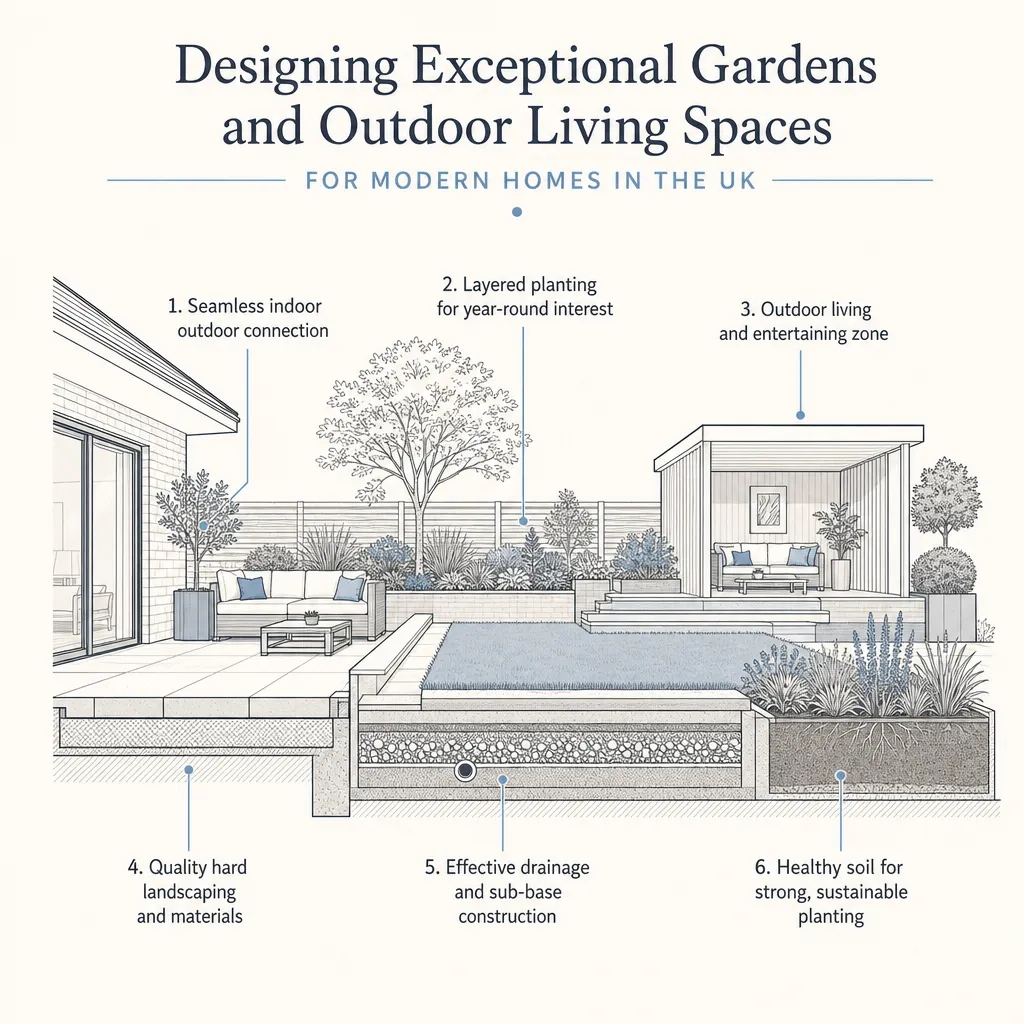
Designing Exceptional Gardens and Outdoor Living Spaces for Modern Homes
A well-designed garden blends practical zones — seating, lawn, planting, and hard landscaping — with your household's needs.
 Improvement & Build
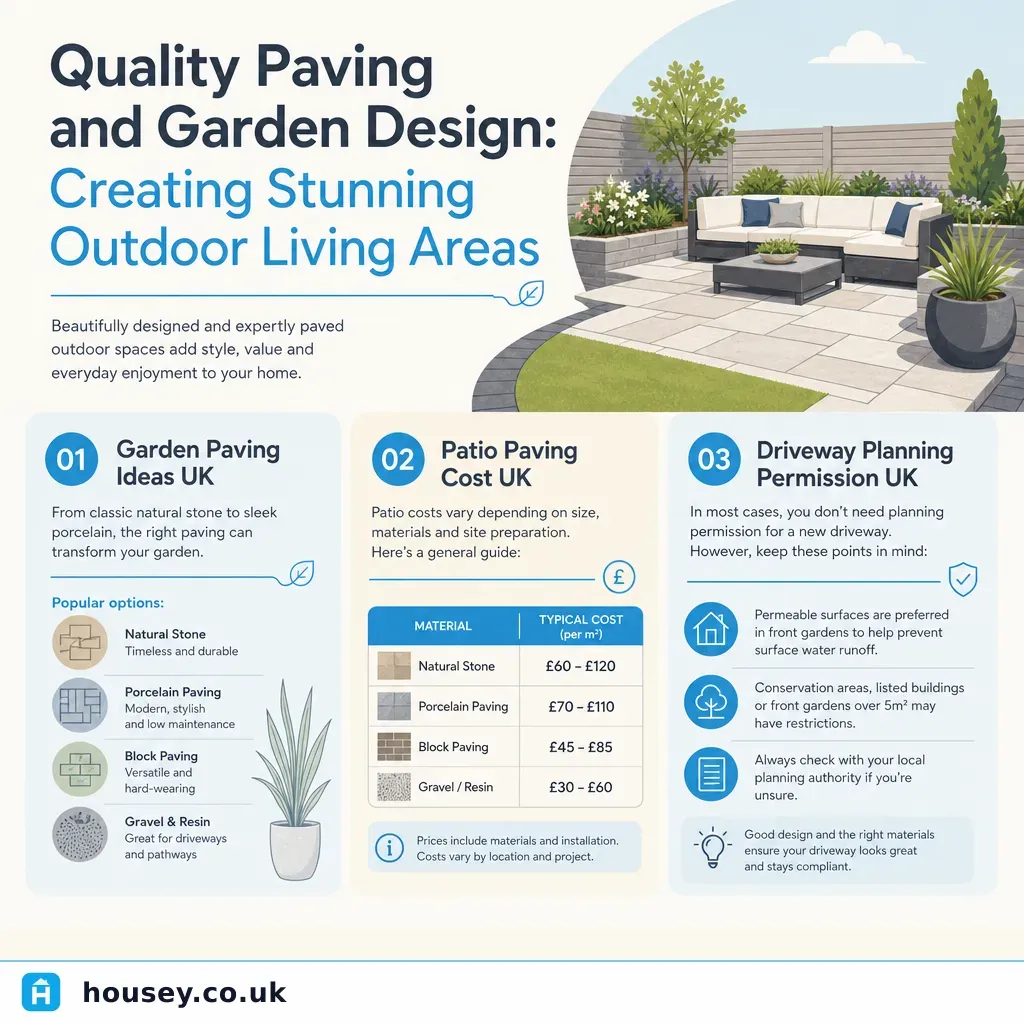
Quality Paving and Garden Design: Creating Stunning Outdoor Living Areas
Paving a front garden driveway over 5 square metres in England requires planning permission unless a permeable material is used and drainage is managed on site.