Quality Paving and Garden Design: Creating Stunning Outdoor Living Areas
By Housey · Last reviewed 24th of May 2026
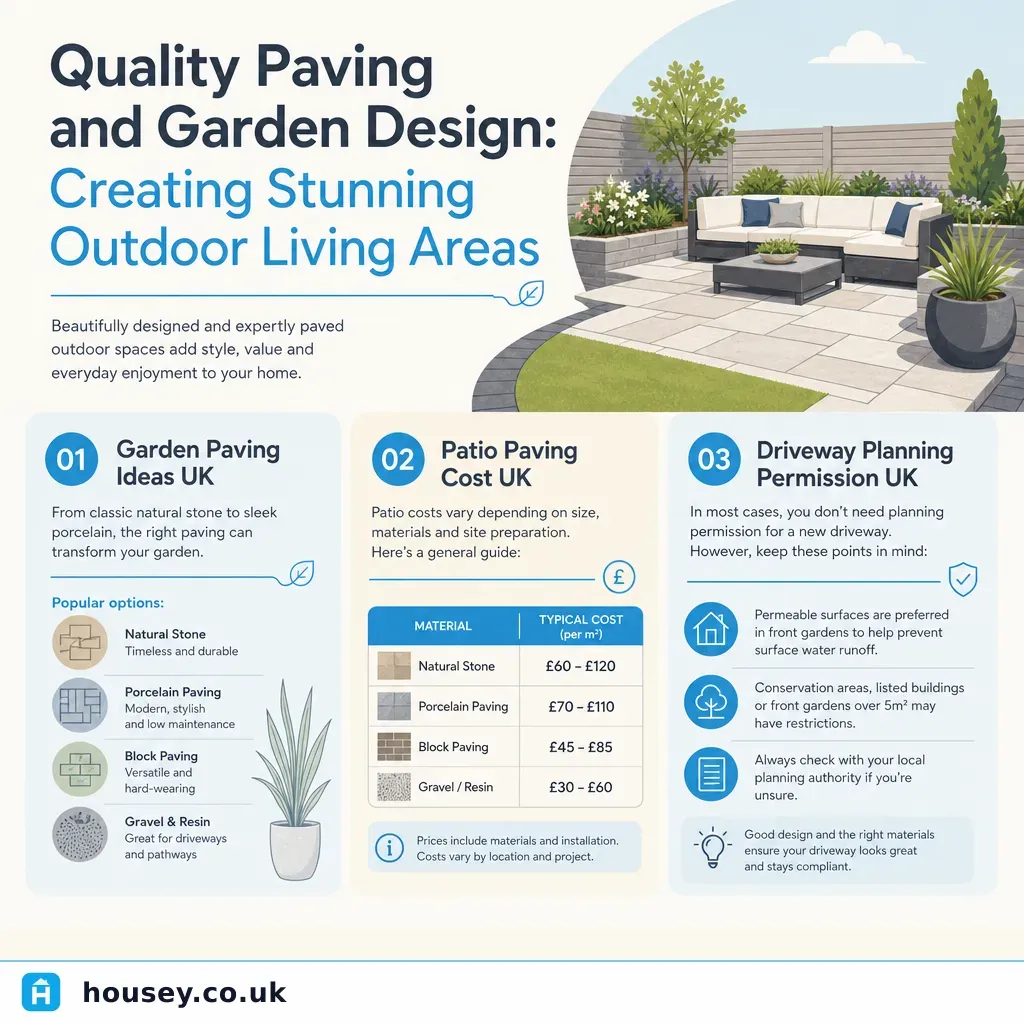
Quality Paving and Garden Design: Creating Stunning Outdoor Living Areas
Well-designed outdoor spaces have become increasingly important to UK homeowners — both for day-to-day use and as a way of adding usable square footage without a major planning application. The decision to pave a driveway, create a patio, or commission a full garden redesign typically arises after a property purchase, ahead of a sale, or when an existing hard surface has failed or become unsafe. Getting material choice, drainage, and design right from the outset avoids costly remediation, and understanding which works require planning consent or dropped-kerb permission can save significant delay and expense.
Key points
- New driveways over 5 square metres using an impermeable surface require planning permission in England unless surface water drains to a permeable area on the property — a condition of householder Permitted Development rules under the GPDO 2015.
- Surface water drainage is a legal responsibility: hard landscaping that causes run-off onto the highway or a neighbour's land can expose homeowners to liability under nuisance and drainage law.
- A dropped-kerb vehicular crossover requires separate consent from the local highways authority — this is distinct from planning permission and must be obtained before any access onto the highway is created.
- BALI (British Association of Landscape Industries) and APL (Association of Professional Landscapers) membership are recognised quality benchmarks for landscape contractors, both requiring adequate insurance as a condition of membership.
- Natural stone and porcelain paving require professional installation: incorrect bed depth, mortar specification, or jointing compound can cause cracking, frost damage, and water ingress within a few seasons.
Do I need planning permission for paving?
The most common planning question for hard landscaping relates to front garden driveways. According to GOV.UK guidance, you will need planning permission if you want to pave over more than 5 square metres of your front garden with a non-permeable material that does not allow rainwater to drain through it to the ground below.
Permission is not needed if:
- The area being paved is 5 square metres or less; or
- The surface is permeable (e.g., gravel, permeable block paving, or resin-bound aggregate over a free-draining sub-base); or
- Surface water from the paving is directed to a lawn, border, or other permeable area rather than directly to a drain or the highway.
Rear garden patios and paths are generally not subject to these restrictions and do not usually require planning permission, though special rules apply in conservation areas and for listed buildings.
Dropped kerbs: Creating or widening a vehicle access point onto the public highway requires a separate application to your local highways authority, regardless of whether planning permission is also needed. Lead times and costs vary by council.
Comparing paving materials
Material | Best for | Not ideal for | Approx. cost per m² (supply and lay) | Key consideration |
|---|---|---|---|---|
Concrete block paving | Driveways, high-traffic areas | Contemporary aesthetic-led gardens | £50–£100 | Replaceable individual blocks; widely available |
Natural stone (sandstone, limestone) | Patios, paths, period properties | Frost-prone sites without managed drainage | £80–£160 | Must be sealed; thermal movement affects mortar joints |
Porcelain | Modern patios, low-maintenance surfaces | DIY installation; uneven sub-bases | £90–£180 | Requires specialist adhesive and grout; very low water absorption |
Gravel / self-binding gravel | Driveways, paths, budget projects | High-maintenance where leaves accumulate | £20–£50 | Permeable; satisfies Permitted Development driveway condition |
Resin-bound aggregate | Driveways, accessible pathways | Steep gradients over 1:15 | £50–£120 | SuDS-compliant permeable surface; UV-stable products available |
Tarmac / asphalt | Long driveways, high-traffic areas | Aesthetic-first garden projects | £30–£80 | Durable; standard grade is impermeable |
Indicative UK costs, last reviewed 2026-05-24. Prices vary significantly by region, material source, and ground conditions.
Should I hire a landscaper or a garden designer?
The right professional depends on whether you need design input or principally need installation.
Decision tree
- Choose a garden designer if you need a conceptual design, planting plan, or a cohesive vision for the whole garden before any build work starts. Look for RHS Level 3/4 qualifications, Society of Garden Designers (SGD) membership, or a BALI-affiliated designer.
- Choose a landscape contractor if you have a clear specification and need quality installation: paving, fencing, retaining walls, drainage. BALI or APL membership indicates professional standards and insurance requirements.
- Use both on larger projects: a designer produces drawings and a specification; a contractor delivers them. The designer may offer contract administration to oversee quality on site.
- Ask a driveway specialist if the work is purely a driveway replacement with no design element — dedicated driveway installers often carry materials trade accounts and competitive pricing.
- Check with your local authority if your property is in a conservation area or is listed, as additional consent may be required even for rear garden paving or boundary walls.
Homeowner checklist: before you commission paving work
Important limitations
This article provides general information about paving and garden design in England. Permitted development rules differ in Wales, Scotland, and Northern Ireland. Planning restrictions vary by local authority, property type, conservation area designation, and any existing planning conditions attached to your property. Surface water management obligations may also involve your sewerage undertaker. This guide does not constitute planning or legal advice.
What to ask a qualified professional
If your project involves significant drainage changes, a retaining wall over 1m adjacent to a highway (or 2m elsewhere), or works in a conservation area or on a listed building, consult your local planning authority or a qualified landscape designer before committing.
- Ask your contractor exactly how surface water will be managed and what documentation they will provide demonstrating compliance.
- If planning permission is required, confirm whether the contractor will assist with the application or whether you need a planning consultant.
- For dropped-kerb applications, confirm whether your contractor will submit the highways consent on your behalf and what the likely programme is.
When to get professional help
Use a qualified landscape contractor or garden designer for:
- Any project involving retaining walls, changes in level greater than 600mm, or structures adjacent to buildings or boundaries.
- Driveways where the drainage relationship to the highway or neighbouring land is unclear.
- Garden redesigns involving tree removal, which may require arboricultural input and Tree Preservation Order checks.
- Conservation area or listed building properties where any external changes may need consent.
How Housey can help
Housey connects homeowners with vetted landscapers, specialist driveway installers, and experienced garden designers across the UK. Describe your project, receive competing quotes, and compare them transparently — without obligation.
Frequently asked questions
Do I need planning permission for a new patio or paving?
Rear garden patios generally do not require planning permission in England. Front garden driveways over 5 square metres require permission if an impermeable surface is used and water drains directly to a drain or the highway rather than to a permeable area on your property. Conservation area and listed building rules add further restrictions. Always check with your local planning authority if you are uncertain about your specific property.
How much does garden paving cost in the UK?
Costs depend on material, area, ground preparation, and access. Natural stone patio installation might cost £80–£160 per square metre (supply and lay); concrete block paving driveways typically range from £50–£100 per square metre. Full-driveway projects vary considerably by size and specification. Always obtain at least three itemised written quotes. Indicative UK costs, last reviewed 2026-05-24.
What is permeable paving and when is it required?
Permeable paving allows surface water to drain through the surface into the sub-base and ground below, rather than running off into drains or the highway. In England, it is one of the conditions under which a front garden driveway over 5 square metres can be installed without planning permission. Examples include permeable block paving, gravel, and resin-bound aggregate laid over a free-draining sub-base.
Should I hire a landscaper or a garden designer?
For design-led projects needing a planting scheme, levels plan, or structural layout, engage a qualified garden designer first, with a landscape contractor then implementing the design. For straightforward paving replacement or a driveway with a clear specification, a landscape contractor or specialist driveway installer will usually be sufficient. On larger projects, a designer and contractor working together typically delivers the best outcome.
What materials are best for UK garden paving?
For patios, natural stone such as sandstone or limestone and porcelain are popular for their appearance, but both require correct installation and drainage. For driveways, concrete block paving offers durability and repairability; resin-bound aggregate provides a permeable, attractive surface suitable for permitted development. The right choice depends on budget, aesthetics, anticipated traffic loading, and drainage constraints specific to your site.
Sources and further reading
- Paving your front garden — GOV.UK
- Driveways — planning permission guidance — Planning Portal
- Find a BALI member contractor — British Association of Landscape Industries
- Find a Society of Garden Designers member — Society of Garden Designers
- SuDS guidance for homeowners — CIRIA SuDSnet
Useful next reads
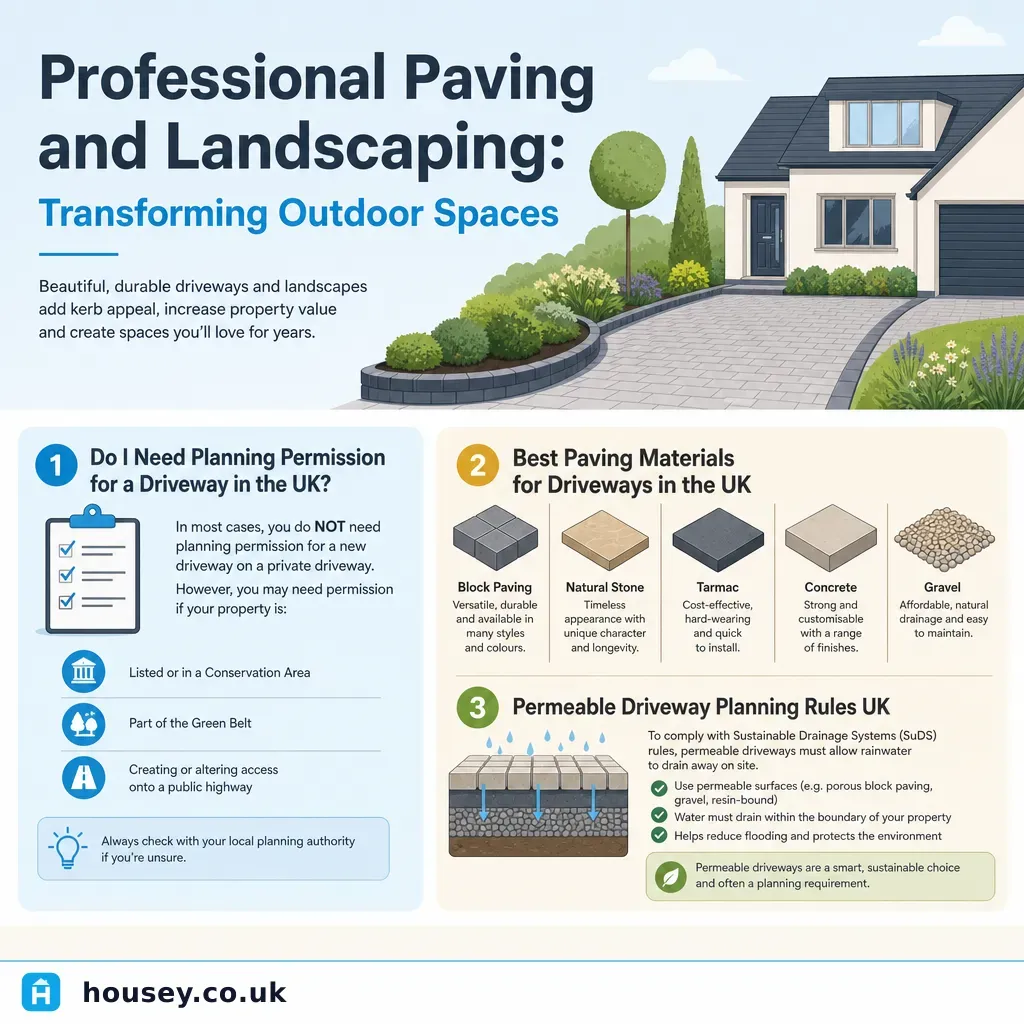 Improvement & Build
Professional Paving and Landscaping: Transforming Outdoor Spaces
Professional paving and landscaping can transform a garden or driveway, improving kerb appeal and adding usable outdoor space.
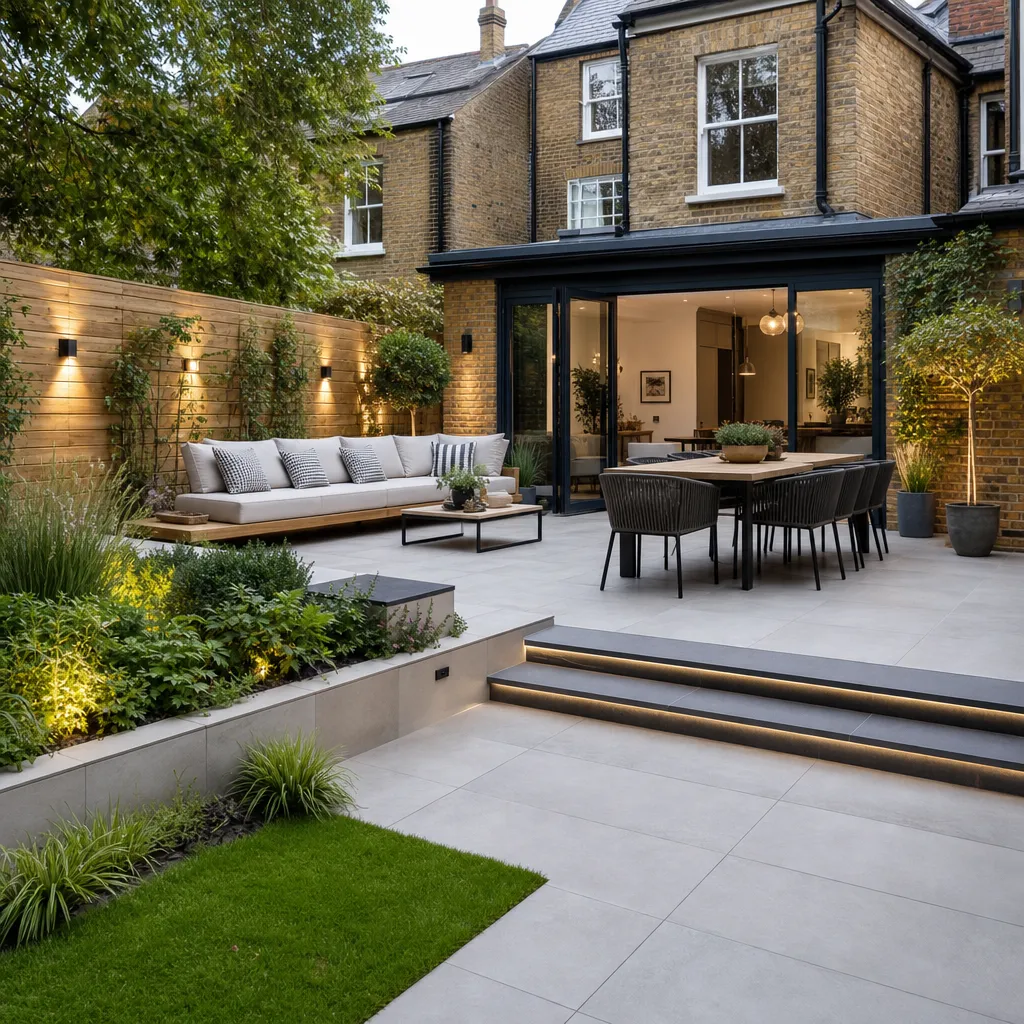 Improvement & Build
Creating Functional and Attractive Outdoor Entertainment Areas
A well-planned outdoor entertainment area combines a level surface — patio, decking, or gravel — shelter or shade, appropriate lighting, and power access if needed.
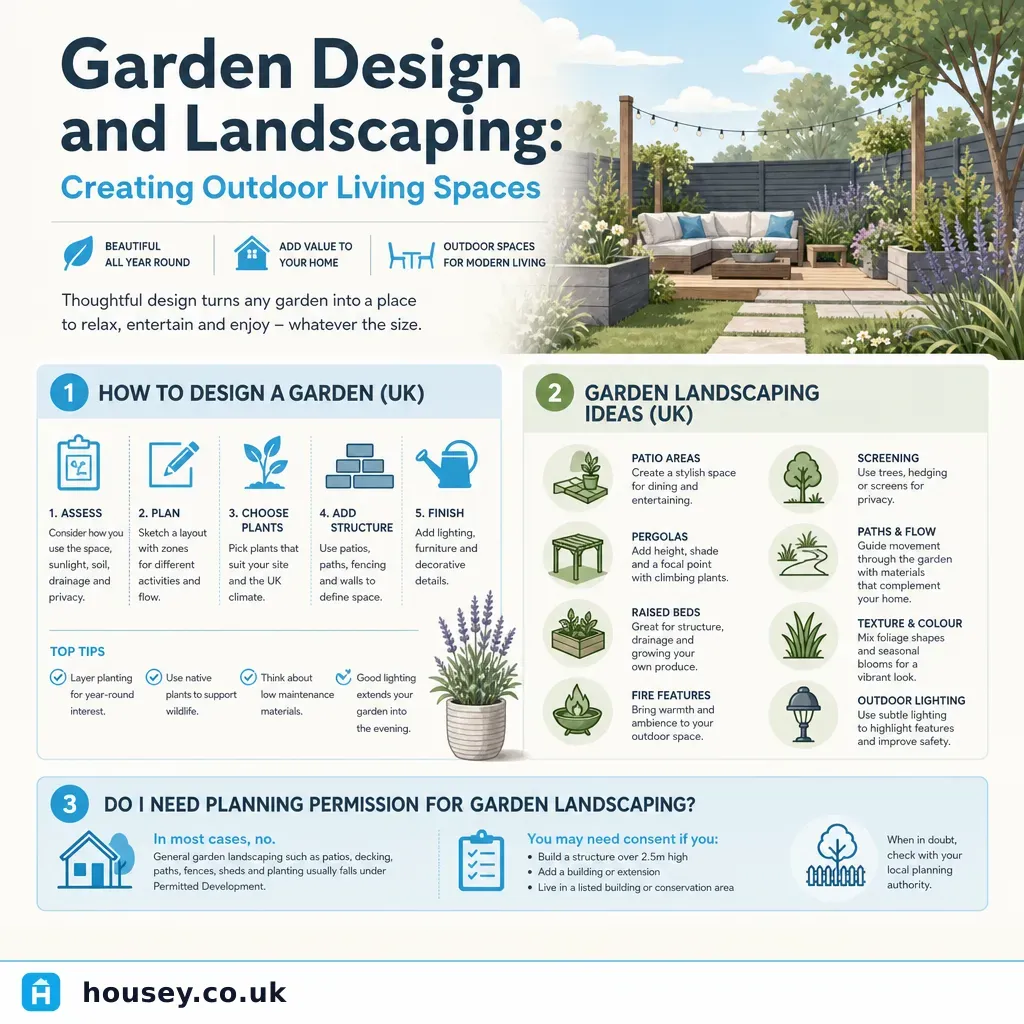 Improvement & Build
Garden Design and Landscaping: Creating Outdoor Living Spaces
Garden design creates functional outdoor living spaces through a combination of hard landscaping such as paving and decking, soft landscaping including planting and lawns, and structures such as pergolas or raised beds.
 Improvement & Build
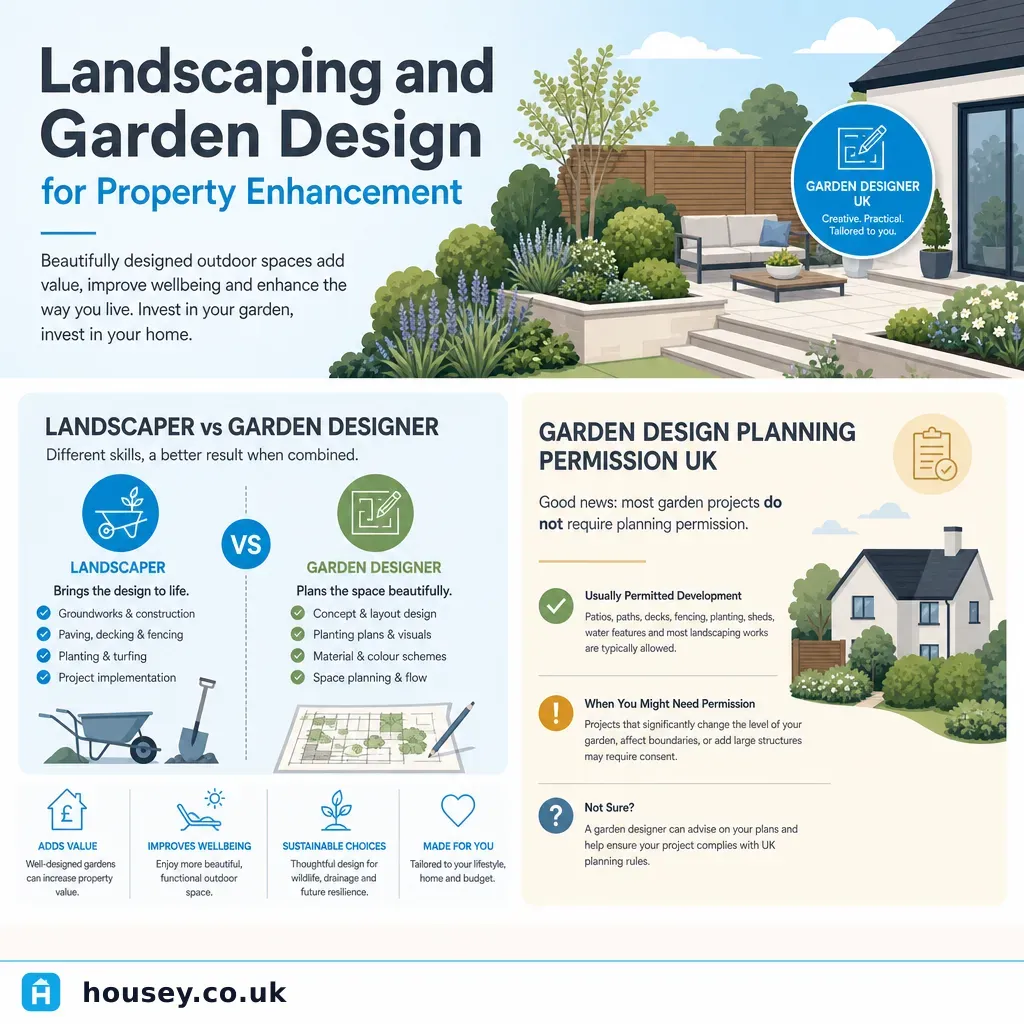
Landscaping and Garden Design for Property Enhancement
Landscaping and garden design involve planning and building outdoor spaces — from patios and raised beds to planting schemes and drainage.
 Improvement & Build
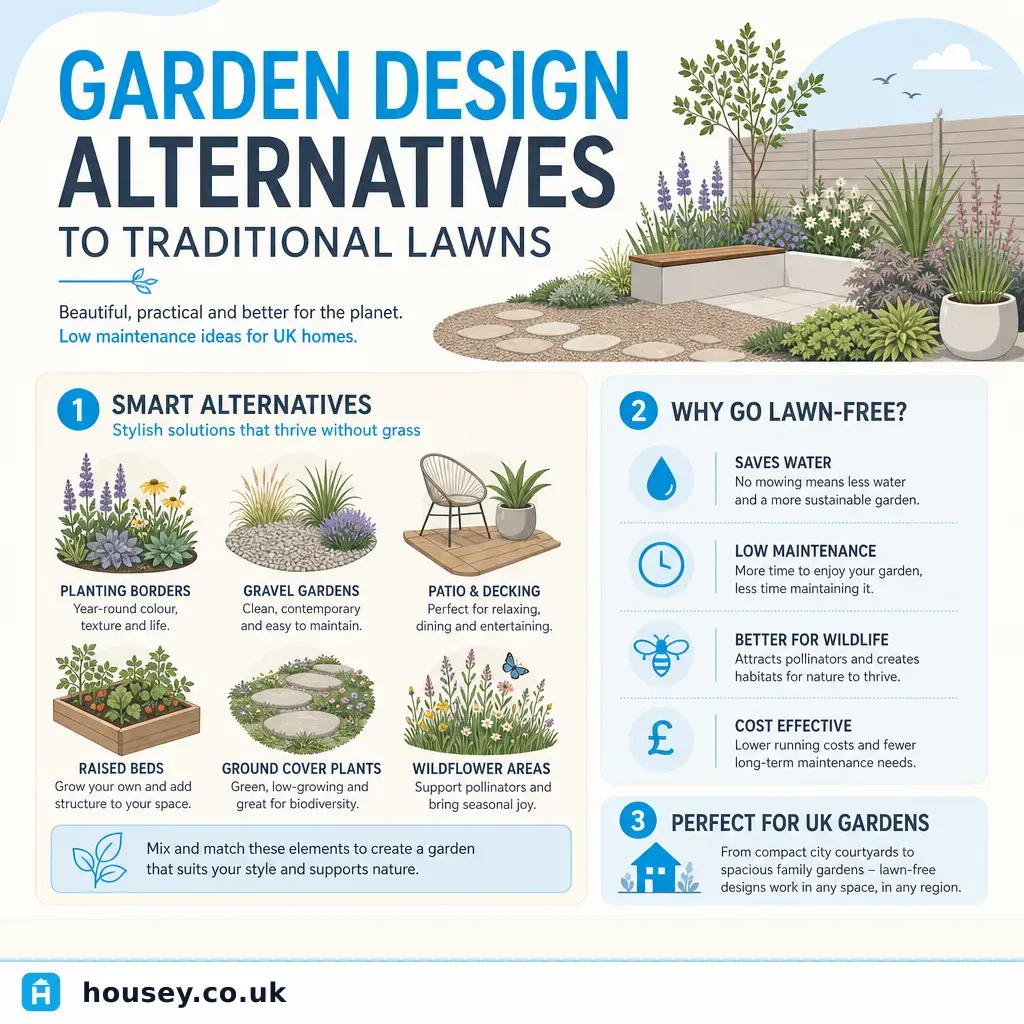
Garden Design Alternatives to Traditional Lawns
Popular alternatives to a traditional grass lawn in UK gardens include gravel, wildflower meadow planting, permeable paving, and ground-cover plants.