Composite Front Door Repairs: Common Issues and Costs
By Housey · Last reviewed 5th of May 2026
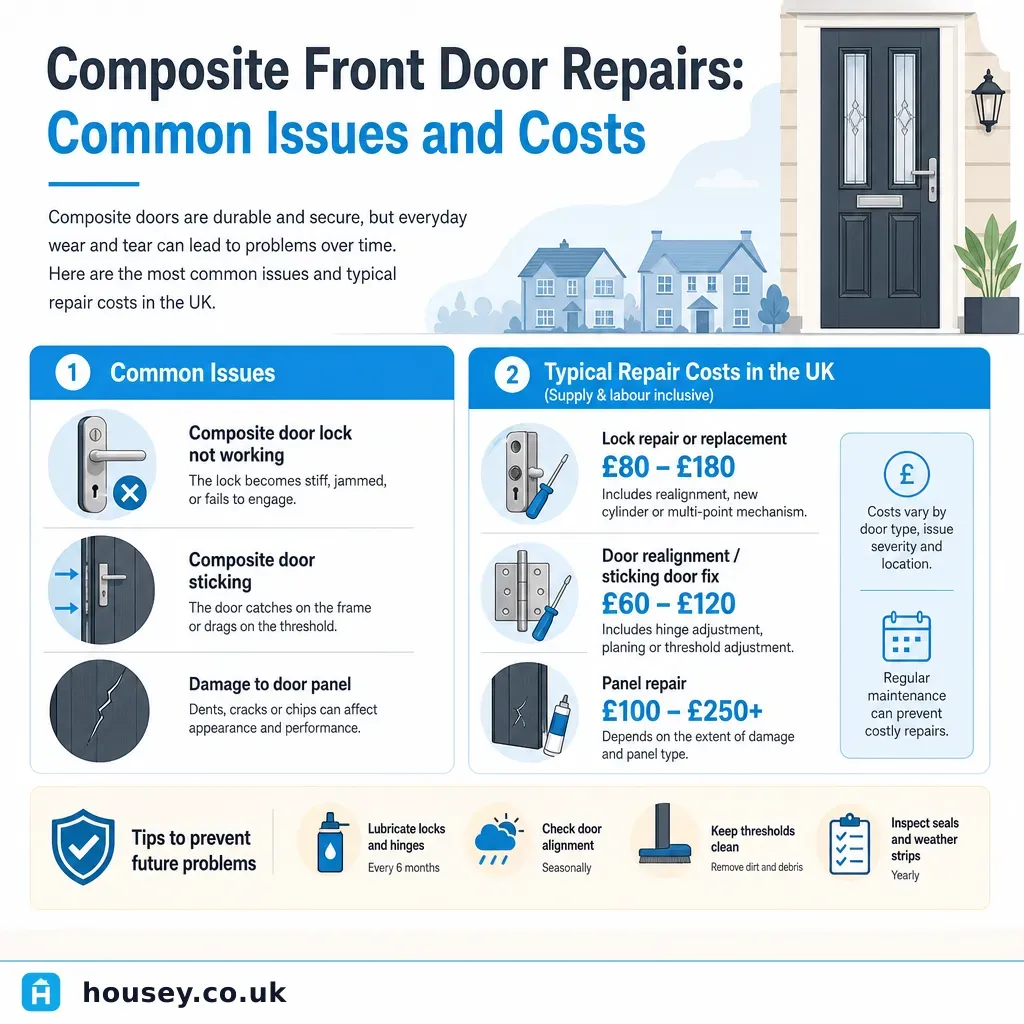
Composite Front Door Repairs: Common Issues and Costs
Composite front doors have become a fixture in UK homes over the past decade, valued for their thermal performance, low upkeep reputation, and security credentials. No engineered product is entirely fault-free, however, and understanding which problems are straightforward repairs — and which suggest replacement is the smarter route — can save a homeowner significant time and money.
Key points
- Composite doors have a Glass-Reinforced Plastic (GRP) outer skin bonded to a solid timber or rigid foam core; durable, but susceptible to specific failure modes.
- Multipoint lock mechanism failure is the most common repair, typically costing £80–£200 for parts and labour (Indicative UK costs, last reviewed 2026-05-05).
- Most composite door manufacturers offer a 10-year guarantee covering manufacturing defects; check whether your door is still within that period before authorising any paid repair.
- Misalignment — sticking, dropping, or draught gaps at the edges — is usually caused by hinge wear or frame settlement and can often be corrected through adjustment rather than replacement.
- Perimeter seal (gasket) degradation is a normal maintenance item after 7–10 years; replacement typically costs £50–£150 supplied and fitted.
Common composite door problems and their causes
Misalignment and sticking
A door that sticks against the frame, drops on one side, or allows a draught at the edges is usually experiencing hinge wear, thermal movement, or frame settlement. Composite doors are heavier than UPVC alternatives, placing greater long-term load on the hinges. Many adjustable hinges allow minor correction with a 5 mm hex key without removing the door from its frame.
If the gap persists regardless of temperature, or the surrounding frame shows cracking in masonry or plasterwork, structural movement in the frame may be the underlying cause rather than hinge wear alone.
Multipoint lock failure
The multipoint locking mechanism (MPLM) is the most mechanically complex element of a composite door. Common symptoms include:
- The handle will not lift fully or springs back without engaging the lock points.
- The key turns but bolts do not extend or retract cleanly.
- The door requires upward pressure on the handle to engage the lock.
- The handle drops under its own weight when released.
Most failures involve the gearbox — the internal component that translates handle movement into multiple locking points. Common UK gearbox brands include Winkhaus, ERA, Yale, Avantis, and Mila; sourcing the correct replacement requires identifying the brand and series from the door documentation or the mechanism itself.
Draught and edge condensation
Cold draughts along the door edge or condensation on the frame face usually indicate perimeter gasket failure. The rubber or bubble seal that compresses on closing degrades over time and is a normal maintenance item. Replacement is generally straightforward for an experienced installer.
If the door is uniformly cold to the touch across the whole panel, this may indicate core delamination — the foam or timber core separating from the GRP skin. This is a manufacturing defect and grounds for a warranty claim within 10 years.
Surface damage and cosmetic wear
The GRP skin can chip, scratch, or develop fine surface crazing, particularly on south-facing doors with prolonged UV exposure. Minor chips can be addressed with colour-matched GRP touch-up kits. Widespread crazing or significant colour fading within 10 years is normally a warranty matter rather than a routine repair.
Door furniture failure
Letterboxes, handles, knockers, and numerals are individually replaceable without specialist tools. Most fittings use through-door bolts with a standard backplate fixing. When replacing security hardware, verify that PAS 24-rated alternatives are specified if your door was originally installed to that standard.
Repair costs: what to expect
The following are indicative UK costs, last reviewed 2026-05-05. Costs vary by region, door brand, and specialist.
Repair type | Typical cost range | Notes |
|---|---|---|
Hinge adjustment | £50–£100 | Call-out plus labour; often resolved in under an hour |
Perimeter seal/gasket replacement | £50–£150 | Varies with door size and seal profile |
Multipoint lock gearbox replacement | £80–£200 | Parts and labour; brand affects parts sourcing time |
Cylinder replacement | £50–£120 | Specify BS TS007:2014 3-star anti-snap cylinder |
Handle and backplate replacement | £40–£100 | PAS 24-rated hardware required for insured properties |
GRP surface repair (minor chip) | £50–£150 | Colour matching is critical; most visible on dark finishes |
Full door replacement (supply and fit) | £800–£2,500+ | Composite doors meeting PAS 24 and Building Regulations Part L |
Obtain at least two quotes before proceeding. Costs are for guidance only.
Red flags: when repair is not the right answer
- Widespread GRP delamination: if the outer skin is visibly separating from the core across a large area, the door needs replacing — surface repair will not restore structural integrity.
- Frame rot or movement: a composite door cannot compensate for a failing frame. Remediate the surrounding timber or masonry before addressing the door itself.
- Repeated lock failure after repair: if a multipoint lock fails again within 12 months of repair, check whether the door is sitting true in the frame. Persistent misalignment destroys lock mechanisms over time.
- Security compromise after forced entry: if the cylinder shows signs of drilling or snap-attack damage, replace it immediately with a BS TS007:2014 3-star anti-snap cylinder. Do not delay.
- Persistent water ingress at the threshold: a degraded threshold seal is the usual cause, but check whether the door step or subfloor has moved before replacing the seal in isolation.
What to ask a door repair specialist before booking
- Are you familiar with this door brand and its locking system?
- Will you attempt adjustment before recommending full part replacement?
- Can you source PAS 24-compliant replacement hardware where security is involved?
- Is the call-out fee deducted from the final repair cost, or charged separately?
- What warranty do you provide on the repair work?
- Do you carry common gearbox and gasket stock, or will parts need to be ordered?
- Is VAT included in the quoted price?
Is your door still under warranty?
Most composite door manufacturers offer 10-year guarantees covering defects in materials and manufacture. These typically exclude mechanical wear on locks and hinges beyond normal use, damage from forced entry or impact, and UV-related colour fading on non-sheltered installations unless specifically stated.
Check your original installation paperwork for the guarantee certificate. If the door was fitted by a FENSA- or Certass-registered installer, the installation also carries a compliance certificate. Guarantees sometimes transfer to a subsequent owner — check the terms before assuming you are covered.
A note on security hardware
When replacing lock cylinders on a composite door, always specify a cylinder meeting BS TS007:2014 — ideally a 3-star rating — to align with Secured by Design recommendations and meet most household insurer requirements. Fitting a substandard cylinder on a PAS 24-rated door undermines the overall security classification of the installation.
When to get professional help
Hinge adjustment and replacing individual door furniture are within reach of a confident DIYer. Most multipoint lock repairs and anything involving the door frame should be handled by a qualified door installer or MLA-registered locksmith experienced with composite systems. Seek immediate professional help if:
- The door cannot be secured at night.
- A visible gap exists between the door and frame when fully closed.
- The door has sustained a forced entry attempt.
- You are unsure whether the lock cylinder has been compromised.
How Housey can help
Housey connects homeowners with vetted window and door installers experienced with composite door systems across the UK. Whether you need a hinge adjustment, a lock repair, or a full door replacement, request quotes from local specialists through Housey.
Frequently asked questions
Why is my composite front door hard to open in cold weather?
Composite doors can tighten in cold weather due to thermal contraction of the frame and threshold components. This usually indicates the door is near the edge of its adjustment range. A door installer can fine-tune hinge settings to provide additional clearance. If the problem is new and pronounced, check whether the frame or surrounding masonry has moved.
How do I know if my composite door needs replacing rather than repairing?
Key indicators are widespread GRP delamination, a structurally compromised or rotten frame, repeated lock failures following multiple repairs, or a door over 20 years old with several failing components. A reputable specialist should give an honest assessment — if repair is not cost-effective, they should say so.
Can composite doors be painted or refinished?
Most manufacturers advise against painting the GRP surface, as standard exterior paints adhere poorly and may void the guarantee. A small number of specialist GRP finishing products can refresh a faded door's appearance, but these differ from conventional exterior paint. Always check the manufacturer's guidance before applying any product.
Who should I call to repair a composite door?
A composite door installer, a UPVC door specialist, or a locksmith registered with the Master Locksmiths Association (MLA) who works regularly with multipoint systems can diagnose and repair most composite door faults. For security-related repairs, consider an installer approved under the Secured by Design scheme.
Sources and further reading
- PAS 24:2022 — Enhanced security performance requirements for doorsets — BSI Group
- FENSA — compliance certificates for window and door installations — FENSA
- Master Locksmiths Association — find a registered locksmith — MLA
- Secured by Design — police crime prevention initiative — Secured by Design
- Building Regulations Approved Document Q — Security — GOV.UK
Useful next reads
 Improvement & Build
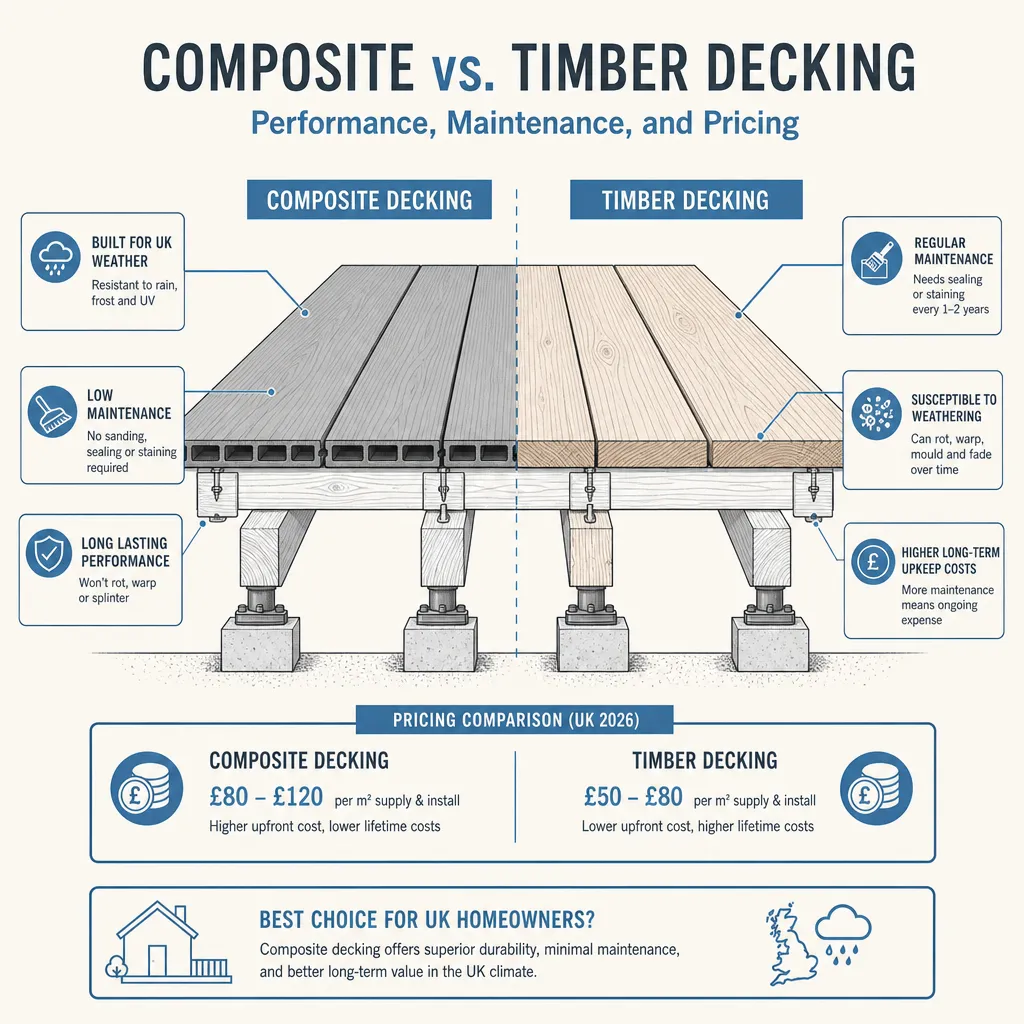
Composite vs. Timber Decking: Performance, Maintenance, and Pricing
Composite decking costs more upfront — typically £120–£220 per m² installed versus £80–£150 for treated softwood — but requires far less maintenance and carries a 25-year warranty.
 Improvement & Build
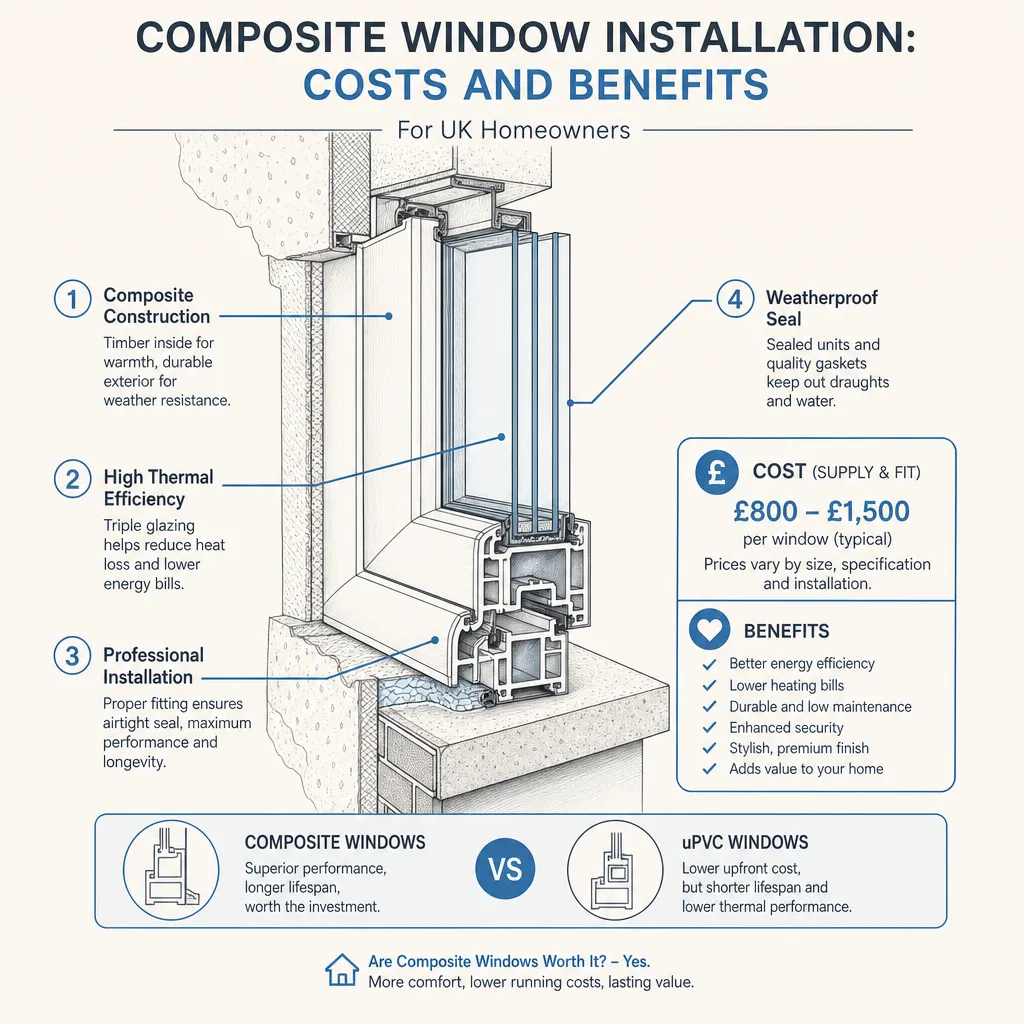
Composite Window Installation: Costs and Benefits
Composite windows combine two or more frame materials — typically a timber or aluminium core with a uPVC or aluminium outer casing — for better thermal performance and durability than standard uPVC.
 Improvement & Build
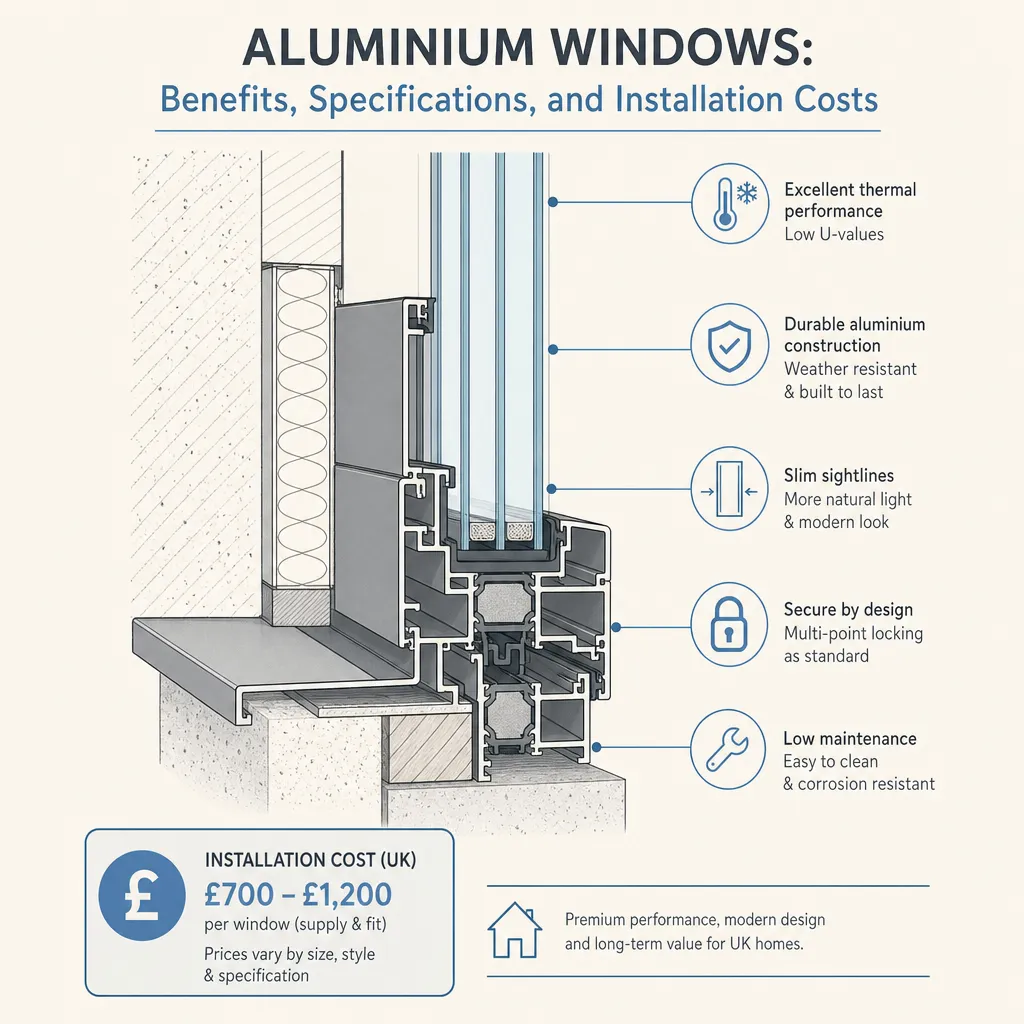
Aluminium Windows: Benefits, Specifications, and Installation Costs
Aluminium windows typically cost £600–£1,800 per window installed in the UK, depending on size and specification.
 Improvement & Build
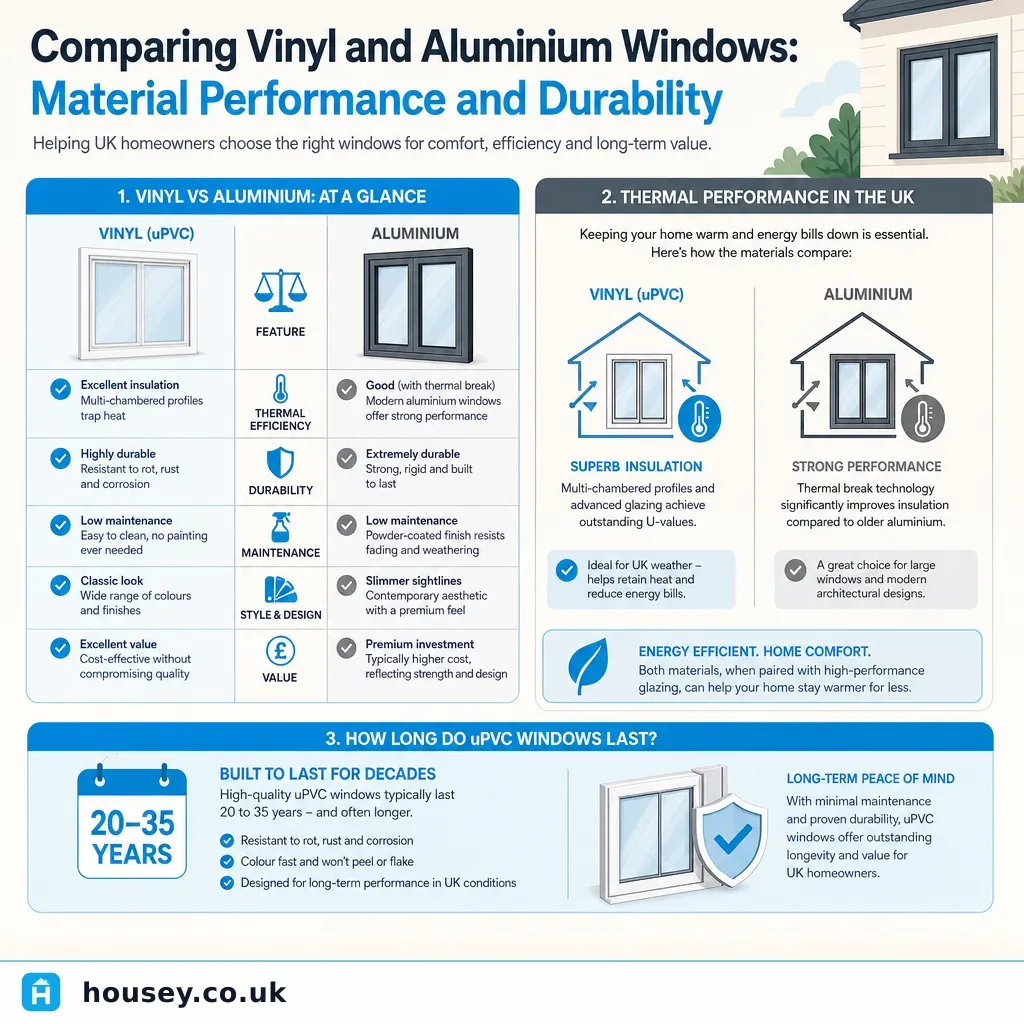
Comparing Vinyl and Aluminium Windows: Material Performance and Durability
uPVC (vinyl) and aluminium windows both meet UK Building Regulations Part L when properly specified.
 Improvement & Build
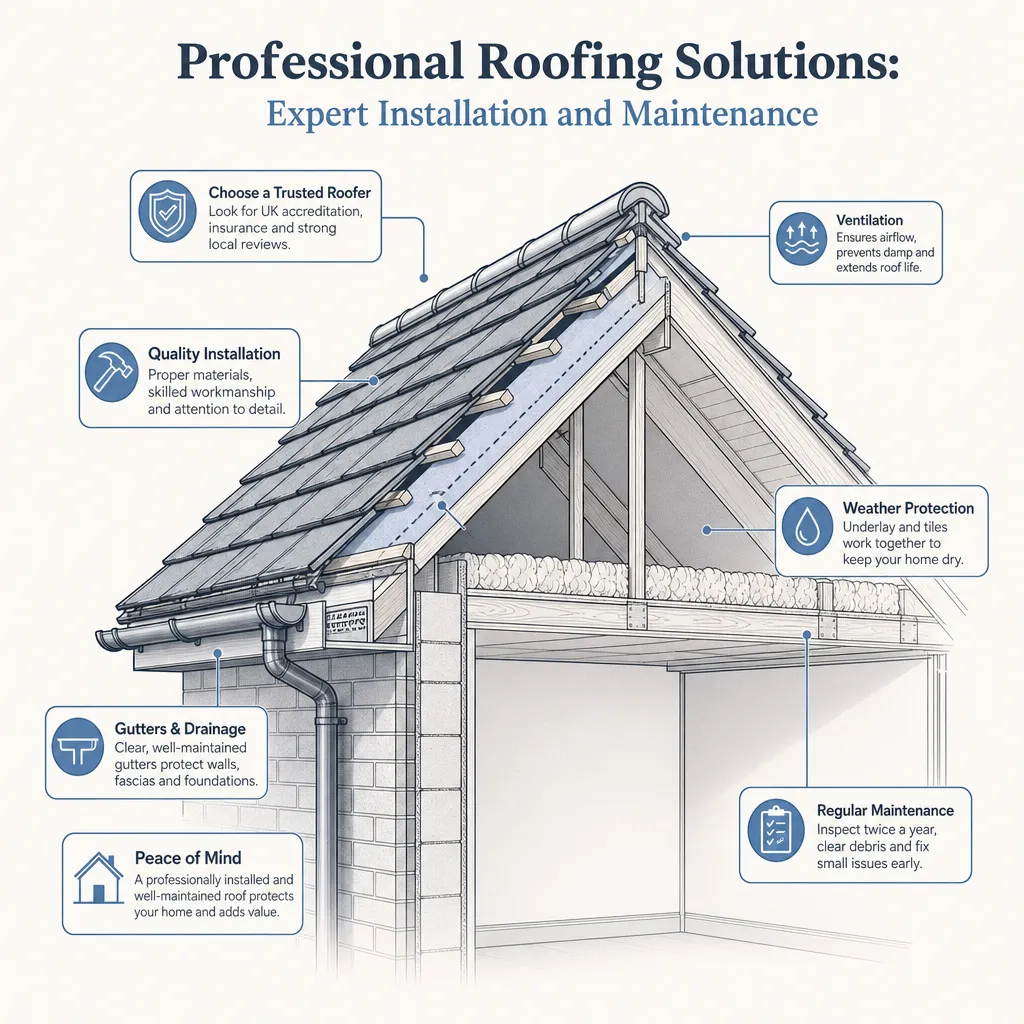
Professional Roofing Solutions: Expert Installation and Maintenance
A professional roofer should hold relevant trade qualifications such as NVQ Level 2 in Roofing Occupations, carry public liability insurance, and provide a written quotation.