Professional Roofing Solutions: Expert Installation and Maintenance
By Housey · Last reviewed 24th of May 2026

Professional Roofing Solutions: Expert Installation and Maintenance
Roofing work is one of the most consequential decisions a UK homeowner faces: a failing roof exposes your home to water ingress, structural damage, and escalating repair bills. Whether you are replacing an ageing pitched roof on a Victorian terrace, repairing a flat roof on a 1960s extension, or arranging annual maintenance, understanding how professional roofing services work helps you specify the right job, ask the right questions, and avoid costly mistakes.
Key points
- The National Federation of Roofing Contractors (NFRC) is the UK's largest roofing trade body; membership involves checks on technical competence and insurance.
- Most roof repairs and replacements fall under permitted development and do not require planning permission, but conservation areas or listed buildings may have restrictions.
- Like-for-like repairs generally do not require Building Regulations approval, but material changes or structural alterations may trigger a notification under Part A (structure) or Part C (moisture resistance).
- A professional roofer should carry a minimum of £2 million public liability insurance; always request a current certificate before work begins.
- Roofing guarantees vary: manufacturer material warranties (often 10–25 years) are separate from a contractor's workmanship guarantee (commonly 5–10 years).
What type of roofing service do you need?
UK homes typically have pitched roofs (slates, concrete or clay tiles), flat roofs (felt, EPDM rubber, fibreglass/GRP, or liquid coating), or a combination. The right contractor and specification depends on your roof type:
Roof type | Common materials | Specialist knowledge required | Typical lifespan |
|---|---|---|---|
Pitched – natural slate | Natural or artificial slate | Lap and gauge setting, lead flashings | 60–100 years (natural slate) |
Pitched – concrete or clay tile | Concrete or clay interlocking tiles | Battening, underlays, thermal performance | 30–60 years |
Flat – built-up felt | Layers of bitumen felt | Drainage falls, junctions, upstands | 10–20 years |
Flat – EPDM rubber | Single-ply rubber membrane | Adhesion, detailing at edges and outlets | 25–50 years |
Flat – GRP fibreglass | Glass-reinforced polyester | Lamination, correct catalyst ratios | 25–40 years |
Flat – liquid coating | Polyurethane or polyurea | Substrate preparation, film thickness | 15–25 years |
Not every roofer is equally experienced across all roof types. Always confirm a contractor has worked on your specific roof construction before agreeing terms.
What a professional roof installation involves
A professional roof installation — whether full replacement or major repair — typically follows a defined sequence:
- Survey and specification: a roofer or roofing surveyor inspects the existing structure, identifies defective timbers or insulation, and specifies materials and detailing.
- Scaffolding: for most pitched and flat roof works, scaffolding is required under the Working at Height Regulations 2005. Confirm whether scaffold costs are included in the quotation.
- Stripping and structural assessment: existing coverings are removed and rafters, joists, and wall plates inspected for decay or damage.
- Underlay and battening: modern breathable sarking felt or membrane is installed before battening to BS 5534.
- Covering and detailing: tiles, slates, or membrane are laid; lead, GRP, or aluminium flashings formed at abutments, valleys, and penetrations.
- Ventilation: Approved Document F and BS 5250 require adequate roof space ventilation to prevent condensation.
- Completion and inspection: gutters cleared, debris removed, and a photographic completion record provided.
Request a written specification before work starts. Vague quotes referencing only 're-roof' without specifying underlay grade, tile type, or insulation level make it impossible to compare quotations fairly.
Roof maintenance: protecting your investment
Routine maintenance significantly extends roof lifespan and prevents minor issues — a loose ridge tile, blocked valley, or cracked flashing — from becoming expensive structural problems.
Recommended maintenance schedule:
- Annually: visual inspection from the ground; clear gutters and downpipes; check for slipped, cracked, or missing tiles.
- Every 5 years: professional inspection covering flashings, ridge, hips, verges, and flat roof areas; repoint ridge and hip mortar as needed.
- After severe weather: inspect after storms, heavy snow loading, or sustained freeze-thaw cycles.
A professional roof survey provides a written condition report, photographs of defects, and a priority-order repair schedule — particularly useful before purchasing a property, after storm damage, or when budgeting planned works.
How to choose a qualified roofer
Qualifications and accreditations to look for:
Accreditation | What it indicates |
|---|---|
NFRC membership | Technical competence checks, insurance verification, code of practice |
CITB-registered workforce | NVQ-qualified operatives in Roofing Occupations |
TrustMark (GOV.UK-endorsed) | Independent checks on trading standards and technical competence |
CHAS or SafeContractor | Health and safety accreditation |
NVQ Level 2 in Roofing Occupations is the standard trade qualification. Some contractors hold Level 3 or specialist certificates for heritage slating, liquid coatings, or leadwork (City & Guilds 6129).
What to ask before accepting a quote
- Is VAT included, and are you VAT-registered?
- Who carries out the work — directly employed operatives or subcontractors?
- What scaffolding is included or excluded from the price?
- Which materials and grades are specified?
- What workmanship guarantee do you offer, and is it backed by an insurance-backed guarantee?
- Will you provide a written completion report or photographic record?
- What assumptions is the price based on — and what could change the final cost?
- What waste disposal is included?
Red flags to watch for
The roofing sector unfortunately attracts rogue traders. Be alert to these warning signs before appointing anyone:
- Unsolicited door-to-door cold calling, particularly following storms ('we noticed your roof while working nearby').
- Requests for large cash deposits upfront — legitimate contractors may request staged payments but rarely require 50% or more before starting.
- No written quotation — verbal-only pricing makes disputes very difficult to resolve.
- No public liability insurance certificate — always verify the document is current and covers the value of your property.
- Unusually low quotes — significantly below-market pricing often reflects underspecified materials, unqualified labour, or inadequate scaffolding.
- Pressure to decide immediately — professional contractors do not issue same-day ultimatums.
- No fixed business address — verify via the NFRC directory or TrustMark register.
Report suspected rogue traders to Trading Standards via the Citizens Advice consumer helpline.
Worked UK property scenario
A homeowner in Sheffield owns a 1930s semi-detached with a pitched roof of concrete interlocking tiles. During an annual gutter clean, they notice two cracked tiles and crumbling mortar on the ridge. They obtain three quotations:
- Quote A – £850 + VAT: scaffold tower, replacing four tiles (two cracked plus two more identified on closer inspection), repointing 3m of ridge, and a written completion report.
- Quote B – £600 cash only: no VAT stated, no written specification, cash payment only.
- Quote C – £1,200 + VAT: full ridge repointing (12m), tile survey, and photographic report.
Quote B should be declined immediately: cash-only with no written specification are clear red flags. Between A and C, the homeowner should ask why Quote C covers the full 12m ridge — is the entire length in poor condition? An independent professional roof survey would confirm the scope before committing to either.
Indicative UK costs, last reviewed 2026-05-24. Costs vary by region, property type, and access requirements.
When to get professional help
All roof work beyond ground-level observation should be carried out by a qualified roofer. Seek professional assistance urgently if you observe:
- Water staining on ceilings or walls after rainfall.
- Daylight visible through the roof in the loft space.
- Sagging or deflection visible in the roof plane.
- Ridge tiles or hip tiles that have moved or are missing.
- Persistent damp in rooms directly below a flat roof.
- Gutters consistently overflowing despite being clear of debris.
If you suspect structural roof movement — such as rafter spread or wall plate failure — consult a structural engineer in addition to a roofer.
How Housey can help
Housey connects you with vetted, insured qualified roofer professionals across the UK, and with specialists who carry out professional roof surveys to give you an independent condition report before committing to works. Submit your job details once and receive competitive quotes from qualified local contractors.
Frequently asked questions
Do I need planning permission for roof repairs or replacement in the UK?
Most like-for-like roof repairs and replacements fall under permitted development and do not require planning permission. However, properties in conservation areas or subject to Article 4 directions may face material restrictions. Works to listed buildings always require listed building consent. Check with your local planning authority before changing roof materials noticeably, such as replacing natural slate with concrete tiles.
How long should a new roof last in the UK?
Lifespan varies by material. Natural Welsh slate often lasts 60–100 years; concrete tiles typically 30–60 years. Modern flat roof membranes such as EPDM and GRP typically carry 25–50-year material warranties. Poor installation, inadequate ventilation, or blocked drainage can significantly shorten any roof's serviceable life regardless of the material used.
What is a roof survey and when do I need one?
A roof survey is a specialist inspection producing a written condition report, photographs of defects, and a prioritised repair schedule. It is useful before purchasing a property, after storm damage, when budgeting for planned maintenance, or when there is a dispute about the scope and cost of works required.
What insurance should a roofer carry?
At minimum, a professional roofer should hold public liability insurance of at least £2 million and employer's liability insurance if employing staff. Some contractors also carry contractor's all-risk insurance covering the works themselves. Always request a current certificate and check the expiry date before agreeing to any work.
Sources and further reading
- National Federation of Roofing Contractors — UK roofing trade body, contractor directory, and consumer guidance
- Building Regulations Approved Documents (GOV.UK) — Part A (structure), Part C (moisture resistance), Part F (ventilation)
- Working at Height Regulations 2005 (legislation.gov.uk) — legal framework for scaffold and safe access
- TrustMark — GOV.UK-endorsed quality scheme for home improvement tradespeople
- Citizens Advice consumer helpline — reporting rogue traders and consumer rights guidance
Useful next reads
 Improvement & Build
Comparing Vinyl and Aluminium Windows: Material Performance and Durability
uPVC (vinyl) and aluminium windows both meet UK Building Regulations Part L when properly specified.
 Improvement & Build
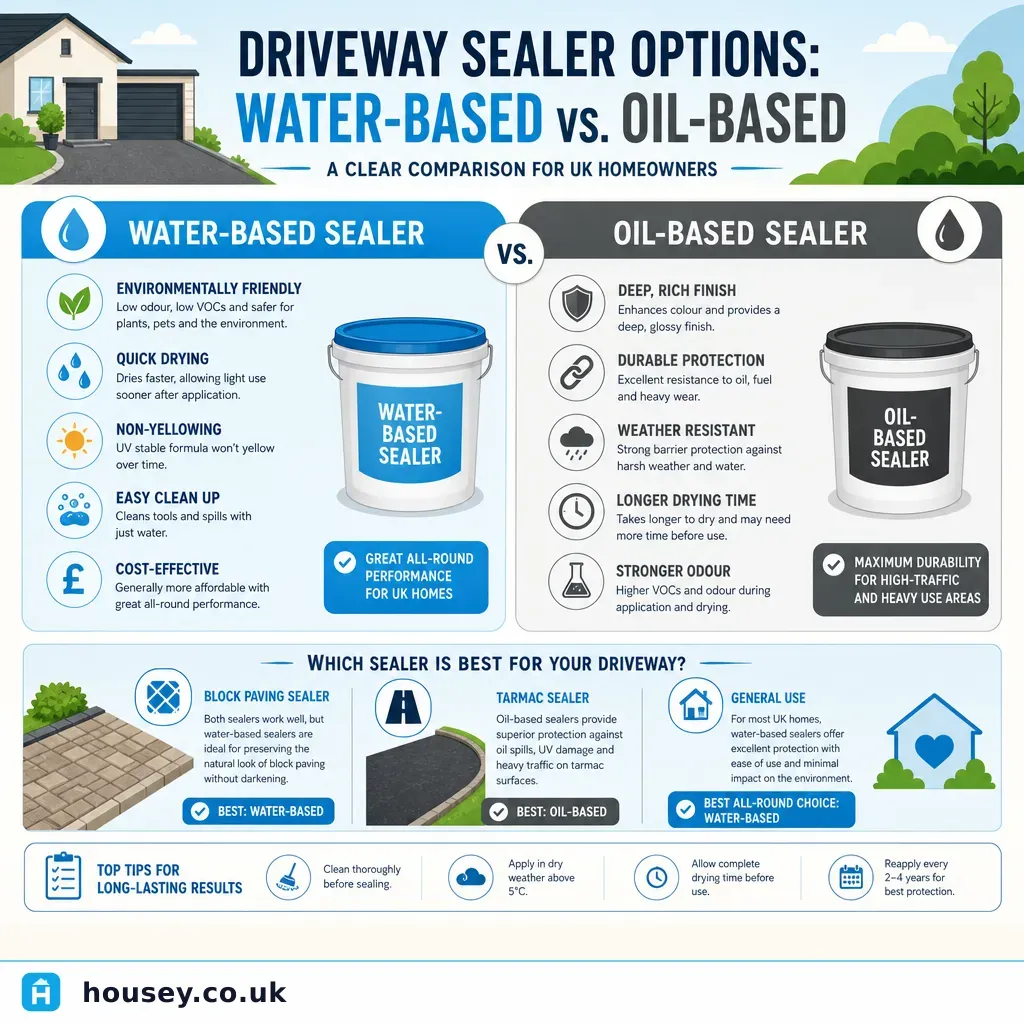
Driveway Sealer Options: Water-Based vs Oil-Based Comparison
Water-based driveway sealers are generally easier to apply, lower in VOCs, and suitable for most block paving and concrete surfaces.
 Improvement & Build
Driveway Sealers: Protection, Maintenance, and Longevity
Driveway sealers fall into two main categories: penetrating types absorbed into the substrate that leave no surface film, and film-forming types that coat and protect the surface.
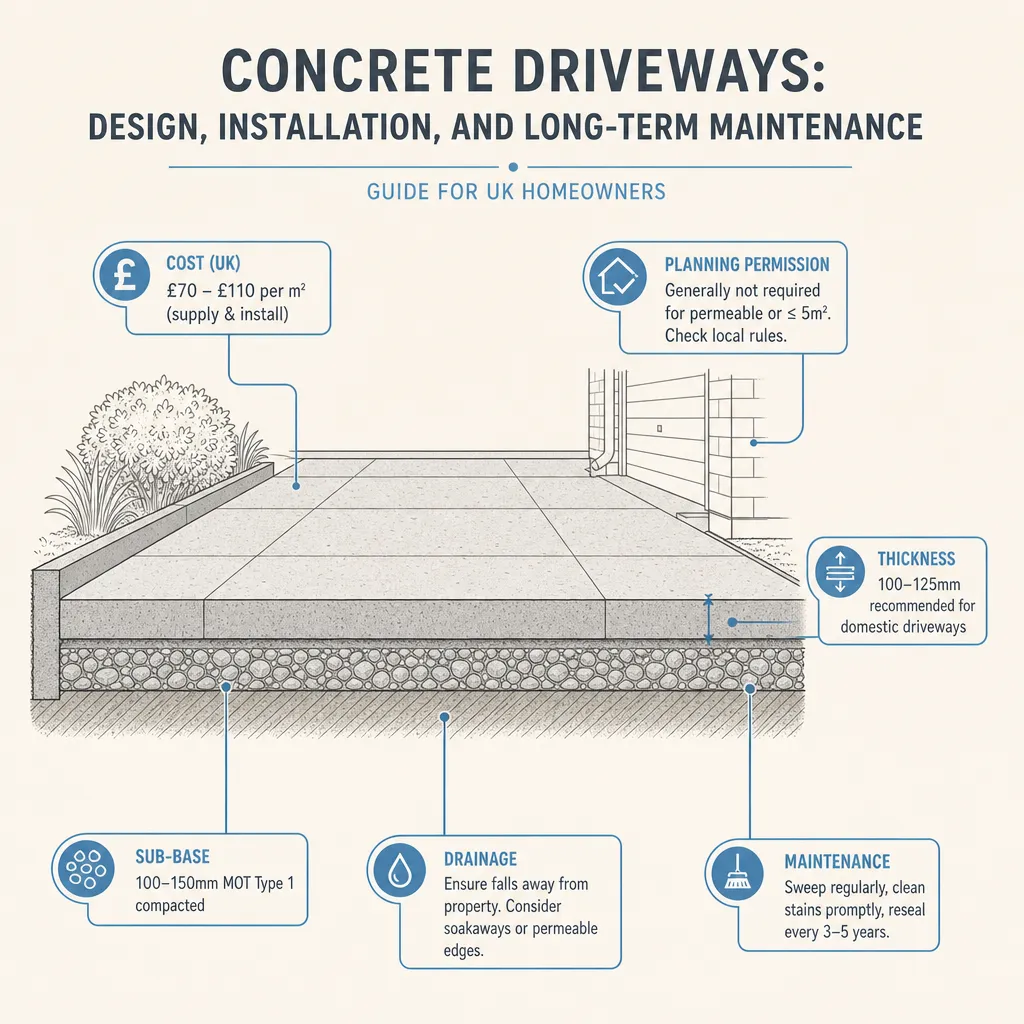 Improvement & Build
Concrete Driveways: Design, Installation, and Long-Term Maintenance
A concrete driveway requires a compacted sub-base of at least 150mm and a concrete slab of at least 100mm for domestic use.
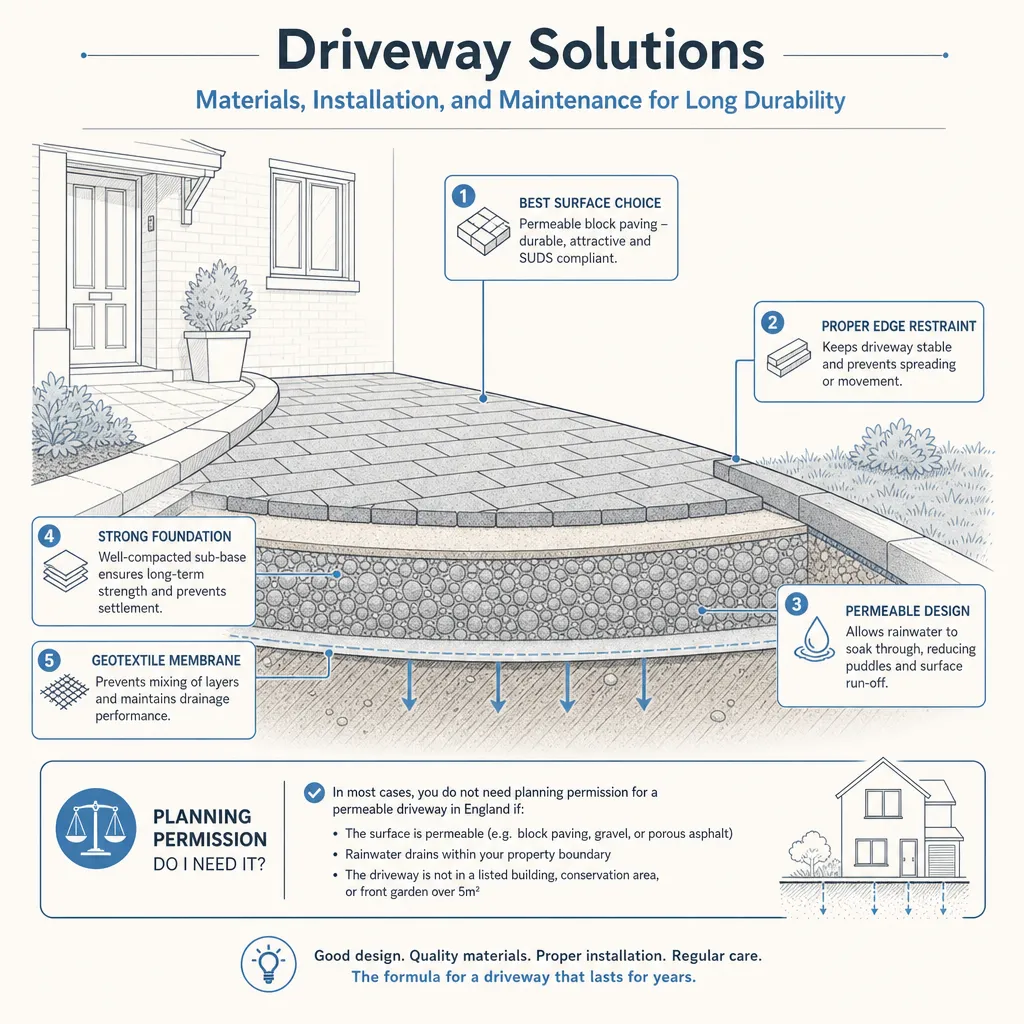 Improvement & Build
Driveway Solutions: Materials, Installation, and Maintenance for Long Durability
In England, driveways over 5 square metres need planning permission unless they use a permeable surface or drain to a lawn or border.