Cost of Zinc Roofing Installation
By Housey · Last reviewed 31st of May 2026
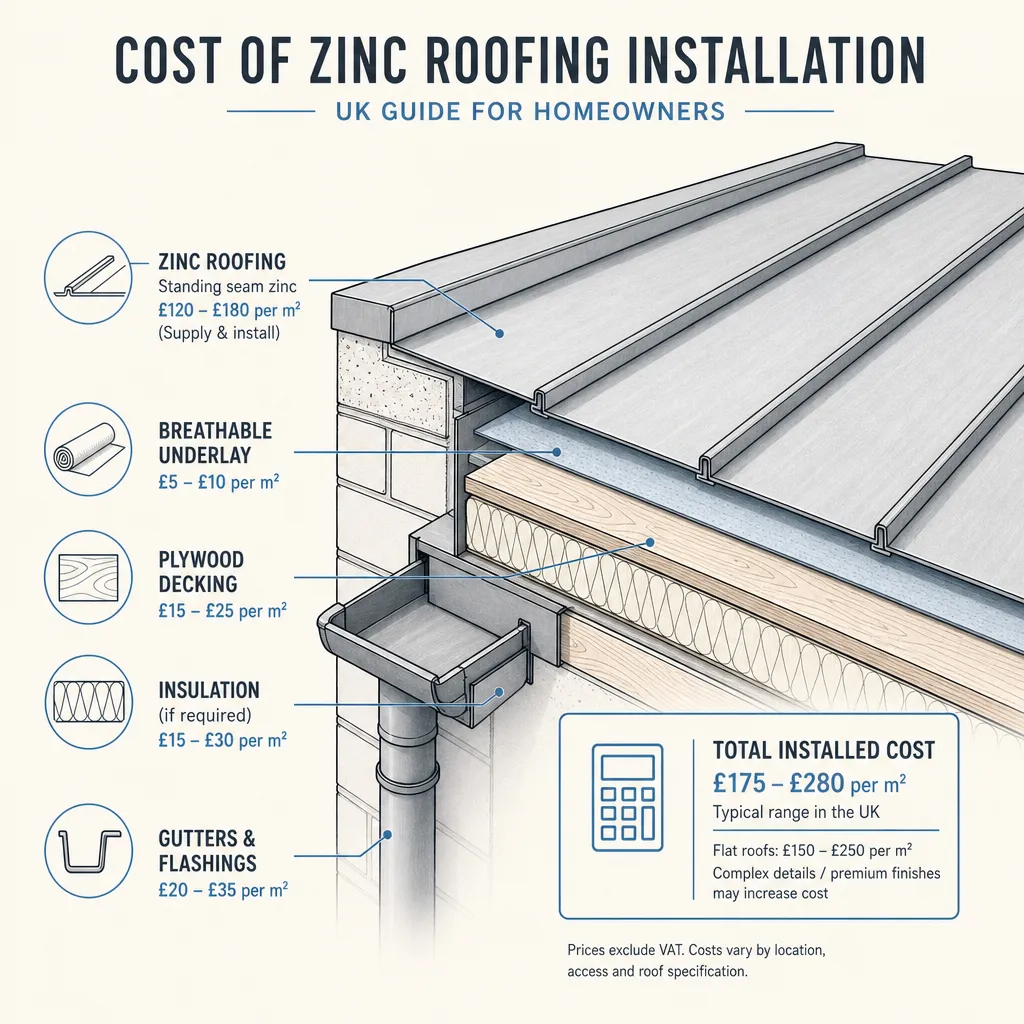
Cost of Zinc Roofing Installation
Zinc roofing is a long-established premium choice in UK construction — historically common on ecclesiastical and civic buildings, and increasingly specified for residential extensions, flat roof replacements, and contemporary new-builds. The decision to use zinc usually arises when an architect specifies it for aesthetic or performance reasons, or when a homeowner wants a low-maintenance, long-lived roof to complement heritage materials. Getting the cost right at planning stage matters, because zinc involves specialist fabrication and skills that differ significantly from standard tiling or felt roofing.
Key points
- Standing seam zinc roofing typically costs £100–£200 per m² installed; flat roof applications range from £80–£160 per m²; indicative UK costs, last reviewed 2026-05-31.
- All zinc used in roofing must comply with BS EN 988 (specification for rolled zinc products for building).
- Zinc roofing has an expected lifespan of 80–100+ years with minimal maintenance once the patina has fully formed.
- The natural zinc carbonate patina develops over 2–5 years, providing self-repairing protection and the characteristic blue-grey finish without any treatment.
- Zinc roofing is specialist work — an installer trained or certified by a recognised zinc manufacturer produces significantly better long-term results than a general roofer.
How much does zinc roofing cost in the UK?
Zinc roofing costs vary by system type, pitch, complexity, and region. The principal systems used in UK residential construction are standing seam (most common for pitched roofs and dormers), flat-lock tiles (more forgiving on irregular shapes), and flat zinc (used on low-pitch or flat extensions alongside or in place of GRP, EPDM, or lead).
Indicative UK costs, last reviewed 2026-05-31:
System | Installed cost (per m²) | Notes |
|---|---|---|
Standing seam zinc (pitched) | £100–£200 | Requires specialist fabricator |
Flat-lock zinc tiles | £90–£180 | More forgiving on irregular roof shapes |
Zinc flat roof (low pitch) | £80–£160 | Used for extensions, dormers, canopies |
Bespoke zinc cladding or dormers | £130–£250+ | Higher cost due to complex junctions |
Scaffolding (two-storey pitched) | £800–£2,500 | Usually quoted separately |
Quotes vary significantly by region, access difficulty, and fabricator skill. Obtain at least three itemised quotes.
Key cost drivers include:
- Zinc grade and gauge: ZnCuTi (zinc-copper-titanium alloy) is the standard for standing seam. Heavier gauges add cost but improve longevity and dent resistance.
- Roof complexity: Hips, valleys, dormers, and penetrations (skylights, soil stacks) all require additional fabrication time and material.
- Fabrication approach: Some zinc work is pre-fabricated off-site and lifted into position; other work is roll-formed on the roof. On-site roll-forming suits longer runs and reduces waste on complex geometries.
- Installer experience: A manufacturer-trained specialist commands a premium, but the quality and longevity difference over a non-specialist is significant.
Zinc roofing compared with other premium materials
Material | Typical lifespan | Installed cost (per m²) | Approx. weight (kg/m²) | Maintenance | Best for |
|---|---|---|---|---|---|
Zinc (standing seam) | 80–100+ years | £100–£200 | 5–7 | Very low | Extensions, contemporary build, heritage |
Lead sheet | 60–100 years | £100–£200 | 14–25 | Low | Heritage, church roofs, complex junctions |
Copper | 80–100+ years | £150–£300+ | 5–8 | Negligible | High-end heritage and architectural |
GRP (fibreglass) flat | 25–30 years | £40–£80 | 2–3 | Low | Budget flat roofs and extensions |
EPDM rubber flat | 25–50 years | £30–£70 | 1–2 | Very low | Flat roof replacement, low-cost extensions |
Indicative UK costs, last reviewed 2026-05-31. Costs vary by region and installer.
Worked UK property scenario
Scenario: A homeowner in Bristol is adding a single-storey kitchen extension (12 m² footprint) with a low-pitch zinc flat roof, and re-roofing a rear dormer (6 m²) in standing seam zinc to match panels recently installed on the main house.
Element | Area | Indicative unit cost | Estimated cost |
|---|---|---|---|
Zinc flat roof (extension) | 12 m² | £130/m² | £1,560 |
Standing seam zinc dormer | 6 m² | £160/m² | £960 |
Zinc upstands and flashings | — | Lump sum | £450–£700 |
Scaffolding (shared access) | — | Lump sum | £900–£1,500 |
Total estimate |
|
| £3,870–£4,720 |
This is a worked illustration only. Actual quotes will vary by location, specification, and contractor. Always obtain itemised quotes from at least three contractors.
What to ask before accepting a zinc roofing quote
- What grade and gauge of zinc is being used, and does it comply with BS EN 988?
- Is the installer trained or certified by a recognised zinc manufacturer (for example VMZINC, Rheinzink, or Umicore)?
- What underlayer, insulation, and ventilation system will be installed beneath the zinc?
- How will thermal expansion be managed at edges, penetrations, and abutments?
- What workmanship warranty does the installer offer, and is there a separate manufacturer product guarantee?
- Is scaffolding included in the quoted price, or is it a separate line item?
- What happens if the existing roof structure is found to be defective (rot, moisture damage) once work begins?
- Is VAT included?
When to get professional help
Zinc roofing is specialist work and should always be carried out by a contractor with proven experience in soft metal fabrication. Errors in detailing — particularly at flashings, abutments, and penetrations — are a common cause of water ingress and will typically void any workmanship warranty.
If the existing roof structure shows signs of rot, deflection, or moisture damage, commission a structural assessment before specifying any new covering. Do not lay zinc over a compromised deck.
For extensions requiring Building Regulations approval, the roof build-up must comply with Approved Document L (energy efficiency) and, where applicable, Approved Document C (resistance to moisture). Discuss the specification with your building control body before works commence.
How Housey can help
Housey connects homeowners with experienced, vetted specialist roofers experienced in zinc and premium roofing systems. Get itemised quotes, check installer credentials, and compare contractors before committing to a significant investment.
Frequently asked questions
Does zinc roofing need planning permission?
Usually not, as replacing or installing a roof covering is generally Permitted Development for standard residential properties. However, if your property is in a conservation area or is listed, planning permission or Listed Building Consent may be required — particularly if the zinc changes the character of the roof. Check with your local planning authority before proceeding.
How long before zinc develops its patina?
Zinc develops its characteristic blue-grey zinc carbonate patina over 2–5 years, depending on local climate, air quality, and roof orientation. The patination process is self-protecting and does not need to be accelerated or chemically treated. Pre-weathered zinc products are available if you want a more immediate patinated appearance.
Can zinc be used alongside other metals?
Galvanic corrosion is a risk when zinc contacts copper or uncoated steel in the presence of water. Stainless steel fixings should be used throughout, and copper pipes, flashings, or tiles should not be positioned so that water drains over zinc surfaces. Your installer should advise on material compatibility at every junction.
Is zinc roofing suitable for flat roofs?
Yes. Zinc is widely used on flat and low-pitch roofs, typically above 1.5° with an appropriate underlayer and draining detail. It is commonly specified for extension roofs, dormers, and canopies where a lightweight, long-lived, low-maintenance solution is required.
Sources and further reading
- Approved Document L: conservation of fuel and power — GOV.UK
- Working at height: a brief guide — Health and Safety Executive
- BS EN 988: specification for rolled flat products for building — BSI Group
- Planning Portal: conservation areas and listed buildings — Planning Portal
Useful next reads
 Improvement & Build
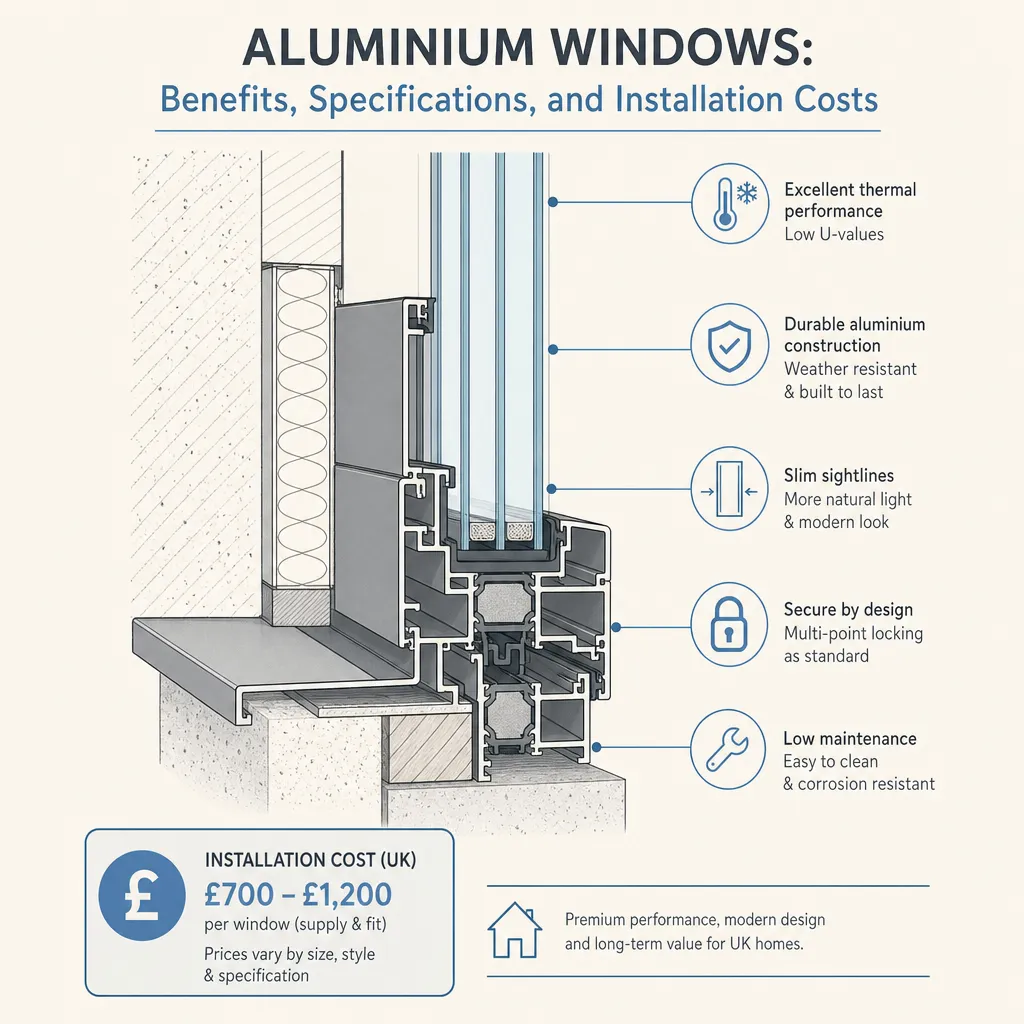
Aluminium Windows: Benefits, Specifications, and Installation Costs
Aluminium windows typically cost £600–£1,800 per window installed in the UK, depending on size and specification.
 Improvement & Build
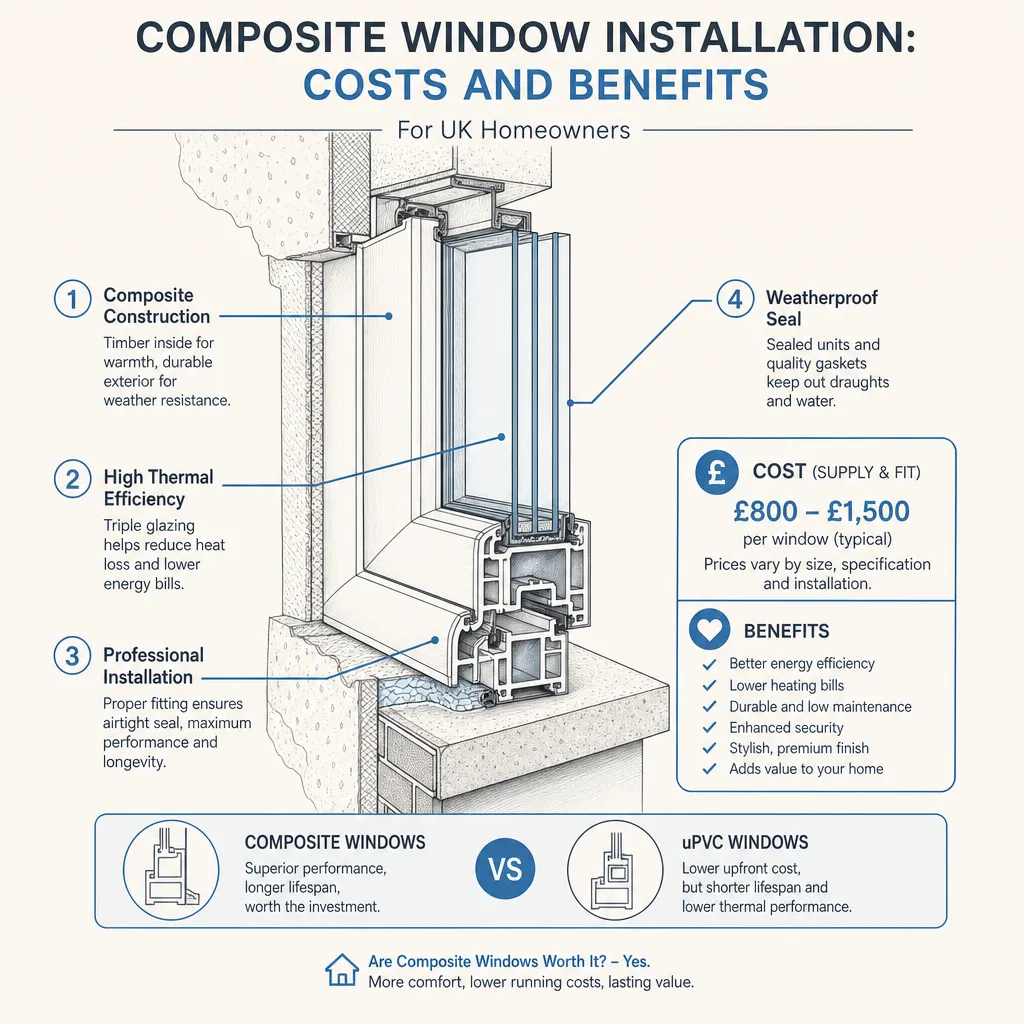
Composite Window Installation: Costs and Benefits
Composite windows combine two or more frame materials — typically a timber or aluminium core with a uPVC or aluminium outer casing — for better thermal performance and durability than standard uPVC.
 Improvement & Build
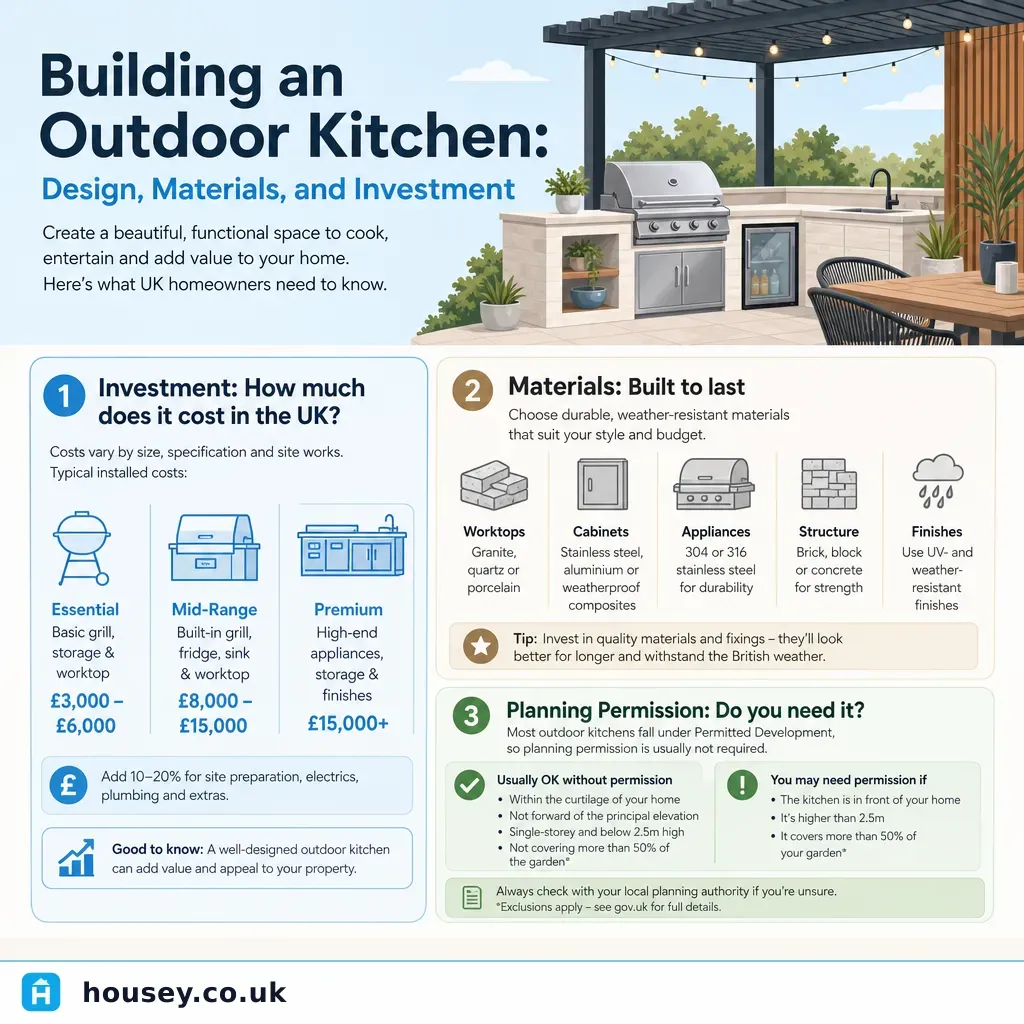
Building an Outdoor Kitchen: Design, Materials, and Investment
Building an outdoor kitchen in the UK costs roughly £3,000–£25,000 depending on size and materials.
 Improvement & Build
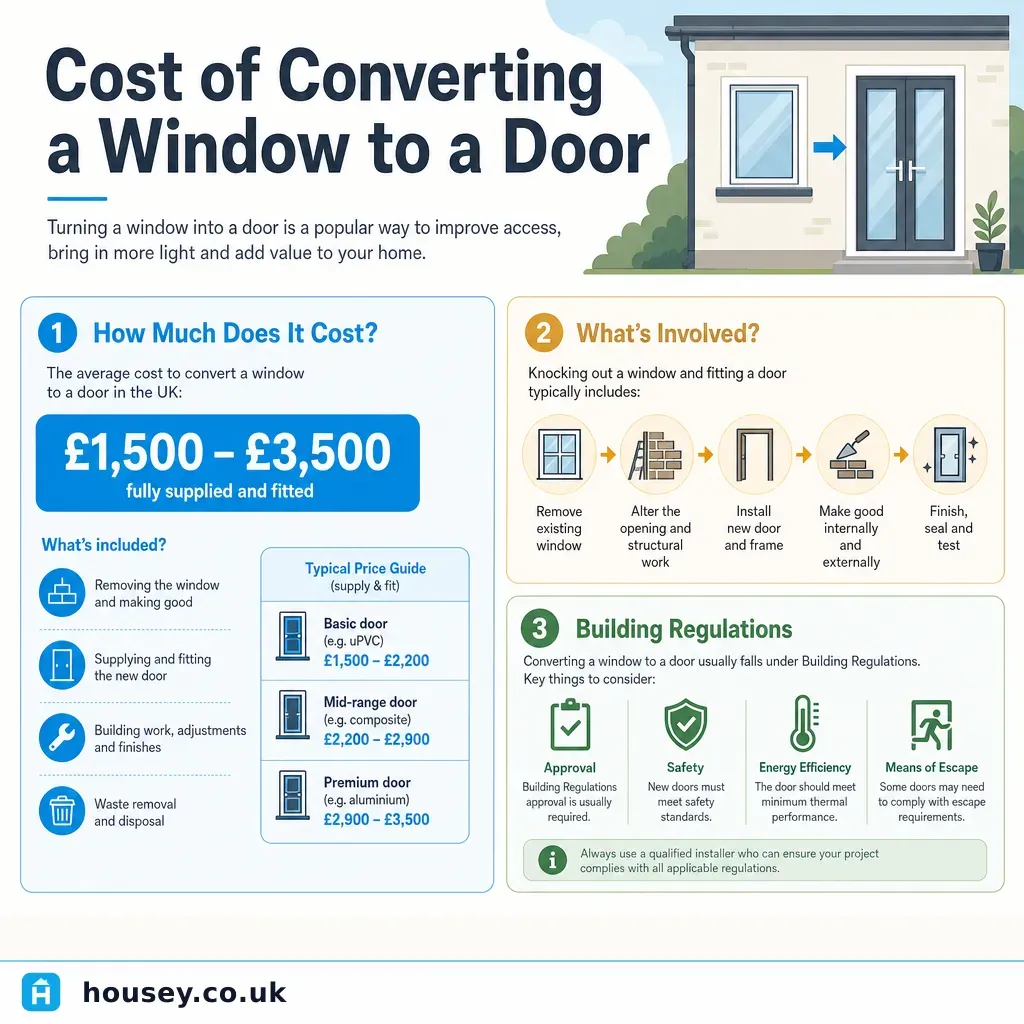
Cost of converting a window to a door
Converting a window to a door in the UK typically costs £1,500–£5,000 or more, depending on wall construction (cavity, solid, or timber frame), the type of door fitted, and whether a new or enlarged lintel is required.
 Improvement & Build
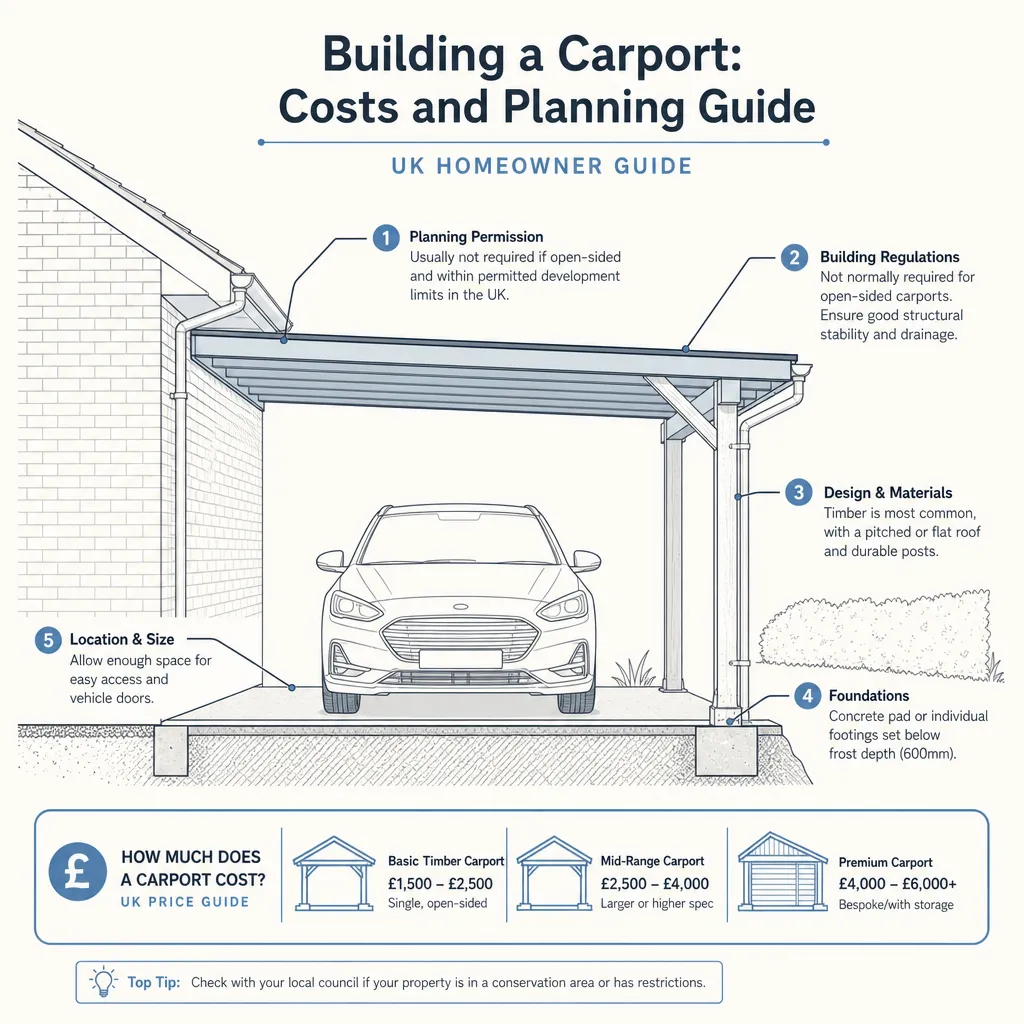
Building a Carport: Costs and Planning Guide
A single-bay carport in the UK typically costs £3,000–£12,000 installed, depending on material and groundworks.