Comprehensive Home Maintenance Services Across Your Region
By Housey · Last reviewed 24th of May 2026
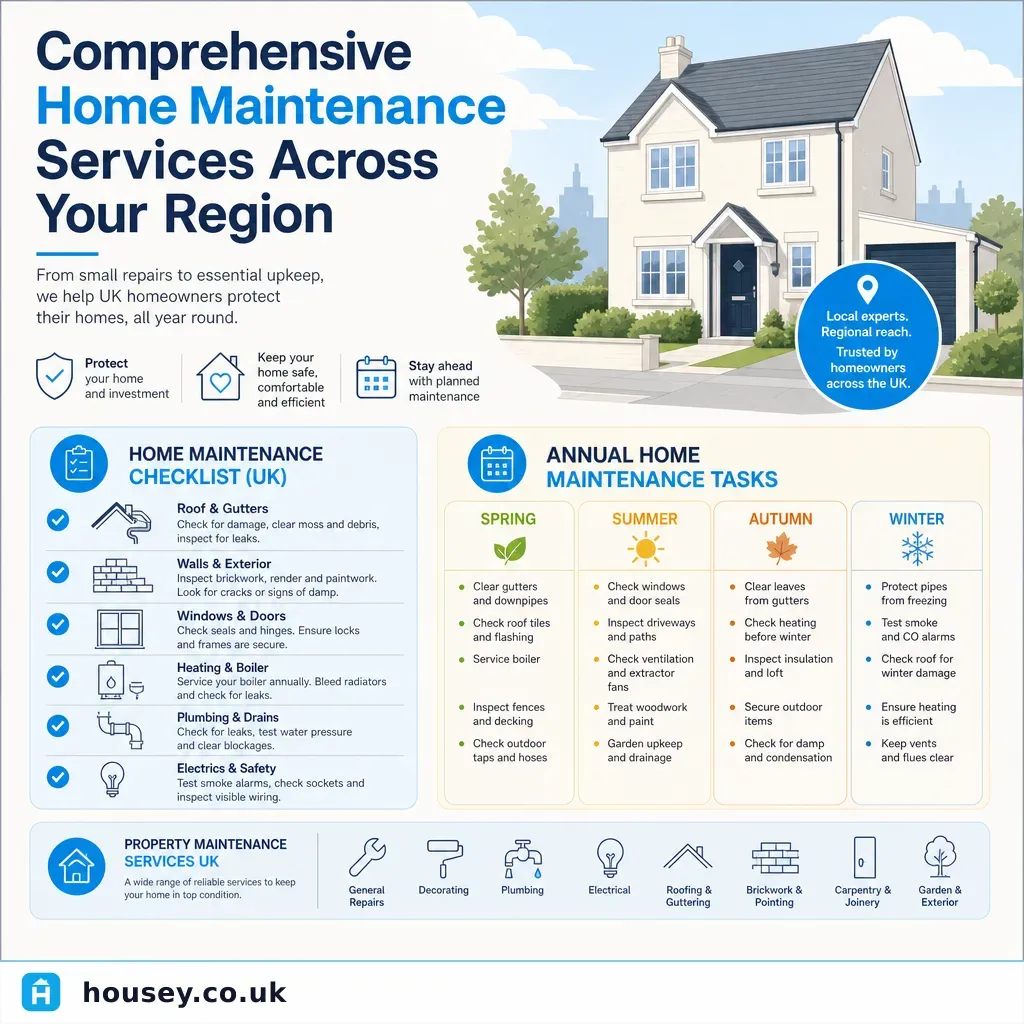
Comprehensive Home Maintenance Services Across Your Region
Whether you have just completed a purchase, settled into a renovation, or simply want to protect a long-term investment, keeping a UK home in sound condition requires more than occasional attention. Property age, construction type, and regional climate all shape what maintenance your home actually needs — and which professionals you will need to call.
Key points
- Boilers and gas appliances require annual servicing by a Gas Safe registered engineer; landlords are legally required to provide a valid Gas Safety Record under the Gas Safety (Installation and Use) Regulations 1998.
- In England, electrical installations in rented properties must be inspected at least every five years under the Electrical Safety Standards in the Private Rented Sector (England) Regulations 2020.
- RICS guidance recommends homeowners carry out a visual inspection of guttering, flashings, and roof coverings at least twice a year, ideally in autumn and spring.
- Cavity wall and loft insulation in older UK homes may have degraded or been installed incorrectly; a retrofit assessment under PAS 2035 can identify moisture risks before energy improvements are made.
- External decorating cycles for timber joinery (fascias, soffits, window frames) are typically 5–7 years depending on paint type and exposure.
What does comprehensive home maintenance include?
Home maintenance covers all the planned and reactive work required to keep a property safe, weathertight, compliant, and in good repair. For most UK homes it divides into three broad areas:
Structural and external — roof coverings, chimney stacks, guttering, downpipes, external walls, pointing, damp-proof courses, and drainage.
Mechanical and services — boiler servicing, central heating system flushing, hot water cylinder checks, plumbing, and electrical installation condition checks.
Internal and decorative — plaster, joinery, internal painting, flooring, ventilation, and condensation management.
A multi-service provider — sometimes called a general builder or property maintenance contractor — can handle a broad range of these tasks, though regulated work (gas, high-voltage electrical, structural) always requires appropriately qualified tradespeople.
Annual home maintenance schedule
The table below outlines typical maintenance tasks by season. Timing varies by property type, age, and local climate.
Season | Priority tasks | Typical professional |
|---|---|---|
Autumn | Clear gutters and downpipes; inspect roof for loose or missing tiles; service boiler before winter demand | Roofer, heating engineer |
Winter | Monitor for frozen pipes; check loft for condensation; bleed radiators if needed | Plumber, heating engineer |
Spring | Inspect external rendering and pointing; check damp-proof course level; service windows and external joinery | General builder, damp specialist |
Summer | External decoration; fence and boundary repairs; check flat roof membranes for blistering | Decorator, roofer, general builder |
Which tasks require a qualified professional?
Some work is suitable for a competent homeowner; other tasks require a licensed or accredited contractor. Getting this wrong can invalidate insurance, breach mortgage conditions, or create a safety hazard.
Decision tree: DIY or call a professional?
- Choose a Gas Safe registered engineer for any boiler service, gas fire, or cooker connection — it is illegal to carry out gas work unless registered.
- Choose a Part P-compliant electrician (NICEIC or NAPIT registered) for electrical work at consumer unit level; in England and Wales certain notifiable electrical work requires a building control certificate.
- Hire a qualified contractor with appropriate equipment for any work at height above 2 m (gutters, roof, fascias) — never attempt this as DIY.
- Ask a qualified surveyor or CSRT-certificated damp specialist to diagnose the cause of damp before any remediation begins.
- For minor decorating, fence repairs, and garden maintenance, a competent homeowner can usually manage safely.
Home maintenance checklist for UK homeowners
Use this checklist annually or tick off as works are completed.
Heating and hot water
Roof and gutters
External fabric
Electrical
Internal
What to expect from a home maintenance contractor
A reputable general maintenance contractor will typically:
- Carry public liability insurance — a minimum of £1 million cover is standard; many carry £2–5 million.
- Be able to show relevant trade memberships or qualifications, such as Federation of Master Builders (FMB) membership or TrustMark registration.
- Provide a written scope of works and quote before starting.
- Subcontract gas and electrical work to appropriately registered specialists rather than carry it out themselves.
Always request a written quote and confirm whether VAT is included. Indicative UK costs for general property maintenance vary significantly by region and scope — obtain at least two to three comparable quotes.
Red flags to watch for
Certain signs suggest a maintenance issue has moved beyond routine upkeep and requires urgent professional investigation:
- Cracks in external brickwork that are stepped, widening, or accompanied by sticking doors and windows — possible structural movement.
- Damp patches on internal walls that return after decoration — likely a sign of rising damp, penetrating damp, or a hidden plumbing leak.
- Boiler pressure repeatedly dropping or pilot light frequently cutting out — requires a Gas Safe engineer to inspect.
- Black mould recurring in the same areas despite cleaning — may indicate inadequate ventilation or a cold bridge requiring professional investigation.
When to get professional help
Routine maintenance is manageable with a reliable local contractor, but some situations warrant specialist input without delay. Contact a qualified professional if you notice structural cracking, unexplained damp, repeated boiler faults, or a roof leak that has not been resolved after a previous repair. For all regulated work — gas, electrics, or structural alteration — you must use an appropriately accredited tradesperson.
How Housey can help
Housey connects UK homeowners with vetted local contractors across a wide range of maintenance and improvement services. Submit a job request, compare quotes from multiple tradespeople, and read verified reviews from other homeowners in your area — all without committing until you are satisfied with the proposal.
Frequently asked questions
How often should I service my boiler?
Most boiler manufacturers and Gas Safe engineers recommend an annual service. Regular servicing maintains efficiency, helps identify developing faults before they become breakdowns, and is often required to keep manufacturer warranties valid. Landlords are legally required to arrange an annual gas safety check and provide tenants with a copy of the Gas Safety Record.
Do I need planning permission for routine home maintenance?
Most like-for-like repairs — replacing roof tiles, repainting external walls, repointing brickwork — do not require planning permission. However, works to listed buildings or properties in conservation areas may need listed building consent or conservation area consent. Check with your local planning authority before proceeding if you are unsure.
What insurance should a home maintenance contractor carry?
At a minimum, look for public liability insurance — £1 million cover is standard and many contractors carry £2–5 million. For work involving employees or subcontractors, employers' liability insurance is also required by law. Some contractors carry professional indemnity insurance, relevant where design or specification forms part of the contract.
How do I find a reliable local maintenance contractor?
Look for contractors registered with recognised trade bodies such as the Federation of Master Builders (FMB), TrustMark (a government-endorsed quality scheme), or Which? Trusted Traders. Always check reviews, request at least two references, and obtain written quotes from at least two contractors before committing to significant works.
Sources and further reading
- Gas Safety (Installation and Use) Regulations 1998 — legislation.gov.uk
- Electrical Safety Standards in the Private Rented Sector (England) Regulations 2020 — legislation.gov.uk
- TrustMark: government-endorsed quality scheme for tradespeople — TrustMark
- Federation of Master Builders: find a builder — Federation of Master Builders
- Gas Safe Register: check an engineer or find a registered business — Gas Safe Register
Useful next reads
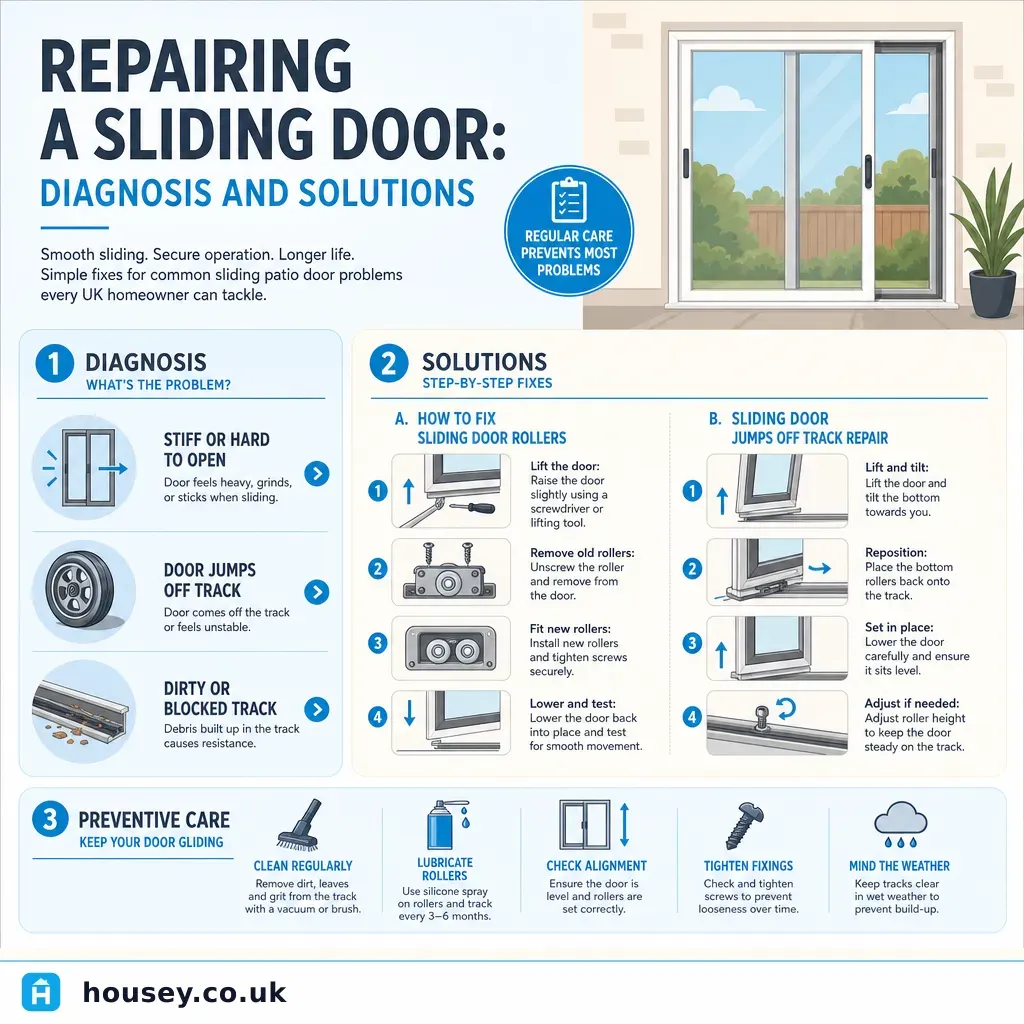 Improvement & Build
Repairing a Sliding Door: Diagnosis and Solutions
Most sliding door problems — stiffness, jumping off track, or draughts — are caused by dirty tracks, worn rollers, or misaligned guides.
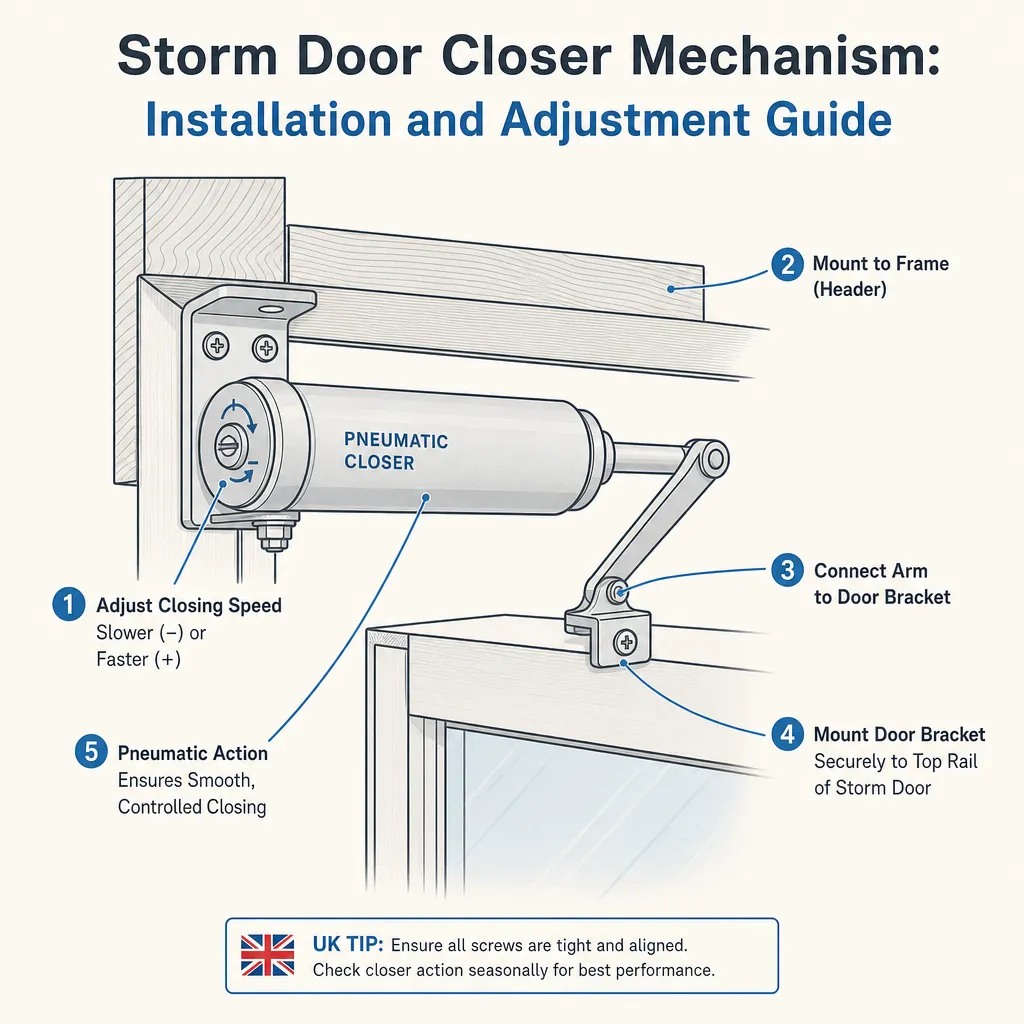 Improvement & Build
Storm Door Closer Mechanism: Installation and Adjustment Guide
Storm door closers are adjusted via a small screw at the end of the cylinder — clockwise slows the door, anticlockwise speeds it up.
 Improvement & Build
How to Find and Vet Professional Roofing Contractors
Professional roofing contractors should carry public liability insurance of at least £2m, provide a written workmanship guarantee, and hold accreditation from a recognised body such as the NFRC or the Competent Roofer scheme.
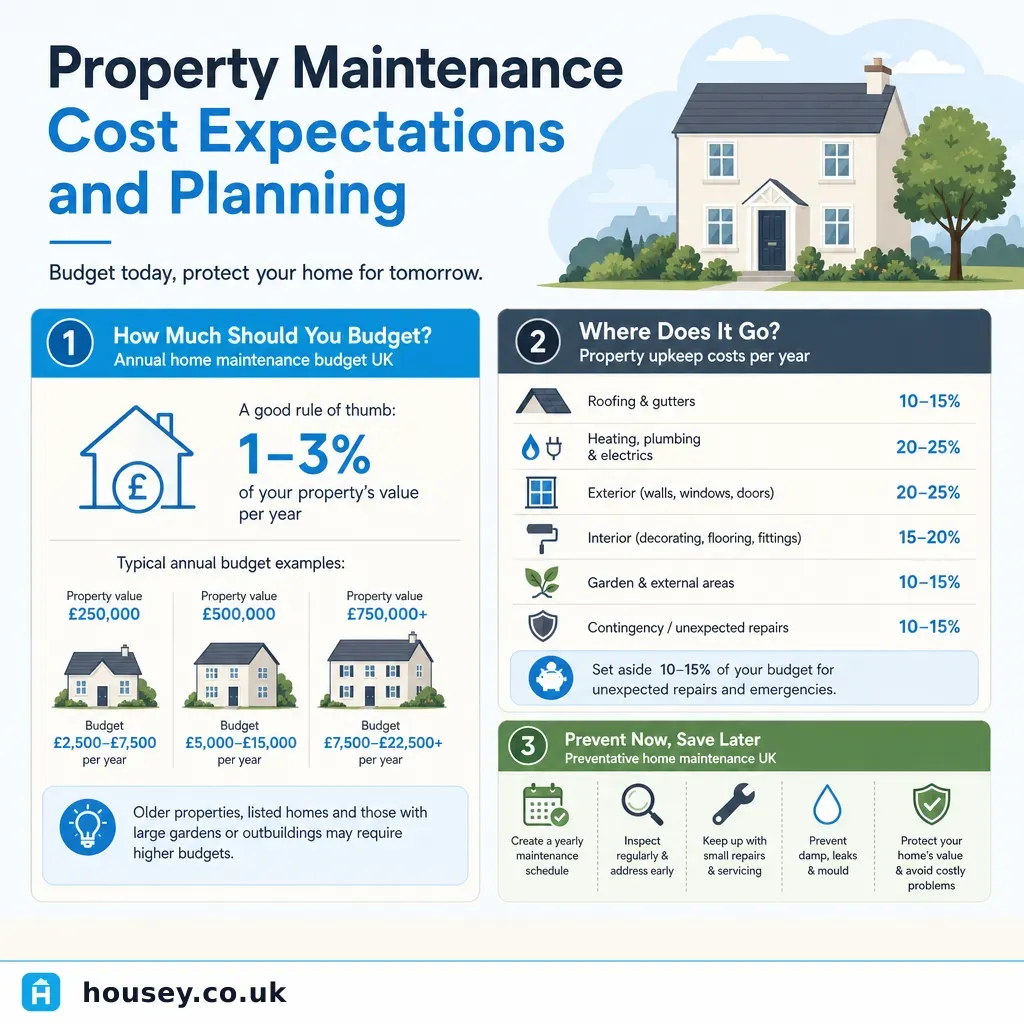 Improvement & Build
Property Maintenance Cost Expectations and Planning
UK homeowners typically budget between 1% and 3% of their property's value annually for maintenance and repairs.
 Improvement & Build
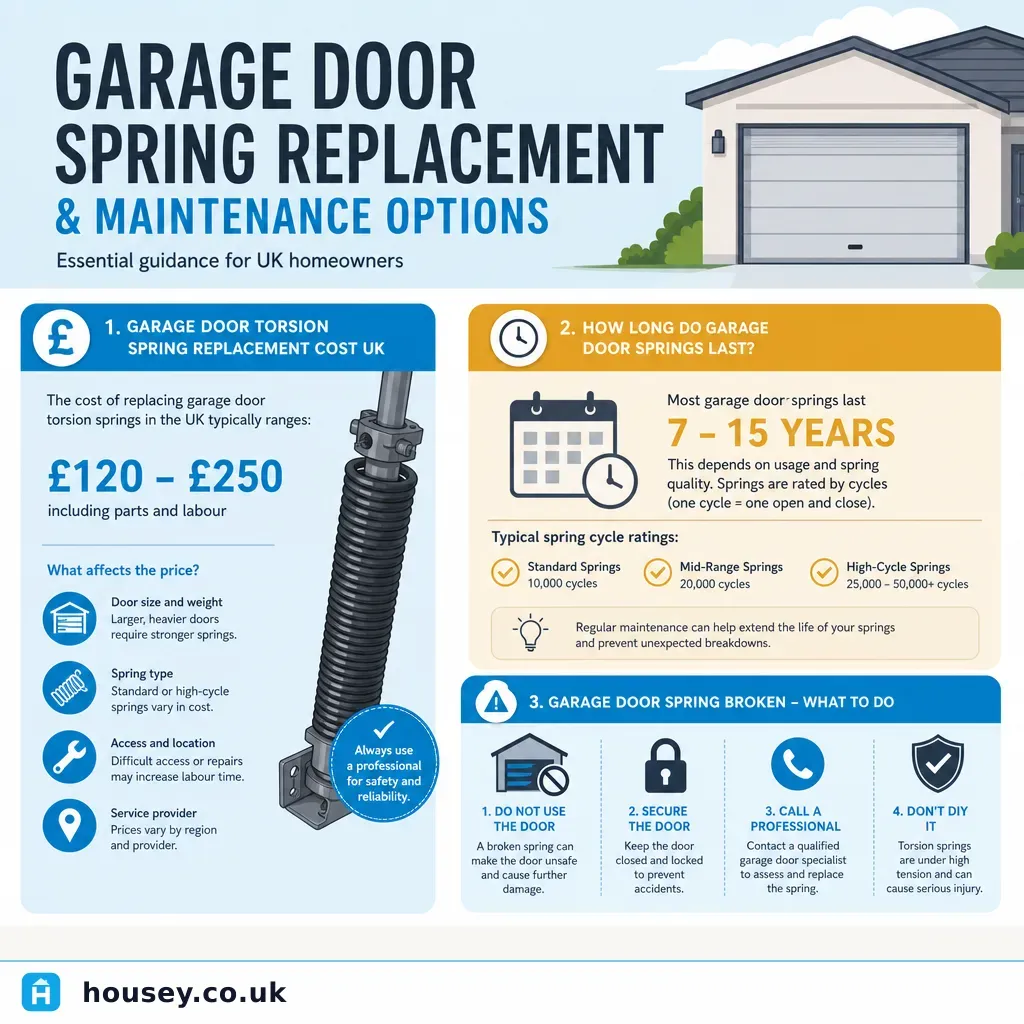
Garage Door Spring Replacement and Maintenance Options
Garage door spring replacement is not a DIY task — torsion springs store dangerous levels of mechanical energy and must be replaced by a qualified engineer.