How to Find and Vet Professional Roofing Contractors
By Housey · Last reviewed 24th of May 2026
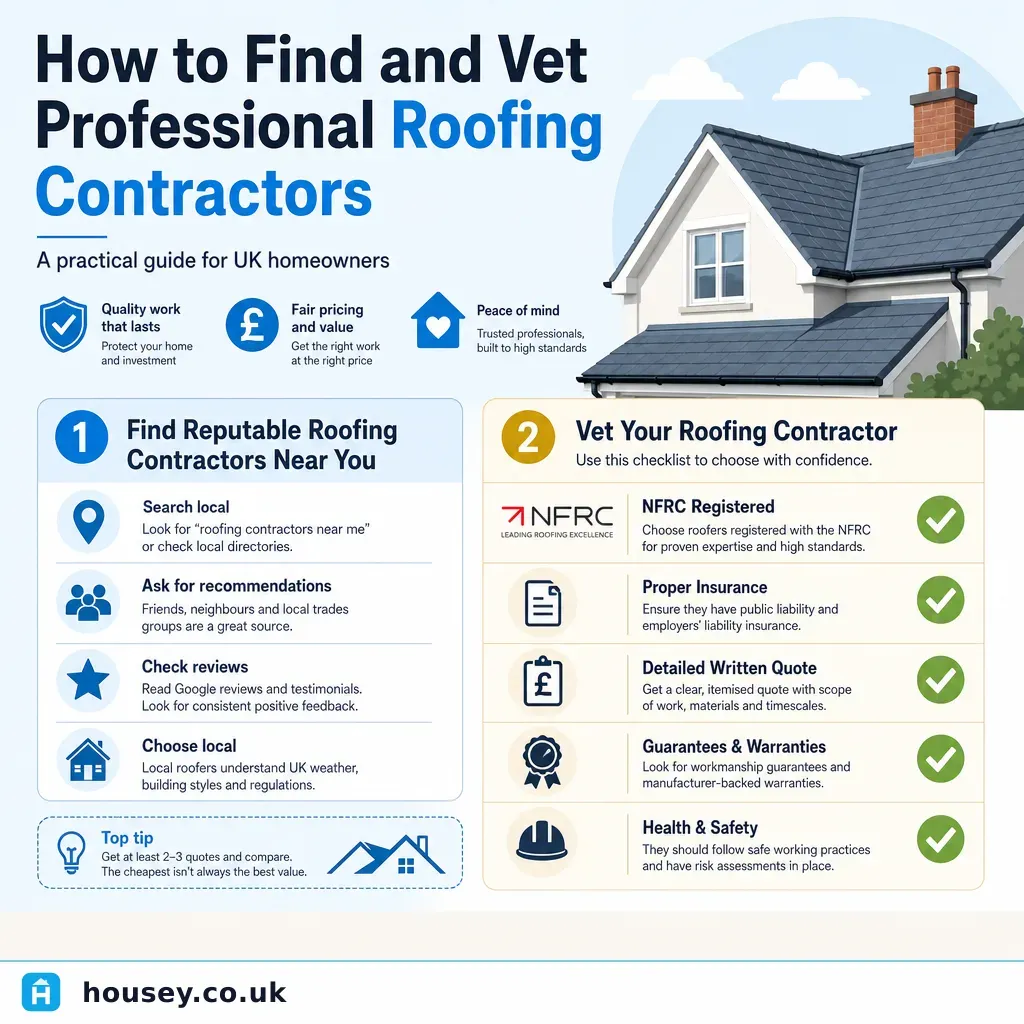
How to Find and Vet Professional Roofing Contractors
Roof defects rarely give much warning before they cause serious damage — a failing tile, degraded flashing, or cracked flat-roof membrane can allow water into a structure for months before interior signs appear. Whether you face a localised repair, a partial re-roof, or a full replacement on a Victorian terrace or 1930s semi, the competence and credentials of the contractor you appoint directly determine the durability of the result and the validity of any warranty. Understanding what distinguishes a professional roofing contractor from an unreliable one can save considerable cost and disruption.
Key points
- The National Federation of Roofing Contractors (NFRC) is the UK's largest roofing trade body; NFRC-registered contractors pass independent vetting covering insurance, financial standing, and technical capability.
- The Competent Roofer scheme allows registered contractors to self-certify eligible work under Building Regulations, removing the need for a separate building control application for qualifying pitched-roof work.
- Work at Height Regulations 2005 (SI 2005/735) impose legal duties on contractors working on roofs; a contractor who proposes to work without adequate fall protection is in breach of these regulations.
- Public liability insurance for roofing work should be at least £2 million; many professional contractors carry £5m given the inherent risks of working at height on occupied properties.
- Flat roofing system manufacturer warranties — typically 25 years for GRP — are only valid when the system is installed by an approved contractor following the manufacturer's specification exactly.
What local expertise means in roofing
Local knowledge in roofing has practical significance beyond proximity. Regional roofing traditions vary considerably across the UK — a contractor experienced with Welsh natural slate will understand fixing gauges, lap tolerances, and batten spacing for that material in ways that differ from a firm familiar only with concrete interlocking tiles. Coastal exposure, wind uplift classifications, and driving rain loadings differ between regions and affect the detailing requirements for both pitched and flat roofing systems.
Local contractors also tend to have established relationships with regional builders' merchants, access to locally appropriate materials when conservation area or listed building conditions specify them, and familiarity with local planning officers' requirements for heritage properties. For like-for-like roof replacements on older housing stock, this knowledge directly affects both compliance and appearance.
Comparing roofing contractor types
Contractor type | Best for | Not ideal for | Accreditation to look for | Key risk |
|---|---|---|---|---|
General roofing contractor | Tile and slate repairs, re-roofs, new-build pitched roofs | Specialist flat roofing systems requiring manufacturer approval | NFRC membership, Competent Roofer registration | Variable quality; verify references and materials specification carefully |
Flat roofing specialist | GRP, EPDM, felt, or liquid waterproofing systems | Traditional pitched slate or tile work | System manufacturer approval (e.g., Sika, IKO, Bauder) | Unapproved installers void the system warranty |
Heritage roofing specialist | Listed buildings, conservation areas, natural slate, lead and lime mortar work | Modern housing stock with standard concrete tiles | NFRC Heritage membership; conservation area experience | Fewer contractors available; longer lead times common |
National roofing firm | Large-scale commercial or multi-property programmes | Single domestic property where local continuity matters | Varies by firm | Often sub-contracts locally; you may have less direct oversight |
Red flags when vetting roofing contractors
Be alert to these warning signs before or during the appointment process:
- Requests for large cash upfront payments: a deposit of 10–25% for materials is reasonable; demanding full or majority payment before work starts is unusual and a significant risk.
- No written quote or contract: verbal agreements leave you with no recourse if disputes arise over scope, materials, or price.
- Unable to provide proof of public liability insurance: this is non-negotiable for any contractor working on your property.
- Proposing to work without scaffolding: for most re-roofing and significant repair work, scaffolding is legally required under the Work at Height Regulations 2005. Ladders-only working on a full re-roof is a serious indicator of non-compliance.
- Cold-calling after storm events: unsolicited doorstep approaches following storms are commonly associated with disreputable traders; always source contractors independently and check credentials before engaging.
- No verifiable fixed business address: check Companies House or ask for a VAT registration number to confirm trading history.
- A quotation significantly below all others without explanation: a quote more than 30–40% below comparable ones may indicate inferior materials, missed scope, or insufficient insurance.
What to ask before accepting a quote
- What materials will be used? Provide the manufacturer name, product, and specification — gauge, weight, or grade as applicable.
- Is scaffolding included in the quoted price, and who erects and dismantles it?
- Are you registered with the NFRC or the Competent Roofer scheme?
- Can you provide a current certificate of public liability insurance?
- What workmanship guarantee will you provide, and for how long?
- Who will carry out the work — your own directly employed operatives, or sub-contractors?
- How will waste and debris be removed, and are disposal costs included?
- Is VAT included in the quoted figure?
- What happens if additional defects — rotten timbers, failed sarking felt, defective flashings — are discovered once work starts?
Understanding roofing warranties
Two distinct warranty types apply to most roofing work and it is important to understand the difference.
Materials warranties are issued by the manufacturer and run for 10–30 years depending on the system. GRP flat roofing systems typically carry 25-year guarantees; natural slate is often guaranteed for longer when correctly fixed. To remain valid, materials must be installed by an approved contractor following the manufacturer's specification precisely. Always request the manufacturer's installation certificate on completion of the work.
Workmanship guarantees are issued by the contractor and typically run for 5–10 years. Their practical value depends entirely on the contractor remaining in business and honouring the guarantee. For greater security, look for contractors registered with the NFRC Quality Assured Scheme or with TrustMark, both of which offer deposit protection and independent dispute resolution.
When to get professional help
Any roof work beyond replacing one or two broken tiles should be assessed and carried out by a qualified, insured contractor. In particular:
- Do not attempt to access a roof without appropriate fall protection — the Work at Height Regulations 2005 apply to homeowners working on their own property as well as to contractors.
- If a roof is leaking and you cannot safely identify the source from ground level, arrange a professional inspection rather than attempting temporary repairs in wet or icy conditions.
- Sagging rafters, widespread vegetation lifting tiles, daylight visible through a roof structure, or spreading damp staining on ceiling joists indicate potentially serious defects requiring urgent professional assessment.
- Properties in conservation areas or on the listed buildings register may have planning conditions specifying approved materials — consult your local authority before instructing a roofer to replace anything.
How Housey can help
Housey helps you find and compare vetted roofers in your area, with verified reviews from homeowners who have used them for similar projects on comparable property types. Submit your project details to receive quotes from local contractors who carry appropriate insurance and recognised accreditation.
Frequently asked questions
Does a new roof require Building Regulations approval?
A full pitched re-roof replacing like-for-like materials typically falls under Competent Person self-certification and does not require a separate building control application, provided the contractor is registered with the Competent Roofer scheme. Changes to the roof structure, significant insulation upgrades, or converting from one roof type to another may require a full Building Regulations application. Your contractor should confirm which route applies to your project.
How long does a new roof last?
Lifespan varies by material. Natural slate: 80–100 years when correctly fixed; concrete interlocking tiles: 40–60 years; GRP flat roofing systems: typically a 25-year manufacturer warranty; felt flat roofs: 10–20 years. These are indicative ranges — actual lifespan depends on exposure, fixing quality, and maintenance. A professional survey can assess your specific roof's remaining serviceable life.
What is the Competent Roofer scheme?
The Competent Roofer scheme is a government-authorised Competent Person scheme allowing registered roofing contractors to self-certify work as compliant with Building Regulations, without homeowners needing a separate building control application. Registration involves vetting of technical competence, insurance, and business standing. Details are available from the Competent Roofer organisation and from GOV.UK's list of authorised Competent Person schemes.
Should scaffolding always be erected for roof work?
For most roof repairs and all re-roofing projects, scaffolding is both a legal requirement under the Work at Height Regulations 2005 and necessary for safe, quality access. A reputable contractor will include scaffold erection in their quotation or arrange it separately with a named scaffolding firm. If a contractor proposes significant roof work from ladders alone, treat this as a warning sign and seek an alternative quote.
Sources and further reading
- National Federation of Roofing Contractors — NFRC
- Work at Height Regulations 2005 (legislation.gov.uk) — legislation.gov.uk
- Competent Person schemes (GOV.UK) — GOV.UK
- TrustMark — find a registered business — TrustMark
- Working at height: a brief guide (HSE) — Health and Safety Executive
Useful next reads
 Improvement & Build
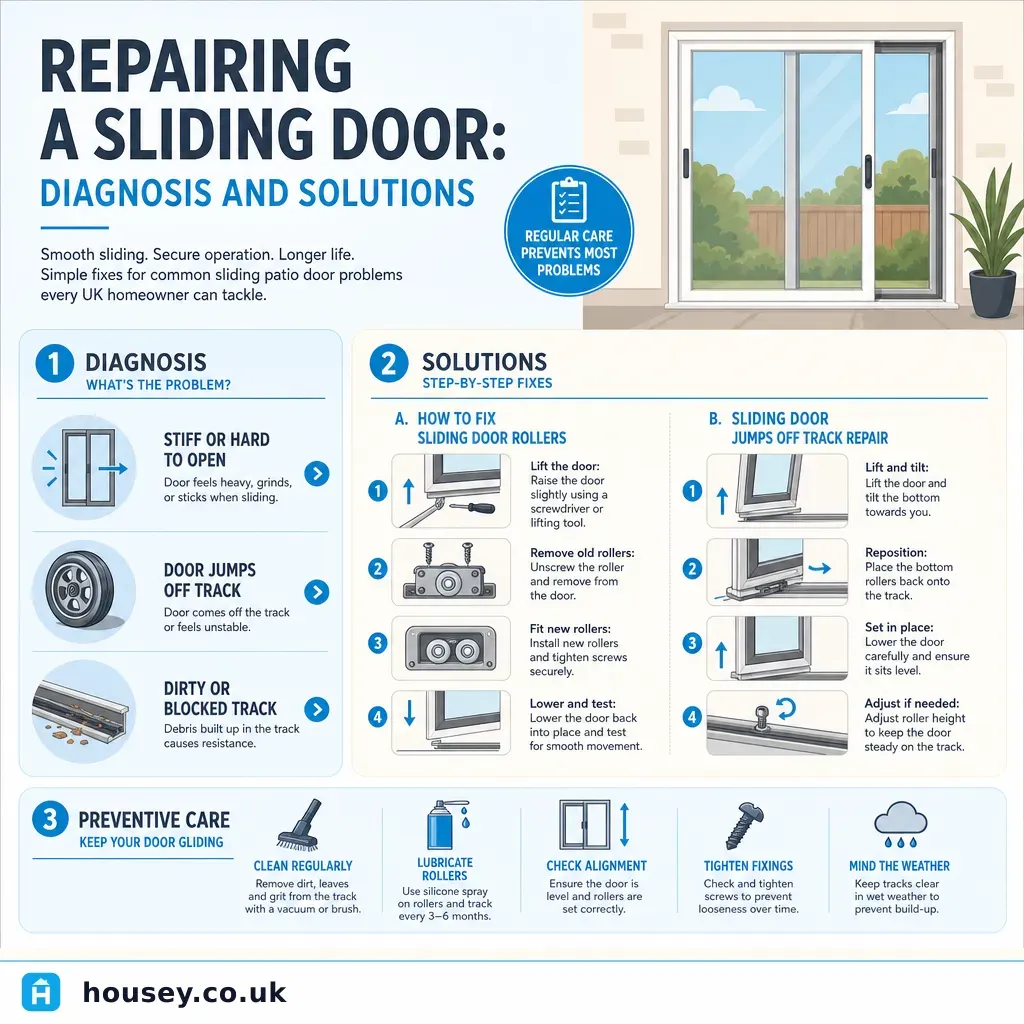
Repairing a Sliding Door: Diagnosis and Solutions
Most sliding door problems — stiffness, jumping off track, or draughts — are caused by dirty tracks, worn rollers, or misaligned guides.
 Improvement & Build
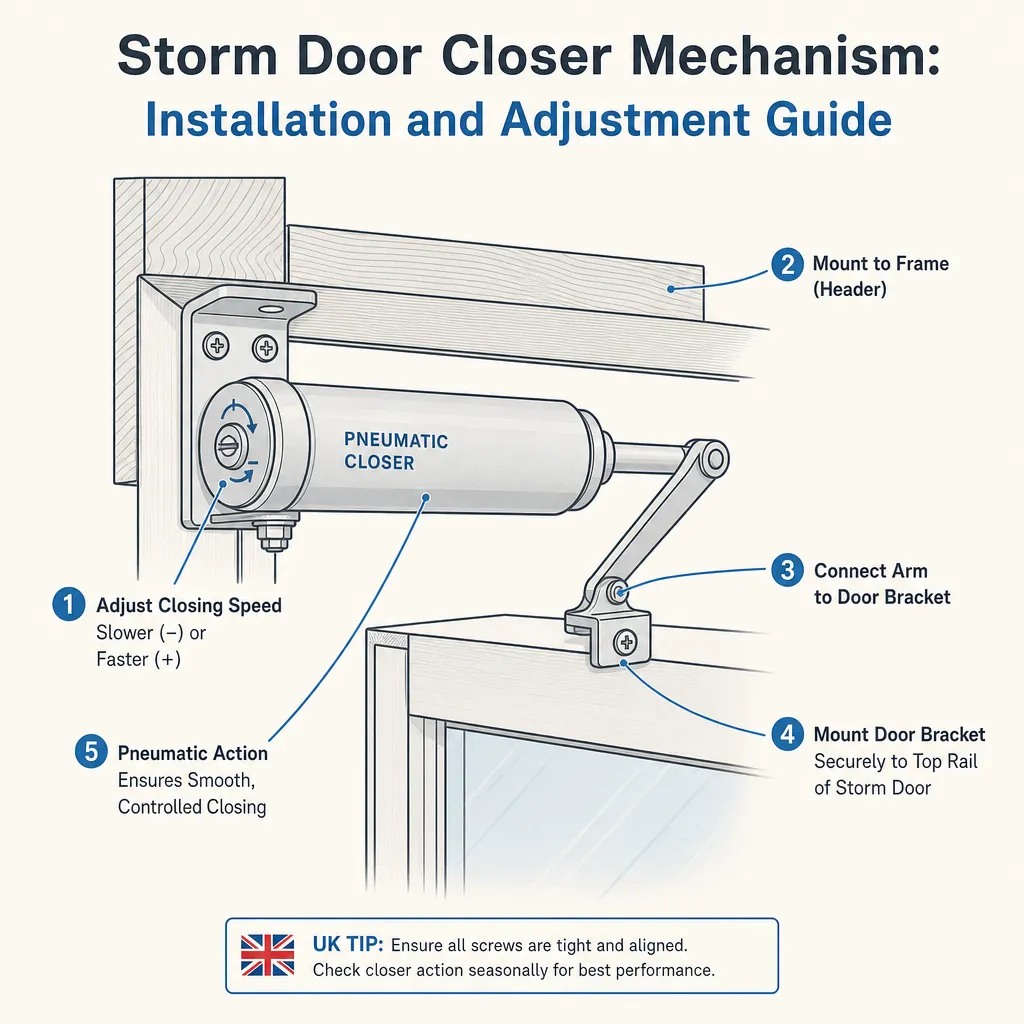
Storm Door Closer Mechanism: Installation and Adjustment Guide
Storm door closers are adjusted via a small screw at the end of the cylinder — clockwise slows the door, anticlockwise speeds it up.
 Improvement & Build
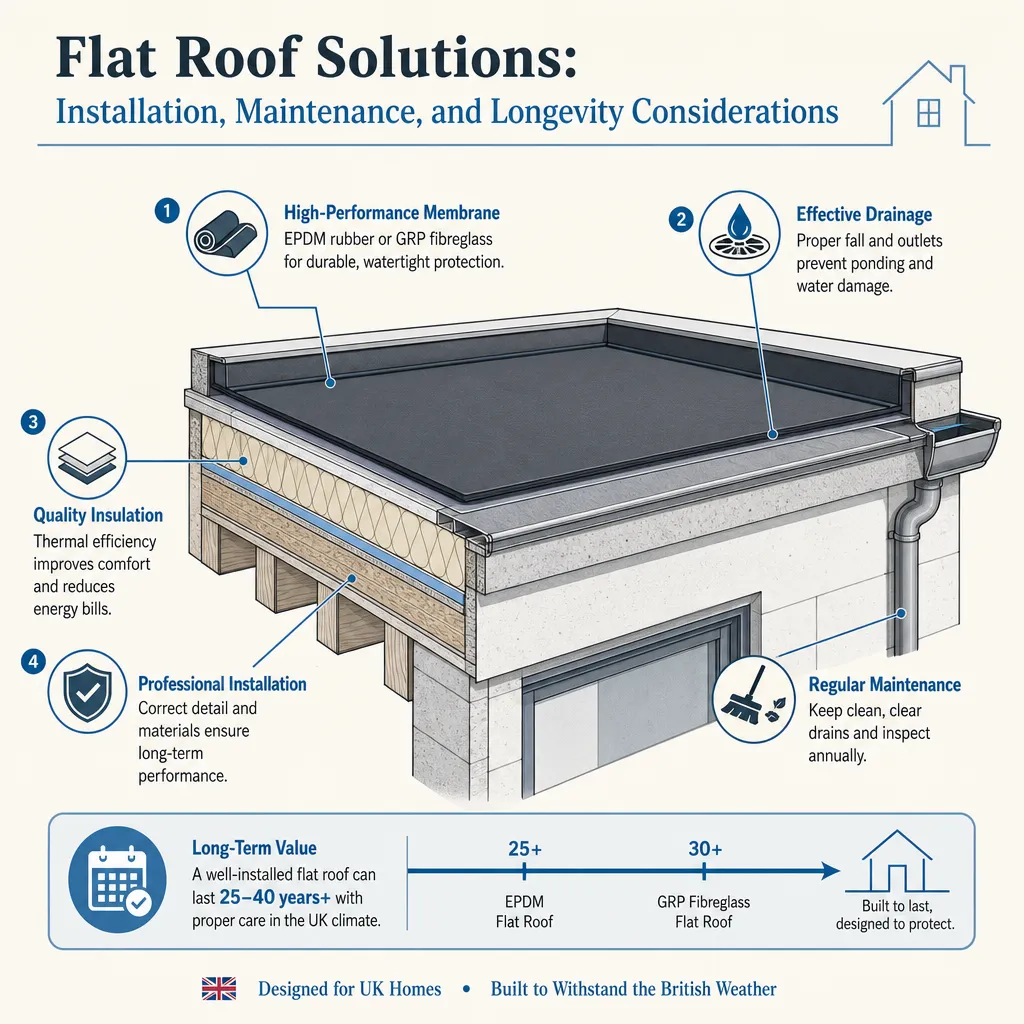
Flat Roof Solutions: Installation, Maintenance, and Longevity Considerations
Flat roofs use several waterproofing systems — EPDM rubber, GRP fibreglass, liquid-applied coatings, modified bitumen felt, lead, and zinc — each with different lifespans and installation requirements.
 Improvement & Build
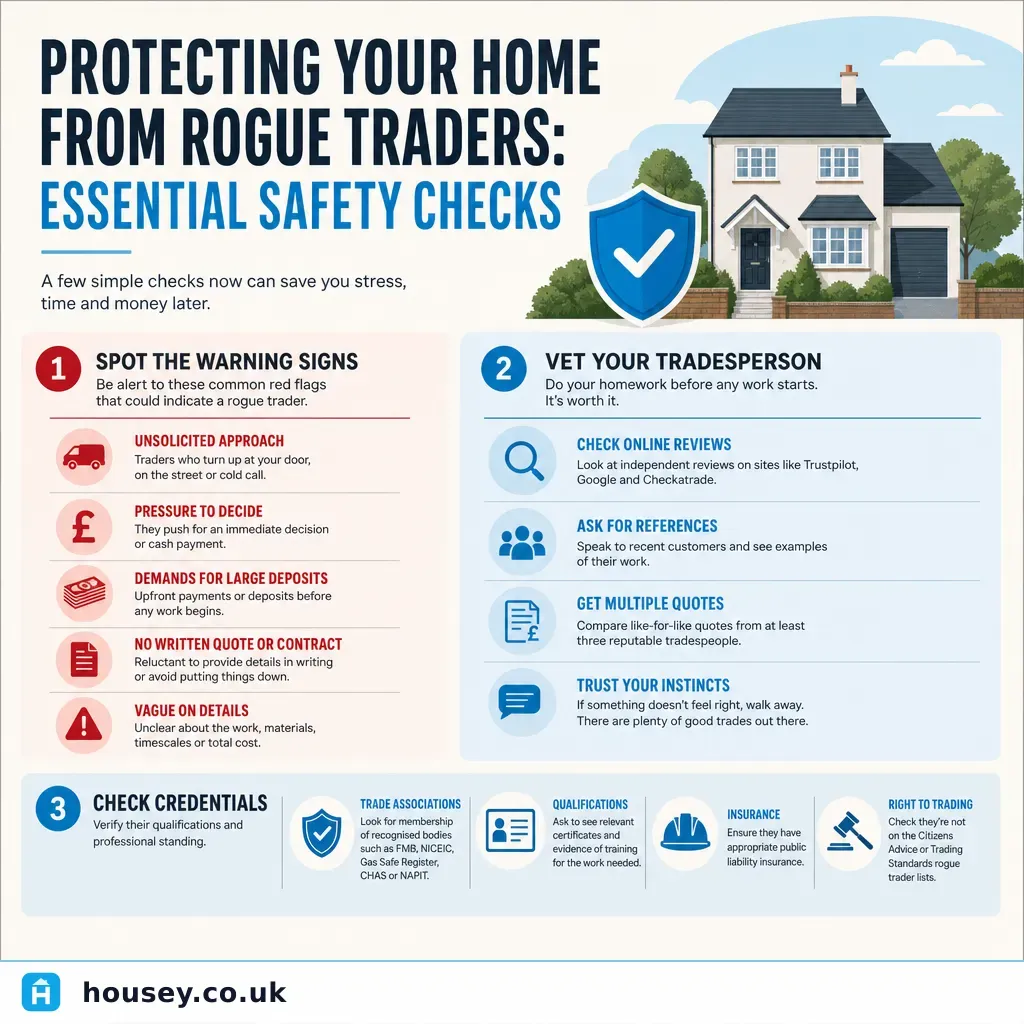
Protecting Your Home from Rogue Traders: Essential Safety Checks
Protect your home from rogue traders by verifying credentials before work starts: check for a trading address and company number, ask for references from recent local jobs, confirm any required scheme membership (Gas Safe, NICEIC, FENSA), and never pay cash in full upfront.
 Improvement & Build
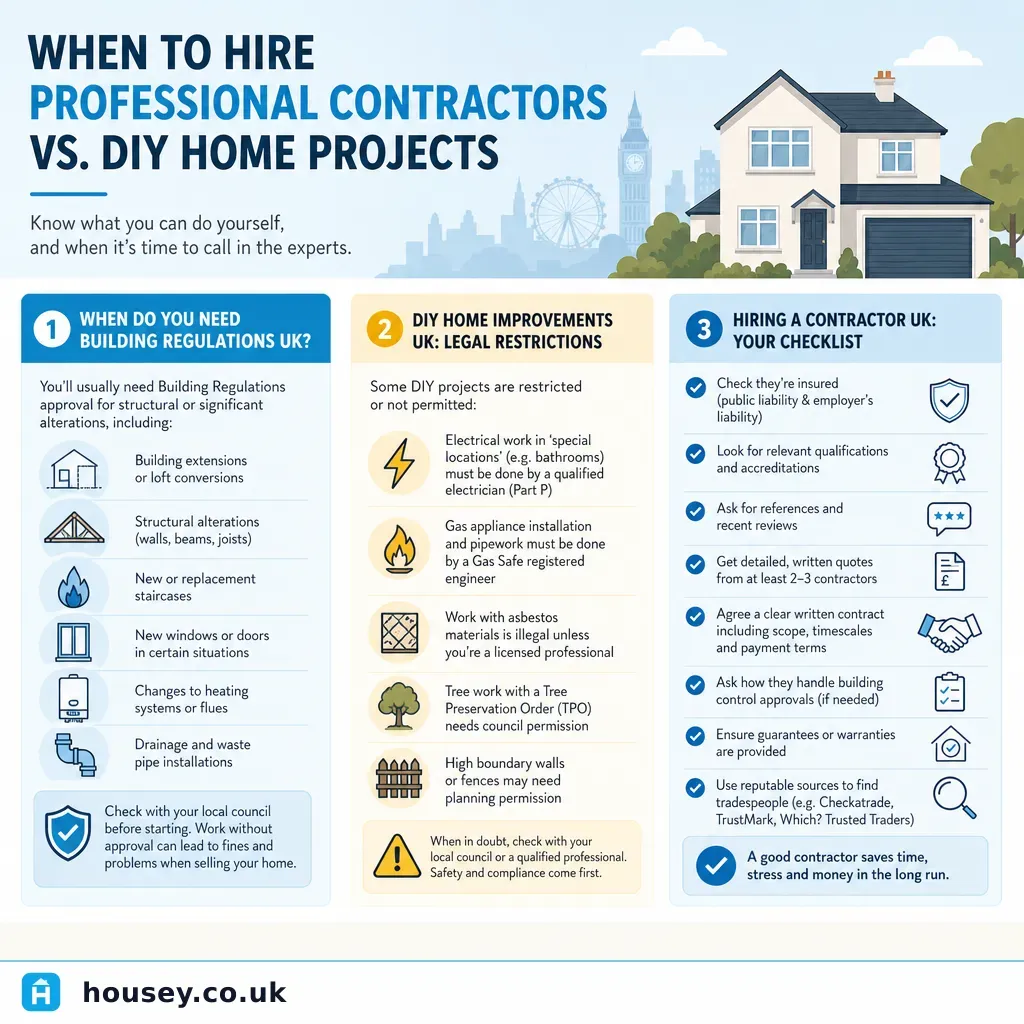
When to Hire Professional Contractors vs. DIY Home Projects
Some home improvement work — including gas fitting, consumer-unit electrical work, structural alterations, and asbestos removal — is legally restricted to qualified professionals in the UK.