Garage Door Spring Replacement and Maintenance Options
By Housey · Last reviewed 1st of June 2026
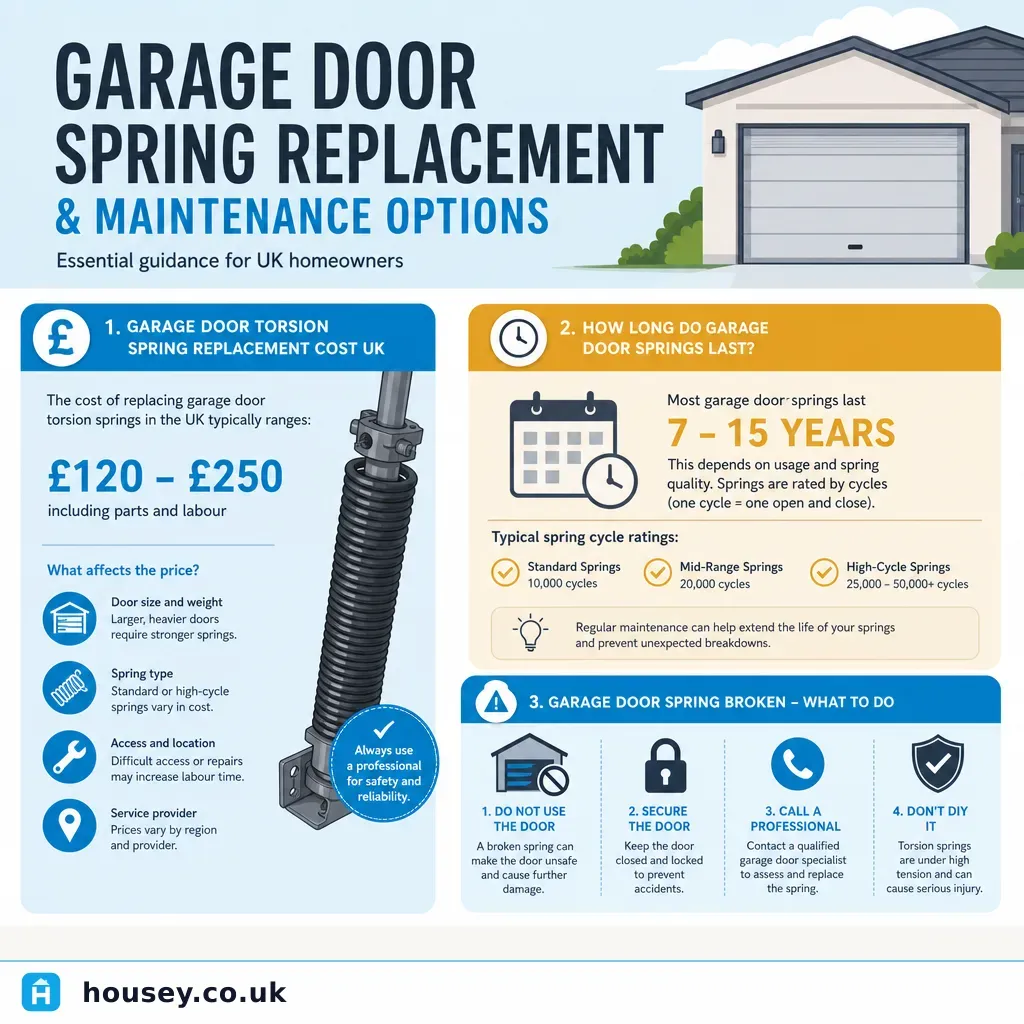
Garage Door Spring Replacement and Maintenance Options
Garage door springs fail with little warning — often announced by a loud bang followed by a door that will not open or feels impossibly heavy to lift manually. For most homeowners this is an unplanned maintenance task outside renovation budgets, arriving at an inconvenient moment. Understanding how the different spring types work, what routine care prolongs their life, and precisely when a specialist engineer is essential can prevent injury and unnecessary expense.
Key points
- Torsion springs, mounted horizontally above the door opening, store energy equivalent to several hundred foot-pounds of torque; they must never be adjusted, wound, or removed without specialist training and tools.
- Extension springs, mounted along the door tracks on older up-and-over doors, must always be fitted with safety cables threading through the coil — without these, a snapped spring can become a dangerous projectile.
- Standard garage door springs are rated for approximately 10,000 cycles; high-cycle springs reach 25,000–50,000 cycles, equivalent to roughly 7 and 17–34 years respectively at four operations per day.
- The correct DIY maintenance task is lubrication of spring coils with a silicone or lithium-based spray every six months; WD-40 is not a lubricant and should not be used on springs or metal mechanisms.
- Indicative cost for professional spring replacement is £100–£250 for a single spring and £150–£350 for a pair, depending on spring type, door weight, and engineer call-out rates (Indicative UK costs, last reviewed 2026-06-01).
How garage door springs work
There are two main spring systems used on UK residential garage doors:
Torsion springs are mounted horizontally above the door on a central shaft. As the door closes, the spring winds and stores energy; as the door opens, it unwinds and assists the lift. The stored energy in a wound torsion spring is substantial — if a spring snaps under full tension, the release is sudden and violent.
Extension springs run along the horizontal overhead tracks on each side of the door, stretching as the door closes and recoiling to assist opening. They are most common on older single-piece and up-and-over doors. Safety cables that thread through the spring coil are essential — they contain the spring if it snaps and prevent it launching across the garage.
Decision guide — who should do the work?
- Handle yourself if: the task is visual inspection, lubrication of coils and rollers, or cleaning of tracks.
- Call a qualified garage door engineer if: a spring has snapped, the door is visibly unbalanced, or grinding and popping sounds are audible during normal operation.
- Call urgently if: the door is stuck closed with a vehicle inside, or a snapped spring has caused visible damage to the door, cables, or opener mechanism.
- Consider full door replacement if: the spring has failed multiple times within five years, the door panels are heavily corroded, or you are adding an automatic opener to older hardware not designed for motorisation.
Spring types compared
Spring type | Common door types | Rated lifespan | DIY replacement safe? | Main failure risk |
|---|---|---|---|---|
Torsion spring | Sectional doors, modern up-and-over | 10,000–15,000 cycles | No — extreme danger | Sudden torque release causing injury |
High-cycle torsion spring | Heavy or high-frequency-use doors | 25,000–50,000 cycles | No | As above |
Extension spring | Older up-and-over, one-piece doors | 10,000 cycles | No — significant risk | Projectile snap if safety cable is absent |
Constant force spring | Some roller doors | 20,000+ cycles | Manufacturer guidance required | Mechanism damage if mishandled |
What causes springs to fail?
Springs fail for several interconnected reasons:
- Cycle fatigue. Metal fatigue is the primary cause — springs eventually snap once their rated cycle count is reached, regardless of maintenance.
- Lack of lubrication. Friction and heat from unlubricated coils accelerate wear significantly. This is the most preventable cause of premature failure.
- Incorrect spring specification. A spring undersized for the door weight works harder on every cycle and fails earlier. Spring selection must match door weight and height — this is an engineer's job, not an online calculation.
- Rust and surface corrosion. UK climate conditions, particularly in coastal areas, poorly ventilated garages, or high-humidity environments, accelerate corrosion on uncoated steel springs.
- Temperature extremes. Metal contracts in cold weather, increasing spring tension; failure on the first door operation of a cold winter morning is a common pattern.
Routine maintenance: what homeowners can safely do
A biannual maintenance routine extends spring life and helps identify problems early. This is the extent of safe DIY involvement:
Spring and door maintenance checklist (every 6 months):
Do not under any circumstances attempt to adjust spring tension, wind or unwind a torsion spring, or remove any spring — these tasks require specialist winding bars, knowledge of the correct turns count for the door weight, and training that protects against sudden release.
Choosing a replacement spring engineer
There is no UK-wide licensing scheme specific to garage door engineers, but reputable installers are often members of the Door and Hardware Federation (DHF) or hold manufacturer-specific training certifications. When comparing quotes:
- Request a written quote specifying spring type, cycle rating, and whether balance testing and adjustment are included in the price.
- Confirm whether disposal of old hardware and a labour warranty are included.
- Ask whether all other moving parts — cables, rollers, hinges, and opener connections — will be inspected and lubricated during the same visit.
- Check whether the automatic opener, if fitted, will be recalibrated after spring replacement, as force and sensitivity settings usually need adjusting once new springs are installed.
When to consider a full door replacement
A spring replacement is cost-effective on an otherwise sound door. A full replacement may offer better long-term value if:
- Springs have failed more than once within a five-year period.
- Door panels are single-skin steel showing significant corrosion or structural deformation.
- The garage is a heated or converted space — a thermally broken, insulated sectional door significantly reduces heat loss compared with an older uninsulated panel type.
- You are adding an automatic opener — some older door frames and hardware are not designed for motorisation, and a complete door and opener package may cost little more than adapting unsuitable existing hardware.
When to get professional help
Any task involving spring tension requires a qualified engineer. Stop using the door immediately and call a professional if:
- A spring has visibly snapped or separated along its coil length.
- The door drops suddenly when manually lifted to waist height, or feels extremely heavy compared with normal.
- The automatic opener strains audibly, stalls, or reverses immediately after activation.
- A cable has come off the drum or is visibly frayed anywhere along its length.
- The door has come partially or fully off its tracks.
How Housey can help
Housey is building a network of vetted local tradespeople across home improvement and maintenance categories. When searching for a garage door specialist independently, look for Door and Hardware Federation (DHF) membership, ask for a written quote specifying the spring cycle rating and door weight confirmation, and request that a full balance test is included on completion.
Frequently asked questions
Is it safe to replace garage door springs myself?
For torsion springs, no — the stored mechanical energy can cause severe injury if released suddenly, and this is not a DIY task regardless of online tutorials. Extension springs are also under significant tension and can snap without warning. Spring replacement on any garage door type should always be carried out by a qualified garage door engineer with appropriate tools and training.
How long do garage door springs last?
Standard springs are rated for approximately 10,000 cycles — roughly seven years at four daily operations. High-cycle springs last proportionally longer at 25,000–50,000 cycles. Lifespan depends on cycle count and maintenance condition rather than a fixed calendar schedule; regular lubrication is the most effective way to reach the rated cycle count before failure occurs.
Can I use WD-40 to lubricate garage door springs?
No — WD-40 is a water-displacing solvent, not a lubricant. It temporarily removes moisture but leaves no lasting lubricating film and can dry out metal coils over time. Use a silicone-based spray or white lithium grease, applied sparingly along the spring coils every six months for effective ongoing protection.
What is the difference between a torsion spring and an extension spring?
Torsion springs mount horizontally above the door on a central shaft and work by twisting to store torque. Extension springs run along the overhead tracks and work by stretching to store tension. Torsion springs are standard on modern sectional doors and generally safer in failure; extension springs are common on older up-and-over doors and require safety cables to prevent injury if they snap.
Sources and further reading
Useful next reads
 Improvement & Build
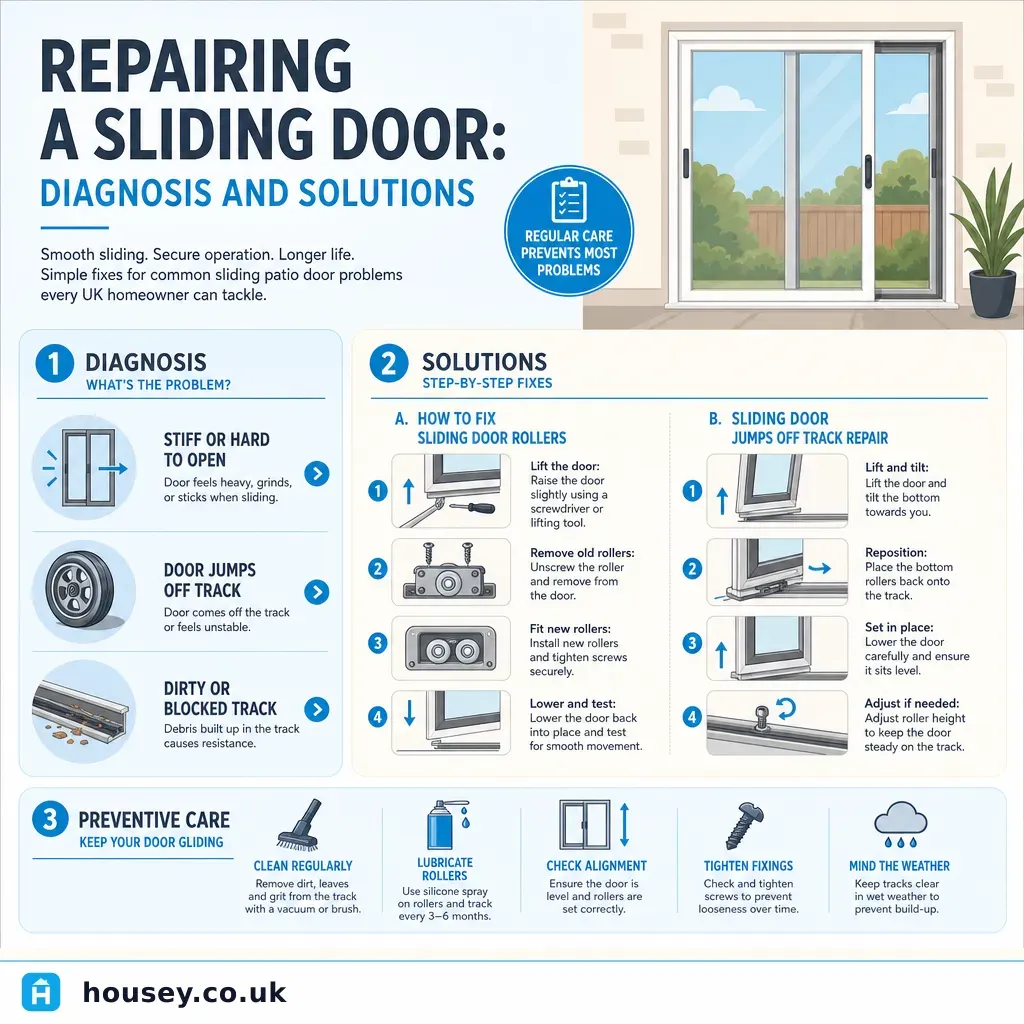
Repairing a Sliding Door: Diagnosis and Solutions
Most sliding door problems — stiffness, jumping off track, or draughts — are caused by dirty tracks, worn rollers, or misaligned guides.
 Improvement & Build
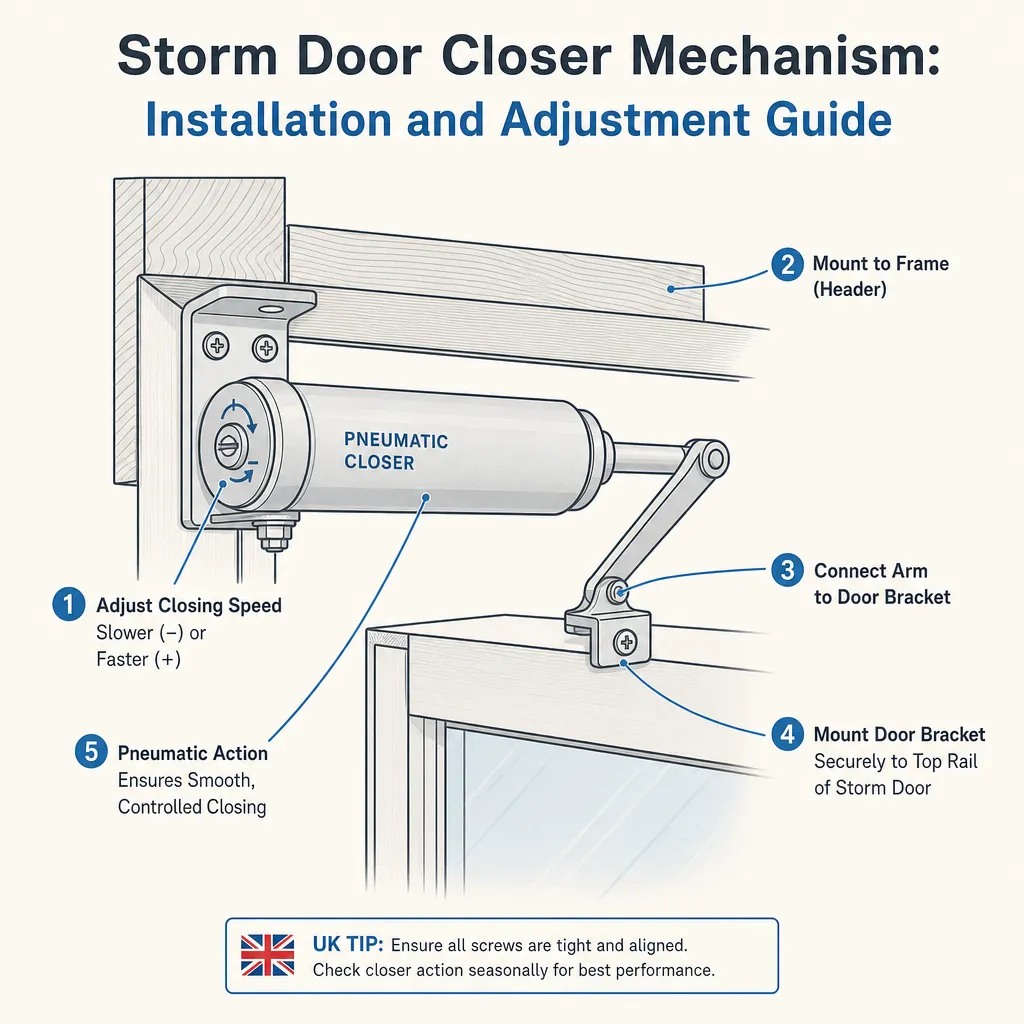
Storm Door Closer Mechanism: Installation and Adjustment Guide
Storm door closers are adjusted via a small screw at the end of the cylinder — clockwise slows the door, anticlockwise speeds it up.
 Improvement & Build
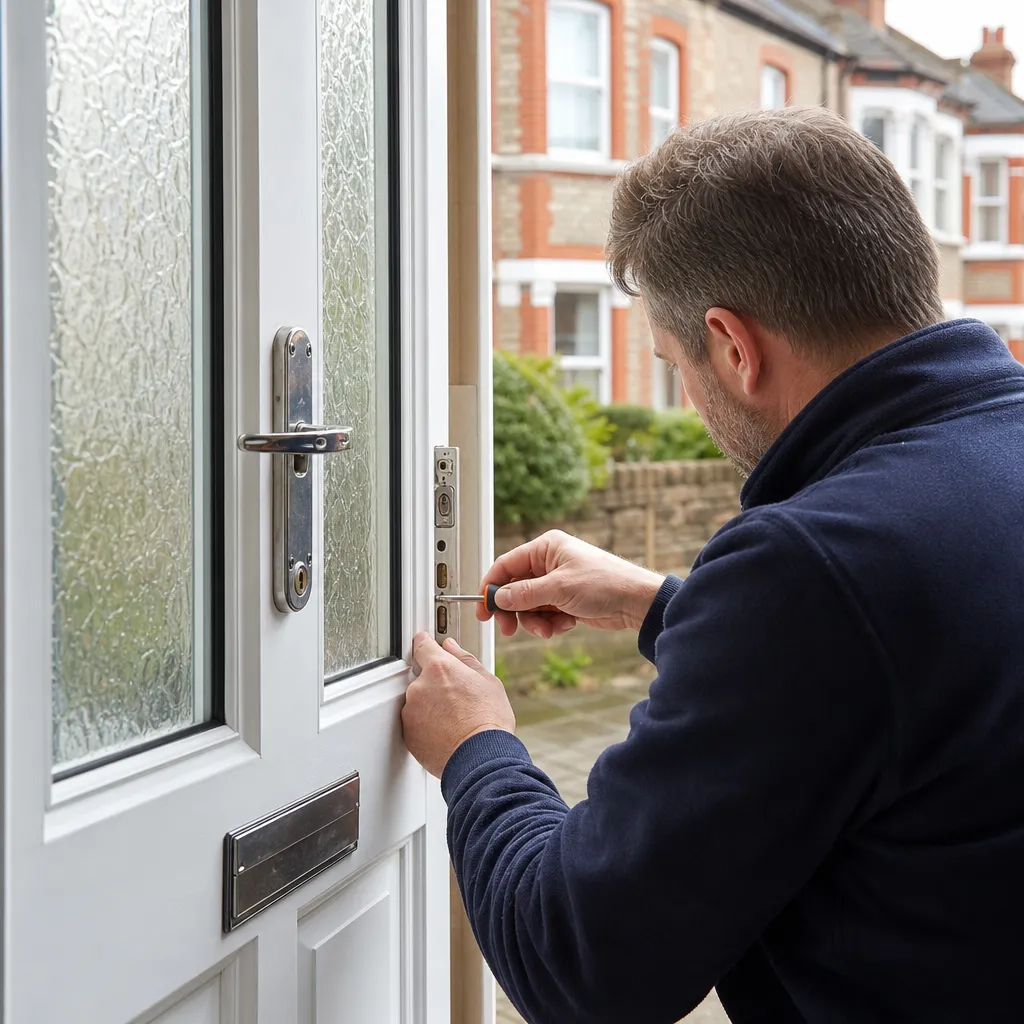
Fixing Sticking uPVC Door Locks: Diagnosis and Solutions
A sticking uPVC door lock is usually caused by a dry or corroded cylinder, misaligned door frame, or a worn multipoint mechanism.
 Improvement & Build
How to Find and Vet Professional Roofing Contractors
Professional roofing contractors should carry public liability insurance of at least £2m, provide a written workmanship guarantee, and hold accreditation from a recognised body such as the NFRC or the Competent Roofer scheme.
 Improvement & Build
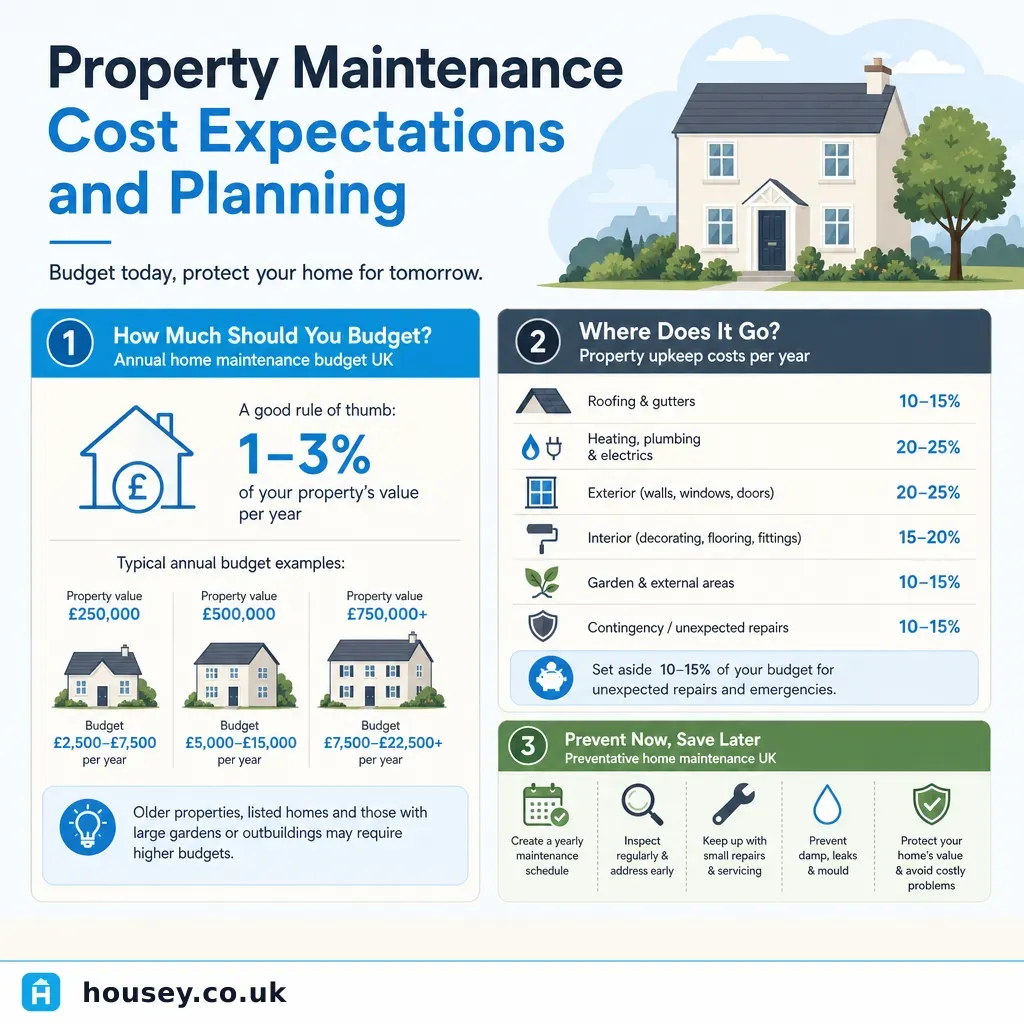
Property Maintenance Cost Expectations and Planning
UK homeowners typically budget between 1% and 3% of their property's value annually for maintenance and repairs.