Concrete Driveway Thickness: Building Standards and Construction Specifications
By Housey · Last reviewed 25th of May 2026
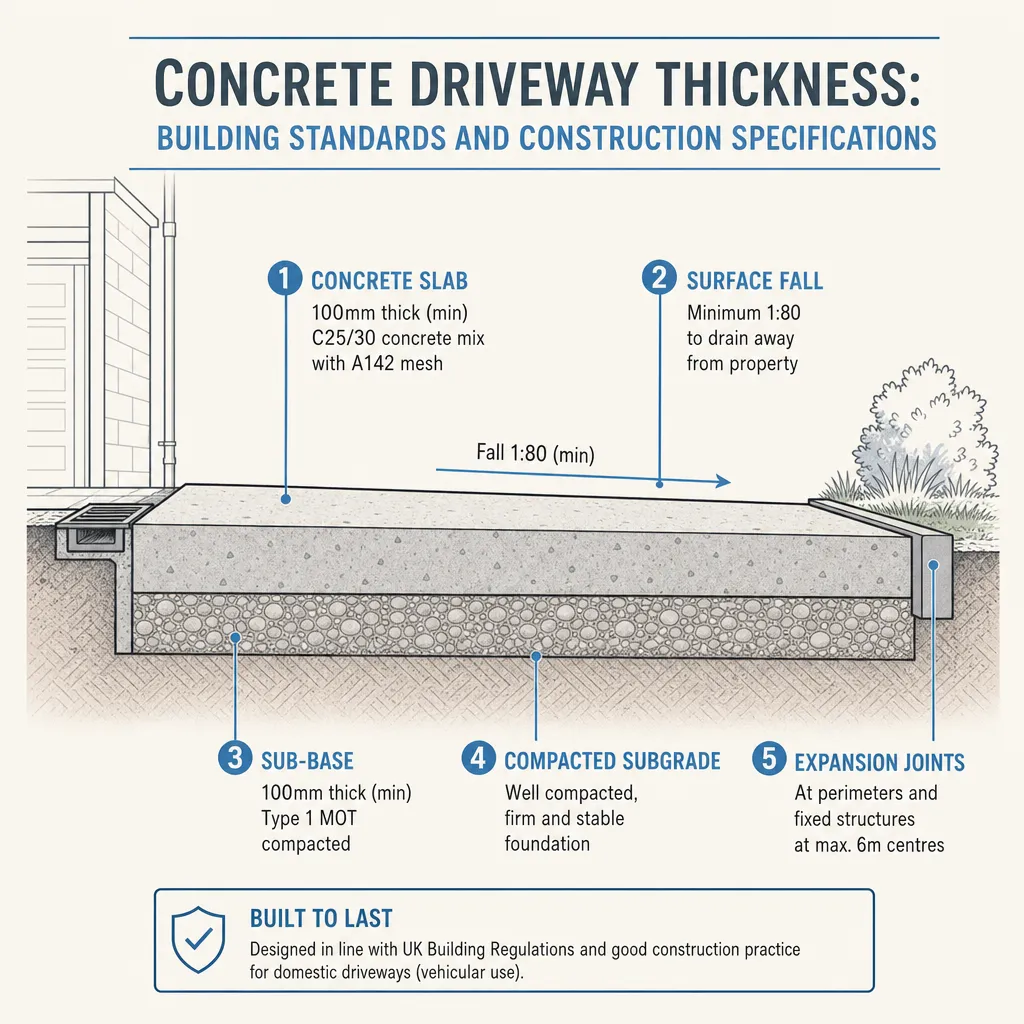
Concrete Driveway Thickness: Building Standards and Construction Specifications
Laying a new concrete driveway is one of the most permanent improvements a homeowner can make to their property. Get the specification wrong — laying the slab too thin, skimping on the sub-base, or choosing the wrong concrete mix — and the result can be cracking, settlement, or a surface that fails within a few winters. Understanding the correct build-up before work starts is the most cost-effective protection against expensive remedial works later.
Key points
- Standard domestic driveways for cars require a minimum 100mm (4 inches) of concrete, laid on a compacted sub-base of at least 100mm MOT Type 1 hardcore.
- Driveways used by heavier vehicles — vans, light goods vehicles, or lorries — should use 150mm concrete and a deeper, more robust sub-base.
- The correct concrete mix for a domestic driveway is typically C30 (standard cars) or C35 (heavier loads or freeze-thaw-exposed areas).
- New hard surfaces over 5m² in front gardens in England may require planning permission unless a permeable surface or suitable drainage is provided, under Permitted Development Class F rules.
- Reinforcement mesh (A142 or A193 steel fabric) is recommended for most domestic concrete driveways to control shrinkage cracking and distribute load.
What thickness of concrete does a driveway need?
The required thickness depends primarily on the loads the slab must carry.
Use case | Minimum concrete thickness | Recommended sub-base depth | Notes |
|---|---|---|---|
Domestic cars only | 100mm | 100mm MOT Type 1 | Standard for most residential driveways |
Cars and occasional van | 125mm | 125mm MOT Type 1 | Sensible for properties with regular delivery vehicles |
Regular vans or light goods | 150mm | 150mm MOT Type 1 | Requires stronger concrete mix (C35) |
HGVs or heavy vehicles | 200mm+ | 200mm+ engineered fill | Consult a structural engineer |
These figures assume the ground beneath is stable and well-drained. If the existing ground is made-up fill, has a history of movement, or sits over clay, a structural engineer or experienced driveway installer should assess conditions before specifying depth.
Sub-base: the layer that determines long-term performance
The concrete slab is only as good as what sits beneath it. A properly compacted sub-base of MOT Type 1 crushed limestone or granite distributes load to the ground and resists frost heave — the upward movement caused by frozen ground expanding in cold winters.
Skipping the sub-base, or using ungraded rubble, is one of the most common causes of driveway cracking and settlement. A reputable installer will:
- Excavate to the required depth (sub-base + concrete + any edging detail).
- Lay and compact the MOT Type 1 in layers no greater than 150mm before each pass of the compactor.
- Test for level and firm contact across the whole area before pouring concrete.
Where the ground is soft cohesive clay or the water table is high, a geotextile separation membrane between sub-grade and sub-base helps prevent materials mixing over time and maintains the integrity of the load-bearing layer.
Concrete mix specification
For domestic driveways in England, Wales, and Scotland, the standard concrete mix designations are:
- C30/37 (RC30) — general domestic use, suitable for most regions and standard car traffic.
- C35/45 (RC35) — heavier loads, higher-traffic use, or exposed northern and Scottish locations where repeated freeze-thaw cycling is a concern.
Ready-mixed concrete is the most reliable option for larger areas — it ensures a consistent water-cement ratio, which directly affects compressive strength and long-term durability. On-site mixed concrete is more prone to variability in the water content and should not be used for slabs where long-term performance matters. Always request the delivery ticket for a ready-mix pour: it records the mix class, slump, and time of dispatch.
Reinforcement and jointing
Concrete shrinks slightly as it cures. Without measures to manage that shrinkage, the result is random surface cracking. Two techniques address this:
Steel fabric reinforcement — A142 mesh (6mm bar at 200mm centres) or A193 mesh for heavier-use driveways is positioned in the lower third of the slab on 40mm plastic chairs before the pour. The reinforcement holds any cracks that do form tightly closed, preventing them from widening over time.
Expansion joints and crack-control joints — Isolation joints around fixed objects such as walls and drain covers prevent differential movement from cracking the slab at those points. Crack-control joints formed or cut into the slab surface at approximately 3m centres give the concrete a preferred location to shrink, avoiding random visible cracking across the main surface area.
Planning rules for front-garden driveways
Under Schedule 2, Part 1, Class F of the Town and Country Planning (General Permitted Development) (England) Order 2015, laying a hard surface in a front garden is permitted development (no planning application needed) only if:
- The hard surface area is under 5m², or
- Any surface over 5m² uses a permeable material (such as permeable block paving, gravel, or porous asphalt), or
- Drainage is directed to a lawn or planted border rather than the highway.
If you intend to lay a solid impermeable concrete slab larger than 5m² in a front garden, you will need to submit a householder planning application to your Local Planning Authority (LPA). Check with your LPA if the property is in a conservation area or is listed, as additional consent may apply. Rules in Wales and Scotland differ — consult the Planning Portal or your local council before starting work.
Which professional handles concrete driveway installation?
- Choose a specialist driveway installer for a standard domestic slab within the specifications above.
- Consult a structural engineer if ground conditions are uncertain, the property sits on filled or made-up land, or vehicles heavier than a transit van will use the surface regularly.
- Check with your LPA before starting if the driveway is in a front garden and will be an impermeable surface over 5m², or if the property is listed or within a conservation area.
Homeowner checklist: before your concrete driveway is laid
When to get professional help
Most concrete driveway projects can be completed by a competent specialist installer without structural engineering input. Seek specialist advice if:
- The ground at formation level looks soft, wet, or inconsistent across the area.
- There is evidence of nearby trees whose roots could lift or crack the sub-grade.
- The driveway is required to serve commercial vehicles on a regular basis.
- The site has a slope steeper than approximately 1:10 and surface drainage requires careful design.
- The property is listed or in a conservation area where materials may be subject to restrictions.
How Housey can help
Housey connects you with vetted driveway installers who understand local ground conditions and can specify, supply, and lay concrete to the correct standards. Use Housey to compare quotes and check credentials before any work starts.
Frequently asked questions
How thick should a concrete driveway be for a car?
A minimum of 100mm (4 inches) of concrete is recommended for a domestic driveway used by standard passenger cars. This should sit on a compacted sub-base of at least 100mm MOT Type 1 hardcore. Thinner slabs are more prone to cracking, particularly in cold weather or on softer ground.
Do I need planning permission for a concrete driveway?
In England, you need planning permission for an impermeable hard surface larger than 5m² in a front garden. If the driveway uses a permeable surface or drains to a lawn or border, permitted development rights apply regardless of size. In Wales and Scotland, rules differ — always check with your local planning authority before starting work.
How long does concrete take to cure on a driveway?
Concrete reaches sufficient strength for light foot traffic within about 7 days and is typically ready for vehicles after 28 days. Avoid driving on a new slab before the 28-day mark, and protect the surface from direct sunlight, frost, and rain in the first week to aid proper curing.
Can I lay concrete directly on soil?
No. Concrete laid on unprepared subsoil will settle unevenly and crack. A compacted sub-base of MOT Type 1 is essential to distribute loads and prevent frost heave. In poor ground conditions, a deeper sub-base or geotextile separation layer may be needed.
Sources and further reading
- Planning Portal — Driveways guidance — Planning Portal
- Town and Country Planning (General Permitted Development) (England) Order 2015, Schedule 2, Part 1, Class F — legislation.gov.uk
- The Concrete Centre — concrete mix design guidance — The Concrete Centre
- Building Research Establishment — drainage and hard surfacing — BRE
Useful next reads
 Improvement & Build
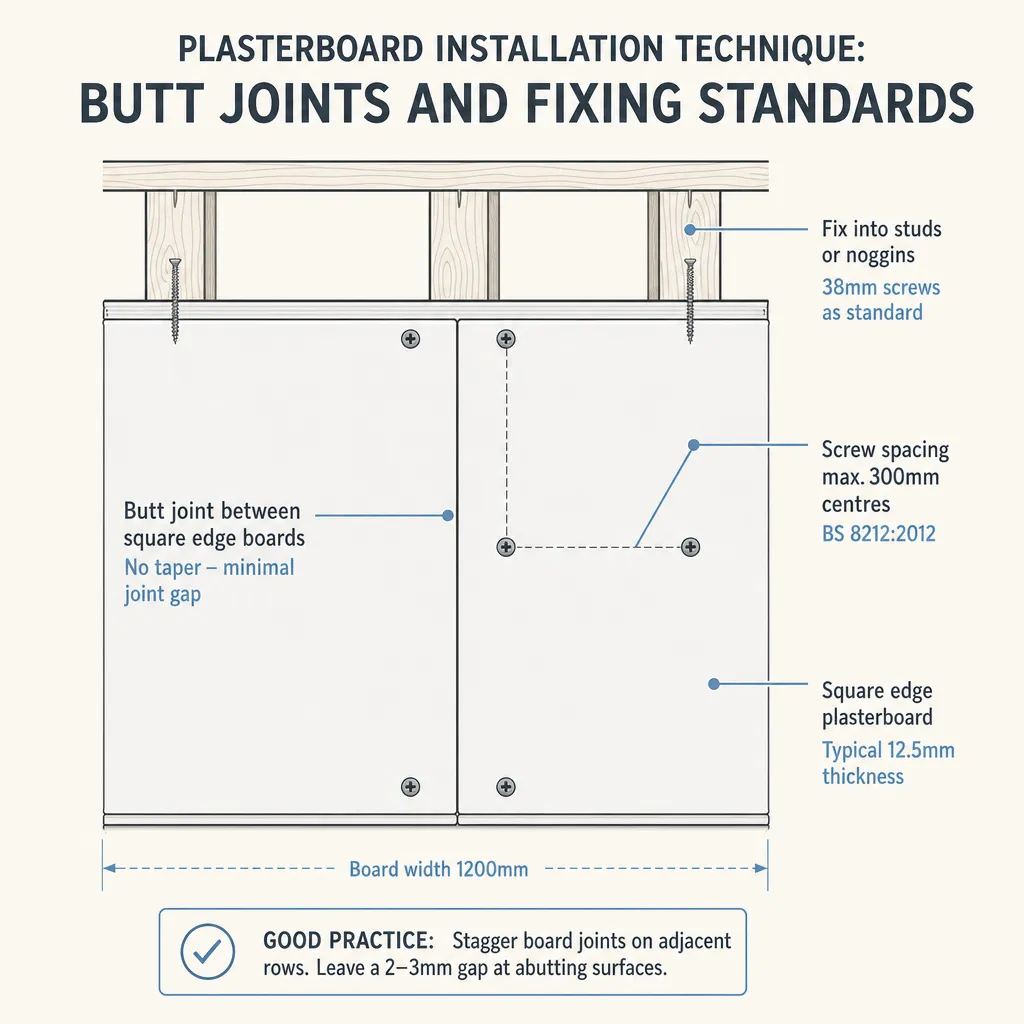
Plasterboard Installation Technique: Butt Joints and Fixing Standards
Butt joints in plasterboard — where two square-cut edges meet — need jointing compound feathered over at least 200mm each side to avoid a visible ridge after decoration.
 Improvement & Build
Green Building Materials for Home Renovations and Extensions
Green building materials are those with lower embodied carbon, better whole-life environmental performance, or improved breathability compared to conventional alternatives.
 Improvement & Build
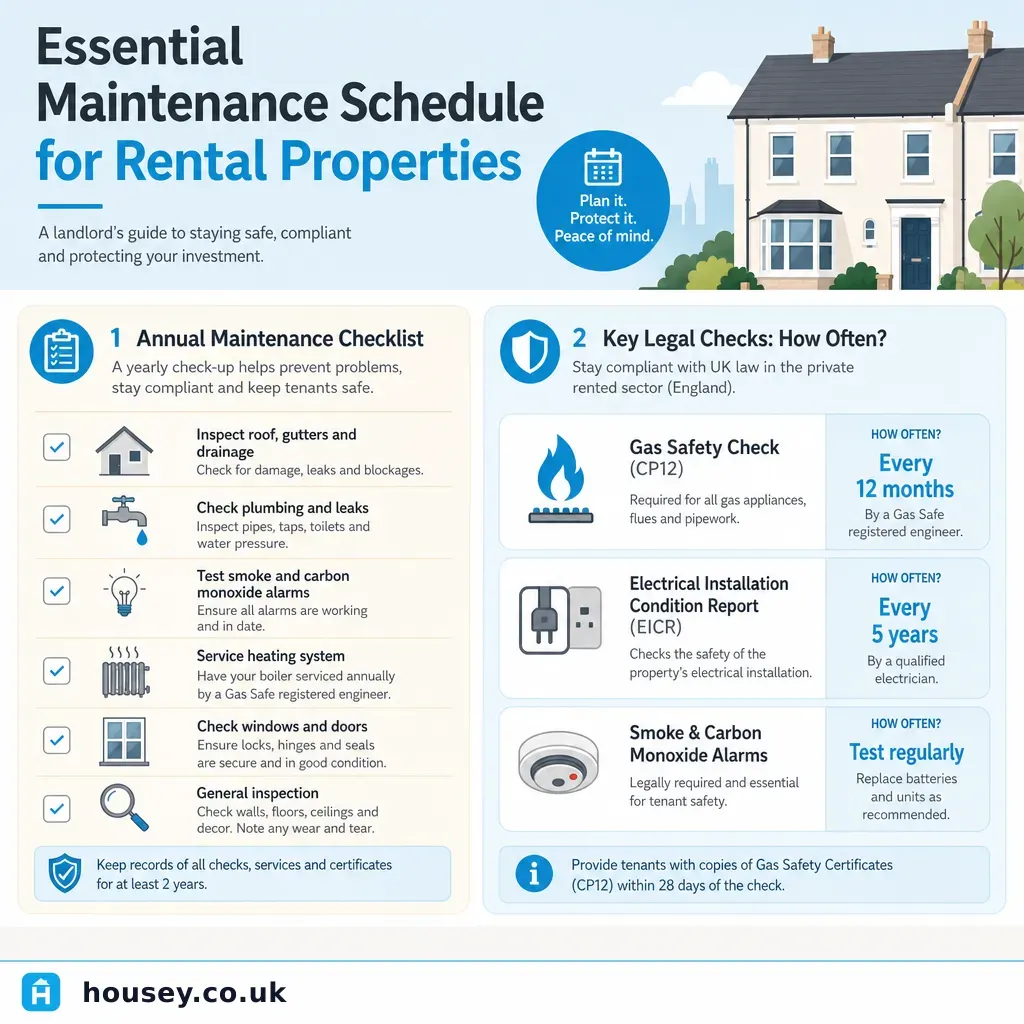
Essential Maintenance Schedule for Rental Properties
UK rental properties need an annual Gas Safety Record, an EICR every five years, smoke alarms on every storey, and seasonal maintenance checks for gutters, roofing, heating, and damp.
 Improvement & Build
Window Replacement Fundamentals: Standards and Best Practice for UK Properties
Replacement windows in England must achieve a whole-window U-value of 1.
 Improvement & Build
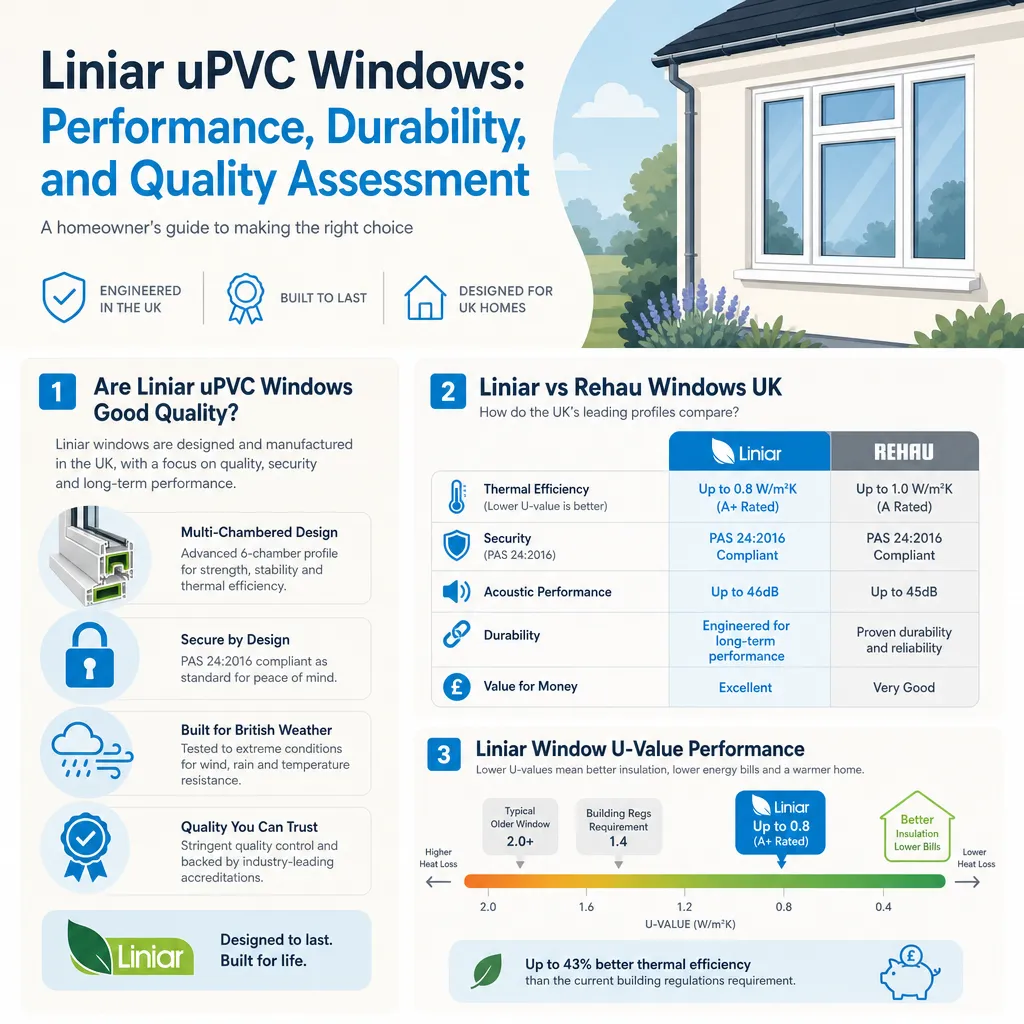
Liniar uPVC Windows: Performance, Durability, and Quality Assessment
Liniar uPVC window profiles are manufactured in the UK using multi-chambered, foamed frames.