Essential Maintenance Schedule for Rental Properties
By Housey · Last reviewed 30th of May 2026
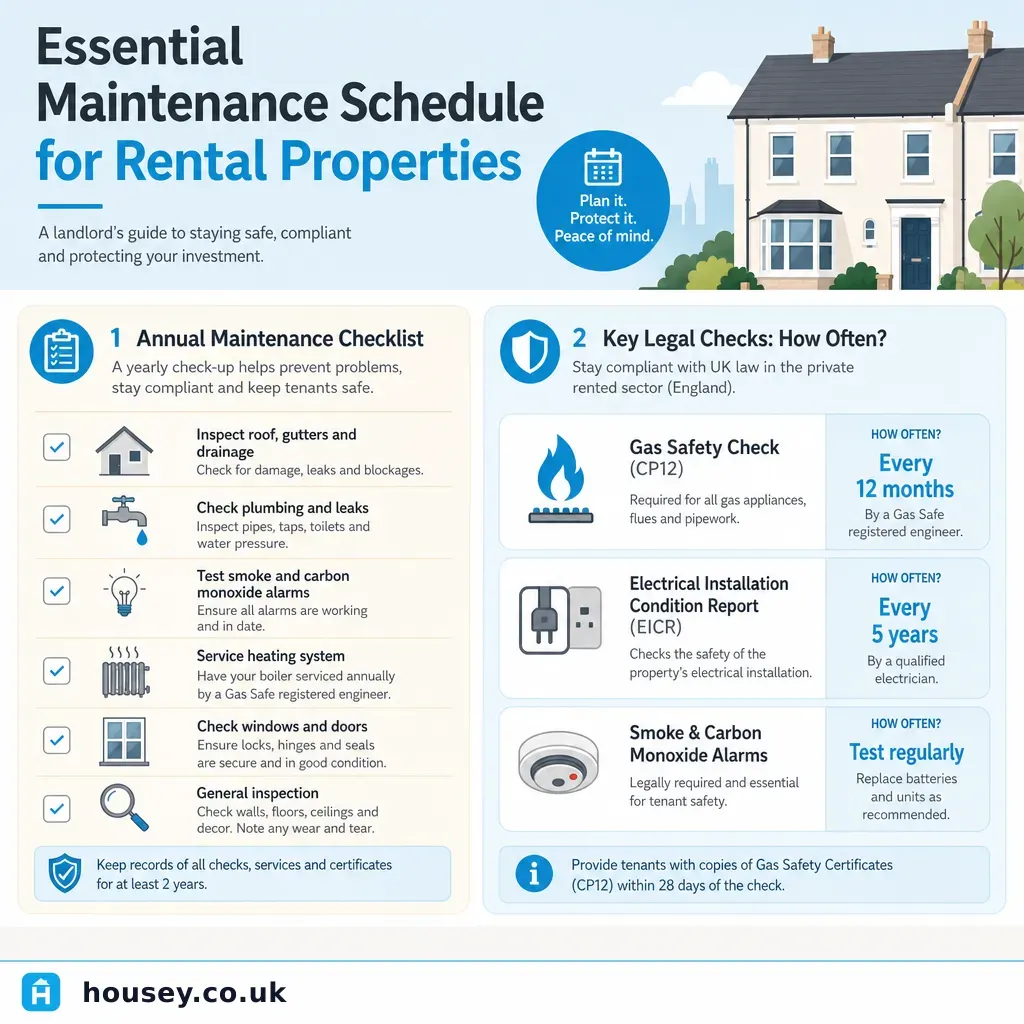
Essential Maintenance Schedule for Rental Properties
Rental property compliance in the UK has grown considerably more demanding over the past decade, with specific inspection intervals, certificate requirements, and hazard-response obligations now carrying legal weight. Landlords who manage maintenance reactively — responding only when tenants raise complaints — risk enforcement action from local authorities, invalid insurance policies, and in the most serious cases, criminal liability. A structured annual maintenance schedule replaces guesswork with a documented programme that protects both tenants and the landlord's investment.
Key points
- Annual Gas Safety Records are a legal requirement under the Gas Safety (Installation and Use) Regulations 1998; a copy must be given to existing tenants within 28 days and to new tenants before or at the start of the tenancy.
- Electrical Installation Condition Reports (EICRs) are required at least every five years for privately rented homes in England under the Electrical Safety Standards in the Private Rented Sector (England) Regulations 2020.
- Smoke alarms must be fitted on every storey of a rental property, and a carbon monoxide alarm provided in any room with a solid fuel burning appliance, under the Smoke and Carbon Monoxide Alarm (Amendment) Regulations 2022.
- A documented Legionella risk assessment is a strong legal expectation under HSE ACOP L8; landlords of simple domestic properties can carry out the assessment themselves, but a written record is essential.
- Properties in England must have an EPC rating of at least Band E to be legally let; a Band C minimum may apply from 2028 under proposed future Minimum Energy Efficiency Standards.
Legal compliance framework at a glance
Requirement | Minimum frequency | Governing legislation | Qualified professional required |
|---|---|---|---|
Gas Safety Record | Every 12 months | Gas Safety (Installation and Use) Regulations 1998 | Gas Safe registered engineer |
Electrical Installation Condition Report (EICR) | Every 5 years | Electrical Safety Standards in the Private Rented Sector (England) Regulations 2020 | NICEIC or NAPIT registered electrician |
Smoke alarms on every storey | Check at start of each tenancy | Smoke and Carbon Monoxide Alarm (Amendment) Regulations 2022 | Landlord checks; electrician for hard-wired faults |
CO alarms in rooms with solid fuel appliances | Check at start of each tenancy | As above | As above |
Energy Performance Certificate (EPC) | Every 10 years, or on marketing | Energy Performance of Buildings Regulations 2012 | Accredited domestic energy assessor |
Legionella risk assessment | No fixed interval; review when conditions change | HSE ACOP L8 | Landlord self-assessment acceptable for simple properties |
Note: Scotland and Wales have broadly equivalent but distinct obligations. Northern Ireland has separate legislation. HMO licences carry additional requirements.
Building a 12-month maintenance calendar
January–March
- Check for damp and condensation following winter rainfall: inspect loft spaces, external walls of solid-wall homes, and ground-floor perimeter rooms
- Clear gutters and downpipes of winter debris; check for blockages or storm damage
- Inspect external joinery — window frames and external doors — for decay or seal failure
- Book the annual Gas Safety Record for spring or early summer; winter emergency queues for Gas Safe engineers are longer and more expensive
April–June
- Complete annual Gas Safety Record if not done in Q1 — this is a legal requirement
- Test all smoke alarms and carbon monoxide detectors; replace batteries in non-mains units
- External inspection: roof tiles, flashings, pointing, fascias and soffits, chimney stacks
- Check window and door seals; plan replacement if significant energy loss or security risk is present
July–September
- EICR planning: confirm whether the 5-year inspection window is approaching; book with a registered electrician well in advance — lead times can extend several weeks
- If the property has been vacant for more than a week, flush all outlets and check hot water temperature before re-letting (Legionella precaution, per HSE ACOP L8 guidance)
- Check mechanical ventilation in bathrooms and kitchens; service or replace extractor fans before winter if needed
- Garden maintenance if included in tenancy obligations
October–December
- Gutter clearance following leaf fall — a key preventive measure against penetrating damp
- Bleed radiators; confirm heating system is fully operational before cold weather sets in
- Visually inspect the roof following autumnal storms; arrange professional inspection if tiles have shifted or water ingress is suspected
- Confirm Gas Safety Record is current — it must not lapse while tenants are in occupation
What to check at the start and end of each tenancy
Start of tenancy checklist
End of tenancy checklist
Important limitations
This article provides general guidance on common maintenance and compliance obligations for landlords in England. Regulations vary between England, Scotland, Wales, and Northern Ireland. Houses in Multiple Occupation (HMOs) carry additional obligations — including more frequent electrical inspections and specific fire safety requirements — not covered here. Leasehold properties, listed buildings, and properties in conservation areas may have additional restrictions. This article does not constitute legal or professional safety advice. Requirements change; always verify against the current version of any regulation before acting, and consult a solicitor if you are uncertain about your specific obligations.
When this becomes urgent
Stop relying on a general guide and seek qualified professional help immediately if:
- A tenant reports a gas smell or suspected gas leak — call the Gas Emergency Service (0800 111 999) immediately and do not re-enter the property until it is declared safe
- Your property does not have a current Gas Safety Record while tenants are in situ — arrange an emergency Gas Safe inspection
- An electrician identifies a category C1 (danger present) code in an EICR — remediation is required before the property can safely remain occupied
- Your property has no working smoke alarms or they are found to be faulty and cannot be repaired promptly
- Your local authority issues an improvement notice under the HHSRS — you have a legal obligation to comply within the stated timescale
- A tenant reports a fire, structural failure, or significant flooding — arrange professional inspection before re-occupation
What to ask a qualified professional
Before instructing a Gas Safe engineer for the annual safety check:
- Can you confirm your Gas Safe registration number, and may I verify it on the Gas Safe Register website?
- Will you inspect all landlord-supplied gas appliances, not just the boiler?
- What documentation will I receive on completion, and within what timeframe?
- If a fault is found, will you provide a separate remediation quote on the same visit?
Before instructing an electrician for an EICR:
- Are you registered with NICEIC, NAPIT, or another approved scheme under the Electrical Safety Standards Regulations 2020?
- Does the inspection cover all fixed wiring, the consumer unit, and all socket and lighting circuits?
- What happens if the report identifies C1 or C2 items — will you provide a remediation quote at the same time?
- How long will the inspection take, and will tenants need to be present or vacate during the visit?
Before instructing a damp specialist following a tenant report:
- Are you a member of the Property Care Association (PCA)?
- Will you produce an independent survey report identifying the cause before recommending any treatment?
- Does your quote include a guarantee, and if so, on what terms and for how long?
When to get professional help
For all gas work: always a Gas Safe registered engineer. For electrical work involving fixed wiring or the consumer unit: NICEIC or NAPIT registered electrician. For damp of unknown cause, commission an independent damp and timber survey before any remediation to confirm the source. For roof concerns, inspect visually after storms and arrange a professional inspection if tiles have shifted or water ingress is evident.
How Housey can help
Housey connects landlords with qualified professionals for every key compliance inspection and maintenance task. You can book Gas Safety Certificate engineers, arrange an Electrical Installation Condition Report (EICR), commission a damp and timber survey, find roofers for inspection and repair, or locate drainage contractors for drainage problems — all in one place, with quotes from vetted local professionals.
Frequently asked questions
How often must I carry out a gas safety check on my rental property?
Every 12 months, by a Gas Safe registered engineer. The Gas Safety Record must be given to existing tenants within 28 days of the inspection and to new tenants before or at the start of the tenancy. You must keep records of the two most recent certificates. Failure to comply is a criminal offence under the Gas Safety (Installation and Use) Regulations 1998.
What is an EICR and how often do I need one for a rental property?
An Electrical Installation Condition Report (EICR) assesses the safety of a property's fixed electrical installations. In England, privately rented properties must have an EICR every five years under the Electrical Safety Standards in the Private Rented Sector (England) Regulations 2020. The report must be provided to tenants within 28 days and to the local authority on request within 7 days.
Do I need smoke alarms on every floor of my rental property?
Yes. Under the Smoke and Carbon Monoxide Alarm (Amendment) Regulations 2022, landlords in England must ensure a smoke alarm is installed on every storey of the property. A carbon monoxide alarm must be fitted in any room containing a solid fuel burning appliance. All alarms must be in working order at the start of every tenancy.
What is my legal obligation if a tenant reports damp and mould?
You have a legal obligation to investigate and address the problem. The Housing Act 2004 (via the HHSRS) treats severe damp as a potential category 1 hazard that councils can require you to remedy. Awaab's Law introduces response timeframes, extending to private rentals under the Renters' Rights Act 2024. Arrange a professional assessment to identify the cause before instructing any remediation work.
Sources and further reading
- Gas Safety (Installation and Use) Regulations 1998 — legislation.gov.uk
- Electrical Safety Standards in the Private Rented Sector (England) Regulations 2020 — legislation.gov.uk
- Smoke and Carbon Monoxide Alarm (Amendment) Regulations 2022 — legislation.gov.uk
- Gas Safe Register: landlord responsibilities — Gas Safe Register
- HSE guidance on Legionella for landlords — HSE
- Housing Health and Safety Rating System (HHSRS) guidance — GOV.UK
- Minimum Energy Efficiency Standards landlord guidance — GOV.UK
Useful next reads
 Improvement & Build
Exterior Painting for Your Home
Exterior painting protects your home from the UK's wet climate and can significantly boost kerb appeal.
 Improvement & Build
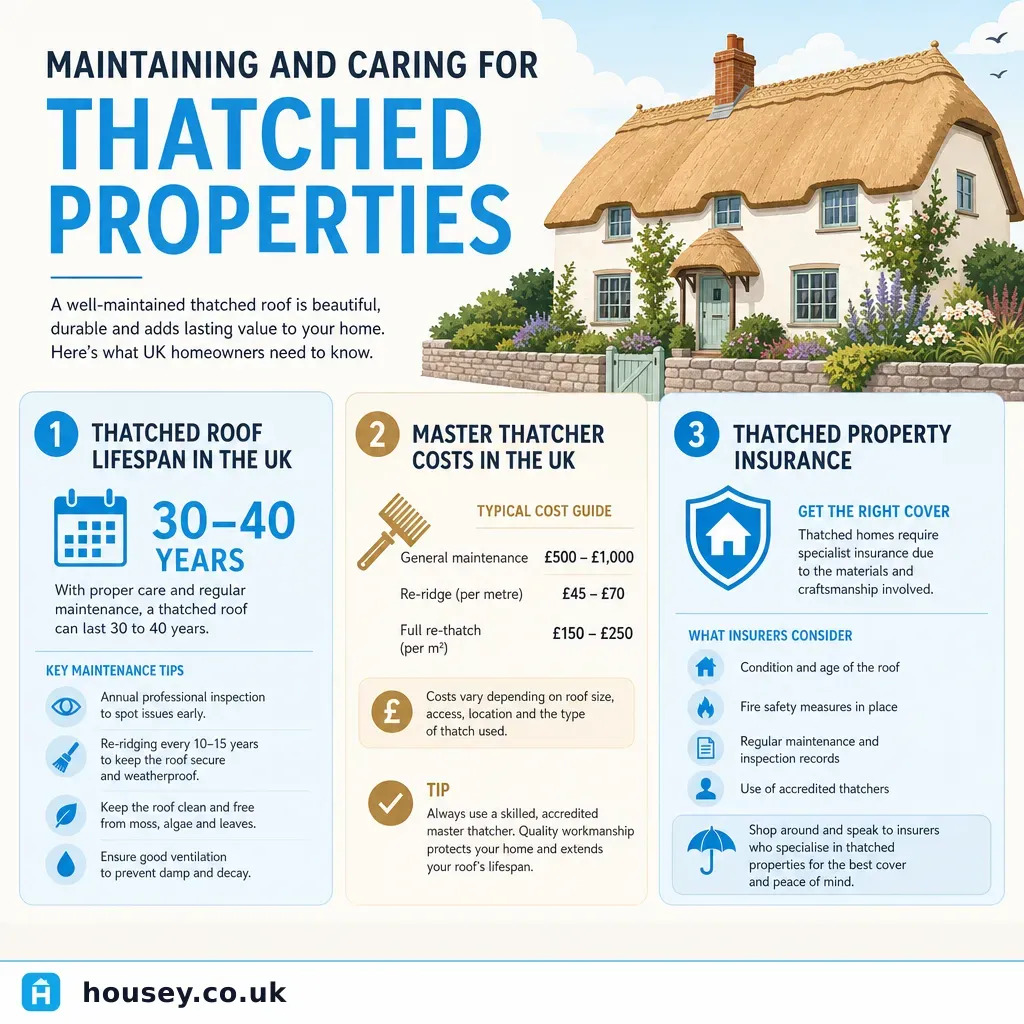
Maintaining And Caring For Thatched Properties
A thatched roof needs inspection by a master thatcher every one to two years, with ridge replacement every 10–15 years and a full re-thatch every 25–40 years depending on the material.
 Improvement & Build
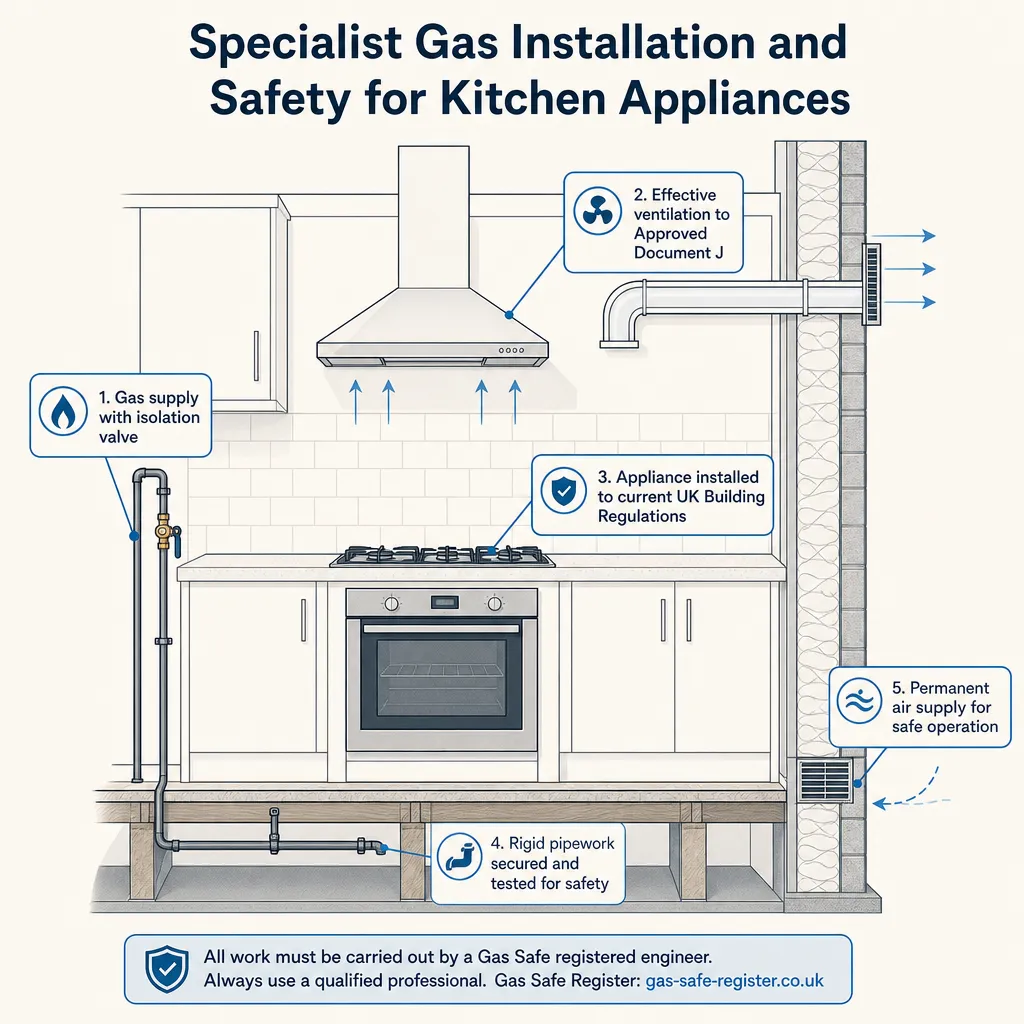
Specialist Gas Installation and Safety for Kitchen Appliances
All gas work on kitchen appliances in the UK must be carried out by a Gas Safe registered engineer.
 Improvement & Build
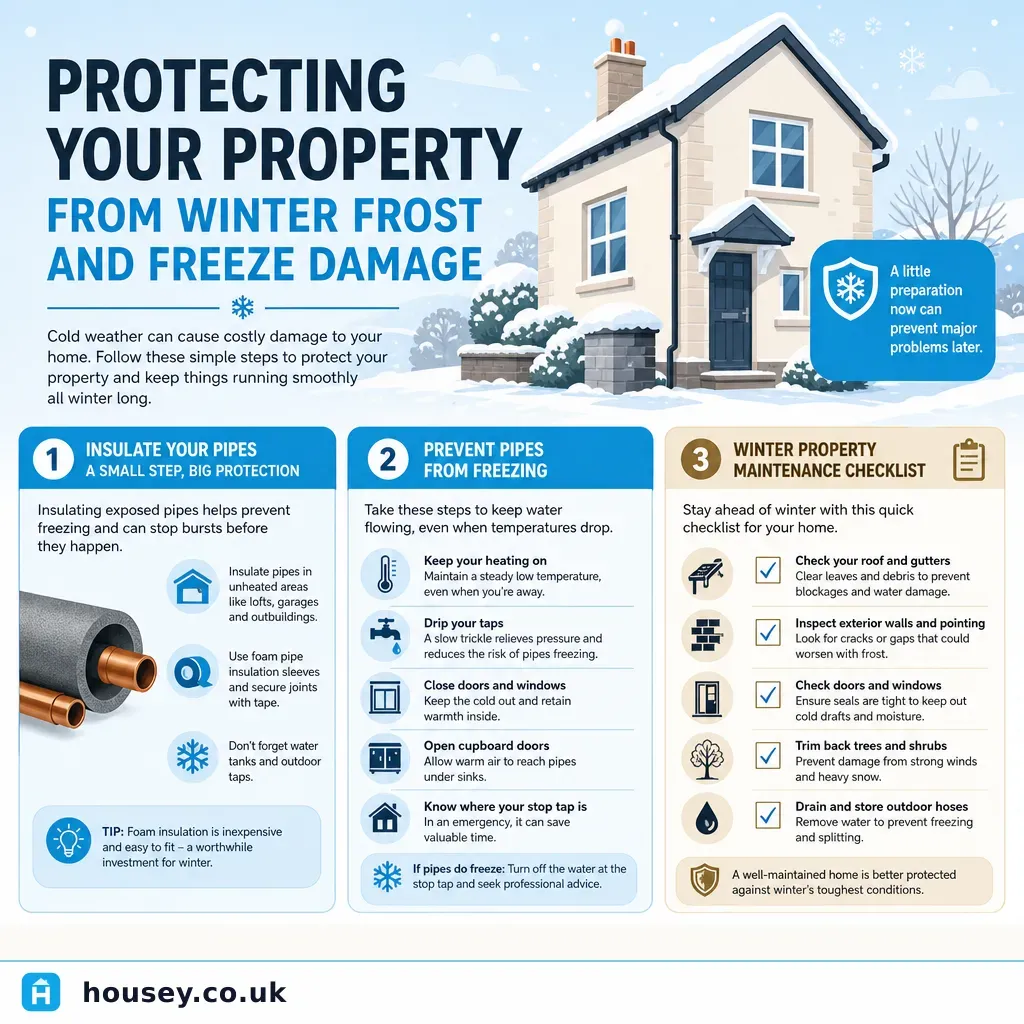
Protecting Your Property from Winter Frost and Freeze Damage
Protecting your home from winter frost damage mainly involves insulating exposed pipes, lagging outdoor taps, maintaining a minimum indoor temperature in unoccupied properties, and clearing drains before cold spells.
 Improvement & Build
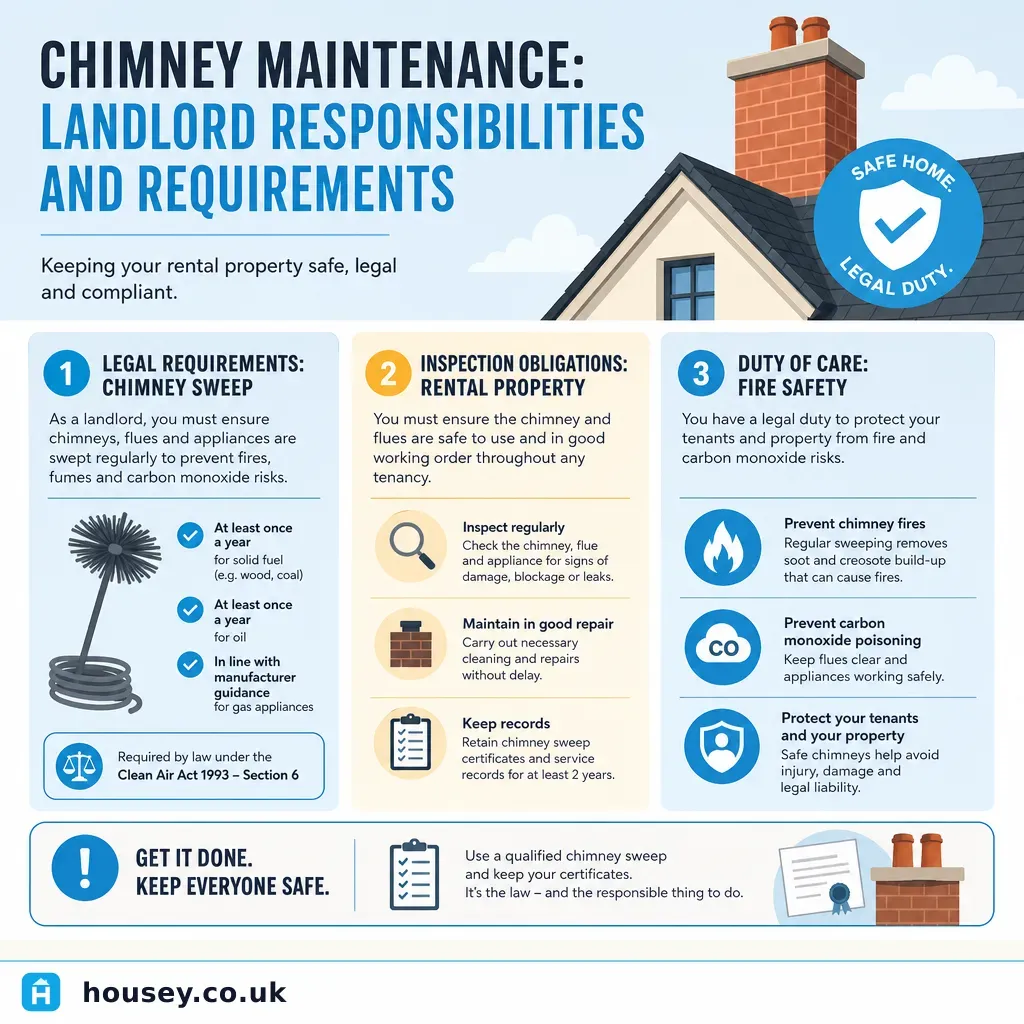
Chimney maintenance: landlord responsibilities and requirements
Landlords must keep chimneys and flues in safe working order under Section 11 of the Landlord and Tenant Act 1985.