Green Building Materials for Home Renovations and Extensions
By Housey · Last reviewed 24th of May 2026
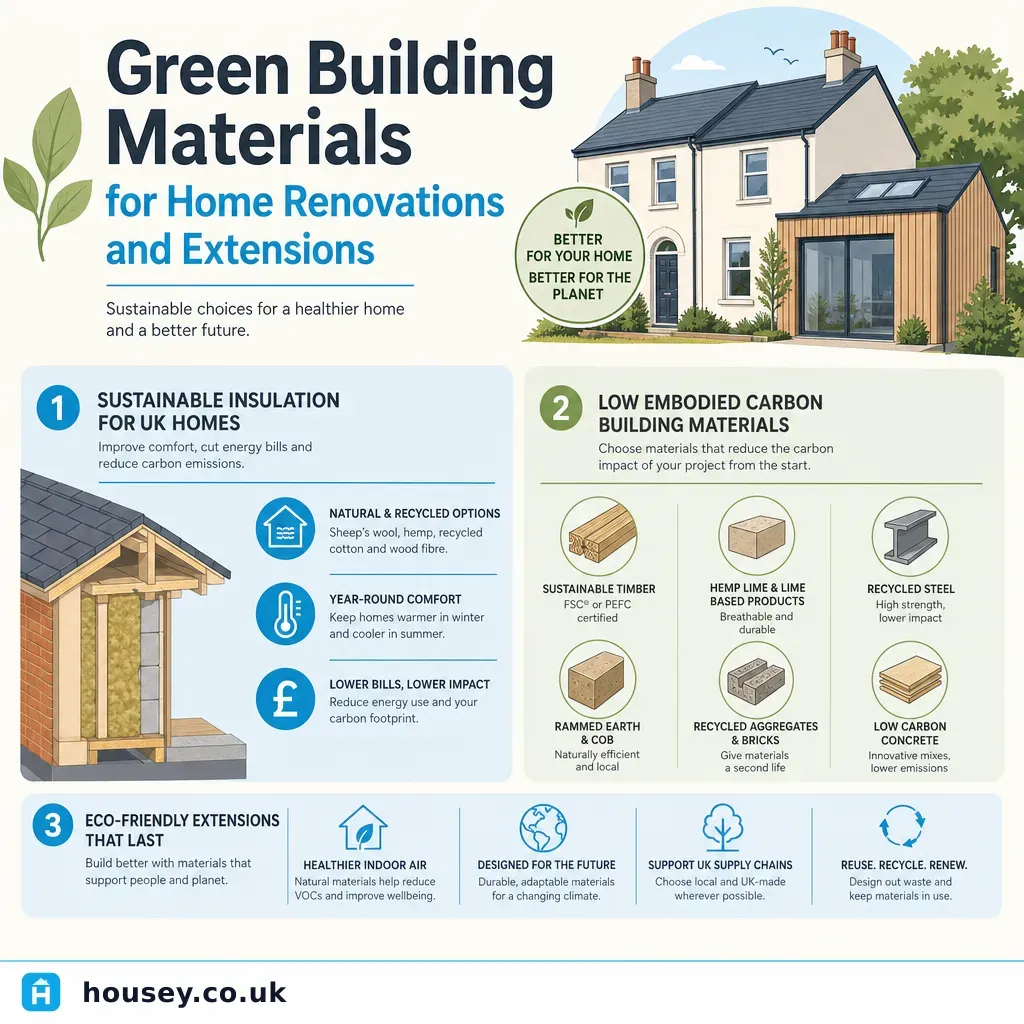
Green Building Materials for Home Renovations and Extensions
As energy efficiency standards tighten and more UK homeowners seek to reduce the environmental impact of their properties, the choice of building materials for renovations and extensions has become increasingly consequential. The question typically arises when planning an extension, loft conversion, or major refurbishment — sitting at the intersection of practical performance, regulatory compliance under Building Regulations Part L, budget, and sustainability goals. The decision affects not only the carbon footprint of construction but also long-term energy performance, thermal comfort, indoor air quality, and the long-term resilience of the building fabric.
Key points
- Building Regulations Part L (Conservation of Fuel and Power) sets minimum U-values for extensions and major refurbishments in England; the maximum for new extension external walls is 0.18 W/m²K, with roofs at 0.13 W/m²K and floors at 0.18 W/m²K.
- Wales, Scotland, and Northern Ireland each have distinct building regulations with different U-value requirements — always verify the correct standard for your location.
- Sustainable timber for structural and finish work should carry FSC (Forest Stewardship Council) or PEFC (Programme for the Endorsement of Forest Certification) certification as a minimum standard.
- British Board of Agrément (BBA) certificates confirm that insulation and building products meet UK performance requirements when installed as specified by the manufacturer.
- Breathable insulation materials — including wood fibre, sheep's wool, and hemp — are typically recommended for solid-wall and pre-1919 properties to manage moisture without trapping damp within the building fabric.
What makes a building material "green"?
"Green" or sustainable building materials are generally assessed across two dimensions: embodied carbon (the carbon emitted during extraction, manufacture, and transport of the material) and operational carbon (the energy saved over the building's lifetime through improved thermal performance).
A material can perform well on one measure and poorly on the other. High-performance foam insulation may have excellent thermal properties but be manufactured using blowing agents with a high global warming potential. Reclaimed brick carries near-zero embodied carbon but may require additional detailing to achieve adequate thermal performance in a solid wall.
Look for the following independent certifications before specifying any product:
- BBA certificate — confirms performance in UK conditions when installed as directed.
- Environmental Product Declaration (EPD) — independently verified whole-lifecycle carbon analysis.
- FSC or PEFC certification for timber — confirms sustainably managed source forests.
- Cradle-to-cradle or Declare label — signals circular economy credentials and material transparency.
Common green material options for UK projects
Insulation
Material | Typical application | Key properties | Notes |
|---|---|---|---|
Wood fibre board | External wall, pitched roof | Breathable, good thermal mass | BBA-certified options available; suits solid-wall homes |
Sheep's wool | Loft, stud walls, floors | Vapour-permeable, no PPE required | Hygroscopic; regulates moisture naturally |
Hemp batts | Internal walls, floors | Breathable, low embodied carbon | Well suited to older building fabric |
Recycled mineral wool | Cavity walls, lofts | Widely tested, cost-competitive | Well-established thermal performance data |
PIR or PUR foam | Floors, flat roofs | Best U-value per mm thickness | Higher embodied carbon; check blowing agent GWP |
For listed buildings and older solid-wall homes, breathable insulation materials are often preferred to manage moisture movement without trapping damp within the structure — an important consideration for pre-1919 properties built to breathe.
Structural materials
Timber frame: A well-established method for extensions and loft conversions across the UK. Sustainably sourced timber (FSC or PEFC certified) carries low embodied carbon relative to steel or concrete equivalents. Engineered timber products — cross-laminated timber (CLT) and glulam beams — allow larger open spans and are increasingly specified in domestic extension projects.
Structural Insulated Panels (SIPs): Prefabricated panels combining structure and insulation. Can achieve high levels of airtightness and thermal performance when correctly detailed. Check Environmental Product Declarations for the specific product being specified.
Reclaimed brick and stone: Suited to extensions where planning or conservation requirements mandate matching existing materials. Structural suitability and fire performance in party walls must be confirmed by a structural engineer and building control before use in any load-bearing application.
Secondary materials and finishes
- Lime render and lime mortar: Breathable, traditional, and well suited to solid-wall properties. Lower embodied carbon than cement-based equivalents and easier to remove and recycle at end of life.
- Natural clay plaster: Zero-VOC (volatile organic compound), breathable, and hygroscopic — particularly suited to living spaces and bedrooms where indoor air quality matters.
- Recycled aggregate: Can substitute primary aggregate in non-structural concrete mixes; BS 8500 specifies permissible applications and performance classes.
- Low-VOC paints and finishes: Conventional paints often contain volatile organic compounds that affect indoor air quality. Water-based and mineral-based alternatives are widely available and increasingly specified as standard.
Which materials suit your project?
- Choose breathable natural insulation (wood fibre, sheep's wool, hemp) if your home is a solid-wall property built before 1919, or if you have existing moisture concerns in the building fabric.
- Choose high-performance foam insulation (PIR, phenolic) if your priority is achieving the best U-value within the thinnest possible wall build-up and the structure is modern and well-ventilated.
- Specify FSC or PEFC-certified structural timber for any timber-frame extension or loft conversion as a non-negotiable baseline.
- Use reclaimed materials where planning requires matching existing materials, or as a low-embodied-carbon strategy — but always obtain structural engineer and building control confirmation before specifying any reclaimed material in a load-bearing position.
- Ask your designer or design-and-build firm to prepare an EPD comparison for the principal materials if embodied carbon reduction is a stated project objective.
- Consider whole-life cost, not just upfront material cost, particularly for insulation — a slightly more expensive breathable product may prevent costly remedial work from moisture damage in a solid-wall home.
Meeting Part L requirements
Building Regulations Part L in England (Approved Document L, 2021 edition) sets specific maximum U-values for extensions:
- External walls: 0.18 W/m²K
- Roofs: 0.13 W/m²K
- Ground floors: 0.18 W/m²K
- Windows and glazed doors: 1.4 W/m²K (whole window unit)
These are minimum compliance standards; well-specified green building materials can comfortably exceed them, delivering better energy performance in use. Your building control officer will confirm compliance during the approval process. Note that extensions over a certain size may also trigger a whole-dwelling energy assessment, so discuss the scope with your building control body or designer early in the project.
Wales operates under its own Part L requirements (introduced with the 2022 Building Regulations amendments), Scotland under Section 6 (Energy), and Northern Ireland under its own Technical Booklet F. Always confirm the correct regulatory framework for your location.
What to ask before selecting green materials
Before committing to a material specification, ask:
- Does the product hold a BBA certificate or equivalent third-party UK certification confirming performance in UK conditions?
- Is an Environmental Product Declaration (EPD) available for this product?
- Has structural performance been independently verified for the specific application intended?
- For timber: is FSC or PEFC certification confirmed for this batch?
- For reclaimed materials: has a structural engineer confirmed suitability for the proposed load-bearing use?
- Does the material require specialist installation, and does my contractor have documented experience with it?
- Will the material's breathability and moisture behaviour suit the existing fabric of my home?
- Has your building control officer reviewed and accepted the proposed material specification?
When to get professional help
Consult a qualified professional before proceeding if:
- You are specifying insulation for a listed building or solid-wall property — inappropriate materials can trap moisture and cause significant structural damage over time.
- A structural engineer has not confirmed the suitability of reclaimed or non-standard materials for any load-bearing application.
- You are uncertain whether your proposed specification meets the Part L requirements applicable to your region.
- Your project involves a party wall, where Approved Document B fire-resistance requirements govern the materials used in and around that wall.
How Housey can help
If you are planning a renovation or new extension, Housey can connect you with experienced extension builders and design-and-build firms who are familiar with sustainable material specifications and Part L compliance. For loft conversions using timber frame or SIPs construction, our loft conversion companies can advise on appropriate materials and building control requirements from the earliest stage of your project.
Frequently asked questions
Are green building materials more expensive?
It depends on the material. Some natural insulation products carry a modest premium over conventional alternatives, but others — such as recycled mineral wool — are cost-competitive. Reclaimed materials can be cheaper in regions where salvage is plentiful. Whole-life costs, including long-term maintenance and energy performance, are worth factoring into any comparison alongside upfront material cost.
Do green building materials meet Building Regulations?
Yes, when specified and installed correctly. Many natural and recycled materials carry BBA certificates confirming compliance with UK building standards in the conditions they are designed for. Your building control officer will confirm compliance during the approval process. Always provide product datasheets and certification documents when submitting drawings for building control approval.
Can I use reclaimed timber for structural work?
Reclaimed structural timber can be used, but it must be graded by a qualified timber grader to confirm its structural class. Many reputable reclaimed timber yards can supply graded material. Your structural engineer should specify the required grade and confirm suitability for the intended application before it is incorporated into a structural design.
Is timber frame suitable for extensions in the UK?
Timber frame is a well-established and widely used method for domestic extensions across the UK, including in areas of moderate rainfall. Correctly designed and weather-protected timber frame performs well in UK conditions. Specify FSC or PEFC certified timber as a minimum and ensure your contractor can provide appropriate structural warranties and building control sign-off.
Sources and further reading
- Approved Document L: conservation of fuel and power — GOV.UK
- Embodied carbon guidance for the built environment — UK Green Building Council
- British Board of Agrément: certified products — BBA
- FSC UK: find certified timber — FSC UK
- Insulation and energy saving — Energy Saving Trust
Useful next reads
 Improvement & Build
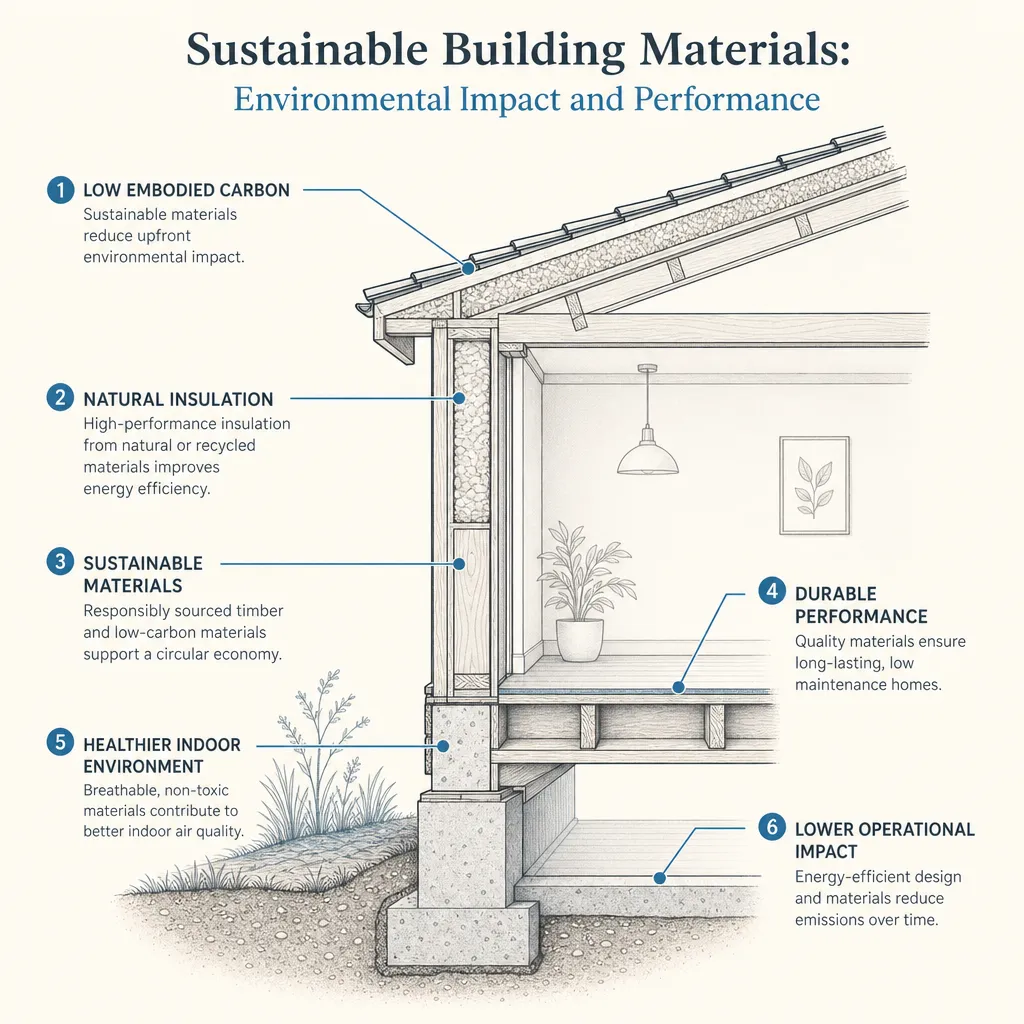
Sustainable Building Materials: Environmental Impact and Performance
Sustainable building materials are assessed on embodied carbon, thermal performance, durability, and end-of-life recovery.
 Improvement & Build
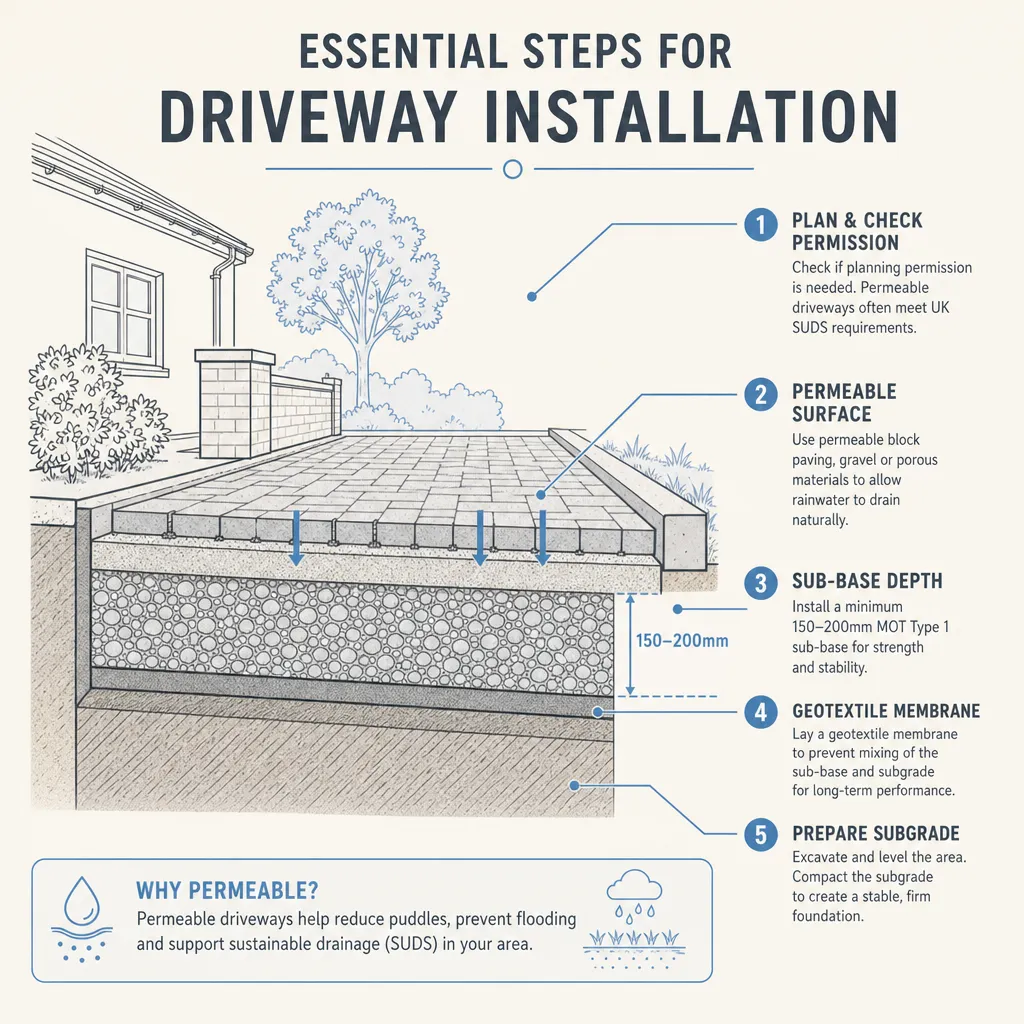
Essential Steps for Driveway Installation
Installing a driveway in England requires planning permission only when using an impermeable surface (standard tarmac, concrete, or block paving) on a front garden area over 5 m².
 Improvement & Build
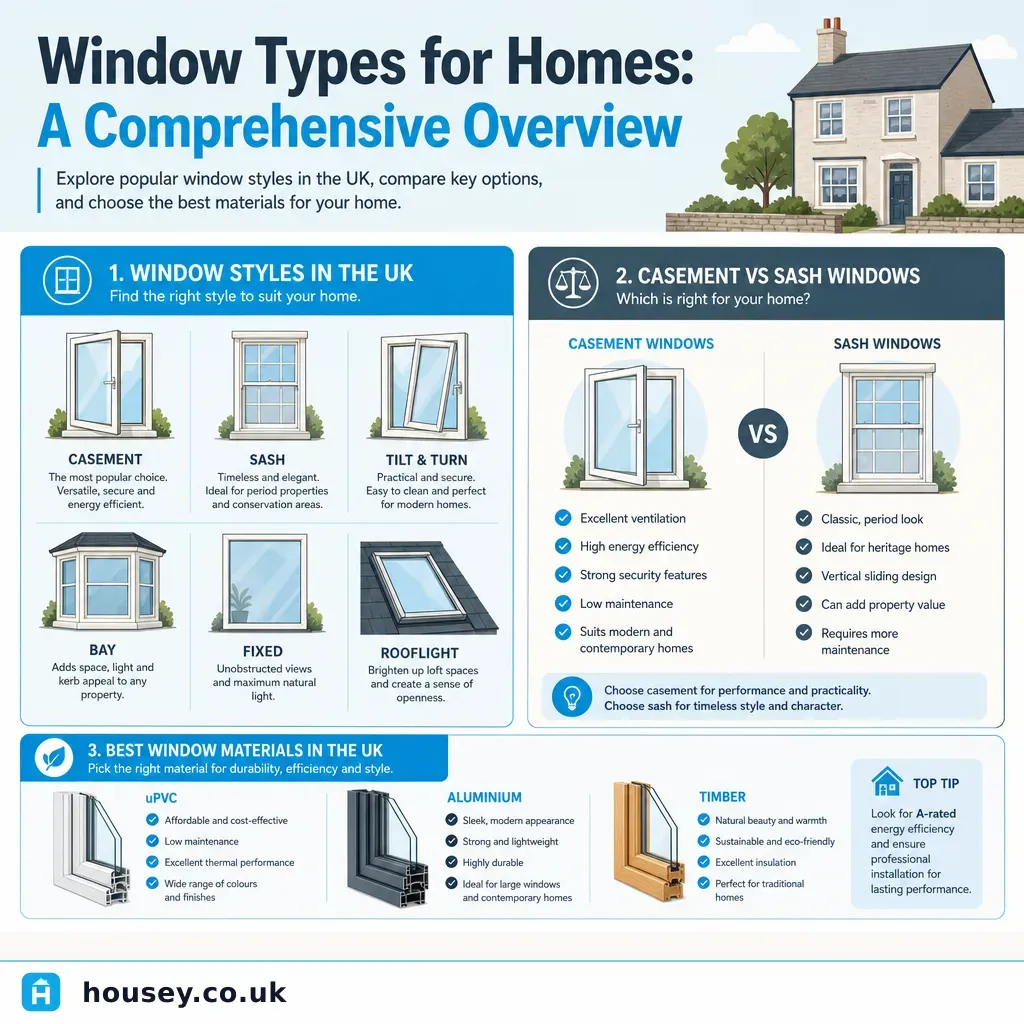
Window Types for Homes: A Comprehensive Overview
UK homes use several main window styles: casement (outward-swinging), sash (vertically sliding), tilt-and-turn, fixed light, and bay or bow.
 Improvement & Build
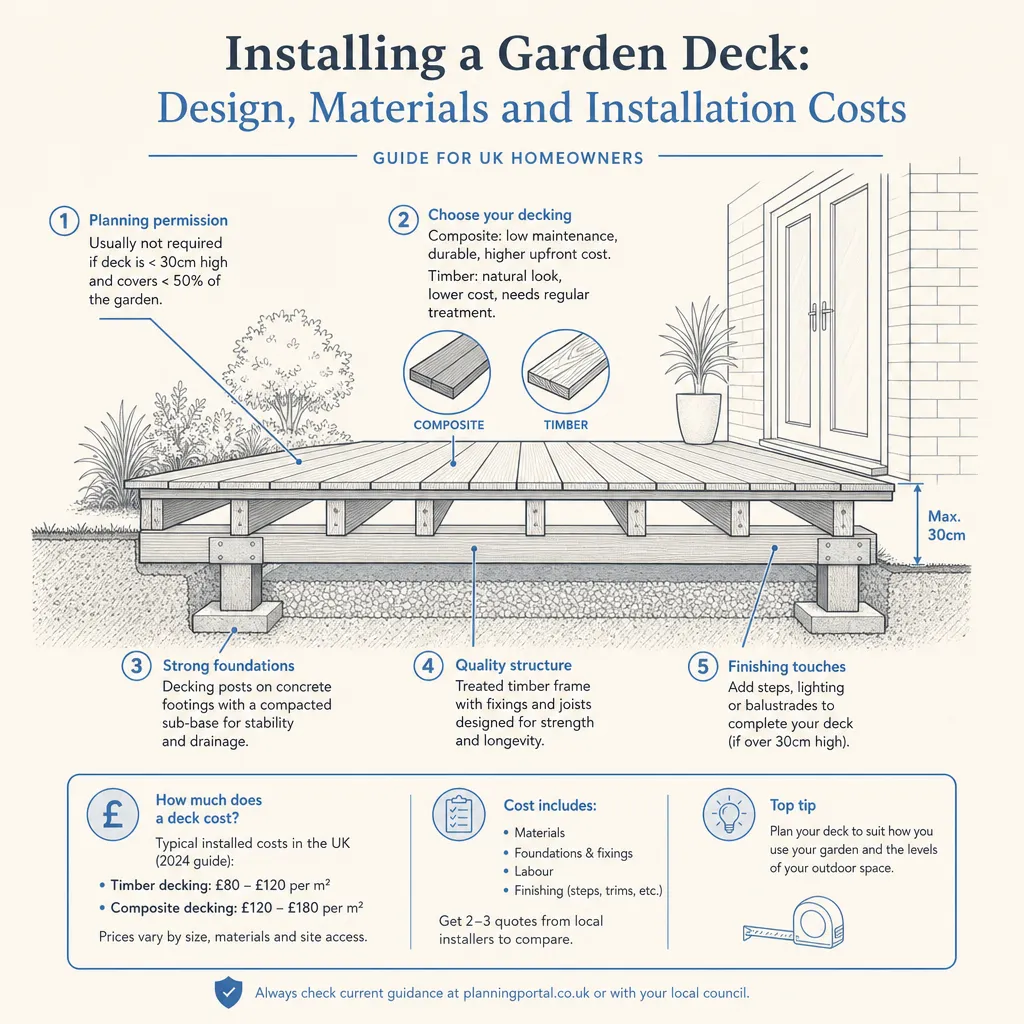
Installing a Garden Deck: Design, Materials and Installation Costs
Garden decking costs £80–250 per m² installed in the UK depending on material — softwood is cheapest, composite the most durable.
 Improvement & Build
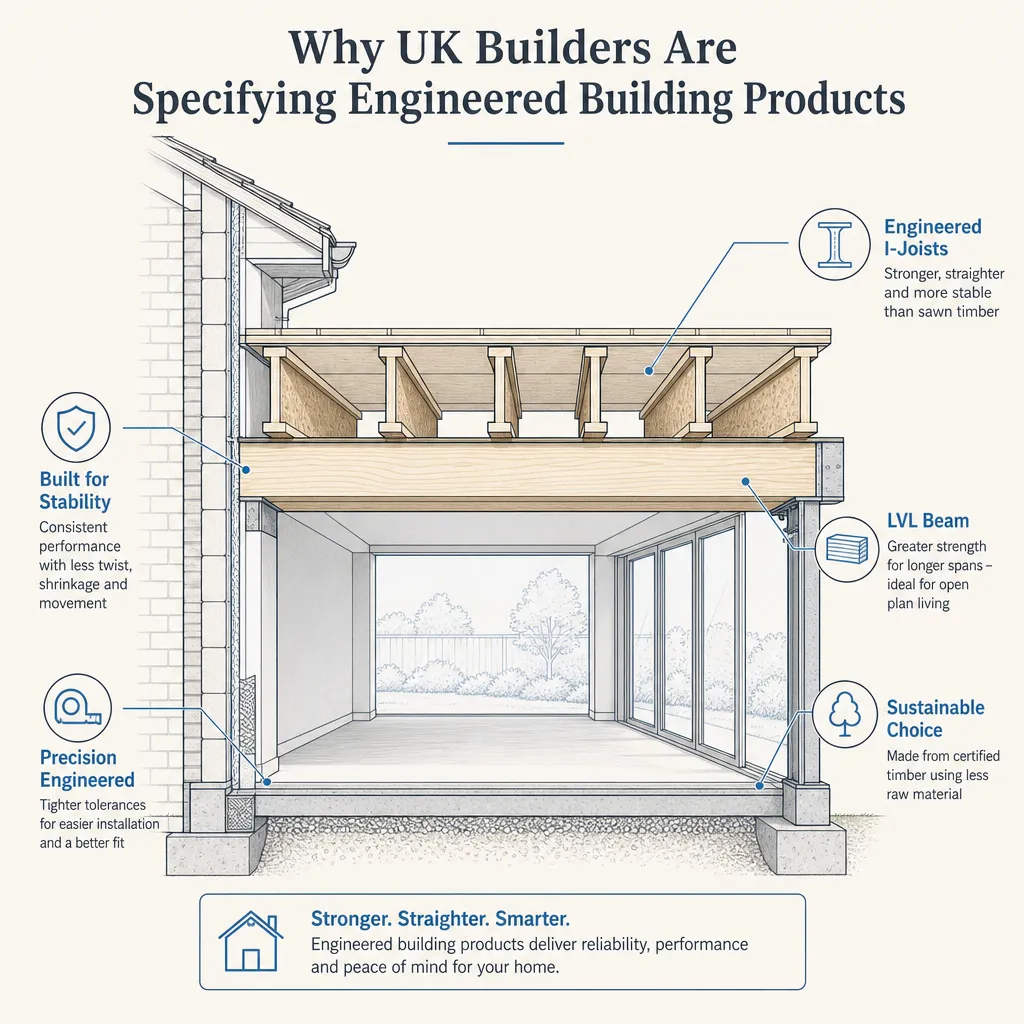
Why UK Builders Are Specifying Engineered Building Products
UK builders increasingly specify engineered building products — I-joists, LVL beams, metal web joists, and aircrete blocks — because they offer consistent dimensions, predictable structural performance, and compliance documentation that supports Building Regulations sign-off.