Which products to use for sealing your concrete driveway
By Housey · Last reviewed 31st of May 2026
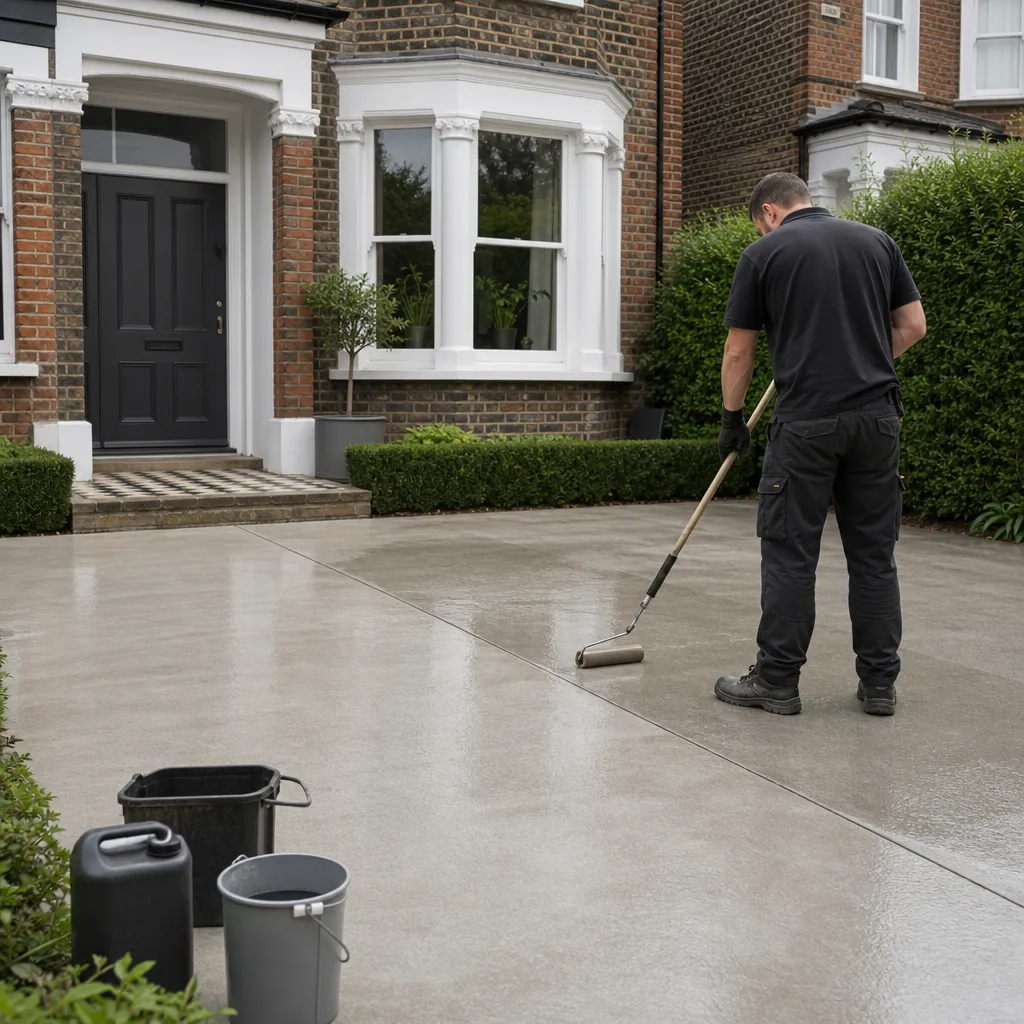
Which products to use for sealing your concrete driveway
A concrete driveway is a significant investment — typical installed costs for an average UK property range from £2,000 to over £6,000 — and an unsealed surface is vulnerable to oil stains, freeze-thaw spalling, moss growth, and gradual surface erosion. The UK's combination of acidic rainfall, winter road-salt runoff, and regular freeze-thaw cycles makes surface protection more important here than in milder climates. Choosing the right sealer depends on the concrete type, its current condition, and how the driveway is used day to day.
Key points
- Concrete driveway sealers fall into two main categories: penetrating (impregnating) sealers that absorb into the surface without altering its appearance, and film-forming (surface) sealers that leave a visible coating.
- Silane-siloxane penetrating sealers offer water repellency and salt resistance without changing surface appearance; they typically last 5–10 years and allow the concrete to breathe, which reduces freeze-thaw damage.
- Solvent-based acrylic sealers are the most widely used coating for pattern-imprinted concrete (PIC) in the UK, providing a wet-look or satin finish, but require reapplication every 1–3 years.
- New concrete must cure for at least 28 days before sealing — applying a sealer too early traps bleed water and can cause adhesion failure, clouding, or discolouration.
- In England and Wales, any new or replacement front garden driveway over 5m² must use a permeable surface or direct runoff to a lawn or border; film-forming sealers can impair drainage compliance if applied over permeable block paving or pattern-imprinted concrete designed with drainage channels.
The two main types of concrete driveway sealer
Penetrating sealers
Penetrating sealers work below the surface. They chemically react with or physically fill the pores in the concrete, repelling water and contaminants without leaving a surface film.
Silane-siloxane sealers combine water repellency (from the silane component) with coverage of larger surface pores (from the siloxane). They allow vapour transmission — meaning the concrete can breathe — which reduces freeze-thaw spalling risk significantly in UK climates. Suitable for plain, brushed, or exposed-aggregate concrete driveways. Reapplication is typically needed every 5–10 years.
Siliconate sealers are similar to silane-siloxane but slightly more surface-active. They may leave a minor sheen and are often used on coloured or decorative concrete.
Lithium silicate densifiers chemically harden the surface by reacting with calcium hydroxide in the concrete matrix. More commonly used on polished or industrial floors, but can serve as a preparation step on highly porous driveways before a topcoat is applied.
Film-forming (surface) sealers
Film-forming sealers sit on the surface and create a visible coating.
Acrylic sealers (solvent-based) are the most common choice for pattern-imprinted concrete (PIC) and decorative concrete driveways in the UK. They provide a wet-look or satin finish, enhance colour, and offer moderate stain and UV resistance. Reapplication every 1–3 years is typical. An anti-slip aggregate additive is advisable on sloped or shaded surfaces.
Acrylic sealers (water-based) have lower VOC content and are easier to apply, but provide a softer sheen and a slightly shorter lifespan than solvent-based versions in exposed conditions.
Polyurethane sealers are tougher and more chemically resistant than acrylics. Suited to driveways with heavy vehicle traffic or regular oil drips. More expensive; some formulations can yellow under prolonged UV exposure.
Epoxy sealers are highly durable but are designed for interior floors and should not be used on outdoor driveways — they chalk and discolour rapidly under UV radiation.
Comparison: sealer types for UK concrete driveways
Sealer type | Appearance change | Typical lifespan | Best for | Avoid if |
|---|---|---|---|---|
Silane-siloxane | None | 5–10 years | Plain or exposed-aggregate concrete; frost-prone driveways | You want colour enhancement |
Siliconate | Minor sheen | 5–8 years | Decorative or coloured concrete | You need no visible change |
Solvent-based acrylic | Wet-look gloss | 1–3 years | Pattern-imprinted concrete (PIC) | Grip is a concern (use anti-slip additive) |
Water-based acrylic | Satin or low sheen | 1–2 years | General residential use; lower VOC preferred | Heavy commercial traffic |
Polyurethane | Satin or gloss | 3–5 years | High-traffic; oil and chemical resistance | Budget-sensitive projects |
Epoxy | High gloss | N/A outdoors | Indoor polished floors only | Any outdoor surface |
Which sealer is right for your driveway?
- Choose silane-siloxane if your driveway is plain brushed or exposed-aggregate concrete and you want long-lasting protection without changing its appearance.
- Choose solvent-based acrylic if your driveway is pattern-imprinted concrete and you want to restore or enhance its colour — plan to reapply every one to three years.
- Choose water-based acrylic if you prefer a lower VOC product with a softer sheen and a more straightforward application process.
- Choose polyurethane if the driveway takes heavy vehicle loads regularly or is prone to oil and chemical spills.
- Do not apply any film-forming sealer if the surface has significant cracking, heaving, or drainage problems — address the substrate first.
- Check with your original installer or local planning authority if your driveway was laid under permitted development or planning conditions specifying drainage requirements, before applying any surface-coating sealer.
Surface preparation checklist
Before applying any driveway sealer:
When to get professional help
Sealing a concrete driveway is within reach of most homeowners for routine maintenance, but contact a professional contractor if:
- The concrete has significant cracking, heaving, or structural deterioration — sealing will not resolve underlying issues.
- You are unsure whether the sub-base or drainage specification would be compromised by a surface sealer.
- The driveway is large or in poor condition requiring repair and professional surface preparation before sealing.
- The installation is under a manufacturer's warranty specifying approved sealers or maintenance requirements — check before applying any product.
How Housey can help
Housey can connect you with vetted driveway installers who can assess the condition of your concrete surface, recommend the most appropriate sealer for your specific concrete type and local conditions, and carry out professional application or repair work where needed.
Frequently asked questions
How long should I wait before sealing a new concrete driveway?
New concrete must cure for a minimum of 28 days before any sealer is applied. Sealing too early traps bleed water, which can cause adhesion failure, a cloudy appearance, or discolouration. Some penetrating sealers specify a longer curing period — always check the manufacturer's technical data sheet before applying.
Can I apply a new sealer over an old one?
It depends on compatibility. Water-based products may not bond well over solvent-based sealers. Perform a water-bead test first: if water still beads on the surface, the old sealer is intact and should be chemically stripped before resealing. If water absorbs readily, a fresh coat can usually be applied after thorough cleaning and drying.
How often should I reseal my concrete driveway?
Penetrating silane-siloxane sealers typically last 5–10 years under normal UK conditions. Solvent-based acrylic sealers on pattern-imprinted concrete usually need reapplying every 1–3 years, particularly in shaded areas prone to algae. A water-bead test each spring quickly indicates whether protection is still active.
Will a film-forming sealer make my concrete driveway slippery when wet?
Film-forming sealers, particularly solvent-based acrylics, can reduce surface grip when wet. Most manufacturers supply an anti-slip additive — fine silica sand or aluminium oxide particles — that is mixed into the sealer before application. Penetrating sealers do not significantly alter surface texture and carry a lower slip risk in wet conditions.
Sources and further reading
- Guidance on the permeable surfacing of front gardens — GOV.UK
- Concrete Centre technical resources — The Concrete Centre
- UK VOC in Decorative Paints Regulations 2012 — legislation.gov.uk
Useful next reads
 Improvement & Build
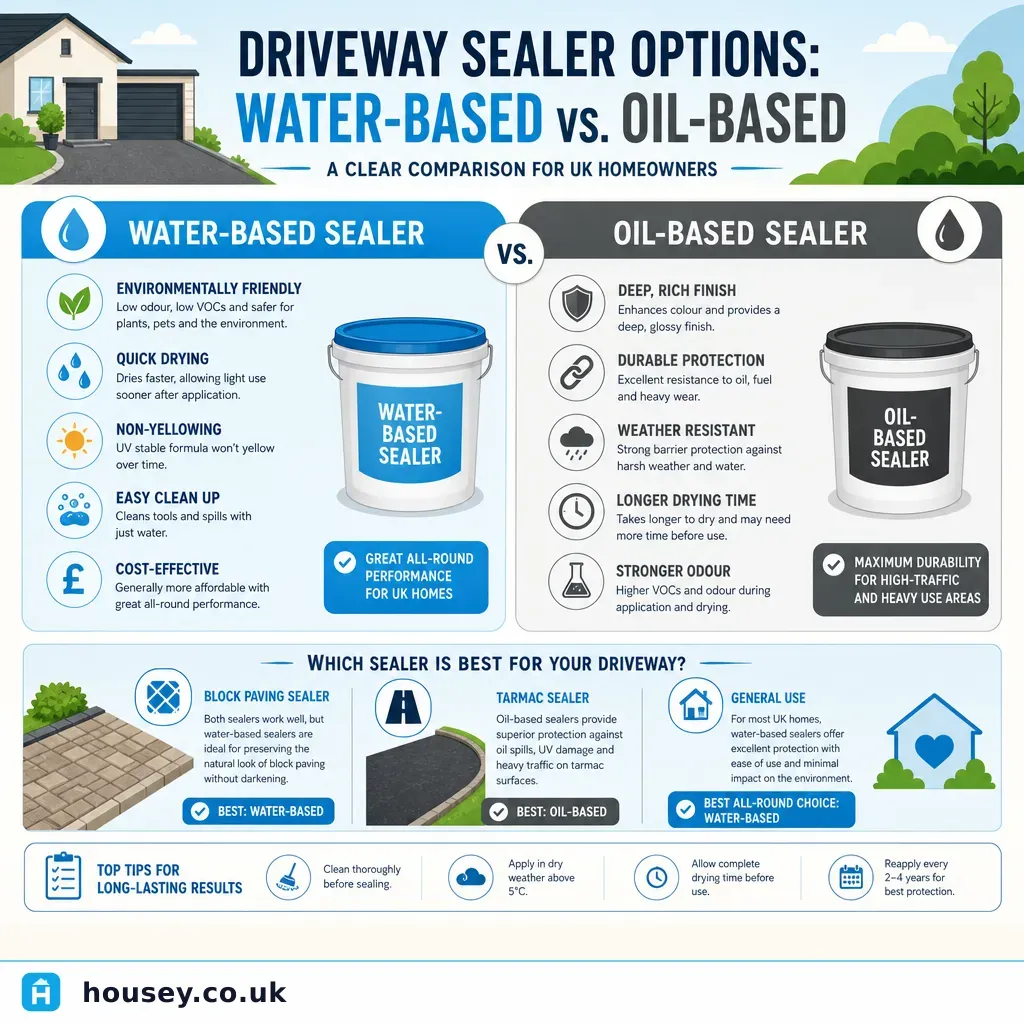
Driveway Sealer Options: Water-Based vs Oil-Based Comparison
Water-based driveway sealers are generally easier to apply, lower in VOCs, and suitable for most block paving and concrete surfaces.
 Improvement & Build
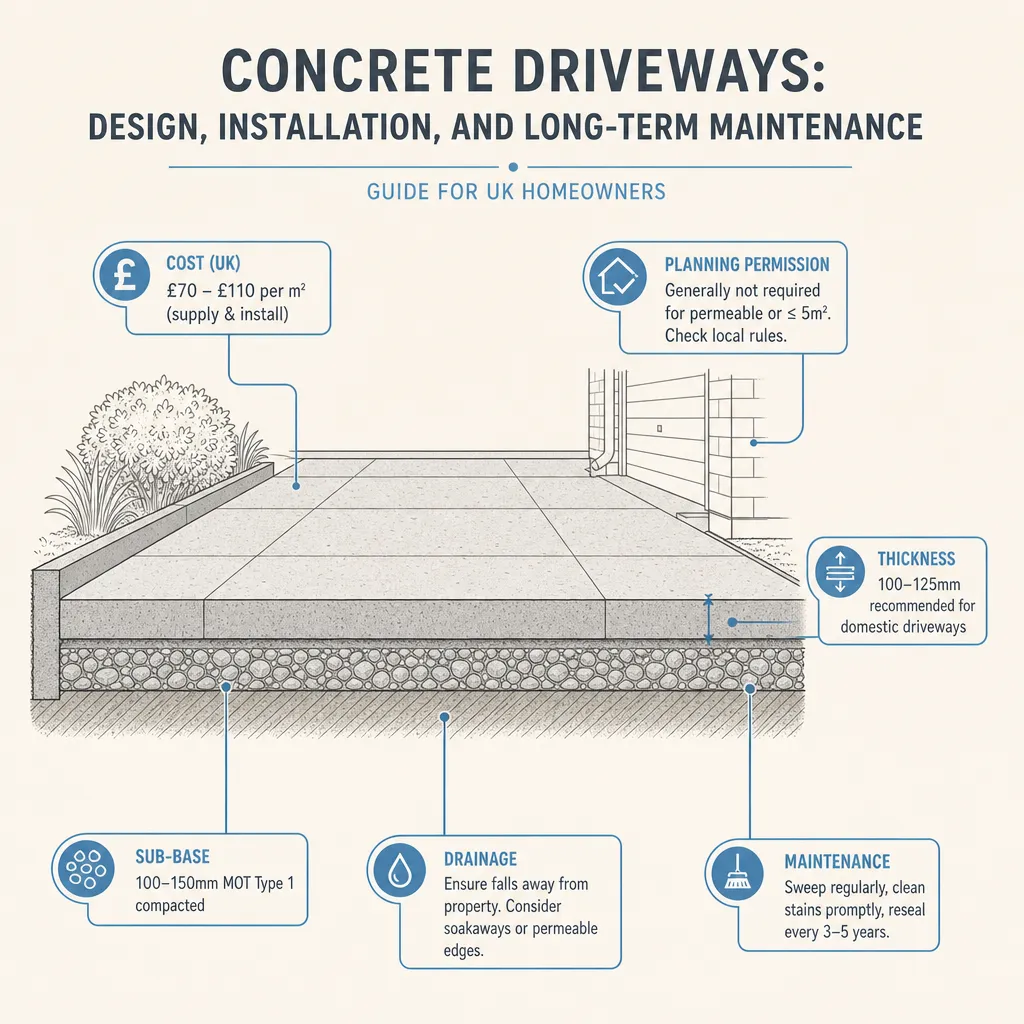
Concrete Driveways: Design, Installation, and Long-Term Maintenance
A concrete driveway requires a compacted sub-base of at least 150mm and a concrete slab of at least 100mm for domestic use.
 Improvement & Build
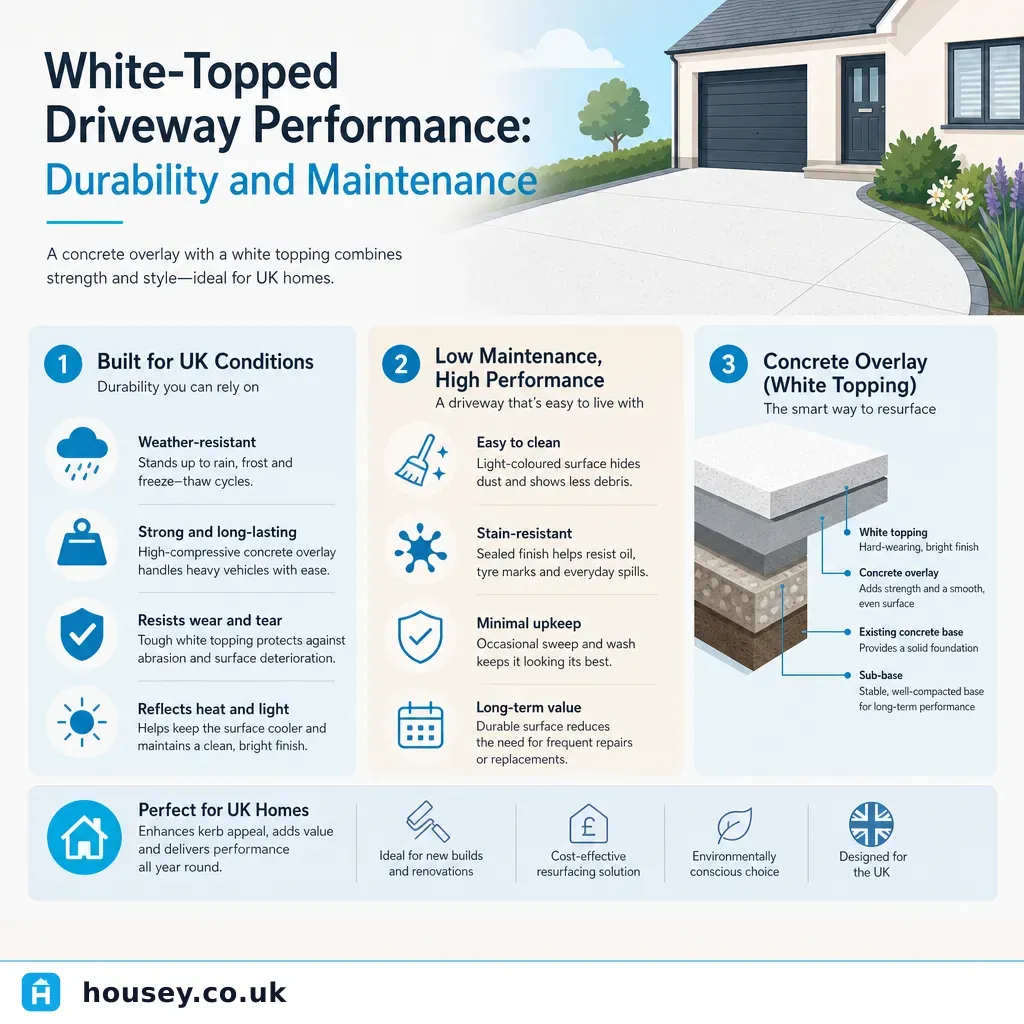
White-Topped Driveway Performance: Durability and Maintenance
A white-topped driveway uses a concrete layer placed over an existing asphalt sub-base, combining the load-spreading of asphalt with the durability of concrete.
 Improvement & Build
Comparing Vinyl and Aluminium Windows: Material Performance and Durability
uPVC (vinyl) and aluminium windows both meet UK Building Regulations Part L when properly specified.
 Improvement & Build
Professional Roofing Solutions: Expert Installation and Maintenance
A professional roofer should hold relevant trade qualifications such as NVQ Level 2 in Roofing Occupations, carry public liability insurance, and provide a written quotation.