Concrete Floor Sealing Costs in the UK
By Housey · Last reviewed 6th of May 2026
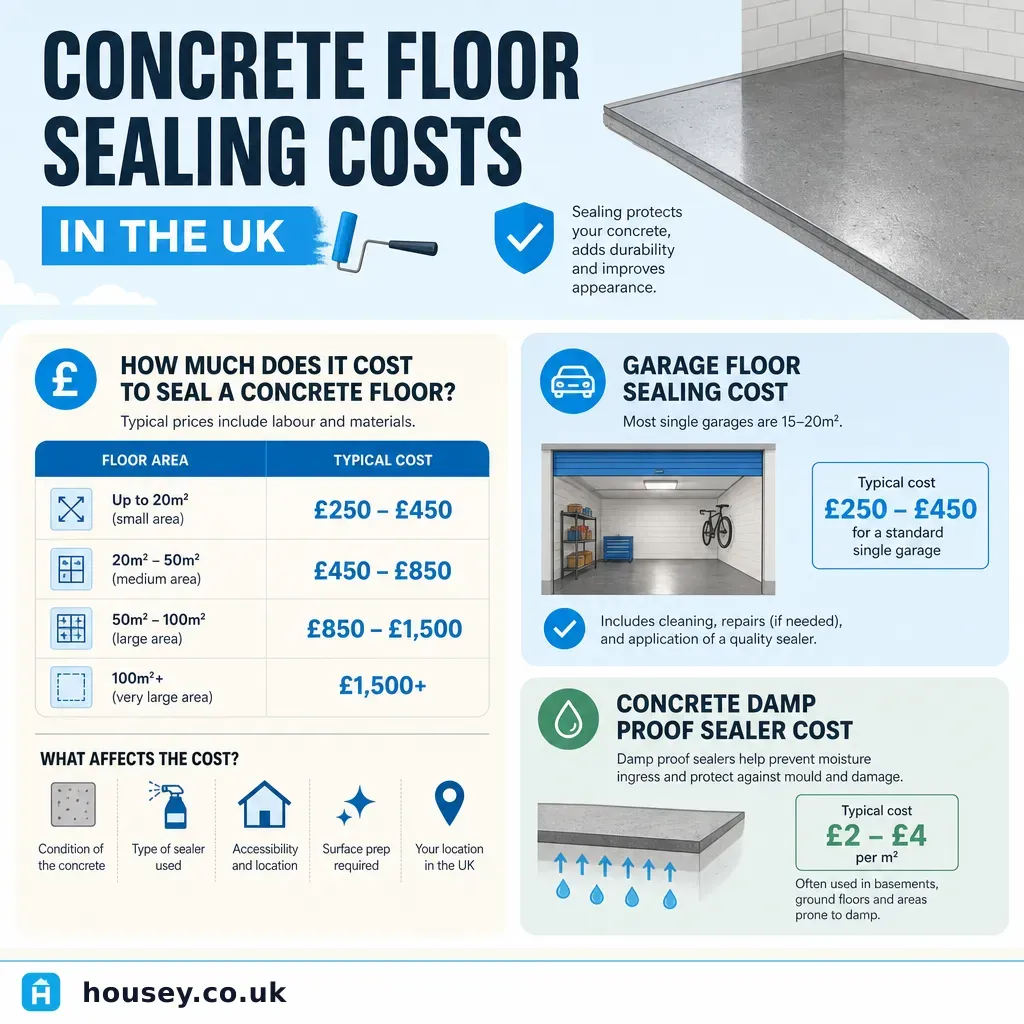
Concrete Floor Sealing Costs in the UK
Concrete floors are found in garages, utility rooms, outbuildings, and older properties with solid ground floors — many of which were laid without a damp-proof membrane or with an ageing one that no longer performs adequately. The question of sealing or treating a concrete floor typically arises when homeowners notice surface dust, damp patches, staining, or when preparing a garage or outbuilding for conversion. Costs vary considerably depending on the sealer type, the floor's current condition, and how much preparation is required before any product is applied.
Key points
- Surface sealers (acrylic, polyurethane) typically cost £3–£10 per m² in materials; professional application adds £8–£25 per m² in labour — Indicative UK costs, last reviewed 2026-05-06
- Penetrating sealers (silicate, silane/siloxane) bond chemically with the concrete and are better suited to damp or dusty surfaces, costing £5–£15 per m² in materials
- Professionally applied epoxy resin floor coatings typically cost £20–£50 per m² including preparation
- Floor preparation — grinding, shot blasting, crack repair, and degreasing — frequently accounts for 50–70% of the total project cost
- A concrete sealer does not replace a structural damp-proof membrane: British Standard BS 8102:2022 governs waterproofing of below-ground structures and requires engineered solutions, not surface sealers alone
Types of concrete floor sealer
Choosing the wrong product — particularly on a damp floor — can trap moisture beneath and accelerate deterioration. The table below summarises the main options.
Sealer type | How it works | Best for | Not ideal for | Approximate material cost |
|---|---|---|---|---|
Acrylic sealer | Forms a surface film | Dry garage or utility floors; dust suppression; easy DIY | Wet or damp floors; wears quickly under traffic | £3–£8 per m² |
Polyurethane sealer | Harder, more durable surface film | Garages, workshops, light commercial use | Damp or contaminated concrete | £5–£10 per m² |
Silicate densifier | Penetrates and chemically hardens concrete | New or dry floors with a dusting problem | Waterproofing; will not seal existing cracks | £4–£10 per m² |
Silane/siloxane waterproofer | Penetrates concrete; repels liquid water | Damp-prone slabs, external concrete, driveways | Floors with active water ingress under pressure | £6–£15 per m² |
Epoxy coating | Two-part resin bonded to the surface | Garages, workshops, showrooms — high durability | DIY without experience; damp substrates | £15–£30 per m² (materials) |
Bitumen or SBR slurry | Applied as a waterproof barrier layer | Older floors with rising damp below a screed or topping | Active water pressure from below | £5–£12 per m² |
How much does concrete floor sealing cost?
Costs depend on floor size, product choice, and condition. These are indicative UK costs based on industry guidance, last reviewed 2026-05-06. Quotes will vary by region and contractor.
Application | Floor area | DIY material cost | Professionally installed |
|---|---|---|---|
Acrylic or polyurethane sealer | Single garage (~25 m²) | £75–£200 | £400–£900 |
Acrylic or polyurethane sealer | Double garage (~50 m²) | £150–£400 | £700–£1,600 |
Penetrating silane/siloxane sealer | 25 m² | £150–£375 | £500–£1,000 |
Epoxy floor coating | 25 m² | £200–£500 (kit) | £700–£1,500 |
Epoxy floor coating | 50 m² | £400–£900 (kit) | £1,200–£2,500 |
Damp-proof slurry coating | 25 m² | Not recommended DIY | £800–£2,000+ |
Professional costs generally include basic preparation such as sweeping, degreasing, and minor crack filling. Shot blasting or diamond grinding for heavily contaminated or uneven floors is typically quoted separately and adds approximately £3–£8 per m².
What affects the cost?
Floor condition and preparation
Preparation is frequently the largest single cost driver. A clean, level, dry floor requires minimal work before sealing. A floor with oil contamination, cracked or spalling concrete, or signs of damp may require:
- Chemical degreasing, particularly for garage floors with oil saturation
- Diamond grinding or shot blasting to open the surface, remove laitance, and provide adequate key for the sealer
- Crack stitching or repair with epoxy mortar prior to coating
- Application of a primer or bonding agent depending on the sealer specification
Be cautious of any quote provided without a site visit for floors larger than a single room. A contractor who quotes remotely without assessing condition may revise the price significantly once on site.
Whether damp is present
If your concrete floor shows visible damp, salt deposits (efflorescence), or mould at the base of walls, a surface sealer alone will not resolve the problem. Penetrating sealers and damp-proof coatings can manage low-level moisture vapour, but active rising damp or lateral water ingress requires investigation and remediation — not simply sealing over the surface.
Access and location
Garage floors are straightforward to access and work on. Basement slabs, cellar floors, or floors in narrow utility rooms may require more time to prepare and treat, adding to labour costs. Restricted access for shot-blasting equipment sometimes means hand preparation, which takes longer.
What not to assume
- A sealer will solve damp problems. A topical sealer applied over a damp floor often traps moisture beneath, causing the coating to delaminate within months and potentially worsening the damp situation. Where damp is present, identify and address the cause before treating the surface.
- All sealers perform similarly. Acrylic sealers are inexpensive and easy to apply but wear quickly under foot or vehicle traffic. Penetrating sealers last much longer because they become part of the concrete rather than forming a film on top. Epoxy coatings provide excellent durability but require precise surface conditions and application technique for a sound result.
- DIY is always the cheaper option. For small, dry floors in good condition, DIY application of a surface sealer is straightforward and cost-effective. For epoxy coatings, penetrating damp-proof treatments, or floors requiring shot blasting, professional preparation usually produces a significantly more durable result and is often better value over a 10-year lifespan.
- One coat is sufficient. Most professional specifications call for two coats of most sealers, applied in line with the manufacturer's technical data sheet. Applying a single thin coat to save cost is a common cause of early failure.
- Any concrete can be sealed. Floors with active water ingress, severe structural cracking, or significant settlement may not be suitable candidates for simple sealing without prior remediation or structural assessment.
Red flags
- Efflorescence (white crystalline salt deposits) on the floor surface indicates water is moving through the slab — a sealer applied over this will delaminate and the underlying moisture issue will remain
- Hollow-sounding areas when tapping the floor surface suggest delamination or voids beneath — any coating applied over these will fail in the same way
- Cracks wider than 1–2 mm, particularly if stepped, irregular, or widening over time, may indicate structural movement that should be assessed before any floor treatment is applied
- A floor that is visibly wet after prolonged rainfall suggests water ingress from below or from the perimeter — drainage, tanking, or cavity drain membrane work may be needed rather than surface sealing
When to get professional help
Surface sealing a dry, clean concrete floor in good condition is within the capability of most practical homeowners. Professional assessment and application is advisable when:
- The floor shows any signs of damp, rising moisture, or water ingress — misdiagnosis leads to wasted expenditure and a worsening problem
- You are converting a garage, outbuilding, or basement to habitable use — Building Regulations Approved Document C requires moisture resistance, and a surface sealer alone may not demonstrate compliance
- The floor area is large, heavily contaminated, or requires shot blasting or grinding — professional equipment produces substantially better surface preparation than consumer tools
- You suspect the underlying slab is cracked, settled, or structurally compromised — a building surveyor or structural engineer should assess before any treatment is applied
How Housey can help
If your concrete floor has signs of damp or moisture ingress, the right first step is a specialist assessment before committing to any sealing product. Housey can connect you with damp proofing specialists who can assess the cause and recommend the appropriate treatment — whether that is a penetrating sealer, a damp-proof membrane, or a full tanking system.
Frequently asked questions
Do I need to seal a concrete garage floor?
Sealing is not a legal requirement for a garage floor, but it reduces dusting, makes cleaning easier, and protects against oil and chemical staining. It can also reduce moisture vapour transmission in garages used as workshops or storage spaces. For most garages in good condition, a penetrating or polyurethane sealer applied every 5–10 years is sufficient maintenance.
How long does concrete floor sealing last?
This depends on the product and traffic. Acrylic sealers typically last 2–5 years before recoating is needed. Polyurethane sealers last 5–10 years with normal use. Penetrating sealers often last 10 years or more because they become part of the concrete. Professionally applied epoxy coatings can last 10–20 years in garage conditions. All sealers benefit from regular cleaning with a neutral detergent.
Can I apply a concrete sealer myself?
Yes, for simple surface sealers on clean, dry floors. Acrylic and single-component polyurethane sealers can be applied with a roller and are sold in builders' merchants. Two-part epoxy coatings require precise surface preparation, temperature, humidity, and mixing ratios — errors produce a poor or delaminating finish. DIY kits are available but professional application is generally recommended for best results with epoxy products.
Will sealing a concrete floor stop damp?
A penetrating silane/siloxane sealer or bitumen-based damp-proof coating can reduce moisture vapour transmission through a slab, which helps with lightly damp floors. However, they will not stop active rising damp or water under hydrostatic pressure. If your floor is visibly wet or shows persistent efflorescence, you need a damp survey and potentially a waterproofing system compliant with BS 8102:2022 rather than a surface treatment.
What is the difference between sealing and tanking a floor?
Sealing applies a surface or penetrating product to reduce dusting, staining, or moisture vapour. Tanking is a comprehensive waterproofing system — typically a multi-coat cementitious or resin slurry — designed to resist water under pressure, used in basements and below-ground structures. Tanking costs significantly more than sealing, often £50–£100 per m² or more professionally installed, and is appropriate where surface sealing alone would be insufficient.
Sources and further reading
- Building Regulations Approved Document C: Site preparation and resistance to contaminants and moisture — GOV.UK
- BS 8102:2022 Protection of below ground structures against water from the ground — BSI Group
- Property Care Association: Damp and timber guidance — Property Care Association
- Floor insulation — Energy Saving Trust
Useful next reads
 Improvement & Build
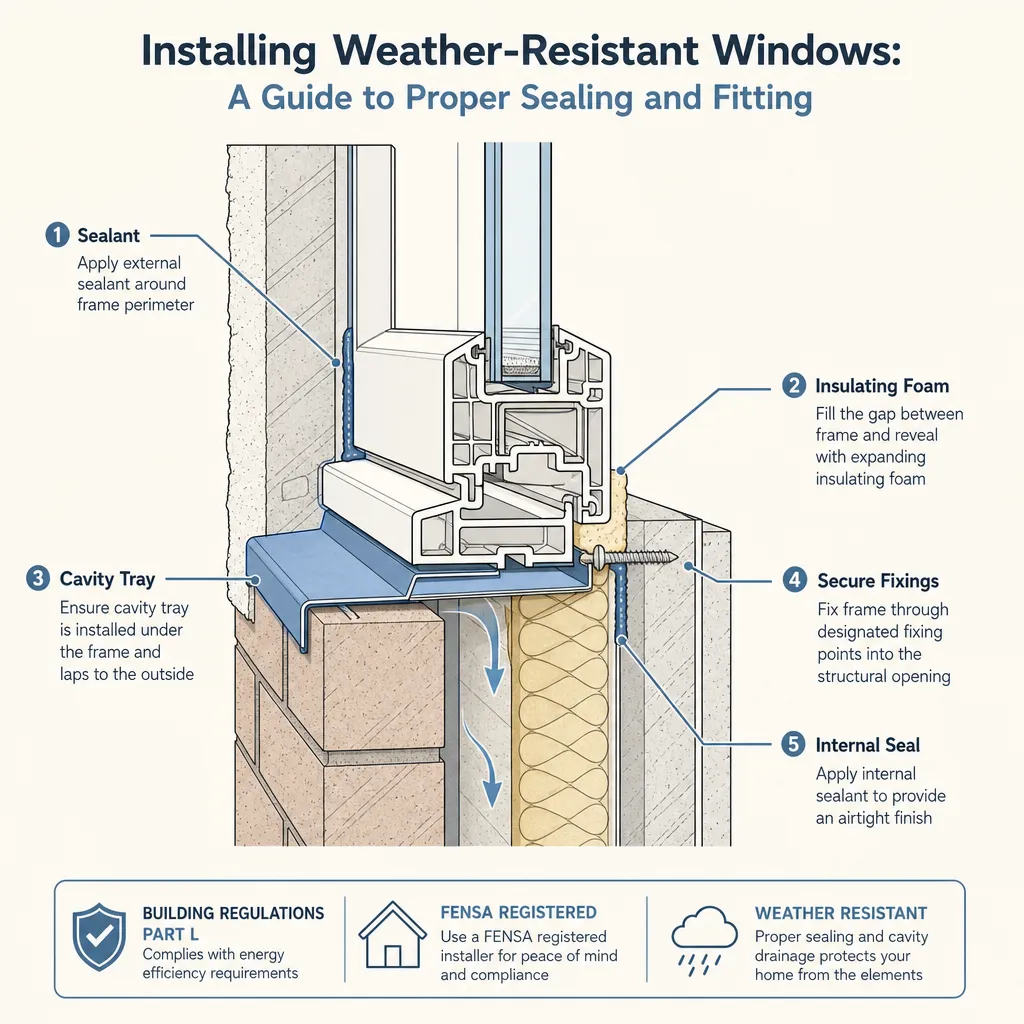
Installing Weather-Resistant Windows: A Guide to Proper Sealing and Fitting
Replacing windows in England requires Building Regulations compliance under Part L — either via a FENSA- or CERTASS-registered installer who self-certifies, or through local authority building control notification.
 Improvement & Build
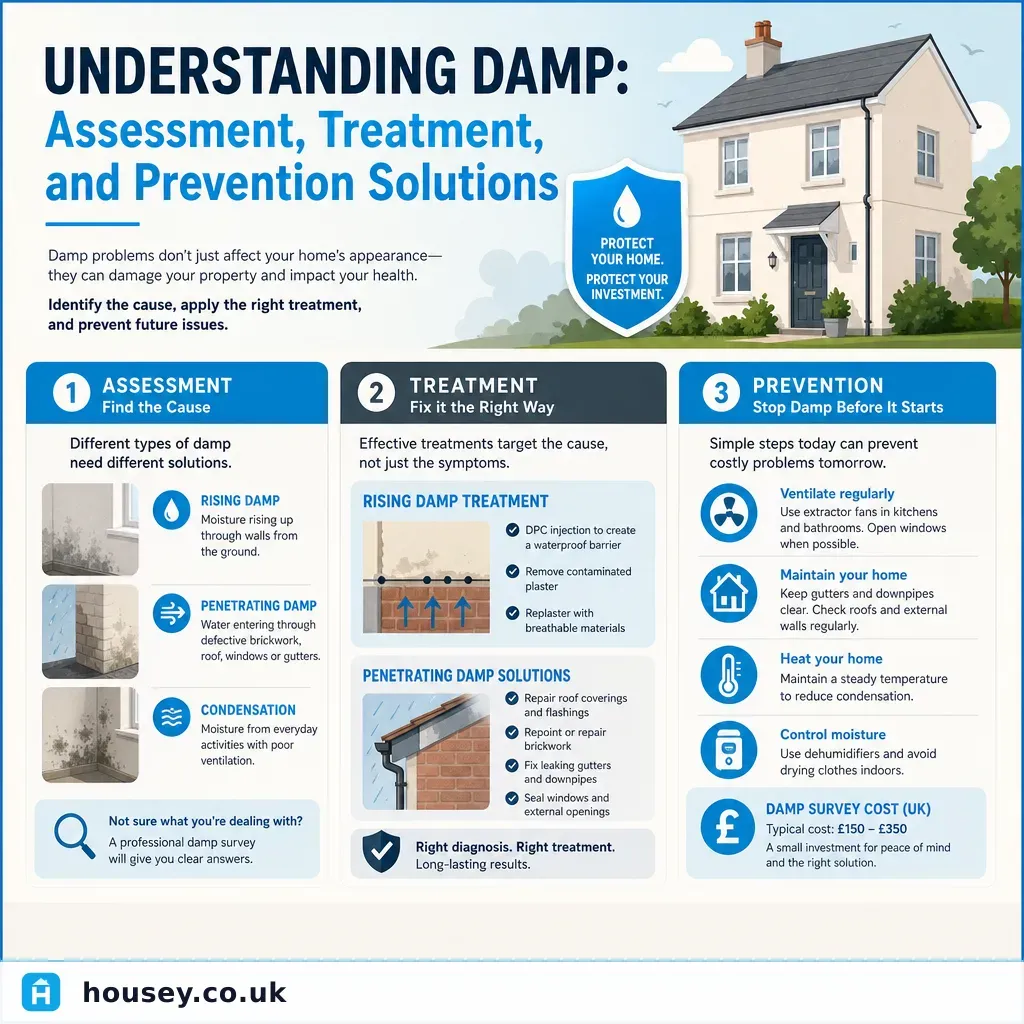
Understanding Damp: Assessment, Treatment, and Prevention Solutions
Damp in UK homes usually falls into three categories — rising damp, penetrating damp, and condensation — each requiring a different remedy.
 Improvement & Build
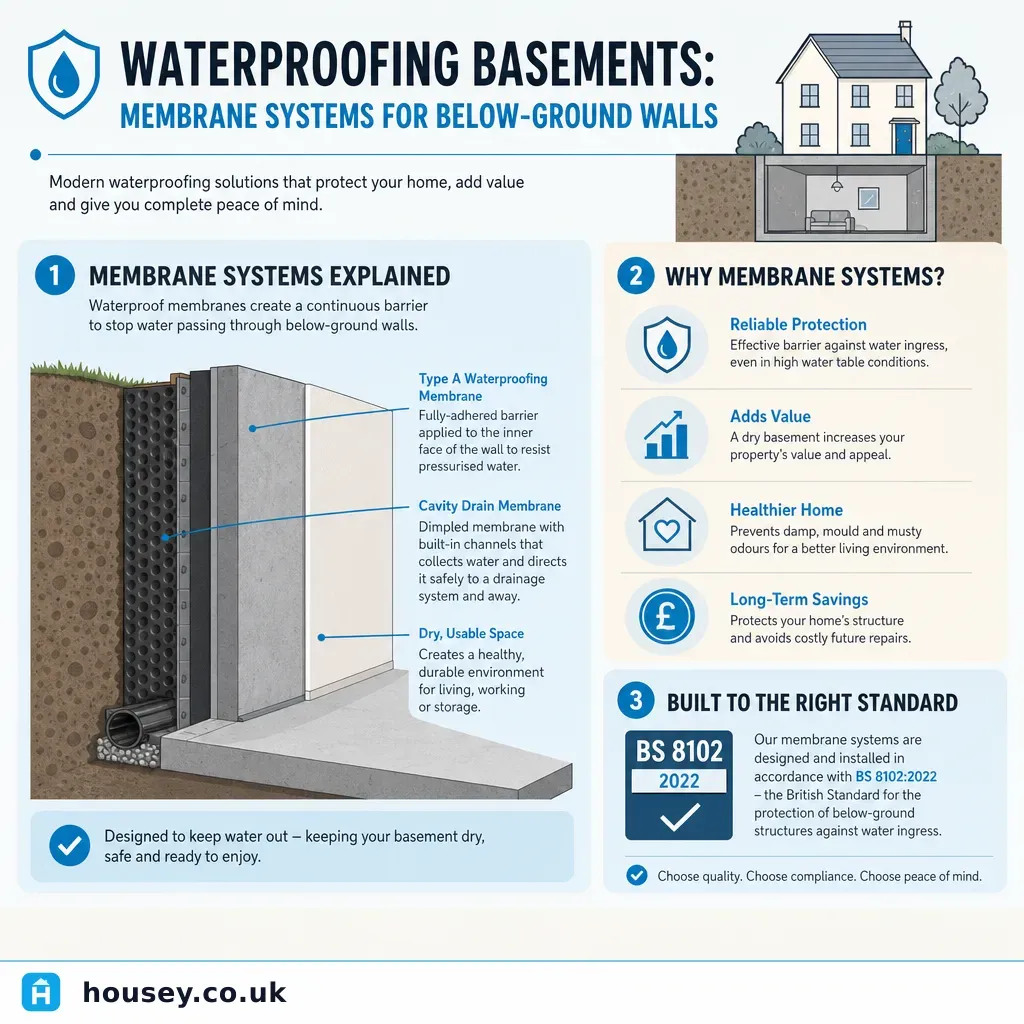
Waterproofing Basements: Membrane Systems for Below-Ground Walls
The three principal below-ground waterproofing systems under BS 8102:2022 are Type A (barrier membranes such as tanking or crystalline coatings), Type B (structurally integral waterproof concrete), and Type C (cavity drain membranes that collect and redirect water).
 Improvement & Build
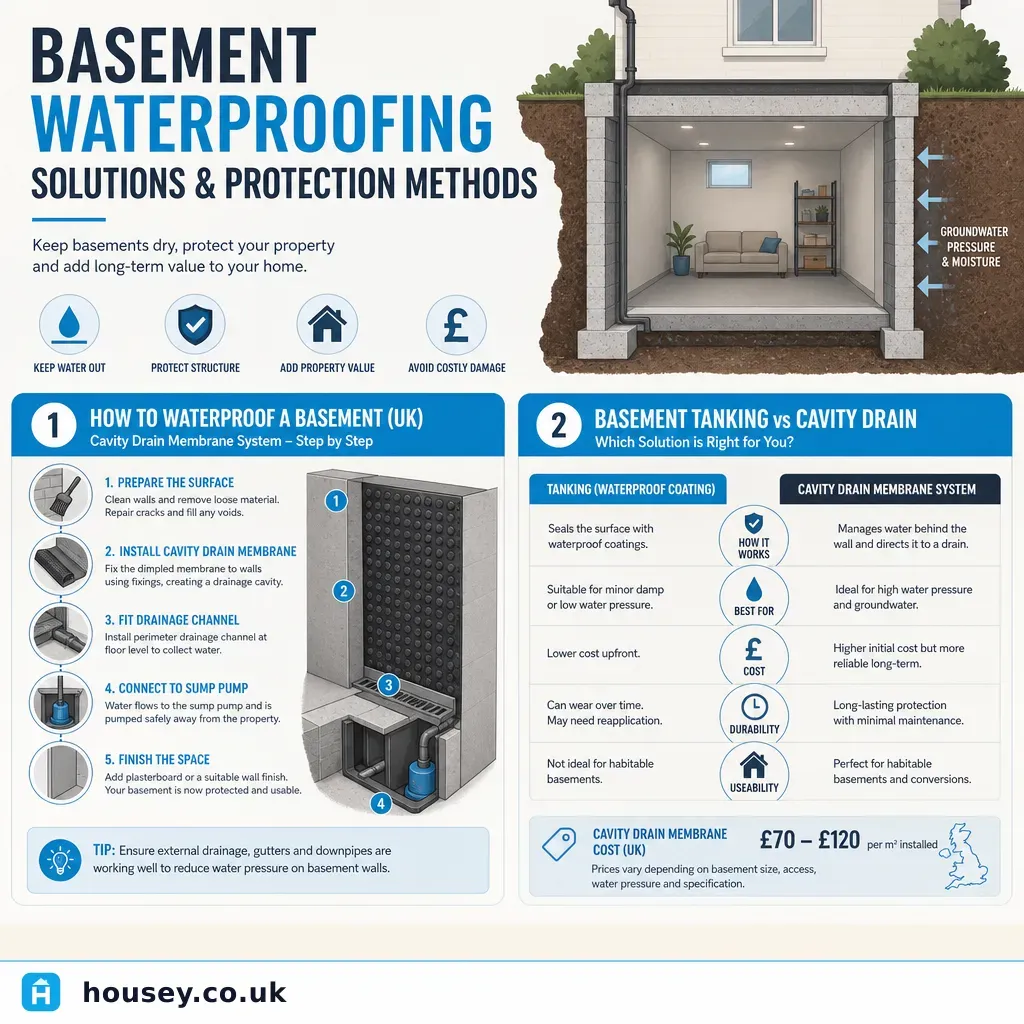
Basement Waterproofing Solutions and Protection Methods
Basement waterproofing in the UK uses one of three system types defined in BS 8102:2022: Type A (barrier tanking), Type B (structurally integral concrete), or Type C (cavity drain with sump pump).
 Improvement & Build
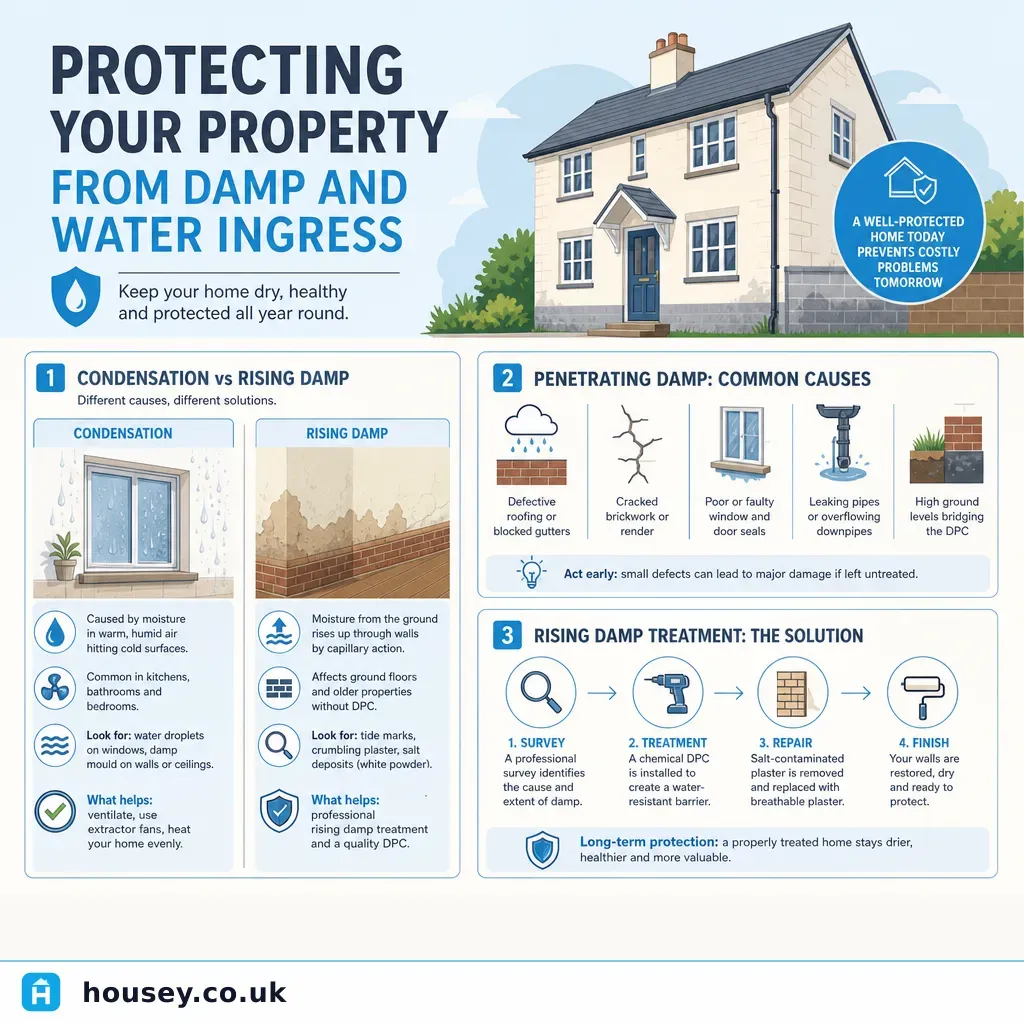
Protecting Your Property from Damp and Water Ingress
Damp in UK homes usually falls into three categories: rising damp (groundwater drawn up through walls), penetrating damp (rain or groundwater entering through the building envelope), and condensation (moisture from warm internal air meeting a cold surface).