Installing Weather-Resistant Windows: A Guide to Proper Sealing and Fitting
By Housey · Last reviewed 31st of May 2026
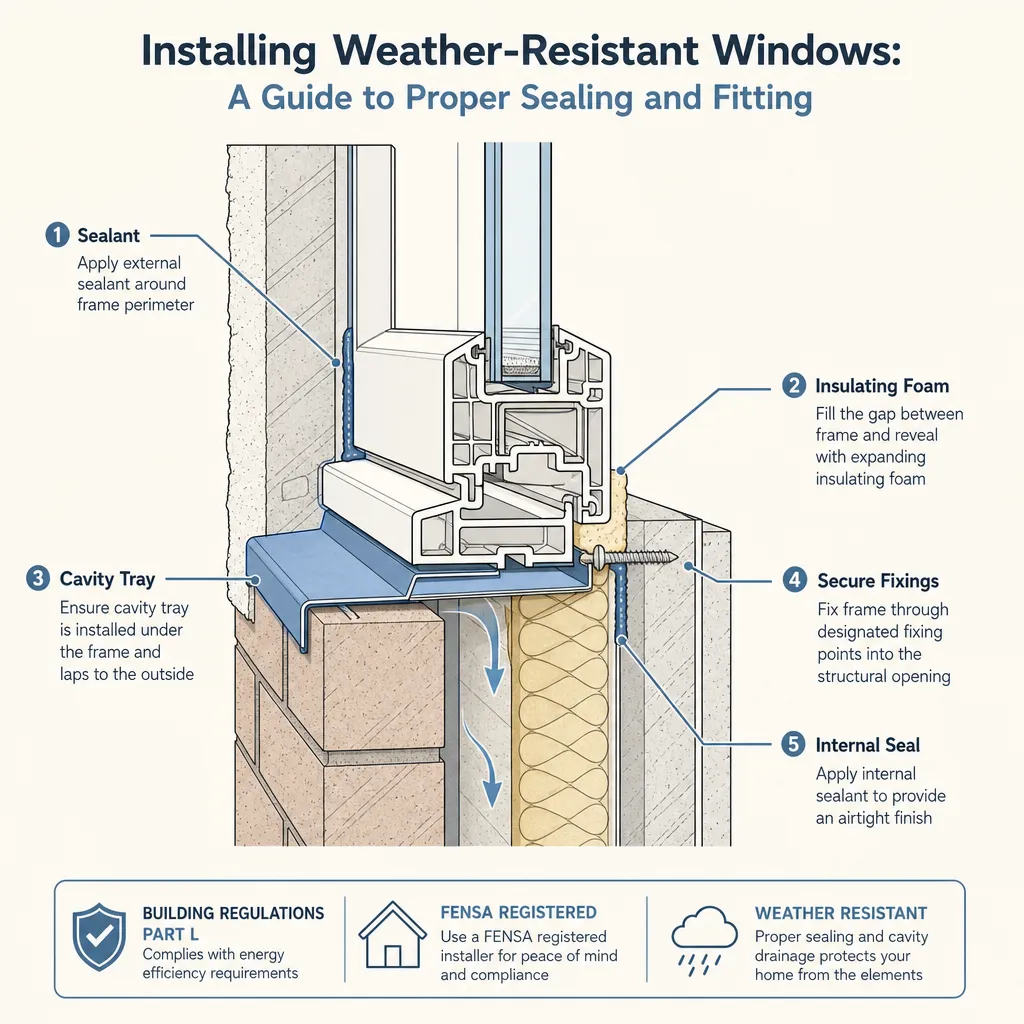
Installing Weather-Resistant Windows: A Guide to Proper Sealing and Fitting
Window replacement is one of the most common home improvement projects undertaken by UK homeowners, yet it is also one where poor installation creates problems that persist for years. Water ingress at the masonry reveal, draughts through failed perimeter seals, and damp patches appearing months after new frames are fitted are almost always the result of installation errors rather than defective window units. Understanding what correct installation looks like helps you specify work accurately, ask the right questions of prospective installers, and identify failures before they become expensive.
Key points
- All replacement windows in England must comply with Building Regulations Part L, requiring a minimum whole-window U-value of 1.6 W/m²K; installation must be self-certified by a FENSA- or CERTASS-registered contractor, or notified to local authority building control before works start.
- FENSA and CERTASS certificates are required by conveyancers when selling a property — missing certificates can delay exchange or require retrospective regularisation at the seller's cost.
- In conservation areas and for listed buildings, uPVC replacement windows typically require planning permission and are often refused; timber or heritage-style slim-profile aluminium is usually required to match the original character of the building.
- Head flashings and cavity trays above window openings are critical in UK cavity wall construction — incorrectly installed or absent trays allow water to track from the outer leaf into the masonry reveal, causing damp patches on internal walls sometimes months after installation.
- Perimeter sealing should use a low-modulus neutral-cure silicone sealant rated for external use and compatible with both the frame substrate and the masonry; oil-based mastics harden and crack within a few years, reopening the joint to water.
Building Regulations and certification
FENSA and CERTASS: the competent person schemes
In England and Wales, replacing windows and external doors is notifiable under Building Regulations, primarily for thermal performance under Part L. There are two compliant routes:
- Competent person scheme: Use a FENSA- or CERTASS-registered installer. They self-certify compliance with Part L, issue a certificate, and notify the local authority on your behalf. This is the most common route for residential window replacement.
- Local authority building control: Notify your local building control department before work starts. An inspector will verify that the installed windows meet Part L requirements. This route is necessary when using a non-registered installer and adds both cost and lead time.
There is no lawful route to skip notification for replacement windows. An installer who claims notification is not required should be questioned carefully — and their advice verified directly with your local building control office.
FENSA certificates and property sales
Conveyancers will request certificates for all window replacements made since April 2002. If certificates are missing when you come to sell:
- Retrospective building control inspection may be required at the seller's cost.
- Your buyer's solicitor may request an indemnity insurance policy or a retention on the sale price.
- In some cases, exchange is delayed while the issue is resolved.
Keep FENSA or CERTASS certificates in your property documents alongside planning consents, building control completion certificates, and Gas Safe records.
Frame material comparison
Frame material | Typical whole-window U-value | Lifespan | Maintenance | Conservation areas | Best suited for |
|---|---|---|---|---|---|
uPVC | 1.2–1.6 W/m²K | 20–35 years | Very low | Often refused | Modern and standard homes |
Timber | 1.3–1.8 W/m²K (with double glazed unit) | 30–60+ years with care | Moderate (painting every 5–8 years) | Usually accepted | Period properties and listed buildings |
Slim-profile aluminium | 1.4–1.8 W/m²K | 30–45 years | Low | Often accepted | Conservation areas and contemporary extensions |
Composite (timber-aluminium) | 1.2–1.5 W/m²K | 30–50 years | Low | Case-by-case | Premium homes across all settings |
Indicative UK specifications only. Verify actual U-values with your supplier before ordering units.
Correct installation: the critical details
Cavity tray and head flashing
UK cavity wall construction — standard in homes built after approximately 1920 — creates a path for wind-driven rain to enter the gap between the inner and outer leaf of masonry. A correctly installed cavity tray positions a damp-proof membrane above the window lintel to direct any water from the cavity out through weep holes in the outer leaf, preventing it from tracking down onto the lintel and into the reveal.
Common installation failures:
- Cavity tray omitted entirely, particularly in budget or rushed installations where the lintel is simply reused without opening the outer leaf.
- Tray installed without weep holes at regular intervals (typically every third perpendicular joint), trapping water against the inner leaf.
- Tray punctured during fixing of the window frame to the lintel.
Diagnostic signs of a failed or absent cavity tray include damp patches directly above the window reveal on the internal wall and white salt staining (efflorescence) on the external masonry above the opening.
Frame bedding and perimeter seal
The gap between the window frame and the masonry reveal is typically:
- Packed with low-expansion polyurethane foam — never high-expansion, which can bow the frame and compromise the sealed unit geometry.
- Finished internally with plaster or render carried to the frame edge.
- Sealed externally with a continuous bead of low-modulus neutral-cure silicone sealant, tooled to a slightly concave profile that sheds water away from the joint.
The sealant must be compatible with both the frame material (uPVC, aluminium, or timber) and the masonry substrate. Confirm the product specification and application method with your installer before work starts.
Cill and threshold installation
- Window cills should project a minimum of 40 mm beyond the face of the external wall and slope downward at no less than 1:6 to shed surface water clear of the wall below.
- Sub-cills in uPVC window systems must be bedded in sealant rather than dry-fitted, to prevent water pooling beneath the cill and wicking into the reveal.
- At door thresholds, a correctly specified weather bar and door brush seal form the primary defence against wind-driven rain at ground level.
Installation checklist for homeowners
Before work starts:
After installation:
Important limitations
This guide covers general principles of weather-resistant window installation applicable in England under current Building Regulations. Requirements in Wales, Scotland, and Northern Ireland are governed by separate regulatory frameworks and may differ in detail. Listed buildings and conservation area properties are subject to additional restrictions that vary by local planning authority and the specific terms of any designation. This guide does not constitute professional or legal advice — always obtain a written specification and written confirmation of building regulations compliance from your installer before work starts.
What to ask a qualified professional
Before appointing a window installer, ask:
- Are you registered with FENSA or CERTASS, and can you provide your registration number for verification?
- Will you install or inspect cavity trays above every window opening?
- What type and specification of external sealant will you use, and is it compatible with my frame material and masonry?
- What is the whole-window U-value of the units being supplied — will they meet or exceed Part L requirements?
- What warranty covers the frame, sealed unit, and installation workmanship, and for how long?
- Do I need planning permission for these windows? Will you confirm this in writing as part of your quotation?
- What happens if the reveals or lintels are found to be in poor condition when the old frames are removed?
- By what date will I receive my FENSA or CERTASS certificate?
When this becomes urgent
Stop relying on general guidance and seek professional advice immediately if:
- Your home is in a conservation area or is listed and you have already installed windows without checking planning requirements — enforcement action can require reinstatement of original windows at your own cost.
- You see damp patches above or beside window openings after rainfall — commission a building surveyor to diagnose the source before ordering replacements, as the cause may not be the window frame itself.
- Existing lintels or reveals show cracking, spalling, or visible deflection — a structural engineer should assess whether the lintel is sound before new frames are specified.
- An installer advises you that building regulations notification does not apply to your replacement windows — this is rarely correct and should be queried directly with your local authority building control team before proceeding.
How Housey can help
Housey connects homeowners with vetted window and door installers who are FENSA- or CERTASS-registered and handle Building Regulations compliance as part of their standard service. If your window replacements form part of a larger extension or renovation project, the extension builders listed on Housey can coordinate structural openings, cavity tray specification, and external finishing works as part of a complete managed package.
Frequently asked questions
Do I need building regulations approval to replace windows in England?
Yes. Replacement windows in England are notifiable under Building Regulations, primarily for thermal performance under Part L. The simplest route is to use a FENSA- or CERTASS-registered installer, who self-certifies and notifies on your behalf. If you use an unregistered installer, you must notify local authority building control before work begins. Skipping notification creates a disclosure liability when you sell.
How long does it take to receive a FENSA certificate?
FENSA-registered installers must register installations within 30 days of completion. You should receive your certificate within this period. If you do not receive one, contact FENSA directly with the installer's registration number and installation date — FENSA maintains a publicly searchable register at fensa.org.uk that also allows homeowners to check their own property's certificates.
Can I replace windows in a conservation area without planning permission?
In most conservation areas, replacement windows do not benefit from permitted development rights and require a householder planning application. The local planning authority will typically require materials and profiles that match the character of the original windows. Always confirm requirements with your local planning authority before ordering units, as enforcement action can require reinstatement at your own cost.
What causes condensation between the panes of a double-glazed unit?
Condensation between the panes — rather than on the interior face of the inner pane, which is a room ventilation issue — indicates a failed sealed unit. The desiccant in the spacer bar has been overwhelmed and the inert gas fill has been lost. The sealed unit needs replacing; the frame can usually be retained if otherwise structurally sound and within its serviceable life.
Sources and further reading
- Approved Document L: Conservation of Fuel and Power — GOV.UK
- FENSA — Fenestration Self-Assessment Scheme — FENSA
- CERTASS — Competent Person Scheme for Windows and Doors — CERTASS
- When is permission required? — GOV.UK
- Double glazing energy efficiency guidance — Energy Saving Trust
Useful next reads
 Improvement & Build
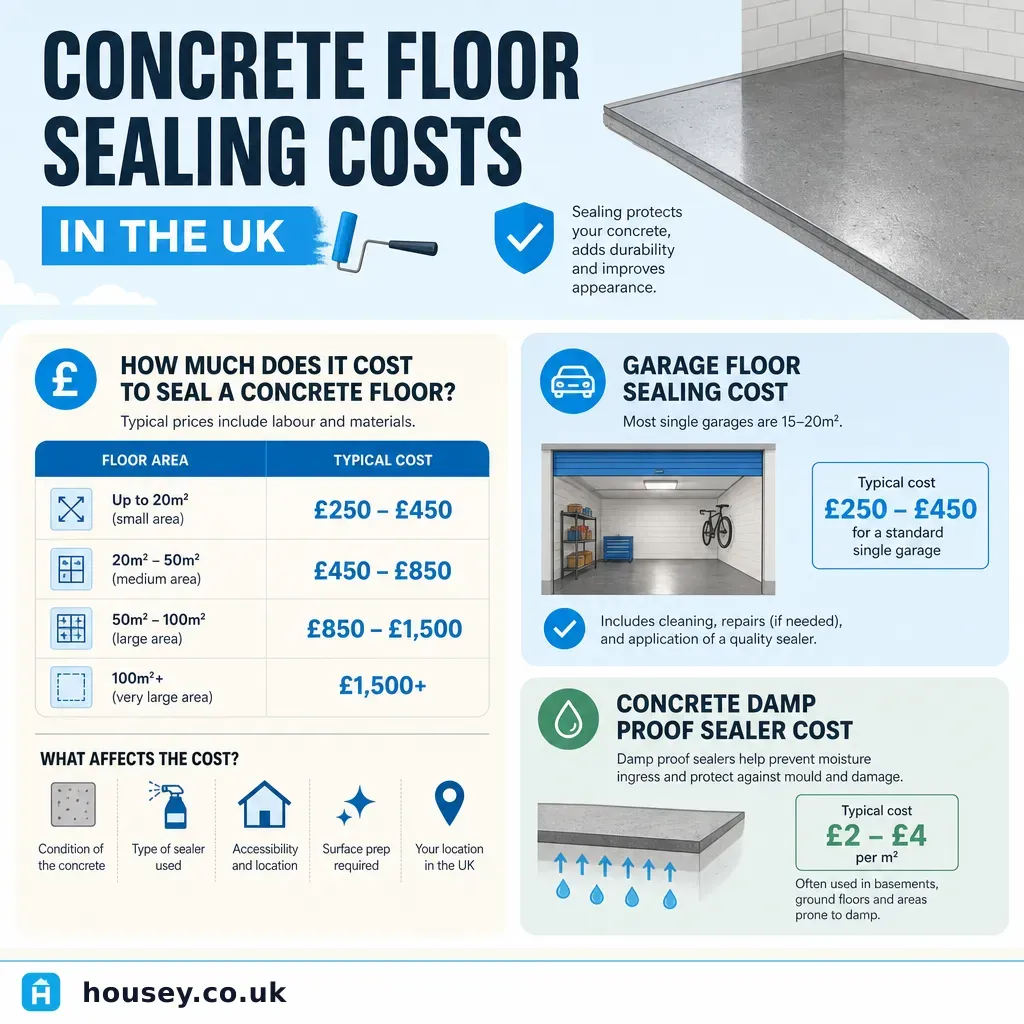
Concrete Floor Sealing Costs in the UK
Sealing a concrete floor typically costs £5–£20 per m² for materials or £15–£50 per m² professionally installed, depending on sealer type and floor condition.
 Improvement & Build
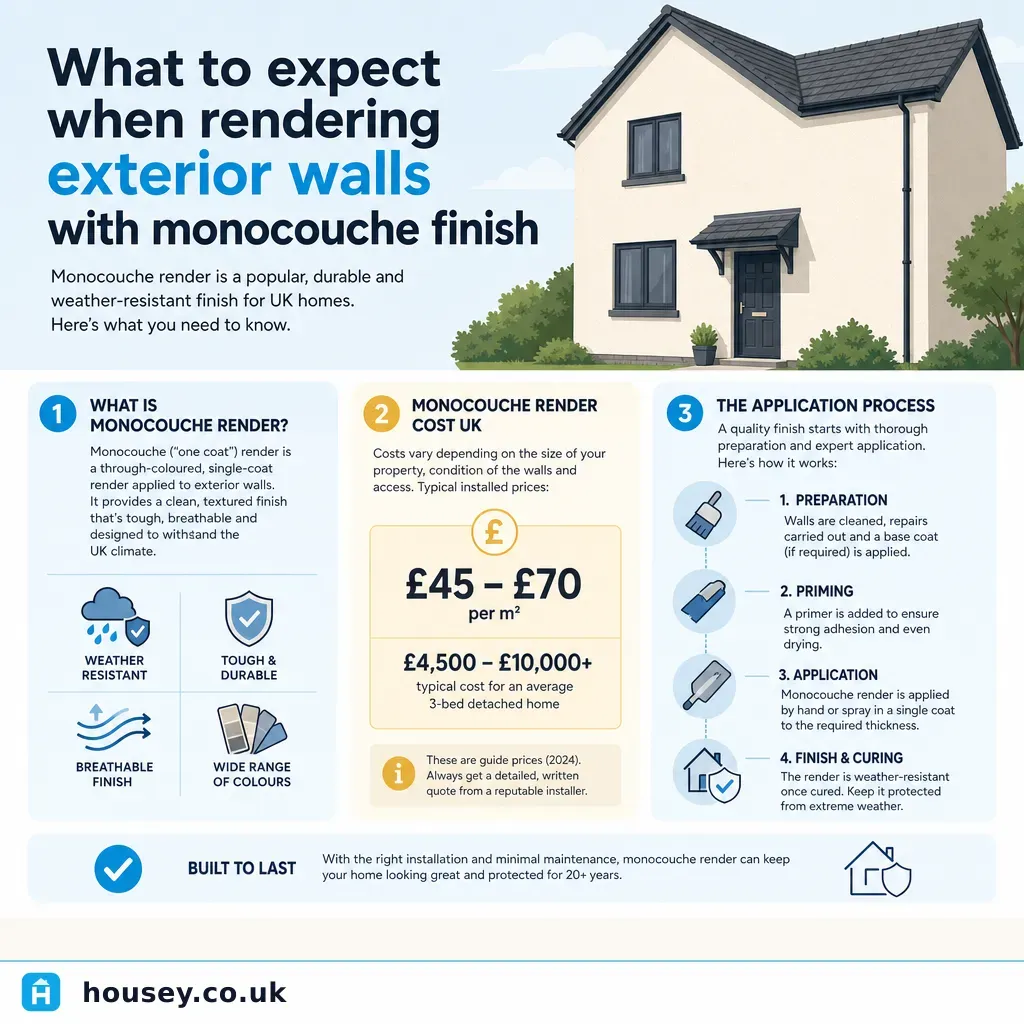
What to expect when rendering exterior walls with monocouche finish
Monocouche is a single-coat, through-coloured cement-based render applied at 15–20 mm onto brick or dense blockwork.
 Improvement & Build
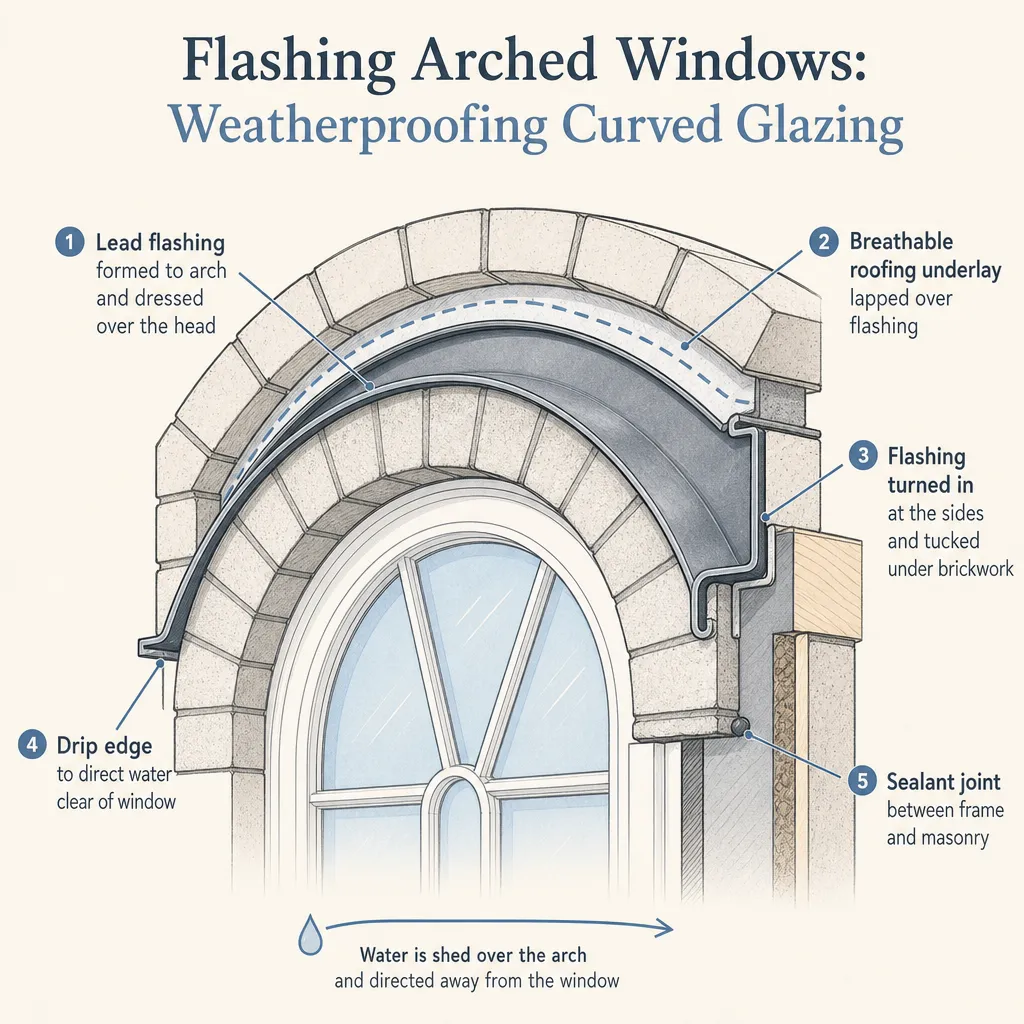
Flashing Arched Windows: Weatherproofing Curved Glazing
Flashing an arched window requires flexible or purpose-formed lead, GRP, or aluminium shaped to follow the curved head, with stepped soakers at the sides and a correctly dressed sill.
 Improvement & Build
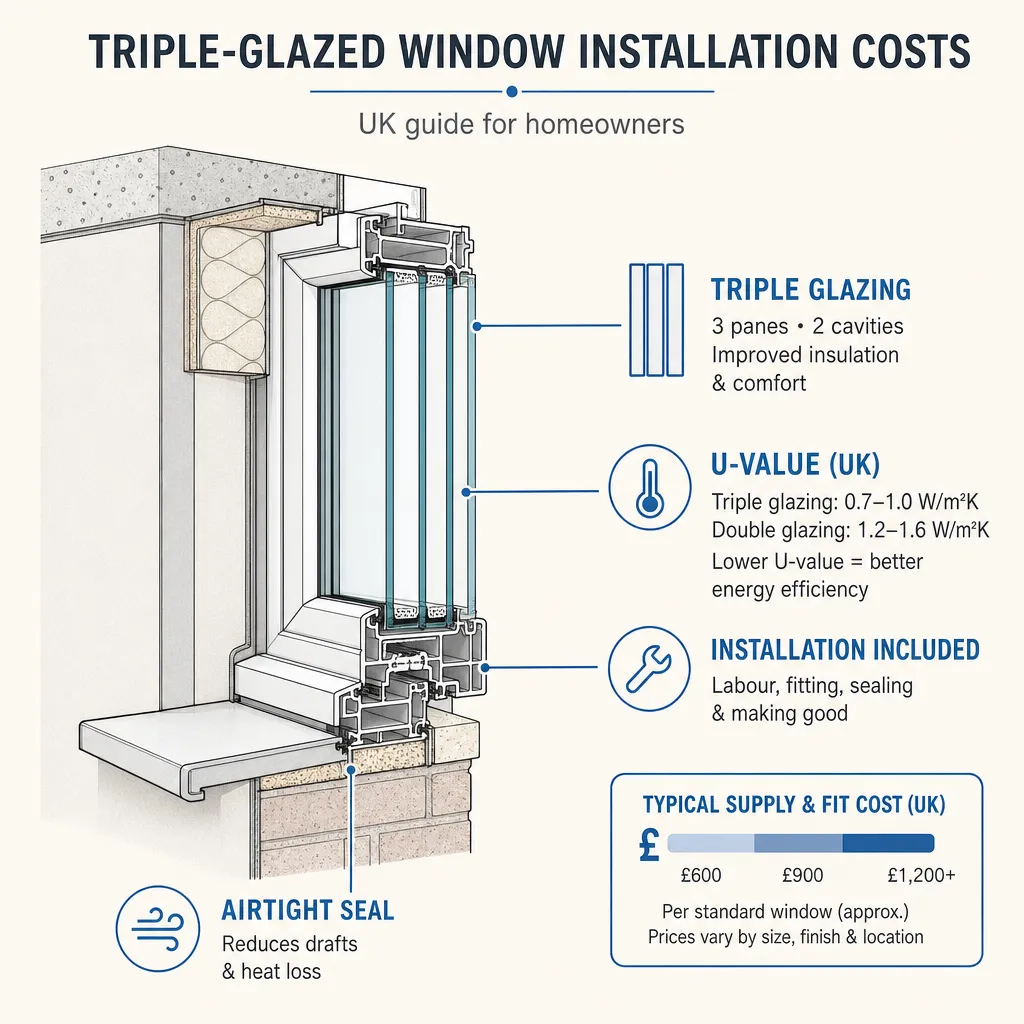
Triple-Glazed Window Installation Costs
Triple-glazed window installation in the UK typically costs £800–£1,800 per window, depending on size, frame material, and glazing specification.
 Improvement & Build
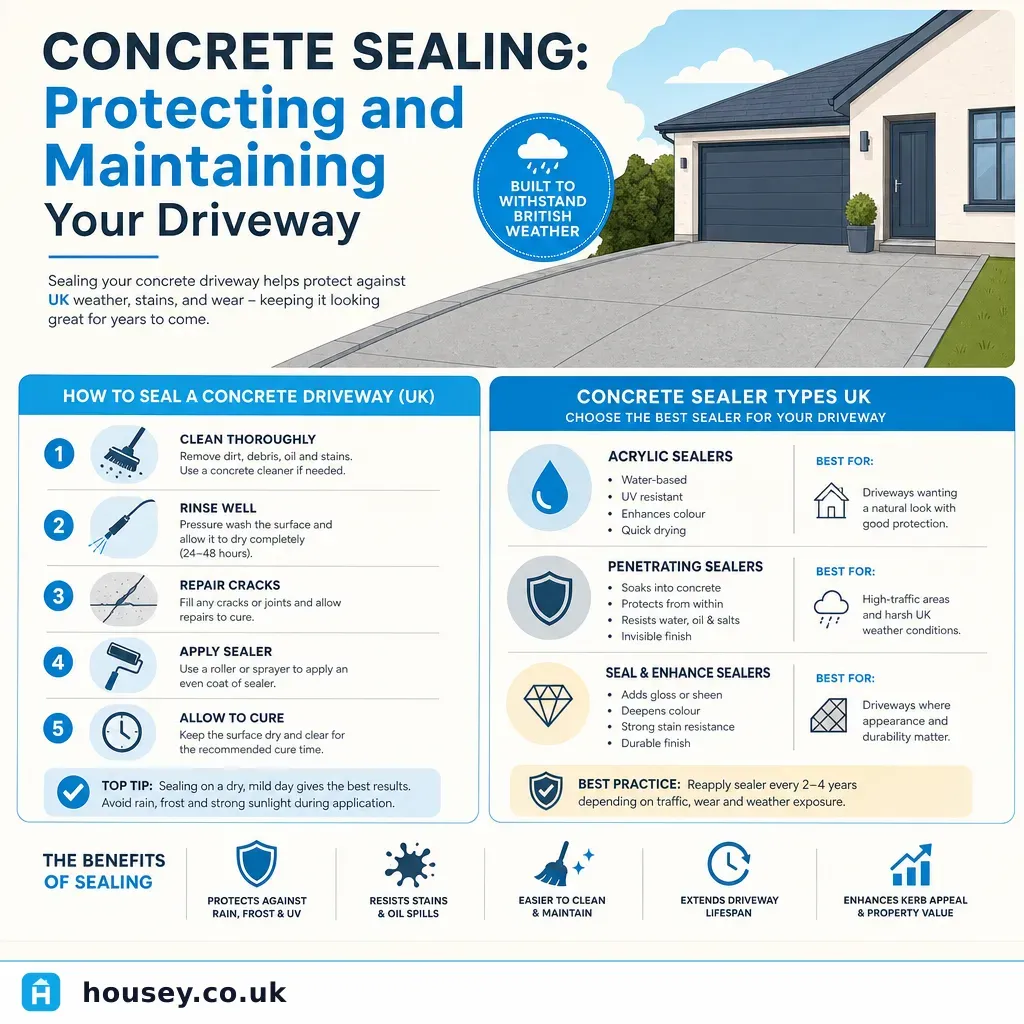
Concrete Sealing: Protecting and Maintaining Your Driveway
Sealing a concrete driveway protects against water ingress, freeze-thaw damage, oil stains, and surface wear.