Designing urban outdoor spaces: professional garden ideas for city homes
By Housey · Last reviewed 7th of May 2026
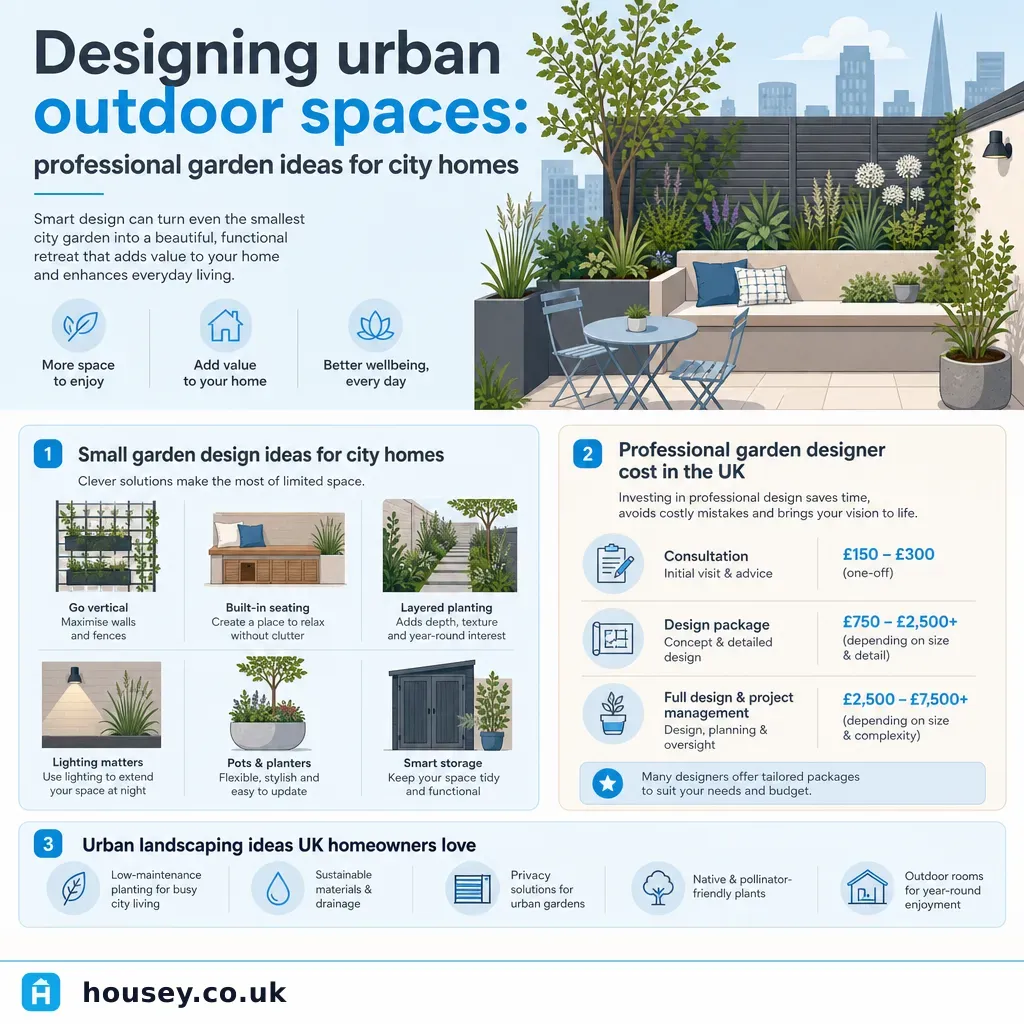
Designing urban outdoor spaces: professional garden ideas for city homes
City gardens in the UK are among the most underused spaces in any property — squeezed between terrace walls, overshadowed by neighbouring buildings, or left as a paved afterthought from a previous owner. For homeowners in London, Manchester, Bristol, or any densely built urban area, thoughtful outdoor design can dramatically increase usable living space and day-to-day quality of life. Whether you have 15m² or 60m², the right approach — and the right professional — makes a substantial difference to what is achievable.
Key points
- Paving over more than 5m² of a front garden with impermeable materials requires planning permission under GOV.UK guidance on hard standings; most rear garden works are permitted development and require no consent.
- Hard landscaping installation typically costs £80–£150/m² for mid-range materials such as porcelain paving or Indian sandstone (indicative UK costs, last reviewed 2026-05-07).
- The Royal Horticultural Society recommends vertical planting strategies — trained climbers, espalier fruit trees, or living walls — for urban gardens where ground space is limited.
- A professional garden designer's concept design typically costs £300–£1,500 depending on garden size and service scope (indicative UK costs, last reviewed 2026-05-07).
- Urban gardens in conservation areas, or attached to listed buildings, may require listed building consent before making material alterations to boundaries, walls, or structures.
What can you achieve in a small urban garden?
Small urban gardens present real constraints: limited light, overlooking neighbours, party walls, and often awkward proportions. But these same constraints define the design opportunity. A 20m² garden that functions as an outdoor dining room, a quiet seating area with year-round planting, and a practical storage zone is a successful design — even if it never resembles a country garden.
Good urban garden design starts with honest assessment:
- Light: Which direction does the garden face? South-facing gardens get the most sun; north-facing gardens need shade-tolerant planting and lighter-coloured materials to reflect available light.
- Privacy: Can neighbours overlook the space? Raised planting, trellis panels, or overhead beams can create enclosure without requiring planning permission in most rear garden situations.
- Access: Is there a side gate? Can materials and soil be brought through the property? This affects both design choices and contractor costs significantly.
- Services: Are there inspection covers, drains, or gas pipes beneath the garden? These constrain where hard landscaping can be laid and where trees can be planted safely.
Design approaches for city gardens
Different design approaches suit different urban situations. This comparison table summarises common options, their strengths, and where they work best.
Design approach | Best for | Main advantage | Key limitation |
|---|---|---|---|
Paved terrace with container planting | Small, low-maintenance gardens | Easy to maintain; flexible planting choices | Containers need regular watering; less visual softness |
Mixed hard and soft landscaping | Most urban plots | Balance of usability and seasonal interest | More maintenance than full paving |
Raised beds and kitchen garden | Poor or contaminated soil; food growers | Growing produce in controlled conditions | Takes up valuable floor space |
Vertical garden or living wall | Very small spaces; shaded boundary walls | Maximises planting per square metre | Requires specialist irrigation and maintenance |
Gravel and drought-tolerant planting | Sunny, dry spots; time-poor homeowners | Low upkeep; attractive year-round | Can look sparse in shade; gravel migrates |
Planning and permitted development in urban gardens
Most work to the rear garden of a house — planting, paving, low-level decking, fencing — is permitted development and does not need planning permission. There are important exceptions for urban homeowners, however:
- Front gardens: Paving over a front garden with an impermeable surface of more than 5m² requires planning permission. Permeable materials such as gravel or block paving with drainage gaps are usually exempt under GOV.UK guidance on hard standings.
- Decking height: Raised decking over 30cm above ground level may require planning permission if it is within 20 metres of a highway or exceeds certain area limits.
- Conservation areas: Permitted development rights are often restricted. Even boundary walls, fences over 1 metre adjacent to a highway, or garden outbuildings may need consent.
- Listed buildings: Any material alteration — including garden structures close to a listed building — may need listed building consent in addition to planning permission.
- Flats and leasehold properties: Permitted development rights typically do not apply to flats. Your lease may also require freeholder consent before making external alterations.
When in doubt, contact your local planning authority before starting work.
Which professional do I need?
Not every urban garden project requires the same professional. Use this decision tree to identify who to approach first.
- Choose a garden designer if you want a full design concept — planting schemes, layout drawings, material specifications — before any physical work begins. A designer produces documents for a landscaper to quote from and may oversee the project.
- Choose a landscaper if you have a clear design idea and need someone to implement hard and soft landscaping, including paving, turf, planting, drainage, and irrigation.
- Choose both if the garden involves significant level changes, a complex brief, or if you want a coordinated design-and-build approach.
- Ask a structural engineer if the project involves retaining walls over approximately 1 metre, basement excavation, or significant changes to levels close to the property or a boundary.
- Check with your local planning authority if the garden is in a conservation area, the property is listed, the garden belongs to a leasehold flat, or you plan to pave the front garden.
What to ask before hiring a professional
Use these questions when requesting and comparing quotes from garden designers and landscapers:
- What is included in the design fee — concept only, or detailed planting plans and specifications?
- Will you attend site and produce measured drawings?
- Are you a member of the Society of Garden Designers (SGD) or the Landscape Institute?
- How will you handle drainage if the garden has no existing soakaway or surface water drain connection?
- What guarantees or aftercare do you offer for planted areas?
- Is VAT included in your quote?
- Who is responsible for obtaining any planning permission or building regulations consent if required?
- Will you coordinate with other trades, such as electricians for outdoor lighting or irrigation specialists?
Homeowner checklist: preparing for a garden design project
Before your first consultation with a designer or landscaper, gather the following:
When to get professional help
Minor planting choices and furniture decisions can usually be made without professional input. However, engaging a qualified designer or landscaper is worth considering when:
- The garden has significant level changes, retaining walls, or drainage problems
- You are in a conservation area or own a listed building
- The project involves tree removal — first check whether the tree has a Tree Preservation Order, which requires consent before any work
- You want a coherent planting scheme that performs well across all seasons
- The project value exceeds £5,000 — at this level, professional design typically pays for itself through better material specification and fewer costly errors
How Housey can help
Housey connects homeowners with qualified garden designers and experienced landscapers across the UK. Whether you need a full design concept or simply want hard landscaping installed to a specification you already have, you can request and compare quotes from relevant professionals in one place.
Frequently asked questions
Do I need planning permission to redesign my back garden?
Most rear garden work — paving, planting, low decking, and fencing up to 2 metres — does not require planning permission under permitted development rights. Exceptions apply in conservation areas, for listed buildings, and for flats. Paving a front garden with impermeable materials over 5m² does require planning permission. Contact your local planning authority if you are in any doubt.
How much does a professional garden design cost in the UK?
Indicative UK costs, last reviewed 2026-05-07: a concept design for a small urban garden typically costs £300–£800. A full design including detailed planting plans and specifications for a mid-sized garden may cost £800–£2,000 or more. Costs vary significantly by location, designer experience, and project complexity. Request itemised quotes from at least three professionals before committing.
What is the difference between a garden designer and a landscaper?
A garden designer focuses on creative and technical design — layout, plant selection, materials specification, and often project management. A landscaper implements the design on the ground, carrying out hard and soft landscaping work. Some professionals offer both services. For complex or larger projects, having a designer produce detailed drawings before tendering to landscapers usually produces better value and results.
Can I alter a garden attached to a leasehold flat?
If your flat has access to a garden, your lease sets out your rights and responsibilities for that space. You will usually need freeholder or management company consent before making material alterations. Always check your lease and obtain written permission before starting work. Permitted development rights do not generally apply to flats, so planning permission may be needed for structural changes.
Is decking a good choice for a small urban garden?
Decking works well in small urban gardens, particularly on sloping ground where levelling for paving would be expensive. Softwood decking needs staining or treating every two to three years and can become slippery when shaded. Composite decking costs more upfront but requires less maintenance. Raised decking more than 30cm above ground level may need planning permission in some circumstances.
Sources and further reading
- Hard standings for driveways — GOV.UK
- When is planning permission required? — GOV.UK Planning Practice Guidance
- Tree Preservation Orders and trees in conservation areas — GOV.UK
- Garden inspiration and plant advice — Royal Horticultural Society
- Find a garden designer — Society of Garden Designers
Useful next reads
 Improvement & Build
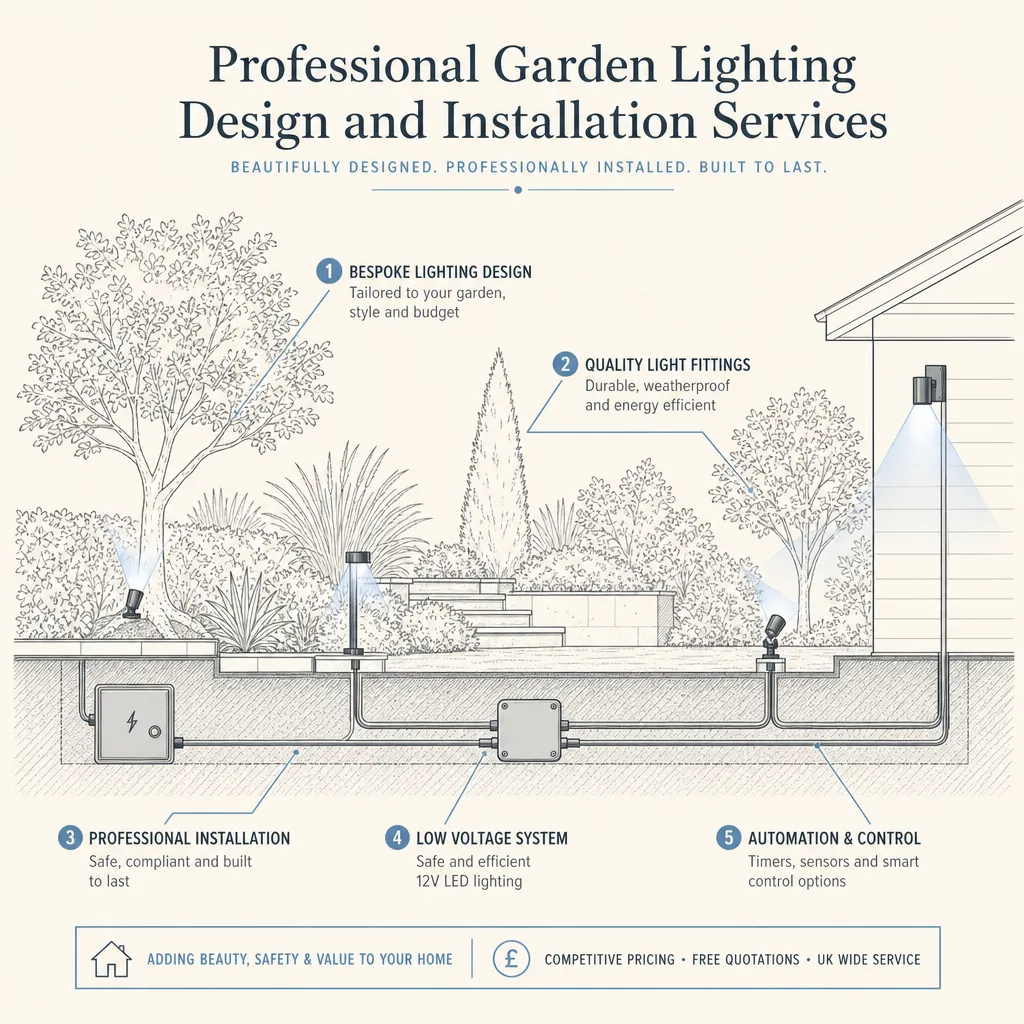
Professional Garden Lighting Design and Installation Services
Professional garden lighting design involves planning a scheme suited to your garden's layout and features, then having it installed by a qualified electrician.
 Improvement & Build
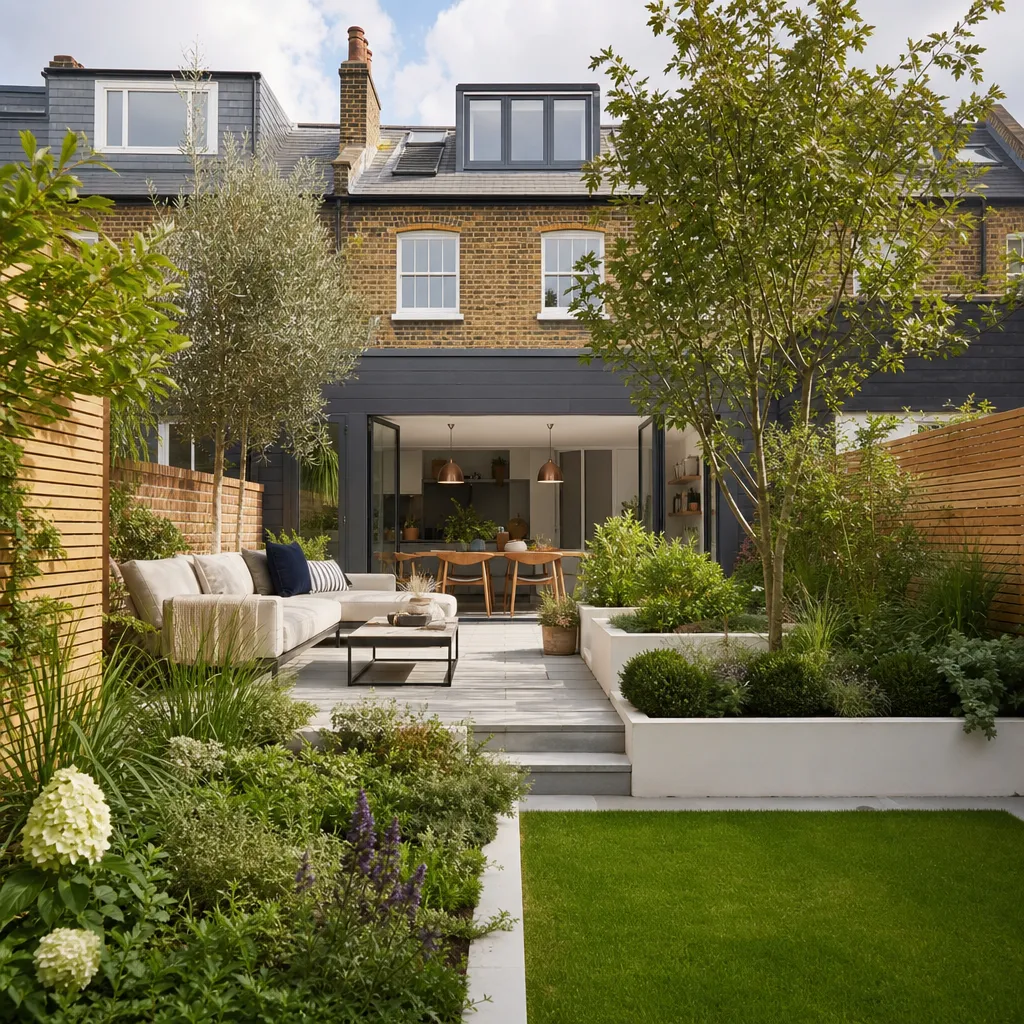
Seasonal Garden Transformations and Outdoor Design Ideas
A successful garden transformation in the UK works with the seasons rather than against them — establishing structure and hard landscaping in autumn or winter, planting in spring, and enjoying the results through summer.
 Improvement & Build
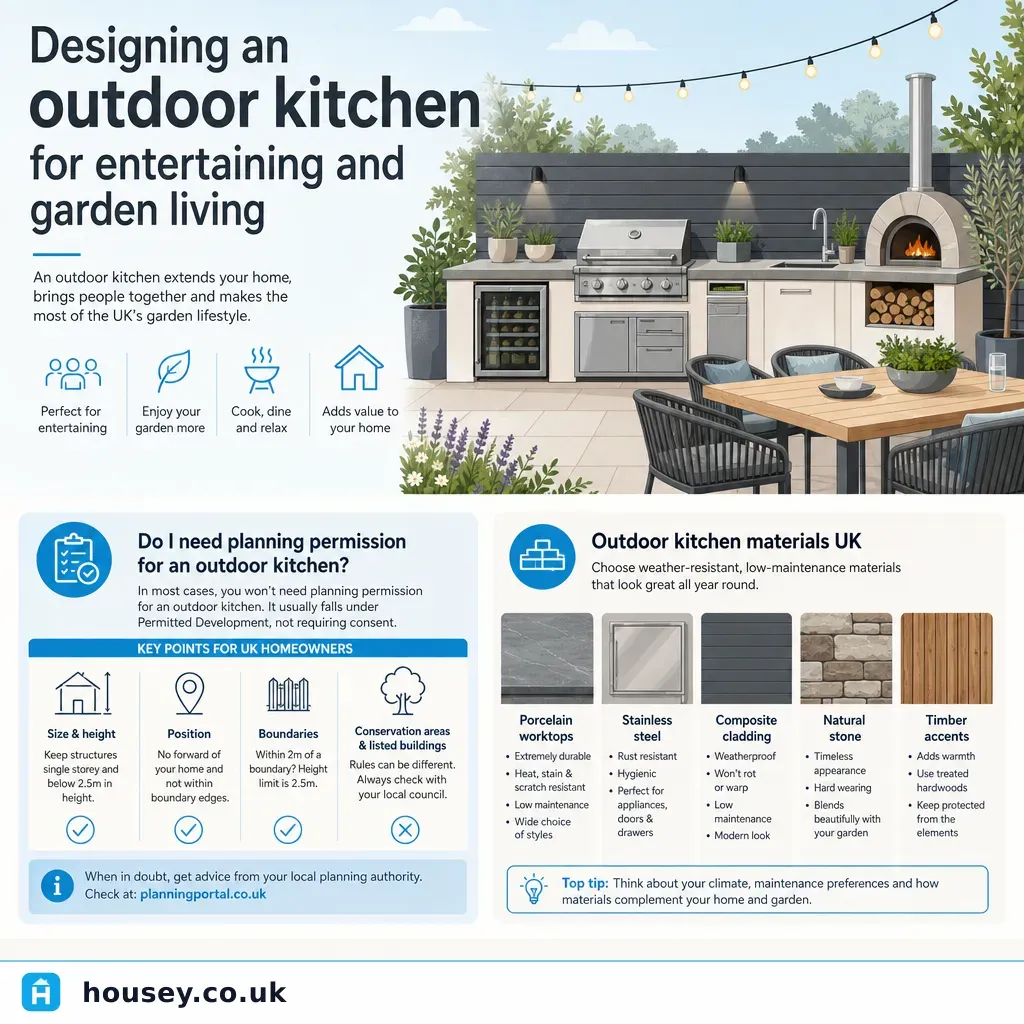
Designing an outdoor kitchen for entertaining and garden living
An outdoor kitchen in a UK garden needs a stable, level base — typically a concrete slab or quality paving — with weather-rated materials such as stainless steel grade 316 or frost-rated porcelain.
 Improvement & Build
Concrete Landscaping for Homeowners: Durability and Design Benefits
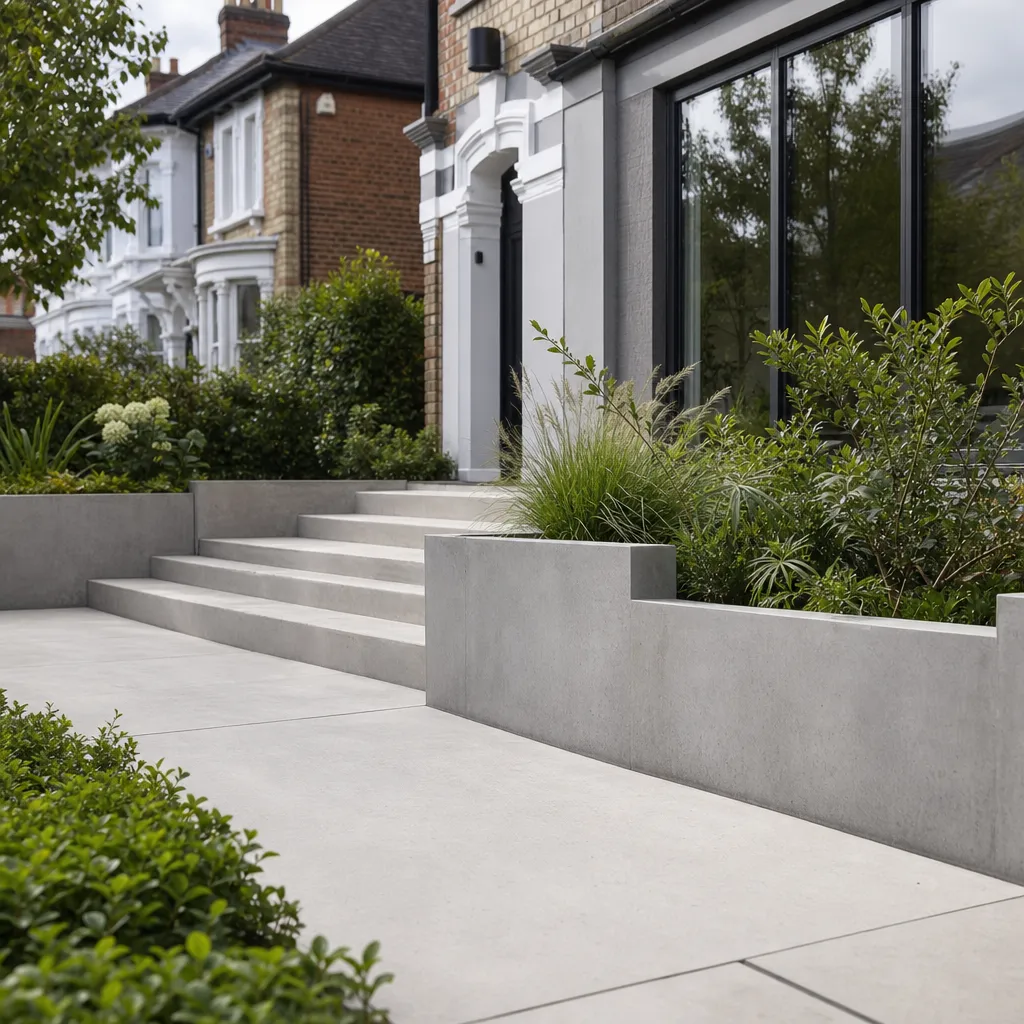
Concrete is one of the most durable hard landscaping materials available to UK homeowners, with a typical design life of 25–40 years and low ongoing maintenance.
 Improvement & Build
Outdoor living: designing gardens and green spaces for small plots
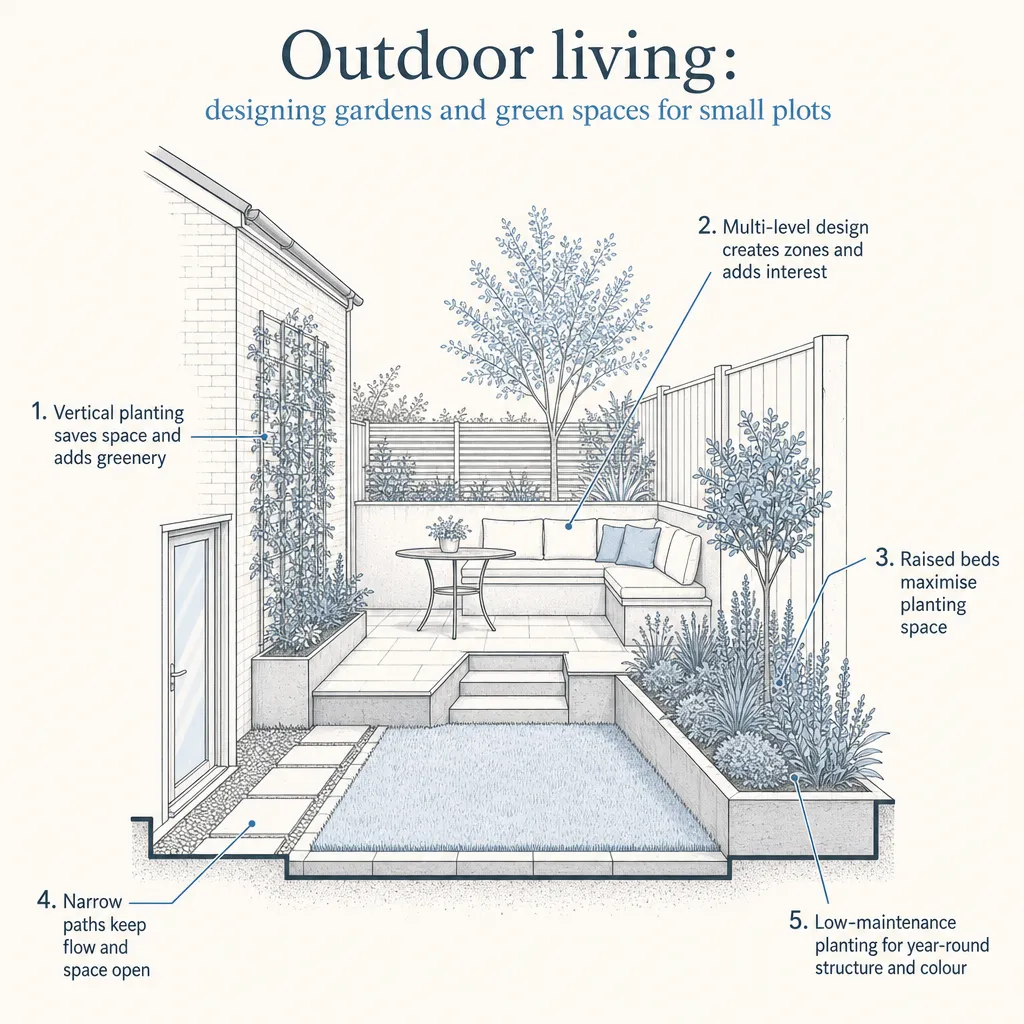
Small plots work best when divided into defined zones — seating, planting, and utility — before materials are chosen.