Concrete Lifting and Repair: Polyurethane Injection Methods
By Housey · Last reviewed 26th of May 2026

Concrete Lifting and Repair: Polyurethane Injection Methods
Sunken or uneven concrete — a driveway slab that has dropped, a garden path that has tilted, or a garage floor that has settled unevenly — is a familiar problem in UK homes, particularly where drainage is poor, ground conditions are variable, or tree root activity has disturbed the subbase. Polyurethane injection, sometimes called polyjacking, has become an increasingly used repair method in the UK because it can lift and stabilise settled slabs with minimal disruption and without the cost and delay of full slab removal and replacement.
Key points
- Polyurethane injection uses a two-part expanding foam injected through holes typically 12–16mm in diameter drilled through the slab to fill voids and lift settled concrete.
- The foam cures within 15–30 minutes of injection, allowing the repaired surface to bear foot traffic the same day and vehicle traffic within hours.
- The method is generally not suitable where the underlying cause of settlement is active structural subsidence — a structural engineer should assess this before any repair is commissioned.
- Indicative UK costs for polyurethane lifting are typically £100–£300 per square metre depending on void size and access, compared with £100–£200 per square metre for full slab removal and replacement, though costs vary widely by location and contractor (Indicative UK costs, last reviewed 2026-05-26).
- Contractors carrying out this work should hold adequate public liability insurance and ideally registration with a recognised body such as TrustMark or the Concrete Repair Association.
How polyurethane injection works
The process — known variously as polyjacking, foam lifting, or polyurethane slab lifting — follows a defined sequence:
- Assessment: The contractor surveys the slab, identifies the extent of voids beneath it (often by sounding the surface by tapping or using ground-penetrating radar), and determines the likely cause of settlement.
- Drilling: Small holes (typically 12–16mm) are drilled through the slab at strategic points, with the pattern designed to achieve even lift across the affected area.
- Injection: A two-part polyurethane resin is mixed at the injection nozzle and pumped under pressure through the holes. The expanding foam fills voids, compacts loose subbase material, and exerts upward pressure on the slab.
- Monitoring and levelling: The contractor monitors the slab lift using levels, pausing and adjusting injection to achieve the target elevation without over-lifting.
- Sealing: The drilled holes are patched with mortar or polyurethane sealant to leave a tidy finish.
- Post-treatment inspection: The slab is checked for levelness and stability before the site is handed back.
Repair methods compared
Method | Best suited to | Not ideal for | Typical disruption | Relative cost |
|---|---|---|---|---|
Polyurethane injection (polyjacking) | Settled slabs with voids; stable underlying ground; areas needing same-day reinstatement | Active structural subsidence; badly cracked or broken slabs; very deep or large voids | Minimal — small drilled holes only | Mid |
Mudjacking (cementitious grouting) | Larger voids where volume of material is advantageous; less weight-sensitive applications | Weight-sensitive structures; areas where long cure time is problematic | Low — similar holes, heavier equipment | Lower |
Full slab removal and replacement | Badly broken or reinforcement-compromised slabs; slabs with inadequate original thickness | Budget-constrained projects; areas requiring rapid reinstatement | High — excavation, waste removal, cure time | Higher |
Compaction grouting | Deep void filling; settlement in infrastructure or commercial contexts | Shallow domestic slabs | Specialist — low surface disruption | Specialist |
Indicative UK costs, last reviewed 2026-05-26. Quotes vary by void size, depth, location, and contractor.
What causes concrete slabs to sink?
Understanding the cause of slab settlement matters, because polyurethane injection addresses the void but not every underlying problem:
- Water erosion: Surface or subsurface water washes fine material out from beneath the slab over time, creating voids. This is the most common cause, and polyjacking is often an effective remedy once the water pathway is also addressed.
- Poor compaction at installation: If the subbase was inadequately compacted when the slab was originally laid, it may continue to settle under load for years.
- Tree root activity: Growing roots can displace subbase material; when roots die or are removed, the resulting voids can cause rapid slab settlement.
- Leaking drains: A fractured drain beneath or adjacent to the slab can wash out subbase material continuously. Any drain defect must be repaired before lifting — otherwise the void will re-form.
- Structural subsidence: Ground movement affecting the foundations of a building is a different problem entirely. Polyurethane injection of a surface slab is not a substitute for underpinning or structural remediation.
Red flags: when polyurethane injection may not be the right approach
Before commissioning a contractor, be alert to these warning signs that the situation requires further investigation:
- Cracks in house walls or around door frames near the affected slab — this may indicate structural movement beyond simple slab settlement.
- Rapidly worsening or very recent settlement — active or accelerating ground movement requires investigation before any repair is commissioned.
- Slab is broken into multiple pieces or extensively cracked — polyurethane can lift sections but cannot bond shattered concrete together.
- Known or suspected drain failure beneath the slab — any repaired void will re-form unless the drain is fixed first; arrange a CCTV drain survey before proceeding.
- Settlement affecting or adjacent to the building's foundation — a structural engineer must assess the situation before any remedial work is commissioned.
- Contractor offers no site investigation — a reputable contractor should always enquire about drainage history, tree proximity, and the timeline of settlement before quoting.
Important limitations
The information in this article is general guidance only. Concrete settlement can arise from a wide range of causes — some of which, including structural subsidence, drain failure, and ground contamination, require professional investigation and may have implications for buildings insurance, mortgage lenders, and the sale of the property. Polyurethane injection is a practical and effective solution in appropriate conditions, but it is not a substitute for structural assessment where there is any evidence of movement in the building fabric. A qualified structural engineer, RICS-chartered surveyor, or specialist remedial contractor should assess your specific situation before work is commissioned.
What to ask a qualified professional
Before instructing a polyurethane injection contractor, ask:
- What is your assessment of why the slab has settled, and what investigation have you carried out to confirm the cause?
- Have you checked for drain defects beneath or adjacent to the slab? Would you recommend a CCTV drain survey before proceeding?
- What type of polyurethane resin will you use, and what is its load rating and expected service life in UK ground conditions?
- How many holes will need to be drilled, and what will the patched holes look like once finished?
- What happens if the slab does not lift to the required level, or if it cracks during the lifting process?
- Do you hold public liability insurance, and can I see a copy?
- Are you a member of a recognised trade body such as the Concrete Repair Association or registered with TrustMark?
- What guarantee do you offer on the repair, and what does it cover?
When to get professional help
Polyurethane injection requires trained operatives and calibrated equipment — it is not a DIY process. Beyond the injection itself, consult:
- A structural engineer if there is any evidence of movement in the building's walls, widening or stepped cracks, sticking doors or windows, or subsidence affecting foundations.
- A drainage contractor for a CCTV drain survey if leaking drains may have caused or contributed to the void — repairing the slab without fixing the drain will lead to re-settlement.
- A RICS-qualified chartered surveyor if the property is being bought, sold, or remortgaged and slab settlement has been identified — this may affect valuation or mortgage conditions.
- Your buildings insurer before commissioning repairs — some policies cover subsidence-related damage, and unauthorised remedial work may affect a claim.
How Housey can help
Housey connects you with vetted groundworkers experienced in concrete remediation, and drainage contractors who can carry out CCTV surveys to identify and repair drain defects before any lifting is commissioned. Request comparable quotes from local specialists before selecting a repair method or contractor.
Frequently asked questions
How long does a polyurethane concrete lifting repair last?
When carried out on stable ground with the cause of settlement addressed, polyurethane injection repairs can last ten years or more. However, if the underlying cause — such as a leaking drain or ongoing soil erosion — has not been resolved, re-settlement may occur within a much shorter period. A reputable contractor will give a realistic assessment of expected longevity based on site conditions.
Is polyurethane injection suitable for all sunken concrete?
No. The method works best for structurally intact slabs where the underlying void is relatively shallow and the cause of settlement is past rather than ongoing. Slabs that are badly cracked, broken into multiple sections, or sitting above active ground movement are generally not suitable candidates for polyjacking. A contractor should assess the slab condition before quoting.
Do I need building regulations approval for polyurethane concrete lifting?
For most domestic driveways, paths, and garden slabs, polyurethane injection does not require building regulations approval. However, if the works involve a structural element — such as a suspended ground floor slab or works adjacent to a retained wall — building control should be consulted. Check with your local authority if there is any doubt about the nature of the slab in question.
Will my buildings insurance cover sunken concrete slabs?
It depends on your policy and the cause of settlement. Some buildings insurance policies cover subsidence-related damage, but definitions vary between insurers and coverage is often subject to a high excess or exclusions. Contact your insurer before commissioning any remedial work and before disturbing the site, as the insurer may wish to appoint their own surveyor to assess the damage first.
Sources and further reading
- Concrete Repair Association: guidance and contractor directory — Concrete Repair Association
- RICS guidance on subsidence in residential property — RICS
- TrustMark: find a registered contractor — TrustMark
- HSE: construction site safety — groundworks — Health and Safety Executive
Useful next reads
 Improvement & Build
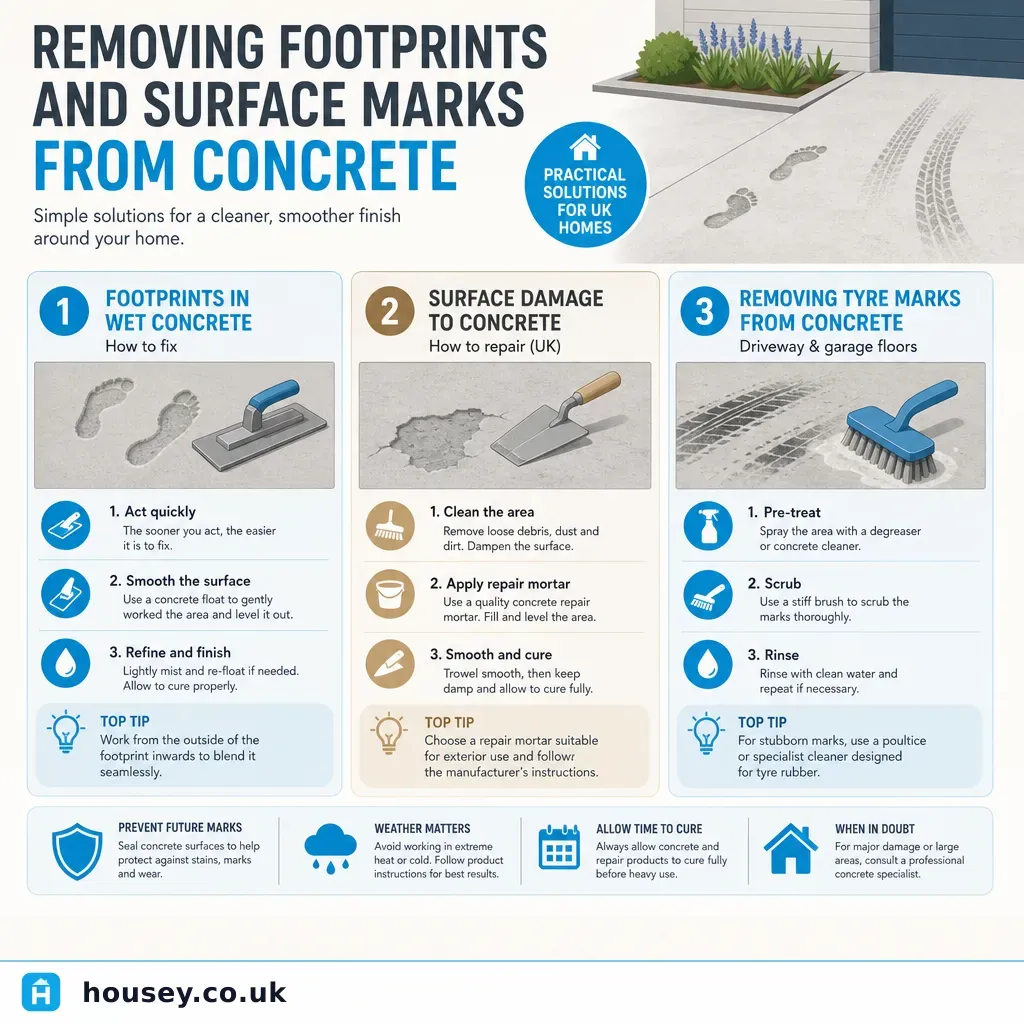
Removing Footprints and Surface Marks from Concrete
Footprints and marks in fresh concrete under 4–6 hours old can often be re-floated or trowelled smooth by a skilled finisher before initial set occurs.
 Improvement & Build
Essential Steps for Driveway Installation
Installing a driveway in England requires planning permission only when using an impermeable surface (standard tarmac, concrete, or block paving) on a front garden area over 5 m².
 Improvement & Build
Planning a Roof Replacement Project
A roof replacement project involves stripping the existing covering, renewing the sarking felt and battens, and laying new tiles, slates, or a flat-roof membrane.
 Improvement & Build
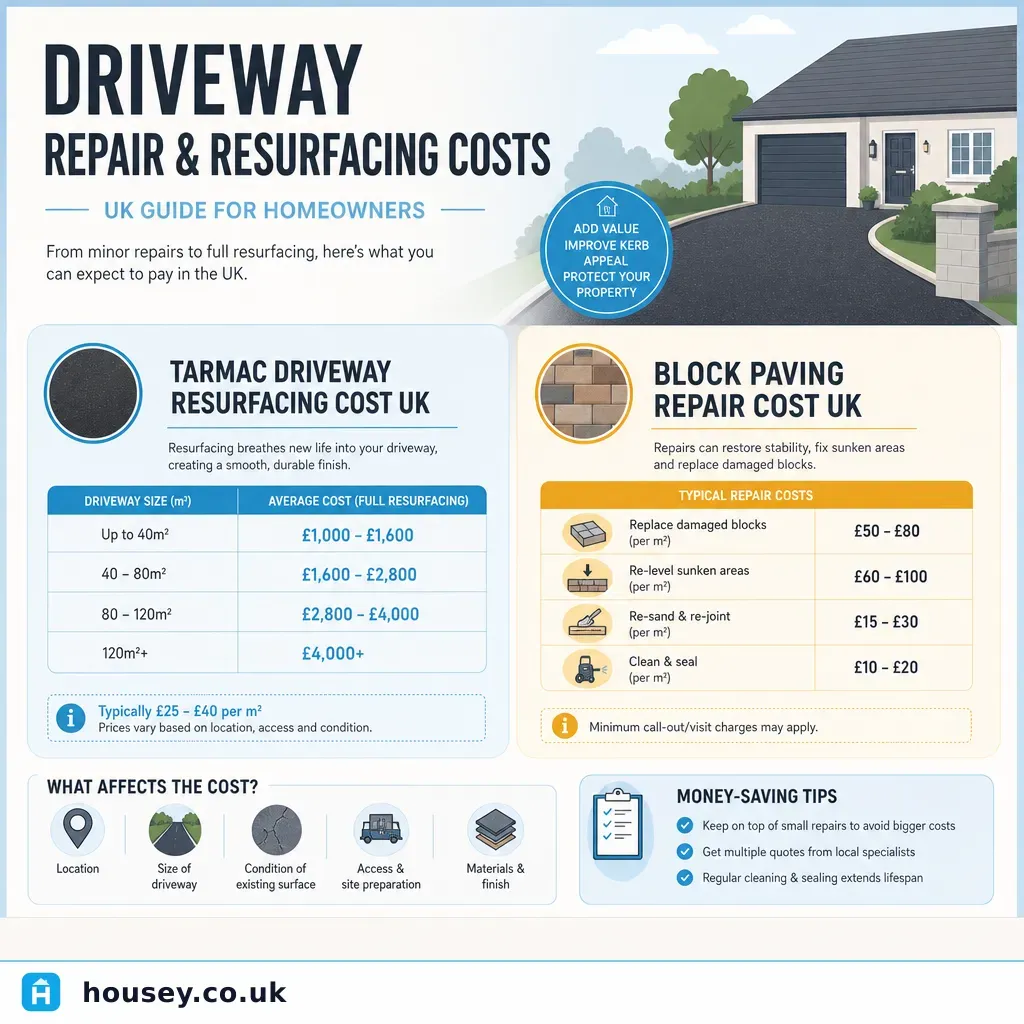
Driveway Repair and Resurfacing Costs
Driveway repair costs in the UK range from around £150 for a single pothole patch to £5,000–£12,000 or more for a full dig-out and replacement on a double driveway.
 Improvement & Build
Selecting and Hiring a Remodelling Contractor
Hiring a remodelling contractor starts with a written scope of works and a shortlist of at least three companies registered with TrustMark or the Federation of Master Builders.