Driveway Repair and Resurfacing Costs
By Housey · Last reviewed 9th of May 2026
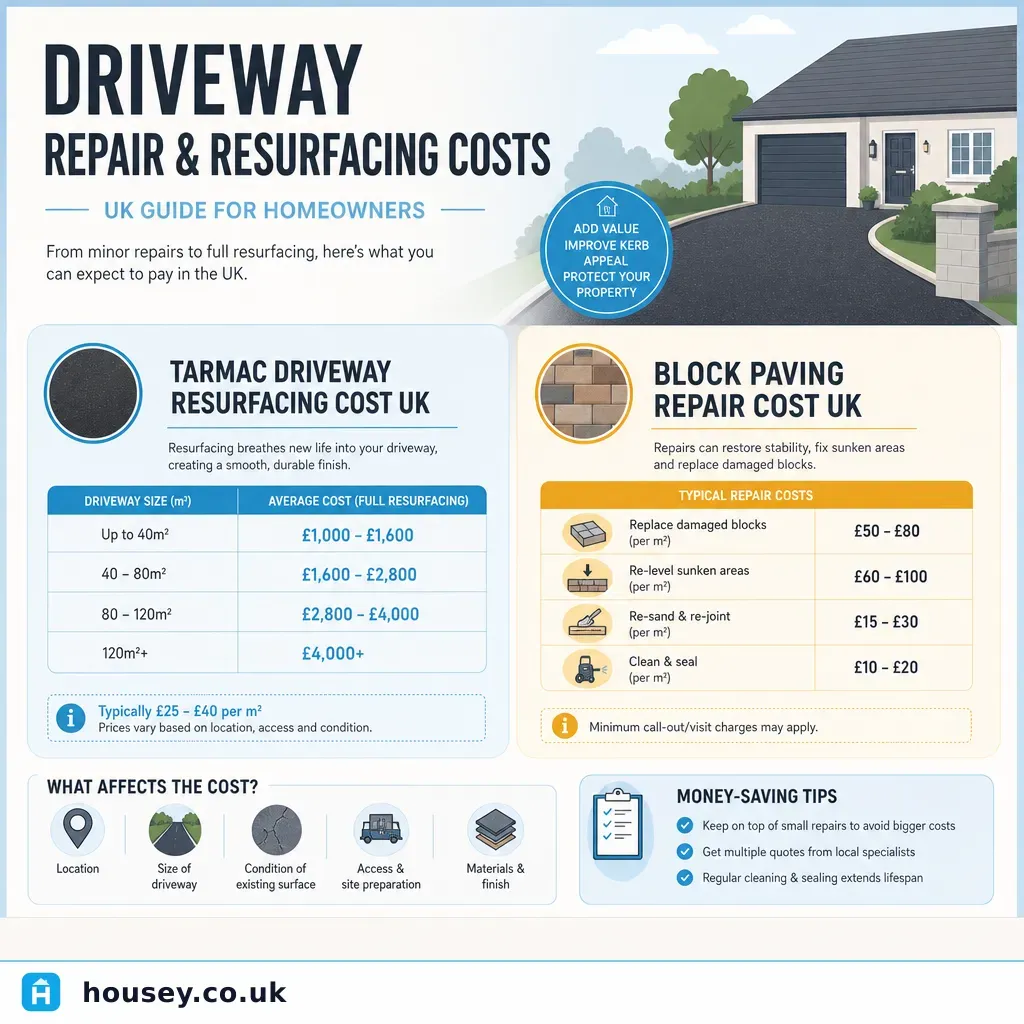
Driveway Repair and Resurfacing Costs
A crumbling, cracked, or potholed driveway is a problem many UK homeowners put off longer than they should. What begins as a minor surface defect can progress to sub-base failure, persistent drainage problems, or a trip hazard — and the cost difference between an early repair and a full dig-out replacement can be several thousand pounds. Knowing which approach your driveway actually needs is what separates a sensible outlay from a job that fails again within a few years.
Key points
- Patching a single tarmac pothole typically costs £150–£400 depending on size and depth (Indicative UK costs, last reviewed 2026-05-09).
- Full resurfacing of a typical double driveway (approximately 50 m²) costs £2,500–£6,000 in tarmac or resin-bound aggregate, depending on material and base condition.
- Front garden driveways over 5 m² that drain toward the highway require a permeable surface or drainage to a soakaway — this is a legal requirement under Approved Document H of the Building Regulations.
- Like-for-like resurfacing normally falls within permitted development rights, but installing a non-permeable surface that drains toward the highway may require a householder planning application.
- Widespread cracking, sunken areas, or persistent pooling after rain often indicate sub-base failure — resurfacing over a poor sub-base will fail within a few years regardless of the quality of material laid on top.
Repair, resurface, or replace? Choosing the right approach
Driveway condition | Recommended approach | Approximate cost (50 m² double driveway) |
|---|---|---|
One or two isolated potholes, surface otherwise sound | Patch repair | £150–£600 per pothole |
Surface cracking or minor settlement, sub-base intact | Localised repair or thin overlay | £800–£2,000 |
Widespread cracking, fading, rough texture — base sound | Full resurface (overlay) | £2,500–£5,000 |
Sunken areas, drainage failure, significant cracking | Dig-out and full replacement | £5,000–£12,000 |
Structural failure, frost heave, or tree root damage | Full replacement including new sub-base | £6,000–£15,000+ |
Indicative UK costs, last reviewed 2026-05-09. Prices vary significantly by region, material, driveway size, access, and sub-base condition.
Surface material options for resurfacing
Tarmac (macadam): The most cost-effective resurfacing option. A new wearing course over a sound base typically costs £40–£80 per m². Tarmac requires periodic sealing and can soften in extreme heat, but is durable, low-maintenance, and widely available across the UK.
Resin-bound aggregate: A permeable, decorative finish increasingly popular for front driveways. Resin-bound surfaces cost £60–£120 per m² and meet the Building Regulations drainage requirement without additional drainage infrastructure. They can be laid over sound existing tarmac, which reduces cost.
Block paving: Repairs to block paving usually involve lifting and resetting individual blocks with fresh sharp sand bedding. Full replacement of standard concrete block paving costs £60–£120 per m²; natural stone or premium options are higher.
Concrete: Concrete driveways can be repaired with crack injection or bonded overlays, but major repairs are rarely cost-effective — matching colour and texture is difficult, and concrete is prone to re-cracking at repair joints. Full replacement costs £75–£150 per m².
Gravel: The lowest-cost option at £20–£50 per m² installed. Gravel requires edging containment and regular raking, and is not suitable where a smooth, firm surface is needed. When laid correctly on a permeable membrane it satisfies the Building Regulations drainage requirement for front gardens.
Planning permission and drainage rules
Resurfacing an existing driveway with the same or a permeable material in a similar footprint is normally permitted development. However, GOV.UK guidance on permeable surfacing of front gardens makes clear that where a front garden driveway exceeds 5 m² and drains toward the highway, the surface must be:
- Permeable — such as resin-bound aggregate, gravel on a permeable membrane, or permeable block paving, or
- Directed to a lawn, border, or soakaway where water can soak away naturally, or
- Connected to a drainage system — such as a channel drain feeding a soakaway or an approved surface water outfall.
This requirement comes from Approved Document H of the Building Regulations and applies to all front garden driveways in England. Properties in conservation areas may have additional restrictions on materials and finishes — check with your local planning authority before ordering materials.
Red flags that suggest a deeper problem
Do not proceed with resurfacing if you notice any of the following. A contractor should inspect the sub-base before agreeing to a specification:
- Sunken or uneven areas — suggests sub-base failure or a void beneath the surface, possibly caused by poor compaction or a drainage problem washing material away.
- Water pooling after rain — indicates drainage failure or incorrectly laid falls. Resurfacing will not correct this.
- Map cracking or alligator cracking — a grid-like crack pattern across the surface is a sign of sub-base movement, not surface wear alone.
- Frost heave — repeated heave and settlement cycles indicate that the sub-base is retaining water and freezing. This will continue to cause damage after resurfacing.
- Tree roots near the driveway — may continue to lift the surface even after resurfacing unless the root issue is addressed at sub-base level.
- Edges crumbling or breaking away — often indicates that the sub-base edge has failed and the perimeter needs reconstruction, not just patching.
Any contractor who quotes on surface area alone, without visiting to inspect the base, should be viewed with caution.
What affects the cost of driveway resurfacing?
- Sub-base condition: A sound existing base reduces cost significantly. Excavation and base replacement adds £20–£40 per m² or more.
- Material choice: Gravel is cheapest to install; natural stone block paving or decorative resin can be two to three times the cost of tarmac.
- Driveway size and shape: Complex shapes, curves, steps, or tight vehicle access increase labour time.
- Drainage requirements: Adding channel drains, gullies, or soakaways adds cost but may be legally required under Part H.
- Skip hire and disposal: Removing old tarmac or block paving adds approximately £200–£500 for a typical double driveway.
- Dropped kerb and highway access: Work near or involving the kerb may require local authority consent and a separate highway works fee.
- Regional labour rates: London and South East contractors typically charge 20–35% more than the national average.
Homeowner checklist before getting quotes
What to ask before accepting a quote
- Will you inspect the sub-base before starting work and before finalising the specification?
- What depth of new material is being laid, and over what base preparation?
- Is the existing surface being removed, or is this an overlay? What are the implications of each for this particular driveway?
- What drainage provision is included, and does the finished surface comply with Building Regulations Part H?
- Is the surface permeable, or will water be directed to a soakaway or border?
- Is VAT included in the quoted price?
- What guarantee applies to workmanship and materials, and for how long?
- Are you a member of BALI or the Interlay Approved Contractor scheme?
When to get professional help
For most straightforward resurfacing, a reputable local contractor is sufficient. Seek additional professional input when:
- The driveway has structural cracking, significant settlement, or drainage failure suggesting a ground investigation may be needed before works begin.
- The property is in a conservation area or is listed — consent requirements vary and your local planning authority should be consulted before work starts.
- The work involves highway access, dropped kerbs, or public footpath crossings — these require separate local authority consent and may involve utility checks.
- You suspect underground services (gas, electricity, water, or telecoms) run under or near the driveway — request a utility search before any excavation takes place.
How Housey can help
Whether you need a straightforward tarmac resurface or a full replacement with drainage works, Housey can connect you with vetted local contractors who will assess your driveway in person before committing to a price. Request quotes from driveway installers through Housey to compare specifications and costs from professionals who understand both the materials and the planning rules.
Frequently asked questions
Does driveway resurfacing require planning permission?
Resurfacing an existing front garden driveway with a permeable material — or where drainage is directed away from the highway — normally falls within permitted development rights in England. If the new surface is non-permeable, exceeds 5 m², and water will drain toward the highway, a householder planning application may be needed. Check with your local planning authority before starting.
How long does a resurfaced tarmac driveway last?
A properly laid tarmac wearing course over a sound sub-base typically lasts 15–25 years with minimal maintenance. Longevity depends heavily on sub-base quality, drainage, and vehicle loading. Poor drainage is the single biggest cause of early failure. Sealing the surface every 5–7 years can help extend its lifespan noticeably.
Can I repair block paving myself?
Relaying a small area of block paving — lifting, re-sanding, and resetting individual blocks — is manageable for a competent homeowner on flat ground. Larger areas, drainage alterations, or edging work are better handled by a contractor to ensure falls and bedding are correct and the finished surface drains as intended.
Is there VAT on driveway resurfacing?
Standard-rate VAT at 20% applies to driveway installation and resurfacing. There is no reduced VAT rate for residential driveways. Always clarify whether a quote is inclusive or exclusive of VAT before accepting — some contractors quote materials and labour separately, which can affect the total figure you compare.
How do I find a reputable driveway contractor?
Look for members of the British Association of Landscape Industries (BALI) or the Interlay Approved Contractor scheme. Ask for written quotes, references from recent local jobs, and confirmation that the contractor will inspect the sub-base before committing to a specification. Avoid any who quote on area alone without visiting the site.
Sources and further reading
- Driveways: do you need planning permission? — Planning Portal
- Building Regulations Approved Document H: drainage and waste disposal — GOV.UK
- Guidance on permeable surfacing of front gardens — GOV.UK
- British Association of Landscape Industries (BALI) — industry trade body for landscape and driveway contractors
Useful next reads
 Improvement & Build
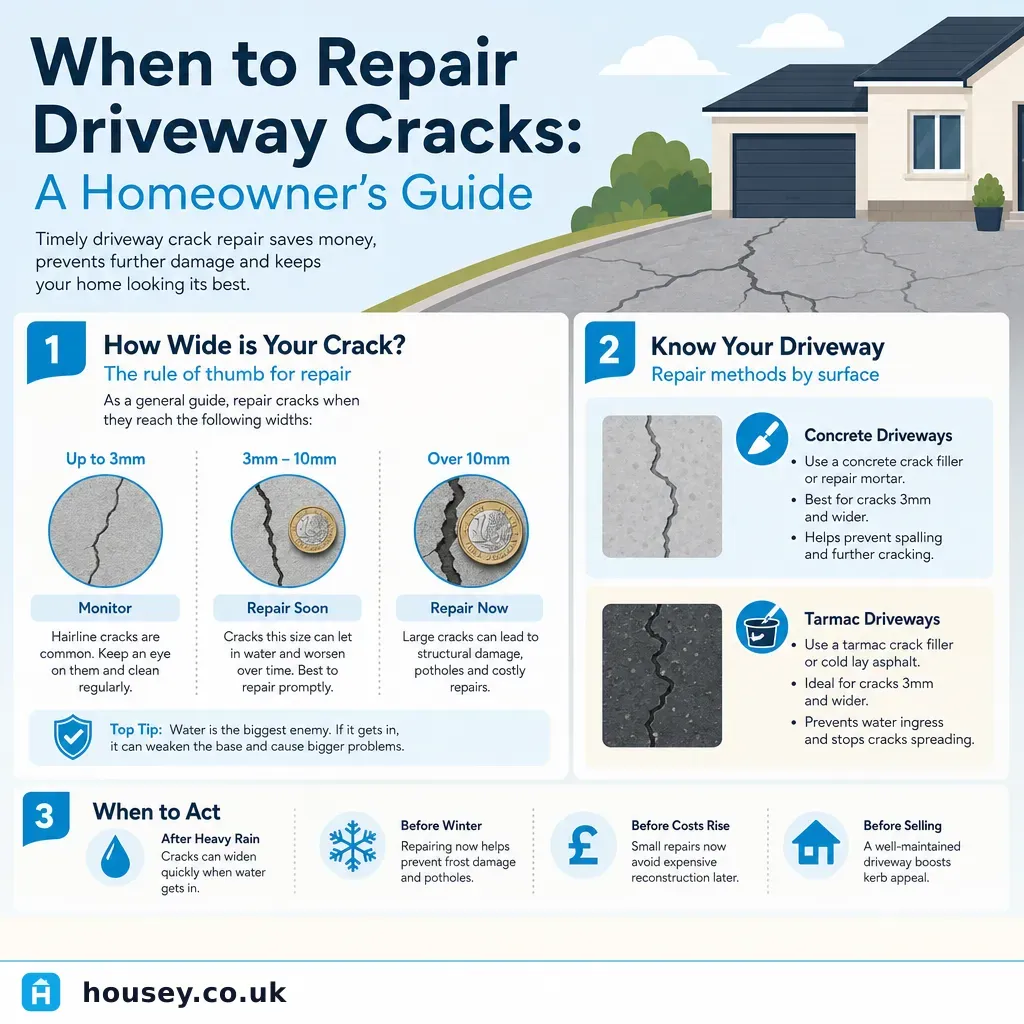
When to Repair Driveway Cracks: A Homeowner's Guide
Repair a driveway crack promptly if it is wider than 3 mm, involves slab displacement, or creates a trip hazard.
 Improvement & Build
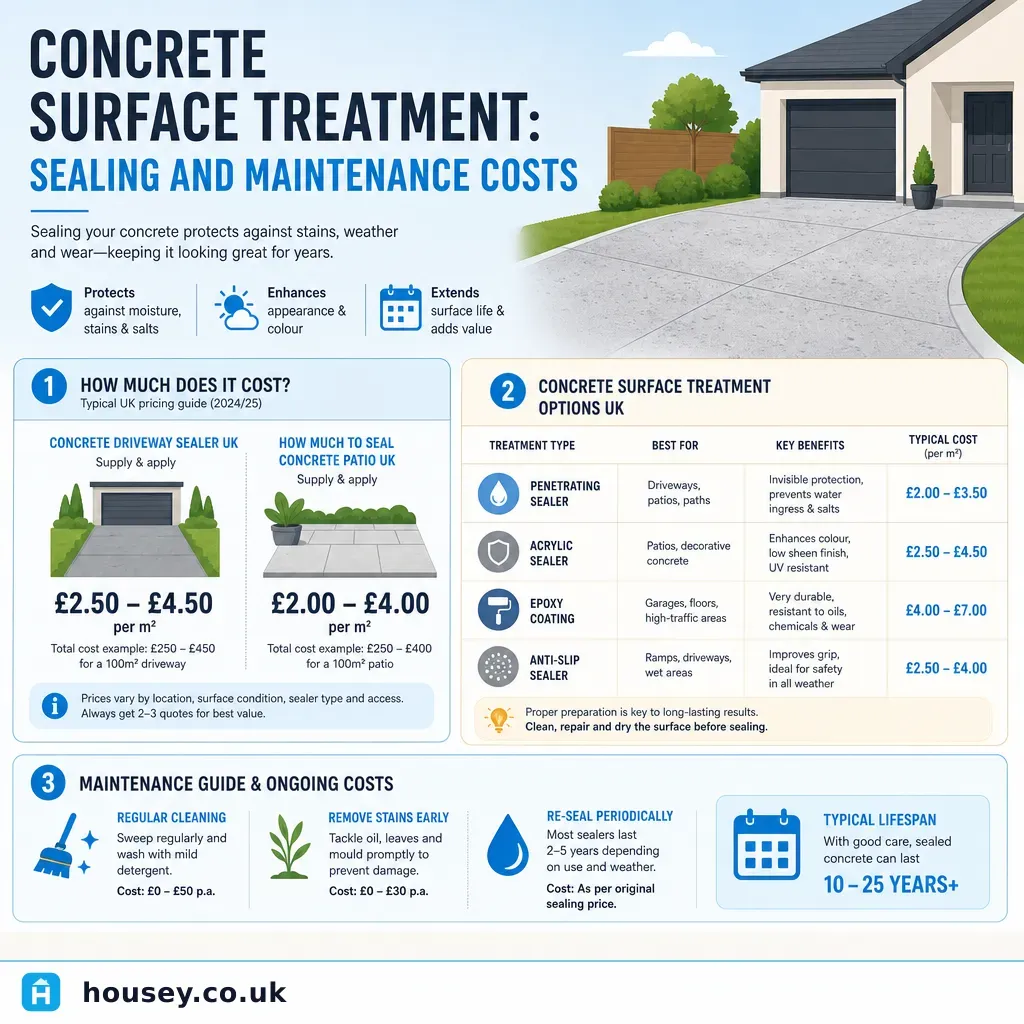
Concrete Surface Treatment: Sealing and Maintenance Costs
Sealing concrete in the UK typically costs £300–£1,200 for a standard driveway or patio, depending on area size and sealer type.
 Improvement & Build
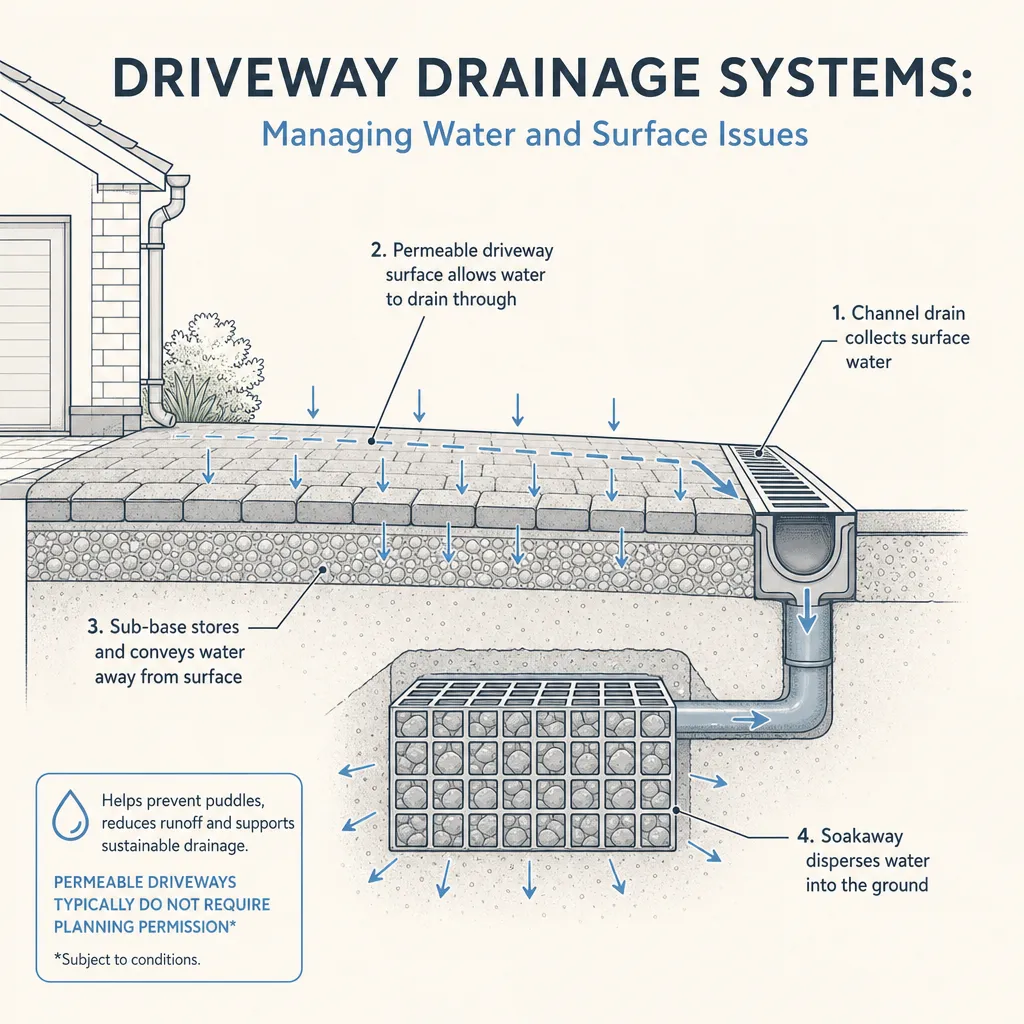
Driveway Drainage Systems: Managing Water and Surface Issues
The right driveway drainage system depends on your surface type, soil permeability, and local flood risk.
 Improvement & Build
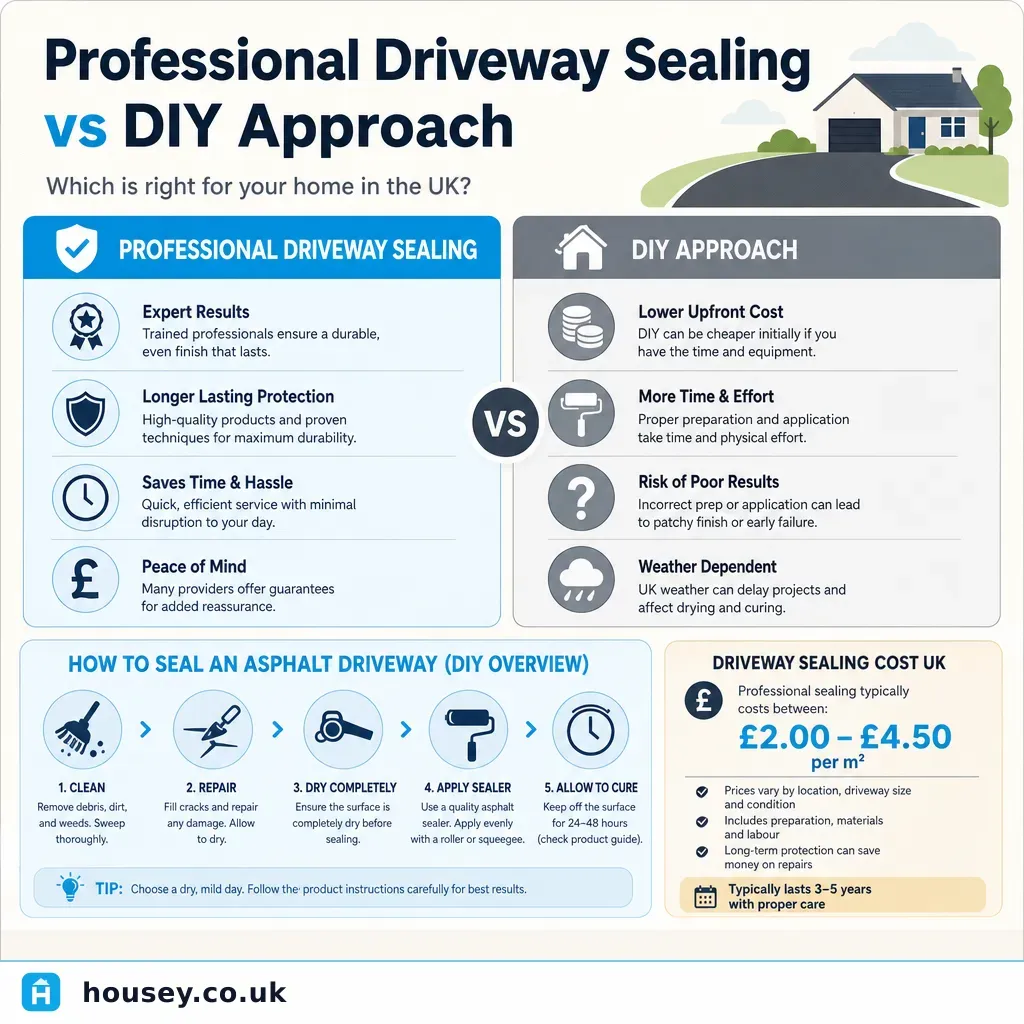
Professional Driveway Sealing vs DIY Approach
Professional driveway sealing offers a more durable, even finish using commercial-grade sealants and specialist equipment, typically costing £150 to £400 for an average drive.
 Improvement & Build
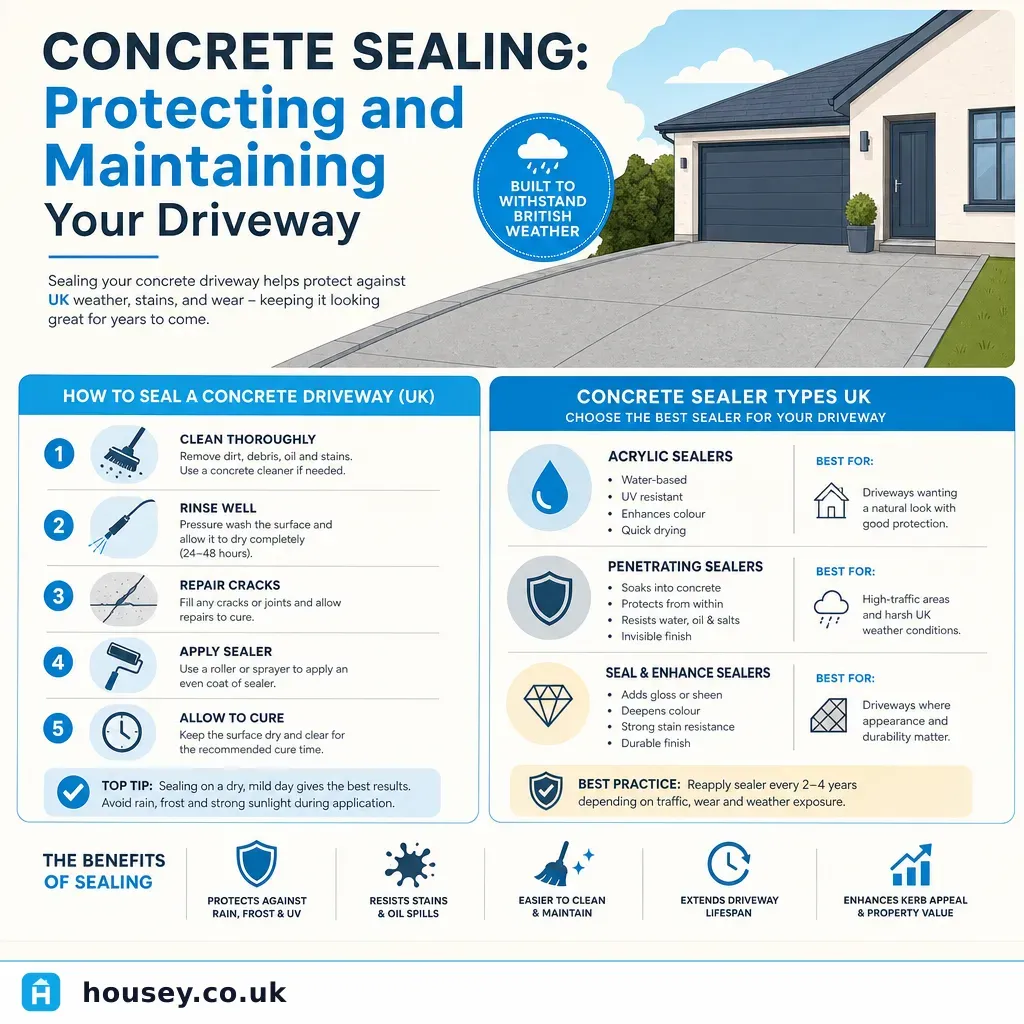
Concrete Sealing: Protecting and Maintaining Your Driveway
Sealing a concrete driveway protects against water ingress, freeze-thaw damage, oil stains, and surface wear.