Concrete Surface Treatment: Sealing and Maintenance Costs
By Housey · Last reviewed 30th of May 2026
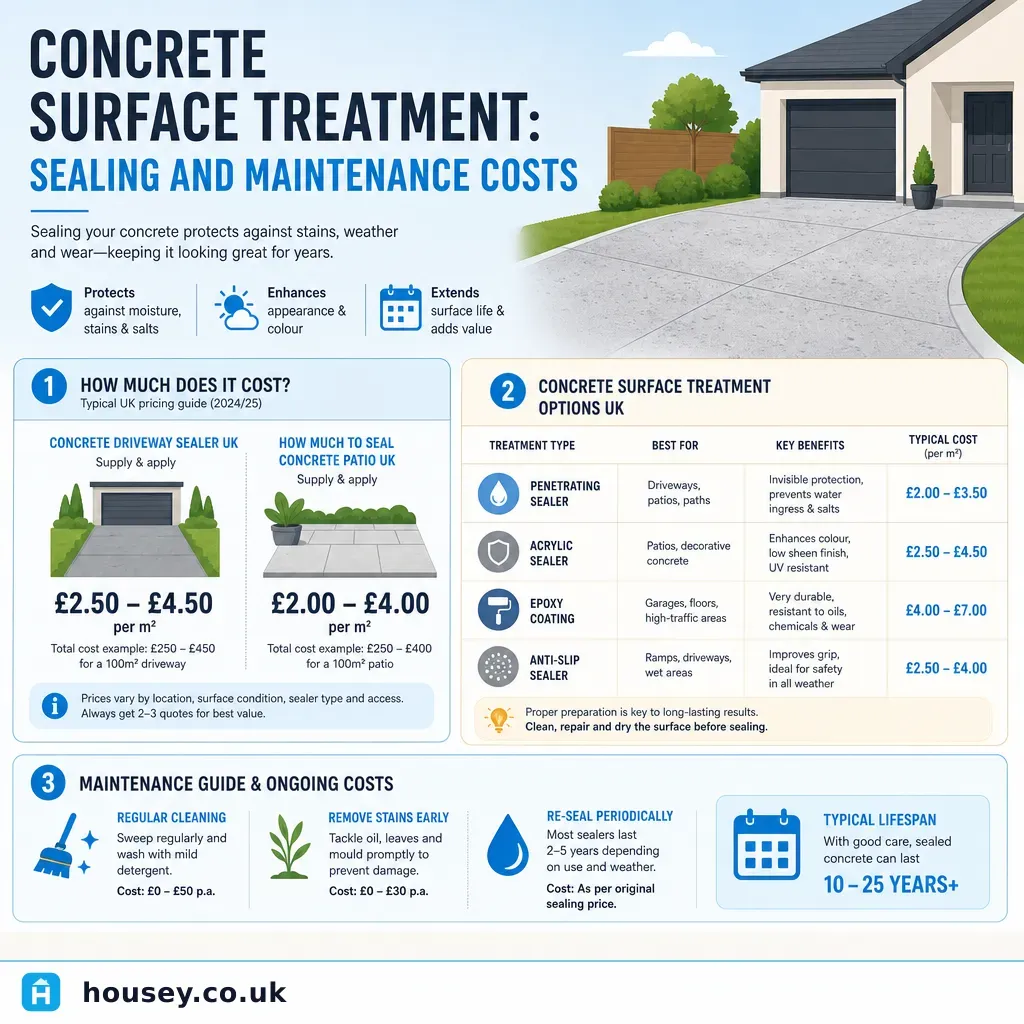
Concrete Surface Treatment: Sealing and Maintenance Costs
Concrete is one of the most widely used surfaces for UK driveways, patios, and paths — yet it is also one of the most frequently neglected. The UK's freeze-thaw cycles, high annual rainfall, and intermittent oil or chemical spills create a demanding environment that untreated concrete struggles to withstand over time. Whether you have a newly laid slab you want to protect or an ageing driveway showing surface scaling and staining, understanding your treatment options helps you make a proportionate investment.
Key points
- UK winters accelerate concrete surface damage through freeze-thaw cycling: water enters surface pores, freezes, expands, and causes spalling or scaling — the mechanism that penetrating silane/siloxane sealers are specifically engineered to resist.
- Under the Town and Country Planning (General Permitted Development) Order 2008, replacing or surfacing a front garden with an impermeable material covering more than 5 m² requires planning permission unless a permeable surface or drainage to a lawn or planted border is used.
- Professional application of penetrating (silane/siloxane) sealers typically costs £8–£18 per m²; acrylic or polyurethane surface sealers cost £6–£15 per m² applied professionally.
- For a typical residential driveway of 40–80 m², total professional sealing costs range from approximately £300 to £1,200 (Indicative UK costs, last reviewed 2026-05-30).
- Surface sealers generally require re-application every two to four years; penetrating sealers every five to eight years — intervals depend on traffic, UV exposure, and local weather conditions.
Which concrete sealer should you choose?
Sealer type | How it works | Best for | Not ideal for | Typical lifespan |
|---|---|---|---|---|
Penetrating (silane/siloxane) | Absorbed into the substrate; repels water and de-icing salts without forming a visible film | Driveways, paths, exposed aggregate; freeze-thaw resistance priority | Surfaces needing enhanced colour or gloss | 5–10 years |
Acrylic surface sealer | Forms a thin film; available in matt, satin, or gloss; can enhance colour | Decorative, coloured, or stamped concrete; patios | Heavy vehicle traffic; peels if applied to damp surface | 2–5 years |
Polyurethane surface sealer | Harder, more abrasion-resistant film than acrylic | High-traffic driveways, garage aprons | Areas prone to standing water (can trap moisture if poorly detailed) | 5–10 years |
Epoxy coating | Two-part chemical bond; decorative chip systems available | Interior garage floors, workshop floors | Exterior UV-exposed areas without a UV-stable top coat (yellows over time) | 5–15 years (interior use) |
Impregnating oil or wax | Flexible; water-repellent; preserves natural appearance | Exposed aggregate and decorative finishes | High-traffic vehicle areas | 2–4 years |
Which treatment for your situation?
- Choose a penetrating silane/siloxane sealer if your priority is long-term freeze-thaw and de-icing salt resistance with minimal change to surface appearance — the standard choice for plain grey driveways and paths.
- Choose an acrylic wet-look sealer if you want to enhance the colour of exposed aggregate, decorative, or newly coloured concrete and are prepared to re-seal every two to three years.
- Choose polyurethane if the surface receives regular vehicle traffic and you want the durability of a surface film without the re-sealing frequency that acrylic products require.
- Choose epoxy if the area is an interior garage or workshop floor where UV yellowing is not a concern.
- Ask a specialist contractor if the concrete shows active cracking, significant spalling, oil contamination, or efflorescence — these require remediation before any sealer can bond effectively.
- Check with your local planning authority if you are proposing to extend or resurface a front driveway to confirm whether the work triggers permitted development limits on impermeable surfaces.
Concrete maintenance costs and schedule
Task | Recommended frequency | Approximate DIY cost | Approximate professional cost |
|---|---|---|---|
Pressure washing | Annually | £0 (owned machine) or £50–£150 hire | £100–£300 depending on area |
Degrease and stain treatment | As needed | £10–£30 (specialist products) | Typically included in cleaning service |
Re-seal (acrylic surface sealer) | Every 2–4 years | £100–£250 materials and equipment | £300–£800 for 40–80 m² |
Re-seal (penetrating sealer) | Every 5–8 years | £150–£350 materials | £350–£1,000 for 40–80 m² |
Minor crack repair (polyurethane filler) | As cracks appear | £10–£40 (DIY filler) | £100–£300 per repair |
Full resurfacing or overlay | Every 15–30 years depending on condition | Not recommended as DIY | £1,500–£6,000+ depending on area and method |
Indicative UK costs, last reviewed 2026-05-30. Regional variation, surface condition, and access affect all figures. Obtain at least three quotes.
Homeowner checklist before concrete treatment
When to get professional help
Re-sealing a plain concrete surface is within the capability of a prepared homeowner when the surface is in good condition. Professional application is advisable when:
- The surface is decorative, coloured, or stamped concrete where uneven application would be visually prominent.
- Active cracking, significant spalling, or structural concerns are present — a contractor should assess whether repair or resurfacing is needed before any sealing work.
- You are applying a polyurethane or epoxy system where the concrete's moisture content must be tested and the substrate mechanically prepared.
- The area is large enough that consistent application without lap marks requires spray equipment.
Signs that more than cosmetic treatment is needed:
- Cracks wider than 3 mm or cracks that reappear promptly after filling.
- Large areas of surface scaling, delamination, or disaggregation of aggregate.
- Settlement causing uneven slabs, trip hazards, or poor drainage falls.
- Standing water indicating that the original drainage falls have been lost.
How Housey can help
Housey connects you with vetted driveway installers and groundworkers who can carry out concrete cleaning, sealing, crack repair, and full resurfacing across the UK. Describe your project on Housey and receive comparable quotes from local contractors experienced in your surface type and condition.
Frequently asked questions
How long does concrete sealer last in the UK?
Penetrating sealers typically last five to ten years in UK conditions, while acrylic surface sealers last two to four years before re-application is needed. Polyurethane sealers perform for five to eight years under normal vehicle traffic. UV exposure, heavy use, and freeze-thaw cycles all shorten effective lifespan. Annual inspection of the surface helps identify when re-sealing is due before the concrete begins to degrade.
Do I need planning permission to resurface a concrete driveway?
Sealing an existing concrete drive generally does not require planning permission. However, if you are replacing or extending a front garden surface with an impermeable material covering more than 5 m², planning permission is required under the Town and Country Planning (General Permitted Development) Order 2008 unless the surface is permeable or run-off is directed to a lawn or border. Check with your local planning authority if in doubt.
Can you seal cracked concrete, or does it need repairing first?
Cracks should be repaired before sealing. Applying sealer over open cracks does not bridge or bond them structurally, and many products simply highlight cracks once cured. Use a flexible polyurethane or epoxy filler rated for external use, allow it to cure fully, then clean and apply your chosen sealer. Cracks wider than 5 mm or showing signs of ongoing movement warrant professional assessment before any surface treatment.
What is the difference between a penetrating sealer and a surface sealer?
A penetrating sealer is absorbed into the concrete substrate where it chemically bonds to block water and salt ingress without forming a visible film — appearance remains largely unchanged. A surface sealer sits as a film on top of the concrete, providing a gloss or satin finish and enhanced colour, but it can peel or wear away if the surface is contaminated or damp when the product is applied.
Is concrete sealing worth doing?
For most UK driveways and external concrete surfaces, periodic sealing is a cost-effective way to extend surface life and reduce maintenance. The relatively modest cost of re-sealing every three to five years is considerably less than full resurfacing or replacement. The case is strongest in areas exposed to frequent freeze-thaw cycling, de-icing salt from nearby roads, or sustained heavy vehicle traffic.
Sources and further reading
- Planning permission: hard surfaces in gardens — GOV.UK
- Sustainable drainage systems — GOV.UK
- BS 8204: Screeds, bases and in-situ floorings — BSI
- The Concrete Society — The Concrete Society
Useful next reads
 Improvement & Build
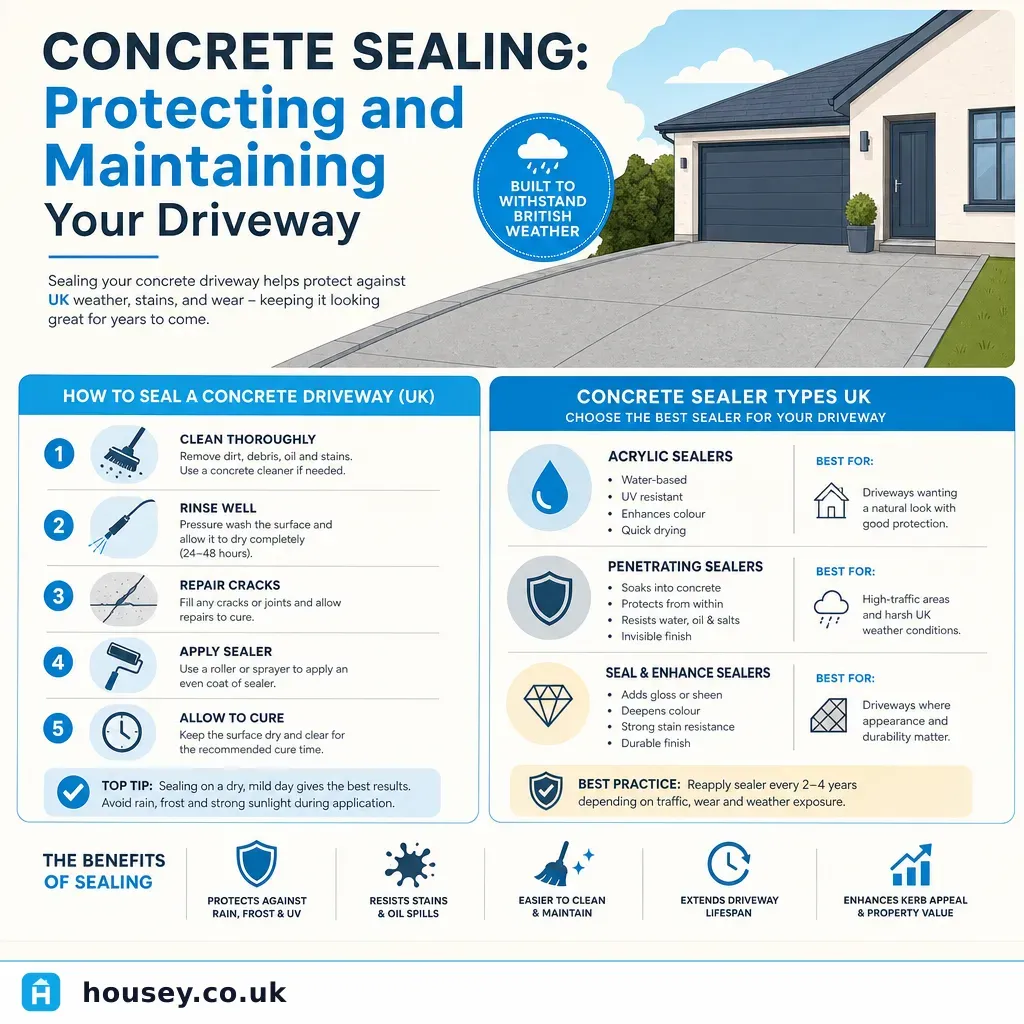
Concrete Sealing: Protecting and Maintaining Your Driveway
Sealing a concrete driveway protects against water ingress, freeze-thaw damage, oil stains, and surface wear.
 Improvement & Build
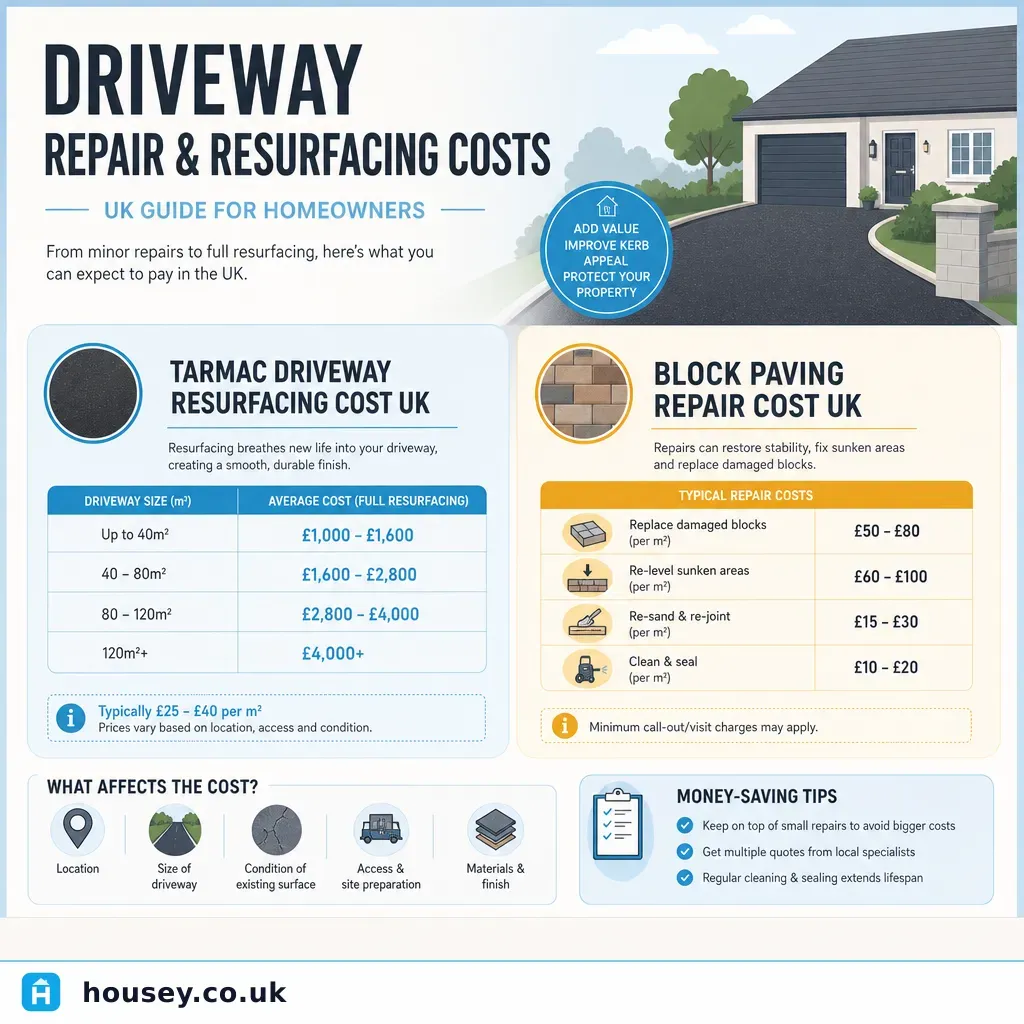
Driveway Repair and Resurfacing Costs
Driveway repair costs in the UK range from around £150 for a single pothole patch to £5,000–£12,000 or more for a full dig-out and replacement on a double driveway.
 Improvement & Build
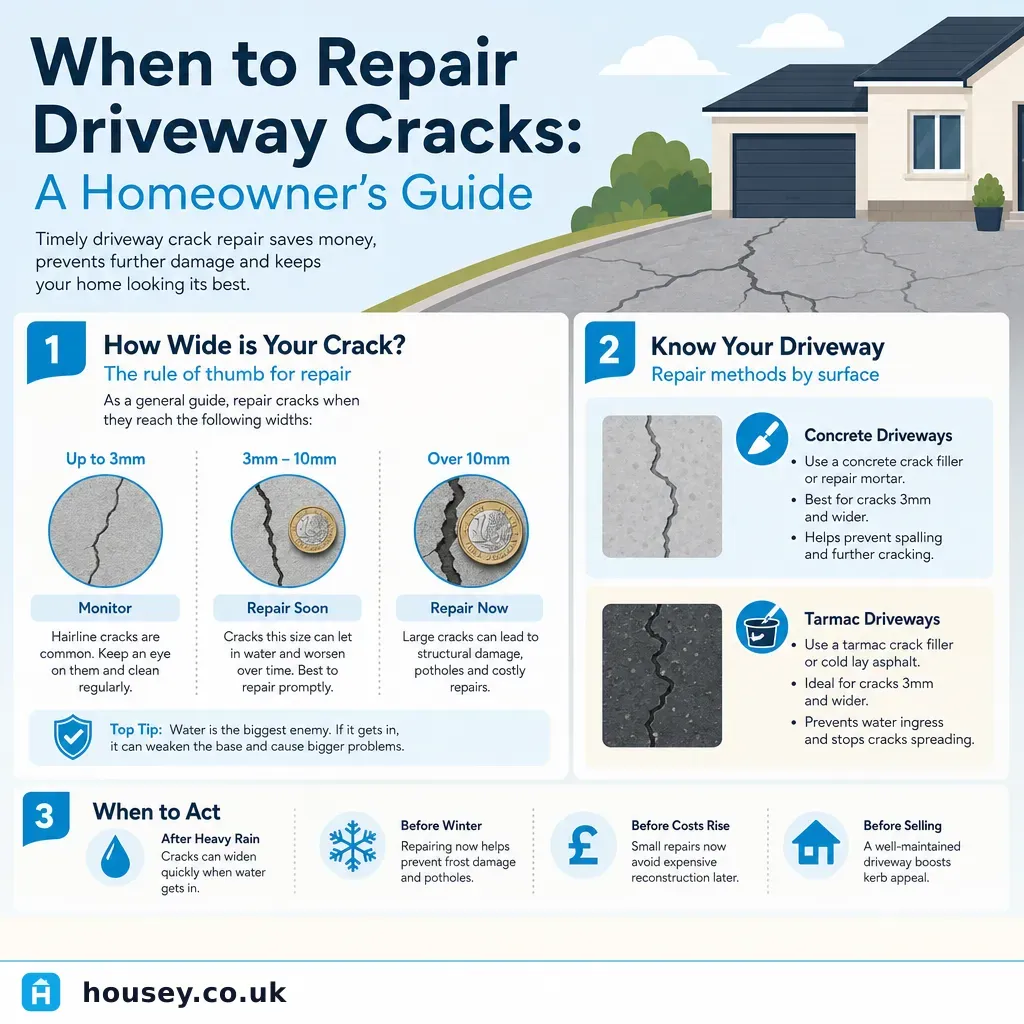
When to Repair Driveway Cracks: A Homeowner's Guide
Repair a driveway crack promptly if it is wider than 3 mm, involves slab displacement, or creates a trip hazard.
 Improvement & Build
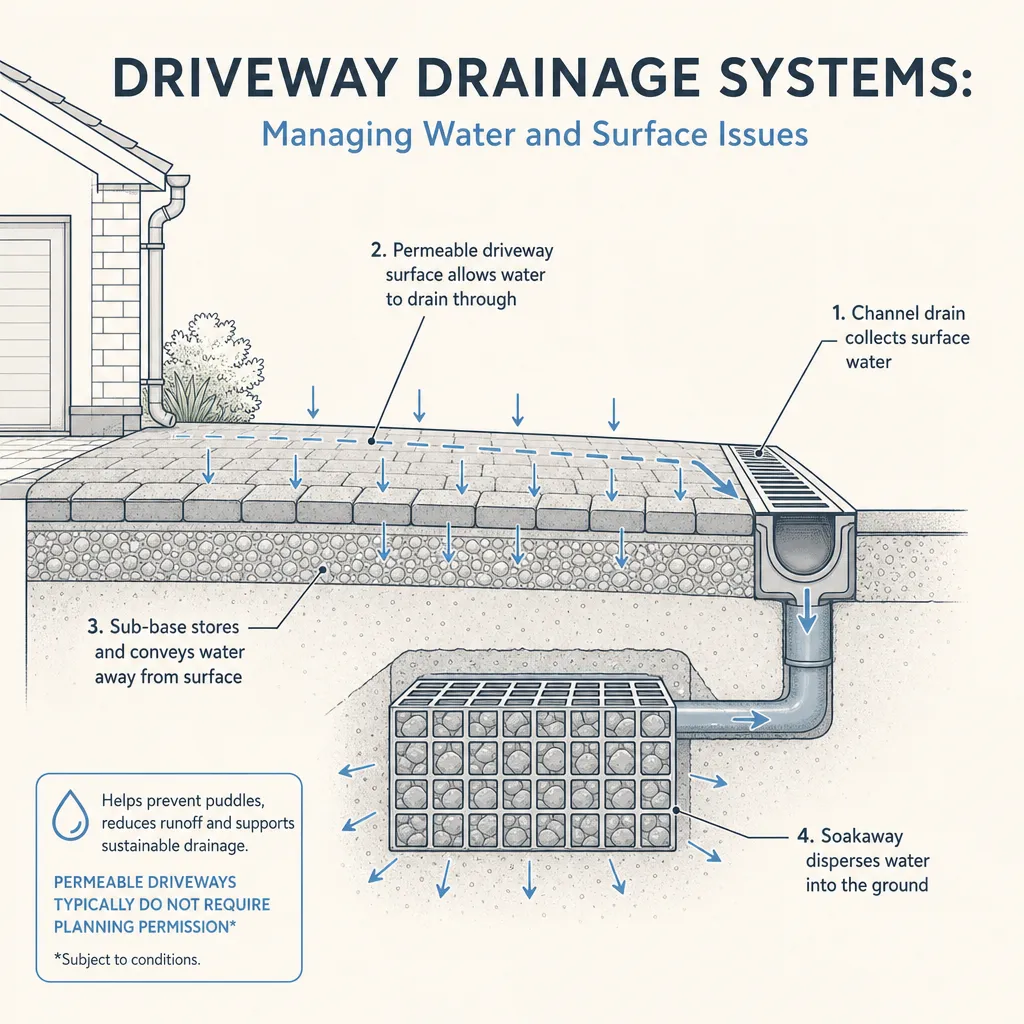
Driveway Drainage Systems: Managing Water and Surface Issues
The right driveway drainage system depends on your surface type, soil permeability, and local flood risk.
 Improvement & Build
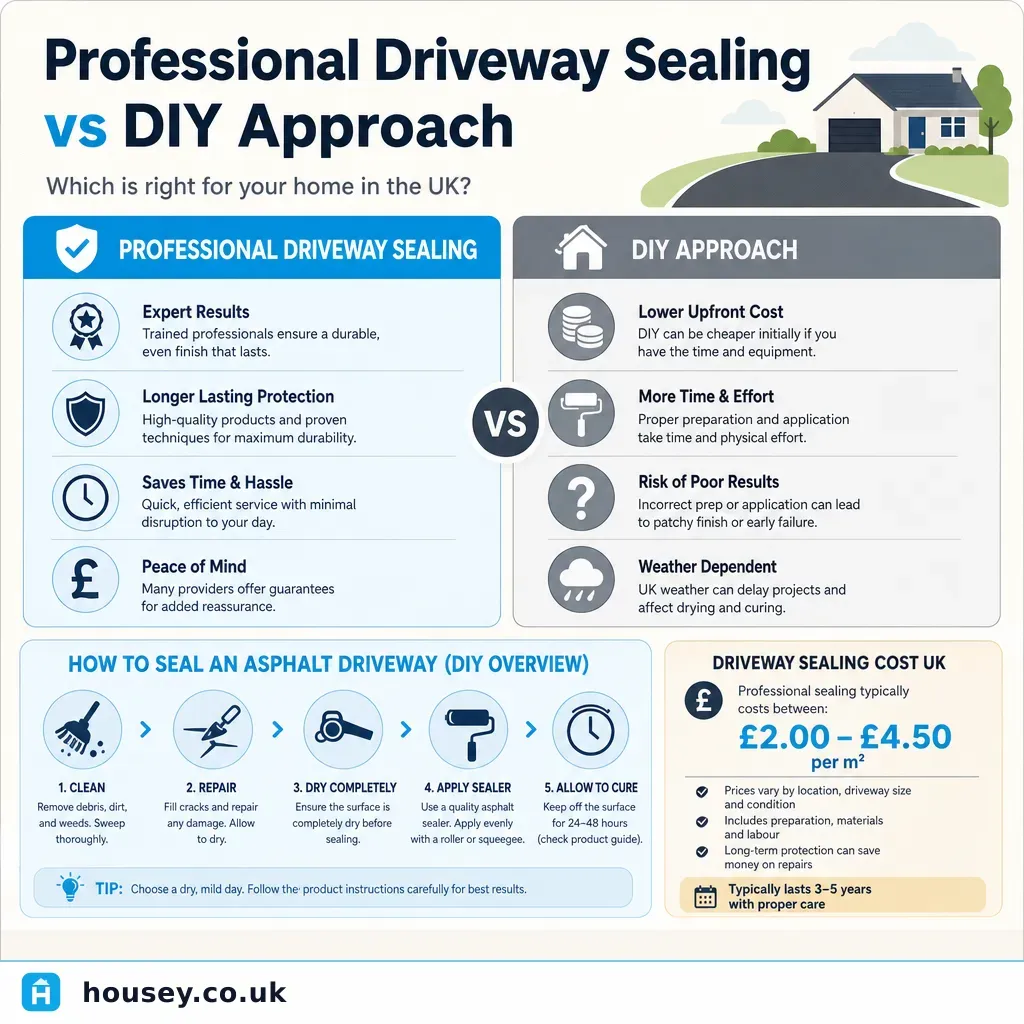
Professional Driveway Sealing vs DIY Approach
Professional driveway sealing offers a more durable, even finish using commercial-grade sealants and specialist equipment, typically costing £150 to £400 for an average drive.