When to Repair Driveway Cracks: A Homeowner's Guide
By Housey · Last reviewed 25th of May 2026
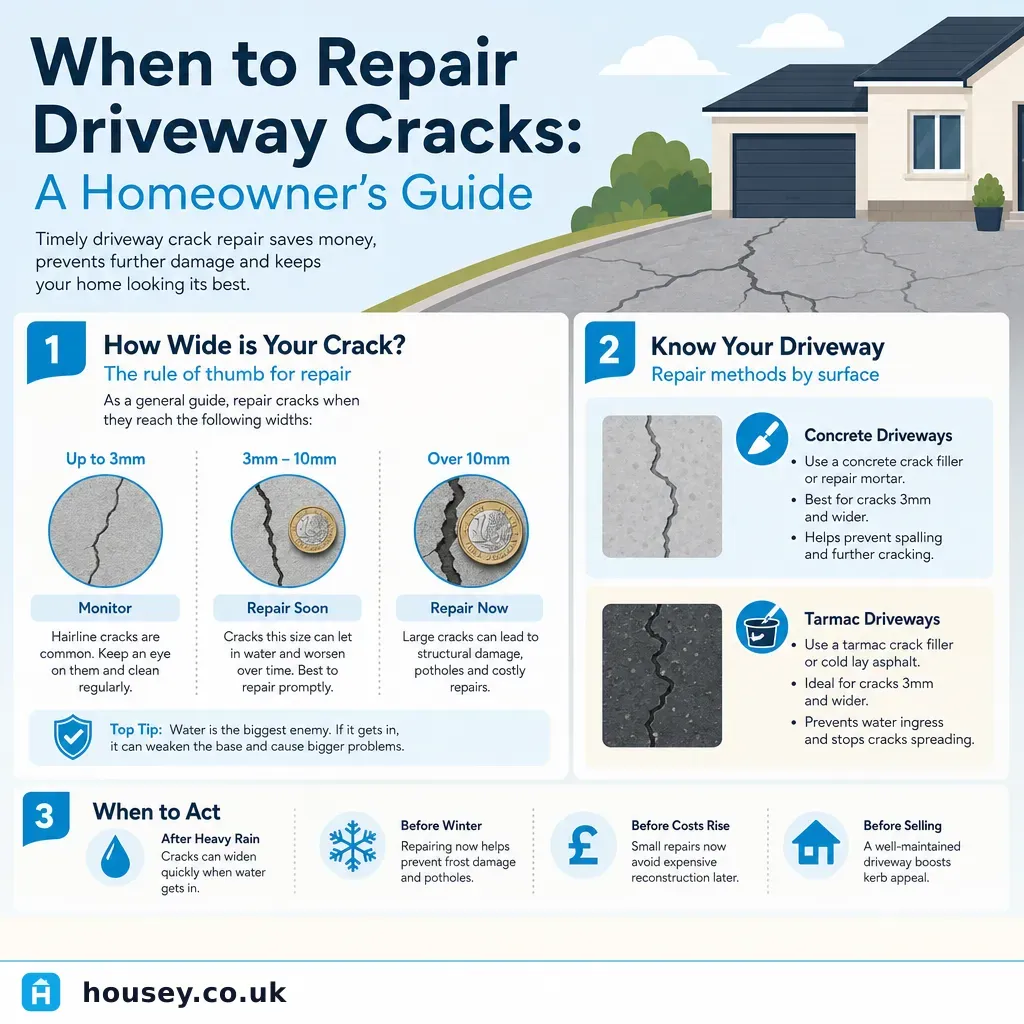
When to Repair Driveway Cracks: A Homeowner's Guide
Cracks in a concrete or tarmac driveway are easy to ignore — until they widen, let water in, or create a trip hazard. Knowing which cracks warrant prompt action and which can be monitored saves money and prevents what starts as a minor surface issue from escalating into full resurfacing or sub-base replacement.
Key points
- Cracks wider than 3 mm are generally worth repairing promptly to prevent water ingress, frost damage, and further deterioration.
- Hairline cracks under 1 mm in concrete are usually a normal result of curing shrinkage and can often be sealed rather than structurally repaired.
- Pattern cracking (also called alligator or map cracking) across a large area typically indicates sub-base failure — surface patching rarely provides a lasting fix.
- Concrete driveways typically last 25–30 years; tarmac (asphalt) driveways 15–20 years with regular maintenance, according to industry guidance.
- Replacing more than 5 m² of a front garden driveway with an impermeable material may require compliance with permitted development drainage rules under GOV.UK guidance on paving front gardens.
Why cracks appear in driveways
Identifying the cause of a crack matters as much as filling it. The same surface treatment applied to two different causes can produce very different results.
Shrinkage cracking — concrete contracts slightly as it cures. Hairline cracks arranged in a random pattern within the first year or two are normal and unlikely to progress significantly. They rarely need structural repair, though sealing them prevents water ingress.
Frost heave and thermal movement — water enters fine cracks, freezes, expands, and widens them. This cycle is the main reason small cracks should be sealed before winter rather than left until spring.
Sub-base failure — if the compacted hardcore or Type 1 sub-base beneath the surface settles or is washed out, the surface above cracks in characteristic alligator or linear patterns. Surface-only fillers cannot fix this.
Overloading — driveways are typically designed for standard passenger vehicles. Heavy deliveries, skips, or large plant machinery can crack even well-constructed surfaces.
Tree roots — roots from nearby trees exert significant upward pressure, lifting and cracking slabs or block paving. The crack pattern usually mirrors the root direction and may reopen after repair unless the root issue is managed.
Decision tree: should you repair now or monitor?
- Repair now if the crack is wider than 3 mm, deepening, or accompanied by slab displacement (one side noticeably higher than the other).
- Repair now if the crack is near a drain, gulley, or edge — water infiltration accelerates failure at these points.
- Repair now if the crack creates a trip hazard with a raised edge of 10 mm or more.
- Monitor if the crack is a single hairline under 1 mm on a relatively new concrete drive — measure and photograph it, then check again in six months.
- Get a specialist assessment if multiple interconnected cracks cover more than a third of the surface area — this may indicate sub-base movement.
- Get a specialist assessment if cracks are accompanied by sinking, heaving, or standing water after rain — drainage or groundwork issues may be the underlying cause.
Types of driveway crack and what they tell you
Crack type | Likely cause | Typical repair approach | DIY suitability |
|---|---|---|---|
Hairline (<1 mm), random | Normal concrete shrinkage | Penetrating sealant or leave | Usually DIY |
Single linear crack, 3–15 mm | Thermal movement, minor settlement | Flexible crack filler or polyurethane sealant | Often DIY |
Linear crack >15 mm with displacement | Sub-base settlement | Lift slabs, re-lay sub-base, relay surface | Specialist required |
Alligator or map cracking | Sub-base failure or surface fatigue | Section or full replacement | Specialist required |
Edge cracking | Inadequate edge restraint or root pressure | Edge repair, root management | Depends on extent |
Raised slab or block | Frost heave or root lift | Re-lay affected area, address root cause | Can be DIY for small areas |
When surface repairs are not enough
Surface-only fillers — polyurethane, rubberised sealants, cold-lay asphalt — work well on cracks that have a stable sub-base below them. If the sub-base has moved, settled, or been washed out, surface repair is temporary at best. The crack will reopen, often within one or two winters.
Signs that sub-base work is needed:
- A crack that has been filled before and has reopened.
- Visible sagging or dipping across the cracked area.
- Standing water in the cracked zone after rain.
- Multiple interconnected cracks radiating from a common point.
In these cases, a driveway installer will need to excavate, improve or replace the sub-base, and relay the surface material. Attempting surface repair in this situation typically delays the inevitable and adds to the eventual cost.
Red flags: when to call a professional quickly
- A crack has opened or widened noticeably within a matter of weeks.
- Water is entering a garage, cellar, or the area beneath a step or threshold after rain.
- The driveway surface is sinking near a drain or inspection cover — this can indicate a drainage pipe failure beneath the surface.
- Cracks run toward or along the house wall, particularly if you have a basement or lower-ground-floor room.
- You can see a visible void or daylight below a cracked or displaced slab.
What to ask before accepting a repair quote
- Is the crack a surface issue or does it indicate sub-base movement?
- What preparation work is included — cleaning, edge cutting, priming?
- What materials will be used, and are they suited to the crack width, depth, and surface type?
- What guarantee or warranty is offered on the repair?
- Will the repaired area match the existing surface appearance?
- Is VAT included in the quoted price?
- What will happen to the cost if sub-base work turns out to be necessary once work starts?
Planning permission: what to check before resurfacing
If you are resurfacing or replacing more than 5 m² of a front garden driveway with an impermeable material (solid concrete, standard tarmac, or similar), GOV.UK guidance on paving front gardens requires you to use a permeable surface or ensure run-off drains to a lawn or border rather than the highway. This falls under permitted development rules; failing to comply can result in an enforcement notice from your local planning authority.
If your property is in a conservation area, subject to an Article 4 Direction, or is a listed building, additional restrictions may apply — check before starting work.
When to get professional help
Most single cracks under 15 mm with no slab displacement can be managed by a competent homeowner using appropriate filler products. Beyond that, or where sub-base involvement is suspected, contact an experienced driveway installer. They can assess whether repair, section replacement, or full resurfacing is the right approach before you commit to any materials or spend.
How Housey can help
Housey connects you with local driveway installers who can assess your driveway, identify the cause of cracking, and advise on the most cost-effective repair or replacement approach — before small cracks become expensive problems.
Frequently asked questions
Can I repair a concrete driveway crack myself?
Hairline and narrow cracks under about 10 mm with no slab displacement can often be filled with a polyurethane sealant or specialised concrete crack filler from a builders' merchant. Always clean the crack thoroughly and check the weather — most fillers should not be applied in frost or rain. Wider cracks or those with movement underneath need professional assessment.
How long does a driveway crack repair last?
A surface repair on a stable sub-base can last several years. If the underlying cause has not been addressed — such as sub-base settlement or tree root pressure — the crack is likely to reopen, often within one or two winters. A specialist installer can diagnose whether the sub-base is contributing before committing to surface repair.
Will my home insurance cover driveway repairs?
Standard UK home insurance policies generally do not cover gradual deterioration such as cracking due to age, weathering, or tree roots. Sudden accidental damage — for example, from a vehicle impact — may be covered subject to policy terms. Check your policy wording and speak to your insurer before making a claim.
How much does driveway crack repair cost in the UK?
Indicative UK costs, last reviewed 2026-05-25. Simple crack filling is a minor cost if DIY or a small trade job. Section repairs and full resurfacing vary considerably by driveway size, material, and region. Obtain at least three quotes from local contractors to compare scope and pricing before committing to any approach.
Sources and further reading
- GOV.UK guidance on paving front gardens — GOV.UK
- Planning Portal: driveways and hardstanding — Planning Portal
- CIRIA guidance on sustainable drainage systems — CIRIA
Useful next reads
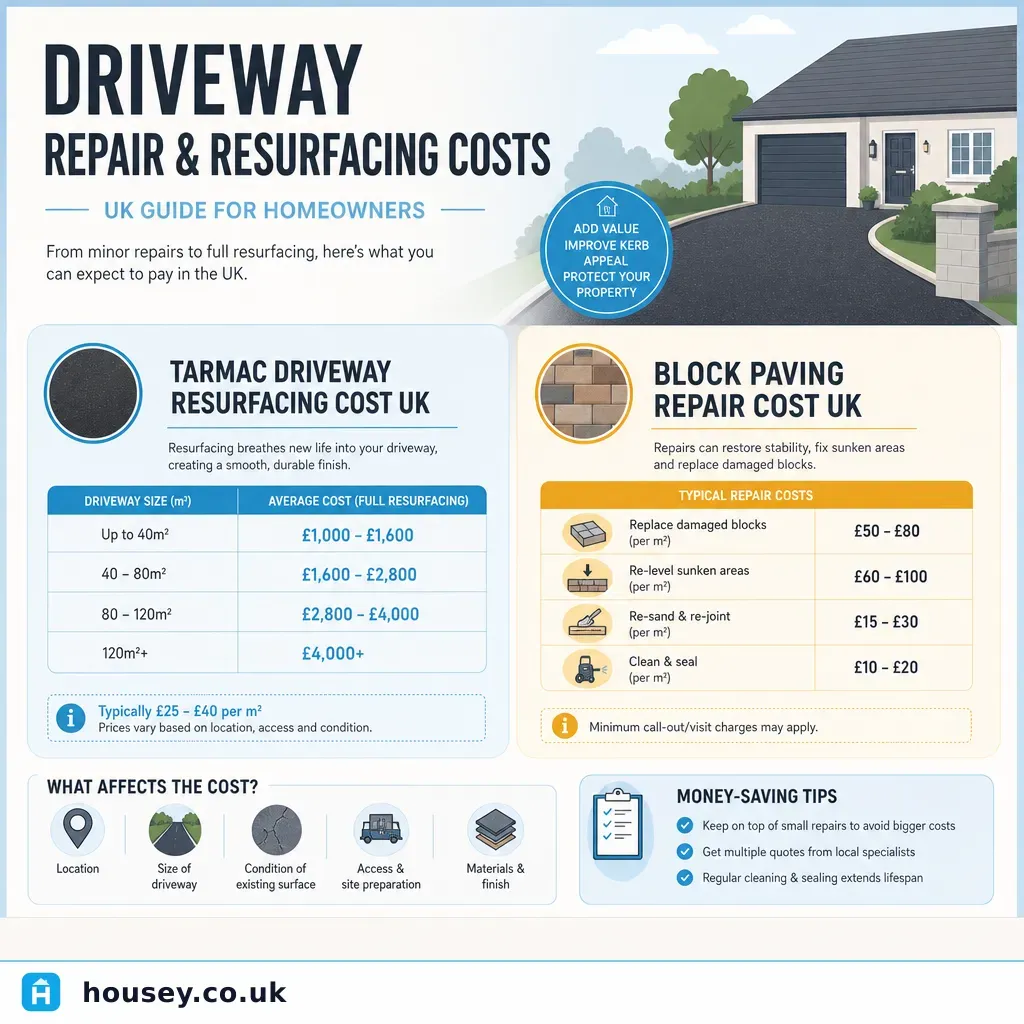 Improvement & Build
Driveway Repair and Resurfacing Costs
Driveway repair costs in the UK range from around £150 for a single pothole patch to £5,000–£12,000 or more for a full dig-out and replacement on a double driveway.
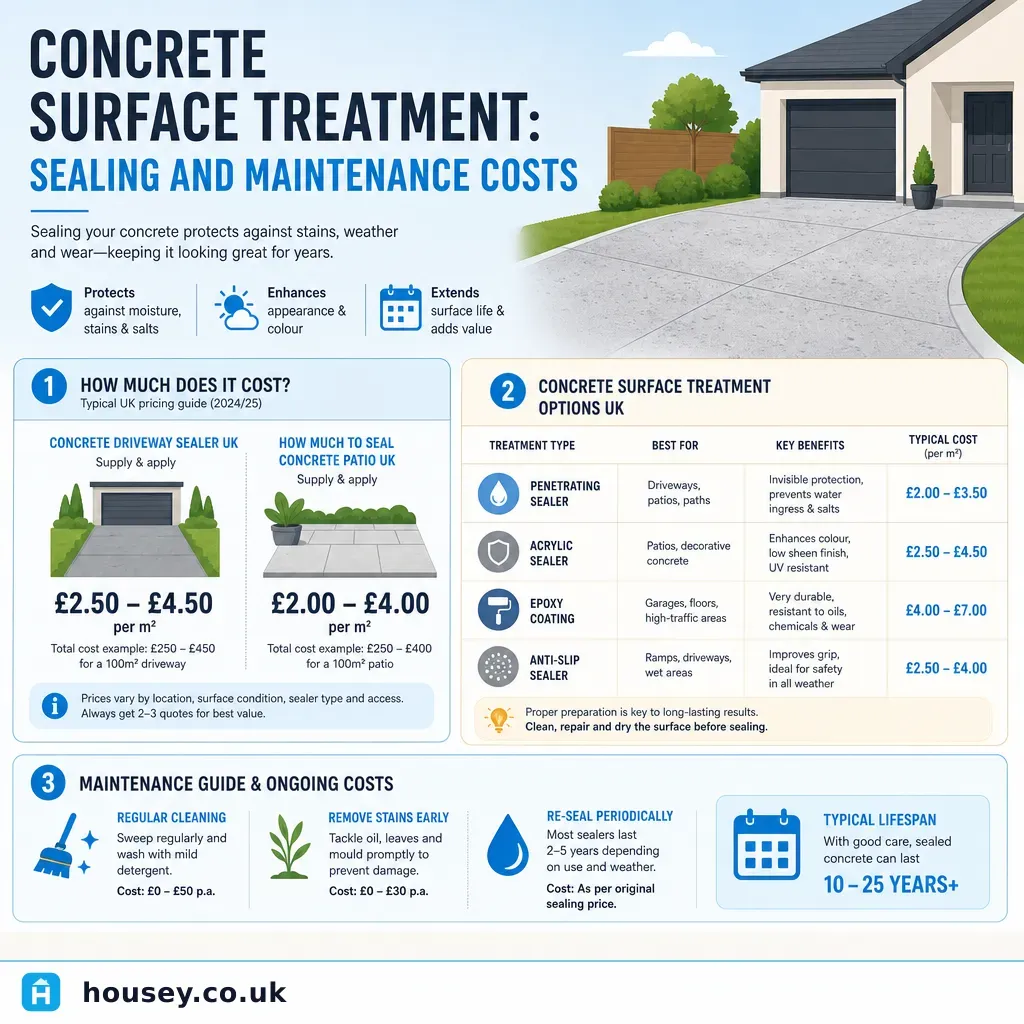 Improvement & Build
Concrete Surface Treatment: Sealing and Maintenance Costs
Sealing concrete in the UK typically costs £300–£1,200 for a standard driveway or patio, depending on area size and sealer type.
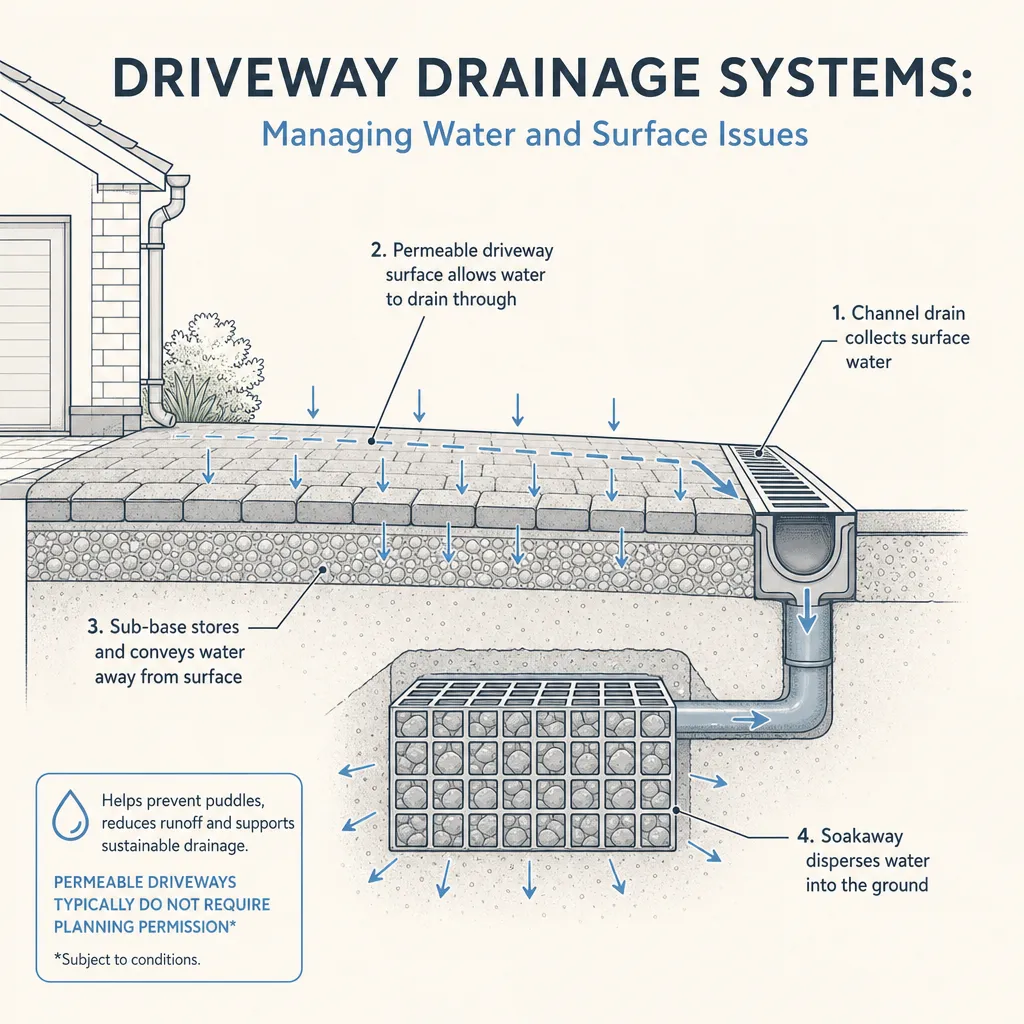 Improvement & Build
Driveway Drainage Systems: Managing Water and Surface Issues
The right driveway drainage system depends on your surface type, soil permeability, and local flood risk.
 Improvement & Build
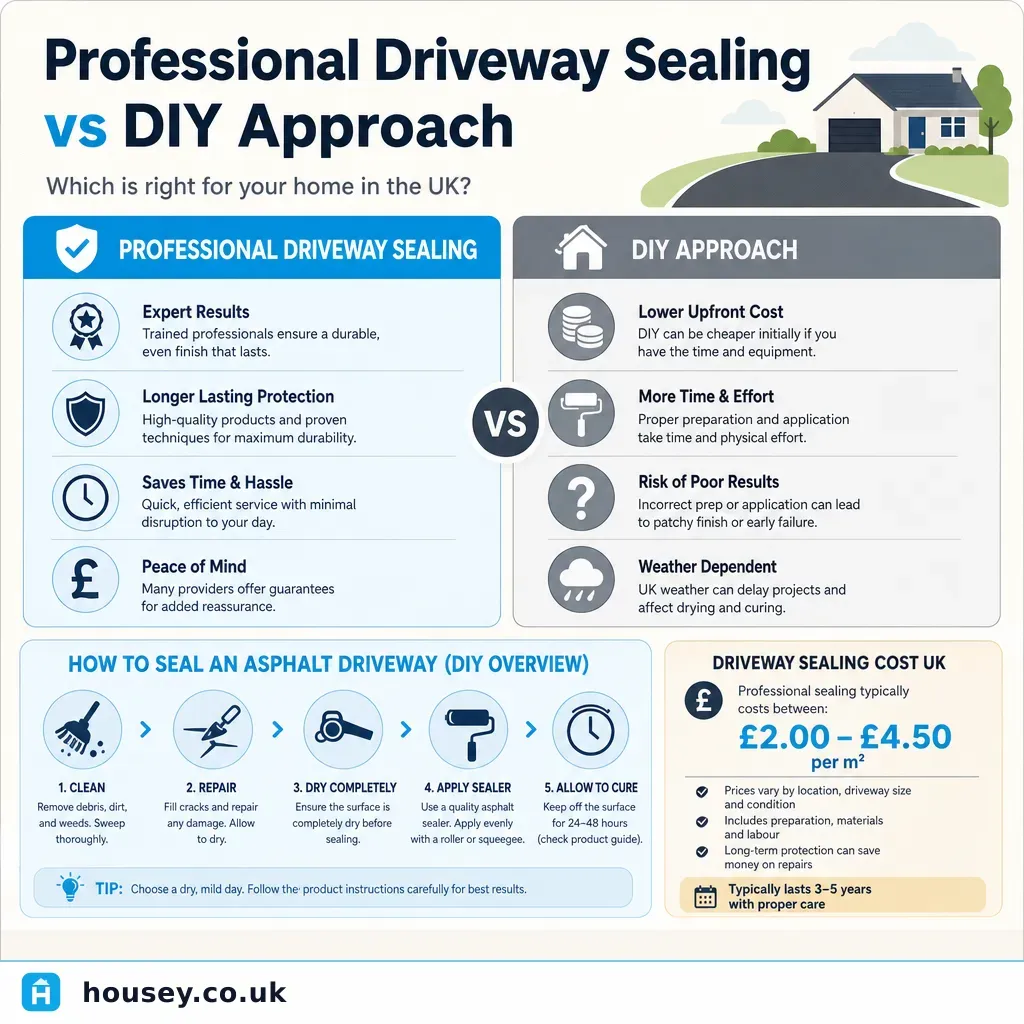
Professional Driveway Sealing vs DIY Approach
Professional driveway sealing offers a more durable, even finish using commercial-grade sealants and specialist equipment, typically costing £150 to £400 for an average drive.
 Improvement & Build
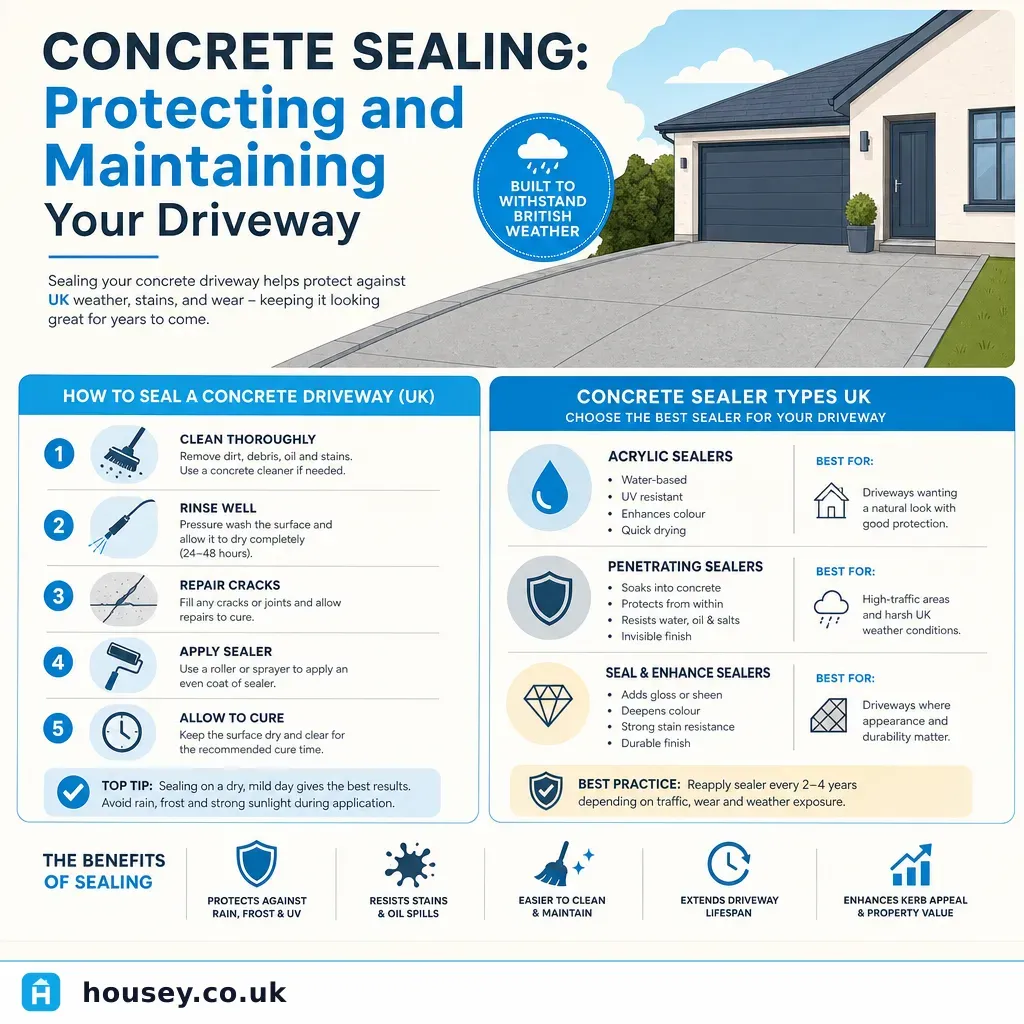
Concrete Sealing: Protecting and Maintaining Your Driveway
Sealing a concrete driveway protects against water ingress, freeze-thaw damage, oil stains, and surface wear.