Conservatory Roof Insulation Installation Costs
By Housey · Last reviewed 7th of May 2026
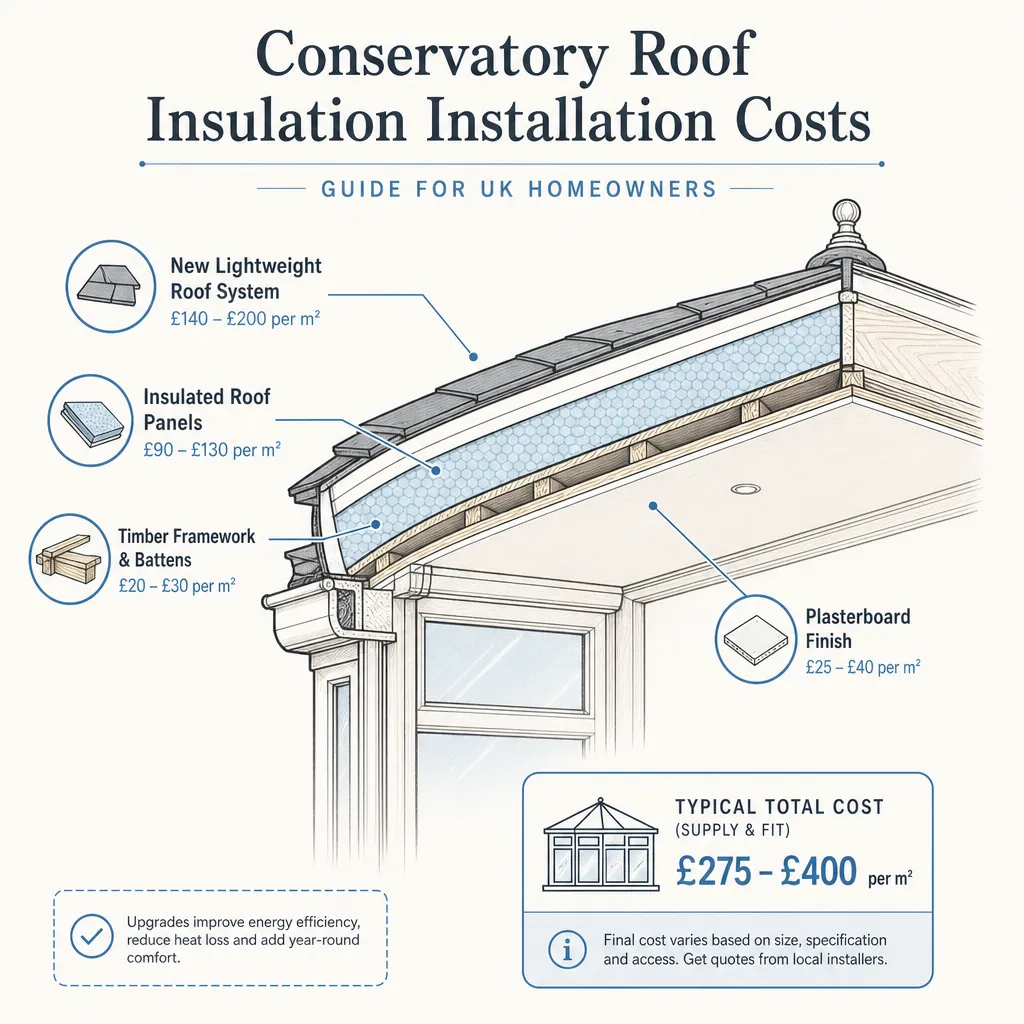
Conservatory Roof Insulation Installation Costs
Most conservatories are used year-round, yet many remain cold in winter and uncomfortably hot in summer because their original polycarbonate or single-glazed glass roofs offer minimal thermal performance. Homeowners typically revisit this when energy bills rise, the room becomes difficult to use, or they are extending the useful life of an ageing structure. The choice between adding internal insulated panels and replacing the entire roof with a solid, insulated alternative carries very different costs, planning implications, and building-regulation consequences.
Key points
- Internal insulated panel kits fitted over existing polycarbonate or glass cost roughly £1,500–£4,000 for a typical 15–25 m² conservatory when professionally installed (indicative UK costs, last reviewed 2026-05-07).
- Solid tiled roof conversions — such as Guardian Roof, Leka, or equivalent systems — typically cost £8,000–£25,000 or more, depending on size, access, and specification.
- Replacing a conservatory roof with a solid, opaque structure may remove its exempt status under Schedule 2 of the Town and Country Planning Act 1990, potentially triggering building regulations approval under Part L and Part B.
- Modern 35 mm multiwall polycarbonate can achieve U-values as low as 1.1 W/m²K, compared with around 2.8 W/m²K for older standard twin-wall polycarbonate — a substantial difference in heat retention.
- Reducing air movement through added insulation can increase condensation risk; ventilation should be assessed before any roof upgrade, especially in older conservatories with limited trickle vents.
What types of conservatory roof insulation are available?
There are three main approaches, each suited to different budgets and priorities.
Internal insulated panels are rigid panels fitted directly over existing roof glazing from the inside. They are the least disruptive and lowest-cost option, reducing heat loss and solar gain. The drawback is reduced natural light — significant in a room designed to let light in.
Replacement glazing swaps old polycarbonate sheets for thermally upgraded alternatives: 35 mm multiwall polycarbonate, solar-control glass, or warm-roof glass units. This preserves the conservatory's bright, open feel while meaningfully improving the roof U-value. It suits structures with sound aluminium or uPVC frames.
Solid tiled roof conversion replaces glazing entirely with an insulated, tiled structure performing comparably to a standard extension roof. It delivers the greatest thermal improvement and reduces rain noise, but changes the room's character and often brings planning and building regulations into scope.
How much does conservatory roof insulation cost?
Option | Typical installed cost (indicative 2026) | Size basis | Typically includes |
|---|---|---|---|
Internal insulated panels | £1,500–£4,000 | 15–25 m² | Labour, panels, trims |
Upgraded polycarbonate panels | £1,200–£3,500 | 15–25 m² | Old panel removal, supply and fit |
Warm-roof glass units | £3,000–£8,000 | 15–25 m² | Structural check, glazing, labour |
Solid tiled roof conversion | £8,000–£25,000+ | 15–30 m² | Structure, insulation, tiles, internal finish |
Indicative UK costs, last reviewed 2026-05-07. Quotes vary by region, roof pitch, access, and frame condition. Always obtain at least three written quotes.
Solid tiled roofs are heavier than polycarbonate. Some older aluminium or uPVC conservatory frames require structural reinforcement or replacement before they can safely carry a solid roof — always ask installers to assess this before committing to a quote.
Do I need building regulations approval or planning permission?
Planning permission: Most conservatories fall within permitted development rights under the Town and Country Planning (General Permitted Development) (England) Order 2015. However, a solid roof conversion that creates a heated, habitable room may not qualify. Rules differ for listed buildings, conservation areas, and Article 4 Direction areas. Always confirm with your local planning authority before starting.
Building regulations: A standard conservatory is exempt from building regulations if it is at ground-floor level, separated from the house by external-quality walls and doors, and covers no more than half the land around the original house. A solid roof bringing the space to habitable standard may end that exemption, requiring compliance with Approved Document L (energy efficiency), Approved Document B (fire safety), and Approved Document F (ventilation). Your installer or local building control officer can advise on your specific project.
Is conservatory roof insulation worth it?
For most homeowners who use the space regularly, yes. Comfort improvement — less heat loss in winter, lower solar gain in summer, quieter in rain — is often noticeable even from internal panels. Financial payback from heating savings alone is modest; enhanced usability tends to be the primary driver.
A solid roof conversion delivers the greatest thermal uplift but at considerably higher cost. Weigh it against the age and overall condition of the conservatory, and whether the frame can support the new load without additional expense.
What not to assume
- Do not assume a solid roof conversion is automatically permitted development. It depends on the property, location, and intended use of the space.
- Do not assume all insulated panel systems perform equally. Ask for independently tested U-values — marketing claims vary widely.
- Do not assume the existing frame can carry a solid roof. Always request a load assessment before ordering materials.
- Do not assume building regulations do not apply. Confirm with building control before starting work, especially if the conservatory will be heated and used as a habitable room.
What to ask before accepting a quote
- What is the U-value of the insulation or replacement glazing, and is it independently verified?
- Has the existing frame been assessed for structural adequacy?
- Will you confirm in writing whether planning permission or building regulations approval is needed for this property?
- Is the internal ceiling finish included, or do I need a separate contractor?
- Are any building control fees included?
- Is VAT included?
- What warranty does the system carry, and are you an approved installer for it?
When to get professional help
Conservatory roof work is generally carried out by specialist installers rather than general builders. Seek professional assessment when:
- The frame shows movement, rotting timber sills, or corroded aluminium joints that could affect load capacity.
- You are planning a solid roof conversion and are uncertain about planning or building regulations requirements.
- Gas or oil heating pipework in the conservatory needs alteration — this must be done by a Gas Safe registered engineer.
- The property is listed, in a conservation area, or subject to covenants restricting external alterations.
How Housey can help
Housey can help you request quotes from qualified insulation installers across the UK. If you want independent advice on which approach is right for your conservatory before committing to work, an insulation assessment gives you a professional view of options and achievable thermal performance.
Frequently asked questions
Will insulating my conservatory roof make it warm enough to use in winter?
Internal insulated panels reduce heat loss through the roof but will not make a poorly glazed conservatory fully comfortable in a British winter on their own. A solid tiled roof conversion, combined with adequate heating and attention to floor and wall insulation, delivers the greatest improvement. The overall thermal performance of the whole structure — not just the roof — determines winter usability.
Can I fit conservatory roof insulation myself?
Some internal panel kits are marketed as DIY products and are within the capability of a competent homeowner. However, working on a conservatory roof involves working at height and handling glass or polycarbonate panels, both of which carry safety risks. For glazing replacements or solid roof conversions, professional installation is strongly recommended. Follow HSE guidance on working at height.
Does a solid conservatory roof replacement add value to my home?
A well-executed solid roof conversion creating a year-round habitable room can add value, particularly when completed in compliance with any required planning or building regulations approvals. Value uplift depends on the local market and overall property condition. An uncertified conversion lacking building control sign-off may create complications on sale.
How long does conservatory roof insulation last?
Internal insulated panels typically last 20 years or more if properly fitted. Replacement polycarbonate panels often carry 10-year material warranties. Solid tiled roof systems from established manufacturers commonly offer 25-year structural warranties, though installer workmanship warranties vary. Always request written warranty documentation before work commences.
Should I notify my insurer before replacing the conservatory roof?
Yes. Any structural alteration — particularly a solid roof conversion — should be declared to your buildings insurer before work starts. A change in construction material and structure can affect your policy terms. Retain the completion certificate, any building control sign-off, and the installer's warranty documentation for your insurer and for any future sale.
Sources and further reading
- Conservatories: planning permission guidance — Planning Portal (GOV.UK)
- Approved Document L: Conservation of fuel and power — GOV.UK
- Approved Document B: Fire safety — GOV.UK
- Approved Document F: Ventilation — GOV.UK
- Working at height: a brief guide (INDG401) — Health and Safety Executive (HSE)
- Insulation guidance for homeowners — Energy Saving Trust
Useful next reads
 Improvement & Build
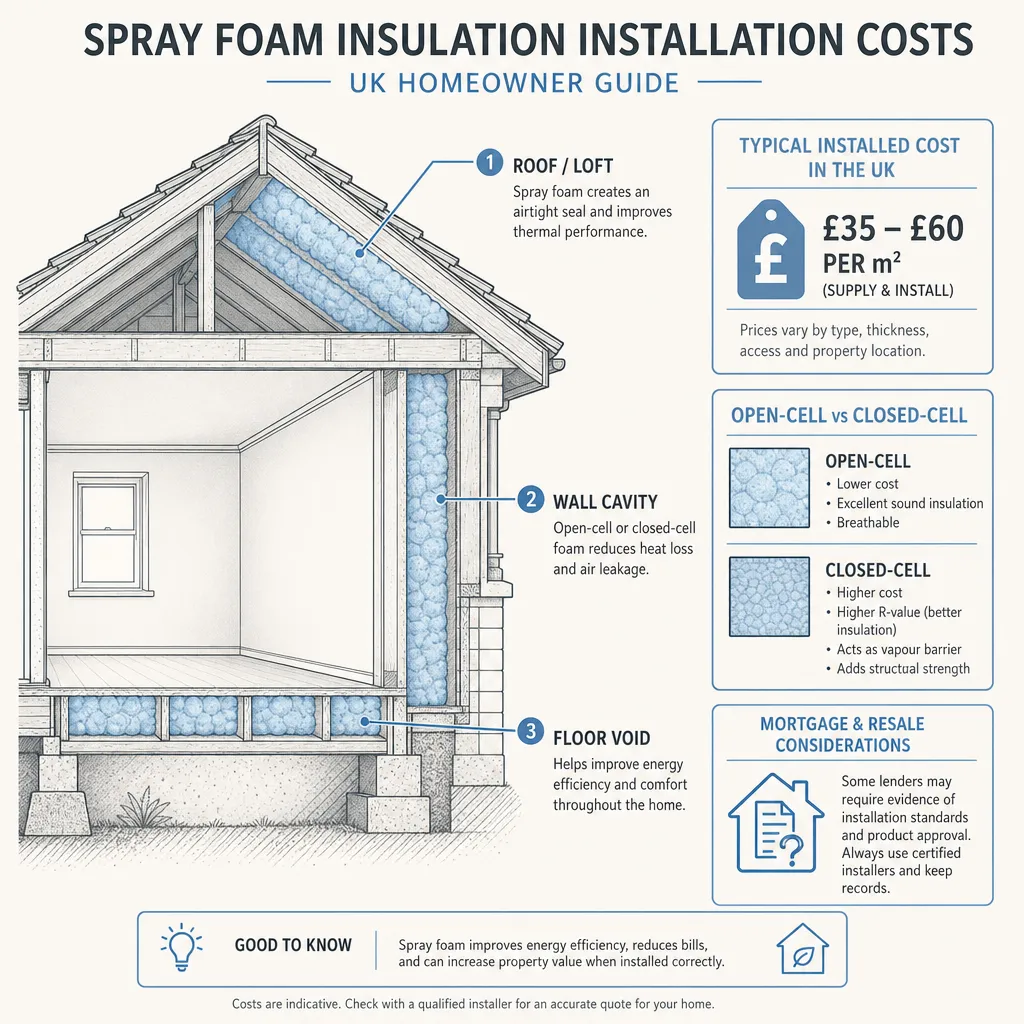
Spray Foam Insulation Installation Costs
Spray foam insulation typically costs £20–£80 per m² installed in the UK, depending on foam type and area treated.
 Improvement & Build
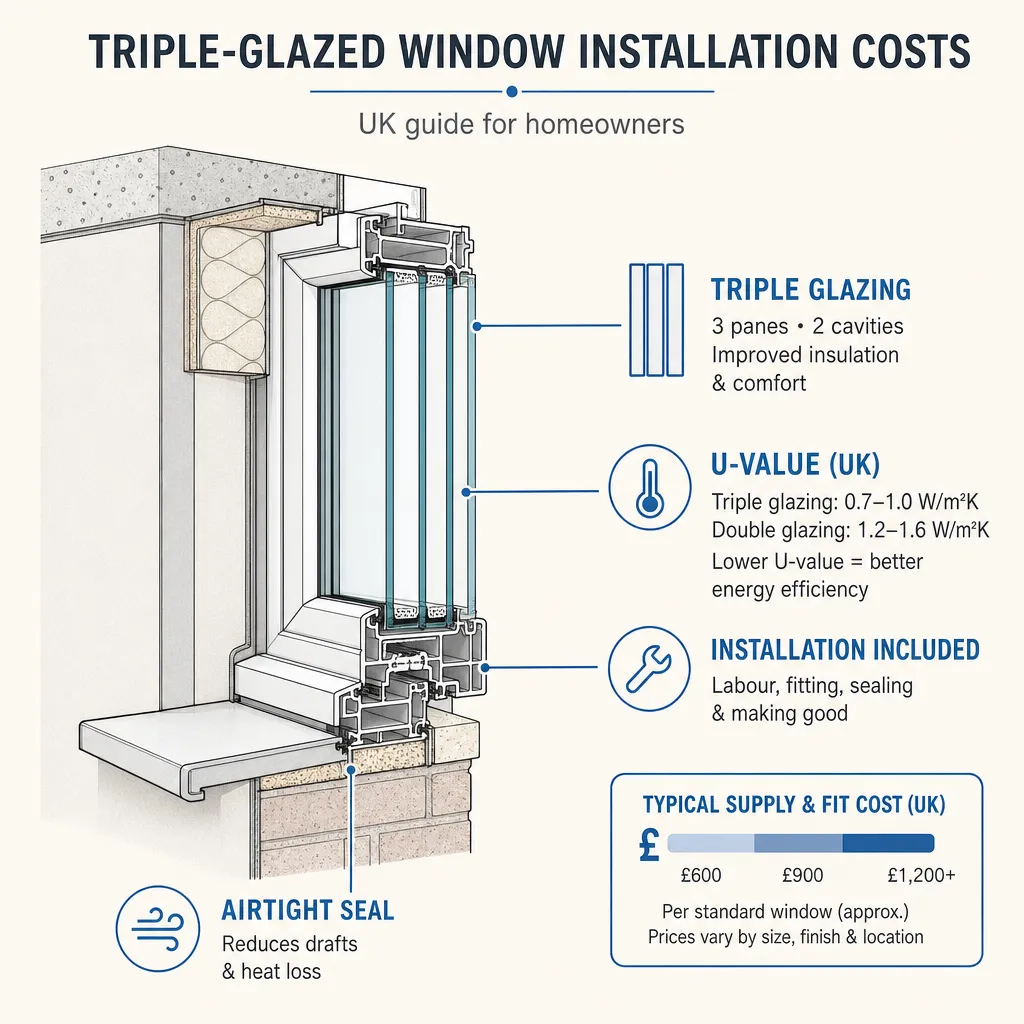
Triple-Glazed Window Installation Costs
Triple-glazed window installation in the UK typically costs £800–£1,800 per window, depending on size, frame material, and glazing specification.
 Improvement & Build
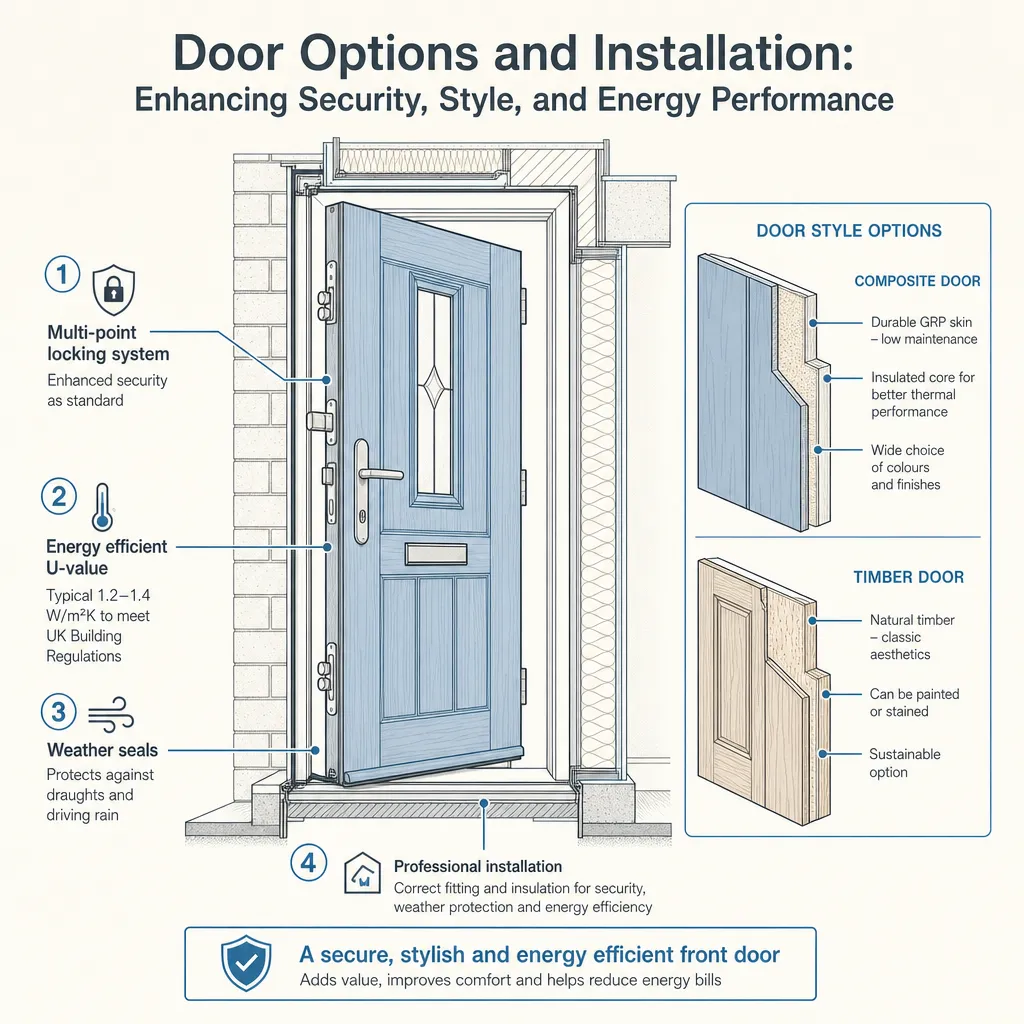
Door Options and Installation: Enhancing Security, Style, and Energy Performance
Choosing a new external door involves balancing security ratings, thermal performance, and style.
 Improvement & Build
Guide to Replacing Timber Sash Windows with Authentic Restoration
Restoring a timber sash window typically costs £150–£400 per window; full replacement costs £800–£2,500.
 Improvement & Build
Custom Glass Solutions: Windows, Doors, and Glazing Services
Replacement windows and doors in England and Wales must comply with Building Regulations Approved Document L (2022), requiring a whole-window U-value of 1.