Guide to Replacing Timber Sash Windows with Authentic Restoration
By Housey · Last reviewed 6th of May 2026

Guide to Replacing Timber Sash Windows with Authentic Restoration
Timber sash windows are a defining feature of millions of UK homes built between roughly 1750 and 1930, from Georgian townhouses and Regency villas to Victorian terraces and Edwardian semis. The decision to repair, restore, or fully replace them arises during renovation projects, energy improvement programmes, or when original windows have deteriorated beyond routine maintenance. The choice has implications beyond comfort and cost: in conservation areas and listed buildings, it also affects planning compliance and the long-term character of the property.
Key points
- In a conservation area, replacing original sash windows usually requires householder planning permission from the local planning authority (LPA); replacing without consent may constitute a planning breach.
- In a listed building, any alteration to windows requires listed building consent — replacement without consent is a criminal offence under the Planning (Listed Buildings and Conservation Areas) Act 1990.
- Draught-proofing and restoring an existing sash window typically costs £150–£400 per window; full like-for-like replacement typically costs £800–£2,500 per window (Indicative UK costs, last reviewed 2026-05-06).
- Replacement windows must be installed by a FENSA- or CERTASS-registered contractor, or a separate Building Regulations application for Part L compliance must be made to building control.
- Slimline double-glazed timber sash units can achieve a whole-window U-value of approximately 1.4–1.6 W/m²K, compared to approximately 4.8 W/m²K for original single glazing.
Repair, restore, or replace: which approach is right?
The right decision depends on the condition of the existing frames, the property's planning status, and your priorities for energy efficiency and budget.
Decision guide
- Restore and draught-proof if frames are structurally sound, rot is limited to surface paint failure, and the property is in a conservation area or is listed.
- Replace like-for-like with slimline double-glazed timber sash if frames are beyond economic repair and your LPA permits double-glazed units with appropriate sightline widths.
- Install secondary glazing if the property is listed and the conservation officer will not approve any visible external change.
- Replace with standard double-glazed timber sash if the property has no planning restrictions and energy performance is the priority.
- Consult your LPA before commissioning any work if you are unsure of your property's conservation area or listed building status.
Option | Best for | Not ideal for | Thermal improvement | Planning consideration |
|---|---|---|---|---|
Draught-proof and restore original | Conservation areas, listed buildings, sound frames | Frames with deep structural rot | Moderate | Usually no consent needed |
Like-for-like slimline double-glazed timber sash | Conservation areas where LPA permits double glazing | Listed buildings without LPA agreement | Good | Check with LPA before proceeding |
Secondary glazing | Listed buildings, rental properties | Where internal appearance is a priority | Good | Usually no consent needed |
Standard double-glazed timber sash | No planning constraints | Conservation areas or listed buildings | Good | Usually no consent needed |
uPVC sash | Budget-conscious, no planning constraints | Conservation areas, listed buildings, period character | Good | High risk of refusal in conservation areas |
LPA = local planning authority.
What authentic sash restoration involves
A thorough restoration programme addresses the mechanical function of the sash mechanism, the condition of the timber, and thermal and acoustic performance.
Typical restoration sequence:
- Condition assessment — Each window is inspected for rot, paint failure, broken sash cords, damaged or missing weights, failed putty, and draughts at the meeting rail and parting beads.
- Timber repairs — Localised rot is cut back and treated with a two-component resin repair system or replaced with new timber inserts. Deep structural rot to the sill or stiles may require a new sash or full frame replacement.
- Sash cord replacement — Traditional waxed-cotton or modern polypropylene cords are threaded through the box-frame pulley system to restore smooth operation.
- Draught-proofing — Brush pile or wool-fibre seals are inserted into the meeting rail, bottom rail, and parting beads, eliminating cold draughts while preserving the sliding mechanism.
- Glazing — Deteriorated putty is raked out and replaced. Where consented and specified, slimline double-glazed units may replace single-glass panes.
- Decoration — Frames and sashes are prepared and repainted using a microporous or linseed oil-based paint system that allows the timber to breathe.
Specifying replacement windows
Where existing frames are beyond economic repair, the specification of replacements matters considerably for longevity, performance, and planning compliance.
Key specification points:
- Timber species: Accoya (acetylated softwood), FSC-certified redwood softwood, or durable hardwood such as iroko or sapele offer good longevity and dimensional stability.
- Sightline widths: Slimline units can achieve sightlines close to original single-glazed profiles. Conservation officers may specify maximum allowable glazing bar widths.
- Glazing unit: A 4 mm – 12 mm – 4 mm sealed unit with low-emissivity coating and warm-edge spacer bar typically achieves a whole-window U-value of approximately 1.4–1.6 W/m²K.
- Hardware: Cast-iron or solid-brass sash fasteners and lift handles maintain period appearance.
- Box-frame relining: Where the original box frame is structurally sound, relining with new liners and sashes saves cost and avoids disturbing internal plasterwork.
Planning permission and Building Regulations
Conservation areas
Removing or replacing windows that make a positive contribution to a conservation area's character typically requires householder planning permission. Consult your local planning authority before commissioning work. uPVC and non-traditional profiles are frequently refused in conservation areas.
Listed buildings
Any alteration affecting the character or fabric of a listed building requires listed building consent from the LPA. This applies regardless of whether the alteration is internal or external, and regardless of how minor it may appear. Replacing original sashes without consent is a criminal offence under the Planning (Listed Buildings and Conservation Areas) Act 1990.
Building Regulations Part L
Replacement windows must meet the thermal performance requirements of Part L (Conservation of Fuel and Power) of the Building Regulations. In existing dwellings this means a minimum whole-window U-value of 1.4 W/m²K, unless a heritage exemption applies. A FENSA or CERTASS-registered installer self-certifies compliance and provides a certificate on completion. A non-registered installer must notify building control and obtain a completion certificate — which is required by mortgage lenders and conveyancers on property sale.
What to ask before accepting a quote
- Are you FENSA or CERTASS registered? If not, how will Part L compliance be certified?
- Have you worked on properties in conservation areas or with listed building status?
- What timber species and preservative treatment will be used?
- What is the specified whole-window U-value?
- Will you advise on or manage any required planning or listed building consent applications?
- What does the quote include — installation, decoration, making good of internal reveals and plasterwork?
- What guarantees are provided on frames, glazing units, and hardware?
- Is VAT included, and what could change the price?
When to get professional help
Most sash window restoration and replacement work can be commissioned directly with a specialist installer. Seek additional professional advice if:
- The property is listed or in a conservation area and you are uncertain what consents are required.
- A structural lintel or reveal requires attention alongside the window work.
- Significant rot extends into the sub-sill, structural brickwork, or lintel bearing.
- The installation forms part of a wider energy retrofit programme subject to PAS 2035 requirements, where window specification must be coordinated with ventilation and moisture risk assessments.
Red flags when reviewing quotes:
- The installer cannot confirm FENSA or CERTASS registration and does not mention Building Regulations notification.
- The quote does not specify timber species, glazing unit, or U-value.
- The installer advises that no consent is needed without having checked your property's planning status.
- The quote proposes uPVC for a property that may be in a conservation area.
How Housey can help
Housey can connect you with experienced window and door installers who specialise in timber sash replacement and heritage restoration across the UK. Use Housey to request quotes, check FENSA and CERTASS registration, and compare proposals from installers familiar with conservation area and listed building requirements.
Frequently asked questions
Do I need planning permission to replace sash windows?
In most properties with no planning restrictions, like-for-like replacement does not require planning permission. In a conservation area you will usually need householder planning permission, and in a listed building you will need listed building consent. Always check with your local planning authority before commissioning any work.
How long do restored timber sash windows last?
Well-maintained and properly restored timber sash windows can last 50–100 years or more. The key factors are quality timber repair, adequate protection from a breathable microporous or linseed oil-based paint system, and regular maintenance: repainting every five to eight years and re-cording sashes as needed.
Can I fit double glazing in a conservation area?
This depends on your local planning authority. Some LPAs permit slimline double-glazed units that closely replicate original profiles and sightline widths; others require single glazing to be retained. Consult your LPA and obtain any required planning permission before commissioning glazing changes.
What is the difference between FENSA and CERTASS?
Both are government-authorised competent person schemes for replacement windows and doors under Building Regulations. Installers registered with either scheme can self-certify compliance with Part L without a separate building control application. Both provide a certificate required by mortgage lenders and conveyancers when the property is sold.
Is draught-proofing a sash window worth it?
For most properties, yes. Draught-proofing can significantly reduce heat loss through an original sash and typically costs £150–£400 per window — considerably less than full replacement. For conservation area and listed properties it is often the most practical and planning-safe option, preserving the original window fabric intact while meaningfully improving thermal comfort.
Sources and further reading
- Planning permission for windows, doors and external wall insulation — Planning Portal
- Building Regulations Approved Document L1B: Conservation of fuel and power in existing dwellings — GOV.UK
- Planning (Listed Buildings and Conservation Areas) Act 1990 — legislation.gov.uk
- Windows: improving energy efficiency — Energy Saving Trust
- FENSA: competent person scheme for windows and doors — FENSA
Useful next reads
 Improvement & Build
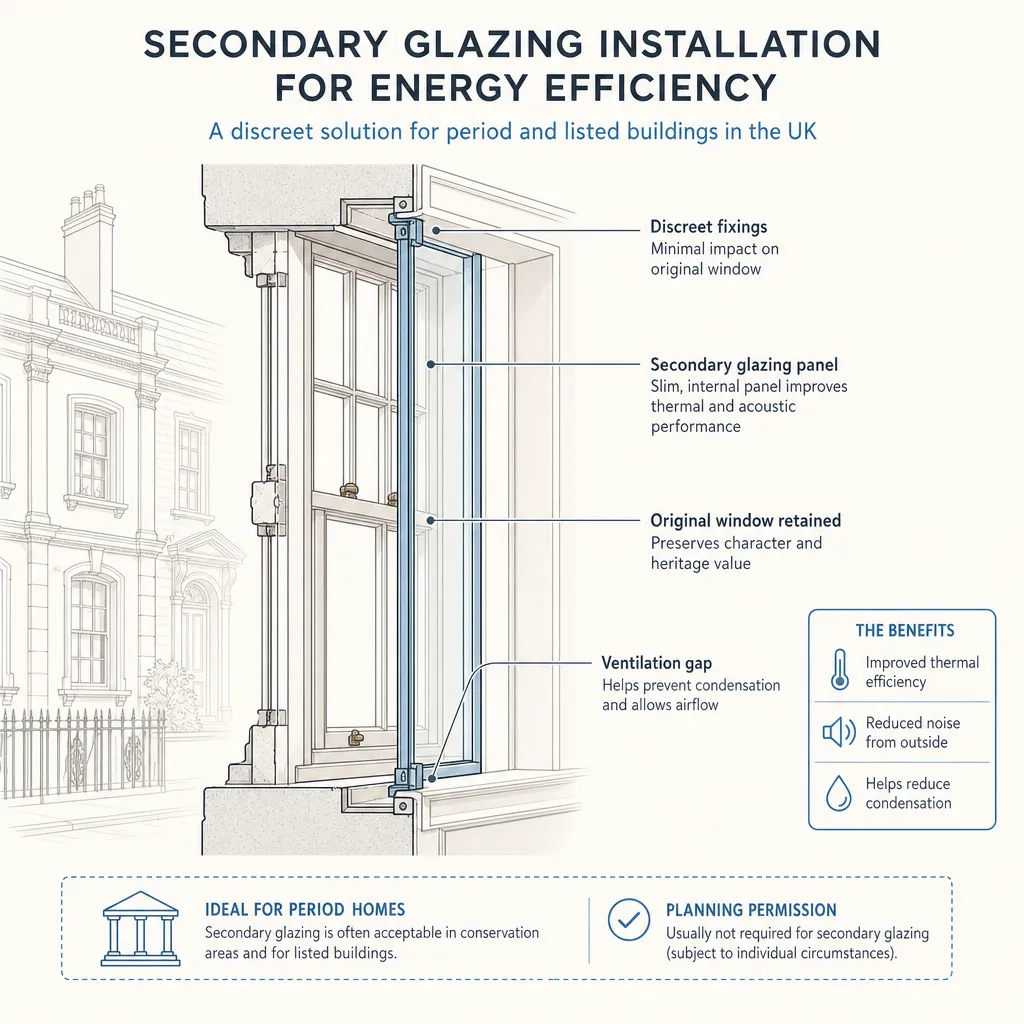
Secondary Glazing Installation for Energy Efficiency
Secondary glazing adds a separate inner pane to an existing window, improving thermal performance without replacing the original frame.
 Improvement & Build
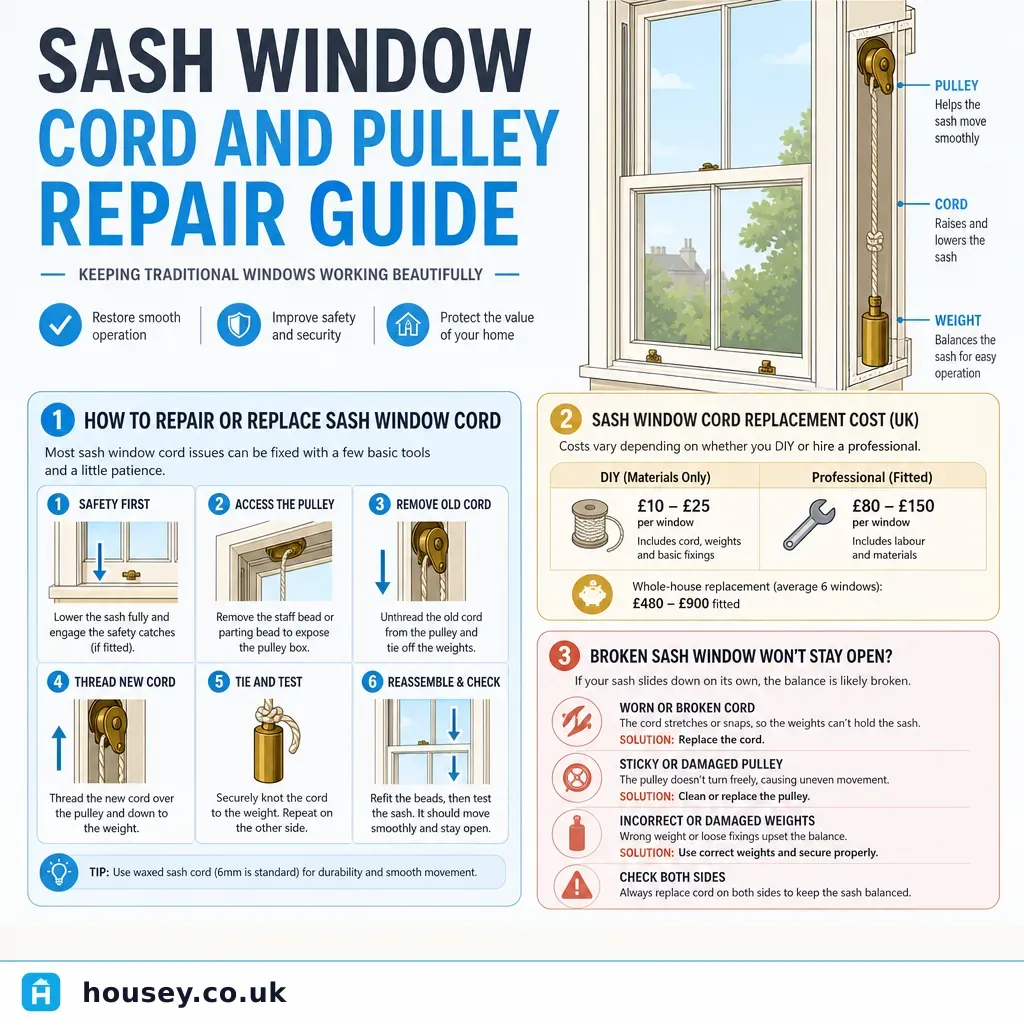
Sash Window Cord and Pulley Repair Guide
Repairing a broken sash window cord involves removing the staff bead, lifting out the lower sash, threading new wax-coated cord through the pulley, and tying it securely to the sash weight.
 Improvement & Build
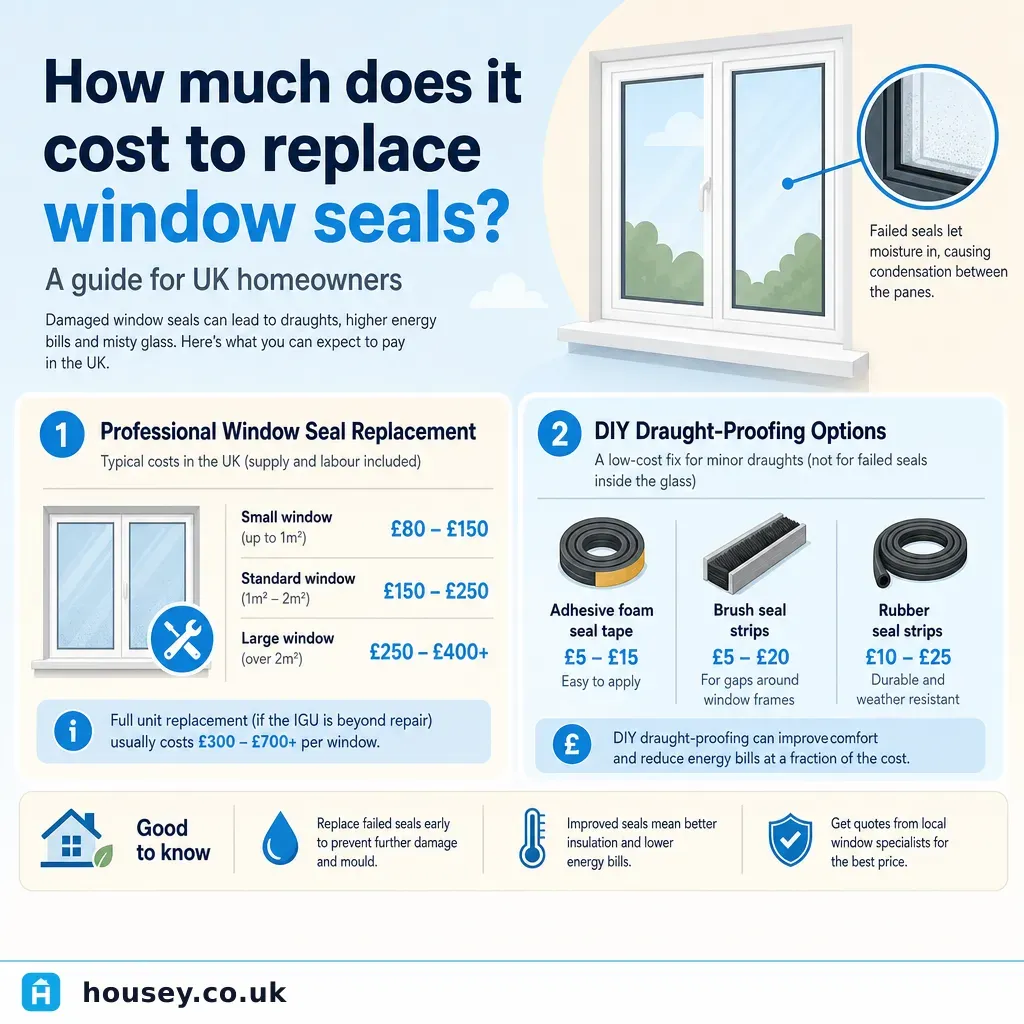
How much does it cost to replace window seals?
Replacing window seals in the UK costs between £40 and £350 per window depending on the repair type.
 Improvement & Build
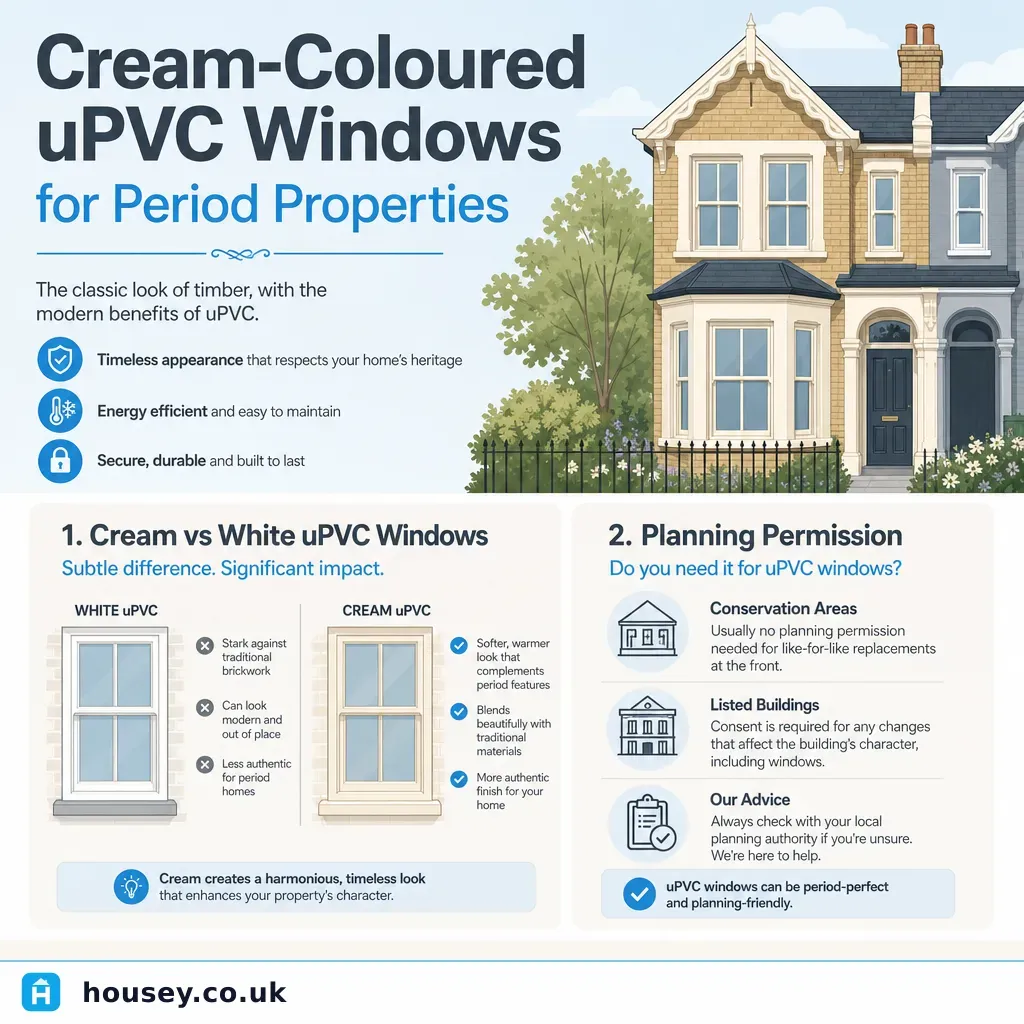
Cream-Coloured uPVC Windows for Period Properties
Cream uPVC windows are a popular choice for period properties because their warmer tone sits more sympathetically with aged brick and stonework than stark white.
 Improvement & Build
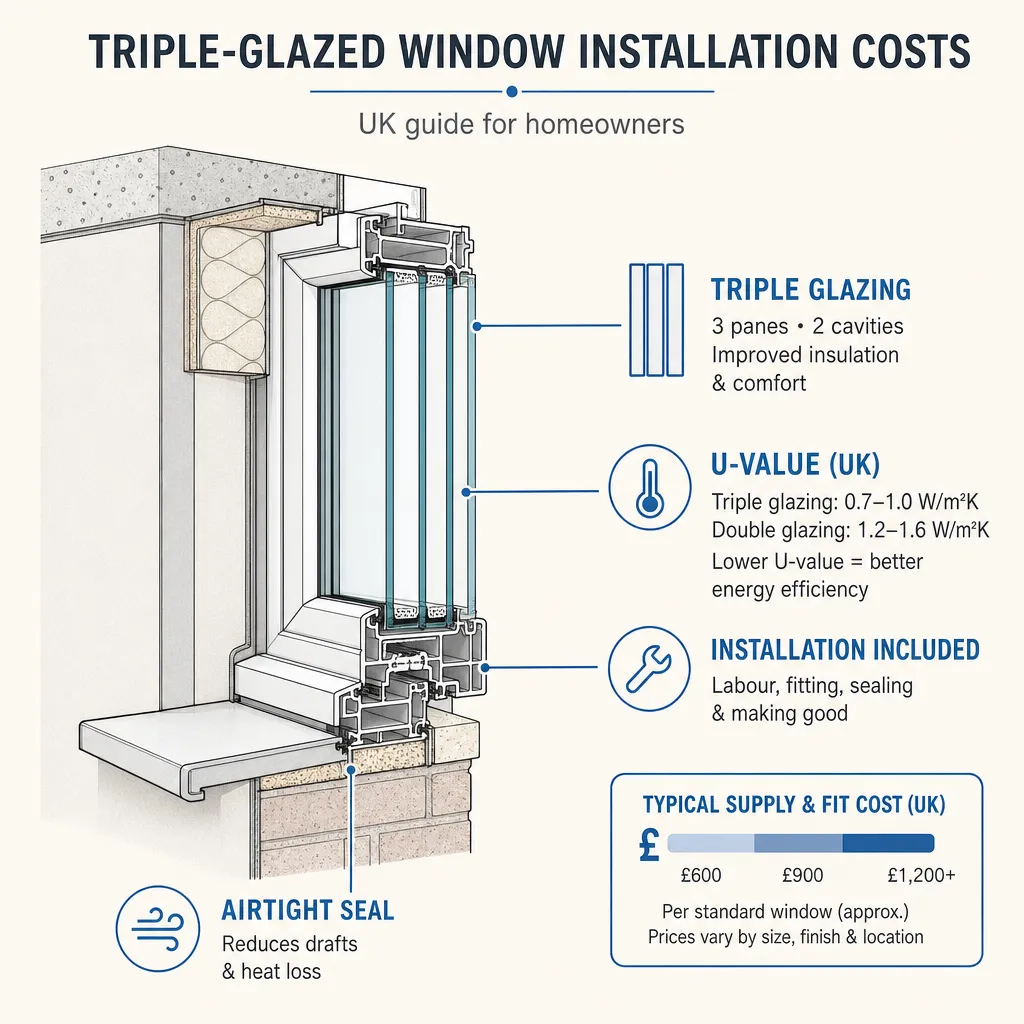
Triple-Glazed Window Installation Costs
Triple-glazed window installation in the UK typically costs £800–£1,800 per window, depending on size, frame material, and glazing specification.