Spray Foam Insulation Installation Costs
By Housey · Last reviewed 7th of May 2026
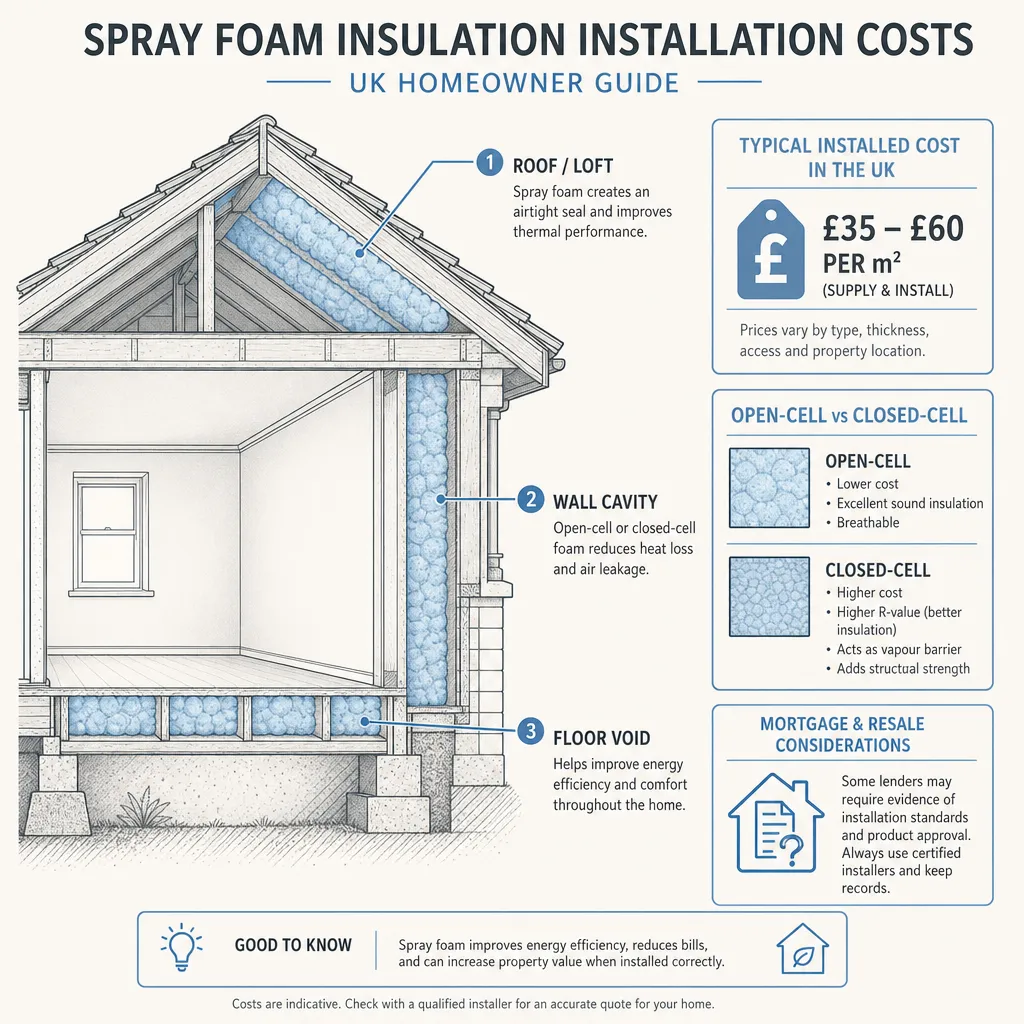
Spray Foam Insulation Installation Costs
Spray foam insulation is promoted as a rapid way to improve a home's thermal performance, particularly in roof spaces and hard-to-insulate cavities. The question of cost typically arises when homeowners are planning energy improvements, responding to a low EPC rating, or considering a loft insulation upgrade ahead of a sale or remortgage. Spray foam carries significant risks beyond the installation cost itself — particularly its well-documented effect on mortgage eligibility and property value — so understanding the full picture is essential before agreeing to any work.
Key points
- Open-cell spray foam insulation typically costs £20–£45 per m² installed; closed-cell spray foam typically costs £45–£80+ per m², depending on thickness and property type (indicative UK costs, last reviewed 2026-05-07).
- Many mainstream mortgage lenders will decline to lend or remortgage on properties where spray foam has been applied to roof timbers, due to concerns about hidden timber damage and moisture risk.
- RICS guidance states that spray foam in roof voids can prevent surveyors from adequately assessing timber condition, potentially affecting survey outcomes and valuations.
- Open-cell spray foam is vapour-permeable; closed-cell is not — applying the wrong type in a cold roof void can cause interstitial condensation and timber decay.
- Removal of spray foam typically costs £2,000–£6,000+ for a semi-detached roof void and may damage roof timbers in the process (indicative UK costs, last reviewed 2026-05-07).
What does spray foam insulation cost in the UK?
Costs vary by foam type, area, access conditions, and regional contractor rates.
Open-cell spray foam (soft, flexible, vapour-permeable) is used in warm roof applications and irregular cavities. Indicative installed cost: £20–£45 per m².
Closed-cell spray foam (rigid, higher thermal resistance, vapour barrier) is used in roof slopes, floors over cold areas, and steel-frame constructions. Indicative installed cost: £45–£80+ per m².
For a typical three-bedroom semi-detached, treating the internal roof slope could cost approximately £1,500–£3,500 (open-cell) or £3,000–£6,000+ (closed-cell). Always obtain at least three written quotes specifying foam type, thickness, and coverage.
Indicative UK costs, last reviewed 2026-05-07.
Open-cell vs closed-cell spray foam: a comparison
Type | Thermal resistance | Vapour permeability | Best for | Not suitable for | Indicative cost per m² |
|---|---|---|---|---|---|
Open-cell (soft) | Moderate | Permeable | Warm roof applications, irregular internal cavities | Cold roof voids without a prior condensation risk assessment | £20–£45 |
Closed-cell (rigid) | High | Vapour barrier | Floors over cold spaces, correctly specified cold roofs | Properties where lender restrictions apply; where future removal is likely | £45–£80+ |
How spray foam affects your mortgage and property value
This is the most significant practical concern for UK homeowners, and it is frequently underemphasised by installers.
Mortgage lending: A substantial number of mainstream lenders — including several high-street banks and building societies — will decline to offer a mortgage or allow remortgaging on a property where spray foam has been applied to roof timbers. The reason is that spray foam prevents visual inspection of timbers for rot, insect damage, or structural weakness during a survey. If you plan to sell or remortgage within the foreseeable future, this is a material financial risk.
RICS surveys: RICS guidance notes that spray foam in a roof void may prevent a surveyor from adequately assessing timber condition. A Level 2 or Level 3 Home Survey may flag the foam and recommend specialist investigation, causing delays and additional costs at sale.
Property value: Properties with spray foam insulation have in some cases been harder to sell or achieved lower valuations due to lender restrictions and growing buyer awareness. Which? and the Insulation Assurance Authority (IAA) have documented cases of homeowners facing significant difficulties selling or remortgaging after installation.
Leasehold properties: Check your lease terms and obtain written freeholder consent before making any insulation changes affecting the building structure.
Is spray foam suitable for your roof?
Cold roofs — where insulation sits at ceiling level and the roof void is ventilated — present the greatest risk. Applying closed-cell foam to the roof slope changes moisture dynamics and can cause condensation on timber surfaces, leading to rot.
Warm roofs — where insulation sits at rafter level — can be more compatible with spray foam, but only if correctly specified and the rafter depth is fully filled to prevent interstitial condensation.
A condensation risk assessment in accordance with BS 5250 and consistent with PAS 2035 retrofit principles should be carried out before any spray foam is specified for a roof application.
What to check before getting spray foam installed
Homeowner checklist — before agreeing to any work:
Important limitations
This article provides general information about spray foam insulation costs and considerations for UK homeowners. Rules and risks vary significantly depending on property type, roof construction, mortgage lender policies, lease terms, and the specific product and installer used. This guidance is not a substitute for an independent insulation assessment, structural survey, or financial advice from a qualified professional.
Mortgage lender policies on spray foam change over time — always verify your lender's current position before proceeding. Cost figures are indicative and based on publicly available trade data reviewed in May 2026; actual quotes will vary.
What to ask a qualified professional
Before instructing any installer or commissioning an assessment, ask:
- What type of spray foam are you proposing, and why is it appropriate for my specific roof construction?
- Has a condensation risk assessment been or will be carried out in line with BS 5250?
- Are you TrustMark-registered, and what guarantee do you provide on the completed installation?
- How might this installation affect my ability to remortgage or sell the property?
- If I need foam removed in future, what would that involve and cost?
- What independent accreditation does the product hold?
- Is this work potentially eligible for any government grant funding?
When to get professional help
Seek independent advice — from a retrofit coordinator qualified under PAS 2035, an independent insulation assessor, or a chartered surveyor — before committing to any spray foam work, particularly if:
- Your home was built before 1945, when roof timbers are more susceptible to moisture damage.
- You have a cold roof void rather than a warm roof design.
- You plan to sell or remortgage within the next ten years.
- You have existing damp, condensation, or roof-covering concerns.
Red flags — pause and get independent advice if:
- An installer does not ask about your roof type or mortgage arrangements before quoting.
- A quote does not specify foam type, thickness, or coverage area.
- No guarantee or accreditation scheme is mentioned.
- There is pressure to sign quickly or accept a same-day offer.
- A price is significantly lower than other quotes without clear explanation.
How Housey can help
Before committing to any spray foam installation, an independent insulation assessment can confirm whether spray foam is appropriate for your property, which type suits your roof construction, and whether alternatives — such as mineral wool, rigid board, or PIR insulation — would better serve your circumstances. If you are ready to proceed with a suitable product, insulation installers on Housey can provide written quotes from accredited contractors in your area.
Frequently asked questions
Does spray foam insulation devalue my home?
It can. Many mortgage lenders will not lend on properties with spray foam on roof timbers, limiting the pool of potential buyers and potentially affecting achieved sale prices. RICS surveyors often flag spray foam as a concern during Level 2 or Level 3 surveys. The extent of any impact depends on your lender, property type, and installation details. Independent advice before installation is strongly recommended.
Can spray foam insulation be removed?
Yes, but it is difficult and costly. Removal involves manually cutting and scraping hardened foam from roof timbers and may cause surface damage to the timber. Costs for a typical semi-detached roof void commonly range from £2,000 to £6,000 or more depending on extent and access conditions (indicative UK costs, last reviewed 2026-05-07). Some specialist companies offer spray foam removal and remediation services.
Is spray foam insulation covered by government grants?
Some installations may be eligible under ECO4 (Energy Company Obligation) or the Great British Insulation Scheme, depending on household income, EPC rating, and local authority involvement. Eligibility and funding levels change regularly — check GOV.UK and contact your energy supplier for the current position. Not all spray foam applications or installers will qualify under these schemes.
What is the difference between open-cell and closed-cell spray foam?
Open-cell foam is soft and flexible, with a lower thermal resistance, and allows moisture vapour to pass through. Closed-cell foam is rigid, has a higher thermal resistance, and forms a vapour barrier. The difference matters greatly in a roof: a vapour barrier applied incorrectly in a cold roof void can trap moisture and cause timber decay. A condensation risk assessment should determine which type — if either — is appropriate for your property.
Sources and further reading
Useful next reads
 Improvement & Build
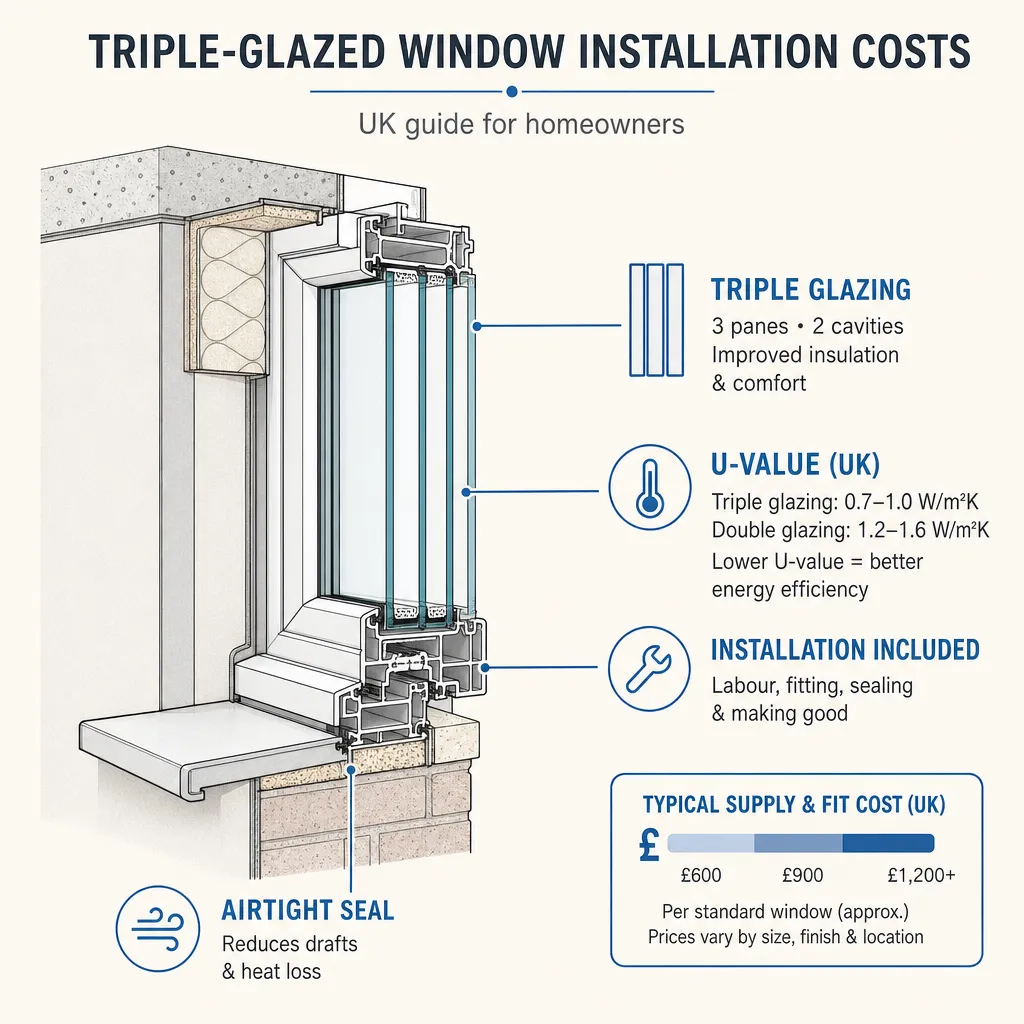
Triple-Glazed Window Installation Costs
Triple-glazed window installation in the UK typically costs £800–£1,800 per window, depending on size, frame material, and glazing specification.
 Improvement & Build
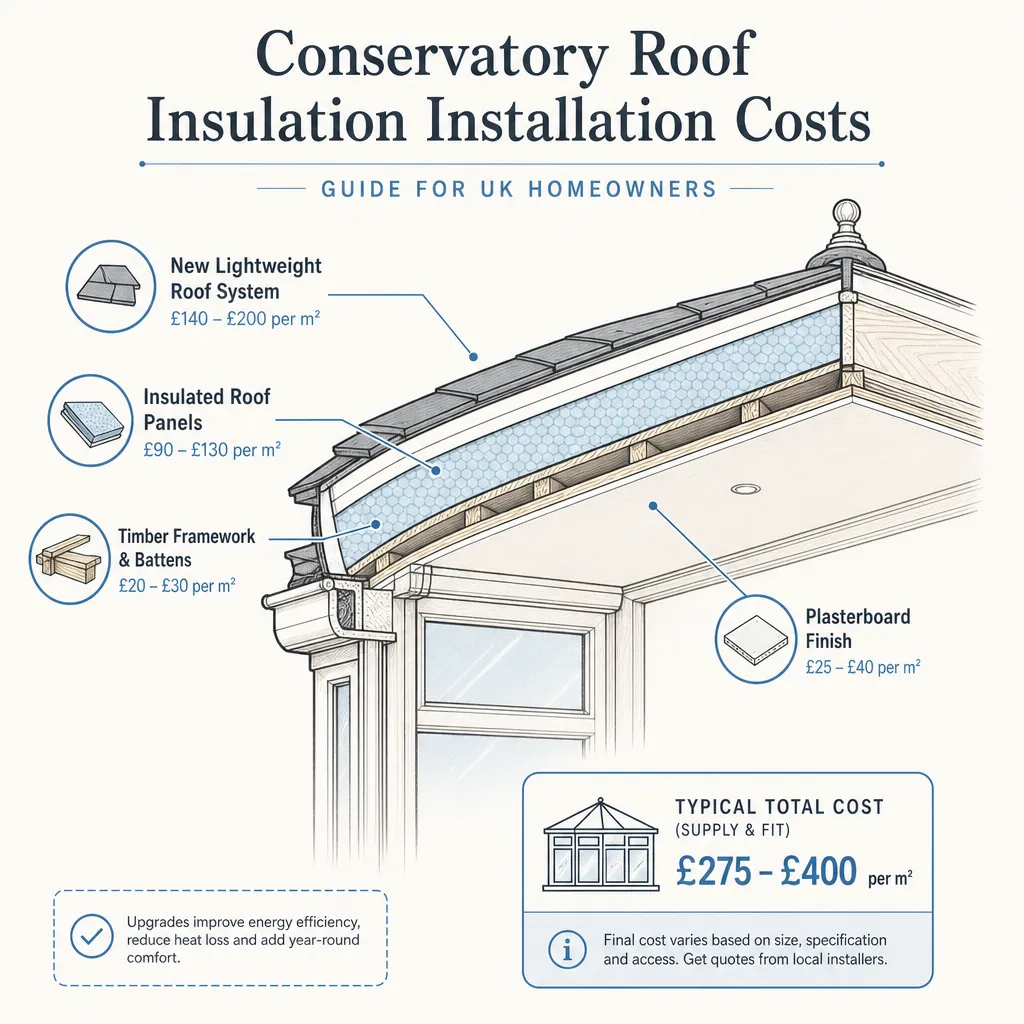
Conservatory Roof Insulation Installation Costs
Conservatory roof insulation costs typically range from around £1,500 to £4,000 for internal insulated panel systems, or £8,000 to £25,000 or more for a solid tiled roof replacement.
 Improvement & Build
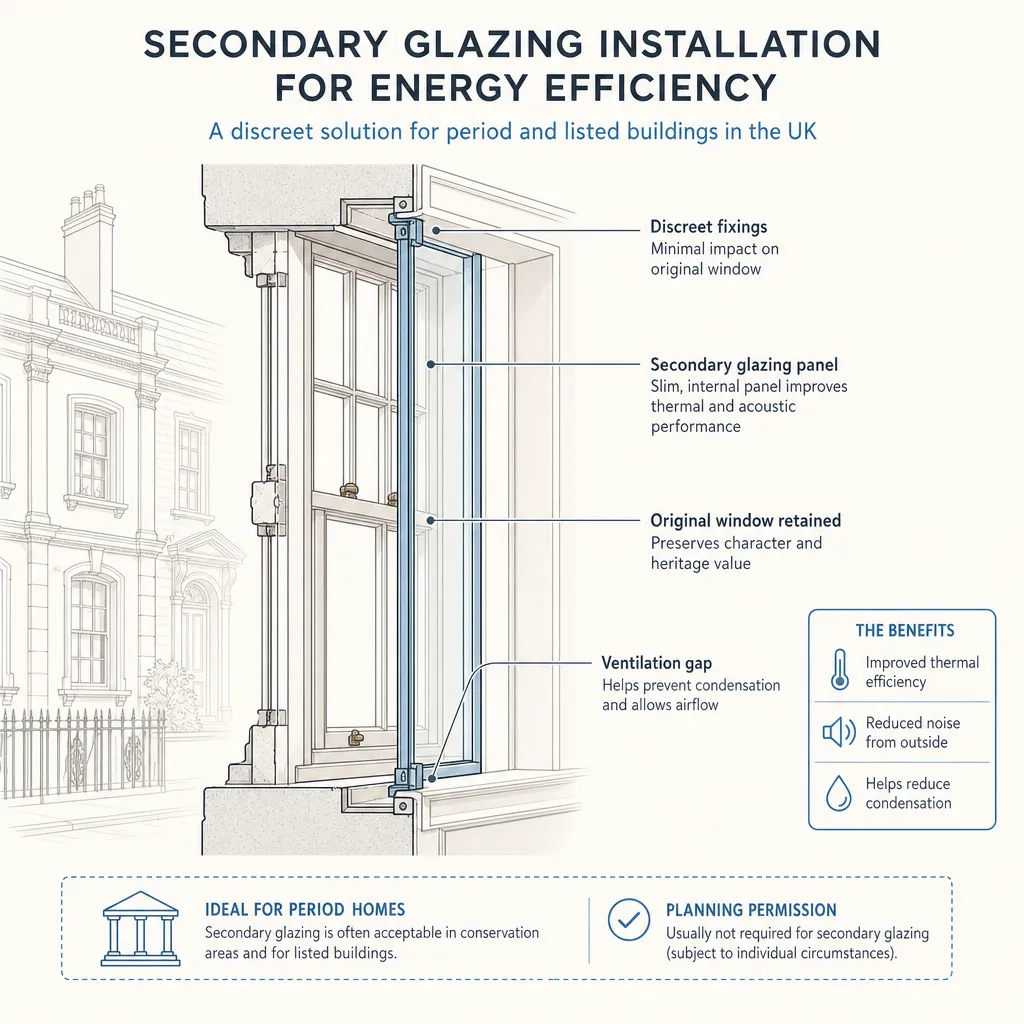
Secondary Glazing Installation for Energy Efficiency
Secondary glazing adds a separate inner pane to an existing window, improving thermal performance without replacing the original frame.
 Improvement & Build
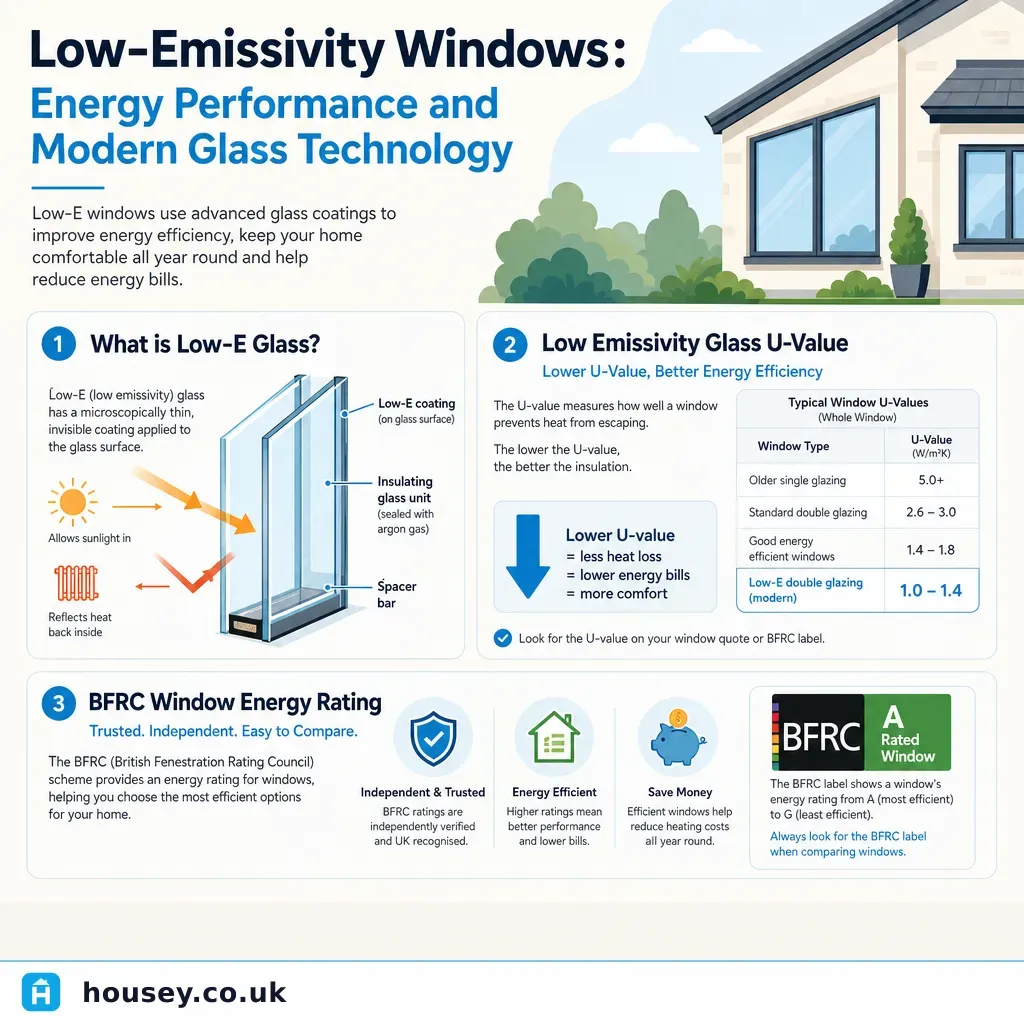
Low-Emissivity Windows: Energy Performance and Modern Glass Technology
Low-emissivity (low-E) glass has a microscopically thin metallic coating that reflects heat back into a room while allowing daylight through.
 Improvement & Build
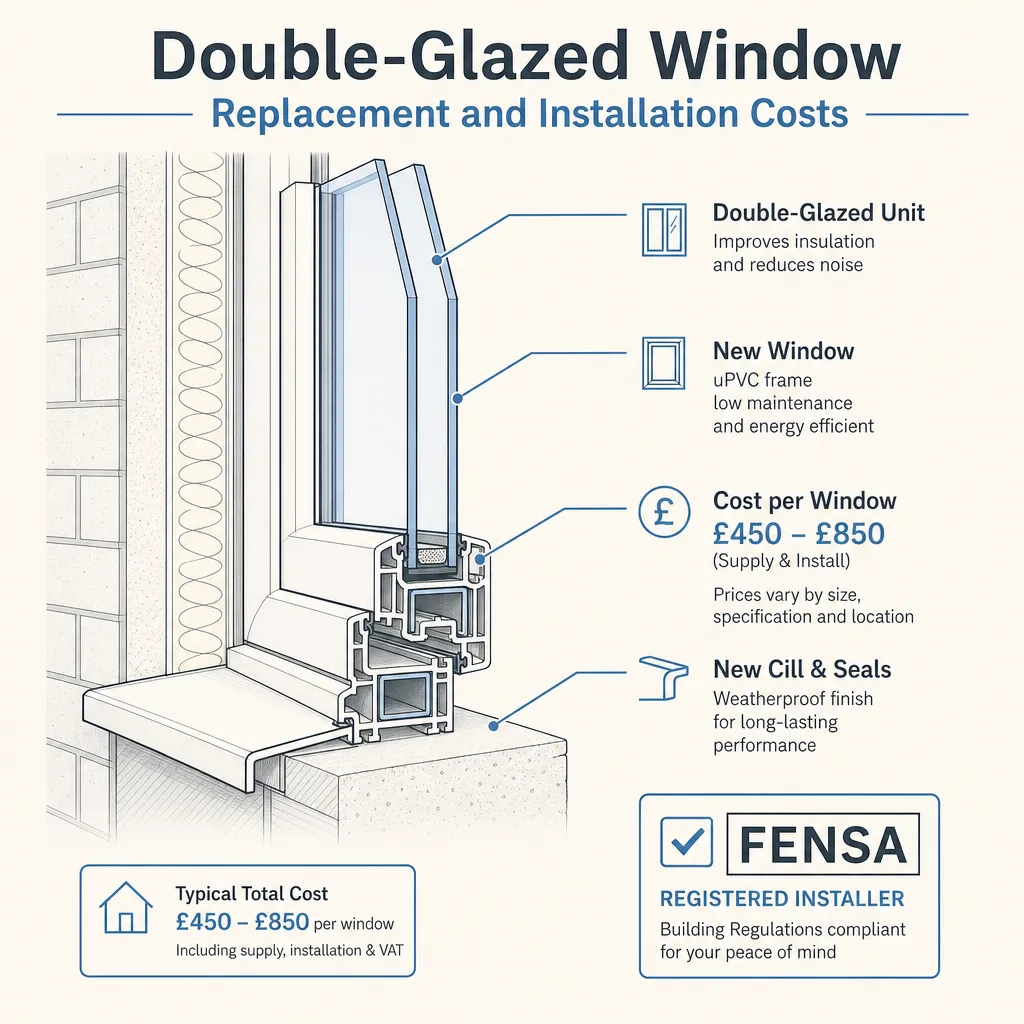
Double-Glazed Window Replacement and Installation Costs
Replacing double-glazed windows in a typical UK home costs roughly £300–£600 per uPVC casement window installed, rising to £500–£1,200 for timber and £400–£800 for aluminium.