Sustainable Roofing Solutions and Green Roof Systems
By Housey · Last reviewed 11th of May 2026
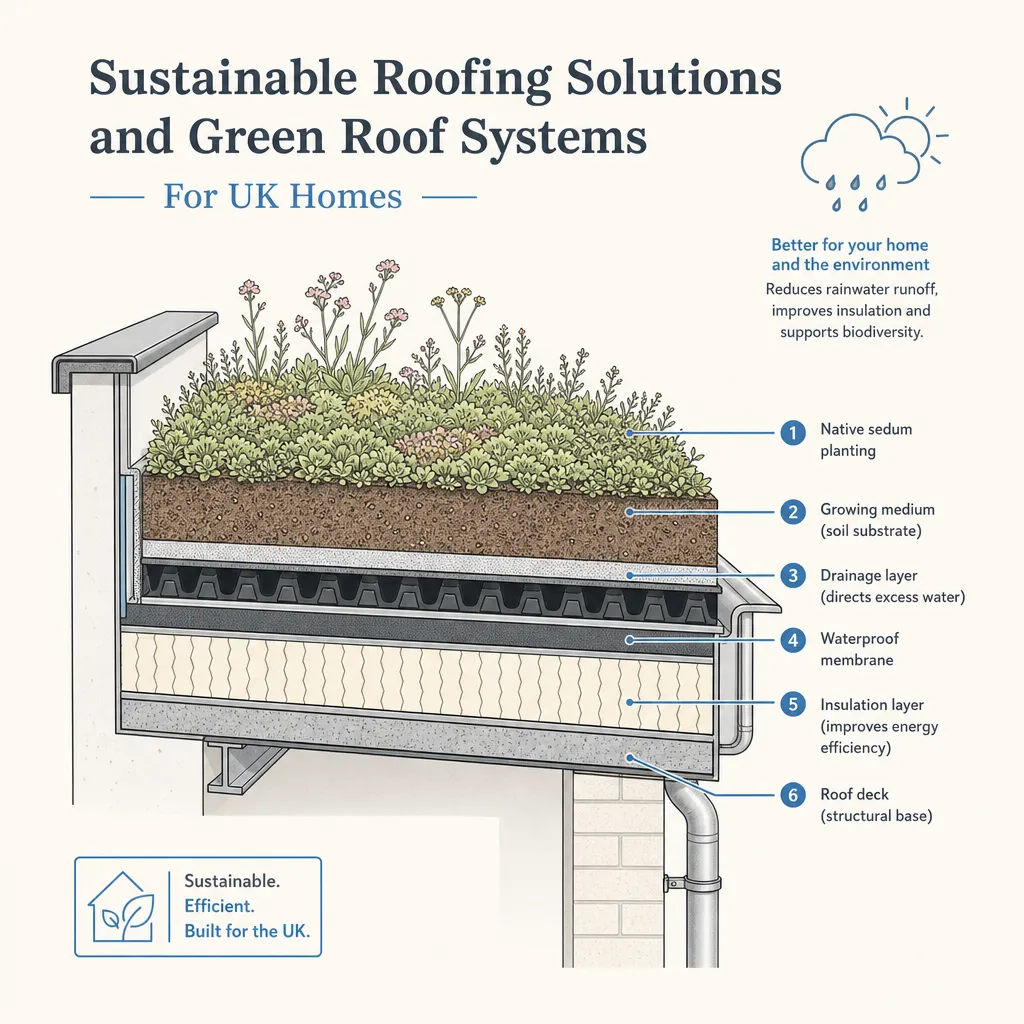
Sustainable Roofing Solutions and Green Roof Systems
Roofing decisions rarely feel urgent until something goes wrong — but for homeowners planning a replacement, extension, or new build in the UK, choosing a sustainable roofing system has become a meaningful part of the process. Planning authorities, energy assessors, and mortgage lenders are paying closer attention to embodied carbon, biodiversity net gain, and thermal performance, which has broadened the ecological roofing options now available and the expectations placed on new and replacement work. Understanding what each system involves, what your roof structure can carry, and how Building Regulations apply will help you brief a contractor confidently and avoid expensive retrofits later.
Key points
- Extensive green (sedum) roofs typically add 60–150 kg/m² when saturated; your roof structure must be assessed before installation under Building Regulations Part A (structural safety).
- Intensive green roofs — deeper substrate, shrubs or small trees — can exceed 300 kg/m² and almost always require structural engineering input before specification.
- Reclaimed slate and recycled-content tiles can satisfy Building Regulations Part L (conservation of fuel and power) when correctly specified; U-values must meet current Approved Document thresholds.
- Green roofs on listed buildings or in conservation areas may require listed building consent or conservation area consent — confirm with your local planning authority before any work is specified.
- The CIRIA Green Roof Code provides the UK industry standard for specification, installation, and ongoing maintenance of green roof systems.
What counts as sustainable roofing?
Sustainable roofing is not a single product — it covers materials, systems, and design approaches that reduce environmental impact, support biodiversity, or improve a building's energy performance. In the UK context, the main categories are:
System | How it works | Best for | Typical roof pitch | Structural consideration |
|---|---|---|---|---|
Extensive green roof (sedum/wildflower) | Shallow substrate (60–150 mm), drought-tolerant plants | Flat or low-pitch roofs, garages, extensions | 0°–15° (specialist systems up to 35°) | Moderate — structural check required |
Intensive green roof | Deep substrate (150–1,500 mm), lawn, shrubs, small trees | Large flat roofs | 0°–5° | High — structural engineer required |
Reclaimed natural slate | Salvaged Welsh or Cornish slate, re-graded and holed | Victorian and Edwardian pitched roofs | 25°–45° | Low — similar weight to new slate |
Recycled-content tiles | Clay, concrete, or composite tiles with recycled aggregate | Most pitched roofs | 15°–45° | Low–moderate |
Solar-integrated roofing | Photovoltaic tiles or in-roof panels replacing standard tiles | South-facing pitched roofs | 30°–50° | Low–moderate — check rafter loading |
Green roof and solar hybrid | Biodiverse substrate beneath elevated PV panels | Large flat or low-pitch roofs | 0°–10° | Moderate–high — combined load assessment needed |
Which system suits your property?
Decision tree: choosing a sustainable roofing approach
- Choose an extensive sedum or wildflower roof if you have a flat or low-pitch roof (garage, rear extension, or kitchen flat roof) and a structural assessment confirms the existing deck or joists can carry the saturated load.
- Choose reclaimed or recycled-content tiles if you have a conventional pitched roof and want to reduce embodied carbon without significantly altering the loading profile or the roofline's appearance.
- Consider solar-integrated roofing if your pitch is between 30° and 50°, faces broadly south (south-east to south-west), and you are already planning a full re-roof rather than a patch repair.
- Consult a structural engineer first if your property is pre-1920, has been altered, shows any sign of rafter deflection, or you are proposing an intensive green roof or a green roof and solar combination.
- Check with your local planning authority if your property is listed, in a conservation area, or subject to Article 4 directions, or if the proposed system would materially alter the appearance of a principal elevation.
Extensive green roofs: what installation involves
An extensive green roof for a typical single-storey extension consists of several layers: a root-resistant waterproofing membrane (usually EPDM or modified bitumen), a drainage layer, a filter fleece, a growing medium, and a pre-grown or plug-planted sedum or wildflower mat.
A qualified roofer will assess whether your existing flat roof deck is sound enough to carry the additional saturated weight before specifying the build-up. For new-build roofs, the structural engineer or architect designs the deck and joists to accommodate the system from the outset. The CIRIA Green Roof Code gives contractors and designers a framework for material selection, drainage design, and maintenance scheduling.
Maintenance requirements are lower than most homeowners expect. Established sedum roofs need clearing twice a year and occasional weeding. They do not require irrigation once established in a typical UK climate, though newly planted systems benefit from watering during the first dry summer.
Reclaimed and recycled-content roofing materials
Welsh slate from the Penrhyn, Ffestiniog, or Dinorwic quarries has been the benchmark UK roofing material for over 150 years. Reclaimed slate — recovered from demolitions and re-graded — can match the original appearance closely, which matters particularly for listed buildings and conservation areas where planning conditions often require a like-for-like replacement material.
Recycled-content tiles — clay or concrete — include products made with significant recycled aggregate content. Fibre-cement slates and synthetic slates can also incorporate recycled materials and offer good weather resistance. Some mortgage lenders and insurers, however, treat non-traditional materials differently from natural slate or clay. Check with your surveyor and insurer before specifying composite products, and confirm that your chosen product carries a suitable BBA certificate or equivalent.
Building Regulations and planning considerations
Any new or replacement roofing system in England must comply with Building Regulations:
- Part A (structural): the additional load must be calculated and the structure demonstrated to be adequate for the proposed build-up.
- Part L (energy efficiency): the roof assembly — including any growing medium — must achieve the required U-value set out in the relevant Approved Document. Current thresholds apply to both new and replacement roofs.
- Part C (moisture resistance): waterproofing must be appropriate for the build-up and pitch.
Planning permission is not usually required for re-roofing in the same or similar materials under permitted development rights. A change that materially alters the roof's appearance — for example, a visible green roof layer on a front elevation or a prominent solar tile installation — may require householder planning permission. If your property is in Wales or Scotland, different planning frameworks apply; check with the relevant planning authority before starting work.
Homeowner checklist before commissioning a sustainable roof
When to get professional help
Green roofing and sustainable roofing systems involve structural loading, waterproofing, and in some cases planning law — all areas where errors are expensive to rectify after the fact.
Seek professional input if:
- You are unsure whether your roof structure can safely carry additional weight.
- Your property is listed, in a conservation area, or subject to Article 4 directions.
- The existing roof deck or rafters show signs of deflection, rot, or water damage.
- You are combining a green roof with solar panels, which creates a combined load.
- Your flat roof is over habitable space rather than a detached garage or outbuilding.
- You have received conflicting advice from contractors about what the existing structure can carry.
How Housey can help
A qualified roofer can assess whether your existing roof is a suitable candidate for a sustainable system and specify the right build-up for your property type. Use Housey to find experienced local roofers for sustainable and green roof projects, or arrange a roof survey to get an independent assessment of your existing structure before committing to any specification. If you are combining sustainable roofing with photovoltaics, a solar survey will confirm whether your orientation and pitch make the project viable.
Frequently asked questions
Does a green roof need planning permission?
Re-roofing in a similar material usually falls under permitted development, so a sedum or wildflower roof on a rear flat extension typically does not need planning permission. However, if the property is listed, in a conservation area, or if the green roof significantly alters a principal elevation, permission may be required. Always check with your local planning authority before starting work.
How much extra weight does a sedum roof add?
An extensive sedum or wildflower green roof typically adds between 60 and 150 kg/m² when the growing medium is saturated after heavy rain. The exact figure depends on substrate depth and composition. A structural assessment should confirm that your existing deck or floor joists can safely accommodate this load before any installation proceeds.
Are green roofs covered by Building Regulations?
Yes. Any new or replacement roof must comply with Building Regulations, including Part A (structure), Part L (energy efficiency), and Part C (moisture resistance). A competent contractor should confirm that the proposed build-up meets current Approved Document thresholds and that the waterproofing and drainage are appropriate for the pitch and substrate depth.
Can I add a green roof to my existing house extension?
Often yes, if the extension has a flat or low-pitch deck with adequate structural capacity. Many single-storey extensions carry some additional imposed load, but this cannot be assumed without a check. If the extension was built in the last 10–15 years, the original structural drawings may show design loads; a structural engineer can confirm whether a green roof is feasible.
Sources and further reading
- CIRIA Green Roof Code — CIRIA
- Building Regulations Approved Document A (Structure) — GOV.UK
- Building Regulations Approved Document L (Energy Efficiency) — GOV.UK
- Roof and loft insulation guidance — Energy Saving Trust
- Green infrastructure planning guidance — GOV.UK
Useful next reads
 Improvement & Build
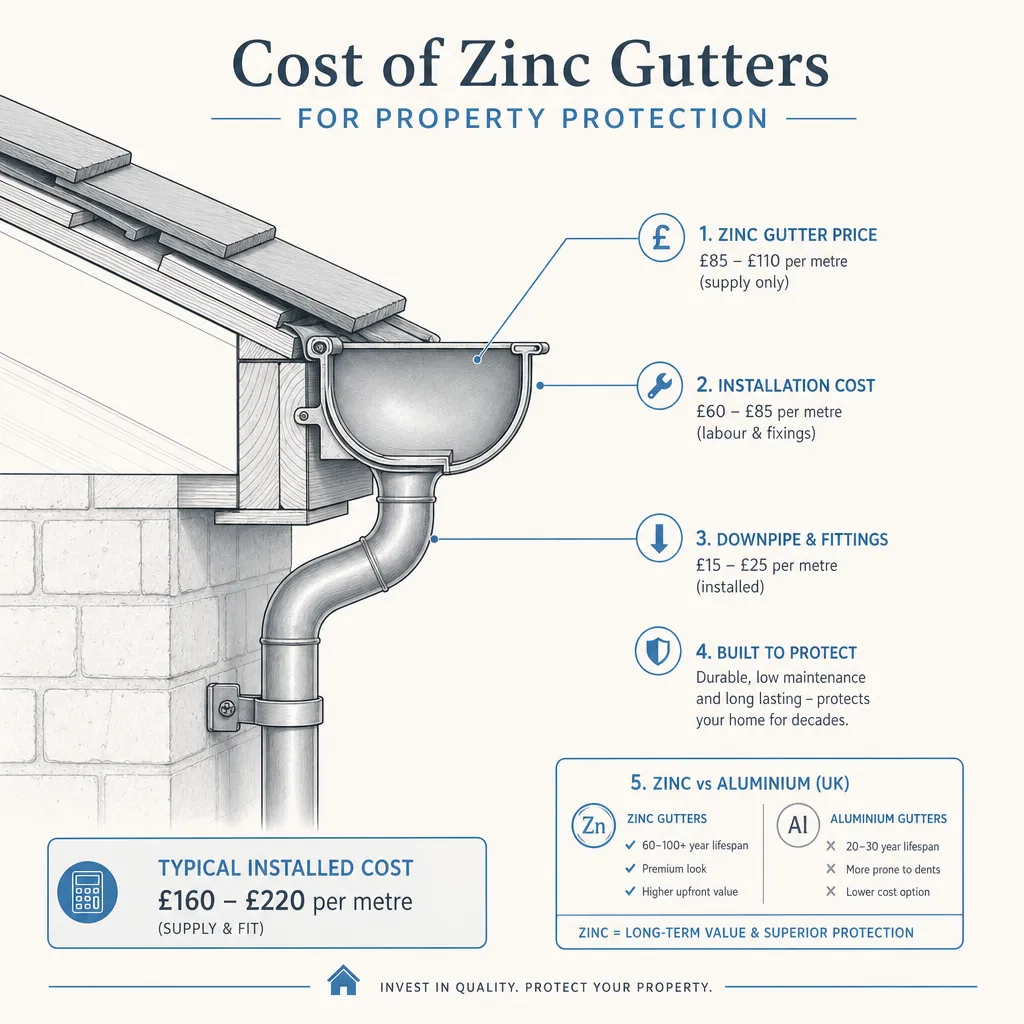
Cost of Zinc Gutters for Property Protection
Zinc gutters cost around £60–£120 per metre installed in the UK, depending on profile complexity, property type, and scaffolding requirements.
 Improvement & Build
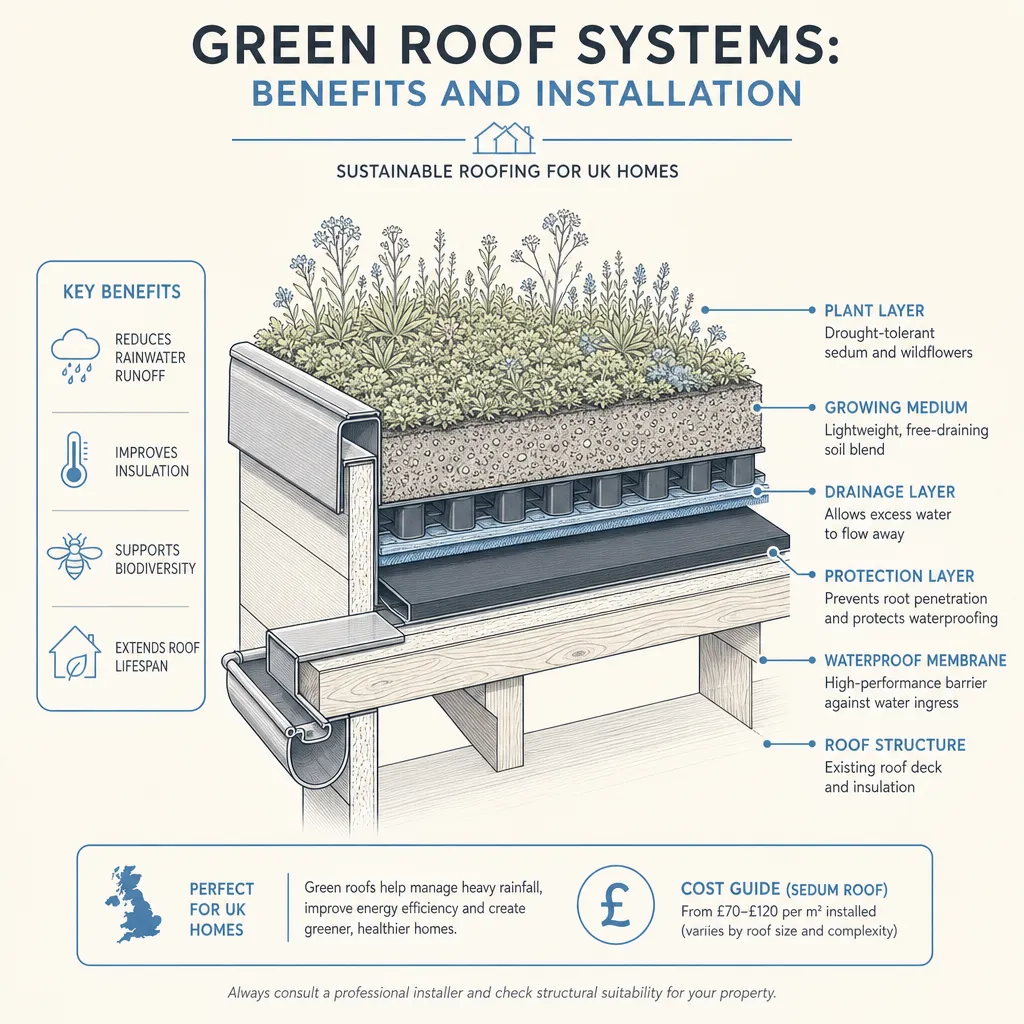
Green Roof Systems: Benefits and Installation
Green roof systems come in three main types: extensive (shallow sedum or wildflower planting, lightweight at 60–150 kg/m² when saturated), semi-intensive, and intensive (deeper substrate, suited to roof gardens).
 Improvement & Build
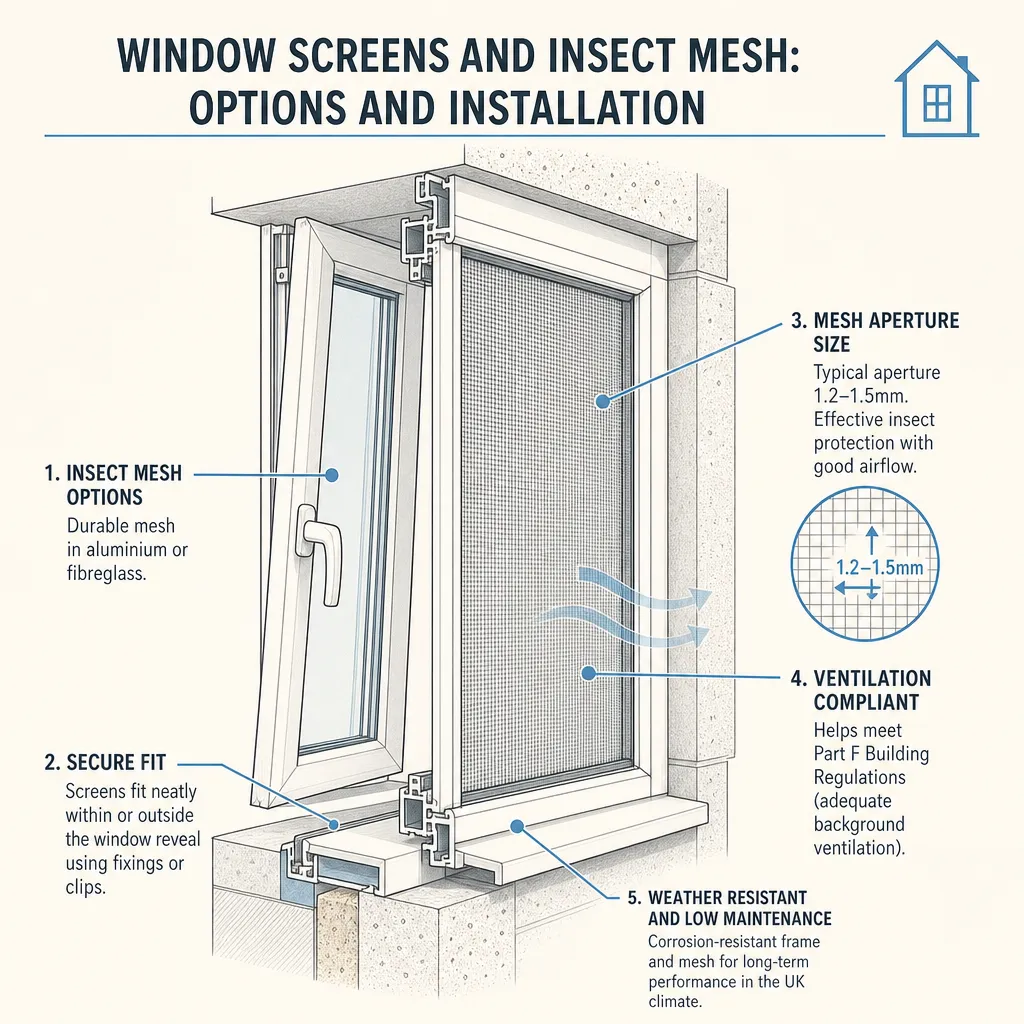
Window Screens and Insect Mesh: Options and Installation
UK window screens fall into four main types: fixed frame, roller retractable, pleated folding, and magnetic snap-fit.
 Improvement & Build
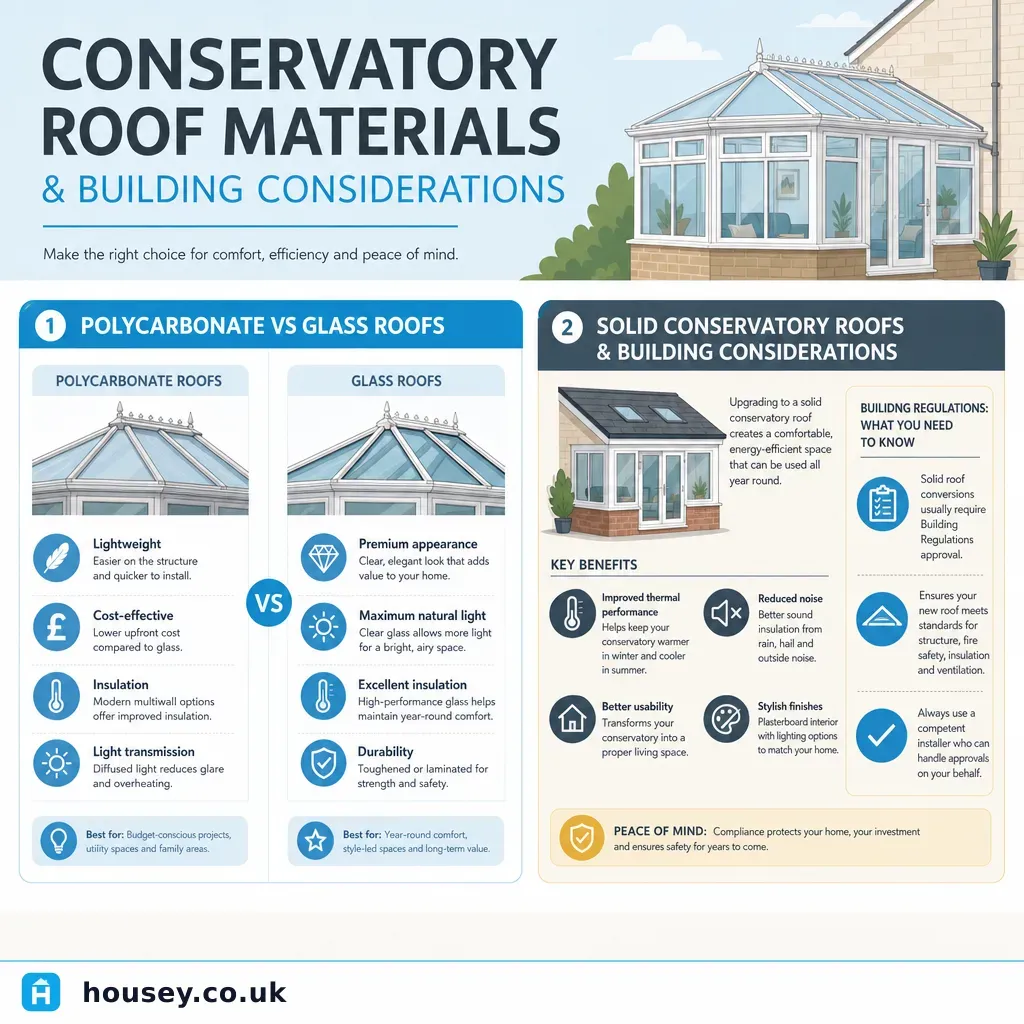
Conservatory Roof Materials and Building Considerations
The main conservatory roof materials are polycarbonate, glass, and solid insulated panels.
 Improvement & Build
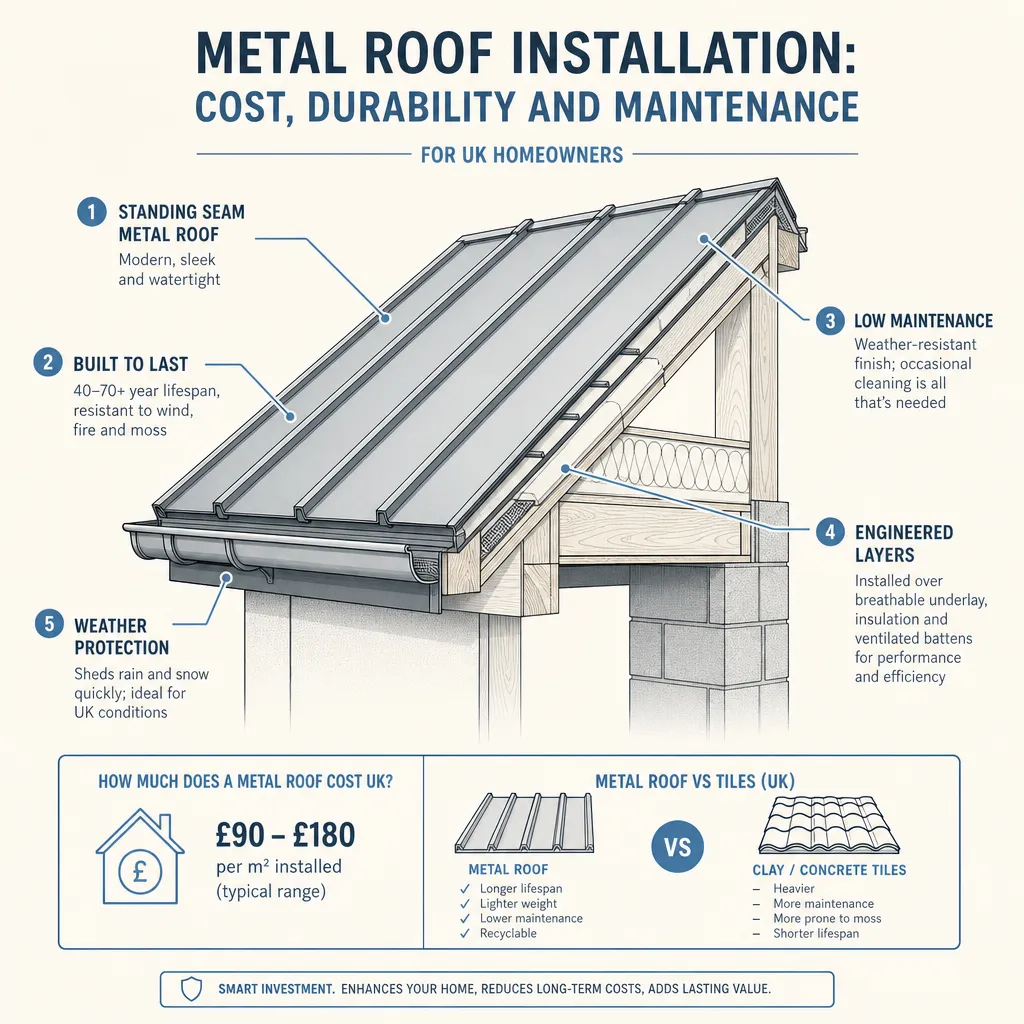
Metal Roof Installation: Cost, Durability and Maintenance
Metal roof installation in the UK typically costs £80–£250 per square metre installed, depending on material and complexity.