Considerations for Construction Projects Near Trees
By Housey · Last reviewed 19th of May 2026
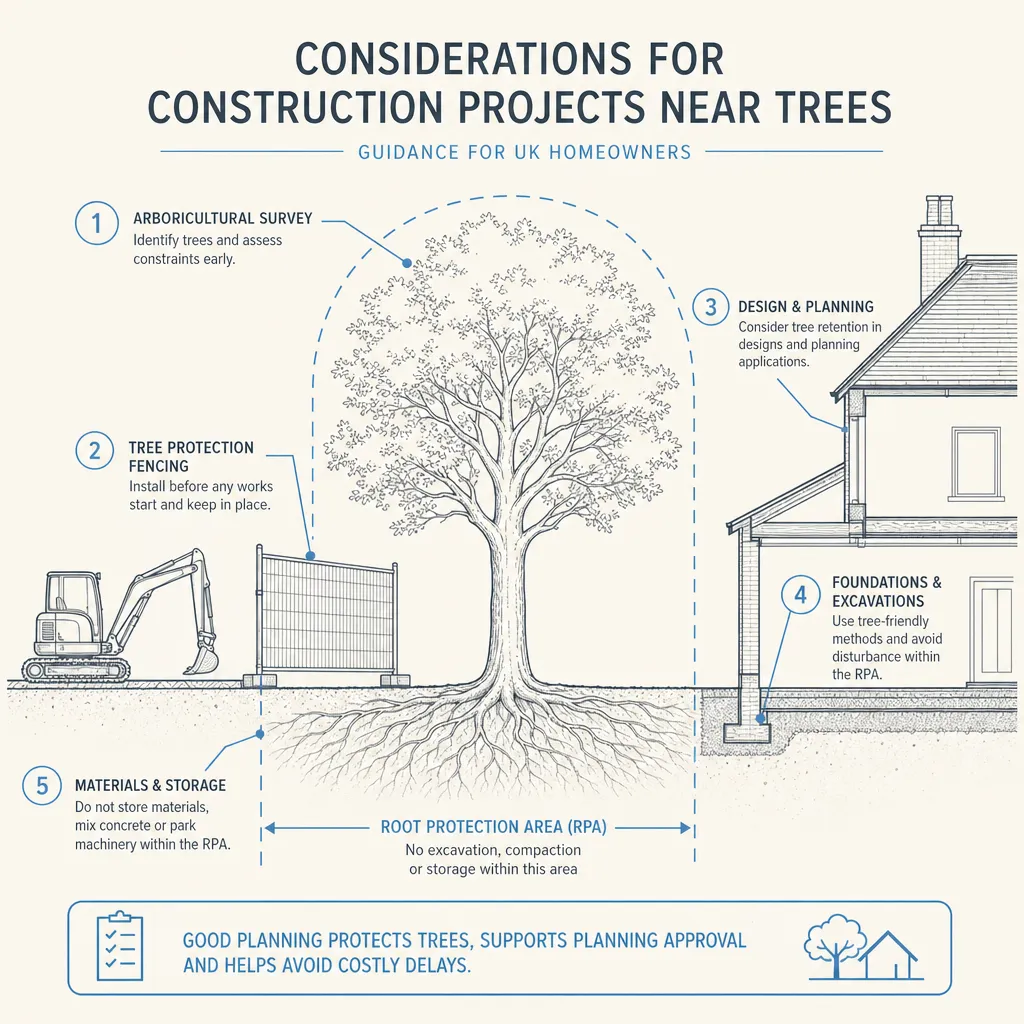
Considerations for Construction Projects Near Trees
Planning or carrying out construction near established trees is one of the more technically complex aspects of residential development in the UK. The issue most often arises when a homeowner applies for an extension, new outbuilding, or landscaping project — only to discover that a nearby tree is protected, or that the local planning authority (LPA) requires an arboricultural report before it will determine the application. Getting tree-related requirements right before submitting plans avoids costly delays, redesigns, and potential enforcement action.
Key points
- BS 5837:2012 Trees in Relation to Design, Demolition and Construction is the British Standard most LPAs require to be followed when preparing an Arboricultural Impact Assessment (AIA) or Arboricultural Method Statement (AMS).
- Root Protection Areas (RPAs) are calculated under BS 5837:2012 as a radius equal to 12 times the stem diameter measured at 1.2 m above ground — construction within an RPA without approved mitigation can cause irreversible root damage.
- Tree Preservation Orders (TPOs) are made under the Town and Country Planning Act 1990; unauthorised work on a TPO tree carries a fine of up to £20,000, or an unlimited fine for trees in a conservation area.
- Trees in conservation areas without a TPO require six weeks' written notice to the LPA under Section 211 of the Town and Country Planning Act 1990 before any works can start.
- Construction-related tree damage is often irreversible — soil compaction from machinery can kill a tree within two to three growing seasons even if no roots are visibly severed.
Why trees create constraints for construction
Trees affect construction projects in several ways that are not always obvious at the outset.
Root systems extend far beyond the visible canopy. Structural roots of a mature oak, for example, may spread 15–20 m from the trunk. Construction within this zone — whether excavation, trenching, or driving machinery over the ground — can sever or compact roots, affecting the tree's long-term stability and health.
Canopy spread and species classification affect what the LPA will approve near a protected tree. Under BS 5837:2012, trees are categorised as Class A (high quality, long life expectancy), Class B (moderate quality), or Class C (low quality, limited lifespan). Class A and B trees are those the LPA will typically prioritise for retention; Class C trees may be removable with consent.
Clay shrinkage is a separate but related concern. Large clay-shrinkage species such as oak, poplar, and willow growing near foundations can cause subsidence, particularly in the shrinkable clay soils found across much of southern England. A structural engineer or RICS-qualified surveyor should assess this risk independently of any planning or arboricultural assessment.
When do you need an arboricultural assessment?
A planning application that could affect trees will usually require one or more of the following documents. The table below sets out when each is needed and who is qualified to prepare it.
Document | When required | Who prepares it |
|---|---|---|
Tree Survey (BS 5837:2012) | Any planning application near existing trees | Arboricultural consultant (qualified arborist) |
Arboricultural Impact Assessment (AIA) | When proposed works fall within or near Root Protection Areas | Arboricultural consultant |
Arboricultural Method Statement (AMS) | Where tree protection measures are needed during construction | Arboricultural consultant |
Tree Protection Plan (TPP) | As a condition of planning approval, to show physical protection on site | Arboricultural consultant in liaison with project architect |
Ecological survey | Where trees may support bats, nesting birds, or other protected species | Qualified ecologist |
The LPA can request any of these as a pre-application requirement or as a planning condition. Failing to provide required documents is a common cause of planning delays or refusals on tree-sensitive sites.
Decision tree: which situation applies to you?
- Is the tree subject to a TPO? Check with your LPA or search the local authority's online TPO register. If yes, you need consent before carrying out any works to that tree — and your planning application must demonstrate how the tree will be protected throughout construction.
- Is the property in a conservation area? If yes, all trees with a trunk diameter over 75 mm (measured at 1.5 m from ground) are protected under Section 211 — submit written notice to the LPA and wait six weeks before starting any works.
- Is the tree within or near your proposed construction zone? If yes, commission a BS 5837:2012 tree survey before drawing up architectural plans. Designing around the RPA from the outset avoids costly redesigns after a planning refusal.
- Are there trees on neighbouring land near your site boundary? The same principles apply — you remain responsible for avoiding damage to neighbouring trees, and the LPA may still require an AIA.
- Do any trees show signs of bat roosting or active bird nesting? Seek an ecological survey before felling or pruning. Disturbing nesting birds is an offence under the Wildlife and Countryside Act 1981; bats are protected under the Conservation of Habitats and Species Regulations 2017.
- Are you unsure of your obligations? Commission an arboricultural survey before approaching the LPA — a qualified consultant can advise on the likely planning requirements for your specific site.
Red flags that need immediate professional advice
- A tree has been recently felled or significantly damaged on a site you are purchasing — establish whether a TPO existed before exchange of contracts.
- The LPA has issued an enforcement notice relating to trees on your property.
- Structural cracking has appeared near large trees on clay soils — this may indicate root-related subsidence requiring an engineering assessment rather than a tree survey alone.
- A planning condition requires a Tree Protection Plan to be agreed before works commence — proceeding without it may jeopardise your building control sign-off.
- Trees on neighbouring land overhang or root into your site — removing roots or branches without proper advice can expose you to civil liability and may breach planning conditions.
- Works have already started on site before a required arboricultural method statement was agreed with the LPA.
Important limitations
This article provides general information only. Tree law, planning policy, and the condition of specific trees vary significantly by location, species, and property history. The Town and Country Planning Act 1990, BS 5837:2012, the Wildlife and Countryside Act 1981, and the Conservation of Habitats and Species Regulations 2017 are subject to amendment and interpretation. Always check current legislation and consult a qualified arboricultural consultant and your local planning authority before proceeding with any works near trees. Rules can differ between local authorities and may be affected by the property's planning history.
What to ask a qualified professional
Before instructing an arboricultural consultant or planning consultant, ask:
- Are you a member of the Arboricultural Association and do you hold appropriate professional indemnity insurance?
- Which documents will the LPA require for my specific application, and will you liaise with the authority on my behalf?
- What BS 5837:2012 category are the affected trees likely to receive, and what does that mean for my project layout?
- What tree protection measures will be needed during construction, and how will compliance be monitored on site?
- Are there any protected species — bats, nesting birds — associated with these trees that require a separate ecological survey?
- If a tree must be removed, what are the LPA's likely replanting requirements and how will this affect the project programme?
When to get professional help
Professional advice from a qualified arboricultural consultant is most valuable at the earliest stage of any project near trees — before you commission architectural drawings. Designing around Root Protection Areas from the outset is far less costly than redesigning after a planning refusal. Seek immediate professional guidance if:
- A TPO is discovered on trees already affected by preparatory site works.
- Your planning application has been refused or conditioned on grounds relating to trees.
- Trees near proposed works show visible signs of structural instability — leaning, crown die-back, or fungal brackets at the base.
- You are purchasing a property where prior development may have damaged protected trees.
How Housey can help
Housey connects you with qualified professionals to help navigate tree-related planning constraints. Whether you need a BS 5837:2012 arboricultural survey to support a planning application, specialist planning consultancy to manage the process with the LPA, or an ecological survey to check for bats and nesting birds, you can request quotes from vetted local specialists through Housey.
Frequently asked questions
Can I cut down a tree in my garden without permission?
Only if the tree is not subject to a Tree Preservation Order and the property is not in a conservation area. If either applies, you must obtain consent from the LPA first. Even where no TPO exists, trees over 75 mm trunk diameter in conservation areas require six weeks' written notice to the LPA under Section 211 of the Town and Country Planning Act 1990.
What is a Root Protection Area and why does it matter?
A Root Protection Area (RPA) is a zone calculated under BS 5837:2012 as a circle with a radius of 12 times the trunk diameter at breast height. Construction within this zone — including excavation, soil compaction, and storage of materials — can damage or kill the tree. Planning authorities typically require proposed development to remain outside the RPA or to use approved mitigation measures.
Do I need planning permission to build an extension near a TPO tree?
Planning permission for an extension and TPO consent are separate decisions. If your extension requires planning permission and falls near a TPO tree, the LPA will usually require an arboricultural impact assessment with the application. You may also need separate consent from the LPA to prune or work on the TPO tree itself, regardless of the extension outcome.
What happens if I damage a protected tree during construction?
Unauthorised damage to a TPO tree is a criminal offence under the Town and Country Planning Act 1990, carrying fines of up to £20,000, or an unlimited fine if the tree is in a conservation area. The LPA can also require replanting of equivalent trees. Civil liability to neighbouring landowners may also arise if their protected trees are damaged.
Sources and further reading
- Tree Preservation Orders and trees in conservation areas — GOV.UK
- BS 5837:2012 Trees in relation to design, demolition and construction — BSI Group
- Wildlife and Countryside Act 1981 — legislation.gov.uk
- Conservation of Habitats and Species Regulations 2017 — legislation.gov.uk
- Arboricultural Association — Find a Consultant — Arboricultural Association
Useful next reads
 Planning & Pre-Build
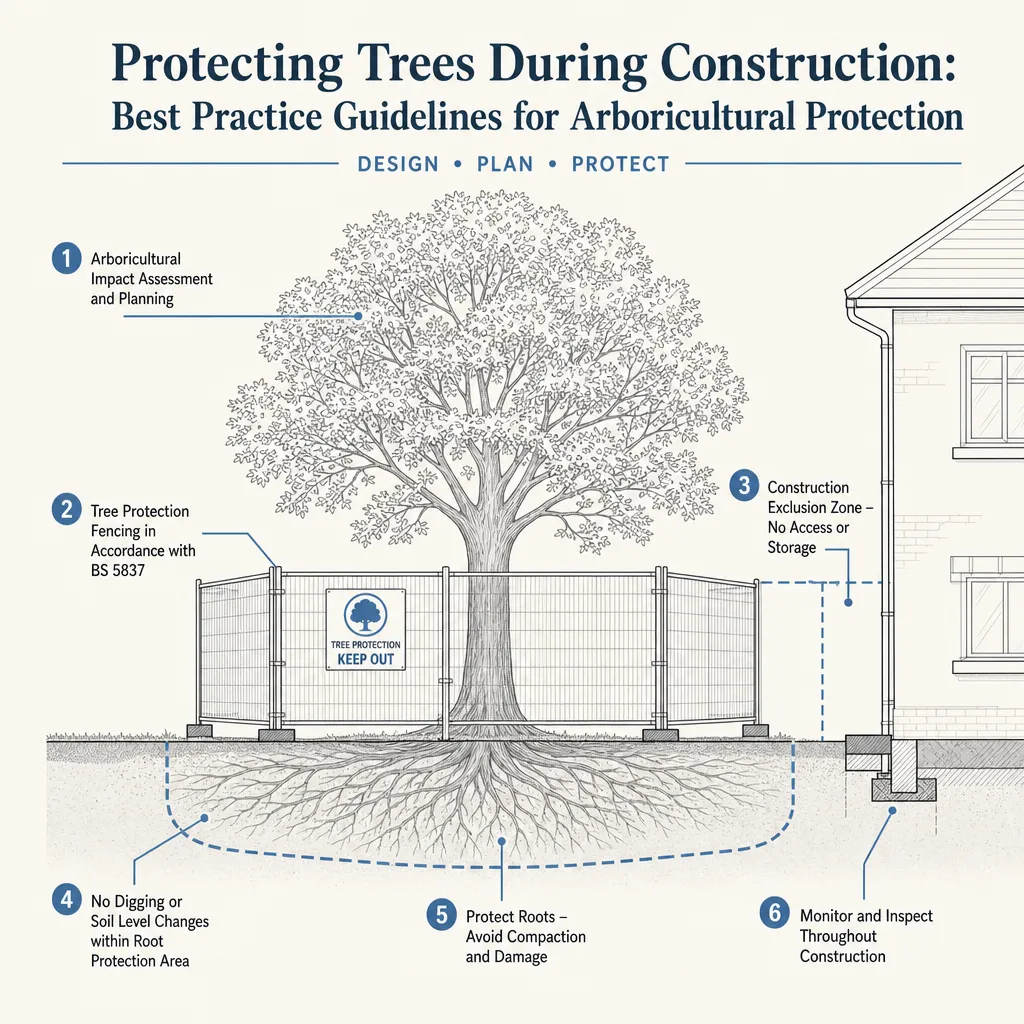
Protecting Trees During Construction: Best Practice Guidelines for Arboricultural Protection
Protecting trees on or near a construction site requires establishing Tree Protection Zones to BS 5837:2012 before any work starts.
 Planning & Pre-Build
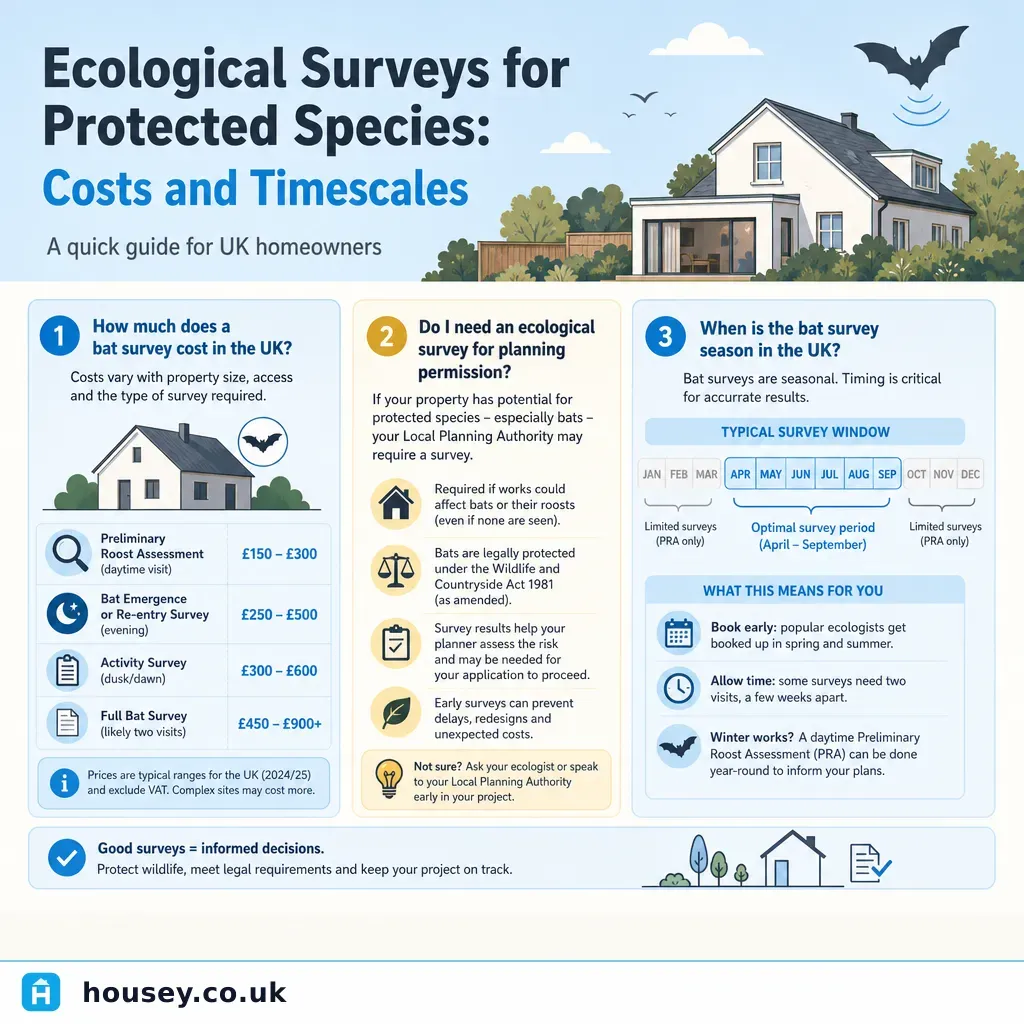
Ecological Surveys for Protected Species: Costs and Timescales
An ecological survey is required when a planning application could affect protected species or habitats — common triggers include demolishing or altering buildings, removing trees or hedgerows, and works near water.
 Planning & Pre-Build
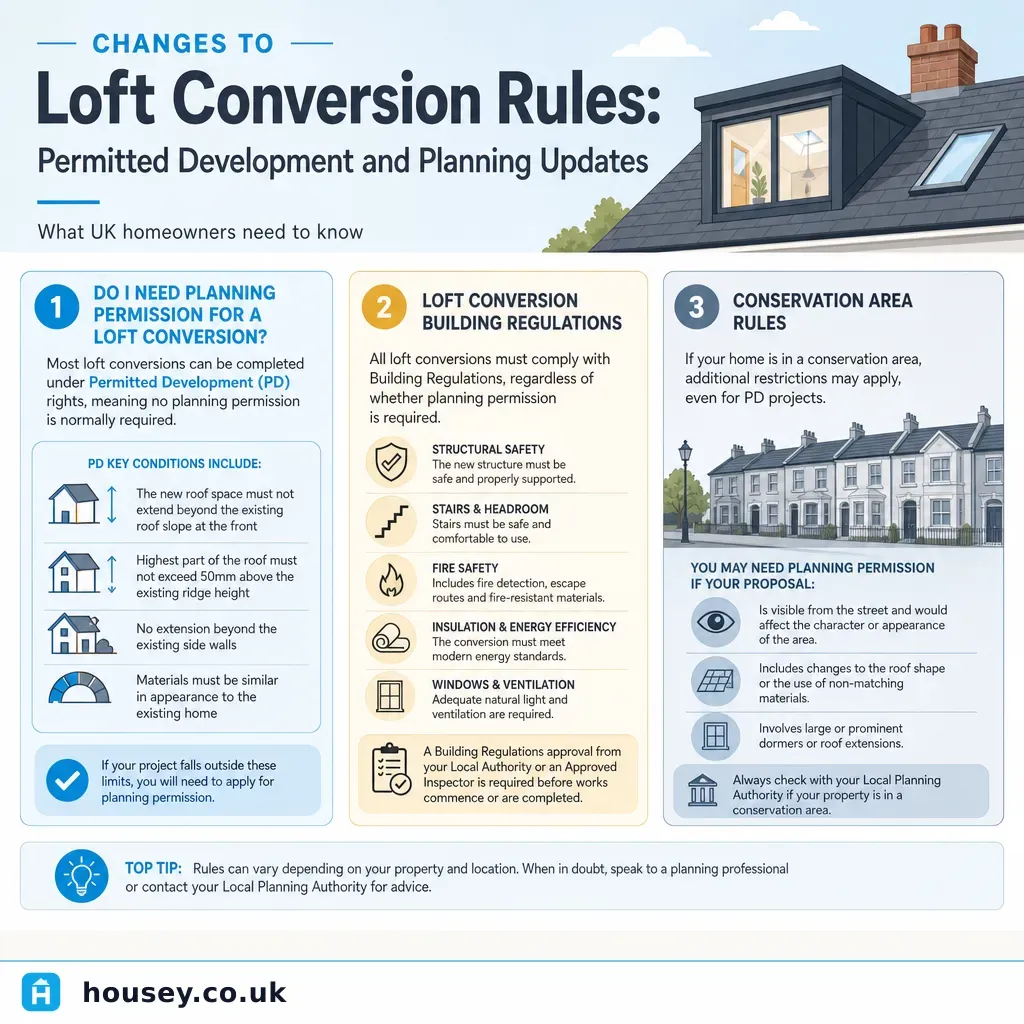
Changes to Loft Conversion Rules: Permitted Development and Planning Updates
In England, most loft conversions on standard houses qualify as Permitted Development under Class B of the GPDO 2015, allowing up to 40 cubic metres (terraced) or 50 cubic metres (detached or semi-detached) without a planning application — if conditions are met.
 Planning & Pre-Build
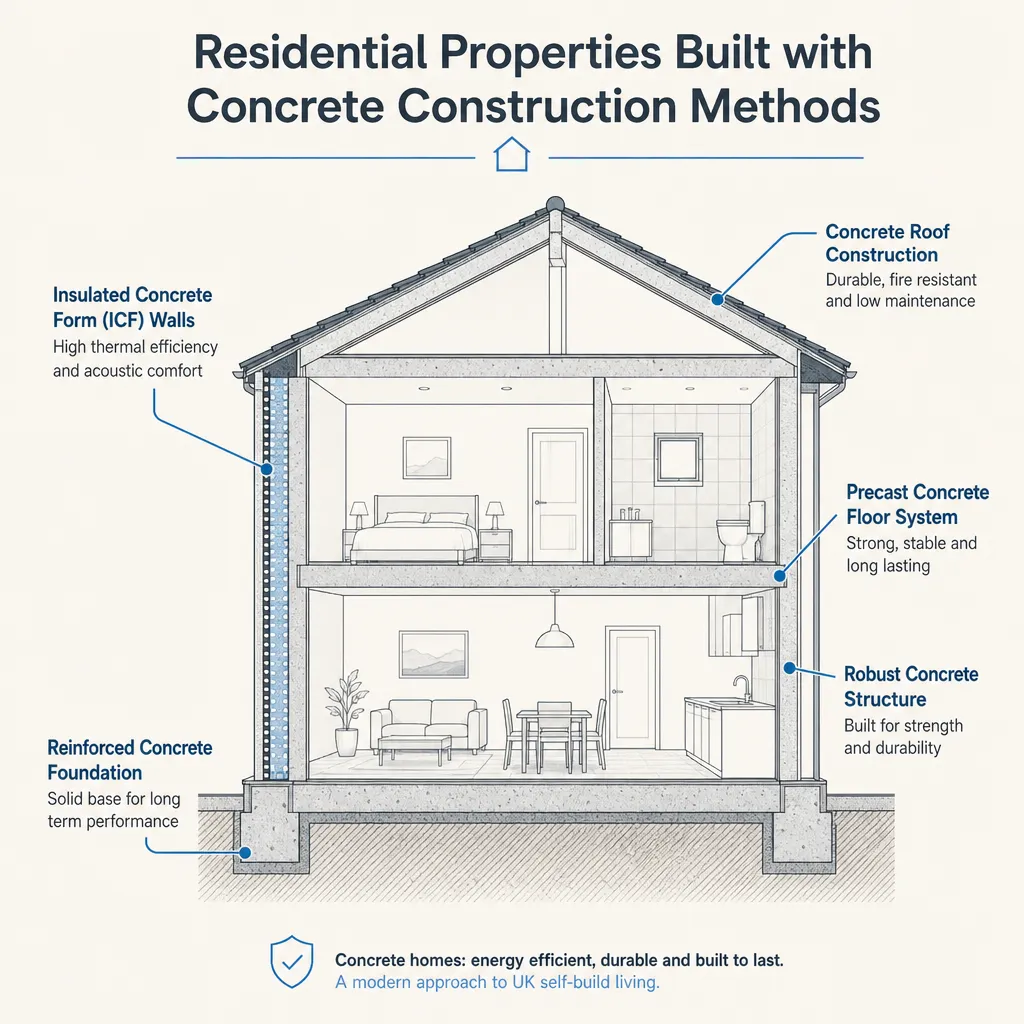
Residential Properties Built with Concrete Construction Methods
UK homes are built using several concrete methods: in-situ cast concrete, precast panel systems, insulating concrete formwork (ICF), and older non-traditional types such as Wimpey No-Fines and Laing Easiform.
 Planning & Pre-Build
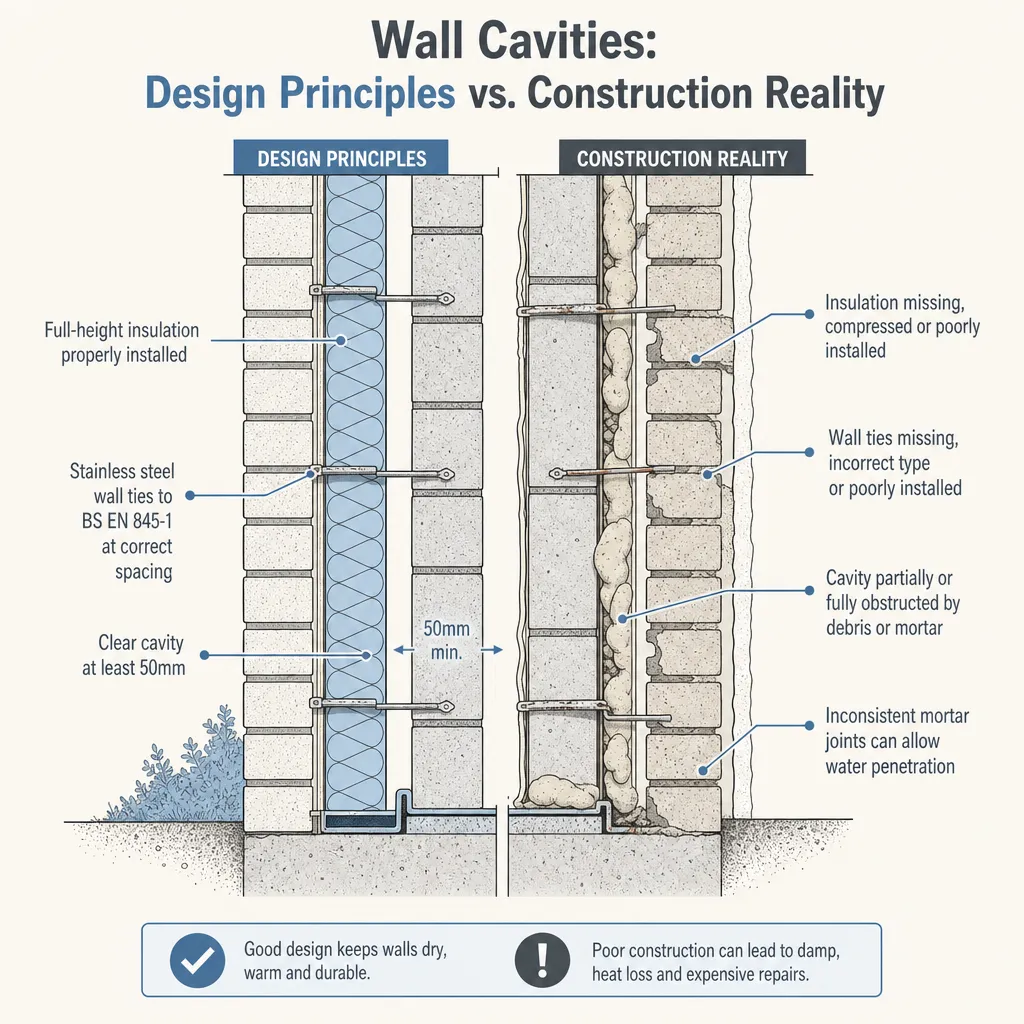
Wall Cavities: Design Principles vs. Construction Reality
A UK cavity wall is designed to resist weather, control heat loss, and structurally link two masonry leaves.