Wall Thickness Ratios: Designing Structurally Sound Walls
By Housey · Last reviewed 25th of May 2026
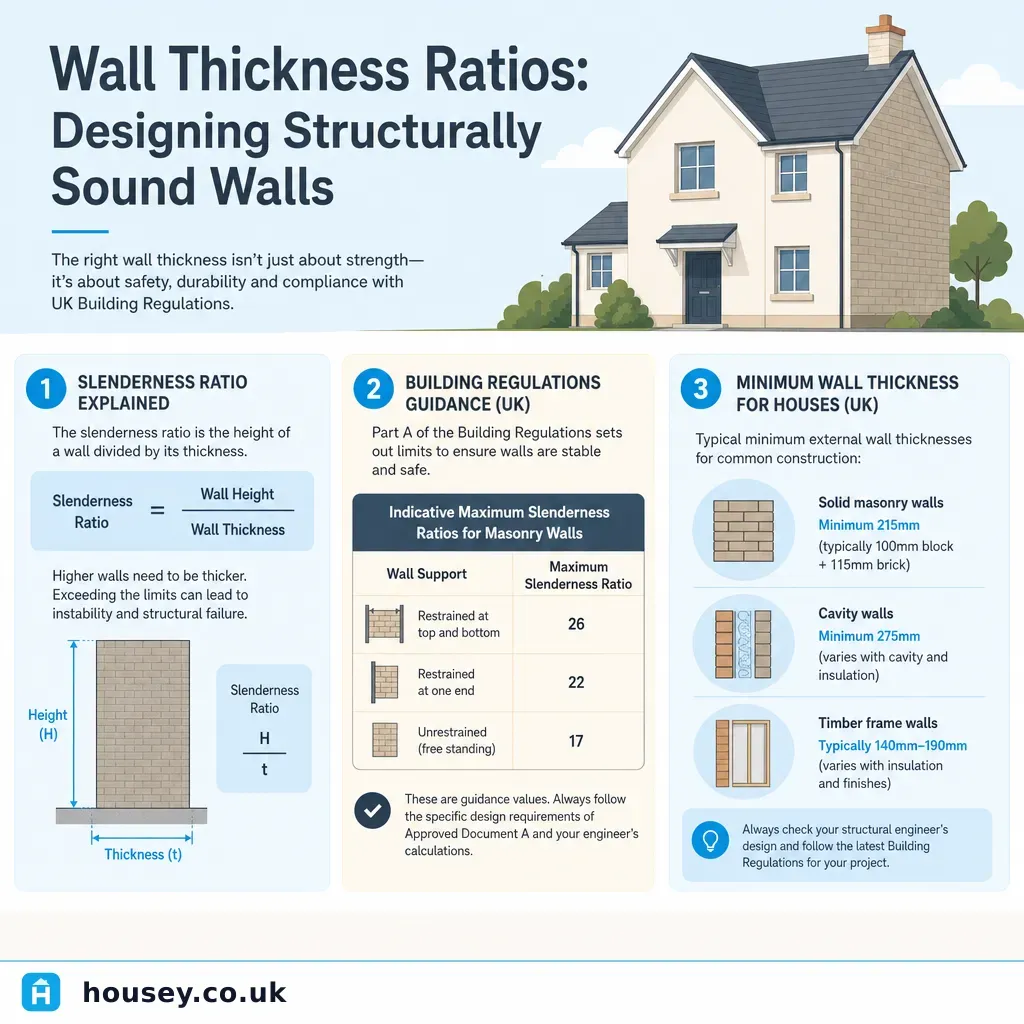
Wall Thickness Ratios: Designing Structurally Sound Walls
When planning a new build, extension, or significant structural alteration, wall thickness is rarely a single number — it is the outcome of calculations that balance load, height, material, and restraint conditions. Architects, structural engineers, and building control officers all scrutinise wall thickness ratios at the design stage because a wall that is too slender for its load can buckle or collapse under eccentric loading. Understanding the key principles helps homeowners and self-builders ask better questions, interpret an engineer's report, and avoid costly redesigns after a building regulations submission.
Key points
- The slenderness ratio (effective height ÷ effective thickness) is the primary check for wall stability; Eurocode 6 (BS EN 1996-1-1) and its UK National Annex typically limit this to a maximum of 27 for unreinforced masonry.
- Building Regulations Approved Document A (Structure) includes simplified wall-thickness tables for standard residential buildings — but these apply only within specific dimensional and loading limits; projects outside those limits require full structural calculations.
- Effective height is not the same as actual clear height — it depends on how the wall is restrained at its top and base (for example, whether it is tied into a concrete floor slab or a timber ring beam).
- Effective thickness for a cavity wall is derived using a Eurocode 6 formula that combines both leaf thicknesses — it is not the sum, and the cavity itself does not add structural stiffness.
- Masonry design in the UK is now governed by BS EN 1996-1-1 (Eurocode 6), which replaced the earlier BS 5628 — any design guidance pre-dating 2010 should be checked against current provisions and the UK National Annex.
What is a slenderness ratio and why does it matter?
A slenderness ratio compares a wall's effective height to its effective thickness. A very tall, thin wall behaves like a column under eccentric load — rather than compressing evenly, it tends to bow and buckle laterally. The higher the slenderness ratio, the less vertical load the wall can safely resist.
For unreinforced masonry, Eurocode 6 Table NA.1 in the UK National Annex sets the maximum slenderness ratio at 27 in most residential cases. Exceeding this means the wall, as designed, is unsuitable for the loads applied — requiring one or more of: greater thickness, reduced unsupported height, additional lateral restraints (piers, returns, or tied floors), or a change to a different structural system.
The slenderness ratio is calculated as:
Slenderness Ratio = Effective Height (h_ef) ÷ Effective Thickness (t_ef)
Effective height (h_ef) is derived from the actual clear height, modified by a reduction factor that reflects the degree of end restraint:
- Restrained at both ends (between concrete slabs or tied floors): h_ef ≈ 0.75 × clear height
- Restrained at one end only: h_ef ≈ 1.0 × clear height
- Free-standing (unrestrained at the top): h_ef ≈ 2.0 × clear height
Effective thickness (t_ef) for a solid wall equals the actual thickness. For a cavity wall, Eurocode 6 Clause 5.5.1.3 gives a formula based on the cube root of the sum of cubed individual leaf thicknesses, typically producing a value lower than the sum of both leaves.
How Building Regulations Approved Document A applies
For straightforward domestic buildings, Approved Document A Section 2C sets out simplified guidance — with tables and rules — that removes the need for full structural calculations, provided the building falls within prescribed limits:
- Houses up to three storeys in height
- Walls within specified storey-height limits (typically up to 2.7 m clear height per storey)
- Roof and floor loads within assumed ranges
- Ground conditions within standard bearing-capacity assumptions
Key thresholds from the simplified rules (reference figures — confirm against current guidance and with your structural engineer):
- External cavity walls: minimum 90 mm inner leaf, minimum 90 mm outer leaf, cavity 50–100 mm
- Single-leaf solid walls in small buildings: minimum 190 mm, subject to height-to-thickness ratio limits
- Internal load-bearing walls in masonry construction: minimum 90 mm blockwork (single leaf), subject to storey height and loading limits
If your project falls outside these limits — a tall gable wall, an open-plan ground floor with heavy first-floor loading, or a basement retaining wall — a structural engineer must produce bespoke calculations.
Wall type comparison: thickness and slenderness considerations
Wall type | Typical overall thickness | Slenderness ratio notes | Common UK application |
|---|---|---|---|
Standard cavity wall (brick outer / block inner) | 260–300 mm | Effective thickness calculated from both leaves; typically 112–130 mm equivalent | New-build houses, extensions |
Solid brick wall | 102.5 mm (½ brick), 215 mm (1 brick) | Full thickness used; ½-brick walls have tight height limits | Pre-1920 terraces, garden walls |
Timber frame (structural) | 89–140 mm stud + sheathing | Governed by BS EN 1995-1-1 (Eurocode 5); different methodology | Modern new builds, kit houses |
Insulated concrete formwork (ICF) | 250–350 mm overall | Reinforced concrete core; calculated as RC wall, not masonry | Self-build, high-performance homes |
Single-leaf blockwork (internal) | 100–140 mm | Height and load limits apply; intermediate floor restraint often required | Internal load-bearing partitions |
Which specification approach should you use?
- Choose Approved Document A simplified rules if your project is a standard house or single-storey extension within all the dimensional and loading limits in Section 2C.
- Commission full structural calculations if the wall is taller than the simplified limits, carries point loads from steel beams, spans over large openings, or involves a basement or retaining context.
- Consult a structural engineer if you are altering or removing an existing load-bearing wall, creating a significant new opening, or if any survey has flagged cracking, movement, or inadequate lateral restraint.
- Check with your local planning authority if the building is listed or in a conservation area — wall materials, finishes, or thicknesses may be restricted by planning conditions.
- Ask your building control body (local authority or Approved Inspector) whether independent structural calculations are required before submitting your building regulations application.
Important limitations
The information in this article is general educational guidance only. Wall thickness calculations depend on site-specific factors including actual load paths, soil bearing capacity, lateral restraint details, opening widths, and local planning conditions. Nothing here constitutes structural engineering advice or substitutes for a qualified professional's assessment. Building Regulations require designs to be assessed by a competent person — typically a structural engineer, a suitably qualified architect, or an Approved Inspector reviewing submitted calculations.
What to ask a qualified professional
Before instructing a structural engineer or submitting building regulations drawings, ask:
- What slenderness ratio has been assumed for each wall, and does it comply with the Eurocode 6 UK National Annex limit of 27 for unreinforced masonry?
- How has effective height been calculated, and what reduction factor has been applied based on the restraint conditions at the top and base of each wall?
- How has effective thickness been derived for cavity walls, and which formula from Eurocode 6 Clause 5.5.1.3 has been applied?
- What loading assumptions underpin the specified wall thicknesses, and are they consistent with the intended roof structure, floor loads, and any point loads from beams?
- Will the structural drawings be independently checked by building control or an Approved Inspector, and are the wall specifications sufficient for that submission?
- Are there site-specific conditions — exposure zone, ground conditions, frost risk, or adjacent structures — that affect material choice, mortar specification, or wall thickness?
When to get professional help
Engage a structural engineer before work starts if:
- Any wall exceeds the height or loading limits set out in Approved Document A Section 2C.
- You are removing or enlarging an opening in a wall that may be load-bearing.
- A structural survey has noted cracking, movement, or inadequate lateral restraint in an existing wall.
- The design involves a basement, retaining wall, or any wall below or partially below ground level.
- The building is listed or in a conservation area, and standard construction methods may not be permitted.
- The wall will carry concentrated point loads from steel beams, timber trusses, or other structural members.
How Housey can help
If you are at the design or pre-application stage and need wall specifications reviewed or calculated, Housey connects you with structural engineering professionals who can produce Eurocode 6-compliant calculations for new walls, extensions, and structural alterations. For full building regulations submission, our building regulations drawings service helps you prepare compliant drawings that incorporate a qualified engineer's structural specifications.
Frequently asked questions
What is the maximum slenderness ratio for a masonry wall in the UK?
Under Eurocode 6 (BS EN 1996-1-1) and its UK National Annex, the maximum slenderness ratio for unreinforced masonry is typically 27. Exceeding this limit requires thicker walls, additional lateral restraints such as piers or returns, or a change to a different structural system. Your structural engineer will confirm the applicable limit for your specific design, materials, and loading conditions.
Can I use Approved Document A tables without commissioning structural calculations?
Approved Document A Section 2C provides simplified tables for standard houses within specific limits, including storey heights, plan dimensions, and roof loads. If your project falls within all of those parameters, the tables may be used without bespoke calculations. However, if any parameter is exceeded, or if you are uncertain, a structural engineer's confirmation is strongly advisable before submitting your building regulations application.
Does cavity wall effective thickness include the cavity gap?
No. Eurocode 6 (Clause 5.5.1.3) defines effective thickness using a formula based on the two individual leaf thicknesses — not their sum or the overall wall dimension. This typically produces a value lower than the combined leaf thicknesses, reflecting that the cavity reduces overall bending stiffness. The cavity itself does not contribute meaningfully to structural stiffness unless wall ties are present in adequate density.
What is the minimum external wall thickness for a new house in the UK?
For a standard cavity wall in a new-build house, Building Regulations Approved Document A requires each masonry leaf to be at least 90 mm, with a cavity of 50–100 mm. The precise minimum depends on wall height, loading, and construction type. Timber frame and insulated concrete formwork (ICF) construction follow different standards and may have different minimum structural dimensions.
Sources and further reading
- Building Regulations Approved Document A (Structure) — GOV.UK, structural requirements for buildings including simplified masonry wall thickness rules
- BS EN 1996-1-1: Design of masonry structures (Eurocode 6) — BSI, the principal UK standard for masonry wall design and slenderness ratio limits
- RICS guidance on structural surveys and inspections — RICS, professional standards for structural inspection and assessment
- Historic England: Repair of Traditional Buildings — Historic England, wall construction in older and listed buildings
Useful next reads
 Planning & Pre-Build
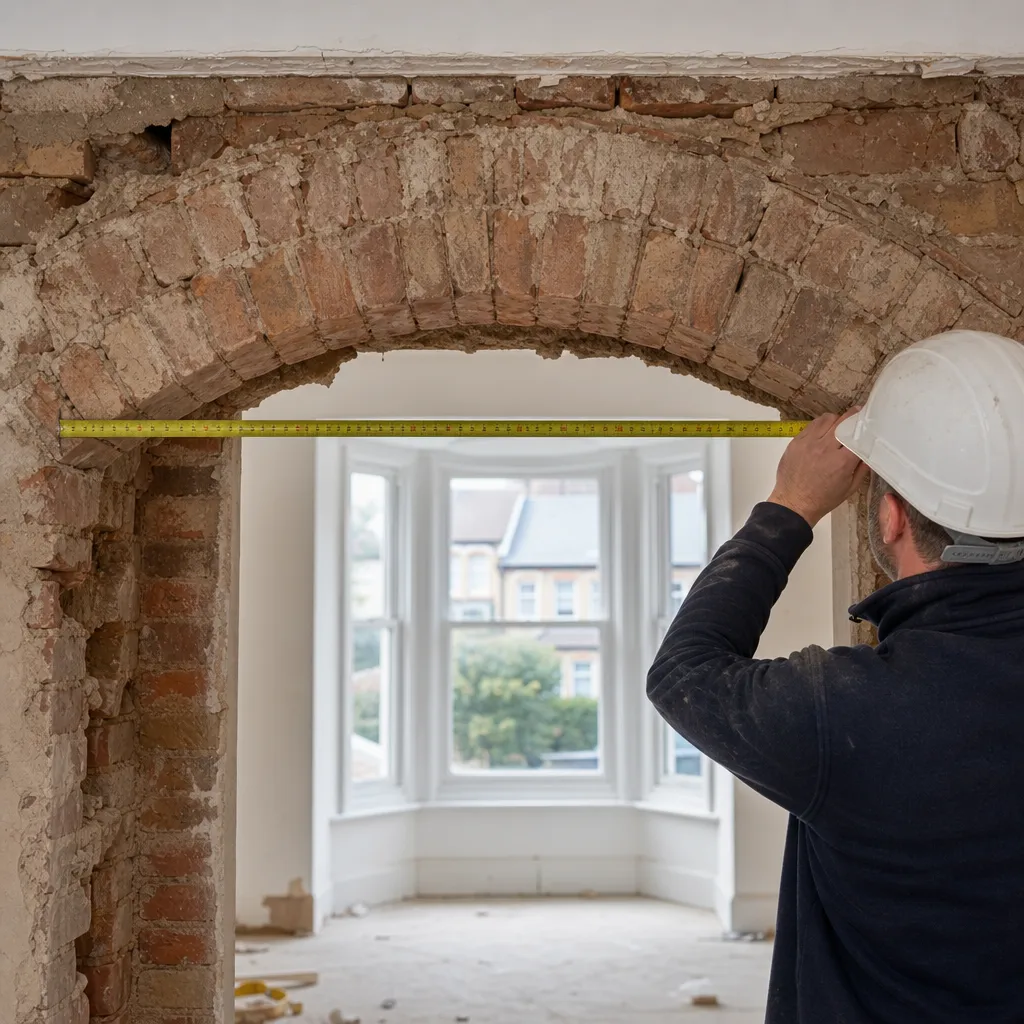
Structural Arching in Walls: Load Distribution and Design
Structural arching occurs when masonry redistributes compressive loads in a triangular or parabolic path around an opening, reducing the load on the lintel below.
 Planning & Pre-Build
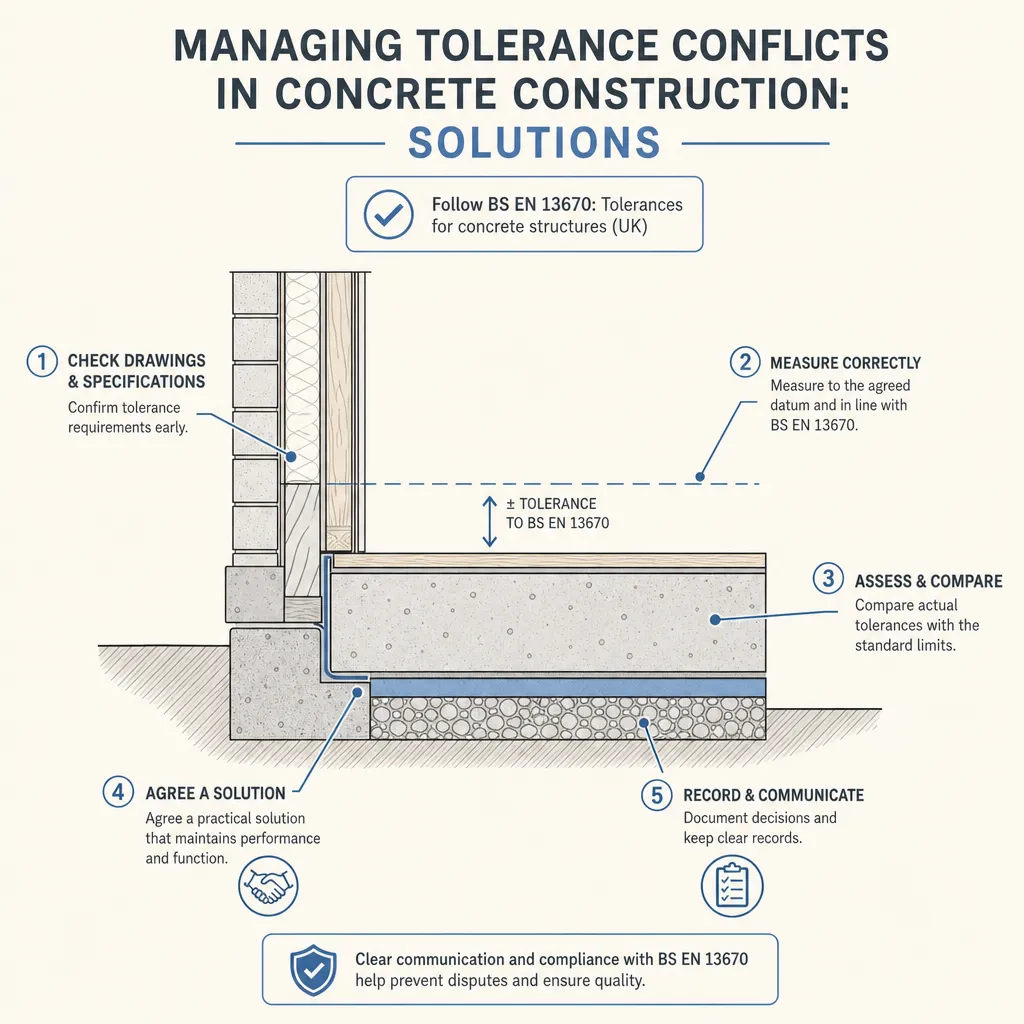
Managing Tolerance Conflicts in Concrete Construction: Solutions
Tolerance conflicts in concrete construction arise when poured elements fall outside the permitted deviations set in the project specification or in BS EN 13670:2009.
 Planning & Pre-Build
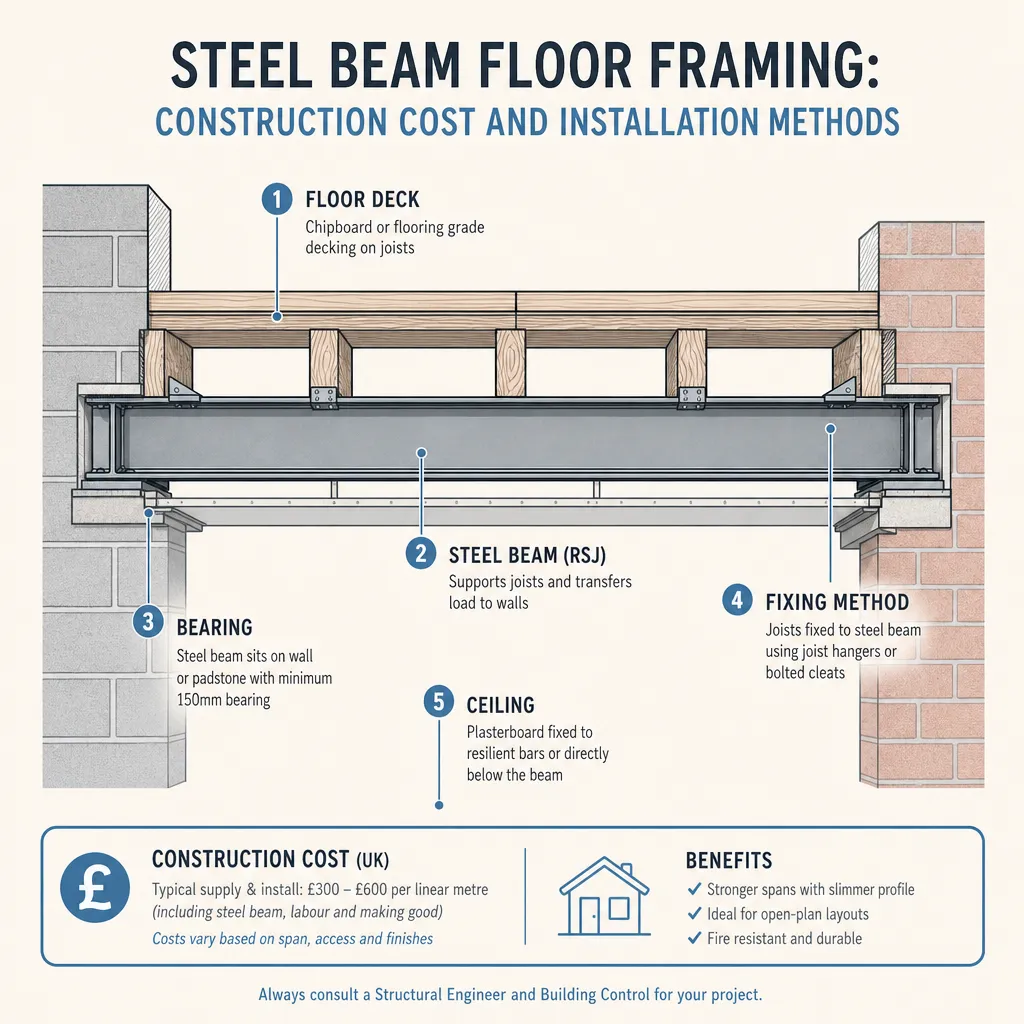
Steel Beam Floor Framing: Construction Cost and Installation Methods
Steel beam floor framing is used in UK homes when spans are too wide for timber joists, or when a load-bearing wall is removed.
 Planning & Pre-Build
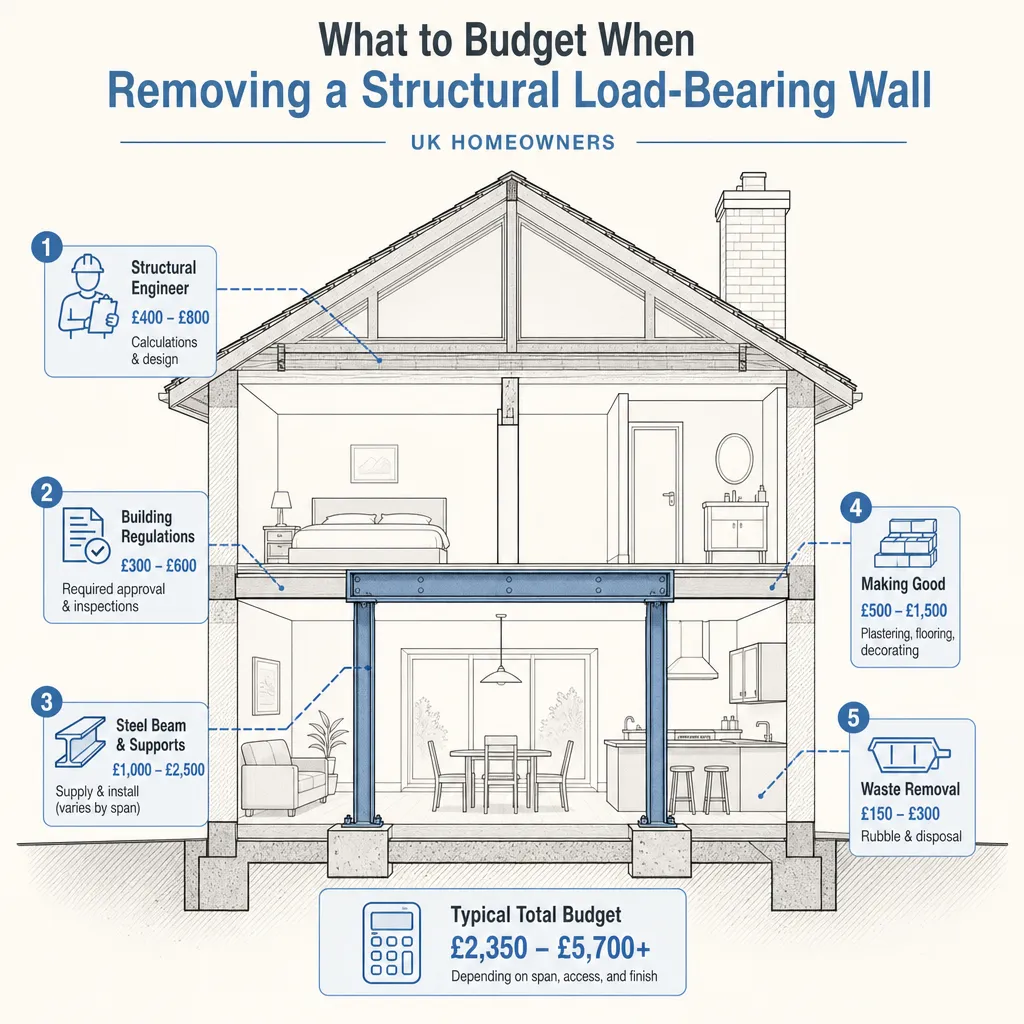
What to Budget When Removing a Structural Load-Bearing Wall
Removing a load-bearing wall in a typical UK home costs £2,500–£8,000 or more in total, covering a structural engineer's calculations, Building Regulations approval, the steel beam, builder's labour, and replastering.
 Planning & Pre-Build
Designing Homes That Are Accessible and Inclusive
Accessible home design in the UK is guided by Building Regulations Approved Document M, which sets three standards for new dwellings: Category 1 (Visitable), Category 2 (Accessible and Adaptable), and Category 3 (Wheelchair User Dwelling).