Contemporary Architectural Concrete: Blending New with Historic Buildings
By Housey · Last reviewed 24th of May 2026
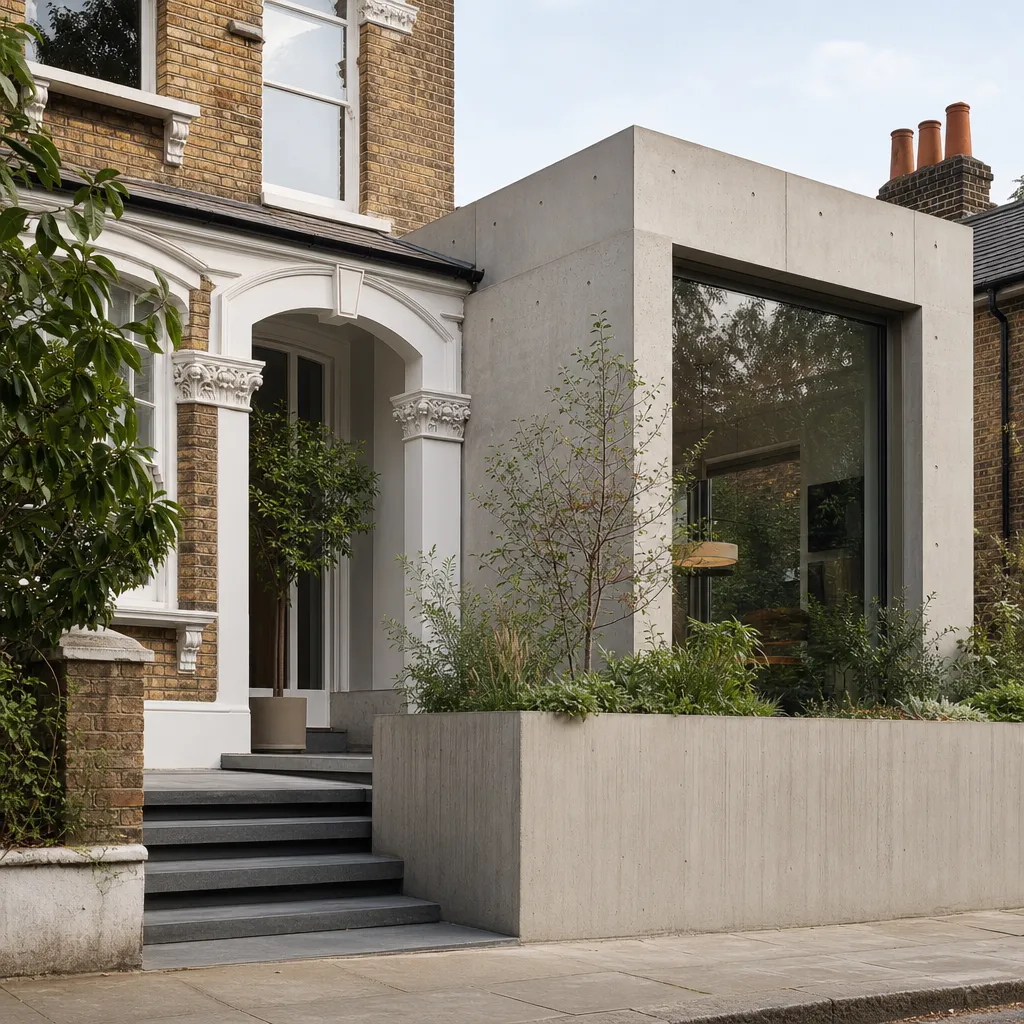
Contemporary Architectural Concrete: Blending New with Historic Buildings
Using concrete alongside historic masonry, timber, or stone is one of the more technically and politically demanding challenges in residential architecture. It arises when homeowners extend a listed cottage, add a modern element to a Victorian terrace, or develop an outbuilding within a conservation area. The decision to specify concrete in these settings is not simply aesthetic — it has direct planning, heritage consent, and conservation implications that must be addressed before any design is committed to paper.
Key points
- Extensions to listed buildings require Listed Building Consent (LBC) under the Planning (Listed Buildings and Conservation Areas) Act 1990, in addition to planning permission — the LBC process specifically assesses impact on the historic fabric and character of the building.
- Conservation area permitted development rights are more restricted than those outside designated areas — certain works that are permitted elsewhere require a prior approval or full planning application within a conservation area.
- Historic England's guidance recommends that new interventions in historic settings be distinguishable from historic fabric, but not so dominant as to overwhelm it — a principle often cited in support of well-designed contemporary concrete additions.
- Carbonation of concrete over time can produce salts that migrate into adjacent historic masonry, potentially causing damage; the junction between new concrete and existing historic materials should be assessed by a heritage professional before design is finalised.
- The National Planning Policy Framework (NPPF, December 2024 revision) requires local planning authorities to consider the setting of designated heritage assets, including how new development affects the character and appearance of the surrounding area.
Important limitations
This article provides general information about design principles and the planning framework for concrete in historic settings. It does not constitute planning, architectural, or conservation advice. Requirements vary significantly by local planning authority, the grade of listing, the extent of conservation area designation, and the specific proposals. Always consult your local planning authority and engage a qualified conservation architect or heritage consultant before committing to a design approach or submitting any application.
When this becomes urgent
- If you have already started work on a listed building without consent, stop immediately and seek professional advice — works without Listed Building Consent are a criminal offence under the Planning (Listed Buildings and Conservation Areas) Act 1990.
- If your planning authority has issued an enforcement notice, seek professional advice before responding or continuing any works.
- If a structural survey has identified that historic fabric (timber, stone, or brick) has been damaged by moisture or salt migration from a previous concrete repair or addition, seek specialist conservation advice immediately.
Why concrete and historic buildings can work well together
The apparent contrast between modern concrete and historic masonry has driven some of the most admired residential architecture in England. At its best, the contrast is intentional and legible: the new concrete element reads clearly as of its own time, while respecting the scale, massing, and spatial hierarchy of the historic structure.
Historic England's Conservation Principles, Policies and Guidance explicitly acknowledges that contemporary materials can be appropriate in historic contexts, provided the new work is designed with skill, uses high-quality materials, and does not harm the significance of the heritage asset. This means that concrete is not automatically refused — design quality and detailing are the critical factors, not the material itself.
In practice, many of the most successful projects involve a glazed link separating the historic building from the new concrete element, allowing each to be read independently and minimising physical impact on the original fabric.
Comparison: concrete approaches in historic settings
Approach | Best for | Planning and consent risk | Heritage suitability |
|---|---|---|---|
Board-marked in-situ concrete | Rural or agricultural historic settings where timber texture echoes vernacular materials | Moderate — material change requires LBC assessment | Can sit well if texture and colour relate to the existing palette |
Smooth white or pale concrete | Urban settings, Georgian or later contexts where smooth renders are common | Moderate — requires LBC if listed | Accepted where palette relates to existing finishes |
GFRC precast panels | Complex geometries, thin profiles adjacent to fragile historic fabric | Moderate | Precise off-site control reduces vibration risk to historic fabric |
Polished concrete floors (internal) | Internal floor replacements in listed buildings | Requires LBC — internal works to listed buildings always need consent | May raise reversibility and below-floor archaeology questions |
Concrete blockwork with render | Budget extensions in non-listed conservation area settings | Usually requires planning permission | Often acceptable if render finish, height, and massing are appropriate |
Always confirm consent requirements with your local planning authority before committing to any design approach.
What makes a concrete design acceptable to a conservation officer?
Conservation officers assess proposals against three key questions: Does the new work harm the significance of the listed building or conservation area? Is the design of sufficient quality? Is the new work clearly distinguishable as contemporary, without poorly mimicking historic details?
Concrete proposals are more likely to receive positive pre-application feedback when:
- The massing and scale of the new element are subservient to the historic building.
- The junction between old and new is clearly detailed — usually a crisp shadow gap or a glazed link rather than a direct masonry-to-concrete abutment.
- The concrete colour and texture relate to the palette of the site — pale aggregate, board-marking that echoes local timber, or a smooth finish that references historic renders.
- The structural connection to the historic building is minimally invasive — ideally the new element is as freestanding as possible.
- A Heritage Impact Assessment (HIA) has been prepared by a qualified conservation professional before the application is submitted.
Which professional do you need?
Professional | When needed | What they provide |
|---|---|---|
Conservation architect (RIBA or AABC accredited) | Any listed building work; preferred for conservation area extensions | Design, specification, LBC and planning applications |
Heritage consultant or independent conservation officer | Complex or sensitive listed buildings, grade I or II* | Heritage Impact Assessment, specialist advice on historic materials |
Structural engineer | Where concrete is load-bearing adjacent to historic fabric | Structural calculations, minimal-intervention connection details |
Planning consultant | Where pre-application discussions have raised concerns or the application is contentious | Planning strategy, appeal support |
Archaeological consultant | Where groundworks may disturb below-ground remains (common in historic town centres) | Archaeological watching brief, assessment report |
What to ask a qualified professional
Before instructing an architect or heritage consultant for a project involving concrete in a historic setting, ask:
- Are you AABC (Architects Accredited in Building Conservation) registered or RIBA-accredited in conservation?
- Have you delivered concrete extensions to listed buildings that have received consent — can you provide examples and references?
- What pre-application discussions do you recommend with the local planning authority and Historic England (for grade I or II* buildings)?
- What is your approach to documenting and preserving significant historic fabric that may be affected by the works?
- How will you address moisture and salt migration risks at the junction between new concrete and existing masonry?
- Will you prepare a Heritage Impact Assessment or a Design and Access Statement as part of the application?
When to get professional help
Do not attempt to design or build a concrete extension to a listed building without qualified professional support. Listed Building Consent refusal and enforcement action can have serious financial and legal consequences. Key red flags that indicate you need professional help immediately:
- You have started or are about to start work on a listed building or within a conservation area without checking consent requirements with the local planning authority.
- Your local planning authority has raised concerns in pre-application discussions about material choice or the massing of a proposed addition.
- A previous contractor has advised that no consent is needed — without written confirmation from the local planning authority.
- The historic building shows signs of structural movement, damp penetration, or previous inappropriate concrete repairs that appear to be causing deterioration of the historic fabric.
How Housey can help
Planning and designing a contemporary concrete element alongside a historic building requires specialist expertise from the outset. Housey connects homeowners with qualified heritage and conservation consultants and experienced architects who understand how to navigate consent processes and design concrete additions that respect and enhance historic buildings.
Frequently asked questions
Do I always need Listed Building Consent for a concrete extension?
Yes, if the building is listed (grade I, II*, or II), any works that affect its character as a building of special architectural or historic interest require Listed Building Consent in addition to any planning permission. This includes extensions, internal alterations, and material changes. Failure to obtain LBC is a criminal offence under the Planning (Listed Buildings and Conservation Areas) Act 1990.
Can a conservation officer refuse concrete outright as a material?
Conservation officers assess proposals against national and local heritage policies and Historic England guidance. A well-designed concrete proposal, supported by a Heritage Impact Assessment, can be approved — design quality, detailing, and the relationship to the historic building are the critical factors. Material preference alone is not a lawful basis for refusing consent.
Is concrete reversible in a listed building context?
Reversibility is an important consideration in heritage work. In-situ concrete is generally not reversible once placed. Precast or GFRC panels can sometimes be removed without permanent damage to the historic structure. A conservation architect can advise on which approach best meets reversibility requirements for your specific proposal and the conservation officer's expectations.
Does the NPPF protect all historic buildings equally?
The NPPF (December 2024) distinguishes between designated heritage assets — listed buildings, scheduled monuments, conservation areas, and registered parks — and non-designated heritage assets. The level of protection and the planning tests applied differ between categories. Consult your local planning authority for their Local List and relevant supplementary planning documents.
Sources and further reading
- Planning (Listed Buildings and Conservation Areas) Act 1990 — legislation.gov.uk
- Historic England: Conservation Principles, Policies and Guidance — Historic England
- National Planning Policy Framework (December 2024) — GOV.UK
- AABC Register: Architects Accredited in Building Conservation — AABC Register
- Historic England: Guidance on Extensions to Listed Buildings — Historic England
Useful next reads
 Planning & Pre-Build
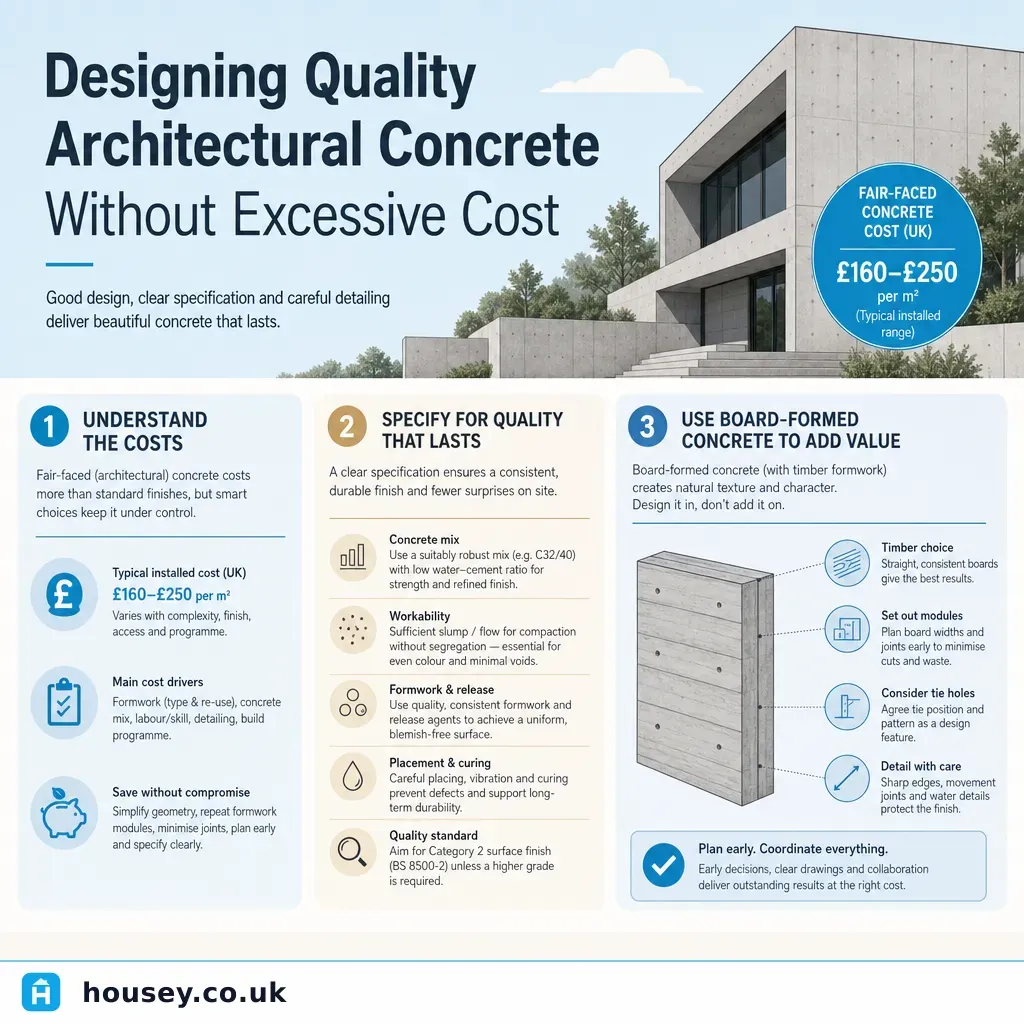
Designing Quality Architectural Concrete Without Excessive Cost
Architectural concrete costs can be controlled by repeating panel dimensions to reuse formwork, concentrating fair-faced finishes on high-visibility elements, and producing a detailed mix and workmanship specification before work starts.
 Planning & Pre-Build
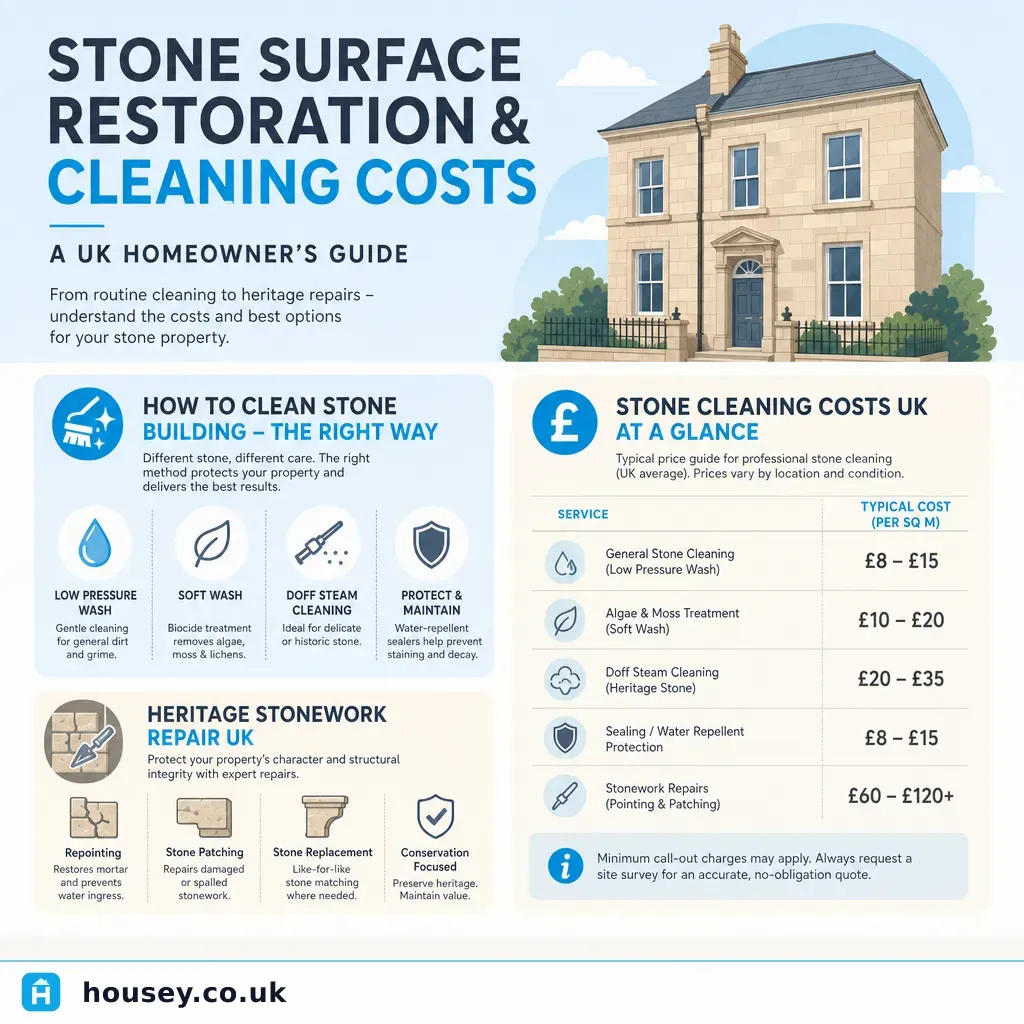
Stone Surface Restoration and Cleaning Costs
Stone cleaning in the UK typically costs £10–£50 per square metre; full restoration ranges from £150 to £500 or more per square metre.
 Planning & Pre-Build
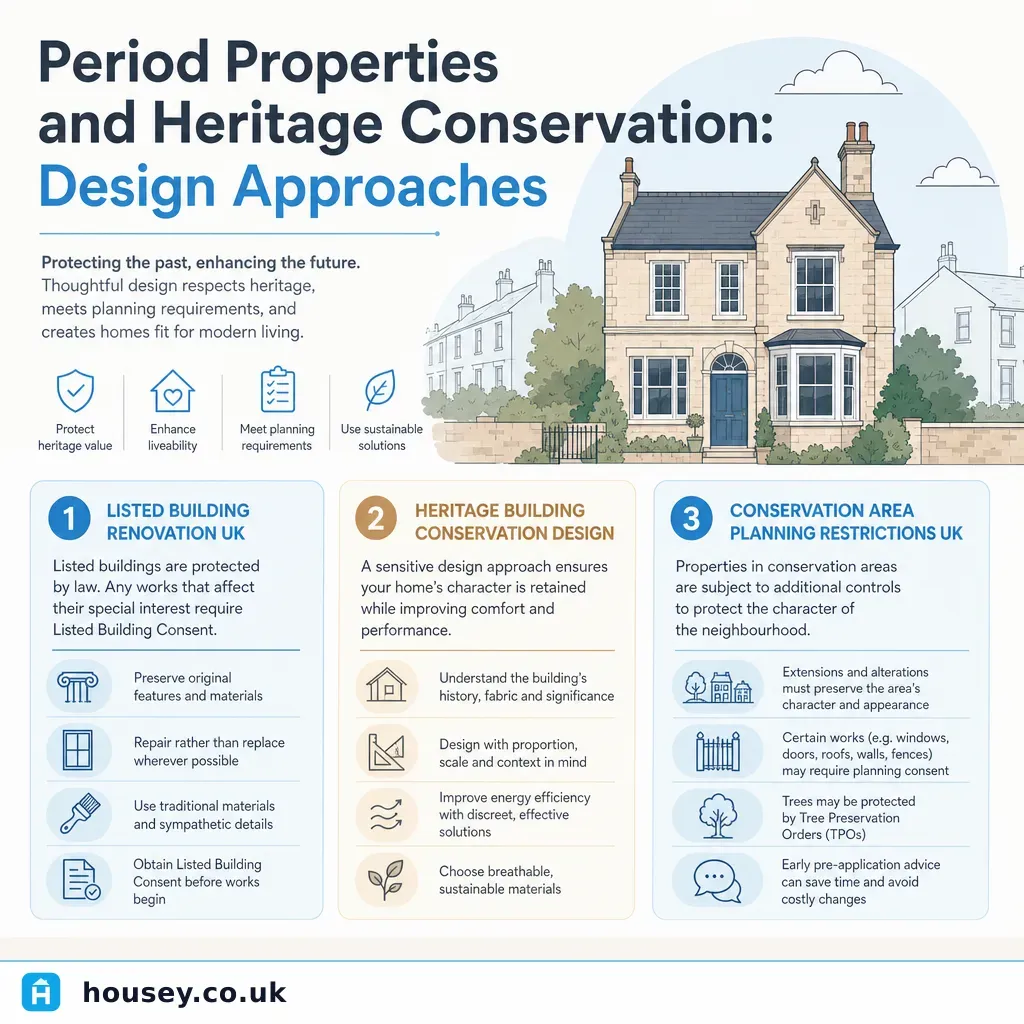
Period Properties and Heritage Conservation: Design Approaches
Renovating a period or listed property in the UK requires listed building consent for most alterations — including internal works — and compliance with conservation area restrictions where applicable.
 Planning & Pre-Build
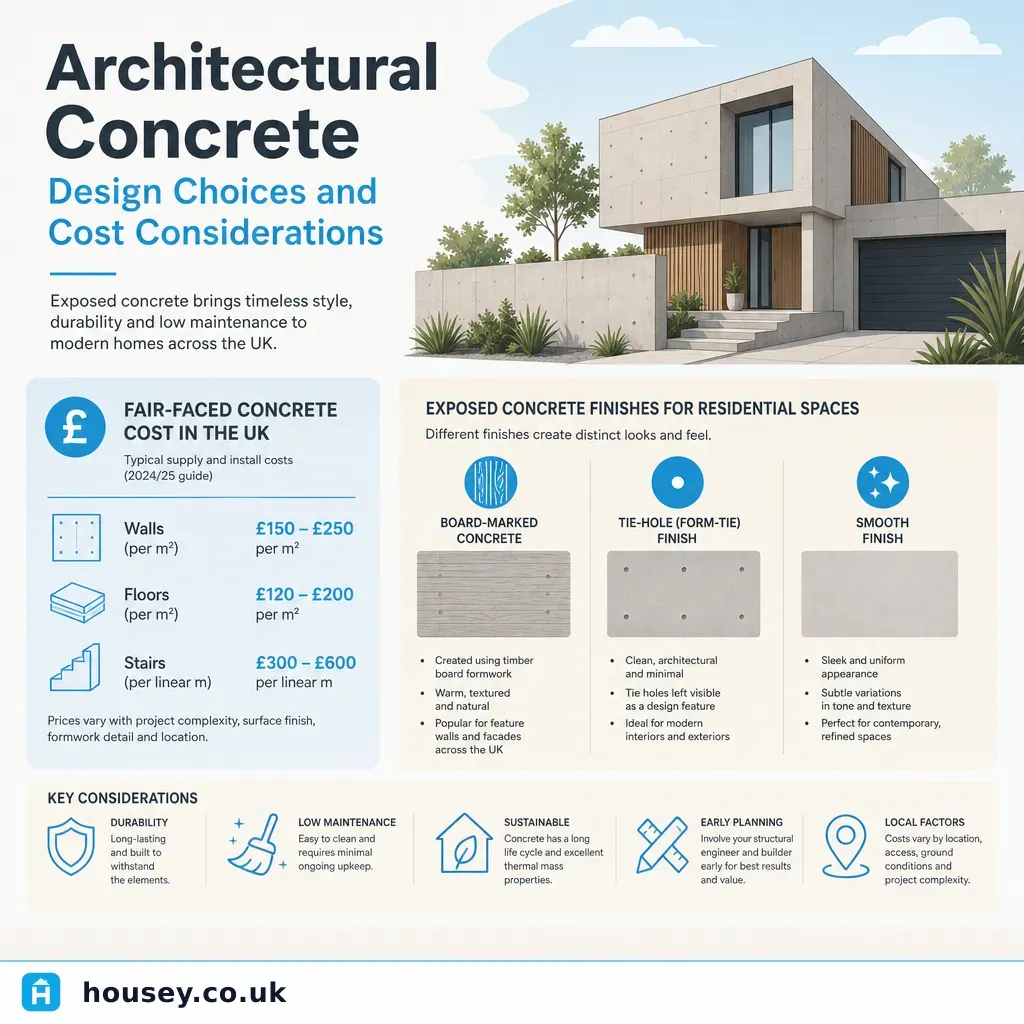
Architectural Concrete: Design Choices and Cost Considerations
Architectural concrete — including fair-faced, board-marked, and polished finishes — demands precise control of mix design, formwork, and curing to achieve a consistent result.
 Planning & Pre-Build
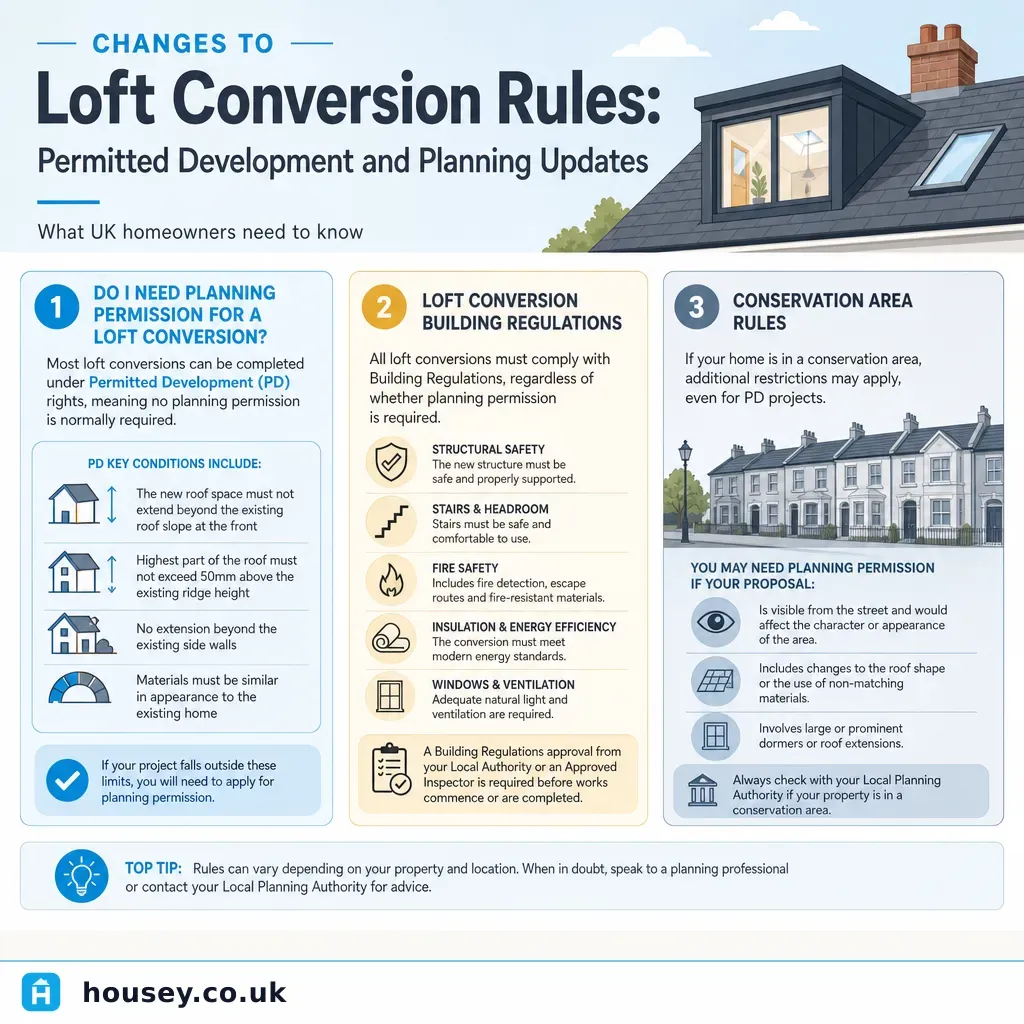
Changes to Loft Conversion Rules: Permitted Development and Planning Updates
In England, most loft conversions on standard houses qualify as Permitted Development under Class B of the GPDO 2015, allowing up to 40 cubic metres (terraced) or 50 cubic metres (detached or semi-detached) without a planning application — if conditions are met.